A Poet Reminisces: Essays After Eighty

ows_141652973541643I have always liked poetry and poets, in particular, because of their sensitivity to human experience.

One poet I like a lot is Donald Hall, a giant among contemporary American poets, although he’s given up the craft, or as he puts it, since “poetry abandoned him.”

Hall is now 85.

Let me assure you, while the tropes may not come as easily as before, his acuity remains vibrant in his newest book, Essays After Eighty, a slim volume of 120 pages, yet filled with reminiscence, keen observation, and sober wisdom.

I first got introduced to Hall by way of his textbook, Writing Well, which I used for a number of years in teaching college composition. The book lived up to its title, emphasizing sentence clarity and how to achieve it, with eloquence added in.

Hall has always been a diligent stylist, whether writing poetry or prose. He confesses that he’s written some individual essay drafts for Essays After Eighty upwards of eighty times to get things said right.

I used to tell my students that the name of the game in all good writing lay in revision, pointing out that scholars have come upon nearly fifty drafts of Yeat’s famed “Second Coming” poem.

I like how Hall says it: “The greatest pleasure in writing is rewriting. My early drafts are always wretched.”

I’ve always held that a good style is etched by its economy, the right words sufficing for empty fillers drowning readers in verbosity; a pleasing rhythm like waves, in and out, upon a sea shore.

Good prose, like poetry, runs lean.

And Hall is the great master.

Let me give you a sampling of Hall’s trademark writing acumen, simple, yet keen with observation, each detail chosen well, verbs especially, accumulating into a verbal, painting, reflecting the ethos of a skilled artisan:

In spring, when the feeder is down, stowed away in the toolshed until October, I watch the fat robins come back, bluejays that harass them, warblers, red-winged blackbirds, thrushes, orioles. Mourning doves crouch in the grass, nibbling seeds. A robin returns each year to refurbish her nest after the wintry ravage. She adds new straw, twigs and lint. Soon enough she lays eggs, sets on them with short excursions for food, then tends to three or four small beaks that open for her scavenging. Before long, the infants stand, spread and clench their wings, peer at their surroundings, and fly away. I cherish them….

Reminiscence weighs heavily upon these essays, not surprising for a writer in his mid-eighties. the ghosts, as it were, looming out of the past–grandparents, Mom and Dad, aunts and uncles, friends;  wife Jane Kenyon, the love of his life and fellow poet, succumbing unexpectedly to cancer at age 47.

Even the northern New Hampshire topography has yielded to change, farms giving way to rebirth of forest as the new generation migrates to the prosperous cities of southern New Hampshire.

As I read this moving collection of personal reflections on sundry topics, I made sure to highlight a number of striking passages, and some of them I’ll share with you.

On writing:

As I work on clauses and commas, I understand that rhythm and cadence have little to do with import, but they should carry the reader on a pleasurable journey.

If the essay doesn’t include contraries, however small they be, the essay fails.

Nine-tenths of the poets who win prizes and praises, who are applauded the most, who are treated everywhere like emperors–or like statues of emperors–will go unread in thirty years.

I count it an honor that in 1975 I gave up lifetime tenure, medical expenses, and a pension in exchange for forty joyous years of freelance writing.

I expect my immortality to expire five minutes after my funeral. Literature is a zero-sum game. One poet revives; another gets deader.

On aging:

When I limped into my eighties, my readings altered, as everything did.

In the past I was advised to live in the moment. Now what else can I do.?

On leisure:

Everyone who concentrates all day, in the evening needs to let the half-wit out for a walk.

On mortality:

It is sensible of me to realize that I will die one of these days. I will not pass away.

At some time in my seventies, death stopped being interesting. I no longer checked out ages in obituaries.

These days most old people die in profit-making dormitories. Their loving sons and daughters are busy and don’t want to forgo the routine of their lives.

Essays After Eighty has been a wonderful read for me with its acerbic wit, cogent wisdom, delivered in a simple, yet elegant, style, proving again that the best art conceals itself.

And yet there’s a melancholy that haunts these excursions into reminiscence, a sense that the best is over and, now, there’s just the waiting. As Hall confesses, “My problem isn’t death, but old age.”

Hall, of course, is addressing physical decline with its imposed limitations and dreaded dependency; but surely his words resonate still more–the sense of ephemerality that mocks our labors and brings to an end all that we love most dearly.

For Hall, “There are no happy endings, because if things are happy, they have not ended.”

Still, this work, perhaps his last, formulates a testimony to a life lived well.

And, very rarely, do you find such honest telling.

–rj

You Aren’t Who You Think You Are!

yoga(1)

Have you ever found yourself so angry, say in an argument, that you’ve yelled, or said mean things, or left the room, or slammed a door, only to feel ashamed later?

Have you ever panicked, ready to pull your hair out, because your fear seemed overwhelming, demanding a quick fix that seemed elusive?

Perhaps it was in getting bad news such as being fired, or being told you have a serious illness, or finding out your spouse wants out.

It’s been said many times you are what you think about. If you’re having happy thoughts, then chances are they’ll carry you through the day, making it a good one.

Conversely, when you’re upset–who knows about what?–you’re apt to put in motion unhappy scenarios throughout your day. Not only that, you may be spreading your viral malcontent to others.

But it’s your unconscious thoughts that may influence you even more, and with greater fall out, since you’re unwitting of the sources behind what you say and do. In short, it goes a lot deeper than just what you think about.

It’s as though you’re living with a stranger usurping your identity. There he is, randomly, unexpectedly, projecting himself upon your conscious world.

Your thoughts, then, seldom come close to mirroring who you really are, though they may try to tell you that you’re either lacking or even very special.

And this is the good news, since your thoughts most likely come short of who you really are.

Your mistake is identifying with them.

This becomes clearer when we resort to linguistics.

In English, we always say things like “I’m angry” or “I’m lucky” or I’m afraid,” when logically this can never be so.

This gets corrected in languages like Spanish, French and German in which we say we have anger, or luck or fear.

Now try this little exercise in predicate adjectives to catch my drift. To

I am, add an adjective that describes you:

I am …

I am happy.

I am sad.

Et cetera.

I call it the name tag game and we all play it.

As such, these tags can never summarize in any moment the totality of who you are in your uniqueness, and thus you err when you identify with them.

Name tags reach back into your childhood as you strive for validation, or self-worth, often by comparing yourself to others.

My mother likes my sister more than me.

I’m smarter than Bill.

I’m not popular.

Unfortunately, such scripts program us; that is, unless you learn to identify the falsity of their self limitations.

By doing so, you free yourself from their tyranny.

You don’t replay them anymore.

Self-acceptance prospers in an environment saturated with love. Too many of us we’re raised, however, by parents who themselves were never accepted for who they were, and thus never fully loved.

Accordingly, their love was, in turn, conditional, or a projection of themselves.

The truth is you’re far more than the stories you’ve come to believe about yourself.

You don’t need to keep modeling yourself on what you think or have been told you are or should be.

You’re worthy now.

Too often you try to compensate for life having dealt you a bad hand:

A broken home replete with violence.

An alcoholic parent.

Bullying at school.

A physical or mental handicap.

Sexual abuse.

A friend’s betrayal.

An insensitive teacher.

And while measured by status and/or accumulation, you may even seem successful to others, you find you’re still battling feelings of inferiority or unworthiness daily.

In a kind of guerrilla war, your anxiety pushes you to flush out the enemy by doing still more.

You hunger for approval, but it’s never enough.

Afraid of disapproval, you retreat from doing new things because you might do it wrong or even fail.

Freeing yourself by identifying the stories you’ve come to falsely believe about yourself is your passport to loving yourself, and with it, finding confidence and joy.

Anxiety about yourself, unfortunately, is an acquired practice.

It follows you must undo the habit.

When you think negatively or act out destructively, catch yourself at it.

This isn’t my true self.

This isn’t me.

And you’re right.

You can help yourself by retrieving your thoughts in a strainer, as it were, by practicing mindfulness,

Breathe deeply through your nose for a count of six seconds, your hand on your belly

Feel your stomach inflate.

Now breathe out for a count of four. feeling your stomach contract.

Visualize happy scenes.

Let your body relax, beginning with your toes, then your feet, legs, back, arms and neck, each in its turn.

Now listen to your thoughts,

Do this without judging them.

If you stray, as we always do, return to deep breathing.

By listening to ourselves, detached from censure, we see objectively, freeing ourselves from anxiety’s tyranny.

We don’t allow our emotions to boss us around anymore.

To this end, I find restorative yoga the most peace-rendering exercise of any I’ve come upon.

Unfortunately, most yoga practice in the West confines itself to bodily exercise, or fitness,

True yoga is much more, or holistic, the “yoking” of mind and body, for they are ultimately one. Yoga mean “to yoke.”

This is where Western medicine so often fails, treating symptoms, not causes.

We are not mere physical creatures.

We possess a spiritual component.

We are sentient beings.

In traditional parlance, we have a Soul.

In modern life, however, we’ve disconnected Body and Soul.

The consequence is that we find ourselves out-of-balance, resulting in stress, fatigue and, ultimately, illness.

Yoga reverses this, restoring health, both physical and mental.

Yoga helps you let go.

Yoga enables you to love yourself and, with it, forgive yourself and others.

I’m sadly limited to a blog, when there’s so much else I’d like to say.

But let me recommend a book that will jump start your reconnecting mind and body. I promise you’ll not want to set it down:

Brad Willis. Warrior Pose:  How Yoga (Literally) Saved My Life.

We listen too much to our head, when we should be living life with our heart.

If you follow my suggestions, hand over my heart, you’ll increasingly gain power over that stranger who’s usurped the premises.

You’ll dislike him so much, you’ll ask him to leave.

The good news is that he will!

–rj

.

On Reading E. O. Wilson’s The Meaning of Human Existence

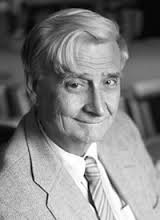
wilsonI finished reading E. O. Wilson’s remarkable book, The Meaning of Human Existence, two weeks ago and am now finally getting to tell others why I like it so much.

For one thing, I admire its author, an eminent, cerebral champion of eco diversity given to candor that may arch the backs of some. Years ago, a member of the Marxist oriented Progressive Labor Party poured a pitcher of water on him for advocating the genetic origin of human behavior, a surely unpopular stance with today’s still entrenched view of social conditioning as the compelling factor in the ongoing nature vs. nurture debate.

The controversy once got so heated that it spilled over in 2001 into the front pages of the New York Times and Time Magazine, with some members of the science community dismissing Wilson as a misogynist and racist.

Of course, I learned long ago that scientists, just like the rest of us, are hardly free from biases that can prejudice challenges to accepted axioms rooted more in assumption–and sometimes, pecuniary interests–than objective research or the empirical.

And always there are the social ameliorists, who can be downright bullying in their evangelical intensity.

For me, Wilson makes a lot of sense. If we can take evolution into our own hands and genetically induce behavioral as well as physiological outcomes in animals such as canines, why would this not be true of evolution as a mechanism at large?

But Wilson has survived the controversy and, you name it, he’s won virtually every academic and journalism award, including two Pulitzers.

The novelist Ian McEwan aptly described Wilson as “an intellectual hero,” and that he didn’t “know of another working scientist whose prose [was] better than his. He can be witty, scathing and inspirational by turns. He is a superb celebrator of science in all its manifestations, as well as being a scourge of bogus, post-modernist, relativist pseudo-science, and so-called New Age thinking” (qtd. in The Guardian, 16 February, 2001).

This most recent book, in many ways a summation of his copious research across several decades, has been nominated for the National Book Award.

It’s far more than a tome on science, however. Replete with wisdom and concern for a diminishing biodiversity on which our survival depends, it ultimately addresses the human condition marred by tribalism, redundant in self-interest, and often (think today)   exhibiting a religious and political mindset:

The great religions are…tragically, sources of ceaseless and unnecessary suffering. Their exquisitely human flaw is tribalism. It is tribalism, not the moral tenets and humanitarian thought of pure religion, which makes good people do bad things.

In more secular societies, faith tends to be transmuted into religion-like political ideologies. Sometimes the two great categories are combined.

The Meaning of Human Existence pleads for the convergence of science and the humanities to not only confront human behavior but pursue its origin that we might remedy it.

The self-contained world of the humanities describes the human condition–but not why it is the one thing and not another. The scientific worldview is vastly larger. It encompasses the meaning of human existence–the general principles of the human condition, where the species fits in the Universe, and why it exists in the first place.

With resounding pathos, not unexpected in a man who loves Nature so fervently, Wilson   also laments our intransigent myopia that unwittingly plants the seeds of our own demise and, hence, betrays our future:

Too paralyzed with self-absorption to protect the rest of life, we continue to tear down the natural environment, our species’ irreplaceable and most precious heritage. And it is still taboo to bring up population policies aiming for an optimum population density, geographic distribution and age distribution.

I think Wilson is spot on. While the humanities can teach us how to behave, they cannot rid us of the conflicting dynamics of individualism versus altruism implanted by evolution.

And that is our tragedy. We must learn to conceive ourselves as unique offspring possessed of divided sensibilities, the finale of vast eons of time, that we might weave a more rational way of living.

Though it’s folly to suppose we can annul our fissure, we can do better. We do not have the gods to blame, nor a devil to curse. And if this frees us from a good deal of our tribalism, then so much the better.

It pains me to think this may be Wilson’s last book, since he will turn 86 next June. As is, he’s lost none of his mettle in provoking us to examine our assumptions and liberate ourselves.

In doing so, he reminds me of those Old Testament prophets that would, at great risk, prognosticate the calamitous fallout of an unheeded warning.

–rj

Being Mortal

gawandeI’ve just finished reading Being Mortal: What Matters in the End by Dr. Atul Gawande.

I had read his previous Complications about life as a surgeon several years ago, greatly impressed.

Both books have been highly praised, with the present book listed by the New York Times as among must reads of 2014.

As a surgeon at Massachusetts General Hospital, Gawande knows what he’s writing about.

And he writes well, often movingly, in layman’s language, of death scenarios with their accompanying challenges that need to be individualized, since we’re all different.

I suspect many readers will opt to avoid a seemingly morbid subject, but that’s a mistake, for   mortality knows no exceptions and our best approach is one that, through knowledge, provides us with options.

And Gawande, a writer for the prestigious New Yorker as well as a physician, delivers–deftly, compassionately, and always with eloquence, on a difficult subject.

Moreover, his book preeminently addresses the medical community, often committed to treatment paradigms that work against the patient’s welfare.

Physicians are trained to see themselves as enhancers of health and survival. They are not taught how to handle lingering illness devoid of remedy:

…within a few years, when I came to experience surgical training and practice, I encountered patients forced to confront the realities of decline and mortality, and it did not take long to realize how unready I was to help them (3).

If your problem is fixable, we know just what to do.  But if it’s not? The fact that we have had no adequate answers to this question is troubling and has caused callousness, inhumanity, and extraordinary suffering (8).

What’s the point, anyway, of continuing chemotherapy, radiation, and surgery in terminal cases when such methodologies may involve great risk and, often, increase duress?

When, in short, should doctors, not just patients, let go?

Patients cling to hope and doctors knowingly feed into this, when frequently no regimen can procure that miracle of restoring health and dignity.

Or as Gawande vividly makes clear in his allusion to Tolstoy’s powerful tale, The Death of Ivan Ilyitch:

What tormented Ivan Ilyitch most was the deception, the lie, which for some reason they all accepted, that he was not dying but was simply ill, and he only need keep quiet and undergo a treatment and then something very good would result (2).

The ultimate challenge for physicians is to accept the restraints of biology and assist their patients to come to terms when that moment arrives

Otherwise, they can inflict considerable, even barbaric, suffering.

Doctors need to be patient-centered, addressing the patient’s best interests, and sometimes the greatest kindness entails being candid..

Ultimately, it’s about providing patients with options that preserve dignity, lessen suffering, and are in accord with the patient’s priorities.

We’ve made some progress in the now universal acceptance of Advanced Directives, though initially contested. But what about options for the terminal patient, still conscious, who lingers, often in great pain, and with perhaps even greater to come?

Gawande says that there are two dominating physician protocols: the one patronizing (this is what you should do); the other, informative (here are your scenarios).

Doctors do better when they ask the right questions of their patients in such contexts:

Whenever serious sickness or injury strikes and your body breaks down, the vital questions are the same: What is your understanding of the situation and its potential outcomes? What are your fears and what are your hopes? What are the trade-offs you are willing to make or not willing to make? And what is the course of action that best serves this understanding? (259)

Palliative care, for example, may well be a better option to further surgery, chemotherapy and radiation when the outcome may make matters worse.

On the other hand, indulging patient fantasy may invoke “a prolonged and terrible death” (4).

Gawande carries out what he advocates. For me, his account of his father’s lingering passage into mortality is deeply moving, which I think many of us can identify with in our own wrestlings with the demise of those we love.

In addition to all of you, I wish every medical practitioner would read this book.

Death isn’t an enemy, but the natural order of things.

How much better it would be in our final moments to have someone like Gawande attending–a physician, with compassion, listening and helping us discern those best options that enhance our dignity and lessen our suffering.

–rj


Traits we should all want

leadershipI saw a recent piece in the Huffington Post, called “7 Habits of Natural Leaders,” and found it riveting. You don’t necessarily have to be in a leadership position, however, to benefit from making these attributes staples of your everyday life.

I’ll list them and give my own take on each of the attributes:

1.  They dare to fail: I was a prof for nearly forty years and found that most students opted to play it safe–take the easier courses, avoid the good, but tough professors who gave A’s only for singular achievement. I have often thought of Lincoln, who mostly failed in his early political efforts. But he never gave up, and the rest is history.

One of the problems with not assuming risk is that it can pursue us all our lives and we simply run away from all life’s tough spots and sometimes ourselves. If you think about it, we owe our country’s greatness to its founding fathers, willing to risk their lives to confront tyranny.

I have always liked how the poet Robert Browning famously put it: “A man’s reach should exceed his grasp, or what’s a heaven for?”

2.   They follow their purpose. In short, they stay the course. Over my lifetime, I’ve found the real nemesis of success is not that we quit, but that we quit so soon. Consequently we find ourselves saying, “what if?, when with perseverance, we might have achieved our goals.

Strong people can be difficult to get along with, since passion often governs what they do. At the same time, I find them attractive people, the kind you want to be friends with. They have a vision, know what they want, follow their bliss, and are exciting to be around.

3.   They give. I think we shouldn’t just think of giving in the way of money, but of ourselves. Currently, there’s a seeming panic going on about ebola. Several caretakers, or medical staff, have recently returned to the States, victims of the disease. What’s extraordinary to me is that they went to West Africa in the first place to confront this ugly disease. One of them has actually labored in Liberia for sixteen years, trying to improve its meager medical resources.

When it comes to the monetary aspect, while the vast lot of us aren’t rich, we can still give something. As Peter Singer, a philosopher who specializes in ethics, has said–if all of us in western counties just set aside five percent of our incomes for special needs, we’d eradicate poverty.  I would add, maybe a good many of our diseases as well.

I do know that what we give of ourselves and our assets is a sure indicator of our capacity to love.

4.    They give themselves a break: It’s important to sometimes treat yourself. Right now, I try to keep up my health as I grow older, working out on our elliptical machine and even lifting weights.

But I also schedule timeouts, one or two days when I don’t work out, like Wednesdays and Saturdays. It makes my exercise far more palatable, knowing tomorrow I can simply relax, and without the guilt. I sometimes suspect that dieters would be more successful if they’d cheat one day a week.

We Americans are hard-working and studies show we don’t take much time off.

That’s a pity!

5.    They really listen: Now here’s a trait I’m trying hard to achieve. After all, when we interrupt or ignore what someone’s saying to us, it’s a form of self-absorption, maybe even narcissism. Certainly, it’s selfish

It’s also demeaning to others, a way of saying you don’t matter or what you’ve come to me with is trivial. I don’t want to be this way. I want to value people and for them to know that. I want them to feel when they talk to me that they’re the only one in the room. In short, that they matter, for they do.

6.    They seek out new experiences and ways of thinking: Hey, I’m all over this one and hope you are, too. I like seeing new places, meeting people, chance conversations, reading serious books and magazines.

Guess that’s why I love being around college campuses, especially their real beauty–young people excited about life, filled with dreams, willing to challenge cultural norms turned into unthinking rituals.

Always, I yearn for stimulation, of being challenged to new ways of seeing things. TV doesn’t do that for me. I’m into romping blogs, trying new things, meeting people whose ideas may often challenge my own. I aim to grow, not stagnate, to wake tomorrow wiser than I am today.

7.   They empathize with others:  I like this a lot! Can’t come by a better trait than this, putting yourself in another’s shoes. This happened for me in a unique way many years ago when I took a chance and accepted an invitation form a college friend to visit his country, India.

I saw not only the Taj Mahal, but more importantly, how much the greater portion of humanity suffers in the shackles of ubiquitous poverty, disease and early demise.

I have learned since, and am still learning, the way of compassion, for people, animals and, yes, a wounded earth. I wish I were wealthy, not as its own end, but that I might empty my wallet for others.

If there really does exist what they call an “emotional quotient,” or EQ, then surely compassion is its ultimate marker.

I want it, and want it bad. Hope you do, too!

–rj

May I recommend?

I confess to being an omnivorous reader and that my iPad has only abetted my hunger for new turf, now so easily accessed with the likes of Publisher’s Weekly, Goodreads, and the Huffington Post. On occasion, I’ve drawn on Fareed Zacharia’s recommendations on his GPS weekly telecast. I maintain links to all the nation’s foremost bookstores like Powell’s as well. And, of course, there is always that behemoth, Amazon.

This past week I was delighted to see two authors among those on the 2014 Long List for the National Book Award for Nonfiction.
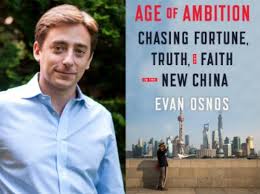
OsnosThe first is Evan Osnos, whose Age of Ambition: Chasing Fortune, Truth, and Faith in the New China I read several months ago following upon Zacharia’s counsel. It’s not my intent, however, to give a lengthy book review here. Besides, you can access copious online reviews with Google or at the Amazon site.

Anyway, Osnos is presently with The New Yorker after having been a roving correspondent in China for eight years. He went everywhere, interviewing citizens across the social-political-economic spectrum.

What amazes me is that he did so speaking fluent Chinese, acquired as a major at Harvard, obviously increasing his access enormously.

He’s also a polished writer exhibiting a lucid style along with cogent analysis.

I hadn’t done any sustained reading on China until Osnos, which–sadly– probably includes the vast lot of us, though China rivals the USA on the world stage.

Certainly, Osnos has his hands on that nation’s pulse.   Essentially, its communist government hasn’t changed in its dedication to controlling all aspects of daily life and maintaining its privileged status despite its seeming anomaly of encouraging a market economy so contrary to the legacy of Mao.

It does so, of course, to keep in check any democratic impulses among its citizenry.  Let them eat cake and they’ll overlook pressing for governmental reform. So far, it seems to have kept the lid on, though Osnos notes that many of the populace seethe underneath, as materialism cannot assuage their desire to be free to think and choose. Accordingly, a revival of interest in religion is also taking place, proving again “that man cannot live by bread alone.”

As a consequence, it’s a fine-balancing act for many Chinese, especially among its entrepreneurial classes, intellectuals, and artisans. The thought police are everywhere monitoring, especially the Internet.

The regime even goes so far as to downplay natural disasters that may point to government malfeasance.

Of course, the Chinese know this well to the point of using code terminology to circumvent the censors.

Osnos doesn’t neglect the full picture, however, as there is a growing emergence of rabid nationalism among some that could ultimately pose a danger on the world stage. In the short term, these zealots pose an additional threat to the cadre of brave dissidents at home.

I went away admiring the quiet heroism of many of the Chinese, and sadly, the hard lot of dissidents who have chosen to articulate their concerns for a more liberal China very openly, risking long imprisonment under harsh conditions and sometimes torture.

If you want to take China’s measure, then this is a book you’ll want to read.

wilsonThe second name among others in the 2014 Long List for Nonfiction is that of the renowned etymologist Edward O. Wilson for his The Meaning of Human Existence. I’m familiar with Wilson’s nimble acuity to persuasively and eloquently deliver a manifesto for nature and its myriad creatures under the duress of both man and global warming in his other books.

I’ve also just recently read his In Search of Nature, surely an environmental classic that explains in layman’s terms the complicated interplay between genetics and environment. Like all sociobiologists, Wilson seeks to unlock the biological origins behind human behavior.

In the Meaning of Human Existence, Wilson boldly asserts that no transcendental design is responsible for our existence. On the contrary, “Our species was created not by a supernatural intelligence, but by chance and necessity out of millions of species in Earth’s biosphere.”

No destiny or purpose is assigned to us, and no afterlife awaits us. Our human moment originates in “the epic of the species, begun in biological evolution and prehistory, passed into recorded history, and urgently now, day by day, faster and faster into the indefinite future.”

Creatures with a social intelligence predisposed for social action enhanced by natural selection, we require the humanities even more than the sciences to define the human condition and guide it into effectual relationships, not only among ourselves, but with earth’s other creatures, for surely our future, and our safety, depends upon biodiversity and its preservation.

Wilson’s view is a brave one, given that the religious instinct along with “tribalism” remain rampant with all their insularity and intolerance:

Human existence may be simpler than we thought. There is no predestination, no unfathomed mystery of life….We are self-made, independent, alone, and fragile, a biological species adapted to live in a biological world.

Accordingly, Wilson movingly pleads that humans in their unique social intelligence extend their embrace to include nature:

We alone among all species have grasped the reality of the living world…. We alone have measured the quality of mercy among our own kind. Might we now extend the same concern to the living world that gave us birth?

As always, Wilson writes a reasoned, yet passionate prose, acute in its honesty, telling in its empathy for both man and his beleaguered companions.

–rj


Jung, Archetypes, and A Parrot: The Legacy of Nature’s Genius

Dr. Joanna Burger
Dr. Joanna Burger

I’ve just finished Joanna Burger’s The Parrot That Owns Me: The Story of a Relationship. Funny, I had this book sitting on my shelf, unread, for twelve years. Looking for something to read while eating my breakfast, I pulled it down and started what turned out to be a fun read.

I also learned a great deal about birds and, especially about parrots, surely one of the most intelligent of animal species, though we normally think of primates (gorillas, chimps, orangutans, etc.), dolphins, elephants and pigs as honorary Mensa candidates among our animal kin.

Burger, one of the world’s leading ornithologists and Rutgers University prof with over twenty books to her credit, tells how Tiko, her Red-lored Amazon, practices a repertoire of tonal warnings to distinguish varied predators, most notably, hawks, cats, and snakes.

She writes that “when Tiko gave his hawk call, Mike (her husband) and I would invariably spot a Red-tailed, Sharp-shinned, or Cooper’s Hawk flying overhead or perched in a nearby tree. Tiko’s response was so consistent that there was no question that he recognized hawkdom” (167).

Likewise, Tiko doesn’t like snakes, one of which Burger kept for a while, much to Tiko’s dismay. Only when the snake went into hibernation could he be content in the same room.

But how does Tiko pull this off?   After all, he seems to possess a genetic memory of jungle predators, even though he’s been totally reared in captivity and has never had any interaction with hawks or snakes?

Years ago I had started reading Jung, who has impressed me more than Freud as being on the mark when its comes to the seminal sources lurking behind human behavior. Jung proposed the theory of archetypes, or “primordial images” (Man and his Symbols, 67), reflecting instinctual urges of unknown origins. They can arise in our consciousness suddenly and anywhere apart from cultural influence or personal experience. Often they take shape in our consciousness through fantasy, symbol, or situational pattern.

And so with Tiko as well as ourselves, the instinctual responses perpetuating survival have become wired in the brains of sentient creatures. Untaught, they’re automatic.

Today, science overwhelmingly confirms the accuracy of Jung’s prescience. Take, for example, the eminent biologist Edward O. Wilson, who attests that monkeys “raised in the laboratory without previous exposure to snakes show the same response to them as those brought in from the wild, though in weaker form (In Search of Nature, 19).

The explanation, of course, lies in evolution’s conferring differential survival value through natural selection. Those who learn to respond to fear quickly simply pass on more of their offspring with their response mechanisms.

Wilson goes further, arguing that human culture itself is considerably biological in origin, or genetically prescribed, supported by analytical models (123-24).

A Jungian at heart, I found Tiko’s innate capacity to respond to elements of danger another in a long line of evidence supporting Jung’s pioneering perspective; on this occasion, by way of one of the world’s most astute animal behaviorists, Joanna Burger.

Nature never ceases to amaze me!

–rj


Technology and the shrinking of community

I just read Frank Somerville’s recent post (July 3) on Facebook. For the record, he’s the nightly news anchor on KTVU in Oakland, CA. I don’t live anywhere near the West Coast, so I don’t get to watch him, but Somerville keeps a page on Facebook that I read daily for its keen insights, sensitivity, and passion for social justice. Thank goodness he’s out there and how I wish there were more people like him, concerned about doing the right thing.

I say this because, quite frankly, I’m damned tired of running into people on a daily basis who, just the opposite, are full of themselves in their thoughtlessness towards others, and making matters worse, frequently mean and calculatingly offensive. Unfortunately, the downside of technology can be the marginalization of community, despite a plethora of social media.

10351899_743347829061880_8323386999323754107_nSomerville laments how many people use the Internet to get back at others. Case in point, a waitress posting the $69 dining bill of former Oakland Raider Warren Sapp, who hadn’t left her a tip. Clearly, she sought to embarrass and humiliate Sapp, who later said that he didn’t like the service and her calling him and his friends boys. I know that I’ve done the same thing as Sapp on rare occasions. Tipping is a way of saying thank you and, likewise, an incentive to serve the public well. In Europe, you don’t generally tip, since a service charge is included, and, believe me, the service can get pretty lousy.

Meanness, unfortunately, runs amuck on the Internet due to the anonymity it provides for angry types low on self-image seeking compensation. I remember Edgar Allen Poe writing in his goose-bumpy short story, “The Cask of Amontillado,” of that most perfect kind of vengeance that allows its perpetrator impunity, or escape from accountability.

I often see Poe’s maxim raise its ugly head in reader comments, especially in discussion forums, and of course, par excellence, Twitter and Facebook. I find myself aghast, not only at the repugnant foreclosure of other viewpoints, but the sheer cowardice it masks, latent with resentment and a need to enhance self by controlling others or turning them into punching bags. Sadly, there have been instances where such verbal pugilism has taken on fatal consequences.

More often, I see the pervasive fallout of anonymity virtually daily when, like Somerville (more below), I’m driving, motorists who think rules are for other people–deliberately running traffic lights, stop signs, or not yielding right of way, or pulling out in front of you, or not signaling, or slowing traffic to a snail’s pace while on their cell phone or texting in public mastabatory self-indulgence.

My wife came home the other day, telling me of a woman who turned in front of her at a three way stop. She gave her the horn, getting the one finger salute in return. I’ve counseled her to not let such ilk spoil her day. You also just don’t know who you’re up against. Stats tell us an estimated 1500 die in road rage incidents every year. Anyway, I sometimes think there really is a bit of karma going around and that the chickens ultimately come home to roost.

Somerville ends his blog with his account of a guy with a mounted camera on his dash who comes up behind him “for no apparent reason” as he is on his way to work. Turns out, he can’t get rid of him. Pulling over, the guy draws along side of him, and Somerville, not wanting the incident to escalate, calmly asks, “What are you doing?, only to have the guy grin and keep videotaping him. Speeding off, Somerville finally loses him.

Hey, so creepy! You just never know what kind of oddball that anonymity may confront you with next.

–rj


A lingering malice that kills

To be happy in life comes down to feeling good about yourself. It isn’t about money, popularity, power, or other commonly assumed indicators of success. In fact, these may actually be forms of over compensation, masking our sense of unworthiness or inferiority.

Unfortunately, most of us think we have to earn our self respect by proving ourselves worthy in ways others will approve. Consequently, we allow others to become monitors of ourselves and miss living authentic lives. We are what we think about ourselves.

Where does it all begin, this failing to accept ourselves? Clearly, much of it comes from our childhood experiences, or the voices of the past, as these lay the foundation for self-esteem and the confidence it fosters–our ability to view others as friends, not rivals; colleagues, not conspirators; ourselves as lovable, attractive, and admired; not difficult to like, be around, or embarrassing.

Surprisingly, these voices often find their sources in the “friendly fire” of parents, teachers, siblings, and even playmates, who label us as unworthy through physical abuse, verbal assault, neglect, abandonment, and the social apartheid of cliques.

As a consequence, it’s been estimated that nearly 50% of us suffer from anxiety in its myriad forms–worry, panic, dread, phobias and defensive rituals. Unsure of ourselves, we relive our childhood trauma whenever we encounter people or circumstances echoing the voices of our past, or what we’ve assumed to be true about ourselves. The past colors our perceptions, often resulting in a paranoia that we aren’t liked, are being talked about, even plotted against.

Ironically, our negative attitude may turn our suspicions into reality, driving away the very people whose friendship can reassure us that we have worth. We can’t chance our being rejected yet again.

I’m struck with how many of those who get caught up in violence, frequently mass shootings, are unable to handle perceived rejection and, accordingly, act out. The recent killings of six young people in Santa Barbara by Elliot Rodger, age 22, can be added to a lengthy list. The focus of his anger shows the pattern–he aimed to get even with the women who had rejected him and the men they chose instead.

I’m aware that it can be argued that a good deal of such violent outbursts stems from mental illness. What normal person could possibly do such things? The fact is, they do, and what constitutes mental illness is often shrouded in legal ambiguity with court appointed experts often unable to agree. The vast majority of those with mental illness do not commit such acts anyway, and every day people we often live or work with often do.

Unfortunately, a good many of us are passive-aggressive, hiding our inner turbulence, only to have it spring like a panther into the open, suddenly, surprisingly, and vehemently. “But he seemed so quiet, always said hello, and sometimes offered help.”

By the way, you can find a good deal of what I call “angst poetry” online. Take this poem, for example. Appropriately, it’s titled “Rejection.”

 What are we so afraid of?
Afraid of wanting, but not being wanted
Afraid of feeling, but not being felt
Afraid of asking and being denied

 We all need love–and some of us, because of our childhood ghosts, require it even more.

–rj


Matthiessen’s The Snow Leopard: Still timely and eloquent

peter-matthiessen-with-leopard-for-web1

I finally got hold of the late Peter Matthiessen’s classic, The Snow Leopard, after a several week delay at Amazon, which was out of it. I had never read Matthiessen before, even though I knew he was a fervent lover of nature.

He began writing the book back in 1972, essentially a daily journal, shortly after the death of his wife, Deborah, from cancer. It tells of his trek across the Himalayas with field biologist George Schaller in quest of the Himalayan blue sheep and, for Matthiessen, in particular, the elusive snow leopard. It would win the National Book Award on its publication in 1978, our country’s most prestigious literary award.

I, too, confess to loving nature intensely to the point that my graduate prof in a Wordsworth course told the other students I had a leg up on comprehending Britain’s foremost nature poet.

In the middle part of my boyhood we lived in Philly, and I do mean the city. Occasionally we’d drive over to the Jersey coast for relief from the asphalt oven that is Philly in summer. For me, it was liberation to be among trees, fruit stands, and the shore.

I used to travel a lot, often abroad, always with camera ready, but I got complaints that there weren’t any people in my photos. I simply preferred landscape and I’m still that way.

But back to Matthiessen, I read several tributes following his death in April and even wrote my own in Brimmings a few weeks ago. I knew I had a lot of catching up to do. After all, he wrote some 33 books, both fiction and non-fiction, excelling at both.

Certainly, I had to read The Snow Leopard after coming upon one reader’s comment that he goes back to it every year, always gleaning new insights. For someone to do this–it’s rare we re-read a book, let alone, continually–implies considerable substance.

Similarly, I also liked what eminent travel writer Pico Iyer, who wrote the Introduction, had to say:

I have been reading Peter Matthiessen’s silver classic for more than a quarter century now, and every time I do, like any classic, it gives off a different light, growing as I do and shifting to meet the needs of every moment,

After comments like that, how could I not want to splurge my time indulging in this book. Out of curiosity, I googled “nature classics,” only to be disappointed to find no mention of the book that deserves company with the likes of Thoreau, Muir, Carson and Leopold. Perhaps it’s because The Snow Leopard, while surely taking in nature with eagle eye observation recorded in some of the most elegant prose ever, moves past nature into spiritual autobiography. In brief, the outer search for the snow leopard ultimately symbolizes his inward pilgrimage to find meaning and, with it, himself.

This said, I hadn’t previously known that Matthiessen was a serious devotee of Buddhism, that gentle faith, from which he continually draws strength and insight in this book, or a sense of what matters in a cosmos of flux and temporality:

Amazingly, we take for granted that instinct for survival, fear of death, must separate us from the happiness of pure and uninterpreted experience, in which body, mind, and nature are the same. And this debasement of our vision, the retreat from wonder, the backing away like lobsters from free-swimming life into safe crannies, the desperate instinct that our life passes unlived, is reflected in proliferation without joy, corrosive money rot, the gross befouling of the earth and air and water from which we came.

I wasn’t prepared for how unflinchingly honest this book is: “I am aware of all that is hollow in myself, all that is greedy, angry and unwise.” Matthiessen acknowledges that things were not well in his marriage with Deborah. There follows his intuitive decision to commit; his ineffectual attempts to show love. After her death It would be a year before this prolific writer found himself able to take up the pen again.

Deeply sensitive and rich in compassion, he is always aware of the plight of nature continually ravaged by humans in their relentless self regard and unbridled exploitation. He laments how even the Himalayas are being depleted of their forests, unsafe despite their remoteness, and with their loss, a habitat that gave sanctuary to unique animals like the blue sheep and snow leopards. Always in Matthiessen you have a sense of a paradise lost, with Man the driving agent of its extinction.

I wish I had time to explore the depth of the book’s many insights, for The Snow Leopard is surely a repository of cerebral wrestlings, an exploration of what it is to live meaningfully in the context of impermanence frequented with suffering. Accordingly, neither the past nor the future really matters, for it is in the Now that we find our paradise and thus our deliverance.

I close with Matthiessen’s sobering admonition:

…almost everywhere, a clear and subtle illumination that lent magnificence to life and peace to death was overwhelmed in the hard glare of technology. Yet that light is always present, like the stars of noon. Man must perceive it if he is to transcend his fear of the meaningless, for no amount of “progress” can take its place. We have outsmarted ourselves, like greedy monkeys, and now we are full of dread.

–rj