My Book Draw-List for 2019

One thing I like about any dawning New Year is the compiling of lists, which come in various genres like resolutions, lead events, best albums, movies, TV programs and, of course, roll calls of individuals who’ve passed before the New Year. Lists look back and sometimes forward.  Booklists are my favorite lists..

Kindle tells me I read 45 books last year and names them. This may not be quite true as some books I pursued were more for looking through than reading such as cookbooks; but then again, I read a few books outside Kindle’s purview last year.

Anyway, I’ve composed the following booklist for this new year to draw-on. I don’t seriously muse I’ll actually read every book here, or even most of them, but at least my list gives me a draw-bag of books I’ve found intriguing in ransacking the Internet, my email, literary magazines, publishing houses, book awards, and the press. A few of these books are re-reads, the highest compliment I can give a book.

Have I omitted books that should be here? Doubtless, though not necessarily intended, since there are so many good books out there. As scripture tells us, “ Of the making of books, there is no end.” By the same token, it’s probable I’ll add from time to time in our new year.

Last year I was working out in my local gym when I met a guy who shared he’d read 2000 books. Now that’s quite a feat, though I don’t know his time frame. I hope he chose his books well. I’ll never come close to his mark, but then I’m not trying to. The fun is in the journey.

BOOK DRAW-BAG for 2019

Amos Oz: A Tale of Love and Darkness.
Yuval Noah Harari. Homo Deus. A Brief History of Tomorrow.
Yuval Noah Harari. 2l Lessons for the 21st Century.
Tom Wolfe. Bonfire of the Vanities.
Stephen King. Different Seasons.
Elif Batuman. The Idiot.
Philip Squarzoni. Climate Changed: A Personal Journey Through the Science.
Diane Ackerman. A History of the Senses.
Annie Proulx. Barkskins.
Brian Doyle. The Plover.
Han Kang. The Vegetarian.
Kim Heacox. Jimmy Bluefeather.
Stefano Mancuso. Brilliant Green: The Surprising History. and Science of Plant Intelligence.
Naomi Klein. This Changes Everything: Capitalism Versus the Climate.
Paul Collier. Exodus: How Migration is Changing Our World.
John Dewey. Art as Experience.
William Finnegan. Barbarian Days: A Surfing Life.
Charlotte Gordan. The Extraordinary Lives of Mary Wollstonecraft and her Daughter Mary Shelley.
Roy Baumeister and John Tierney. Will Power: Why Self-Control is the Secret to Success.
Amanda Palmer. The Art of Asking.
Jalal al-Din Rumi. The Essential Rumi. Tr. Coleman Barks.
Charles Mann. 1491.
Jonathan Brown. Misquoting Muhammed.
Philip Pullman. The Book of Dust.
Michael Connelly. Two Kinds of Truth.
Tony Morrison. Beloved.
James Baldwin. Go Tell it on the Mountain.
Margaret Atwood. The Handmaiden’s Tale.
Arundath Roy. The God of Small Things.
Alice Herdan-Zuckmayer. The Farm in the Green Mountains.
Norman Podhoretz. Making It.
Richard Powers.  The Overstory.
Rachel Kushner. The Mars Room.
Jordan. Peterson. 12 Rules for Life.
Patrick Barkham. Nature.
Anthony Doerr. All the Light We Cannot See: A Novel.
Brené Brown. Braving the Wilderness.
Barbara Ehrenreich. Natural Causes.
Colette. Vagabond.
Michael Harrington. Socialism: Past and Future.

–rj

And a Child Shall Lead Them: Healing What Ails Us

Image result for and a child shall lead themI was talking just a few minutes ago with my better half, wondering just how I used to spend my idle hours before the Internet came into vogue. As is, I’m cuffed to a binary lodestone, whether smart phone, iPad, or desktop, dulling awareness, squandering time, exponentially addictive.

Generally, my dawns begin not with photographing sunrises or heading to the gym, but grabbing my tablet, which accompanies me even to bed, for a wakeup breakfast of The Guardian, BBC, CNN, and NPR.

Unsatiated, I imbibe local news back home where I lived for 41 years before moving this past summer, all of this consuming at least an hour. I check for updates several times throughout the day.

I comb Facebook for friend posts, get off text messages as day tumbles into noon.

One of the inveterate things I do is to google this and google that. If curiosity killed the cat, it’s stuffed my brain into info overload.

According to a recent report in Ofcom featured in The Guardian, I’m not alone by any means. 78% of us now have smartphones, rising to 95% of young people, 16-24. Returning from work, we grab a fast meal, throw ourselves into a comfy chair, turning on, say, Netflix, for a few hours more of wasteful indulgence.

Bored and stressed, we moderns seek distraction. We have difficulty keeping company with ourselves.

Addicted, each day becomes a round of what Buddhists term Samsara, or the unenlightened repetition of daily round, captured famously in Bill Murray’s stellar performance in Groundhog Day.

And we pay a steep price for all of this in a lifespan never really long enough, missing out on the miracle of life that´s not only ourselves, and won’t happen again, but of those around us enveloped in a cosmos, earthly and heavenly, infinite, yet temporal.

It was Wordsworth, nature poet of a quieter time, who told us “the child is father of the man” in the ¨Rainbow.” What he probably meant is that what we are as children we become as adults in the maturation of habits and sensibilities acquired when children, particularly an early fondness for nature.

I’d extend its meaning to include a child’s sometimes extraordinary ability to show us the way as adults in their frequent exemplar of sensory delight in the nowness of things, each day a renewed cornucopia, at least before the advent of video games.

Maybe you’re getting my drift—that one way out of our electronic matrix is to rethink what we loved to do as children and rediscover it again. I loved studying languages, playing and watching baseball, walking to the library and the adventure of new book, traveling to new places, meeting new people, learning new things, the smell of country air, the touch of bare feet on cool earth in early morning in our garden.

Children teach us not to fret about tomorrow.
To stop if it isn’t fun.
To be curious.
Honest.
Passionate.
Hopeful.
Forgiving.
To savor the moment.
To forgive.
To love.

I hold to action over prayer, but were I a praying guy, I’d surely pray, “Lord, give me the mind of a child again!”

–rj

Thoughts on a remarkable book I’ve just re-read

This week I re-read Brad Willis Warrior Pose, a book that has lodged in my memory since I first came upon it two years ago. I read a lot of books, but only a few do I read twice. It’s the highest compliment I think I can render a good read.

Warrior Pose: How Yoga Literally Saved My Life is Willis’ account of his arduous journey from illness to healing, and I mean of both body and soul.

Formerly, an international correspondent with NBC, Willis was at the top of his game, doing what he loved, traveling to the remotest parts of the world, often in war zones like Iraq and Afghanistan, when life unleashed, as it sometimes does, its heavy, arbitrary hand.

In a freak accident while vacationing in the Bahamas with his girlfriend, a sudden storm erupted and reaching high from a chair to close an obstinate window, he fell to the floor, breaking his back.

Surgery only complicated his condition and ultimately physical pain ended his career.

A modern Job, Willis subsequently was diagnosed with Stage IV throat cancer and given two years to live.

In a dark night of the soul, he chanced upon yoga and almost immediately found relief for pain and an inner calm.

Two years later, Willis confounded his doctors. His back had healed and his cancer had gone into remission.

Well, that was a good ways back in time. Today he flourishes as an internationally renowned yoga instructor, lending the wisdom gleaned from his arduous deliverance from a cauldron of pain and despair, to helping others through the healing potential of fully implemented yoga for both body and mind.

In re-reading Willis’ inspiring book the following salient passage really strikes home to me for its acuity in summing up life’s essence, given fate’s vicissitudes and life’s relative brevity:

‘I’ve learned that humility and softness are far more powerful than the sharp edges of bravado and hubris of my earlier years. That accepting what is takes more courage than forcing what I think should be. That judgments and opinions, and the need to be right can be great hindrances. That it is always better to give than to receive. Affirm rather than criticize. Serve rather than be served. I’ve also learned to be grateful for the smallest, most ordinary things. The morning light. A sip of water. A breath of fresh air. The privilege of being alive.”

–rj

Artificial Intelligence: Will It Take Your Job?

Now I am become death, the destroyer of worlds” (Robert Oppenheimer, quoting the Bhagavad Gita following the dropping of the atom bomb on Hiroshima)
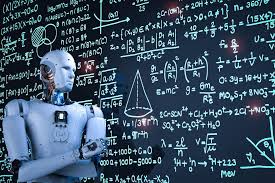
Recently, my daughter shared details of her trip as an Amazon employee to Las Vegas to attend a tech conference. 8700 people from all over the world gathered there for the conference—its major theme, Artificial Intelligence.

And why not! Artificial Intelligence continues to multiply and accelerate its presence, foreshadowing a brave new world.

Robots today weld auto parts tirelessly.

Tomorrow’s world of driverless cars is imminent.

No more truck drivers.

Or taxi drivers either.

You get on your plane. It hasn’t a pilot.

You’re in the emergency room. Within minutes, a medical database yields every minuscule of medical counsel ever assembled relevant to your illness.

Your subsequent surgery is performed by a tireless robot with steady hand.

Legal counsel is dispensed through a database that’s uncovers every precedent and resolution.

No need to gamble recklessly on Wall Street. A handy software app latent with market prognostication is at your disposal.

Several months ago I read Martin Ford’s mesmerizing Rise of the Robots: Technology And the Threat of a Jobless Future. Selected as Business Book of the Year (2015), this is a book you shouldn’t miss, since it’s not a question of if, but when and how Artificial Intelligence (AI) will arbitrate our everyday world, sweeping into oblivion a ride range of jobs, not merely those of the unskilled or workers engaged in manufacturing (already a dying breed), but even those of highly skilled professionals, whose jobs have long been dubbed impervious to the economics of the marketplace or Wall Street tremors.

Ford is a guy mustering credibility, having twenty-five years of experience designing computers and creating software with prodigious expertise on the economic impacting of innovative technology on the marketplace (see his The Lights in the Tunnel: Automation, Accelerating Technology, and the Economy of the Future).

But just what is Artifical Intelligence?

At the bottomlime, we’re talking about the ability of computers to perform tasks traditionally relegated to human beings. Remember world champion chess player Garry Kasparov, defeated by a supercomputer in 1997 in a six game match? Prior to the match, Kasparov had boasted, “l never lost in my life.”

We’ve seen technical innovation before and its fallout. Think agriculture and the impacting of mechanization and bio-technology. At the birth of our nation, with a 3 million population, 90% of us farmed. Today, with some 325 million, just 2% of us do. We got through that revolution because new jobs were created to which we could transition.

In our modern era, we’ve likewise welcomed technological innovation as a harbinger of jobs, frequently at high wages, just for the asking as in our auto and steel plants of the early 1950s.

But then came automation, insidiously gnawing at the fabric of middle class prosperity. You got greater production, yes, but with fewer workers across the board, a trend that’s accelerating.

Net result—the job market hasn’t been able to keep up with a growing work force as population increases, exacerbated still further by rising numbers of former employees joining the queue.

As Ford points out, our present economy needs to create a million new jobs annually just to keep up. Dismally, however, we’re currently running a ten million job deficit as of the first decade of our new century.

Up to now, college educated workers, a good number with advanced degrees and professional portfolios, haven’t felt threatened. As had been vouched many times, the fallout overwhelmingly impacted unskilled, poorly educated workers. Up to now, the axiom’s been, “Go to college and make your future!”, a truism no longer valid, given the volatility of today’s workplace.

As Ford astutely observes, “While lower-skill occupations will no doubt continue to be affected, a great many college-educated white-collar workers are going to discover that their jobs, too, are targeted for elimination as software automation and predictive algorithms advance rapidly in capability.”

Jobs even in medicine may go the way of the pick and shovel as radiologists, for example, find themselves outsmarted by robots scanning images in mega seconds. While today’s radiologists are highly skilled technicians requiring up to 13-years post-high school, they’ll fall by the wayside just like Kasparov in a relative few years.

Meanwhile, many lawyers and paralegals, in an already crowded profession, are discovering that software has replaced them. Corporations, formerly engaged in litigation, traditionally dedicated untold hours to turning-up internal documents establishing precedent, which then had to be shared with the opposing side as part of the discovery process. E-discovery software, however, can sift documents including emails, for relevancy in an eye blink.

In the business world, accountants have been moved to the margins. Today, for example, you and I can resort to software to do our own bookkeeping quickly and accurately.

As for taxes, I just insert my TurboTax CD into my computer drive and, bingo, I can get my return out in an hour max, file it electronically, Fed or State, and
pay taxes due or request a refund. Frosting on the cake, just $45 versus the $300 I shelled out last time I visited the local H & R Block.

Planning a career in journalism? Not so fast! Machines can now generate news stories using raw data with tools such as Quill platform. Research and correlation can be performed quickly, helping to eliminate fake news. (https://www.techemergence.com/automated-journalism-applications/)

How do you prepare your kids for such a world? The traditional resort has been getting a college degree, desirably in a STEM area, enhancing employment opportunity and long-term security.

If you think getting a degree in engineering or computer science can save you, think again. The number of graduates in those fields exceeds by 50% the number of jobs currently available, one big reason being the off-shoring of corporate computer needs. Call up Express Scripts as I’ve had to on several occasions recently and you get India.

Shockingly, some 50% of today’s college grads end up in jobs that really don’t call for a college degree. Many can’t find work at all and live at home with Mom and Dad.

Unemployment or under-employment is rampant among today’s college graduates, with up to 50% of students affected. Since fewer job opportunities exist, college graduates are increasingly showing-up in unskilled areas like sales or even fast-food restaurants, replacing non-graduates. All of us know such young people, perhaps even our own.

The one exception to all of this may be in health care, where a substantial need for physicians will exist to serve a growing population, among them the elderly. The problem is that many doctors shun the rural areas or family medicine. Today’s graduates prefer big bucks specialization, given the considerable expense incurred to get their M.D.

At the same time, problems remain in today’s health care industry. Many health job opportunities are in home care, comprising the largest portion of service jobs, replacing manufacturing as today’s leading employment sector. The sad truth is that home care workers currently average a paltry $20,000 a year, though this could change if the several entities comprising the service sector unionized.

Education, which has been largely immune to the newer trends imposed by AI, is undergoing transition, with online courses proliferating, reducing the need for professors and campus costs, etc.

As I write, I’m enrolled in an edX course, a consortium of elite institutions. I can tell you they’re first rate. Mine is from Harvard and for a small fee I can earn a certificate to up my resume. All of this is part of a burgeoning educational movement called MOOCs.

Their pragmatic success ultimately lies in whether employers will ultimately give them regard. They don’t replace degrees.

All of which may be moot. Short on revenue, an increasing number of universities are offering actual online degree programs as a way of increasing revenue, reducing overhead, and just plain keeping their heads above water, something that Ford doesn’t touch upon. If this catches on, America´s campuses will be severely impacted. With fewer students, you´ll have fewer faculty and administrators.

Case in point, I used to supplement my income by teaching courses on Saturdays, morning and afternoons, for twenty-one years at the local community college. When I started, I’d average nearly 30 per class. Then came the web and online courses, making it more convenient for students to study at home and on their own time. By the end of my tenure, I could barely get the ten student minimum. Ultimately, we cancelled afternoon sessions.

For the community college faculty at large, they shortly were opting to teach online classes to replace their own depleted campus courses. This led to replacing a good number of adjunct faculty, some with Ph. Ds like myself and needing these jobs far more than I did. I believe that digitalization of higher education will not only continue, but increase, conceivably becoming the norm.

“Virtually every industry in existence is likely to become less labor-intensive as new technology is assimilated into business models,” Ford writes.

Nationally, it will polarize us into fractious entities of haves and have nots, privileged and resentful. Our last election results mark only the opening round of this polarization and civic strife.

The pot boils over even more when you add the triple threat of global warming, diminished resources, and aging population to downward consumer spending.

How do you compete with robots anyway? They always show up for work, don’t take breaks, vacations or sick leaves, haven’t any need for a paycheck or retirement benefits, don’t unionize, and will work for you twenty-four hours a day without complaint.

Tesla has a new plant in Fremont, CA. 160 robots produce 400 cars a week. Hard to beat!

But there’s a good side to some of this. While low cost, off shore entities have drained our manufacturing sector into virtual extinction, a good many of these jobs are returning to us, simply because AI has sharply curtailed production costs.

For example, textile and apparel exports rose 37% just between 2009 and 2012, amounting to 23 billon (New York Times, 9/20/2013).

Yet what’s good for the goose isn’t good for the gander. Increasingly, even these returning jobs don’t need you and me!

Despite our recovery from the 2008 economy bust, most new jobs are low-paying service jobs, replacing millions of middle-class jobs wiped out in the fallout. Many of these jobs are in retail or fast food entities, subject to increasing automation in the future through robotics and self-servicing. Going to a $15 an hour minimum wage only speeds up the process.

Or let’s put it another way. In 1998, the U.S. business sector produced 194 billion hours of total labor. By 2013, the value of the business sector economy, adjusted for inflation, came to $3.5 trillion, or a 42% increase in output. By the same token, just 194 billion hours (the same as in 1998) were required to yield that increase.

In short, no job growth took place in the fifteen subsequent years, despite a 40 million increase in population!

Along these lines, Oxford researchers have projected that approximately 47% of current total employment, i. e., 64 million jobs, will potentially disappear through automation over the next decade or two.

Fewer job opportunities at meaningful wages can only exaggerate class alienation with a plutocracy of the wealthy, lessen consumer spending, and downgrade the quality of family life. Further, it poses a gargantuan challenge to a growing elderly population in a world of accelerating health costs, including for Medicare, along with declines in social security revenues and retirement provisions increasingly subject to corporate and state ransacking to reduce costs.

Ford thinks that in light of these sobering facts, we may need to resort to a basic, or guaranteed income, for everyone. Finland has already begun the experiment.

The money, of course, would have to come via an uprooting of our traditional way of taxation, perhaps much higher taxation of high income. Of course, the recently passed new Republican tax bill moves in the opposite direction in regard to corporate income and the 1% at the top owning most of the wealth. Out of necessity, we may resort to something like a value added tax.

As another way out, several states like California are considering tax measures affecting deep pocketed corporations implementing technology that replaces workers. If they accelerate profits by replacing workers with automation, then that profit residual will be taxed and redistributed to the needy.

Meanwhile, AI continues to advance prodigiously, with Silicon America committed to its imposition—ironically in a race among themselves (i.e., Google, Apple, and Amazon) as to who will get there first and best.

Ford says that AI is likewise proving indispensable to military intelligence and, ominously, to authoritarian regimes bent on controlling dissent through surveillance.

It’s even conceivable that our future, or at least that of the next generation, will feature a leap to AGI, or artificial general intelligence, i. e., computer intelligence dwarfing human intellect, with still further inner directed incremental advances enabling these machines to improve their capabilities, perhaps writing their own software, or implementing evolutional programming to enhance their design in what we might call recursive improvement. Ultimately, these machines would not only be smart, but get ever smarter.

Chillingly, we may be headed for “singularity,” a term borrowed from astrophysics to depict in its new context an artificial intelligence largess replacing humans. In fact, machines and man may even merge, fulfilling many a science fiction scenario.

In 2014, Cambridge physicist Stephen Hawking wrote that the advent of AGI in which machines could think on their own “would be the biggest event in human history, machines capable of outsmarting financial markets, out-inventing human researchers, out-maneuvering human leaders, and developing weapons we cannot even understand.”

All of this in a world facing the exponential threat of global warming, increasing population, diminished earth resources, declining employment opportunity. Putting off dealing with climate change to meet our immediate needs will eventually serve only to exasperate the human crisis. Unfortunately, that’s the way things are breaking now.

So where do we go from here?

While Ford may give us the sobering details contributing to our demise, he’s wanting on long term solutions, save for looking seriously at a guaranteed base income, which of itself, only adumbrates our dystopian future.

Even here, he doesn’t assess how government at all levels can exact revenue, not only for a guaranteed income, but for other pervasive needs such as refurbishing infrastructure, combatting global warming, maintaining already costly entitlement outlays, etc., from an obviously declining tax base. Imposing high taxation on corporations and individuals can only go so far without potentially harmful reverberations.

We might have options. Take offshoring, for example. Ultimately, even these bastions of virtual immigration, India and China, are likely to face automation. Nevertheless, an estimated 130 million of the smartest of the smartest will remain with the help of AI tools to perform informational tasks for Western firms at reduced cost. That is, unless we take restrictive measures.

The social-political implications of artificial intelligence are staggering. As Arend Hintz, assistant professor of computer science and engineering at Michigan State University comments, “In our current system, automation pushes people out of jobs, making the people who own the machines richer and everyone else poorer.” (Scientific American, July !4, 2017).

Again, it doesn’t suffice to exfoliate on the emerging social displacement via a barrage of stats without exploring preventative measures to offset the monopoly of artificial intelligence by a relative few controlling production to the demise of the many.

In short, can democracy survive in tomorrow’s world?

Then too, experts have shared their plausible anxieties as to potential malevolent applications of this technology, given human history and the misuse of power.

If artificial intelligence is itself a by-product of human induced evolution, can we impute a capacity for the ethical in this machinery destined to replace human cognition? We might then get a level playing field.

Even then, this implies cooperation among all earth’s people, something that would surely be an anomaly when the United Nations hasn’t succeeded in accomplishing this. What could happen is simply, and dreadfully, machines in the image of man warring on one another.

When you come down to it, the problem isn’t really artificial intelligence, but what humans might do with it.

But whatever. If you can bring yourself to read this book without being pummeled into depression, then this book is for you, enlightening as it is sobering.

I suggest you read it twice.
—rj
Alzheimer Breakthrough? Bredeson’s The End of Alzheimer’s: The First Program to Prevent and Reverse Cognitive Decline

Death has many doorways. Yet most of us go by way of heart disease, cancer, or respiratory disease; in fact, 50%.

The good thing is that we can preempt these diseases, if not reverse them through lifestyle changes.

Not so when it comes to Alzheimer’s disease, ranking sixth for causes of mortality. Shockingly prevalent, some 5.4 million Americans have it, with 200,000 of them below the age of sixty-five. All of them will die.

Estimates have it that this number will swell to 14 million by 2050.

Cost wise, treating dementia comes to a mind-blowing $250 billion annually .

Alzheimer’s differs from other types of dementia in that ultimately you become totally unable to perform normal body functions and require round the clock monitoring. You also lose long and short term memory. Alzheimer patients live in an eternal present. There is neither a past or future.

Aside from stroke, it may consequently be the illness we fear most.

But it could be that a breakthrough has appeared, thanks to the diligent clinical research of neurologist Dr. Dale Bredeson at UCLA, who has researched the disease for 30 years. For the first time, we have evidence that those strictly heeding his protocol can both prevent and even reverse early Alzheimer’s. The proof lies in some 200 plus survivors of mild cognitive impairment (MCI) and early stage Alzheimer’s who’ve experienced either remission or reversal.

Bredeson details his research in his just published (2017) The End of Alzheimer’s: The First Program to End and Reverse Cognitive Decline.  When I learned that Maria Shriver enthusiastically endorsed the book, along with several respected neurologists on the forefront of Alzheimer research, I was hooked.

In September, I lost my sister, though probably due to vascular dementia, not Alzheimer’s. Additionally, I had already become more sensitive as an older person to the the plight of those confronting cognitive decline in either themselves or their loved ones and, of course, my own potential fate in growing older.

I’ve now read the book, difficult going in some places because of the underlying genetic and chemical factors involved, but worth your time, though Bredeson says you can skip such chapters if you want. I read the entire book in three days, virtually mesmerized.

Presently, there are four principal drugs used to treat Alzheimer’s. At best, while perhaps relieving confusion or memory loss, they’re ineffectual in halting the ultimate ravages of this progressive illness.

Bredeson attributes this to the current medical paradigm of treating Alzheimer’s as a single disease rather than the consequence of several contributing causes. Almost always, Alzheimer’s is described as simply a build-up of beta-amyloid and tau proteins, resulting in abnormal plaque deposits that damage brain cells and promote consequent memory loss. Find the right pharmaceutical formula—and bingo!—you’ll slow or prevent the disease.

As to what causes the excessive amyloid/tau accretion, conjectures exist, but none of them validated. As with virtually all contemporary medicine, we treat the symptoms rather than cause.

Bredeson proposes that Alzheimer’s is primarily a response to inflammatory insults (e.g., infections, or trans fats, sub-optimal nutrients, trophic factors and/or hormone levels, toxic compounds including bio-toxins such as those from mole or bacteria), any and all of which contribute to an imbalance between reorganization of older and newer synapses, the latter not sufficiently produced to replace the former synapses and enhance healthy neuron molecule production.

Bredeson further contends there are three subtypes of Alzheimer’s inflammatory response initiated principally by the common genetic variable ApoE4, each requiring its own treatment protocol.

75 million Americans carry a single copy of ApoE4, giving them a 30 percent risk for the disease. If you have two copies of the ApoE4, one from each of your parents, you have a substantially higher than 50 percent risk for developing Alzheimer’s. Presently, that’s 7 million of us.

Symptoms of Alzheimer’s usually appear when you’re in your sixties or seventies, traceable in blood-work that identifies your subtype, requiring a specific treatment protocol, though we know Alzheimer’s can sometimes occur earlier.

Obviously, genetic evaluation is required as a starting point in treatment. Catching Alzheimer’s in its early stage, especially when asymptomatic, may halt or slow its progression. Simply following the present medical scenario of trying to reduce amyloid-beta production is ineffectual unless its inducers are eliminated.

Everyone 45 and up should undergo a “cognoscopy,” or genetic and blood work-ups, Bredeson contends.

Bredeson’s treatment formula, called ReCODE, is potentially expensive, requiring in addition to the usual lifestyle formulae of a healthy diet, sufficient sleep, exercise,  elimination of stress, numerous supplements, and brain exercise. In short, such treatment would seemingly exclude those with marginal income.

You may also find it difficult to locate a ReCODE physician in your area, although word is spreading and more physicians are practicing it.

Bredeson’s ketogenic diet recommendation, not the previously reported Mediterranean diet, may likewise prove challenging, if not unpalatable for many, requiring substantially reduced carbohydrate intake, replaced by healthy fats. No sweets or grains. It also includes twelve hour fasting daily. Meat choices should derive from grass-fed beef and free-range chickens. Be careful about mercury laden fish like tuna. Alaska salmon is your better choice.

Chapters 8-9 detail 36 factors that individually or collectively may induce Alzheimer’s. Eliminating these is essential and requires discipline, which perhaps many, even if they can afford treatment, will find difficult. You simply can’t cheat. Alzheimer’s doesn’t take holidays.

Bredeson also gives readers sample programs that two of his patients with mild cognitive impairment have pursued successfully, with the caveat that the regimen must be life-long.

Refreshingly cautious, Bredeson isn’t proposing he’s actually found a cure, but rather that those in Alzheimer’s early stages heeding his research-based protocol faithfully have proven to be successful thus far. Depart from the regimen in even minor aspects and you’ll retrogress.

As he’s commented elsewhere, “The longest we have a person on the program is four and a half years. We’ve not had a single example yet out of hundreds in which someone has gone on the program, gotten better, stayed on the program, and then gotten worse.”

Leonard Hood, M.D., Ph. D, National Medal of Science recipient, writes that “Dr. Bredeson has provided enormous hope for the heretofore intractable clinical problem of Alzheimer’s. Bredeson’s early studies suggest that this approach can halt and in many cases reverse early Alzheimer’s.”

This is good news!
—rj

Does the Qur’an Preach Violence?

Yesterday came news of the slaughter of up to 300 Sufi worshippers exiting a mosque in Egypt’s Sinai at the close of prayer, among them, twenty-seven children. It isn’t the first time such a murderous attack on unarmed civilians, even fellow Muslims, has occurred in Egypt and elsewhere.

Increasingly, Islamic violence has spread to Europe and North America as well. Thanks to Carnegie Mellon’s interactive platform, EarthTimeLapse, drawing on the Global Terrorism Database, we can even precisely map both its locale and frequency over the last 20-years.

Last year, 2016, Islamic extremists killed 269 people across Europe. In America, we’ve largely escaped since 9/11, apart from several sporadic incidents, the latest occurring in NYC when Uzbekistan immigrant Sayfullo Habibullaevic Saipov drove a rented truck into a crowded bike lane in lower Manhattan, killing eight on October 31, 2017.

All of this pales, however, when we include the Middle East and Africa, where 19,121 died last year, according to the Global Terrorist Data project, nearly all of them Muslim, which we’re likely to miss in our frequent ethnocentrism.

Consequently, it’s not unreasonable that many have come to associate Islam, “the religion of peace,” with violence. Critics call it Islamophobia.

Feeding into the public’s unease have been the likes of Franklin Graham, Robert Spencer and Pamela Geller, who have vociferously argued that Islam is intrinsically disposed to violence, both in its long history and the present, posing an insidious threat to our nation’s future, given their rising immigration numbers, high birth levels, and alleged intolerance.

And, of course, there’s President Trump who has seemingly bought into the nation’s anxiety, perhaps for political advantage.

I would personally like to defuse my own unease that erupts with almost daily news bulletins announcing some new, malicious violence somewhere on our troubled planet. Hopefully, its source isn’t Islam, but almost always it is.

I studied in France at the University of Dijon in the summer of 1985 and my best memories are of the friendships I shared with Muslims from Morocco, Iraq, Jordan, Iran, Syria and Israel. What won their affection was my sympathy for the Palestinians in their pursuit of nationhood, something they found incongruous, what with the stereotype Muslims often have of Americans, given our country’s traditional support for Israel.

We never quarreled. In fact, religion never came up at all.

At home, while I haven’t had much contact with Muslims, I’ve met several who treated me with kindness when I’ve met them in stores, allowing me to precede them in a line or fetching me a grocery cart.

My experience of Muslim reciprocal kindness tells me that like most human beings, their heart is good and wants to share its goodness, and that their faith has been grievously  maligned.

Now comes Gary Will’s new book, What the Qur’an Meant And Why It Matters (Viking,2017). This a crucial book, since Muslim proponents of terrorism trace what we now know as jihad back to the Qur’an, which they interpret literally, devoid of context or cultural antecedents, doing what fundamentalists generally do whatever their proclaimed religion.

Taken out of context, the Qur’an can indeed be disturbing reading, but so can the Old Testament with its advocacy of genocide towards those of different faith and culture like the Moabites. Wills, on the other hand, persuasively argues that the Qur’an is utterly incompatible with the barbaric atrocities committed in its name by Isis, Al Qaeda, Boko Haram, the Taliban, and Al-shabaab.

Wills points out, for example, that the Qur’an’s employment of  jihad “striving,” i.e.,”zeal,” and sharia don’t resonate their original nuance for these groups, and that jihad, for example, can suggest “holy war” in modern Arabic.

As for “sharia” with its modern association with complex religious laws, it occurs only once in the Qur’an (Q.45:18) and simply means “the right path.” In fact, no complex system of religious laws even existed in the Prophet’s lifetime.

In Wills’ view, the Qur’an has been grossly abused by militant Muslims, its text supporting peaceable co-existence with Judaism and Christianity and recognizing Adam, Noah, Abraham, Moses and Jesus as antecedent prophets to the preeminent  prophet, Mohammed.

The Qur’an does allow for defensive warfare against militant aggressors opposed to monotheism: “If God did not refuel some people by means of others, many monasteries, churches, synagogues, and mosques, where God’s name is much invoked, would have been destroyed (Q. 22:40).

The one liability for Wills is the Qur’an’s seeming denigration of women as in Q. 4:34: “If you fear bad conduct from your wives, advise them, then ignore them in bed, then strike them. If they obey you, you have no right to act against them.”

By the same token, the Qur’an doesn’t assign blame to Eve, who is unnamed, for the transgression in the garden, unlike the Old Testament.

While Wills’ scholarship seems impeccable in its fairness and exactitude, the problem of the Qur’an’s grievously distorted message and misappropriation by radical Islamic extremists and many Western critics, remains. Good as Wills’ book is, it will prove no more effectual in promoting reconciliation with all faiths than a seed by itelf can produce a harvest.

Islam needs to undergo theological and cultural reform, as occurred with Judaism and Christianity to curtail radical extremism.  Though there are reformers trying to do just that such as Maajid Nawaz, Asra Nomani, and Irshad Manji, they’re all too few and face vehement opposition, if not enmity, among purists and entrenched theocracies like Iran. Islam isn’t merely a faith but a total way of life in which change, if any occurs, will only come grudgingly.

What this book can do for those who read it is expurgate the vast majority of the world’s one billion Muslims, whether Sunni or Shiite, from the shibboleth of violence and intolerance so often impugning both the Qur’an and its practice as a consequence of an extremist minority. After all, Muslims have been by far, terrorism’s victims as yesterday’s Sufi massacre attests.

—rj

Elegy for Iris: A Review

“We can only learn to love by loving.” —Iris Murdoch

I’ve just read John Bayley’s Elegy for Iris, his moving memoir of his wife, renowned British novelist Iris Murdoch—26 novels in addition to nonfiction—who succumbed to Alzheimer’s in 1999 at 79.

How does something like this happen? We’re told that we may ward off Alzheimer’s scourge by exercising our brains via mental pursuits like puzzles, word games, picking-up a language, trolling in math, yet here’s this woman of scintillating brilliance, winner of the Booker Prize, working omnivorously at her craft, yet ultimately pummeled by this dread disease. The truth is that the cards were virtually stacked against her, given her mother’s earlier Alzheimer’s.

Lasting forty-three years, their marriage was unconventional. Iris was bi-sexual and had liaisons throughout their marriage. Age or gender didn’t matter. She was attracted to robust intellectuals, not least, her distinguished husband highly regarded for his literary criticism and as an academic at St. Catherine’s College, Oxford.

But does it matter anyway? That eccentricity often goes hand-in-glove with artistry is a given. Besides, an author’s sexual life ranks in the lower tier when it comes to our reading choices. Think Dickens, George Eliot, Sartre, and others.

For some of us, however, we retain curiosity about the life behind the work when it comes to those who seemingly “hook” us with their artistry. In this, we’re probably no different from those devotees of Hollywood celebs, rampaging People magazine and the like in fervent quest for intimacy. We even have our dedicated websites.

My own practice when I come upon an established writer that I really like is one of saturation.   Generally, I’ll read maybe three novels and two biographies. This helps me see writers in context and provides a ground-base for properly appreciating their work. I had just read Murdoch’s Booker Award novel, The Sea, O the Sea (1984).

Bayley received sharp criticism in some quarters for publishing his memoir in 1998. Iris was still alive, yet Bayley proved unsparing in disclosing Murdoch’s private life without her consent or ability for rebuttal. Muriel Spark described the elegy as “sordid.”

On the contrary, Bayley felt that the Elegy honored Iris and the vast majority of readers seem to agree. We learn something about marriage, in this case, an anomaly that worked for Iris and John as opposed to the traditional axiom of not taking your partner for granted. For John and Iris, taking each other for granted took on a quotidian staple, emerging as a refrain in the Elegy.

By this, the couple meant not clinging to one’s partner or controlling, but allowing them independence to embrace the effulgence of their identity: “Apartness in marriage is a state of love and not a function of difference or preference or practicality,” Bayley writes.

As columnist Graeme Archer perceptively observes in the Telegraph (2015), “Only when you know without question that you are wanted, no matter how you behave, no matter what you say; that you’ll be together till death, etc – this is when you know it’s love.”

The Elegy tells of their early romance, their shared living habits, common interests, and writing practices. What sets the book apart is its honest wrestlings in living with someone you love, in this instance, a woman of cerebral brilliance now unable to remember her friends, achievements, and their life experiences as a couple, reduced to minimal articulation, daily angst, and ubiquitous dependence by chronic illness. Bayley fed, clothed, and “hosed her down.”

A forthright narrator, Bayley castigates himself for his sometimes loss of patience and scolding, the Elegy emerging as a testimony of love’s transcendence over the vagaries that time with its contingencies imposes on us mortal creatures, fallible in our humanity, yet graced with the capacity to not merely endure, but to overcome and love steadfastly.

An international best seller, it would provide along with Bayley’s subsequent book, Iris and her friends, the basis for the 2001 film, Iris, garnering three academy award nominations.

Writing in the Providence Sunday Observer, critic Tom D’Evelyn wrote, “Elegy for Iris has already become a classic memoir and a remedy for modern love. Read it and, if you dare, give, it to someone you love.”

—rj

My hummingbird friends

My hummingbird friends descend upon my garden landscape each spring, or like clockwork with the advent of April, having journeyed more than a thousand miles from their winter feeding grounds to the south or in Mexico.
They stay with me, these ruby throated aerial acrobats, until the first week of October when days of shortened light signal them to begin their return journey.

Often less than 6 inches in length, they’re among the most intrepid of birds, aggressive even among their own, and quite capable of speeds up to 60 mph.

Occasionally, I sometimes think of them as analogous to helicopters, able to both hover and fly backwards.

While they’re with me, I try to help them find food by providing a red feeder for them filled with my home brew of four parts water to one part sugar.

I last saw my sojourners on October 2, darting their bills vehemently into their liquid brew fattening themselves for their exodus to warmer feeding grounds.

Like the falling leaves, their departure is one of nature’s ritual markers of coming frost and winter’s inevitability.

I worry about them.

Climate change has resulted in flowering plants now often blooming up to three weeks before their arrival to rest and feed in an area, before resuming their spring journey north, meaning a loss of nectar and the risk of starvation.

And then there’s that constant of diminishing habitat, pesticides, and invasive species.

Although Spring brings joy with its warming temperatures and a regenerating landscape, our world around us is rapidly entering into a new phase and perhaps some future spring they, like butterflies and bees, will no longer be part of that spring, inflicting a hovering silence with their absence..

Meanwhile, I hope to supplement their well-being while they’re with me, adding plants like penstemon, cardinal flower, bee balm, coralbell, and scarlet sage to next year’s garden.

Their departure always saddens me, not helped by increasing somber gray skies, brisk temperatures, and a waning landscape.

But then, such are nature’s rhythms, and even our own, that every beginning has its ending, with wisdom teaching us to value each moment in a cosmos of impermanence.


The Left’s War on Free Speech

But what was strange was that although Goldstein was hated and despised by everybody, although every day and a thousand times a day, on platforms, on the telescreen, in newspapers, in books, his theories were refuted, smashed, ridiculed, held up to the general gaze for the pitiful rubbish that they were — in spite of all this, his influence never seemed to grow less. –from Orwell’s 1984.

Thank goodness for the First Amendment that grants us the right to free speech in America, and yet each year books are banned, censored or challenged simply because they express views contrary to usually a political, religious or ethnic constituency.

Just today comes news that Muslim news website The Muslim Vibe is demanding that Amazon pull Raheem Kassam’s pending book, No Go Zones: How Sharia Law is Coming to a Neighborhood Near You from its inventory, calling it “Islamophobic hate.”

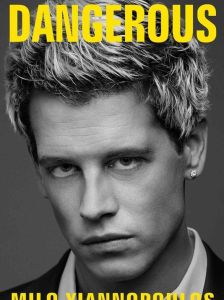
If you tell me not to read a book I promise you I’ll read it. That’s why I just read conservative media troll Milo Yiannopoulis’ best selling Dangerous, a book he had to self publish because Simon and Schuster cowered after a $250,000 advance, withdrawing its publication following vociferous threats of the Chicago Review of Books not to review any more of their books, then bullied by a pile-on of 100 writers who said they’d find another publisher if Simon and Schuster followed through.

Normally, we’d associate book banning and repressions of free speech with the extreme right. Think Hitler and the infamous public conflagration of books on May 10, 1933 shortly after his election to Chancelor.

Or Chile in 1973 when the fascist Pinochet government burned hundreds of books.

Unfortunately, limitations on free speech have taken a ubiquitous turn in America, with the Left and many progressives championing repression of conservatives whom they’re fond of labeling as hate mongers. Ironically, the arena for their incendiary assaults are college campuses, supposedly citadels of free inquiry.

On February 1, 2017, Milo had been scheduled for an interview by conservative political commentator Anne Coulter on the Berkeley campus of the University of California, when the university reneged following a gathering of 1500 protestors outside the Student Union building, some dressed in black and wearing masks, throwing rocks at police, smashing windows, and physically assaulting people before moving on to vandalize downtown Berkeley, resulting an estimated $300,000 damage.

How weird for a campus famous for the genesis of the Leftist free speech movement of the 1960s.

Today, the tables have turned and it’s conservatism that’s the counter-culture, the Left its pursuers, given to violence, censorship, ridicule, and ostracism. Media has lent a helping hand, often by sheer omission of news events counter to liberals and progressives, or pursuing advocacy journalism.

Nowadays, even moderate conservative intellectual columnists such as George Will find themselves banned from print or college campuses.

Banning extends even to Berkeley radio station KPFA, which cancelled its planned event with distinguished Oxford scientist and fervent atheist, Richard Dawkins, after receiving complaints alleging hate speech targeting Muslims.

But as Dawkins subsequently explained afterwards, “I have indeed strongly condemned the misogyny, homophobia, and violence of Islamism, of which Muslim–particularly Muslim women–are the prime victims. I make no apologies for denouncing those oppressive cruelties, and I will continue to do so. Why do you give Islam a free pass?  Why is it fine to criticize Christianity but not Islam?”  Thus far, KPFA hasn’t responded.

I won’t go into what happened to Charles Monk, author of the controversial The Bell Curve, when he was met with violence at Middlebury College in Vermont.

I can’t say I’m a devotee of Milo; for example, he adores Donald Trump, who’s anathema to me. I’m for environmentalism, women’s rights, gay rights, single payer health care, increased taxation of the wealthy, etc., none of which Milo’s keen about.

Truth be told, however, Milo’s iniquities have been grossly exaggerated. He’s been wrongly, and repeatedly associated with the nationalist alt.right which media outlets like CNN just can’t seem to get right.  Funny, but both Left and right political wings find him odious.

He’s been called a Nazi and Fascist, deemed Islamophobic, transphobic, white supremacist, and even a pedophile advocate, but better read his book first, since politics can be a very dirty game, but then I don’t think I have to tell you that.

Anyway, we do have the First Amendment with its affirmation of five fundamental freedoms, among them, free speech.

Me, I’m sympathetic when Milo writes that “one day, while attending Manchester I was told I couldn’t read Atlas Shrugged, I thought, this is poppycock. Fuck anyone who tells me what I can and cannot read. I finished it three days later.”

Milo’s early experience with would-be censorship brought back a painful memory of how as a 16-year old, I had been reading Dostoevsky’s Crime and Punishment, only to be told by my adult evangelical cousin and guardian that I was indulging in trash. Two weeks later, I was shipped back to my violent, alcoholic father.

Maybe why the Left really doesn’t want you to read or hear Milo is they fear his persuasive verbiage, and just maybe they should. I think Milo’s scores when he says Democrats forfeited victory in 2016 because they focused more on identity politics than everyday workers in flyover America, forgetting their traditional blue collar ties.

You can’t simply drive him off the stage as some kind of dimwit. Nimble in his velocity, delivering repeated right uppercuts, he grievously shreds stereotypical notions of the politics of a man with a Jewish mother and out-of-the closet gay with a black lover. The bottomline is that Milo jars you into awareness there’s another viewpoint to be had.

I taught argumentative writing on college campuses for more than three decades, always endeavoring to inculcate in my students the rudiments of sound persuasion, listening to the opposition’s point of view, subsequently refuting it point by point with both sound reasoning and empirical evidence. You don’t win a boxing bout by refusing to exchange punches.

I bring this up because I want to practice what I’ve preached to my students. In 2012, Jeremy Waldron, a distinguished scholar and professor of law and philosophy at NYU, penned his landmark book for the Left, The Limits of Hate Speech, arguing that it’s wrong to allow speech that denigrates the dignity of minorities. It’s after all, contributory to social alienation, or tool to ostracism.

But though this view is obviously humane, what often falls under the canopy of Leftist notions of hate speech is simply a refusal to acknowledge the shibboleths of identity politics, better known as political correctness. I’ve already noted its predilection to insult and violence, ostracism and shaming. Are conservatives less deserving of dignified assessment? It’s not a one way street.

In 2015, a guest speaker at a Des Moines high school told his audience, “I don’t agree that you, when you become students at colleges, you have to be coddled and protected from different points of view…You shouldn’t silence them by saying, ‘You can’t come because I’m too sensitive to hear what you have to say.’ That’s not the way we learn either.”  The speaker was President Obama.

I tire of preachments about being a white male, as though being a white male confers privilege.

Or that white males are the seminal source of systemic evil.

Or Yale students moaning that they have to read the literary works of dead white men. Take care, Shakespeare, Wordsworth and Dickens!

Why isn’t this racism, seeing race has been brought into the equation?

Ask the impoverished white miners in my state of Kentucky or unemployed steelworkers in Ohio or drought-stricken farmers in Kansas about white privilege!

And you wonder how Democrats lost the election?

Waldron says we shouldn’t get hung up on the First Amendment. Well, he’s a New Zealander. I think the First Amendment encapsulates what ideally America is all about. I shudder to think of an America without it.

And then there’s the horrid history of banning hugely associated with totalitarian regimes like today’s Republic of China, with their self-appointed oligarchy prescribed tenets, and harsh penalization of violators.

You and I aren’t bugs on the ground, but individuals endowed with reasoning capacity. Treat us as such. Respect our right to think for ourselves. There’s your human dignity!

Historically, oppressed minorities haven’t found emancipation through banning the raucous, despicable sentiments of their oppressors, but through reasoned discourse and legislative enactment.

But as I’ve said, many universities have become increasingly radicalized and intolerant of conservatives, reneging on liberal values that encourage intellectual freedom and toleration.

As I write, the exemplar of professor Jordan Peterson sweeps into my purview. Seems he’s been refusing to buckle before the identity politics crowd in not using gender neutral pronouns. It’s his way of protesting Bill C-16 introduced in the Canadian parliament last May as an amendment to the Human Rights Act, calling for the prohibition of language specifying “gender identity” and “gender expression” and a human resource initiative by the university. For Peterson, it all comes down to a freedom of speech issue.

Here at home, GPS host Fared Zakakria recently commented that “American universities these days seem to be committed to every kind of diversity except intellectual diversity. Conservative voices and views, already a besieged minority, are being silenced entirely. Freedom of speech is not just for warm, fuzzy ideas that we find comfortable. It’s for ideas that we find offensive.”

Among American universities, the University of Chicago gets it right:

The University of Chicago is an institution fully committed to the creation of knowledge across the spectrum of disciplines and professions, firm in its belief that a culture of intense inquiry and informed argument generates lasting ideas, and that the members of its community have a responsibility both to challenge and to listen (Geoffrey R. Stone, Edward H. Levi Distinguished Service Professor of Law and former Provost of the University).

If you really think about it, people like Milo serve democracy well. As one of my favorites, John Stuart Mill, often called ‘the saint of rationalism,” pointed out in On Liberty,

In this age, the mere example of non-conformity, the mere refusal to bend the knee to custom is itself a service. Precisely because the tyranny of opinion is such to make eccentricity a reproach, it is desirable. That is, few now dare to be eccentric, marks the chief danger of our time.

I won’t apologize for reading Milo. Like so many in the true liberal tradition, I am opposed to the banning of books.

–rj

MILO SAMPLINGS

I’m no hypocrite. I tell the truth, always. That’s my whole fucking problem.

The Left is filled with hypocrites who choose their targets of outrage based solely on their politics.

Young conservatives respond and libertarians respond to me because I say the things they wish they could.

Social taboos for the past fifteen years have all come from the progressive left. They’ re a ridiculously ugly army of scolds who wish to tell you how to behave. Libertarians and conservatives are the new counter-culture.

For the New Left, white men are the cultural counterpart to the economic bourgeoisie in classicist Marxist theory.

I’d prefer a world with no identity politics. I’d prefer we judged people according to reason, logic, and evidence instead of barmy left-wing theories about “oppressors.

Feminism describes itself merely as a movement for female equality. But it behaves like something quite different: a vindictive, spiteful, mean-spirited festival of man-hating.

In the two months following the election, social media analytics discovered more than 12,000 tweets calling for the death of Donald Trump–tweets that remain on the platform.


On First Looking Into Milford’s Savage Beauty: The Life of Edna St. Vincent Millay

Down, down, down into the darkness of the grave
Gently they go, the beautiful, the tender, the kind;
Quietly they go, the intelligent, the witty, the brave.
I know. But I do not approve. And I am not resigned. –Edna St. Vincent Millay


I recently finished Nancy Milford’s biography of poet Edna St. Vincent Millay (Savage Beauty: The Life of Edna St. Vincent Millay [2001]). While it has some limitations, it remains a seminal treatment of a poet who once enjoyed immense popularity, went out of fashion, but currently is enjoying a revival.

While the book’s scope is large, relying chiefly on letters, diaries, journals and interviews, important details are sometimes omitted and the organization of her massive material could be better integrated.

Unfortunately, Milford proceeds chronologically, transitioning in step-stone fashion from one source to another, interspersed with brief commentary. Instead of critical acumen, she offers readers laudatory generalizations, rendered in ejaculatory phrases.

Millay enjoyed a stunning popularity for a poet and playwright in the 1920s and 30s, her poetry collections selling in the thousands and providing a comfortable income. She was awarded a Pulitzer for her poetry in 1923.

She also barnstormed America several times. Appearing before sold-out audiences, she mesmerized them with her spectacular delivery, though outwardly it came unexpected, since there was always this latent fragility about her.  At just 5”1” and scarcely weighing a 100 pounds, she gave off the aura of a child, doll-like in silk gown.

Audiences were most certainly lured by her unconventional lifestyle. Rumored to be sexually promiscuous, Millay was bisexual and in an open marriage. She was also outspoken, a social activist, chain smoker and heavy drinker.  Not since Byron, with whom Millay was often compared, had a poet so widely captured the public’s imagination and curiosity. The poet of the Jazz Age had, in our contemporary idiom, taken on the likeness of a rock star.

Milford rightly dubs her the exemplum of the New Woman, which helps explain Milford’s motivation to undertake Millay’s biography, a poet who sadly lived to see her poetry eclipsed by the rise of the Modernist Poets (e.g., Pound, Eliot, Stevens, Williams and Auden).

Novelist and poet Thomas Hardy famously commented that there were only two great things in the United States, its skyscrapers and the poetry of Millay.

Millay had good luck on her side in her early years. Coming from an impoverished, dysfunctional family in Maine, she had submitted a poem called “Renascence” in a contest sponsored by Lyric Year. The poem would launch a career.

Wealthy arts patron Caroline B. Dow, who heard Millay recite the poem and play the piano, offered to financed her at Vassar College, which provided the milieu that ultimately fashioned Millay into a highly cultured woman.

Millay was forthright when asked why she thought her poetry was so popular:

I think people like my poetry because it’s mostly about things that anybody has experienced. Most of it is fairly simple for a person to understand. If you write about people who are in love, and about death, and nature, and the sea, thousands…understand…my poetry because it’s about emotions, about experience common to everybody.  Then, too, my images are homely, right out of the earth.

Today, Millay has largely been relegated to a footnote in literary history. I still have my copy of Norton’s Anthology of Modern Poetry. After a brief introduction, it features only two Millay poems, among them, her most famous quatrain that foreshadows the transience theme pervading her poetry:

My candle burns at both ends,
It will not last the night;
But ah, my foes, and oh, my friends—
It gives a lovely light.

Years ago, can’t remember where or when, I had read a critical review that dismissed Millay’s significance. Sadly, it had prejudiced me until I took an online course from Stanford in 2015, called Ten Pre-Modern Poems by Women, which included Millay.

Forced to wrestle with “Recuerdo”, outwardly a seemingly simple poem, I discovered a subtlety between the lines, alerting me that maybe this was a poet I needed to know better, and Milford has convinced me even more.

As for the Norton Anthology’s superficial inclusion of Millay, you can argue it’s merely anachronistic, not substantive, a bastion of male hegemony needing to be challenged and on good grounds.

But then Millay didn’t allow herself to be the tool of any polemic, including feminism:

A woman poet is not at all different from a man poet. She should write from the same kind of life, from the same kind of experience, and should be judged by the same standards. If she is unable to do this, then she should stop writing. A poet is a poet. The critics should estimate her work as such.

All of which makes me think of Derek Walcott, who died just hours ago.  He didn’t want to be thought of as a black poet, but as a Caribbean poet.

What would she say to a course like Stanford’s that excluded male poets, making for a segregated artistry?

Or to academic conferences for women writers only?

It’s the sort of thing the male dominated academy used to do in their condescension:

We are supposed to have won all the battles for our rights to be individuals, but in the arts women are still put in a class by themselves, and I resent it, as I have always rebelled against discriminations or limitations of a woman’s experience on account of her sex.

Millay’s candor, her directness, the ease with which her words flow in her letters and journals I greatly admire. She filled a room with her presence, made you feel important with her focus, proved prodigious in her love and compassion for family and the unfortunate.

As a former Vassar classmate expressed it, “She was a girl who wanted to be beautiful and well-liked and powerful in her class. And she set out to be just that.”

The sad truth of transcience, or impermanence, her poignant theme, remains:

To what purpose, April, do you return again?
Beauty is not enough. (“Spring”)

In all things, aesthetic conventions ultimately dissolve before new facets of engendering. Millay’s poetry straddles two worlds, that of the Victorian with its Romanticism, diction and metrics; and the modern with its strident subversion of conventional sensibilities and aesthetic maxims.

In reflecting upon her work, I think of  Second April (1921) as among her best work with its free verse and passionate sonnets. I would point readers to her “Spring” and “Ode to Silence” poems in particular.

For specifically feminist poetry, I’d recommend sonnets 8 and 18 in The Harp Weaver and Other Poems (1922). Reviewing The Harp Weaver, influential and accomplished poet Harriet Moore wrote, “How neatly she upsets the carefully built walls of convention which men have set up around their Ideal Women. {She is} perhaps the greatest woman poet since Sappho.”

Milford’s biography abruptly ends with Millay’s seemingly accidental death on October 28, 1958, at Steepletop, her beloved rural farm in Austerlitz, NY, nestled in the Berkshire foothills. In actuality, she had suffered a heart attack, precipitating her falling down a flight of stairs, breaking her neck.  She was 58. She is buried there and a guided trail, open year round, takes you to her grave.

There is more:

Milford owes an immense debt to Millay’s sister, Norma Millay Ellis, who inherited Steepletop and turned over her large collection of salient materials for Milford’s pursuit, making her biography possible. Norma had selected her to do the biography based on her success with Zelda, a best selling biography of F. Scott Fitzgerald’s wife.

Milford doesn’t mention it, but the well-regarded poet Mary Oliver had visited Steepletop and developed a close relationship with Norma, living with her at Steepletop for seven years, and was instrumental in organizing the Millay manuscripts.

Milford subsequently edited and wrote an introduction for a collection of Millay’s poetry, The Selected Poetry of Edna St. Vincent Millay (2002).

Norma died in 1986, but Steepletop remains, lovingly preserved, both house and the gardens her sister delighted in, which you may tour through an appointment (May-October).

In the dining room, Millay’s china remains set out as though at any moment, our poet will make her appearance, silently, unexpectedly, as was often her way in life.

—rj