Traits we should all want

leadershipI saw a recent piece in the Huffington Post, called “7 Habits of Natural Leaders,” and found it riveting. You don’t necessarily have to be in a leadership position, however, to benefit from making these attributes staples of your everyday life.

I’ll list them and give my own take on each of the attributes:

1.  They dare to fail: I was a prof for nearly forty years and found that most students opted to play it safe–take the easier courses, avoid the good, but tough professors who gave A’s only for singular achievement. I have often thought of Lincoln, who mostly failed in his early political efforts. But he never gave up, and the rest is history.

One of the problems with not assuming risk is that it can pursue us all our lives and we simply run away from all life’s tough spots and sometimes ourselves. If you think about it, we owe our country’s greatness to its founding fathers, willing to risk their lives to confront tyranny.

I have always liked how the poet Robert Browning famously put it: “A man’s reach should exceed his grasp, or what’s a heaven for?”

2.   They follow their purpose. In short, they stay the course. Over my lifetime, I’ve found the real nemesis of success is not that we quit, but that we quit so soon. Consequently we find ourselves saying, “what if?, when with perseverance, we might have achieved our goals.

Strong people can be difficult to get along with, since passion often governs what they do. At the same time, I find them attractive people, the kind you want to be friends with. They have a vision, know what they want, follow their bliss, and are exciting to be around.

3.   They give. I think we shouldn’t just think of giving in the way of money, but of ourselves. Currently, there’s a seeming panic going on about ebola. Several caretakers, or medical staff, have recently returned to the States, victims of the disease. What’s extraordinary to me is that they went to West Africa in the first place to confront this ugly disease. One of them has actually labored in Liberia for sixteen years, trying to improve its meager medical resources.

When it comes to the monetary aspect, while the vast lot of us aren’t rich, we can still give something. As Peter Singer, a philosopher who specializes in ethics, has said–if all of us in western counties just set aside five percent of our incomes for special needs, we’d eradicate poverty.  I would add, maybe a good many of our diseases as well.

I do know that what we give of ourselves and our assets is a sure indicator of our capacity to love.

4.    They give themselves a break: It’s important to sometimes treat yourself. Right now, I try to keep up my health as I grow older, working out on our elliptical machine and even lifting weights.

But I also schedule timeouts, one or two days when I don’t work out, like Wednesdays and Saturdays. It makes my exercise far more palatable, knowing tomorrow I can simply relax, and without the guilt. I sometimes suspect that dieters would be more successful if they’d cheat one day a week.

We Americans are hard-working and studies show we don’t take much time off.

That’s a pity!

5.    They really listen: Now here’s a trait I’m trying hard to achieve. After all, when we interrupt or ignore what someone’s saying to us, it’s a form of self-absorption, maybe even narcissism. Certainly, it’s selfish

It’s also demeaning to others, a way of saying you don’t matter or what you’ve come to me with is trivial. I don’t want to be this way. I want to value people and for them to know that. I want them to feel when they talk to me that they’re the only one in the room. In short, that they matter, for they do.

6.    They seek out new experiences and ways of thinking: Hey, I’m all over this one and hope you are, too. I like seeing new places, meeting people, chance conversations, reading serious books and magazines.

Guess that’s why I love being around college campuses, especially their real beauty–young people excited about life, filled with dreams, willing to challenge cultural norms turned into unthinking rituals.

Always, I yearn for stimulation, of being challenged to new ways of seeing things. TV doesn’t do that for me. I’m into romping blogs, trying new things, meeting people whose ideas may often challenge my own. I aim to grow, not stagnate, to wake tomorrow wiser than I am today.

7.   They empathize with others:  I like this a lot! Can’t come by a better trait than this, putting yourself in another’s shoes. This happened for me in a unique way many years ago when I took a chance and accepted an invitation form a college friend to visit his country, India.

I saw not only the Taj Mahal, but more importantly, how much the greater portion of humanity suffers in the shackles of ubiquitous poverty, disease and early demise.

I have learned since, and am still learning, the way of compassion, for people, animals and, yes, a wounded earth. I wish I were wealthy, not as its own end, but that I might empty my wallet for others.

If there really does exist what they call an “emotional quotient,” or EQ, then surely compassion is its ultimate marker.

I want it, and want it bad. Hope you do, too!

–rj

A lingering malice that kills

To be happy in life comes down to feeling good about yourself. It isn’t about money, popularity, power, or other commonly assumed indicators of success. In fact, these may actually be forms of over compensation, masking our sense of unworthiness or inferiority.

Unfortunately, most of us think we have to earn our self respect by proving ourselves worthy in ways others will approve. Consequently, we allow others to become monitors of ourselves and miss living authentic lives. We are what we think about ourselves.

Where does it all begin, this failing to accept ourselves? Clearly, much of it comes from our childhood experiences, or the voices of the past, as these lay the foundation for self-esteem and the confidence it fosters–our ability to view others as friends, not rivals; colleagues, not conspirators; ourselves as lovable, attractive, and admired; not difficult to like, be around, or embarrassing.

Surprisingly, these voices often find their sources in the “friendly fire” of parents, teachers, siblings, and even playmates, who label us as unworthy through physical abuse, verbal assault, neglect, abandonment, and the social apartheid of cliques.

As a consequence, it’s been estimated that nearly 50% of us suffer from anxiety in its myriad forms–worry, panic, dread, phobias and defensive rituals. Unsure of ourselves, we relive our childhood trauma whenever we encounter people or circumstances echoing the voices of our past, or what we’ve assumed to be true about ourselves. The past colors our perceptions, often resulting in a paranoia that we aren’t liked, are being talked about, even plotted against.

Ironically, our negative attitude may turn our suspicions into reality, driving away the very people whose friendship can reassure us that we have worth. We can’t chance our being rejected yet again.

I’m struck with how many of those who get caught up in violence, frequently mass shootings, are unable to handle perceived rejection and, accordingly, act out. The recent killings of six young people in Santa Barbara by Elliot Rodger, age 22, can be added to a lengthy list. The focus of his anger shows the pattern–he aimed to get even with the women who had rejected him and the men they chose instead.

I’m aware that it can be argued that a good deal of such violent outbursts stems from mental illness. What normal person could possibly do such things? The fact is, they do, and what constitutes mental illness is often shrouded in legal ambiguity with court appointed experts often unable to agree. The vast majority of those with mental illness do not commit such acts anyway, and every day people we often live or work with often do.

Unfortunately, a good many of us are passive-aggressive, hiding our inner turbulence, only to have it spring like a panther into the open, suddenly, surprisingly, and vehemently. “But he seemed so quiet, always said hello, and sometimes offered help.”

By the way, you can find a good deal of what I call “angst poetry” online. Take this poem, for example. Appropriately, it’s titled “Rejection.”

 What are we so afraid of?
Afraid of wanting, but not being wanted
Afraid of feeling, but not being felt
Afraid of asking and being denied

 We all need love–and some of us, because of our childhood ghosts, require it even more.

–rj


Matthiessen’s The Snow Leopard: Still timely and eloquent

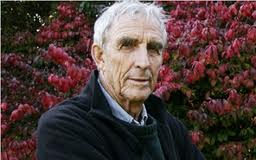
peter-matthiessen-with-leopard-for-web1

I finally got hold of the late Peter Matthiessen’s classic, The Snow Leopard, after a several week delay at Amazon, which was out of it. I had never read Matthiessen before, even though I knew he was a fervent lover of nature.

He began writing the book back in 1972, essentially a daily journal, shortly after the death of his wife, Deborah, from cancer. It tells of his trek across the Himalayas with field biologist George Schaller in quest of the Himalayan blue sheep and, for Matthiessen, in particular, the elusive snow leopard. It would win the National Book Award on its publication in 1978, our country’s most prestigious literary award.

I, too, confess to loving nature intensely to the point that my graduate prof in a Wordsworth course told the other students I had a leg up on comprehending Britain’s foremost nature poet.

In the middle part of my boyhood we lived in Philly, and I do mean the city. Occasionally we’d drive over to the Jersey coast for relief from the asphalt oven that is Philly in summer. For me, it was liberation to be among trees, fruit stands, and the shore.

I used to travel a lot, often abroad, always with camera ready, but I got complaints that there weren’t any people in my photos. I simply preferred landscape and I’m still that way.

But back to Matthiessen, I read several tributes following his death in April and even wrote my own in Brimmings a few weeks ago. I knew I had a lot of catching up to do. After all, he wrote some 33 books, both fiction and non-fiction, excelling at both.

Certainly, I had to read The Snow Leopard after coming upon one reader’s comment that he goes back to it every year, always gleaning new insights. For someone to do this–it’s rare we re-read a book, let alone, continually–implies considerable substance.

Similarly, I also liked what eminent travel writer Pico Iyer, who wrote the Introduction, had to say:

I have been reading Peter Matthiessen’s silver classic for more than a quarter century now, and every time I do, like any classic, it gives off a different light, growing as I do and shifting to meet the needs of every moment,

After comments like that, how could I not want to splurge my time indulging in this book. Out of curiosity, I googled “nature classics,” only to be disappointed to find no mention of the book that deserves company with the likes of Thoreau, Muir, Carson and Leopold. Perhaps it’s because The Snow Leopard, while surely taking in nature with eagle eye observation recorded in some of the most elegant prose ever, moves past nature into spiritual autobiography. In brief, the outer search for the snow leopard ultimately symbolizes his inward pilgrimage to find meaning and, with it, himself.

This said, I hadn’t previously known that Matthiessen was a serious devotee of Buddhism, that gentle faith, from which he continually draws strength and insight in this book, or a sense of what matters in a cosmos of flux and temporality:

Amazingly, we take for granted that instinct for survival, fear of death, must separate us from the happiness of pure and uninterpreted experience, in which body, mind, and nature are the same. And this debasement of our vision, the retreat from wonder, the backing away like lobsters from free-swimming life into safe crannies, the desperate instinct that our life passes unlived, is reflected in proliferation without joy, corrosive money rot, the gross befouling of the earth and air and water from which we came.

I wasn’t prepared for how unflinchingly honest this book is: “I am aware of all that is hollow in myself, all that is greedy, angry and unwise.” Matthiessen acknowledges that things were not well in his marriage with Deborah. There follows his intuitive decision to commit; his ineffectual attempts to show love. After her death It would be a year before this prolific writer found himself able to take up the pen again.

Deeply sensitive and rich in compassion, he is always aware of the plight of nature continually ravaged by humans in their relentless self regard and unbridled exploitation. He laments how even the Himalayas are being depleted of their forests, unsafe despite their remoteness, and with their loss, a habitat that gave sanctuary to unique animals like the blue sheep and snow leopards. Always in Matthiessen you have a sense of a paradise lost, with Man the driving agent of its extinction.

I wish I had time to explore the depth of the book’s many insights, for The Snow Leopard is surely a repository of cerebral wrestlings, an exploration of what it is to live meaningfully in the context of impermanence frequented with suffering. Accordingly, neither the past nor the future really matters, for it is in the Now that we find our paradise and thus our deliverance.

I close with Matthiessen’s sobering admonition:

…almost everywhere, a clear and subtle illumination that lent magnificence to life and peace to death was overwhelmed in the hard glare of technology. Yet that light is always present, like the stars of noon. Man must perceive it if he is to transcend his fear of the meaningless, for no amount of “progress” can take its place. We have outsmarted ourselves, like greedy monkeys, and now we are full of dread.

–rj

Climate Change: Can we win the fight?

divest395581_155622104590737_1008694978_n

We just celebrated Earth Day on April 22, an annual fête of huge importance for those of us wanting to increase the public’s awareness of the challenge of climate change, and our substantial human contribution to it, and ways we might fight it.

It’s an important time for us in another way, too, as this yearly outpouring of Green advocacy transcending borders buoys up our enthusiasm, telling us we’re not alone in our caring. After all, sometimes it seems that we’re on this great big mountain we impulsively thought we could climb; so rituals of solidarity like Earth Day give us pause to catch our breath, reassess, and press on to our worthy goal of a humanity in harmony with nature as one species among others, each necessary to all. Just maybe we can pull this thing off. Anyway, good to dream big rather than live small.

The truth is that so much more needs to be done and that we’ve been moving at a snail’s pace in making climate change a palpable issue for the public. I saw this demonstrated all too clearly in the presidential debates in 2012, or just 18 months ago, with not a single question directed to environmental matters raised by debate moderators.

If the press can seemingly have no feel for the greatest issue ever to menace us with its destructive pay-load should we evade addressing it, then how much less can we expect the public to grasp what’s at stake? As is, individual lifestyle changes like driving less, getting rid of plastic, cutting back on electricity in our homes aren’t going to do the trick. We need more than bandages to treat the Earth’s hemorrhaging.

Now consider that a recent poll suggests that 37% of Americans don’t even believe in climate change. There exist also a good many, perhaps even more, who look at climate change as simply cyclic and that, just maybe, it might even right itself. Of course that view gets us off the hook and we can conduct business as usual.

Just recently the United Nations released the findings of its Intergovernmental Panel on Climate Change, a careful study by credentialed scientists encompassing some 40 volumes. Insiders say they toned down some of their language and projections so as not to unduly frighten, though their findings still emerge as deeply sobering, with none of us escaping vulnerability to what surely are predictions on an apocalyptic scale. In all honesty, I haven’t noticed any work-up by media or any concerted effort by members of Congress to hold hearings on the report and what we might do to save the day. Like many of you, I grow weary–and wary–of their feckless accommodations to corporate interests.

What’s vital is that we impact the political process, as happened with the Vietnam War, ultimately culminating in LBJ’s decision not to pursue reelection. It started with just a few protesters, then took hold and proved unstoppable. Unfortunately, I don’t see anything like this breaking out. I think this is because many of our projections for climate change impacting us lie still in the future, whereas flag covered body bags coming into Dover AFB were a daily, tangible occurrence, which the media ultimately caught up with when it perceived a muscular protest movement, packing a punch, that wasn’t going to go away.

On the other hand, if we haven’t been able to muster cadres of protestors against our Iraq and Afghanistan incursions with their costly toll in life and wounded for a dubious cause, how much less likely for an environmental movement devoid of blood and gore? And that’s what makes climate warming so horrendously insidious, or like some invisible killer we know is out there, but don’t know where he is, or when he’ll strike, or how.

Perhaps our young people will again show us the way as they did with Vietnam by way of their fossil fuel divestment sit-ins sweeping our college campuses, some 300 as I write, with several success stories, including Harvard with its $32 billion endowment. If it’s wrong to destroy our planet, it follows we shouldn’t be seeking to profit from those who do.   I wrote earlier of the Vietnam days when students rallied to make a difference. All of us: unions, retirees, teachers, tech workers, etc., might do well to follow their lead in choosing our retirement portfolios more discriminately.

But divestment has its limitations, too. While it was practiced widely in the 70’s and 80’s to pressure South Africa’s apartheid regime, the invariable result was that other investors stepped in. It’s true value lay in shaping public discourse, and I venture this holds true with this present endeavor.

Still, I question the wisdom of painting with a broad brush the fossil fuel industry as some kind of axis of evil. We need energy. Are our students willing to follow through and divest themselves of their cars and their electricity and take on an Amish likeness? We would do better to focus on the coal sector, our greatest polluter.

I still like our president–articulate in his efforts to assure health care access, social and economic equality, tax, immigration and drug sentencing reform. So far, he’s championed alternative energy efforts, sought restrictions on coal burning power plants, held out against the Keystone XL project, endorsed alternative energy efforts.

As for Keystone, he needs our support even as we must sustain, and grow our protests, to keep a fire under his feet. When I think of Keystone and the big money behind it–think Koch brothers–I get nauseous: the obscenity of it, given the perils of climate change; the stench of it, given its association with pet coke; the callowness of it, given its destruction of farmland, water aquifers, and wildlife habitat.

The President will presumably make his decision after this fall’s elections, but faces immense pressure, even in his own party. It isn’t a given he’ll opt for courage over pragmatism. In the end, it’s important we all get to the polls and endorse environmentally friendly candidates such as the courageous Gary Peters (D-MI), who hopes to succeed retiring senator Carl Levin (D-MI).   Peters has come out against Keystone, provoking the Koch brothers to contribute substantially to his Republican opponent, who now leads in campaign funding. Peters is our leading spokesperson on pet coke. (By the way, you can access online the Sierra Club’s political endorsements, which include Peters.)

If it came down to, say, an errant asteroid making its way to befuddle our planet as once happened, plunging the world into a rebirth of its pre-evolutionary darkness, then you can bet your life we’d all get off our bottoms and fight the good fight. Well, think of that asteroid as climate change.

–rj


Peter Matthiessen: Homegoing

matthiessen

We lost a great writer, Peter Matthiessen, this past weekend. A co-founder of the renowned Paris Review and author of thirty-three books, both fiction and non-fiction, his supreme subject was Nature and, sadly, Man’s pervasive impact upon it:

Species appear, and left behind by a changing earth, they disappear forever, and there is a certain solace in the inexorable. But until man, the highest predator, evolved, the process of extinction was a slow one. No species but man, so far as is known, unaided by circumstance or climactic change, has ever extinguished another. (Wilderness in America [1959]).

Along with other environmentalists, I mourn his loss since his death silences a powerful voice of advocacy for what remains.

I think of the great writers of Nature who have borne sensitive witness to the fragile cocoon of Nature that includes ourselves that I have read across the years, works both of poetry and prose that have refined my sensitivity, shaped my priorities, and taught me awareness of the transience of all living things. All of them have been my teachers.

In poetry, I think of Wordsworth, Shelley, Keats, Hopkins, Dickinson, Frost, Jeffers, for example; as for prose–Thoreau, followed by Muir, Carson, Wilson, Dillard, McKibben and, of course, the most prodigious–Matthiessen.

Of all the books Matthiessen wrote, two stand out to me in particular as robust reads: Shadow Country, a novel featuring a desperado gunned down by his own neighbors in the lawless Everglades wilderness of the nineteenth century; the other, Snow Leopard, a non-fictional account of Matthiessen’s search for the elusive snow leopard in the Himalayas. More than a travel adventure, it depicts the author’s spiritual journey. As stimulating as it is beautiful, lucid in its prose and stunning in its imagery, it may just be one of the finest books to treat both Nature and the Soul ever written and deserves many re-readings.

Both Shadow Country and Snow Leopard won National Book Awards, our country’s most prestigious literary prize. (Matthiessen is the only writer to receive multiple National Book Awards.)

Matthiessen was not your ordinary person. A former CIA spy, son of a well-to-do family, initially conservative in his politics, he ultimately moved to the Left, championing American Indians, Cesar Chavez and exploited migrants, opposed the Vietnam War (bravely refusing to pay taxes) and, of course, became a committed environmentalist.

A deeply spiritual man, he embraced Buddhism following the death of his second wife in 1972, ultimately becoming a Buddhist priest. Snow Leopard reflects a Zen ambience throughout and its acceptance of the Now as the only true consolation we have in a transitory cosmos.

Though he fought ardently for conserving nature, he was troubled by the exponential excesses wrought by anthropocentric interests. As he would lament, “I can hardly point to a victory that we ever won as conservationists that hasn’t been overturned.”

Not all was lost, however:

 …we won some, too — there were long-lasting victories. And if nothing else, we stalled — stalled them off, the developers and exploiters.

All of us Greens will miss him, and yet there remains the fervent advocacy of his many books championing justice; respect for other species and their habitat; the simple life lived mindfully, free from material desire; the valuing of each other.

There couldn’t have been a finer man.

–rj


Artemis Cooper’s Fermor Biography: A Great Read

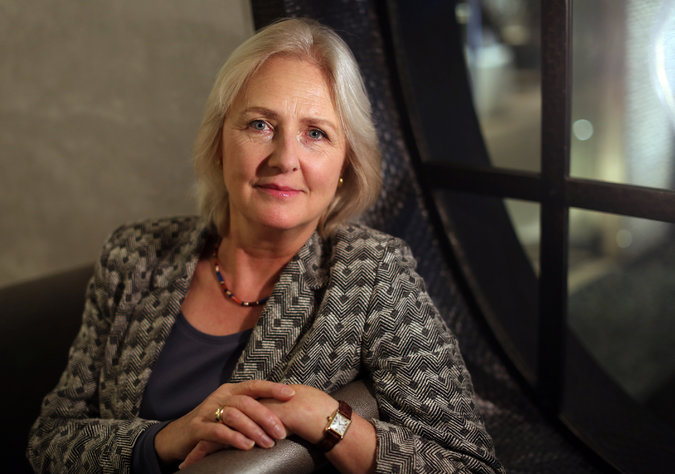
artemiscooperI just finished Artemis Cooper’s splendid biography (Patrick Leigh Fermor: An Adventure).

Fermor, who died in 2011 at age 96,  is widely regarded as the foremost travel writer of the last century–ever observant, never boring, blessed with diligent recall, and unexcelled with metaphor.  When you read Fermor, you’re getting not only description, but history and art amid the first stirrings of fascism in pre-World War II Europe.

The apex of his writing is, of course, his recounting of his three year walk (1933-35) across Europe, or from Rotterdam to Istanbul in two volumes:  A Time of Gifts and Between the Woods and the Water.  Sadly, it’s a Europe that’s largely vanished with its post Great War vestiges of Hapsburg resplendence; of unfettered freedom-loving peasants; of an untamed Danube not yet shackled by dams, bounded by bird-saturated wetlands; of fulsome traditions and extant vernaculars; of a redolent human goodness replete in hospitality transcending class or wealth; of a Europe not yet initiated into the apocalyptic horrors of fascism and the aftermath of Soviet hegemony across Eastern Europe.

Gifted with an ebullient personality along with many a youth’s folly, he made friends easily and treasured these friendships across the years.  They included every day people–shopkeepers, peasants, gypsies, monks–along with luminaries like Evelyn Waugh, Cyril Connally, Dylan Thomas, and Philip Toynbee.  He was especially close to Lawrence Durrell and Ian Fleming.

Here let me confess I prefer biography to autobiography because I think it’s in the former you’re more likely to find honesty than among the raconteurs of the latter, often promoting themselves or embroidering their narrative through boasts or claims difficult to confirm.

Fortunately, we have one surviving Fermor journal that records his journey, assuring us it happened.  Even so, any perusal of it tells us what we surmised–that despite his prodigious talents for memory and detail, no 18-year old could possess the salient knowledge Fermor displays forty years later in his layered recall.

In short, Fermor added details across the years, embellishing his journals through vast, omnivorous reading–often in their original languages (he was fluent in six of them)–in a laboring  akin to fashioning a mosaic.  At times, he confessed to steeping his writing in imaginative touches like riding horseback across the Hungarian steppes.  At heart, Fermor was an ardent Romantic who sometimes linked himself with Byron, who like himself had a fondness for Greece and fought for its freedom.  I wasn’t surprised then that like his hero, he swam the Hellespont.  What shocked me was that he was 69.

Like, Byron, he also had many lady loves, despite his long relationship and later marriage to Joan Raynor, whose mother was heiress to a fortune made in woolens manufacturing. (Be warned that when you learn of Fermor’s women friends you’re probably right to assume they were loves.)  What enabled Joan and Paddy’s marriage to survive these amours was their foreswearing of sexual jealousy.  In fact, Joan was observed providing Paddy with money on one occasion, should he need a woman in his travels.  His early love affair–before Joan– with the Rumanian princess, Balasha Cantacuzine, sixteen years older than himself, is certainly moving in its ultimate tragedy of ensuing separation with the onset of war and later Communism.

I know I risk understatement when I say Fermor had an intensity about him when it came to life.  Passionate, he wanted to know the full palette of human experience and verbally paint its textures.  A consummate intellectual, he never put on airs with his encyclopedic command of many disciplines, whether music, art, history, literature or languages.

He was also a brave and ingenious man, serving in World War II as a naval officer assigned to the Intelligence Corps and dropped into Crete as a liaison to the Cretan resistance against the occupying Germans.  Ultimately, in one of the war’s greatest exploits, he would mastermind the capture of the commanding German general on Crete.  Cooper is very thorough in presenting the many facets of this endeavor and the narrow escape of Fermor and his fellow partisans from German reinforcements in search of their general.

Cooper unflinchingly gives us full portraiture of Fermor.  Not everyone liked his tendency to dominate a conversation, for example.  Politically, he was conservative and despised the Communists who created havoc in civil war Spain, opposed resistance efforts in Crete, and contributed to considerable violence in post-war Greece.  He had also killed a fellow member of his Cretan guerrilla unit in an accidental shooting incident he could easily have avoided with more diligence to gun safety.  As for his writing, some critics argue his long sentences, weighted with details, may trip up readers and frequent digressions provoke their annoyance.  We learn, too, that he smoked as many as seventy cigarettes a day.

Cooper knew Fermor firsthand as the granddaughter of Lady Diana Cooper, who found Fermor captivating and remained a lifelong friend and correspondent:

He could illuminate any subject under the sun, and had a memory that had retained most of the thousands of books he had read over the years.  He knew all her favourite passages from Browning, Shakespeare, Tennyson, Meredith and Keats by heart–and much more besides….

As for Paddy, he worshipped Diana, not just for her indestructible beauty, but for the original cast of her mind, the flourish of her phrases, and the blind eye she turned to convention.

The New York Times has recently listed her book as one of the year’s (2013) most notable biographies; likewise the prestigious New York Review of Books, which had already proven its fondness for Fermor by printing several of his works as “Classics.

Having recently read A Time of Gifts, I found the biography an exceptional read in translating an extraordinary life into an effulgence of candor, scholarship and artistry.  I can’t think of a better memorial.

–rj

A Woman for all Seasons: Ruth Bader Ginsberg

ginsbergI’ve been thinking a lot about her these days, surprising myself, since I knew her simply as a fact stored away in my memory for so many years.   Diminutive at just five feet and weighing only one hundred pounds, her small face accentuated by her landmark over sized glasses, there isn’t anything visible to recommend her apart from a flinty chin suggesting determination.  Just goes to tell me how short-sighted I  am when slipping into judging by appearances.  I guess that’s a topic for a follow-up blog.  Anyway, small packages  sometimes pack a wallop.

Ruth Bader Ginsberg hails from Brooklyn, the child of Jewish immigrants from Russia.  Think about how wonderful that is, the promise of America, that in a second generation, children of immigrants or an immigrant parent can weave their way into the American success story.  Think Steve Jobs (Syria), Walt Disney (Canada), Gloria Estefan (Cuba).  Nikki Haley and Nora Jones (India).  Think Barak Obama (Kenya).  Did you know that a good number of our biggest firms owe their existence to immigrants?  Think Boeing (Germany), 3M ( Canada), Home Depot (Russia) for just a few examples.

Now most of us know who Ginsberg is, though she doesn’t command the headlines like some of her U. S. Supreme Court colleagues such as Justices Roberts and Scalia.  Doubtless this stems from her minority position in a long-dominated conservative court, despite her frequent dissents always highlighted by their precocious acuity.

I’m not about to launch a verbose listing of salient background details about Kiki (her nickname), save to note her appointment by President Clinton to the bench in 1993.  I’m frankly more interested here in her character traits lending her the individuality for which she’s noted. 

Although she’s an ardent liberal (former ACLU litigator), she pals with the Scalias, sharing in their mutual love for opera.  Her favorites, Verdi and Puccini.  On the fun side, she’s been an extra in two operas.

Much of her early life was spent in fighting off sexism.  Just out of Columbia Law School in a time of very few female lawyers, justice Felix Frankfurter refused to interview her for a clerkship:  “Does she wear skirts?  I can’t stand girls in pants.”

Combatting injustice of any kind has always motivated Ginsberg throughout her legal career:  “I thought, well maybe the law could catch up with changes in society, and that was an empowering idea.”

By any measure, I admire Ginsberg for her spunky witticism.  On one occasion, Justice William Rehnquist queried her as to why she was making an issue out of gender equality.  Wasn’t having Susan B. Anthony on the dollar coin enough for her?  Famously, she quipped back, “No, your honor, tokens won’t do.”

I also find her very brave.  Twice she’s survived cancer:  colon (1999) and pancreatic  (2009).  With the colon diagnosis she didn’t miss a day on the bench, despite chemo and radiation regimens.  Twelve days after her Whipple surgery to remove a portion of her pancreas, she was hearing oral arguments.  Pancreatic cancer has very few survivors and apparently they got it early through a routine cat scan.  It was the pancreatic cancer taking the life of one of my icons, Steve Jobs, that aroused my curiosity about this angry organ, the pancreas, that led to my researching Ginsberg.

Though she’s given up water skiing and horseback riding, she works out with a trainer two times a week and is up to twenty no cheat pushups.

She’s fluent in Swedish, acquired from two summers there and says she can watch Ingmar Bergman films without subtitles.

Some liberals want her to retire so that President Obama can appoint another liberal as deterrent against a subsequent Republican presidency.  Ginsberg refuses to budge, saying she’ll remain on the bench unless health issues interfere.  Though she’s known more for championing equality issues affecting women, it’s clear she’s also an exemplum of the senior citizen’s ability to continue contributing to the workplace and society as a whole.

I’m glad she’s there, offering rational balance in a time of deepening national division.

–rj

Hamlet in the White House: Obama Blinks

obama_2652642b

I had tuned in on Friday to President Obama’s Rose Garden appearance before the media, expecting an updating of data justifying a response to the alleged use of chemical weapons by the Assad regime in Syria.  After all, Secretary of State John Kerry had spoken forcefully to the issue, calling it an act of “thieves and murderers.”  How preternatural it seemed for someone who had so vociferously opposed the Vietnam War, throwing his own medals away, to now be advocating a military strike.  There must be something here.

What I hadn’t counted on was the residue from the UK Parliament rejection of Prime Minister David Cameron’s plea for a military option.  Cameron hadn’t originally planned on asking for Parliament’s permission, only to yield to the reality of low public support in the polls and vociferous objection among even his Labor Party cohorts. He simply wanted to protect his hide, an idea that’s proven to be contagious.

Casting a dark specter over everything was doubtless the protracted war in Iraq, now largely deemed the folly of unreliable intelligence and an understandable passion for taking action following the terrorism of September 11, 2001.  While it’s often been remarked how history repeats itself, it’s not a given that we must repeat its madness.

The psychology in Obama’s turnaround in imitating Cameron fascinates me.  Sometimes we say too much and get ourselves into tight places, with anticipated fall out  locking us into responses our better judgment, tempered by time and reason, tells us are wrong.  From this angle Progressives seem justified in calling Obama’s new mindset courageous.

I see it differently, however, as a failure in will, abetted by a compliant media and a war- weary public.  We have a president who has difficulty making decisions.  For six months he knew the location of Osama bin Laden before taking action.  We’re still awaiting the Keystone decision.  Just the day before, we had heard a horrific litany of the deaths of 1400 civilians, more than 400 of them children, by the Assad regime’s use of chemical agents on its own people.  British, French and Israeli intelligence also corroborate the culpability of the Assad government.

Oddly, the President in his Rose Garden appearance told us he had determined to strike Syria, yet wanted to put it up to the Congress.  I think it unlikely that Congress will approve a strike, perhaps the Senate, but not the Republican House with its contingent of Tea Party isolationists.  This may even play into Obama’s hands, giving him an opportunity to extricate himself, or to climb down the ladder as it were.

But he isn’t going to do so without impunity or a severe loss in credibility.  Even more serious, he’s placed our nation in danger, emboldening aggression abroad by rogue governments.  No one’s talked about it, but the present imbroglio is really about Iran.  His paralysis can only encourage Iran’s efforts to achieve a nuclear arsenal.  If I were the Israelis, I would be deeply troubled.  It’s conceivable that Israel may now see itself as needing to launch a preemptive strike on its own, given the unreliability of the U. S.

Given Obama’s hesitancy towards Syria, what’s the script for Iran?  Do you tip your hand, asking Congress for its permission for a preemptive strike?  Or is it you do nothing, accepting the reality of a nuclear Iran with whom we must learn to live with as we do with North Korea?  Meanwhile, a hostile Iran that sponsors terrorism develops a delivery system potentially targeting Tel Aviv and, ultimately, America.  Let’s face it, as a corollary of the President’s pattern, the odds are that Iran gets its Bomb, despite our stringent embargo.

In the present circumstances, Obama has set a dangerous precedent.  Presidents must be free to act in dealing with contingencies that may arise, and this is what the War Powers Act allows with its 90 day allowance before Congressional oversight kicks-in.  A limited strike on Syria does not violate the Constitution, contrary to what some liberals say.

Mr. Obama is known to admire Lincoln.  But maybe he’s forgotten his history.  Lincoln didn’t ask Congress for permission to war against the eleven successionist states.  In fact, the legality of succession wasn’t allowed to be presented before the Supreme Court.  Lincoln rightly knew he couldn’t win in either the Congress or before the Supreme Court.  My point is, strong presidents lead.

A very good argument can be made that any response now planned would be ineffectual and inflammatory anyway, since the strike is so limited and considerable time has elapsed for Assad to move his military assets into the mountains and his troops into   exempted civilian areas such as schools.  Even more important, the Syrian civil war has now largely turned sectarian, with Sunnis vs Shiites, compounded with the entrance of Hezbollah and al Qaeda insurgents, both of whom target Christians, who comprise 10% of the population.

But this gets us back to square one and our ineffectual president.  Obama created this morass with his dilly-dallying over the last two years, giving extremists time to move in.   His red lines mean nothing, as seen in Assad’s emboldened aggression.  While Syrian dissidents lamented the absence of international outcry following the chemical attack of August 21, Obama was silent for 72 hours.  Later,  he played his usual rhetorical slight of hand, stating the situation defied easy answers.

Mr. President, if we’re reduced to this scenario, then you are its creator, having squandered your options and not acted on your own warnings.  Awful as these deaths from chemical weapons are, they’re minuscule in a sea of 100,000 deaths, most of which could have been prevented had you armed the rebels from the outset.  By the UN’s own estimates, we now have 2 million refugees, 1 million of them children.

Playing Hamlet–to act or not to act–is unbefitting a commander-in-chief and poses grave dangers for America.  As Hisham Melhem, Washington bureau chief of Al Arabiya news channel comments, “He seems unable to make difficult decisions. This will embolden Assad and the opposition jihadis and demoralize the secular, moderate Syrian opposition. Obama is gambling with his reputation at home and abroad.”

With one utterance, Obama has inaugurated a template for disaster, diminishing the powers of the Presidency, making a mockery of American credibility, abandoning Syria’s freedom-fighters, and putting  America and Israel under increased threat from a belligerent Iran ultimately armed with nuclear weaponry.

–rj

Intolerance: Medicine’s Nemesis

Medical Statue at Semmelweiss Medical Museum
Medical Statue at Semmelweiss Medical Museum (Photo credit: Curious Expeditions)

I had grown up thinking medicine was free of the prejudices, if not sheer ignorance, rampant in the everyday world where resistance to anything new seems a given.  Let’s face it:  we humans don’t like having the security of our assumptions challenged.  The truth is that the history of medicine shows the same proclivity for stubbornness or subordination to the weight of custom as elsewhere.

In his riveting study, Doctors: The Biography of Medicine, physician Sherwin Nulan recounts the story of Ignac Semmelweiss, a young Viennese physician in the 1840s, who observed that women delivering their babies in hospitals died of puerperal, or bed fever, considerably more frequently than those delivering at home.  He did his own research to find out why, ultimately discovering a link between medical student routine and maternal deaths.

Each day,  students and profs would examine cadavers in between visiting patients. Although they didn’t have any notion of germs back then, Semmelweiss ultimately concluded that “invisible cadaver particles” on the hands of students and attending physicians was the source.  In short, he had discovered the role of infection in promoting illness.  

Instituting a protocol of his students’ washing their hands in a chlorine solution, he saw a dramatic drop-off in mortality.  His colleagues, however weren’t amused by this young upstart, whose research implicated them in so many deaths.  Consequently, Semmelweiss didn’t publish his research for fifteen years.

Dr. Joseph Lister
Dr. Joseph Lister

By the 1860s,  Louis Pasteur’s germ theory had entered into medicine, though it initially wasn’t widely accepted.  In Britain, Dr. Joseph Lister decided to apply the notion to post surgical infections, which were nearly always fatal.  Discovering that a neighbor city had poured carbolic acid down its drains to eliminate a potent sewer stench, he concluded that the acid had killed microorganisms similar to those Pasteur had identified.  Applying this concept to surgery, he employed wound dressings saturated in carbolic acid.  Later, he added spraying the entire surgical area with the solution.  Ultimately, he expanded the solution to washing his hands and instruments.  Lister published his successful results in 1867, inaugurating the formal beginnings of antisepsis.  It would be another generation, however, before Lister’s innovations became universal.

It was only in the 1880s that doctors had finally moved beyond a solely antiseptic solution to changing their clothes and boiling their instruments, sutures, towels, and sponges and adopting a ritual of vigorous hand washing.  In 1893,  Dr. William Halsted  became the first surgeon to wear a surgical mask.  In the 1920s, white garments and linens became universal, though the former now seems to be giving way to darker shades again.

Infection still remains a serious threat and the shorter your hospital stay, the better your odds.  Each year, nearly 2 million patients experience infection and 100,000 die.

Even with today’s antibiotics, infection looms as a serious menace, complicated by the increasing rise of resistant, highly contagious bacteria strains.

The bottom line in medicine is that what we don’t know often governs more than what we know.   After several thousand years, we overwhelmingly treat symptoms, not causes.  Now and then, however, a Semmelweiss or Lister appears like some new Columbus, charting a vastly different terrain leading to a New World.  Thus, it behooves medicine to be open to self-scrutiny, forfeit vested authority, tradition, and prejudice.  Only in this way can we find the breakthroughs that advance our safety, promote our healing, and perhaps offer sovereignty over some of our most chronic diseases like cancer.

–rj

.

An American Treasure: Reflections on Donald Hall

donald-hall-baseball
Lately, I’ve been thinking a lot about poet Donald Hall, now in his 84th year, and an American treasure. I came upon him early as a teaching assistant at the University of North Carolina at  Chapel Hill, where we used his Writing Well as our principal text in our composition courses.   Written in Hall’s typical plain-language, no nonsense style, I learned a lot from it at this early stage of my teaching career.

The other day I happened to tap into Daniel Giola’s blog with its invaluable essays he’s written on a good number of American poets, including Hall, and I liked what I read.  Giola is himself a talented poet, who formerly was head of the National Endowment for the Arts and currently teaches at Stanford.

Truth is, I hadn’t read Hall, the poet, who served as our Poet Laureate in 2006.  Until I read Giola, I was also unaware of Hall’s prowess in writing memoirs.  I downloaded his Life Work this morning from Amazon and am eager to get into it, seeing the critical accolades its drawn, which doesn’t surprise me.  Educated at Exeter Academy, Harvard, and Oxford, he’s written more than fifty books of poetry, prose and children’s stories;  been awarded two Guggenheim fellowships; the National book Critics Circle Award for Poetry, and twice nominated for the nation’s foremost literary honor, the National Book Award.  I’m embarrassed it’s taken me so long to catch-up.

I started this draft yesterday and am now a good way into Life Work, which he had initially published in 1993, or just after surgery for colon cancer (originally diagnosed in 1989) that had now metastasized to his liver, giving him a dismal prognosis of 1 in 3 odds he’d be around another year.  Ironically,  he beat the odds, only to lose his much beloved wife, Jane Kenyon, a former student and poet he had married twenty years earlier while teaching at the University of Michigan.  She had seemed so healthy, only to suddenly be diagnosed with leukemia and passing in 1995.  As Hall candidly remarks,  “The worst day is the day when grief or sorrow overcome you.  Your wife has cancer; you have cancer.”

It would take some six years for Hall to right himself again.  Jane’s presence permeated the house.  Giving her clothes away turned into an ordeal:

He emptied the dead woman’s dresser and closets,
stacking rings and bracelets, pendants and necklaces.
He bundled sweaters and jeans, brassieres and blouses, 
scarves
and nightgowns and suits and summer dresses
and mailed them to Rosie’s Place for indigent women.
For decades a man and a woman living together
learned each other for pleasure, giving and taking,
studying every other day predictable ecstasy
secure without secrecy or advenmre, without romance,
without anxiety or jealousy, without content 
….
(from “Kill the Day”)

Each new day reopened the wounds of loss–of lovers in communication, always together, mutual artists sharing creative ecstasy.  The gnawing loneliness. The unfairness of it all.  She was just 47.

All of this is part of the undertone of sadness to this work I sometimes think intrinsic to the acute sensibility common to artistry and especially poets.  As Hall reminds us, poetry is fundamentally about time and mortality.  This has been my own observation across the years in reading, teaching and occasionally writing poetry.  We may think of music as the most affective of the arts, but I have found poetry more so, sometimes reminding me of the way a drug works, bringing potential healing, but with it, too, a risk for side effects and a wish one hadn’t dosed.  But then I think of the greater risk of sensory, if not spiritual poverty, in refusing to let its potential for insight, empathy, and catharsis to work its grace and make me whole.  Poetry is latent with a sacramentalism that wraps around the soul.

One of the big draws of Life Work lies in its repertoire of Hall’s daily ritual that has made his prodigious artistry possible.  Mornings, he rises at 5; better, leaps out of bed, eager to resume yesterday’s unfinished tasks following a cream cheese bagel washed down by coffee.  A consummate craftsman, he revises poems sometimes a hundred times and even more.  Mornings are filled with creation.  Afternoons, with well-deserved indulgence.

I like the human side to Hall.  He tells us he’s installed satellite TV.  He loves his Red Sox and Celtics, never missing a game.  With New England in my own blood, I relish these teams, too, though I’ve lived away from the place for many years.  Reading a work like this alleviates my guilt in often violating the Puritan ethic of duty in my sometimes preferring  play over work.

You won’t find this in Life Work, but in a recent NPR Fresh Air interview (February 8, 2012), Hall tells us he’s given up on writing poetry, since the ideas, words and images don’t spring up with their former ease.  He continues to write, however, focusing on prose:  “As long as I can do my work and continue to enjoy myself, I feel fulfilled.  My body causes me trouble when I cross the room, but when I am writing, I am in my
heaven–my old heaven.”

–rj