Solitude’s Recompense

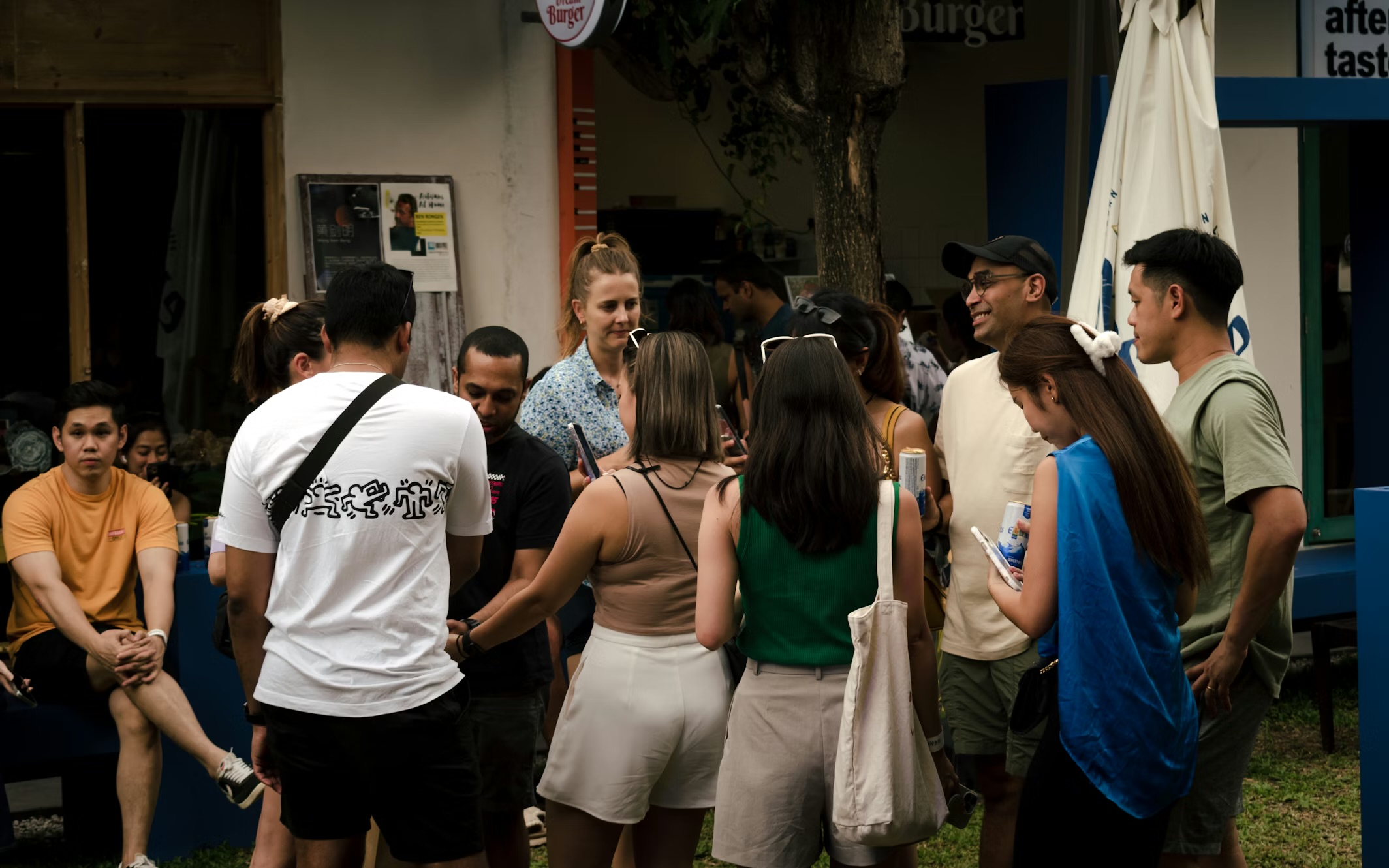
More than eight billion souls rise each morning to breathe another day—many of them lonely. While others seem to rollick in life’s plentitude, they feel left out.

Loneliness has many strands. Ultimately, it’s feeling you’re disconnected. Or like the world’s hung up on you.

Loss is loneliness’ common denominator. It comes in many currencies: loved ones who’ve died or drifted away, a romance gone sour, schoolmates reduced to memory, a job that vanished overnight, aging, the slow erosion of health

According to a Gallup/Meta survey, 25% of people in 140 countries experience loneliness “very or fairly often.” In the USA, 1 in 3.

Loneliness can be grievous. Even fatal. There seems to be a herd instinct governing human behavior. We like togetherness. Like cows in a pasture, we like facing in the same direction.

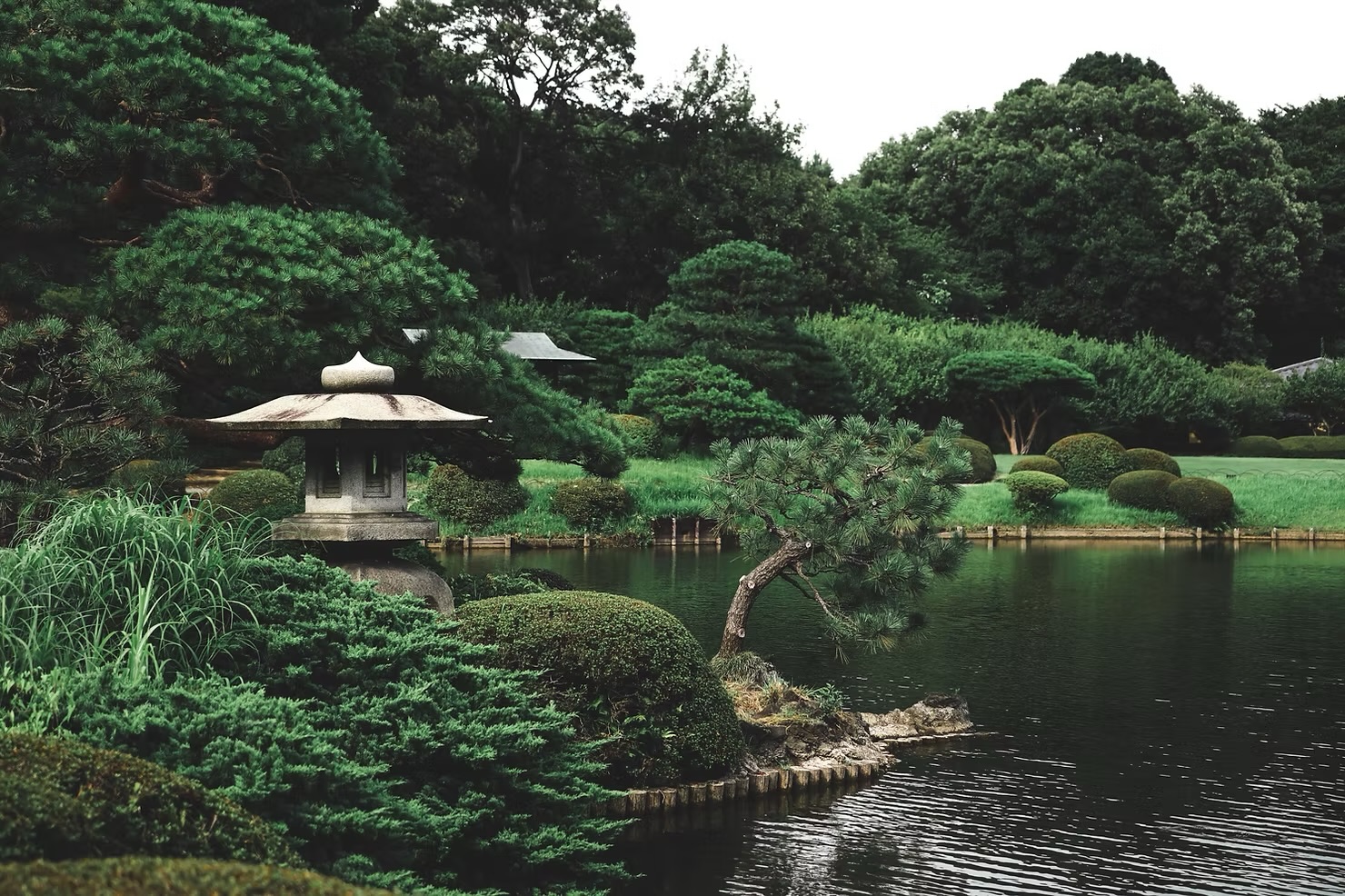
And yet the paradox: you can feel most alone in a crowd, the noise of others drowning out your pulse. For introverts like me, solitude grants restoration, not exile. My happiest moments have often come in silence: in a garden, along a woodland path, or beside a pounding shore.

A few days ago, I wrote of three places I’ve been that have sustained me, each of them granting solitude—a chance to reflect, to locate myself, to fish in life’s stream, that rare chance to glimpse Eternity.

Recently, I’ve found someone, Scott Stillman, who shares my love for solitude, writing eight splendid books on this theme. He has a way of putting things:

you are not broken for needing stillness

you are not flawed for shrinking from noise

your mind is simply attuned to something different

something more aligned with the quiet current

that flows beneath all of existence

Morning’s Bliss: On Keeping the Mind Young

I love the early mornings, when the world holds its breath and my mind wakes like a small flame, flickering with new thoughts, questions, fragments of ideas, waiting their harvesting; when the day pulses with possibility.

I’ve been reading Virginia Woolf’s Diary. I like her thoughts on keeping her mind young:

“Began reading Freud last night; to enlarge the circumference: to give my brain a wider scope: to make it objective; to get outside. Thus defeat the shrinkage of age. Always take on new things. Break the rhythm, etc.” (Diary, 1939).

Similarly, I want to emulate Dr. Gladys McGarey’s wise counsel, expressed in her remarkable book, The Well-Lived Life. Regarded as the mother of holistic medicine, she was 103 when she published it.

“You have to feel and know life is there to be lived. You have to live it. As you pay attention to life itself, life is like a seed. It has a shell around it. It has all the energy of the universe within it,” she says.

It’s thus with expectation I relish my morning rush—the gift of a new day to crack life’s shell and nourish its core.

rj

It Isn’t What I Know

It isn’t what I know, but what I don’t know that subdues my ego’s pretense. All life is flow and to be happy is to bend, like a willow in the wind, to its rhythms:

“Those who know they do not know gain wisdom.
Those who pretend they know
Remain ignorant.

“Those who acknowledge their weakness
Become strong.
Those who flaunt their power will lose it.” —Tao Te Ching 71.

Morning Thoughts

I begin my day daily, reading the news, the wrong way to commence a new day, heavy with humanity’s burdens I can do little about.

I would do better in rising with the sun, to set my day’s course like a compass pointing to true North on what matters, enriches, and contributes to well-being, not only for myself but, more importantly, for others.

I remember lines from one of Mary Oliver’s last poems: “Wherever I am, /the world comes after me. /It offers me its busyness. /It does not believe that I do not want it.”

We think of ourselves as separate from the main. Prisoners of self-interest, we’ve relinquished poet John Donne’s maxim, “No man is an island.“

As humans we crave togetherness.

We abhor loneliness.

We require bonding and the cohesion it brings.

I’ve traveled to many places, often alone, but the trips I remember most were those I’ve shared with others. To experience something awesome, but with no one to share it, somehow bottoms out its delight.

Like leaves on a tree, individual in their shape and shimmering on their branches, we feed into a trunk that flourishes when its leaves work collectively. We are citizenry of a greater Self.

We live in a time of electronic fellowship. Billions turn to Facebook, Twitter, Instagram, ad infinitum, in a desire to connect, ample evidence we need one another to complete ourselves.

We find the relational in other, more meaningful ways. We love, we marry, we have children, we make friends, we frat with those sharing like interests, we bond with our pets. And yes, we write books—and even do blogs!

Unfortunately, since Descartes with his “I think, therefore I am,” we’ve weighed our lives down with ego indulgence, mindless of that greater entity of collective humanity and of Nature that grants us being and sustains.

In Victorian times, Bentham’s notion of utilitarianism was in vogue, its thesis that what promotes happiness is good; what promotes pain is bad. Essentially hedonistic, it was vehemently satirized by Dickens in Hard Times as serving the wealthy at the expense of the working class.

Modern psychology hasn’t helped mend our ways. Self-validation defines its focus. Witness the plethora of books on self-improvement. I was schooled in behaviorism at the grad level with its notion that humans are little more than pigeons, subject to stimulus response, driven by self-interest. Accordingly, prescribed behavior can be reenforced through operant conditioning that awards the positive; conversely, extinguishing the negative via the punitive. Anthony Burgess, whom I met briefly many years ago, deciphered it rightly in Clockwork Orange (1962), one of the 20th century’s most profound books.

In economics, capitalism is founded upon the same a priori of what’s in it for me, ushering in the Adam Smith credo of self-interest and competition as prerequisites to prosperity. Its consequences are with us daily, the one percent owning half the wealth, the exponential decline of the middle class, the continuous emphasis on growth despite diminishing natural resources.

In his widely published The Selfish Gene (1976), evolutionary biologist Richard Dawkins tells us that genes act to preserve their self-interest, with altruism, when it does exist, functionally symbiotic as in bees and ants. In fairness, Dawkins does propose that humans have potential capacity with growth in moral intelligence to modify evolution’s predilection for self-interest. Harvard’s eminent psychologist Stephen Pinker, who sets out in The Angels of Our Better Nature (2011) to statistically validate the decline of violence, should be pleased.

On a human scale, I think of Japan, unique in its protocol of collective behavior in the interest of public welfare that critics might disdainfully dismiss as herd mentality or, essentially, a vestige of Hobbes’ “enlightened self-interest.” Nonetheless, Japan is one of our few stable nations, high in economic equality, rare homelessness, and little crime. When the tsunami struck in 2011, unlike in other nations, there were few reports of looting. No need to send in the National Guard. My own memories of Japan confirm a pervasive politeness and honesty I’ve found unequaled in my travels.

In contrast, I think of what took place with the COVID outbreak, nearly a third of Americans not getting vaccinated and, even more, refusing to mask. As one business man told me, “It’s a personal choice.” But then this isn’t confined to America. In France, Belgium, and Germany gargantuan anti COVID protocol demonstrations, some of them violent, have occurred. Theirs is the right to infect others and continue the pandemic. By the way, Japan’s COVID mortality rate was 14.52 versus 233.8 in the U.S. as of Nov. 21, 2021, according to Johns Hopkins University stats.

Reading the news reminds me of the human folly behind the headlines, whether of individuals or nations, in pursuing self-interest. Sowing greed, we have reaped social dissonance with high crime, economic disparity, and homelessness among its results.

Frost wrote a renowned poem, “Mending Wall” in which the persona tells us of his neighbor, who advocates “Good fences make good neighbors.” I’m for tearing down walls that separate us.

In mutuality we find our common denominator, making for a better world.
In discovering the Other, we find ourselves.

–rj
The Risks of Not Reading

I needn’t labor on the inroads of our high tech age on our daily living habits, numerous studies elaborating on the atrophying of socialization and, dynamically, its impact on family life, parents and children exponentially independent of each other.

My purpose here is to focus on its intrusion upon our reading habits in this now predominately video age.

Consider the following:

According to The American Time Use Survey employing a representative sample of 26,000 Americans, reading for pleasure is now at its lowest point. Between 2004 and 2017, reading among men declined by 40%; among women, 29%.

Gallup tells us that the number of Americans who haven’t read a book in any given year tripled between 1978
and 2014.

For comparison, in 2017, Americans spent 17 minutes reading; 5.4 hours on their cell phones.

The menace of TV exceeds that of even social media. Some 60% of Americans eat their meals while watching TV. 47% of 9-year olds watch TV 2-5 hours daily (aft.org). On average, Americans TV binge 3-4 hours each day.

Collectively, a 2020 Nielson study reveals that the average American “spends a staggering 11 hours, 54 minutes each day connected to some form of media — TV, smartphones, radio, games” (abcnews.go.com). In short, many of us are media addicts.

You can reasonably assume this affects timeout for reading. It may also factor in our children’s continuing drop off in reading proficiency (henchingerreport.org), a vast subject in itself.

The reading of literary fare—poetry, short stories, novels, drama—has taken a special hit, even among those with college exposure, and across the board, regardless of race or ethnicity, exhibiting a ten year average decline of 14% between 1992 and 2002, according to the National Endowment for the Arts comprehensive study, Reading at Risk.

It comes at a cost. Literary reading in particular grows discernment, teaches values, fuels discussion as well as entertains. It liaisons us with the global community and cultivates cultural continuity. And, yes, it can keep us safe, crystallizing excess that imperils our well-being. All really good reads are fundamentally moral, underscoring the human contract to do the right thing by each other.

As for non-fiction, I haven’t gathered any stats, but it probably fares better. We’re not all literary aficionados and the choice of good non-fiction tomes crosses many genres, whether science, health, environment, psychology, philosophy, ad infinitum.

But judging from the The Times Best Seller Lists, most non-fiction reads will be of the self-help or business variety. You’re unlikely to find mind-bending items like Nietzsche’s On the Genealogy of Morals, Freud’s Civilization and Its Discontents, or Hoffler’s enduring classic, The True Believer.

As such, we impoverish ourselves if, when we do read, we do so indiscriminately. Our reasoning weakens. We see in fragments and not the whole. We become prey to parochialism and its hyperbolic distortions. Like our muscles, our brain prospers with exercise.

The bottomline is that so much of what we take for granted was once imagined. What better place to tap into its limitless underground caverns than a challenging read?

Through reading we meet ourselves, learn we’re not alone, find comfort, inspiration, and discernment. Not least, we encounter the coalescence of human experience, discover that each of us is its own rivulet flowing into a vast ocean of a greater Self.

Long term, the consequences of not reading become potentially devastating for both community life and democracy. Electronic resources foster instant gratification, replacing more concentrated effort. On the other hand, research shows discerning readers are more engaged in their communities. In sum, they help foster those values that promote the public’s interest and those amenities enhancing a functional democracy.

To not read is simply one more ingredient eroding family cohesion and breeding social isolation, not only pervasive, but advancing. It exchanges commitment for passivity.

As humans, we discover our individual identity through assertion. “To be or not to be? remains the existential question. Good literature inculcates not only its resolution, but its how.

Reading requires concentration, an intellectual skill that improves with exposure. To forfeit its dividends for Esau’s porridge of instant gratification with its fallout for the family and community is nearly too nightmarish for me to contemplate.

–rj

What Counts Most in a Person?

Of all character attributes, what counts most? For me, it’s integrity, or doing the right thing, regardless of circumstance, especially when no one’s around. I say this because of the pervasive anonymity our high tech age confers. I confess to being a Marcus Aurelius devotee, who in Meditations wisely counseled, “Do not act as if you were going to live ten thousand years. Death hangs over you. While you live, while it is in your power, be good.”

I was seated by a corporate CE0 on a flight years ago and we began to converse. He shared that what he looked for most were trustworthy employees committed to doing the job right, workers not requiring micromanagement. Warren Buffett echoes this sentiment when he counseled, “We look for three things when we hire people. We look for intelligence, we look for initiative or energy, and we look for integrity. Without the latter, the first two can hurt you.“

In short, trustworthiness is primary, sorely lacking in business, politics and even religion today. And yes, too frequently in private conduct. Some may call it, ‘walking the talk.” I call it Integrity.—rj

Cherished Company

From a chiId I’ve always craved the company of animals, sometimes preferring them over humans. It was Darwin who in his massive studies of the animal kingdom posited that reason, emotion, and even morality, weren’t solely relegated to humans through evolution. My long acquaintance with animals tells me Darwin was on cue. Oh, the many stories I could tell.

Relatedly, there’s a delightful new little book just out by John Gray, titled Feline Philosophy, obviously about cats. And I can tell you a lot about them as well, though my wife, Karen, exceeds me greatly.

I like Gray’s cogent observation about animals when he says, “Lacking self-consciousness, non-human animals are present in the world more completely than we are. They inhabit nature fully whereas we are always dislocated, at a right angle, from it. Indeed, we are destroying it.”

So you see, you don’t have to consult a Buddhist monk to find serenity. It was the Buddha who taught us that suffering lay in desire and refusal to accept impermanence. On the other hand, our animal friends are simply their authentic selves, with each day a sojourn in life’s palate. Scarce wonder I pursue their company.

—r

Business as Usual: Lockdown Unenforced

Protestors in Texas

As experts have warned and a rogue president, prioritizing reelection, has ignored, recharging the economy when Covid-19 continues to ravage has exacted a surge in the pandemic’s victims, with a new wave anticipated this fall.

But Americans are its lead cause, a spoiled populace ignoring the laws governing exit from the crisis, wearing a mask in public, practicing social distancing, limiting unnecessary activity. Fifty states, each with its own governance, unequal to enforcing these mandates of public safety, subservient to economic interests, fuel our crisis. Shamefully, we lead the world in the pandemic’s victims.

Meanwhile, climate change exacts its continuing world toll. We tied the record in May for the highest monthly average on record; investment in renewable energy has plummeted; in the next five years, five-hundred species will disappear as humanity continues its assault on Nature, despoiling fauna and flora in a greedy rush for profit. Worse is the meat industry, a virus hotspot, progenitor of the pandemic, not just now, but historically in its previously related strains.

As I write, the Amazon forest continues to burn to make room for cattle ranches, environmentalists have been killed or discredited, indigenous tribes decimated. In Croatia, yesterday, 50 million bees died, suspected victims of pesticides. You think it only happens abroad? It’s happening here. Last year in Texas, someone deliberately set fire to beehives, killing 500,000 bees. Almonds, a prime contributor to California’s agricultural sector, may soon devolve into memory.

Where do we go from here? For the sake of the present we are ravaging our children’s future. I think anew of poet Robinson Jeffers’ credo of “inhumanism,” a summons to abandon a plethora of mass murder and commodification, to simplify our lives, to embrace with stoic discipline those values that both uplift and secure our children’s destiny.

—rjoly

Morning Routine Wins the Day

Yes, I admit to following a daily regimen that some may call being in a rut; but I much prefer its discipline, the empowerment it confers over my many infirmities and the peace it affords in keeping chaos at bay and getting things done. I believe the passions must be made obedient to the mind. Or as Epictetus put it, “One person likes tending to his farm, another to his horse; I like to daily monitor my self-improvement.” Virtue doesn’t fall upon us out of the blue. We must toil at it.

Since I’m writing about routine, Amy Landino has written a wonderful book on its potential for transformation, Good Life: 5 Simple Habits to Master Your Day and Upgrade Your Life. Her thesis is that a good morning creates a good life; in brief, beginning your day with a sound routine can promote well-being.

Movement: Do something to move your body. You can be ambitious and hit the gym right away. I prefer just a few simple stretches and massaging the muscles on my face. When you move your body a little, you wake up.

Mindfulness: It’s too easy to pick up the phone or turn the TV on when you don’t have anything else to do. Instead of resorting to those things, start with a practice that helps you generate your own original thoughts or ideas. Meditation works for some people.

Mastery: Focus on something that you’ve been meaning to get around to or that you’re passionate about. Have you been wanting to learn a foreign language? Start the day going through flashcards or using a training app. When you make time to master something, you aren’t allowing yourself to stay stuck on the hamster wheel of the everyday.

That’s it, a simple routine with large dividends. Allons-y! Go for it!

–rj

Why We Name Our Children as We do.

Image result for babies images

Have you been following today’s trend in baby names? Whatever happened to names like George, Susan, Henry, Robert, Marvin, Kenneth, and Molly?

Names typically follow fashion and fashion, of course, changes just like clothing, hairstyles, and music favorites. We’ve this passion for the new, the trendy. For something that sets us apart. That says, “I am!” We want this for our kids as well.

Among the top five go-get-em names currently (2018) for girls are Emma, Olivia, Ava, Isabella, and Sophia; for boys, Liam, Noah, Oliver, Mason, and Lucas.

It used to be fairly common to name a first born boy after his father, but this has likewise tumbled out of fashion.

Religious folk are still drawn to biblical names like Joshua, Noah, Ethan, Matthew and John, though lots of people simply give their boys these names oblivious of their origin.

Sometimes parents are drawn to names of a TV or movie character such as Noah, Gabriella, Sidney, and Tristian.

Others associate a name with someone who’s impacted their life. I named my daughter after a cousin I’ve kept in touch with over a lifetime. Along the same lines, I’ve heard that Barack is increasingly popular.

Then again, sometimes we just like the sound of a name. I’ve always like Allison, Loran, and Natalie, for instance. My sister named her boy Michael, thinking it had a masculine ring to it, though ironically girls increasingly go by this name.

Today, a lot of parents want something unique, or a name their child’s unlikely to share with others. One of the things in this trend is that parents wlll vary a popular name, say rendering Noah into Noe, for example.

Racial and ethnic minorities have their own way of naming. Up to 30% of black girls, inspired by Black identity movements, have “invented” names to sound African such as the polysyllabic Shaniqua or Kadesha. Among boys, Jamal (Muslim), and DeShawn, a syntactical variant of Shawn are common.

Hispanics, on the other hand, though not averse to Anglo names for girls, overwhelmingly choose those terminating in the Spanish feminine –a like Isabella and Valentina.

One last observation related to choosing a name that stands out is the now frequent use of surnames for first names. Take my three grandchildren, Lincoln, Cole, and Hunter as examples. The Chinese have been doing this for years of course, the surname occurring first. One of the most popular boy names these days is Mason.

But what does it matter anyway? As Shakespeare famously put it in Romeo and Juliet, “What’s in a name? That which we call a rose by any other name would smell as sweet.”

—rj