The Fate of our Animal Friends in Pandemic Times

The untold suffering of our animal friends, victims of collapsing slaughter houses in the wake of mass worker viral infections, is so manifest it shouldn’t be ignored. It isn’t just Asian wet markets that need closing, though China bristles in denial, but industrial farming here at home, latent with cruelty, harbinger of disease, pervasive in despoiling the earth and advancing climate change. We rightly become angry at those who selfishly resist public safeguards like wearing masks and practicing social distancing yet, hypocritically, continue to crave meat that perpetuates such wrongs. I’m not asking you to become vegan, but at least reduce your intake of meat. Let’s get rid of this institutionalized mass cruelty. There are better ways.

This morning’s Guardian informs us that “at least two million animals have already reportedly been culled on farms, and that number is expected to rise. Approved methods for slaughtering poultry include slow suffocation by covering them with foam, or by shutting off the ventilation into the barns.” I’ll not even tell you about the plight of pigs, those most remarkably sentient animals.

Peter Singer, the world’s renowned ethicist, makes good sense to me and, hopefully, to you:

“It is tragic that countries such as China and India, as they become more prosperous, are copying western methods and putting animals in huge industrial farms. If this continues, the result will be animal suffering on an even greater scale than now exists in the west, as well as more environmental damage and a rise in heart disease and cancers of the digestive system. It will also be grossly inefficient. As consumers, we have the power – and the moral obligation – to refuse to support farming methods that are cruel to animals and bad for us.”

—rj

Is Anybody Listening? Voter Apathy on Climate Change

American media should be ashamed! Here we are, facing an unparalleled survival crisis, yet the absence of climate change from Thursday’s Democrat debate. (No opportunity for discussing the Green New Deal.) Then there is the apathy of many Americans. Three recent state voter surveys sadly show the absence of climate change as a top five issue for prospective voters. Meanwhile, the Trump assault on environment continues, with the Arctic opened this week to new oil exploitation, even as the world burns and the Arctic melts. I leave you this recent op-ed excerpt from Naomi Klein, one of our foremost writers on the subject: rj

“Wherever in the world they live, this generation has something in common: they are the first for whom climate disruption on a planetary scale is not a future threat, but a lived reality. Oceans are warming 40% faster than the United Nations predicted five years ago. And a sweeping study on the state of the Arctic, published in April 2019 in Environmental Research Letters and led by the renowned glaciologist Jason Box, found that ice in various forms is melting so rapidly that the ‘Arctic biophysical system is now clearly trending away from its 20th-century state and into an unprecedented state, with implications not only within but also beyond the Arctic.’ In May 2019, the United Nations’ Intergovernmental Science-Policy Platform on Biodiversity and Ecosystem Services published a report about the startling loss of wildlife around the world, warning that a million species of animals and plants are at risk of extinction. ‘The health of ecosystems on which we and all other species depend is deteriorating more rapidly than ever,’ said the chair, Robert Watson. ‘We are eroding the very foundations of economies, livelihoods, food security, health and quality of life worldwide. We have lost time. We must act now.´”

–rj

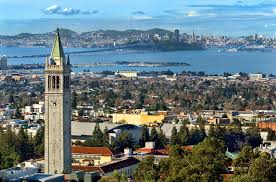
Setting an Example: Berkeley Outlaws Natural Gas

The Berkeley City Council has unanimously voted to ban natural gas in all new construction, a move critics say imposes higher utility costs on the poor.

Beginning January 1, 2020, new homes, townhouses and small apartment buildings will be without hookups for stoves, hot water, laundry and heating. The ban ultimately includes large commercial structures and apartment dwellings. Electricity is the name of the game.

There are those who object to all of this. Natural gas, after all, typically runs at half the cost of electricity, heats our homes faster, and is there for us when the lights go out.

What’s more, most of California’s electricity grid is generated by dirty coal from other states. So much for going green!

But I disagree.

I commend Berkeley for its courageous, innovative move as America’s first city to impose a ban on natural gas. You may have heard that natural gas is not only a cheaper alternative fossil fuel, but runs cleaner than coal and oil. That’s not true. In fact it’s worse, with methane leakage at 3%.

As for the increasingly utilized gas extraction technology known as fracking, its emission rate of methane leakage exceeds that of conventional natural gas by 30%, according to an exhaustive Cornell study. It’s also a dirty, wasteful process with huge toxic effects.

Methane is an especially heat-trapping gas, exceeding carbon dioxide by 34%. Moreover, whether it derives from conventional or fracking sources, natural gas competes with transitioning to renewable clean energy sources such as wind and solar, pivotal to limiting climate change and fostering the well-being of our children. It’s the very basis of the Council’s move. In a world winding down, later comes too late.

Sometimes considered a “bridge” fuel, the reality is that every fracking gas source comes on line with a life expectancy of 30-50 years, justifying a return on investor capital in the billions. This comes at a time when according to many climatologists, we’ve only twelve years to move the needle and mitigate catastrophic consequences for all life on earth.

Since we’re also talking about the cost to the poor, the dreadful reality is that POC are already paying a grievous price, often living near pollution sources. As the NAACP rightly points out, “race – even more than class – is the number one indicator for the placement of toxic facilities in this country. And communities of color and low income communities are often the hardest hit by climate change.”

I can’t go into the logistics in a brief post, but I believe it’s imperative we alter our GDP addiction with its “growth is good” mentality to a paradigm of social justice and economic parity that a green economy potentially fosters and without it cannot succeed. Why should 1 % own half the nation’s wealth?

We’re talking about saving life on earth! That’s you and me and the other guy, too! It begins with what we do now and the sincerity that tests our commitment. Yes, it’s going to hurt us, not only in the pocket book, but in our very lifestyles, eliminating those options we took for granted as piecemeal to the good life.

Let’s me put it this way: If you needed medical intervention, would you really opt for the less reliable, local guy over the more costly, but skilled and seasoned Mayo surgeon if it came down to saving your life? Can you put a price tag on survival?

But here’s some good news: A study by Energy+Environmental Economics found that transitioning to clean electricity-powered appliances in new construction would allow developers to build more affordable homes more quickly, resulting in considerable consumer savings. (No natural gas connection or internal plumbing.)

Berkeley knows the score. Twenty-five percent of California’s climate pollution comes from homes and buildings using fossil fuels. It comprises 27% of Berkeley’s greenhouse gas emissions. They chose a fossil fuel free future.

As for ourselves, we moved to Santa Fe, NM last summer and found natural gas pervasive in the community, with our house part of the grid. I’ve always been afraid of natural gas with its potential for leaks and explosions. I lost two family members from carbon monoxide. In a previous Minnesota home, I thought I smelled gas and called the gas company. I was right.

When they did the house inspection here in Santa Fe, I learned that the previous owner’s newly installed gas stove leaked carbon monoxide when you turned on the oven, common to high altitude country like New Mexico.

That was enough for us, yet shopping at the local Home Depot, we found only gas ranges and had to order our electric one. As for our washer and dryer, they’re now on electric, too.

Yes, we shoveled out some dough, but we go to bed each night with a pretty good chance of seeing daylight. Count me in on the safety factor!

In California, fossil fueled buildings and homes contribute to 25% of the state’s climate pollution as well as considerable financial outlays for asthma victims, many of them children and the poor.

Now, some fifty or more American cities, including San Francisco, are studying Berkeley’s move.

Thank you, Berkeley!

–rj

Ithaca, NY: A Best City

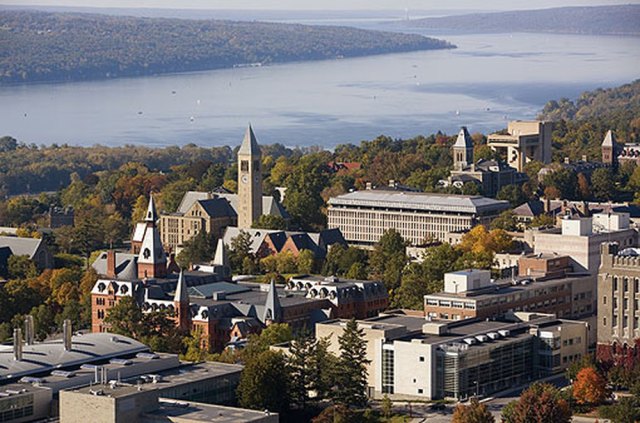
Ithaca, New York, at the southern end of Cayuga Lake, is a progressive town of about 30,000 people and hub to one of the state´s prettiest areas of undulating rural greenery, consisting of vineyards, apple orchards, pastoral farms and scattered water bodies known as the Finger Lakes.

I´ve never been to Ithaca, but it´s one place I wish I had. Everything I read about it tells me it’s a very broad minded place known for its demographic diversity and liberal cultural milieu, anchored by Ivy League Cornell University and Ithaca College. Like Chapel Hill where I went to grad school, it stands out as a blue dot, defiant and steadfast, surrounded by a sea of political red.

Ithaca has been consistently rated as one of America’s most livable college cities. Vegan and gay friendly, it’s home to the legendary Moosewood Cafe, made famous by its cookbooks. In 1997, Utne Reader deemed it “America’s most enlightened city.”

Alex Haley (Roots, The Biography of Malcolm X) was born here. Among its most famous residents was Vladimir Nabokov (Lolita).

I got interested in the place years ago when I found out that Carl Sagan taught at Cornell for many years and Diane Ackerman, one of my favorite essayists whose books on nature read like poetry, lives there.

A hilly city beautified by its gorges and waterfalls and must see Cornell Botanic Gardens sprawling over 4000 acres, Ithaca happens to be blessed with a vibrant environment ethic. Nearby, three state parks offer multiple hiking trails, camping and scenic vistas.

Every fall, its population swells with the influx of young people, yet Ithaca attracts retirees as well, despite its snowy winters.

I´m proud of Ithaca for standing tall to corporate gas interests (Millennium Pipeline and others), who a few years ago wanted to bring fracking to the area, stirring up a hornet’s nest.

A gateway Cornell study (2011) had revealed hydraulic fracking to be considerably more dangerous than even coal and oil in contributing to climate change in its inevitable association with methane leakage. As biochemist Robert Howarth pointed out in the study, methane poses a warming potential eighty-six times greater than that of carbon dioxide.

In short, natural gas isn’t the clean alternative touted by its supporters. Mostly methane, even small leaks are significant. Shale gas, which involves fracking, can emit an average 8% methane leakage over the life of a shale well.

Although it was Governor Cuomo who ultimately imposed a state-wide ban on hydraulic fracking in 2014, it came only after Cornell’s monumental study along with the efforts of the Ithaca-based Park Foundation and concerned townsfolk that brought the issue into public gaze.

Credit is also due to renowned Ithaca College biologist and author Sandra Steingraber with her expertise on the link between toxic chemicals and cancer (Living Downstream: An Ecologist’s Personal Investigation of Cancer and the Environment).

As a teenager, I used to go to summer camp at nearby Lake Canandaigua and remember its bucolic beauty to this day. Thankfully, it remains..

–rj

And a Child Shall Lead Them

Image result for greta thunberg

Today, May 24, was another walk-out-of-school day for thousands of children in 110 countries, urging their governments to take quick and meaningful action to avert environmental catastrophe. If only the politicians, and us, for that matter, would listen.

It’s certainly, if nothing else, gotten the climate crisis considerable media attention. Of course, it’s 16-year old Greta Thunberg of Sweden who started it all and is featured on the cover of TIME’s current issue as one of the most influential young people in the world. Just nine months ago, Greta stood alone outside the Swedish Parliament, carrying a sign proclaiming SKOLSTREIK FOR KLIMATET (School Strike for Climate).

Seemingly a brave, but naive and futile gesture of a teenager, it’s become a planted seed grown into a world-wide groundswell of young people taking climate change seriously. And why shouldn’t they, since their generation and their children will be affected most?

I like the way she articulates our crisis: “I believe that once we start behaving as if we were in an existential crisis, then we can avoid a climate and ecological breakdown. But the opportunity to do so will not last for long. We have to start today.”

In March, Greta’s singular protest kindled an estimated 1.6 million young people turnout, encompassing some 133 countries.

Seems she’s even converted her own parents. Both have followed her into veganism as a way of contributing less CO2 and methane into the atmosphere. Greta’s mother, an opera singer, now travels by train rather than by air. Greta would probably love speaking in America, but since there’s no train track across the Atlantic, guess she’d have to resort to a freighter; that is, just so long as it wasn’t carrying oil barrels.

Imagine my surprise that not everyone admires this green movement Joan of Arc, one commentator dubbing her a “millenarian weirdo”:

It actually makes sense that Ms Thunberg – a wildly celebrated 16-year-old Swede who founded the climate-strike movement for schoolkids – should sound cultish. Because climate-change alarmism is becoming ever stranger, borderline religious, obsessed with doomsday prophecies (Brian O’Neill, wattsupwiththat.com).

I should point out that O’Neill writes for a smart aleck anti-climate change blog, so I can’t take him seriously, given the estimated 97% of scientists who embrace the reality of climate change and the humans factor for its origin.

Others use Greta’s Asperger’s Syndrome against her in myriad personal attacks, mocking her monotone delivery and fixed stare. I like Greta’s nimble response: “Being different is a gift.”

My heart pounds for you, Greta! I have friends who exalt in nature, yet never join that needed protest to universalize our climate crisis into action that saves both nature and ourselves.

You’ve been nominated for the Nobel Peace Prize. Is there anybody more deserving?

–r. joly

Coming to Our Senses

Image result for amphibiansindangerDo you remember any of those asteroid disaster movies? Depending on how you do the counting, there were at least seven of these goosebump films, assuring you nightly bouts with insomnia. One of my favorites has to be Meteor (1979), staring Sean Connery. That ominous prelude:

Its power is greater than all hydrogen bombs. Its speed is higher than any rocket ever conceived. Its force can shatter continents. Its mass can level mountain ranges. It cannot think. It cannot reason. IT CANNOT CHANGE ITS COURSE.

In the movie, the danger was sufficient that both the United States and Soviet Union suspended their cold war animosity to mutually merge efforts to ward off an impending doomsday scenario.

Today, Earth faces an apocalyptic fate all too real, fostered not by a fast approaching asteroid straight out of science fiction, but largely of our own making in real time: climate change.

It’s difficult to believe that there are skeptics about something seemingly so obvious and menacing like climate change. A bit like believing the earth is flat. Several months ago, I actually had my barber tell me the earth was flat and I nearly fell out of the chair!

Between May 23 and May 26, or just a few days from now, elections for the European Parliament will take place. As a prelude, the German populist party, Alternative für Deutschland (AfD), hopes to augment its appeal by stridently dismissing human caused climate change as Klimawandelpanik (climate change panic). They are backed by the European Institute of Climate and Energy (EICK), a consortium of conservative scientists, with links to their counterparts in the United States.

In America, we of course have Donald Trump leading the anti-climate change brigade. Additionally, there are entities like the Committee for a Constructive Tomorrow and the Heartland Institute, the latter funded by fossil fuel interests.

They argue that human induced climate change is simply an unsettled matter, with no definitive science resolving the issue. To buttress their claims they like to draw on the The Petition Project that presents 31,000 signatories from the science community, supporting the conclusion that “there is no convincing scientific evidence that human release of carbon dioxide will, in the foreseeable future, cause catastrophic heating of the Earth´s atmosphere” (Petition Project).

In rebuttal, co-authored consensus studies of climate change by seven eminent scientists averaged a 97% probability of human causation (John Cook, et al). I should point out that far more than seven scientists have underscored the human factor. What happens is that when research establishes probability, scientists move on. Why belabor the obvious?

And then there’s the science of climatology, which exceeds meteorology, the latter fairly reliable for short term forecasts we’re accustomed to getting daily on our TVs or smart phones. Climatologists, in contrast to meterologists, can pickup likely long term weather patterns; let’s say, for example, fifty years into the future through applied physics, computer models, and statistical analysis. Overwhelmingly, given the current projections of rising atmospheric temperatures, the future weather landscape poses survival implications for a vastly changed earth.

Even when we humans accept climate change as a reality (very true these days in Europe), we’re wired through evolution to take stock of palpable, more immediate threats such as job loss, divorce, a declining economy, or possible physical danger such as a street mugging, not abstract, long-range scenarios. It doesn’t affect me now, so why bother?

We judge weather short-term through memory and emotion, not seeing developing long term patterns. Climate change thus poses a peculiar, subtle kind of threat, silent, ubiquitous, insidious, and unrelenting.

In the meantime, we know that climate change is accelerating with devastating consequences and that we are its seminal source. We’ve had several recent United Nation reports on the imperiled status of the Earth, but now comes its sobering May 6, 2019 findings:

1. One million of some 8 million plant and animal species are on the verge of extinction. Flora and fauna that form vital components of an ecological complex vital to our survival should be as imperative a priority as climate change. 66% of marine life and 75% of land environments have been “severely altered,” according to the report. Ten percent of insects, 40% of amphibians, 33% of marine mammals, and a third of reef-forming corals face extinction.

2. The impact of human population growth with its fossil fuel dependence,, urban growth, deforestation, expanding agriculture, excessive meat eating, ruthless plundering of exotic species, along with pollution, drives climate change and species extinction.

Meanwhile, Donald Trump has taken America out of the Paris Treaty, which at least attempted to set goals for diminishing carbon release into the atmosphere, and surrounded himself with lackeys denying climate change.

Concurrently, the Arctic and Antarctica continue their meltdown, the seas keep rising, and submerged coasts proliferate. Our oceans, covering 71% of the earth’s surface, grow polluted with human contaminants, much of it plastics. Alarmingly, water temperatures are rising, imperiling the Gulf Stream and Humboldt current on which much of Europe and the United States depend as moderating influences on climate.

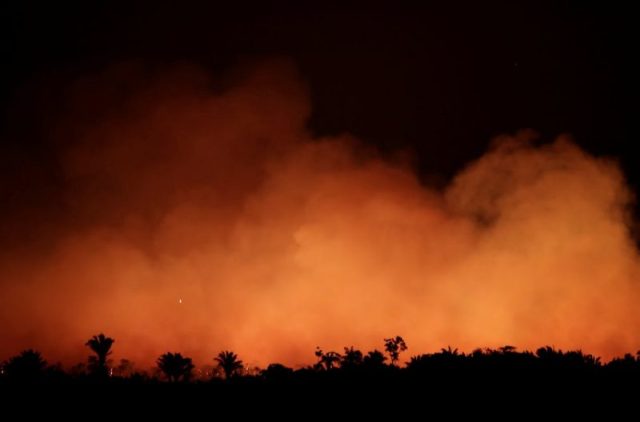
Forest fires and drought have become common calendar features, not only in California, but globally. Heat waves scorch Siberia, while record floods inundate Midwest farmlands and hurricanes intensify and become more frequent.

Unfortunately, the seeds of our demise are primarily fueled by market economies with their dependency on growth, leading to still further decimation, not only of Nature, but from the economic inequity that results. Oxfam tells us that in 2016 the wealthiest 62 people owned half as much as the world’s poorest people.

Desperate people worry about their immediate needs, not nature. They farm animal sanctuaries, log and burn forest to expand grazing and plant palm plantations, fish the seas to exhaustion, poach elephants, rhinos and other game.

Alarmingly, a current 2019 Pew Research Center poll shows climate change hovering next to last place as a bottom priority with the economy, health care costs, and education taking the top tiers ([https://www.people-press.org/2019/01/24/publics-2019-priorities-economy-health-care-education-and-security-all-near-top-of-list/]

In America, some twenty Democrats have announced their candidacy for the presidency, yet only two as of this writing have a defined strategy for combating climate change! The leading candidate, Joe Biden, still finds a place for coal, natural gas, and nuclear energy. He seems not to have heard of the Green New Deal (GND), our best shot yet at slowing both climate change and eliminating the income disparity emanating from an exploitive economy dependent on fossil fuels.

I worry about my grandchildren. What kind of a world are we about to bequeath them?

If we can’t come to our senses, give-up our selfish behavior, change our priorities, persist in denying the seriousness of climate change and our complicity, then we are indeed in trouble, the quality of life itself profoundly diminished, if not imperiled.

As Mark Twain memorably put it, “Better to build dams than wait for a flood to come to its senses.”

–R. Joly
Trophy Hunting Looms for Grizzly Bears

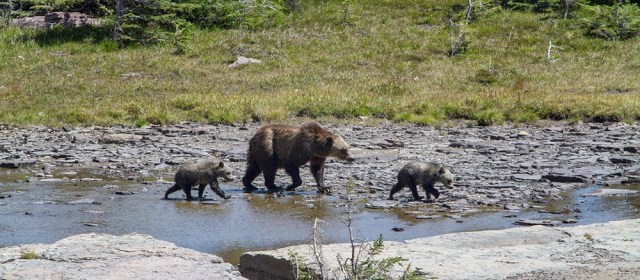
Averaging 800 pounds, powerful and fast moving, voracious defenders of their young, grizzly bears are a North American treasure deserving of our awe and worthy of preservation.
Native Americans held them sacred and embedded them in their legends, dances and paintings. Although they hunted them for food, clothing, and jewelry, they saw them as avatars of strength and courage conferring protection as the physical embodiment of spirit helpers. Wearing a bear claw necklace proffered security and good health.

At the turn of the twentieth century, an estimated 50,000 grizzlies roamed Alaska, Canada, and the American West. Unfortunately, by 1975, just 150 grizzlies remained in the lower U. S., most of them confined to the Greater Yellowstone Eco System.

Today, their numbers have increased to an estimated 1900 in the lower U. S. and their range by fifty percent, thanks to the Endangered Species Act. Some 150-200 grizzlies reside in Yellowstone National Park and another 500-600 within the Greater Yellowstone Eco System.

Yellowstone National Park attracts four million visitors annually, with tourists as eager to glimpse grizzlies as they do the Park’s thermal features.

Unfortunately, this great success story is now being used to justify revival of trophy hunting in Wyoming, sparked by Interior Secretary Ryan Zinke’s announced plan (June 22, 2017) to remove the Greater Yellowstone grizzlies from the Endangered Species Act. Management of the bears would be handed-over to Idaho, Wyoming, and Montana.

Despite receiving some 500,000 protests, the Fish and Wildlife Service (USWF) is going ahead with its implementation, pending final determination by the courts.

Wyoming state wildlife officials are relishing this move and want to allow a twenty-four bear kill this fall, including 14-females.

Trophy hunters would be allowed to kill any bears that stray from Yellowstone National Park.

More than forty years have been invested in bringing back these noble creatures, indigenous to North America, from the brink of extinction. Killing a pregnant bear would obviously eliminate their cubs.

Some fear that bait may be used to make them easier prey.

Ironically, the Wyoming proposal would not allow them to be hunted within one quarter-mile of a highway.

Hunters would pay $600 per bear.

Conservationists fear that actual killing limits would be exceeded.

Doubtless, monetary-minded game officials in Idaho and Montana will want in on the “ harvesting.”

The USWF’s Matt Hogan, former lobbyist for the Safari Club International, the world’s largest trophy hunting organization, has been the leading delisting proponent. Meanwhile, Zinke has announced plans to reallow importing of elephant and lion trophies into the U. S.

Oil and gas interests may also have pressured the delisting, which would open up public lands, i.e, grizzly habitat, for drilling. Hogan was appointed to the task, apparently not disclosing his ties to Anadarko Petroleum and Gas.

Native Americans were never consulted, despite the pleas of many Congress members, including Cory Booker and Bernie Sanders. Consequently, 125 Canadian and American tribes have signed a treaty calling for continuing protection of grizzlies and all animals sacred to tribal communities.

We, of course, know what happened in North Dakota with Trump issuing two memoranda encouraging resumption of the Dakota Access Pipeline just days after taking office, despite vigorous Standing Rock Sioux protests.

As is, an estimated one-hundred grizzlies are killed annually as roadkill, or by confusion with black bears during the hunting season, or by disgruntled ranchers who view grizzlies as livestock predators, and by poachers.

All of this comes even as grizzlies face declining primary food sources such as white bark pine nuts and cutthroat trout, forcing them to seek new habitat and increasing their risk for conflict with humans.

Environment encroachment remains an ongoing challenge along with the long term impacting of climate change on food resources. As Erik Movar of the Western Watershed Projects points out, “The Yellowstone region is one of the last places where grizzly bear still occupies its natural place as the king of the mountains. But the livestock industry continues to push sheep and cattle deep into the mountains, causing conflicts with grizzly bears and other native wildlife in their natural habitats. Turning grizzly bear management over to trigger-happy state agencies without guarantees that the bears will be protected turns back the clock to the dark days when predator killing was the rule and grizzly bear populations were eliminated.”

We know too well that wherever the human footprint establishes itself, wildlife is diminished. Bears shouldn’t have to coexist with humans. It’s the other way around.

—rj

You have every right to be afraid!

cropsprayingMany of us rightfully fear a Trump presidency for what it may mean for the welfare of our citizenry and nation.

Will Affordable Health Care (AHC) and Medicare be on the chopping block?

If you’re an undocumented immigrant, will Trump carry out his often repeated pledge to deport illegals and build a wall on the border with Mexico?

Will he foreclose on refugees, many of them Muslims?

On the the world stage, will he roll back Obama’s executive order that has restored relations with Cuba?

Will he undo the nuclear treaty with Iran?

While all of these concerns are legitimate, I’d argue that they pale up against the incipient threat posed by climate change, an issue virtually missing from the presidential debates, despite the earth’s very survival being at stake.

Alarmingly, in his October 100-day preview, Trump, who has repeatedly declared global warming a hoax, pledged he’d repeal the Clean Power Plan, withdraw from the historic Paris agreement (signed by 120 nations, setting targets for carbon), and lift restrictions on oil and gas development on public lands.

He’s also told us he’ll revive Keystone XL.

In recent days, the press has been focused on his potential choice for the important Secretary of State position. Nobody’s talking, however, about whom he’ll appoint as Secretary of the Interior.

At the moment, the scenario for environmental disaster looms large in Trump’s choice of Myron Ebell to oversee the transition of the Environmental Protection Agency, ironically founded by Richard Nixon. Ebell doesn’t believe in climate change either.

He’s also associated with the Competitive Enterprise Institute (http://SafeChemicalPolicy.org), which underplays the environmental and health consequences of industrial chemicals.

Ebell could also be Trump’s choice to head the EPA. For the record, Ebell opposes government efforts to curb global warming and the Paris Agreement.

As I write, it isn’t far-fetched that Trump might give the nod to Forrest Lucas for Secretary of the Interior. Lukas has contributed mega-bucks to Trump and Pence’s campaigns. An oil executive, he’d be in charge of our national parks and public lands. Native Americans–think North Dakota pipeline–might raise their eyebrows, given that one of the Department’s tasks is to monitor programs relating to Native Americans.

We haven’t heard yet on who’ll fill the Department of Energy either, but if Ebell doesn’t get the EPA or Interior nomination, he’d likely fill this vacancy. This, again, is a pivotal cabinet post, affecting environment in the Department’s mission to research, regulate, and develop energy technology and resources.

In the meantime, climate change isn’t when, but now. Lamentably, we learned just last week that due to the summer melting of Arctic ice, warm waters have swept over the South Pacific, killing coral, and substantially damaging the famed Great Barrier Reef off Australia’s coast.

We ‘re getting more droughts and flooding than the norm..

2016 will go down as our hottest year since we began keeping track of temperatures.

Scientists tell us we’re on pace, despite December’s Paris agreement, for an increase in earth’s average temperature of 3.5 Celsius, if not more, by 2100.

What this means to our children is that coastal cities like NewYork, Míami, and New Orleans will be mere abstracts of memory, or like the Atlantis of ancient myth, lost beneath the sea.

–rj

Introducing my hummingbird friends…

hummingbird-at-a-feeder-1They return every April to our Kentucky backyard, survivors of a 3000 journey from Central America, which includes a non-stop 500 mile flight across the Gulf of Mexico. It’s a journey my hummingbird friends will repeat again, returning in fall to their winter feeding grounds.

Knowing of their imminent arrival, I had faithfully set out our bright red hummingbird feeder in mid-April. For some reason, they prefer red and orange colors. Every spring, I’d be either sitting in the sunroom or outside, prepping the flower beds, when I would first spot or hear a solitary aerial scout probing, like some overhead helicopter, the landscape below. First of a coming vanguard, this sole wayfarer heralded spring’s rebirth, despite frequent rain, temperature dips, and clouds that frustrate the sun.

Always, as though set on a timer, my guests start their return journey the first week of October. I last saw them here on October 3, busily waging war with each other for first rights to their sugar drink. I know what this is about. It’s important for them to increase their body fat by half to fuel their arduous journey. I’m glad to provide a way station.

I’ve learned enough about hummingbirds to know this remnant flew-in from other haunts this fall, perhaps even from lower Canada, seeking to refuel. If I hadn’t seen any hummingbirds since early August, it was because my regular clientele were already embarked on their long journey. Hummingbirds begin their return migration as early as the waning weeks of July, extending through the second week of September, depending on the locus of their summer habitat.

The next day, they had vanished, nature stamping fall’s passport while signaling my own need to prepare our yard for winter’s long sleep.

Still, I keep the feeder out just in case there’s a straggler about. It happened one year. I had seen this seemingly forlorn hummingbird on our woodpile out back, which is quite unusual, since hummingbirds can’t walk or hop like other birds, given their tiny feet. That’s why their feeders lack perches.

Moving cautiously, I was able to get near enough to cup him in my hands and place him in an old shoebox, uncovered, for a quick trip to our vet. Along the way, Karen and I kept thinking anxious scenarios of what to do if he got loose in the car. But it never happened, thank goodness.

The vet, a bird specialist, shrewdly put sugar solution into a nose dropper and he started drinking–hey, a good sign. Then, suddenly, here he was, zooming around the exam room. Well, we got him back, cradled him into his box again, this time with aerated cover, and took him home.

Releasing him in the backyard, we watched our friend fly eagerly to a high pine branch, rest momentarily, before soaring out of sight, perhaps ready to resume his journey over land and sea.

I’d like to think he did well, but the final fate of migratory birds is an uncertain one at best. Their worst enemies are storms and loss of habitat through human intrusion. An estimated one third don’t make it. That’s why it’s incumbent you and I who have backyards do all we can to lend a helping hand to our aerial friends.

After all, they help us maintain the ecological balance on which life depends, including our own.

Postscript: Fun Facts about Hummingbirds:

  • Of 320 species in America’s, only 8 of them breed in the U.S., among the most notable, the ruby-throated hummingbird. Hummingbirds are found only in the Americas.
  • They live about 3-5 years.
  • Each species makes a different humming sound, determined by wing beats per second.
  • Their wings beat between 50 and 200 flaps per second.
  • Their tiny hearts beat 1200 times a minute.
  • They take 250 breaths per minute at rest, which isn’t often.
  • They can straight fly at 30 mph, dive at 60 mph.
  • Among bird species, they’re your ninja warriors, known to attack jays, crows, and even hawks.
  • In size, some species are so small they’re consumed by other insects such as praying mantis and dragonflies.
  • They’re the only birds that can fly backwards and sometimes upside down.
  • Hummingbirds must eat twice their body weight daily, and to do this, they visit hundreds of flowers, primarily feeding on nectar. (I make a sugar substitute formula for them, changing it every 3 or 4 days to avoid mold.)
  • Unlike other migratory birds, each hummingbird makes a solitary journey, and not as part of a flock. (Hard to imagine, even for a human, crossing the Gulf of Mexico by yourself, without map and compass. But these 3 inch creatures are nature’s miracle. Even more spectacular, young birds travel to a homeland they’ve never seen, depending solely on instinctual navigational skills.)


Macdonald’s H is for Hawks: Finding Passage

The archaeology of grief is not ordered. It is more like earth under a spade turning up things you had forgotten, surprising things come to light: not simply memories, but states of mind, emotions, older ways of seeing the world.
–Helen Macdonald, H is for Hawk

Helen Macdonald with her goshawk, Mabel, near Cambridge, England, 2007

I’ve finished reading Helen Macdonald’s H is for Hawk and want to weigh in on it like someone who’s just dined gourmet and relishing the deed, must boast his good fortune.

I was attracted to Macdonald’s memoir because of its critical esteem in those bastions of literary prowess like The New Yorker and The New York Review of Books, which often ration praise and, even then, not without censure.

H is for Hawk has won two prestigious book awards as well: The Samuel Johnson Prize for non-fiction and Costa Book Award for best book in any genre.

This is Macdonald’s fifth book.

She teaches and does research at Cambridge University.   Her interests include not only falconry, but history and poetry (3 published collections).

Macdonald’s memoir tells the story of her depression following the unexpected death of her father, Alistair MacDonald (2007), a longtime photographer and  journalist for the Daily Mirror, and her resorting to falconry to relieve her grief.

Macdonald’s goshawk, Mabel

This isn’t the first occasion we’ve seen a book testifying to the ability of animals to uplift troubled humans, but may well be among the best. In venturing into the first several pages, I knew immediately I’d be keeping company with a masterpiece.

Macdonald’s training of a goshawk provided a means of continuity with her father, an ardent plane spotter and bird enthusiast, who also taught her patience, a primary motif contributing to her healing and integral to harvesting nature’s plenitude::

My father’s talk of patience had held within it all the magic that is waiting and looking up at the moving sky.

But Macdonald’s memoir is not your romp into a Wordsworthian nature, benevolent and moral.  Mabel kills her prey, suddenly and savagely, or like those artifacts of the human world, airplanes, which link the human and the natural; and yet, even then, there is a vital difference separating the two, with the balance favoring nature:

In my time with Mabel I’ve learned how you feel more human once you have known, even in your imagination, what it is like to be not. And I have learned, too, the danger that comes in mistaking the wildness we give a thing for the wildness that animates it.  Goshawks are things of death and blood and gore, but they are not excuses for atrocities.  Their inhumanity is to be treasured because what they do has nothing to do with us at all.

The writing itself is magnificent in its artfully composed sentences resonant with observation and chiseled detail of landscape and of her travails in training her goshawk, Mabel,  and, most of all, in its poignant psychological journey of retreat from the human community and, ultimately, return to its renewed embrace.

Her memoir is also interlaced with T. H. White’s works, renowned for their Arthurian themes and with his The Goshawk (1951) in particular.

White, who lacked experience, had earlier attempted to train a goshawk, only to fail.  Macdonald, however, didn’t suddenly take up the hobby or, more precisely, being an austringer (i.e., a hawk trainer), having previously trained peregrines, merlins, and kestrels:

While the steps were familiar, the person taking them was not. I was in ruins. Some deep part of me was trying to rebuild itself, and its model was right there on my fist. The hawk was everything I wanted to be: solitary, self-possessed, free from grief and numb to the hurts of human life.

Although MacDonald identifies in many ways with White, who becomes a projection and touchstone of her own anguished struggle to evade life’s seemingly malevolent caprice, she fortunately finds her way past his psychological morass.

As I grew happier his presence receded, his world more and more distant from mine.

Like White I wanted to cut loose from the world, and shared, too, his desire to escape to the wild, a desire that can rip away all human softness and leave you stranded in a world of savage, courteous despair.

Unlike White, she learns that “hands are for other human hands to hold. The wild is not a panacea for the human soul. Too much in the air can corrode it to nothing.”

–rj