I Altered My Routine Last Week


I altered my routine last week, signing up for an eight week edX course, The Living Amazon: Science, Cultures and Sustainability in Practice.

It’s all that I could hope for, an intense, but well-informed analysis of the Amazon’s plight, with 21% of its forest already harvested to make room for cattle ranches, mining and lumber interests.

The fallout for its 1 million indigenous, suddenly brought into contact with an entrenched, and growing profit-motive corporate presence, has been disastrous, violence not uncommon, indigenous lands degraded or appropriated, and cultures eroded.

Not only does the Amazon, so vital to mitigating climate change, need saving, but social justice must prevail.

The course, hosted by distinguished earth system scientist Carlos Nobre, is conducted in Portuguese, but subtitled in Spanish, and English.

Despite the Amazon’s plight, Nobre doesn’t lose hope that remedies can be found to halt the carnage while simultaneously offering a prosperous economic future, founded on eco-safeguards and beneficial for its indigenous peoples.

Frankly, if we don’t achieve solutions, the consequences will prove apocalyptic for all of us. As is, we’re nearing the tipping point of no return in the existential challenge of climate change.

In actuality, the Amazon transcends Brazil, the Amazon basin embracing portions of nine countries, housing the largest tropical forest on earth and, with its river system, 7 million square kilometers, or about 40% of South America.

50 diverse Andean-Amazonian ecosystems are within its traverse, collectively comprising 13% of the world’s biodiversity. 34% of the world’s birds and 20% of its mammals are endemic to the basin.

The Amazon biome functions as an important carbon sink, helping
to reduce the global heating rate. Unfortunately, its effect seems to be weakening, the basin experiencing diminished rainfall and forest fire occurrence.

I’m excited about this course and trust that informed, I can do my part in helping sustain the Amazon’s crucial contribution to earth’s welfare.

rj

What Happens Then? Trump’s Myopic Climate Change Agenda

Caring about Mother Earth like many of you, I lament Trump’s myopic approach to climate change reflected in his pledge to curtail the provisions of the Inflation Reduction Act and withdraw from the Paris Agreement.

Renewable energy alternatives like solar, wind, and electric vehicles will be curtailed, prolonging our fossil fuel dependency.

Unfortunately, climate change didn’t resonate as an important issue for many voters, inflation, job security, healthcare, and immigration taking precedence.

Not infrequently, public attention to climate concerns follows the oscillations of natural disasters and temperature rise, snuffed out shortly after each by more immediate local concerns.

As is, we’re already behind in our efforts to mitigate climate change, hastening earth’s demise and dooming future generations to apocalyptic consequences formerly the realm of science fiction.

Unlike the biblical Joseph, we are unlikely to stow up for the future. Alas, the seemingly distant phenomena of melting glaciers, droughts, famines, and biodiversity loss may falsely shelter us from their unfolding consequences.

The danger looms that Trump’s intransigence on climate change may motivate developing nations to do the same in view of budget restraints.

An excerpt from poet Neil Gaiman’s moving tribute to Rachel Carson, “After Silence,” speaks to our malaise.

What happens then?
Are consequences consequent?
The answers come from the world itself
The songs are silent,
and the spring is long in coming.

There’s a voice that rumbles beneath us
and after the end the voice still reaches us
Like a bird that cries in hunger
or a song that pleads for a different future.
Because all of us dream of a different future.
And somebody needs to listen.
To pause. To hold.

America’s Fossil Fuel Addiction: A Call for Change

As another storm, Milton, churns its way in the Gulf toward FL, Americans continue their love affair with fossil fuels, reluctant to embrace habit change and the inconvenience it imposes. One of our candidates for the nation’s highest office, with PA in mind, now preaches fracking; the other wants to roll back all climate change regulation.

China puts us to shame, last year installing 57% of all new solar plants around the world.

Likewise, Singapore, its people on board, plans to be zero emissions free by 2050.

As is, expect more storms, more heat, more fires, more drought, more ecosystems on which our survival depends, compromised or destroyed. A recent Lancet Countdown analysis (2023) reports that 80% of the 86 governments assessed were subsidizing fossil fuels, providing a collective $400bn in 2019.

We are addicted, myopic about the myriad consequences of fossil fuel dependency we relegate to a remote future.

Presently, there’s not a single Earth System that doesn’t face collapse.

We need to be on a war footing, the environment our highest priority, if we’re to avoid apocalyptic scenarios like that of Appalachia emerging a salient headline of our daily lives.

If we stubbornly resist taking action to mitigate the situation, the ecological balance — a product of millions of years of evolution that sustains life on Earth — may soon collapse, leading to our eventual extinction.

—rjoly

The Lights Are Flashing Red

Famed entomologist E. O. Wilson passed into infinity in December, 2021.
He was 92.

I came upon him late in my life, but not too late for him to have left me with a reverence for his boundless intellect, inveterate inquisitiveness, and fervent championing of our fellow creatures, mostly outside human ken, myriad species vital to Man’s survival, yet victims of humanity’s arrogant trespass.

Recently, an extended research project, launched by the World Wildlife Fund, revealed that of the 32,000 species it analyzed, 69% of them are in decline. Shockingly, 2.5% of mammals, fish, reptiles, birds and amphibians have gone extinct just since 1970 (World Wildlife Report).

While species extinction surely is an integral fact of our 4.5 billion old planet’s history, the salient evidence of natural selection favoring those able to adapt to largely inveterate climate distillations, several near-Earth object (NEOs) visitations, volcanic acidification of oceans and acid rain, impacting land chemistry, their repetition has become marginalized by evolution’s new arbiter of destiny, homo sapiens.

“The message is clear and the lights are flashing red,” says WWF International’s Director General Marco Lambertini, one of the report’s authors.

Climate change threatens the next massive die-off, witnessed in every day record breaking temperatures, accelerating violent storms, rising sea levels, droughts, and massive fires.

Meanwhile, we continue to pour heat-trapping gases like carbon dioxide and methane into the atmosphere. All of this affects habitat, destroying the intricate ecological web that sustains us.

It doesn’t make for breaking news headlines, but should, that the Arctic
is warming four times faster than the rest of our planet, threatening the demise of the jet stream, resulting in still more climate instability.

We live our lives addicted to trivia, fingers in our ears, indifferent to the existential challenge that poses our extinction. It seems a human predilection to forfeit the future for indulgence in the ephemeral present. Rome burns while Nero plays his fiddle.

Thus far, efforts to mitigate climate change and restore balance have failed to achieve their targets. We even have a candidate running for the presidency who’s pledged to roll back environmental regulations.

Not to be outdone, we have President Biden’s recent approval of the Willow Project (March 1923), allowing ConocoPhillip’s massive oil drilling rights on Alaska’s North Slope in the National Petroleum Reserve, despite his campaign promise he’d prohibit drilling on public lands (The Willow Project).

We knew where Trump stood, but we trusted Biden, whose administration has also approved the auctioning off of 73 million acres of waters in the Gulf of Mexico to offshore oil and gas drilling interests, encompassing an area twice the size of the Willow Project (Common Dreams).

Universal human-induced loss of forest, wetlands, and ecosystems hastens the trajectory of apocalyptic consequence for future generations.

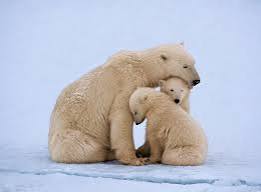
Meanwhile, beleaguered polar bears attempt to adapt, but aren’t succeeding. Given the melting ice, they cannot access their traditional foods, resulting in their numbers declining 30% since 1980 (Polar bear decline).

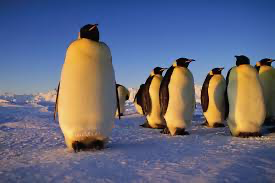
Penguins haven’t fared any better, their numbers declining up to 10% (Penguins declining).

Truth be known, we’re approaching a tipping point at which the ecosystem collapses.

E. O. Wilson rightly faulted humans for earth’s crisis: “Deeming ourselves rulers of the biosphere and its supreme achievement, we believe ourselves entitled to do anything to the rest of life we wish. Here on Earth our name is Power” (Half-Earth: our Planet’s Fight for Life).

Each species is its own miracle. By the century’s end, most of today’s faltering species will be gone:

No birdsong to greet the new day,
No crickets rubbing their wings;
An absence of croaking frogs at the pond,
Zinging dragonflies but memory.
Amid parched landscape, a wounding silence.

–rjoly

Antigua’s Chinese Enclave: What it Means

ANTIGUA: TOURIST PARADISE:

A mere 264 miles from US shores lies the sovereign Caribbean island nation of Antigua and Barbuda, a tourist’s paradise blessed with stable, year round temperatures; several hundred pristine beaches; lush lagoons; and hideaway natural harbors. It has mountains, too, offering scenic views of a vast mangrove forest. 80% of Antigua’s GDP derives from tourism.

But Antigua, like other island nations, faces immense challenges in the maelstrom of climate change: increase in hurricane intensity and frequency, rising sea levels, erosion, salt water intrusion, and ground water depletion.

2017 saw Antigua devastated by Category 5 Irma, destroying 97% of
Barbuda’s infrastructure, rendering it nearly uninhabitable.

Often dubbed “the Switzerland of the Caribbean,” Antigua finds itself lacking the financial resources to sustain its economic viability in the context of climate change and yielded to Chinese overtures: a 2 percent interest loan, with a 5-year moratorium on repayment.

Antigua’s prime minister, Gaston Browne, views China as a friend: “I see China, though, as a country that stands on truth, and a country that, you know, at least has some level of empathy for small states, and generally for poor and dispossessed persons globally” (Newsweek. May 5, 2024).

ENVIRONMENTAL THREATS POSED BY CHINA IN ANTIGUA:

Newsweek’s recent study of leaked documents indicates 1000 acres of forest will be razed to accommodate a Chinese Economic Free Zone juggernaut, ultimately consuming 2000 acres for housing and businesses. It includes an airport, up to seven resorts, a shipping port, and Antigua’s first four lane highway. Construction has begun.

Bearing all the earmarks of a Chinese enclave, the completed project confers independent immigration and customs formalities for the enclave and a license to issue passports. It will not pay income taxes, unlike native Antiguans, sales taxes, or import duties. Anyone investing $400,000 or more will be eligible for Antiguan citizenship

Browne touts his Chinese venture as an investment in the future, creating hundreds of jobs.

Browne sweetens the deal by promising environmentalists a 70 acre mangrove reserve and a 60 acre nursery for growing 100,000 trees.

This hasn’t pacified the island’s environmentalists, however, who contend the free zone transverses the island’s largest marine reserve, under legal protection since 2005, and destroys most of its mangrove forests, a haven for migrating birds.

They point out the area’s “nesting ground for critically endangered sea turtles, the threatened West Indian whistling duck and the Antiguan racer, once dubbed the world’s rarest snake, brought back from the brink of extinction by efforts from local environmentalists” (Newsweek).

Browne angrily brands his critics “ecoterrorists.”

AIR AND WATER POLLUTION:

China has a history of contributing to pollution through industrial production and waste processing. Enforcement of environmental protections is often ignored when it comes to garbage, water, atmospheric, and excrement pollution, undermining economic development and investment.

Opponents insist the Antiguan government adequately address these issues, which could have deleterious effects on soil ecology, agricultural production, and water supply.

Antigua’s first environmental report by the government’s environmental management authority, issued in 1992, proved alarming in terms of pollution, waste disposal, deforestation, and entrepreneurial nonchalance.

As for the accommodation sector, the study noted that the water supply for the bankrupt Grand Royal Hotel was found inadequate, singling out Chinese businesses for dumping.

OVERFISHING AND MARINE ECOSYSTEM DEGRADATION:

Chinese nationals also have a legacy of illegal and unregulated logging of parrotfish in the coral reefs, which are important to the marine environment of Antigua’s Marina Bay. As such, not only are the food chain and the environment in peril as acres of mangroves fall to chainsaws, but its fisheries as well

China’s relentless pursuit of high-quality fish (apex predators in the ocean communities), and the destruction of the ecosystems that consistently produce these creatures, have been implicated as the main culprits in extensive ecosystem degradation when applied at galactic scales to Africa, the American Pacific coast, and now the Eastern Caribbean.

Buying seafood from China, which will be allowed to operate a fish farm, has negative consequences for both the environment and Antiguan fishers. Chinese vessel owners profit greatly from buying or leasing fishing rights from over 60 countries, including Antigua and Barbuda. While this provides a trillion meals per year, it causes damage to the ocean.

HISTORY OF CHINESE CARIBBEAN INVESTMENT:

The major Chinese enterprises in Antigua mainly involve construction, infrastructure, real estate, and hotels. The total value of China’s FDI in the seven countries of the Organization of Eastern Caribbean States (OECS) was estimated at almost 300 million US at the end of 2011. Chinese financing came in the form of concessional loans. In the Eastern Caribbean, it funded the construction of the national stadium, the American University of Antigua, and the Lyndhurst Road Development Project. China has also engaged in a number of technical cooperation projects in capacity building and training and granted subsidies to the Tropical Storm Grant Program.

The bottom line is that China’s growing influence on Antigua’s politics and economy comes at a cost, primarily to the environment and the United States. Air and water pollution in Antigua are predominantly caused by Chinese firms.

The challenges deriving from air pollution and inadequate addressing of such concerns leave open the question of whether a distinction should be made in Antigua between government policies attracting investment contributing to the economy while exacerbating the country’s environmental problems and those policies that mitigate polluting.

Antigua’s economic growth in the last decade has been due to investments and loans from China, which reflect China’s strategic objective in the Caribbean. Smaller island nations have been overly enthusiastic in embracing China’s support since they have been relegated, as well as stigmatized, by powerful global financial institutions in times of crisis. The Chinese have presented their assistance with no condition of policy or regime change, thus undermining the frequent dictates of the Washington Consensus.

China has been exploiting the vulnerability of developing nations. If Beijing can increase its investments in countries that are dependent on tourism and other single export industries, it can anticipate predictable returns. Focusing on countries that rely on imports, not on natural resources, China is now the second largest trading partner with some Caribbean countries.

POTENTIAL FOR ESPIONAGE AND CYBERSECURITY RISK:

Given its proximity to US shores, Antigua obviously has strategic significance.

On August 17th, 2020, former Trump administration Chief of Staff Mick Mulvaney warned that China’s post-crisis economic policy, including investment in impoverished Caribbean nations like Antigua and Barbuda, jeopardizes US security.

Historically, the Monroe Doctrine (1823), was strictly enforced to keep foreign interests from interference in the Americas. Among its provisions, further colonizations in the Americas would be viewed as threatening US interests.

In 1861, France attempted creating an empire in Mexico, encountering protest.

In 1962, Russian missile intrusion in Cuba nearly launched WWIII.

In 1983, President Reagan committed troops to expel Cuban military from pro-Soviet Union Granada.

Will Antigua become an espionage base like Cuba?

While the U.S. military’s Southern Command (SOUTHCOM) has issued concerns about China’s growing presence in Antigua and the Caribbean region, the Biden administration has been silent.

–rj

Farming Octopuses: Are There No Boundaries?

The lines are long at the Seattle Aquarium’s annual February Octopus Week, with the Octopus Blind Date on St. Valentines Day its highlight, attracting hundreds, if not thousands, to witness a potential Octopus mating.

By any measure, Octopuses are wondrous creatures as smart as your golden retriever. With a larger centralized brain than that of all animals except birds and mammals, they’re neurological marvels with advanced capabilities. 

Amazingly, each of its eight legs contains a mini brain, assisting the primary brain in local control. Evolving over 300 million years into complex organisms, octopuses are the most cerebral of the invertebrates. We humans are late interlopers, having been here by most scientific estimates a mere 200,000 years as recognizable homo Sapiens.

Endowed with nine brains in all, 500 million neurons, and three hearts, they can open prescription bottles, use tools, deceive predators, and exhibit personalities. The two supplementary hearts help in supplying oxygen. Octopus blood is blue because of its oxygen-carrying pigment, hemocyanin.

Octopuses can even distinguish people, some of whom they dislike, which shows they have memory. Affectionate, they like having visitors scratch their heads.

They’re enthusiastic when it comes to toys. Throw them a bottle or ball and they’ll play with it.

And those large eyes, so human like, yet far more complex, never cease to fascinate aquarium goers.

They’re masters at camouflage too, not merely to evade predators, as changing color can reflect their moods and health.

Sadly, octopuses have short lifespans, at most, two or three years. After mating, males become senescent and females die when their eggs hatch.

Found in all oceans, 300 known species of octopuses exist, varied in size and weight. No other invertebrates come close to these creatures in beauty, intelligence, capability, and complexity.

I recommend watching the Oscar winning Netflix documentary, My Octopus Teacher, to appreciate more fully the wondrous splendor of these evolutionary miracles of the sea.

Curious, exploratory, and affectionate, they face an ominous future, as
Octopus is increasingly a featured menu option in haute cuisine restaurants of the Western world.

Culinary octopus fare isn’t anything new, of course, particularly in Asia. It’s simply that economic interests have moved to exploit increased demand and replace diminished sea life largely from over fishing.

Between 1950 and 2015, the harvesting of wild octopuses has increased tenfold, or to an estimated 359,000 tons annually, principally by China Japan, and Mexico. African fisheries have now joined them, expanding their catch to octopuses and contributing to a further decline in their numbers.

Ominously, Spanish international Nueva Pescanova has recently announced plans to open the world’s first commercial octopus farm in 2024 in the Canary Islands, entailing the slaughter of 3000 tons of Octopus vulgaris per year, i.e., 1 million octopuses. Octopuses would be killed by placing them in water at -3C/26F temperature.

Jonathan Birch, associate professor at the London School of Economics, headed a review of more than 300 scientific studies, revealing that octopuses feel pain and pleasure, leading to their designation as “sentient beings” in the UK’s Animal Welfare (Sentience) Act 2022.

Prof Birch believes that high-welfare octopus farming is “impossible” and that killing them by “ice slurry” assures their slow, painful death.

Proponents, however, argue that octopus farming is necessary for the protection of wild stock, the same argument they used to justify the farming of salmon, now a lucrative industry supplying 70% of consumed salmon.

Further, we are living in a time of growing human population, with the UN projecting a population of 9.7 billion by 2050, much of it occurring in developing nations deeply affected by climate change, reducing their food resources.

Proponents contend that aquaculture assures a safer consumer foodstuff, free of mercury, lead, and parasites, pointing to salmon farms as an example.

But this isn’t true, as farmed salmon are deliberately fattened, and, consequently, prone to accumulating more PCBs (polychlorinated biphenyls), a persistent organic pollutant.

As for parasites, sea lice infestations have been widely reported in aquaculture farms in Canada, the UK, Norway, and Ireland. Sea lice chew on salmon, creating lesions that dilute a proper salt-to-water balance.

Aquatic farming results in still further decline in wild fish numbers. Currently, one third of the world’s catch is used as feed for its farmed captives.

Unfortunately, the harvesting of farmed octopuses suggests a further expansion of factory farming with its inherent cruelties and environmental consequences.

Currently, some 550 species of sealife are now farmed, from oysters and shrimp to salmon, trout, and bluefin tuna, and this is only the beginning

The bottomline is whether an intelligent creature, the octopus, should be exploited at all.

Are there no boundaries for humans? Must we someday awake to find we’ve emptied the seas? That dolphins, whales, and octopuses are simply the stuff of memory relegated to children’s picture books?

–rj

Jane Goodall’s “Reason For Hope: A Spiritual Journey”

Finished reading Jane Goodall’s Reason For Hope: A Spiritual Journey, minutes ago, a compelling, yet difficult read, as Goodall bares not only triumphs, but personal tragedies in her long life.

Renowned for championing chimpanzees, our closest relative and, now, an endangered species, at 89 she travels widely, raising funds and informing audiences of the myriad challenges of entrenched poverty, species loss, and climate change. In 1950, 2 million chimpanzees roamed Africa’s then teeming wilderness. That’s dwindled to just 150,000 currently.

A compassionate woman who empathizes keenly with all who suffer, whether humans or animals, she’s not without hope that the human capacity for good as well as evil will ultimately triumph, saving not only mankind, but a beleagured Mother Earth. Above all, abides Jane’s vigorous faith in a greater Consciousness that pervades our universe and seeks our good.

Salient passages:

“But I have tried to write my story honestly—else why write the book at all?”

“It is probably the case that inappropriate or morally wrong behaviors are more often changed by the influence of outsiders, looking with different eyes, from different backgrounds.”

“In particular I became intensely aware of the being-ness of trees. The feel of rough sun-warmed bark of an ancient forest giant, or the cool, smooth skin of a young and eager sapling, gave me a strange, intuitive sense of the sap as it was sucked up by unseen roots and drawn up to the very tips of the branches, high overhead.”

“I saw chimps use and modify other objects as tools, such as crumpled leaves to sop rainwater from a hollow in a tree. Stones could be missiles; some of the males threw with good aim—as I sat there, keeping vigil, I thought, as I have thought so often since, what an amazing privilegeit was—to be utterly accepted thus by a wild, freeanimal. It is a privilege I shall never take for granted.”

“I found that my whole attitude to eating flesh abruptly changed. When I looked at a piece of meat on my plate I saw it as part of a once living creature, killed for me, and it seemed to symbolize fear, pain, and death—not exactly appetizing. So I stopped eating meat. For me, one of the delightful side effects of becoming a vegetarian was the change in my own health.”

“And people are beginning to suffer; in some places women must dig up the roots of trees long since cut down to get the firewood they need for cooking. And all this change is because the numbers of people have increased dramatically—mainly due to the explosive population growth, but also due to repeated influxes of refugees from troubled Burundi in the north, and more recently from eastern Congo. And this scenario is repeated again and again across the African continent and other developing countries: increased population growth, diminishing resources, and the destruction of nature, resulting in poverty and human suffering. Yes, we are destroying our planet. The forests are going, the soil is eroding, the water tables are drying, the deserts are increasing. There is famine, disease, poverty, and ignorance. There is human cruelty, greed, jealousy, vindictiveness, and corruption.“

“Each one of us matters, has a role to play, and makes a difference. Each one of us must take responsibility for our own lives, and above all, show respect and love for living things around us, especially each other. Together we must reestablish our connections with the natural world and with the Spiritual Power that is around us. And then we can move, triumphantly, joyously, into the final stage of human evolution—spiritual evolution.”

—rj

Jane Goodall: My Hero

Every now and then, I like to honor in Brimmings those I cherish as heroes. They stand apart in their daring, accomplishments and, above all, in their goodness. Jane Goodall comes to mind.

She’s 87 now, passionate as ever about the fate of our beleaguered planet, spending much of her time these days lecturing widely across Europe, North America, and Asia, to raise funds for her beloved chimpanzees of Tanzania’s Gombe National Park and the subsistence farmers who crowd its borders, encouraging her audiences to find ways in their daily life to heal the earth and the consequences if they don’t.

As a child, her love for animals came early, on one occasion as a 4-year old, taking earthworms to bed. At age 11, she came upon the Tarzan books and it changed everything. “I decided that when I grew up, I would go to Africa, live with animals and write books about them.”

But women didn’t do things like that. They belonged in the home, taking care of their men.

Besides, her family lacked the resources to send her to university.

Not to be deterred, she saved up her money from her secretary job in London and in 1957, at age 23, set out for Kenya to stay with a friend. Soon she was working as a secretary in Nairobi, heard about famed archaeologist and palaeontologist Lewis Leakey, and paid him a visit. Impressed with her knowledge of animals, Leakey hired her as his assistant and soon she was digging for fossils in Olduvai Gorge on the Serengeti Plains.

Then came the day Leakey asked if she’d like to research chimpanzees in Gombe National Park, and she said yes.

The problem remained that she was a woman, didn’t have a degree, and lacked funding. A year later, a wealthy American businessman supplied the funding, telling Leakey, “OK, here’s money for six months, we’ll see how this young lady does.”

It would begin a sojourn of 60 years among the chimpanzees, and still counting. She discovered they can use tools and have a defined social structure: “I am amazed to know how chimpanzees are very much like humans. Biologically, the DNA of chimps and humans differs by only just over 1 per cent. The blood of a chimpanzee is so like ours that you could have a blood transfusion if you matched the blood group. Chimpanzees can learn American Sign Language (ASL). They can learn about 400 of the signs of ASL, and they can use them to communicate with each other – although they prefer to use their own postures and gestures.”

I used to think of chimps as peaceful creatures, munching bananas as the day is long. Alas, as Goodall discovered, they’re like us in their tribalism, attacking other chimp communities. Keen predators, they aren’t hesitant to feast on bonobo monkeys, small antelopes, and wild hogs:

“It was a shock to me when I first realized that chimpanzees, like us, had a dark side to their nature; in interactions between neighbouring groups and communities in particular, there can be violent behaviour. Groups of males patrolling the boundary of their territory may give chase if they see strangers from a neighbouring group, and they may attack, leaving victims to die of wounds inflicted. But we can take comfort from the fact that they also show love and compassion. They can show true altruism.“

Sadly, these creatures, so much like ourselves, with intellect, distinct personalities, and emotions, are becoming extinct: “They’re disappearing because of the destruction of their habitat and ever-growing human populations. They’re disappearing because they are being hunted for food – not to feed hungry people, but because of the commercial hunting of wild animals, which is facilitated by the intrusion of new roads created by logging companies.”

Realizing that something must be done to lessen the human footprint, she and others founded Roots and Shoots to involve third world communities in the environment’s preservation, enhancing their economies and welfare with jobs, schools, medical clinics, and teaching crop rotation.

While poorer populations can destroy a habitat through intrusion in a desperate attempt to find new land for food production, slashing and burning their way through primeval forest, the bulk of environmental destruction comes from the materialism of rich nations, eating more meat, dependency on fossil fuels, factory farming with its consequent pollution, misuse of water resources, planes and cars spewing CO2 into the atmosphere, warming the seas, melting the glaciers, raising the tides.

I like it that Goodall is keen on limiting population growth to lessen the ubiquitous human footprint that threatens wildlife and is largely responsible for species decline and extinction, unlike other environmental and organizations such as the Sierra Club, reluctant to take up the issue because of its potential racial overtones.

We hear a lot about poaching, but exploding population growth in Africa poses devastating consequences, not only for indigenous fauna and flora, but for humans as well in the context of climate change and diminished resources. A UN study, for example, projects Nigeria’s current population of 200 million will double to 401 million just by 2050 and 721 million by century end.

Tanzania, home of Gombe National Park and Goodall’s research, has a current population of 68 million. By 2100, its population will swell to a projected 283 million: Goodall knows this: “We cannot hide away from human population growth, because it underlies so many of the other problems. All these things we talk about wouldn’t be a problem if the world was the size of the population that there was 500 years ago.”

I admire her boldness, whether addressing population growth, human aggression, meat eating, habitat loss, and climate change. There’s something alluring about those like Goodall who don’t mince words, daring what our anxieties disallow.

Goodall, nevertheless, remains optimistic: “Every one of us makes a difference every day. And if we would just spend a little bit of time thinking about the consequences of the choices we make each day – what we buy, what we wear, what we eat – there is so much we can do. Collectively, that will start to make bigger changes as more people understand that their own life does make a difference.”

While Goodall is renowned for her decades-long study of chimpanzees, I would contend her greatest contribution lies with her inclusion of the needs of local populations in minimizing habitat loss and species decline, revolutionizing conservation.

Dr. Goodall, a pioneering woman defying cultural boundaries, is my hero, brave, determined, assertive, living alone in the jungle for 60 years, a friend of animals, a champion of Mother Earth, always with passion and never without hope.

–rj

We Are Losing Earth on Our Watch: The Unfolding Crisis of a Warming Planet


I wanted to walk my two miles this morning, but stepping outside, blasted by the double whammy of humidity and a temperature already at 83 F and rising fast, I thought better of it.

It’s like this virtually everywhere these days. Our children, vacationing in Palm Desert, CA, relayed it reached 118 F there yesterday.

2016 was the hottest year on record. This year is likely to be hotter still.

Some suffer grievously. There’s Phoenix, AZ, with its 27 straight days of 110 F plus temperatures, its denizens reliant on air conditioning to get them through. I ponder the city’s fate were the electric grid to give way. Fifteen percent of Phoenix’s population lives in poverty, many on the streets, exacerbating the heat’s impact. Last year’s heat waves killed 425 residents of Maricopa County, 56 percent of them homeless.

Duluth, MN, looks better everyday. It doesn’t surprise me that a growing number of families, sensing what’s likely to get a lot worse, are moving to this Lake Superior city known for its cool days even as the Twin Cities, to the South, bake. North Dakota, anyone?

Along with record-breaking heat, come the inevitable forest fires. Everyone’s holding their breath in California, despite its recent heavy downpours and filling of depleted reservoirs, as soaring temperatures eclipse records.

Canada has fared badly, many fires still burning as plumes of toxic fumes drift southward to the US. 4200 fires, a record number, have occurred this year in Canada.

You’ve heard about the raging heat and accompanying fires in Italy, Greece, Algeria, and Crete fueled by spiraling heat waves, with many killed, thousands displaced, livelihoods gone, and animal habitats decimated.

It’s so much worse among developing countries, climate change not only bringing higher temperatures, but change in rainfall patterns, resulting in widespread famine and malnutrition as crops wilt in parched fields and cattle perish for lack of feed and water. This is especially true of Africa’s Central Sahel (Burkina Faso, Mali, and Niger), where temperatures are rising 1.5 faster than in the rest of the world. Privileged Western nations in their addiction to fossil fuels bear heavy responsibility for their plight. Unless we mend our ways, their desperation may be tomorrow’s world for our children, our spiraling heat waves and droughts the preface of things to come.


All of this isn’t unanticipated, as our sophisticated attribution science has consistently confirmed the likelihood of a warming world. It’s just that it’s happening sooner and with greater intensity than projected.

But let’s not simply blame this year’s El Niño, which does make for hotter weather. We humans have been engaged in a reckless plundering of our planet’s resources since the beginning of the industrial revolution in the late 18th century, accompanied by increasing reliance on fossil fuels, the consequence that we’re now 1.2 C warmer than in pre-industrial times.

75 percent of global greenhouse gases and 90 percent of carbon dioxide emissions come from burning fossil fuels. They trap heat and with their exponential increase now pose humanity’s greatest challenge in their dire consequences for life on earth.

Under the 2015, Paris Agreement, we’ve pledged a concerted effort to hold at 1.5 C.

That’s unlikely. The World Meteorological Organization (WMO) forecasts its breach as early as 2027, despite climatologists’ warning that any rise above that level would unleash irreversible catastrophic consequences.

Meanwhile, the fossil industry yesterday released its 2022 earnings report, announcing $200b in profits, surely an obscenity, given their primary contribution to the existential crisis that confronts us.

Shell says it will issue $3b to stock investors over the next three years through stock buybacks.

ExxonMobil, BP, and Shell not only boasted record profits, but gleefully announced they’ll be rolling back earlier plans to invest in low emissions ventures. It’s follow-the-money.

Concurrently, GOP congressional members lie-in-wait to ambush existing climate change mitigation efforts, should Trump—God help us—be reelected.

It’s urgent that Biden declare a climate emergency, joining the UK, New Zealand, and Japan. There’s much we could do under such a declaration to halt the fossil industry tycoons who prioritize profit over the welfare of the human community and our beleaguered earth, but don’t bet on it.

Unfortunately, he’s initiated policies contrary to his campaign pledge to fight fossil fuel emissions, pushing new pipelines, lifting taxes on gasoline and half-emptying the Strategic Petroleum Reserve to cushion consumers at the pump, removed sanctions on American involvement in Venezuelan oil, obsequiously begged the Saudis to increase oil production, opened northern Alaska wilderness to massive oil drilling, sold oil and gas leases in the Gulf of Mexico. All of this from a candidate pursuing the presidency, pledging to young people, “no more drilling on federal lands, period, period!”

Climate expert Peter Kalmus sums up our dilemma bluntly: “Mark my words: it’s all still just getting started. So long as we burn fossil fuels, far, far worse is on the way; and I take zero satisfaction in knowing that this will be proven right, too, with a certainty as non-negotiable and merciless as the physics behind fossil-fueled global heating. Instead, I only feel fury at those in power, and bottomless grief for all that I love. We are losing Earth on our watch. The Amazon rainforest may already be past its tipping point. Coral reefs as we know them will be gone from our planet by mid-century, and possibly much earlier given this surge in sea-surface temperatures. These are cosmic losses. And as a father, I grieve for my children.”

And I, along with many of you, grieve with him.

—rj

Mining the Ocean: The New Gold Rush

Mankind’s invasive footprint appears deplete of boundary, whether of earth, sky, or ocean depth, and not without consequences for an already shrinking biodiversity and a burning planet and, therefore, for ourselves.

Today, July 9, 2023, marks an incipient crisis for our oceans, already menaced by rising temperatures, accelerating acidity and melting glaciers, all of it human induced. Applications to mine the sea can now begin.

It all goes back to 1982 when the United Nations negotiated The Convention on the Law of the Sea (Unclos), mandating a vast area of the ocean, a designated 53m sq. mile coastal economic zone, be excluded from seabed mining until the adoption of a code safeguarding the environment. Meanwhile, it approved an area of 1,700,000 sq. miles (half the size of Canada) known as the Clarion-Clipperton Zone, for seabed mining.

To this end, the International Seabed Authority was founded in 1994, with a current 167 subscribing members along with the European Union. After 28 years of negotiating, it has been unable to agree upon a code. It administers the Clarion-Clipperton Zone.

A clause in Unclos, however, provided an escape mechanism allowing any application for seabed mining be allowed should no code be adopted. Today, that moratorium ends.

We are caught in a catch 22 dilemma, compounded by both need and greed.

We rely upon nickel, cobalt and manganese, along with lithium from land resources, to propel our wind farms and electric vehicles. Potentially, the ocean seabeds offer us tons of needed minerals.

Even if there were a code, I seriously doubt it would be meaningfully implemented and mitigate environmental degradation to sea life.

The ISA has always been poorly funded and many of its negotiators have fishery interests. It has yet to deny any application for exploration, granting 31 of them. Five of them are by China. It lacks empowerment and resources to mandate candid environmental impact appraisals, leaving that up to the corporate sector.

We need to be doubly painstaking in assessing opening up our last earthly frontier for exploitation.

As environmental writer, Guy Standing (The Blue Commons: Rescuing the Economy of the Sea), cautions, “All of us should be deeply alarmed. The environmental impact of deep-sea mining could be catastrophic. Massive machines will scour the ocean bed to pick up polymetallic nodules, destroying everything in their path and creating sediment plumes that can suffocate coral reefs and other organisms hundreds of miles from the mining site. Mining will damage the ocean’s ability to act as a carbon sink, accelerating global warming. And new research suggests the polymetallic nodules could contain radioactive substances, endangering human health cautions.”

And what about noise, vibration and light pollution, or fuel leaks and chemical spills? The list is long and the unplanned for has a way of happening.

In June, the European Academies Science Advisory Council spoke of the dismal impacting on marine ecosystems and denounced “the misleading narrative” that deep-sea mining is necessary to harvesting the metals vital to a green economy. Lithium, not a pervasive ocean element, and other minerals vital to EV technology, are presently land-based. Further, technology constantly changes.

Our oceans comprise a vast cornucopia of biodiversity yet to be discovered. Consider the recent finding of 5,000 new species living on the seabed of the Clarion-Clipperton zone, open to deep-sea mining firms.

I fear where we’re about to tread.

I fear for ourselves.

And for our oceans, from whence we come.

–rj