Finding the Virtuous in Troubled Times

Reading the news, we’re likely to despair of finding good people who inspire through example. But they exist—people like John Woolman, Oskar Schindler, Nelson Mandela, Jimmy Carter, the Dalai Lama, and Pope Francis. This morning, I was reminded of this in reading Marcus Aurelius’ observation:

“When you need encouragement, think of the qualities the people around you have: this one’s energy, that one’s modesty, another’s generosity, and so on. Nothing is as encouraging as when virtues are visibly embodied in the people around us, when we’re practically showered with them. It’s good to keep this in mind” (Meditations, Book 6).

As my favorite journalist, Nicholas Kristof, writes in his superb memoir, Chasing Hope, “I’ve interviewed warlords and terrorists, but the people who have left the deepest impression are the saints who give their all to make this a better world”

—rj

Finding Myself and Contentment, Too

Time moves swiftly, and I’m astonished that twenty years have passed since I retired from teaching. On the whole, these years have been rich and fulfilling, offering me the space to rediscover myself, travel widely, and immerse myself in new pursuits—whether delving into meditation, completing a course on the Brazilian basin, or exploring the ever-expanding frontiers of AI. Most recently, I’ve taken up the challenge of learning to read Italian.

I read voraciously across a vast range of subjects, continually captivated by the alchemy of syntax and the resonance of wisdom—each new insight opening doors to deeper understanding, heightened empathy, and more meaningful conversation.

In essence, I’ve spent these years following my own path, embracing the art of self-cultivation, and discovering a quiet, enduring contentment—even in a world often burdened with turmoil.

rj

Trump Environmental Rollbacks: Travesty in the Making

The Trump administration is accelerating its broad assault on environmental protections and climate change mitigation, putting both public health and the planet at risk. It began with the U.S. withdrawal from the Paris Climate Agreement, a pact signed by 200 nations.

Dismantling Biden’s Inflation Reduction Act, Trump has rolled back roughly 125 environmental policies in just two months, issuing executive orders to expand oil and gas drilling on public lands and increase logging in national forests.

Meanwhile, 1,600 workers have been cut from the National Oceanic and Atmospheric Administration (NOAA), undermining critical weather forecasting and public safety.

Aid to developing countries for green initiatives, once provided through the International Partners Group, has been halted.

FEMA, responsible for disaster relief, is under review.

The Environmental Protection Agency (EPA)—established by Richard Nixon in response to Rachel Carson’s Silent Spring—has pivoted to pro-fossil fuel advocacy. Forget about EVs, charging stations, or clean energy incentives.

It doesn’t stop there. Reuters reports today that the Department of Energy is considering slashing millions in funding for two major carbon capture projects in Louisiana and Texas. These projects, once fully operational, could remove an estimated two million metric tons of carbon annually.

Long standing congressional mandated legislation such as the Clean Air Act, the National Environmental Policy Act, the Clean Air Act, the Endangered Species Act, the Noise Reduction Act, and the Endangered Species Act face Trump’s bludgeoning. The courts must act to stop the carnage.

All of this comes as the world falls short of its pledge to limit warming to 3.6°F (1.5°C) above pre-industrial levels.

Trump, of course, remains unbothered. He has long dismissed climate change as a “hoax.”

Unfortunately, we will all pay an incalculable price for electing a renegade despot, mindlessly sabotaging the public’s welfare and our children’s future.

—rj

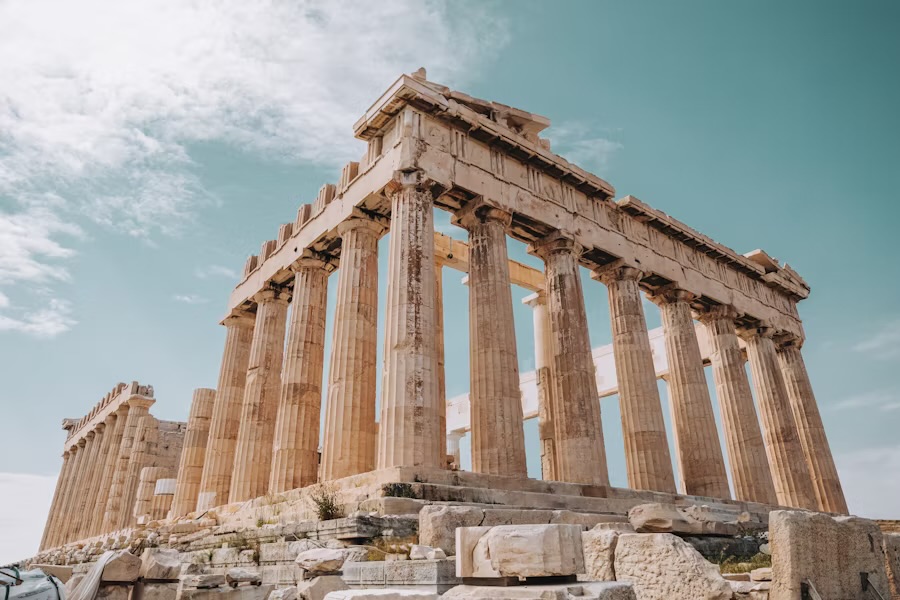
The Greek Ideal We Need Today

The Greeks called it aretè, a concept I’ve never forgotten since my beloved early professor, Thomas Pappas, introduced me to it.

Often translated as “virtue,” it encompasses far more—not just moral goodness, but the pursuit of excellence in every endeavor. Plato expanded the idea to include wisdom, justice, and self-control.

Aristotle, in turn, emphasized that aretè arises from reason and consistent practice. As he put it, “Moral excellence comes about by cultivating habit. We become just by doing just acts, temperate by doing temperate acts, brave by doing brave acts.”

Examples of aretè abound in classical literature. Take Odysseus, for example, in The Odyssey, undertaking a ten year journey to reach home, overcoming every obstacle thrown his way through intelligence, resilience, courage and leadership.

Antigone provides another example of aretè. Defying King Creon’s decree, denying her brother burial, Antigone exemplifies moral courage in defying the autocratic king.

Does aretè exist today?

Nelson Mandela comes to mind. Imprisoned for 27 years, Mandela opted for reconciliation over bitterness, unity over revenge in post-apartheid South Africa, reflecting aretè in its highest moral and political form.

Aretè isn’t reserved for just the famous; it can be seen in frontline workers, teachers, activists, and individuals who strive for excellence in their fields, steadfast in upholding ethical principles.

In all things, excellence matters, and in these tumultious times, we need areté more than ever.

—rj

A President Unhinged: Menace To All


The stock market went crashing yesterday, precipitated by Trump’s glibly informing press that a recession may well happen.

Apparently, he’s blown it with the Ayatollah as well, urging renewed negotiations to limit Iran’s march to a nuclear arsenal or face a military response, resulting in the Ayatollah’s rebuff that Iran won’t negotiate with bullies.

Ignoring the consensus of the science community, he’s branded environmentalists as “lunatics,” caring more about “a half inch sea rise” than the threat of nuclear war. It seems a favorite term of his, used previously on Democrats critical of DOGE.

He’s even got Israel rattled, calling Hamas leaders with whom he’s been negotiating, “really nice guys.”

His most shameful moment, however, was declaring Ukraine’s valiant Zelensky a “dictator,” resonating Putin’s lies.

My wife, an ardent Trump resistor, who’s joined protest marches and calls the White House daily, tells me Trump suffers from “diarrhea of the mouth,” reviving a once widely used phrase of unknown origin for political loudmouths drawn to impulsive, insensitive utterance. It deserves reviving.

And yet it doesn’t go far enough.

What we have on our hands is a full-blown case of diplomatic dysentery, and America left cleaning up the mess.

Trump’s words are as reckless as his policies, grenades lobbed into the world order, heedless of the consequences.

Mind you, Trump’s dangerous—no less a menace than Putin, Xi, or Kim Yong-Un.

In just a week, he’s managed to offend Israel, embolden Iran, undermine Ukraine, tank markets, and insult allies, in keeping with his penchant for blurting out half-formed nonsense in the syntax of a child.

If political lunacy exists, and it does, Americans increasingly know where to find it.

When the Shades Are Drawn: The Decline of Literary Reading

I’ve been an avid reader of cerebral Virginia Woolf for many years, enjoying not only her novels, but her highly polished essays such as “A Room of Her Own.” Thanks to the Yale Review Archives, I’ve just read “How Should One Read a Book?” (September 1, 2026). It was a different world then, absent of electronic media.

Today, reading is in sharp decline. According to the National Assessment of Educational Progress (February 2025), 33% of eighth graders lack basic reading skills, and only 14% of students read daily. Among adults, just 40% read a literary book.

This trend exacts a cost, as literature cultivates empathy and instills humane values. Active readers are more engaged in civic and cultural life. They contribute to their communities. In contrast, electronic media foster shorter attention spans and weaken intellectual skills (National Endowment for the Arts Assessment).

With AI increasingly doing our cognitive heavy lifting, our ability to think critically is further eroding.

If Woolf believed literature offered us a window into the world, today it seems the shades have been drawn.

—rj

No Other Land: A Story That Must Be Told

The Academy Awards take place tonight, but I may not watch.

I have misgivings, particularly about the industry’s apparent exclusion of films that highlight the Palestinian plight in Israel.

Like many others, I don’t miss theaters. It’s nice just lounging in an easy chair, scrolling through endless streaming choices on a big-screen TV, microwaved popcorn at hand. Traditional studios have taken the hint, shifting their priorities toward digital platforms.

A few times, I’ve ve been tempted to return to the theater to see films like Top Gun: Maverick for its effects, or Oppenheimer, for its brilliant portrayal of a conflicted scientist. But I always hold off, knowing that within months, I can rent or buy the film and avoid the steep ticket prices.

Now comes another film, a documentary No Other Land, winner of the Berlin International Film Festival and the Gotham Award for Best Documentary, now an Oscar nominee.

Yet no American studio dares to sponsor it.

Jointly directed by Palestinian and Israeli filmmakers, No Other Land lays bare the struggles of Masafer Yatta, a West Bank community facing near-daily assaults from Israeli Defense Forces and encroaching settlers who want them gone, the latter, an updated version of the Ku Klux Klan. The IDF claims it needs the land for a military training base.

Two weeks before the film’s Oscar nomination, masked settlers stormed Masafer Yatta, destroying homes. In one instance, caught on film, a resident was shot in the stomach. The filmmakers themselves have been harassed, even shot at, over five years of production.

Palestinian director Basel Adra, a Masafer Yatta resident, has been targeted multiple times. Yet he refuses to leave the land where his family has lived for generations.

His Israeli co-director, Yuval Abraham, told The New York Times:
“I look at Basel, who’s living a much more difficult life than myself, and as long as he’s continuing, I feel like I also have to continue. Even if reality is only changing for the worse, it’s not as if we know what would happen if there is no documentation.”

So far, the film has reached just 23 American theaters. Still, the directors hope for broader exposure to awaken audiences to Israel’s deepening colonization of the West Bank and shift public perception.

But in America, supporting Palestinian rights often invites accusations of antisemitism. Trump has proposed deporting Palestinian student protesters. As for Gaza, he advocates expelling its 2 million inhabitants without a right of return.

Ta-Nehisi Coates’ new book, The Message, devotes half its pages to his time in the West Bank. Some criticize him for omitting Hamas’ attack on Israel and its atrocities. Daniel Berner of The Atlantic calls Coates’s analysis simplistic. Yet liberal Israelis, though a minority, may find his perspective compelling.

Coates focuses on the West Bank, not Gaza. In an interview with New York Magazine, he remarked: “I don’t think I ever, in my life, felt the glare of racism burn stranger and more intense than in Israel.”

As expected, some have labeled him antisemitic. The New Republic sees it differently, calling the backlash a massive media failing: “Coates is not antisemitic to defend Palestinian human rights” (Shiner, October 2, 2024).

If No Other Land makes it to my local theater, I’ll give up my easy chair, venture out to the theater, pay the ticket price, not only to witness a remarkable documentary, undertaken at great risk, but to lend my support to a story centered in truths that must be told.

RJoly
Ambush at the White House: A Hero Humiliated

Zelensky arrived at the White House, mocked openly by Trump for not wearing a suit. Zelensky soon discovered that the anticipated signing of an agreement for access to 50% of Ukraine’s minerals offered no security guarantees. Unwilling to sign, Zelensky was lured into an ambush before a gathered press. If you are defined by the friends you keep, then the reality sinks in: Trump’s friend is Vladimir Putin. In what followed. he lavished praise for the dictator, who he said can be trusted to keep his word.

As usual, Trump couldn’t get the facts straight. Boasting of the US giving Ukraine $340b, the truth is $119b, a not inconsiderable sum, but Europe has given more at $138b.

Zelensky was expelled and the planned celebratory luncheon canceled.

Trump appears ready to cut off all military aid to the besieged nation. Meanwhile, the Russian press has been exuberant in its praise of Trump.

We are in a shameful moment of a fascist government, run by incompetents, trampling on dissent, imperiling our obligations to the marginalized, abandoning its allies, and subordinating itself to corporate oligarchy.

Stand up for Ukraine. Incorporate its flag into your FB profile. Support the boycott movement, the public protests. It isn’t just about Ukraine. It’s coming cuts to Medicaid, the suspension of environmental and health safeguards, the cut off of aid to developing nations.

America is engaged in a war—a moral one. We can win, and with your help, we will.

–RJoly

Putin’s Aggression, Trump’s Betrayal, and Europe’s Challenge

  • Photo by Ukraine.ua on September 07, 2023.

You may not have heard of Tim Snyder, but he’s worth knowing. A Yale professor of Eastern European history and authority on the Holocaust, his vitae includes sixteen books and many academic awards. A Brown and Oxford graduate, he speaks five European languages and reads in ten.

I mention him because of his ardent defense of a free Ukraine, whose fate now lies in jeopardy. This month he’s been in Ukraine, a participant in a dedication of a new underground school for children a mere twenty miles from the front and within twenty second reach of Russian cruise missiles.

Today marks the end of three years of Ukraine’s brave resistance to its Russian invaders, who now occupy twenty percent of its land. The school has to be underground, as Russian targets include schools as well as hospitals, civilian housing, energy infrastructure, and even shopping malls.

Now Ukraine confronts its most insidious danger—Trump’s abandonment of Ukraine. Snyder reminds us that Trump cares little about Europe. What matters is making deals in exchange for profit as seen in his demand Ukraine grant rights to fifty percent of its minerals. Like Gaza, Greenland, and the Panama Canal, it’s about adding real estate to his portfolio.

Ukraine’s destiny now lies in European hands, but their commitment isn’t assured. Rewarding Kremlin aggression makes more aggression likely, particularly involving the Baltic nations of Estonia, Latvia, and Lithuania, each with a considerable Russian minority similar to that of Ukraine.

There are ways you can help Ukrainians. Snyder sponsors Documenting Ukraine, which affords Ukrainians a voice. There is also Come Back Arrive, supporting Ukrainian soldiers; RAZOM assisting civilians; and United 24, the Ukrainian government’s site for donations.

Few will read my lengthy post, but for those who do, donate, if you can—and while at it, join the resistance. You know what I mean.

—RJoly

Defending Democracy: What We Must Do

A year ago this month, Russian opposition leader Alexei Navalny died in a labor camp under circumstances that strongly suggest Kremlin involvement. His courageous fight against Russian despotism should have inspired a global recommitment to democracy. Instead, we see authoritarianism advancing—both abroad and at home.

Donald Trump, long an admirer of Vladimir Putin, has once again echoed Kremlin propaganda, calling Ukrainian President Volodymyr Zelensky a “dictator” and blaming him for the war—simply because Zelensky rejected his negotiating Ukraine’s surrender on Putin’s terms.

Unsurprisingly, Russian state media has embraced Trump as a political rock star, amplifying his rhetoric to weaken Western resolve.

Meanwhile, here in the United States, our own democratic values are under siege, the rule of law undermined, institutions eroded, and authoritarianism on the rise.

The threats we face today, both at home and abroad, make the world more dangerous for all who believe in freedom.

But we will not stand idly by. We must resist—through the courts, in Congress, and in the streets through peaceful protest.

The fight for America’s soul is far from over. If we stay united, we will prevail. In two years, we have the opportunity to reclaim Congress, hold those who threaten democracy accountable, and ensure that America remains a beacon of freedom—not an ally to autocrats.

—R Joly