Retired English prof (Ph. D., UNC), who likes to garden, blog, pursue languages (especially Spanish) and to share in serious discussion on vital issues such as global warming, the role of government, energy alternatives, etc. Am a vegan and, yes, a tree hugger enthusiastically. If you write me, I'll answer.
It was the 7th inning of last night’s Dodger-Blue Jays World Series game, the Dodgers leading 5-4. I needed sleep, so gave up watching, but nonetheless fervently hoped the Jays would pull it out against baseball’s best team money can buy and perennial champion.
I’m glad I left the screen early. The game went 18 innings! The Blue Jays lost.
For me, baseball is metaphor for something larger than itself—each batter in existential challenge, one against a field of nine. In short, the odds of getting that hit aren’t likely, and yet batters do come through, sometimes winning a game.
As I waited for sleep to descend, I thought of how tonight’s game reflected my America, facing the hegemony of an encroached political dynasty. Would things ever change?
I fell asleep, expectant.
And so with our nation.
I refuse to give up hope. There’s yet another day, another game to be played. Sometimes the unexpected happens—the underdog breaks through. That happens in life, too. We get that hit. We score that run.
As poet Joy Sullivan tells us, “i know nothing about baseball, but something in me breaks with joy when the runner rushes in, body flung & reaching, & the umpire lifts his arms out like a prophet or a mother & makes him safe.”
Childhood should be our Eden, a time for innocence before the shadows come and we lament its loss.
This morning I’m enjoying my romp in Joy Sullivan’s Instructions for Traveling West Poems, a collection of her prose poems, reminiscent in many ways of beloved Mary Oliver’s peace-conferring verse. Sullivan lived her childhood in Africa, the daughter of medical missionaries.
In one poem that means much to me, she shares her memory of untainted innocence that helps us recover our own dormant memories of a garden world we cannot enter again:
“Growing Up”
All I could think about was filling these cups and staining these lips and being some new kind of loveable. All the while, my mama in her quiet, weary way: one day, you’ll wish for this time without worry. No one can really ever warn you how the world is a thick leather boot. A midnight car slowing down. An oil spill. A matchstick.
I miss the girl my mother still could see— unadorned, untired. The one, at dusk, who followed the dog into the woods unafraid.
This morning I’ve been reading Thich Nhat Hahn’s Fear: Essential Wisdom for Getting Through the Storm. Many of you are familiar with his books, wise in counsel, encouraging mindfulness engaged in the present, not burdened with trauma from the past or worries about the future.
I reached for Hahn, my amygdala working overtime, given the White House maelstrom.
Hahn reminds me that we are linked to an infinity beyond ourselves. We are all connected: sun, water, forest, and sentient animal friends.
That there is no permanence.
That entropy is life’s law.
I venture that our ultimate anxiety concerns our mortality
Peace comes, however, with its acceptance and doing good for others. Our passing doesn’t mean extinction, but rejoining that eternally existing phenomena that gave rise to our being.
Fundamental to Buddhism is that there is neither birth nor death, but continuum only. The Buddha perceived this truth 2500 years ago, confirmed by the Conservation Law of Mass-Energy —that mass is not created ex nihilo, nor destroyed into nothing. It simply changes its manifestation.
A cloud never really dies in becoming rain or snow.
We must confront our fears, not deny them, if we are to find peace, not seek escape in accumulation or media overload.
While I find the history of religion to be no less than a bloodbath, I think of true Buddhism as a way of life rather than a religion. It posits no deity. I completed an impressive course from a Dutch university several years ago that introduced me to its major tenets and, especially, to mindfulness enhanced through meditation.
I’ve been subsequently amazed with brain imaging results that show serious meditators experience neural changes at several levels, including an increase in gray matter density and cortical thickness in the hippocampus, responsible for learning, memory and emotion.
What impresses me most is that amygdala activity, the brain area responsible for our anxiety, is decreased, often after just eight weeks of consistent practice. I’m all for less anxiety.
With this new brain imaging technology now available, science is just catching up with the intuitive truths of Buddhism. I know of a Princeton professor who has dedicated his research to studying the liaison.
Several years ago, I undertook training in Transcendental Meditation. I didn’t really catch on how to do it effectively until last year when I read Yongey Mingyur Ripoche’s The Joy of Living and learned specific techniques. Unfortunately, I have failed to practice it consistently. I need to mend my ways.
The late film director David Lynch did meditation twice daily, busy as he was, never missing, until the end of his life and wrote a book about it, Catching the Big Fish, which I’ve read.
I am grateful for my time out with Thich Nhat Hahn’s book, a refresh on those values than quiet our anxieties and grant us peace.
Wishing all of you well, I trust my affection for all of you vibrates into a day of happiness.
Flora and fauna. West Texas plain. Nothing missed.
Vernacular of everyday people, wrestling with life, each day’s sameness, yet not without hope of life’s longshot lottery breaking their way.
Sensory, escalating, you-are-there cumulative syntax, landscaping America’s dark soul, foregrounded in cosmic indifference to individual fate of man and beast.
At the very least, Faulkner’s equal:
As he turned to go he heard the train. He stopped and waited for it. He could feel it under his feet. It came boring out of the east like some ribald satellite of the coming sun howling and bellowing in the distance and the long light of the headlamp running through the tangled mesquite brakes and creating out of the night the endless fenceline down the dead straight right of way and sucking it back again wire and post mile on mile into the darkness after where the boilersmoke disbanded slowly along the faint new horizon and the sound came lagging and he stood still holding his hat in his hands in the passing ground-shudder watching it till it was gone (Cormac McCarthy, All the Pretty Horses).
I know I’m preaching to the choir for the most part, but silence is not an option given a White House ogre who would be king, trampling the bounds of our Constitution and violating every norm of moral decency
Not a single day passes without his intrusion. He is everywhere — America’s unprecedented micromanager — overriding the citizenry’s right to dissent and Congress’ constitutional sovereignty over the nation’s purse.
He persecutes critics with vitriol, weaponizes the Department of Justice for revenge and governs, not by law, but by impulse and ego.
It was not enough for him to pave over Jackie Kennedy’s iconic Rose Garden. Now a $200 million, 90,000-square-foot ballroom extravaganza is under construction — an East Wing expansion with bulletproof glass and ostentatious design that mocks the White House’s classical restraint.
Three days ago, during a dinner for corporate behemoths — Amazon, Apple, Meta, Google, Microsoft, T-Mobile, and Comcast among them — he unveiled plans for an American Arc de Triomphe to rise across the Potomac, opposite the Lincoln Memorial. Contributors, he promised, will have their names engraved.
Within the White House he’s installed a “Presidential Walk of Fame” lined with photos of his predecessors, except for former President Joe Biden, represented by an autopen image.
On his orders, massive flagpoles have been installed on the White House south grounds. It appears he wants to emulate France’s Louis XIV and facsimile Versailles.
Meanwhile, our nation suffers as his tariffs induce seismic consequence for world markets, a boomerang policy ensuring economic stress here at home. Consumers already feel the pinch.
Yesterday, the would be King informed visiting Ukrainian president Zelensky he’ll not be getting those coveted tomahawk missiles after all. Russia and Ukraine must stop their war, even if it means Ukraine must surrender much of its land. In coming weeks, he will meet a second time with despot Putin in Budapest to hammer out Ukraine’s fate. He deems himself a peacemaker even as he plots Venezuelan intervention and guns down boats at sea.
Today, media reports Ukraine’s defenses are rapidly buckling; more so, its morale. Trump’s misfire, propelled by egotism, promises to outweigh Russia’s nightly onslaught of missiles and drones, delivering a coup de grâce assuring Ukraine’s doom.
Yesterday, Trump pardoned the notorious George Santos, sentenced to seven years for multifarious deceit. Will Epstein’s collaborator Ghislaine Maxwell be next?
In this time of climate challenge posing a future earth transformed into a version of Mars, Trump has systematically, unhesitatingly, chosen to war on the environment, auctioning off public lands for fossil fuel development, sanctioned logging the nation’s remaining pristine wilderness, suspended curbs on air and water pollution, subsidies for renewable energy technology—electric vehicles, solar and wind—visionary endeavors prodigious with promise.
Ominously, yesterday he sent 80% of our nuclear arsenal guardians home, surely sheer madness in a time of mounting Russian, Chinese, and North Korean intimidation.
Implementing his autocratic reach for fascism are his incompetent lackeys and sycophantic Republican enablers, who conflate loyalty with virtue.
Let him build his Versailles of glass and steel. We choose otherwise, our priority a republic defined by courage and conscience.
March boldly, my fellow warriors for freedom. Let your voices fill every street and square: “We will not have a king!”
I’ve been a reading addict since childhood, when as a young boy I’d walk a mile—sometimes more—just to lose myself in a library’s cool hush, seated at a table, surrounded by shelf-lined books inviting adventure.
My love for animals found early confirmation in the Dr. Doolittle books I devoured. I read every one. Years later, that same fascination with the speech of creatures led me to Jane Goodall’s revelatory studies of chimpanzees—proof that empathy can grow into insight.
Another passion took root in the dusty bleachers of Shibe Park—later Connie Mack Stadium—in Philadelphia. I loved baseball with an intensity only children know, lingering outside the gates, hungry for autographs as players boarded their buses. I read passionately about my idols—Ruth, Gehrig, immortals who remain with me.
Travel books, too, called out to me. Mutiny on the Bounty and its aftermath on Pitcairn’s Island transported me to the South Seas, where I imaginatively romped through Tahiti, New Zealand, and Australia. In later years, that early enchantment led me to consider emigrating to New Zealand. I was, in fact, approved.
Languages fascinated me. One day, at ten, I brought home books in Russian from Philadelphia’s Free Library, expecting the Cyrillic script to magically transform itself into English. That early infatuation would one day carry me across the world to Russia and the homesteads of Tolstoy, Dostoevsky, and Chekhov.
I call myself an autodidact, though I’ve graduated from several reputable universities. I started behind most students, having fled a troubled home at seventeen, enlisting in the Air Force, which sent me to Korea. Our base library was a single room, yet its shelves were somehow populated with a few classics. One off-duty evening, I pulled down a book called Look Homeward, Angel. It changed my life.
After Korea, I read everything Thomas Wolfe wrote, visited his home in Asheville, eventually enrolling as a Ph.D. student at his alma mater—the University of North Carolina at Chapel Hill, “Pulpit Hill” in Wolfe’s novel. On my first campus day, waiting to register for classes, I bumped into a retired professor, who asked what brought me to Chapel Hill. “Thomas Wolfe,” I said without hesitation.
A serendipity moment, that professor had known Wolfe. Becoming lifelong friends, they traveled together to prewar Germany, where Wolfe witnessed the Nazi persecution of Jews, which he would later feature in You Can’t Go Home Again. He shared anecdotes about Wolfe, who stood six feet, six inches. His hands too wide to use a typewriter, Wolfe wrote standing up, a refrigerator top serving for a desk.
Despite the scores of books I’ve read, there remain gaps I want to fill. The books I’ve read have been my faithful companions along life’s road, shaping who I am.
Were I granted another life, I think I’d come back as a librarian. No other choice comes close.
AI excels at counterfeiting the human mind. If we’re not vigilant, it will think for us—leaving our own intelligence dormant, our creative impulse atrophied.
Already, much of our news is machine produced at news outlets like AP, Reuters, and Bloomberg, recapping the latest happenings in news, sports, and entertainment.
It can project us into videos, put words in our mouths, falsify who we are.
Writing in the Free Press, Tylan Cowen warns that within the next few years, AI will author most “of the words written in the United States.” He contends AI is much smarter than us, encyclopedic in scope, capable of writing our books and news for us.
New advances in technology assure its omnivorous takeover of much of everyday life. Indeed, we’re on the threshold of Ray Bradbury’s apocalyptic new world.
Bradbury foresaw a future of stupefying distraction—a civilization that traded reflection for amusement. With AI, his warning no longer reads as metaphor but as prophecy.
AI’s intelligence is borrowed; it knows only what its creators feed it. In the wrong hands, it becomes a megaphone for manipulation—its outputs polished, persuasive, and perilously biased.
AI cannot think for itself. What it spews out can prove toxic, prodigious in conspiracy, disseminating division that may spill into violence.
Algorithms are predictive. They know our wants and pile-on their overtures. Increasingly, they orchestrate our choices. Corporate driven, they offer a pecuniary bonanza servicing their interests.
AI outsources cognition. Invading scholarship, it’s become the campus Cliff Notes, shortcutting inquiry, analysis, and reasoning. It can summarize a complex Faulkner novel in milliseconds, replete with analysis. Why read at all? Why bother with the professor?
AI’s convenience comes at the price of serendipity: the unplanned discovery that alters our thinking, robbing us of the slow astonishment that once expanded the boundaries of our knowing.
AI proliferates plagiarism, the theft of another’s thought, masquerading as one’s own. It’s become the teacher’s nemesis: how do I know the student’s writing is their own?
AI homogenizes the writing act, making us all sound alike—the short, staccato sentences; simplified vocabulary; the annulling of the cumulative, crafted sentence, subtle in its syntactical variation, rhythms, and nuance. It’s the ultimate in dumbing down.
The heart of the matter, however, is AI’s largesse as a substitute for thought, straying into amnesia—a prosthetic for our inner murmurings.
More than eight billion souls rise each morning to breathe another day—many of them lonely. While others seem to rollick in life’s plentitude, they feel left out.
Loneliness has many strands. Ultimately, it’s feeling you’re disconnected. Or like the world’s hung up on you.
Loss is loneliness’ common denominator. It comes in many currencies: loved ones who’ve died or drifted away, a romance gone sour, schoolmates reduced to memory, a job that vanished overnight, aging, the slow erosion of health
According to a Gallup/Meta survey, 25% of people in 140 countries experience loneliness “very or fairly often.” In the USA, 1 in 3.
Loneliness can be grievous. Even fatal. There seems to be a herd instinct governing human behavior. We like togetherness. Like cows in a pasture, we like facing in the same direction.
And yet the paradox: you can feel most alone in a crowd, the noise of others drowning out your pulse. For introverts like me, solitude grants restoration, not exile. My happiest moments have often come in silence: in a garden, along a woodland path, or beside a pounding shore.
A few days ago, I wrote of three places I’ve been that have sustained me, each of them granting solitude—a chance to reflect, to locate myself, to fish in life’s stream, that rare chance to glimpse Eternity.
Recently, I’ve found someone, Scott Stillman, who shares my love for solitude, writing eight splendid books on this theme. He has a way of putting things:
you are not broken for needing stillness
you are not flawed for shrinking from noise
your mind is simply attuned to something different
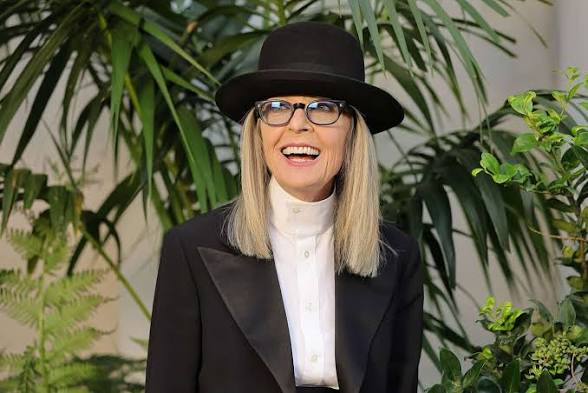
We’ve just added “Something’s Gotta Give” to our streaming collection—Diane Keaton’s own favorite among the seventy films in which she starred.
I’ve never been much drawn to romantic comedies, but this one—also featuring Jack Nicholson and Keanu Reeves—has held a special place for me.
A compassionate woman, Keaton was more than a Hollywood icon. She gave freely of her time and means to causes close to her heart, including animal welfare. I hadn’t known she refused to eat meat: “I don’t eat meat. I’m a vegetarian, and I’ve been a vegetarian for twenty-five years—and I’ve stopped even eating fish.” Learning this, I admire her all the more.
Art, as Keats reminded us, transcends mortality. We’ve lost you, Diane, but through your movies—and the goodness that shaped you—your legacy endures. RIP.
Every New Year’s Day for the past six years I’ve posted on Brimmings my annotated recommendations for the finest fiction and nonfiction reads. I spend hours culling my lists from authoritative sources. I give emphasis to canonical works, both domestic and international—books intellectually stimulating, challenging, and broadening, the kind that will still be read generations hence. Often one of my criteria has been to fill gaps in my own reading, those books I should have read long ago, but somehow missed.
But lately I’ve been musing on a new way of choosing books—more personal than public, more in keeping with my desire to read systematically, to fill in the areas I don’t know well but should.
While my published lists have value, they fall short of providing full acquaintance with an author through a single recommendation. A fragmented forest, bisected by a highway or development, comes to mind—isolated stands of trees cut off from the territorial expanse essential for their flourishing.
It used to be that when I encountered a great writer for the first time, I would read five books: two about the author (often biographies), and three by the author. It worked well—Tolstoy, for example.
But now I want to do better still.
Perhaps I could read not only by author but by theme—a focus on, say, the environment, doing a minimal five books, maybe beginning with the late E. O. Wilson, who never disappoints, or the sagacious Carl Sagan. Reading only The Great Gatsby hardly gives one the fullest sweep of Fitzgerald’s range and mastery. It’s like movie buffs: if you admire Tom Hanks, you don’t stop at one film.
To really round out my education, I should read chronologically, starting with the classics. I’ve read and taught Euripides’ Medea, but it’s only one play—nineteen of his tragedies survive.
So yes, I can focus on an author or a theme—or read chronologically across disciplines.
Here’s another approach: why not read geographically, and I mean largely internationally? I know so little of Chinese literature, philosophy, and culture—the same for India and Japan.
Or I could venture a European country that most readers overlook—Finland, for example, a nation whose people are addicted to both writing and reading, dark interminable Arctic nights surely contributing. I already have Finland on my list.
I’ll still publish my annual New Year’s list, but when push comes to shove, know that privately I’ll be trekking the road not taken.






 Brimmings: up from the well