The New Martyrdom: Christians in Peril

NewsweekLogo-1 [Converted]

What do these nations below have in common?  Quick answer:  they all persecute Christians.  What’s more, thirty-seven of them are Muslim nations:

  1. North Korea
  2. Somalia
  3. Syria
  4. Iraq
  5. Afghanistan
  6. Saudi Arabia
  7. Maldives
  8. Pakistan
  9. Iran
  10. Yemen
  11. Sudan
  12. Eritrea
  13. Libya
  14. Nigeria
  15. Uzbekistan
  16. Central African Republic
  17. Ethiopia
  18. Vietnam
  19. Qatar
  20. Turkmenistan
  21. Laos
  22. Egypt
  23. Myanmar
  24. Brunei
  25. Columbia
  26. Jordan
  27. Oman
  28. India
  29. Sri Lanka
  30. Tunisia
  31. Bhutan
  32. Algeria
  33. Mali
  34. Palestine
  35. United Arab Emirates
  36. Mauritania
  37. China
  38. Kuwait
  39. Kazakhstan
  40. Malaysia
  41. Bahrain
  42. Comoros
  43. Kenya
  44. Morocco
  45. Tajikistan
  46. Djibouti
  47. Indonesia
  48. Bangladesh
  49. Tanzania
  50. Niger

This shouldn’t come as any surprise.  As the Skeptical Inquirer reports, Islam currently poses the world’s greatest threat to human freedom, or to think for oneself.

You’ll note that this is a gradated list, with the worst offenders coming first, among them North Korea, a non-Muslim Stalinist holdout that persecutes Christians vigorously.  Estimates have it that between 50,000 to 70,000 Christians languish in prison camps, with few survivors likely, given the brutal conditions.  An unconfirmed report, says that  80 Christians were executed in November, 2013.  Change the regime, however, and the persecution will cease, as happened after the collapse of the Soviet Union.  Ironically, today’s Russia is the one nation that has vigorously denounced the persecuting of Christians.

Not so for Uzbekistan, Turkmenistan, and Tajikistan–all former Muslim constituents of the Soviet Union–where persecution of Christians continues.

You’ll see that the list also features some U. S. allies like Saudi Arabia and even Kuwait, a Muslim nation we saved from Saddam’s incursion.

And, of course, we all know about Pakistan with its endless duplicity, a nation outraged by our killing of Osama bin Laden who had taken refuge there and a free haven for the Taliban.  Persecuting Christians is almost a sport in Pakistan, with Christians often accused falsely of violating blasphemy laws by those seeking their property.

But Kenya, a nation with a predominantly Christian population, is also on the list.  This is because Kenya also has a minority Somalian population.  Bombings are frequent as in the recent terrorist insurgency from Somalia itself, resulting in the Nairobi mall massacre in which Christians were deliberately targeted and Muslim hostages let go.

Meanwhile in Egypt, several hundred Coptic churches have been ransacked and many of them burned by deposed President Morsi supporters from the Muslim Brotherhood.

As in Kenya, a nation needn’t have a Muslim majority for Christians to be singled out.  Take, for example, the Central African Republic, which has been in the recent headlines.  Following a recent seizure of power by a Muslim in a county overwhelmingly Christian, the Muslim minority immediately began to kill Christians.  Here, Christians formed their own militias to wade off the attacks, successfully driving the usurpers from power.

Some of the worst scenarios for Christians are playing out in war-ravaged Syria, whose Christian community dates back to the first century and St. Paul, who was converted on his way to Damascus.   In 2013, 2,123 Christians died, representing a 100% increase over the previous year.  Assad, by the way, didn’t persecute Christians.  In some Christian towns, insurgents have given Christians the option of converting or being executed on the spot.  Priests have been killed; nuns taken hostage.

It’s conceivable that soon there will be no Christians left in the Middle East.  Consider Iraq:  Before our incursion in 2003, there were some 2 million Christians in Iraq.  Only about half now remain.  According to the UN Committee for Refugees, 850,000  Christians  have left at last count.  There may even be as few as 250,000 remaining.

Before the rise of Islam in the 7th century, the Levant and North Africa were actually largely populated by Christians.   St. Augustine, in fact, was a North African bishop. Then came the Arab invasions, spreading “the religion of peace” by the sword.  The truth is that Islam hasn’t changed very much across the centuries, in doctrine or behavior.  Unlike Christianity, it’s rooted in a fundamentalism that has stubbornly resisted reform.  It’s as though time stood still.  It’s questionable whether Islam can ever reconcile with the tenets of democracy, for what Islam fears most is divergent opinion.

But I also want to be fair.  I studied in France a number of years ago and came into contact  with a good many Muslims.  My politics, not my religion, was what mattered.  In fact, not once did faith enter into our conversations.  Additionally, I frankly sympathize with the Palestinians in their quest for nationhood and a return to 1967 borders.  I haven’t any quarrel with secular Muslims, whom militants place in the same company as Western “infidels.” I cherish the several friendships I developed that transcended religion and homeland, whether Iraq, Palestine, Syria, Jordan, or Iran.

Unfortunately, where persecution of Christianity does exist, it often generates from a perception of the West as anti-Muslim.  We give billions to Israel annually, much of it employed to buttress Israel’s military might.  Think, for a moment, how you would feel were your people strafed and bombed by Israeli pilots flying American fighter jets, or your lands appropriated by Israeli settlers feverishly supported by many American evangelicals.  We don’t have a good footprint when it comes to the Middle East.  I would even argue that our disregard for the Islamic culture and faith has made groups like al Quaeda possible, feeding on aeons of resentment.  Unfortunately, Christians are caught in the exchange.

Religion, like politics, can prove violent in absolutes giving no ground.  I despise the lingering animosities of every political and religious faction.  True progressives move past ideology to an embrace of the human family.  I also distain religionists who fashion deity into a human assemblage, or composite of ourselves, incumbent with our prejudices and capacity for malevolence.

I likewise dislike the silence of governments with regard to the assault on Christians in their pursuit of  the political game of expediency.  I find this as unsavory as militant Islam’s historical penchant to impose religious and socio-political hegemony.

I yearn for the day that moderate Muslims disavow the sword; that Israelis cease their apartheid; that the U. S. commits itself to genuine justice for those long denied.  I think of Article 18 of the Universal Declaration of Human Rights:  “Everyone has the right to freedom of thought, conscience and religion; this right includes freedom to change his religion or belief, and freedom, either alone or in community with others and in public or private, to manifest his religion or belief in teaching, practice, worship and observance.”

But do I wake or sleep?

–rj

Reflections on Boyd’s Any Human Heart: Elegant Solemnity

51PW49A1GYL._BO2,204,203,200_PIsitb-sticker-arrow-click,TopRight,35,-76_AA278_PIkin4,BottomRight,-66,22_AA300_SH20_OU01_Have just finished William Boyd’s riveting novel, Any Human Heart, nearly 500 pages long.  You may remember it had appeared on PBS as an award-winning three part adaptation.  That’s what led me to the novel, the fictional playback of the posthumous journals of Logan Mountstuart, novelist and free lance journalist, whose life of eight and half decades virtually bookends the previous century.  Though a fictional work, Boyd ingeniously transmutes it into a rerun of much of that century’s principal happenings, replete with landmark political and cultural figures.  We almost believe Mountstuart is real.  Boyd even supplies copious endnotes!  Obviously, Boyd did his homework.

Most readers embrace this novel warmly, despite its weight of persistent melancholy.  Life for Mountstuart adds up to luck and unluck and, subtracting the difference, hoping your assets top your liabilities.  For Mountstuart, there’s an awful lot of bad luck, though you could argue much of it’s of his own doing rather than a conspiracy of fate.

There are readers who don’t like him.  I see things differently–Mountstuart an anti-hero in the sense we all are, living behind masks, or an assemblage of many selves, creatures often governed by inertia, self-absorption, insecurity, pettiness, obsessive evolutionary drives– and not infrequently, self-pity; in sum, a panoramic narrative of human finiteness foregrounded in the human condition that forestalls its amelioration.

I see a character refreshingly honest about his failings, indeed his saving grace, who by story end, arrives at a greater, more compassionate self, reaching beyond narcicissm to embracing others; distilling what good elements remain through sharpened awareness; at last accepting of mortality’s proximity in keeping with the tenor of his several journals underscoring the ephemerality of experience.

Any Human Heart just happens to be one of the wisest novels I’ve read in a long time with its plethora of acute observations, reminding me of Herzog’s insightful ruminations in Bellow’s eponymous work.  Accordingly, I’ve jotted some of them down, hoping you’ll like them as I do and perhaps want to try out this novel for yourself: 

On life:

Every life is both ordinary and extraordinary–it is the respective proportions of those two categories that make that life appear interesting or humdrum.

That’s all your life amounts to in the end: the aggregate of all the good luck and the bad luck you experience.  Everything is explained by that simple formula. 

You can’t make these unilateral pacts with life:  you can’t say that’s it, my emotions are securely locked away away, now I’m impregnable, safe from the world’s cruelties and disappointments.

On religion:

It was all a bit obscure to me and now I understand why I don’t give religion much thought.  The awful boredom of uncritical faith.  All great artists are doubters.

I’ve never understood how a person of real intelligence can believe in a god. Or gods.

Shelley was so right:  Atheism is an absolute necessity in this world of ours.  If we are to survive as individuals we can rely only on those resources provided by the human spirit–appeals to deity or deities are only a form of pretense.  We might as well howl at the moon.

On sexual initiation

I could only marvel at her nudity.  It seems to me that first time of mutual nakedness is almost a more lasting memory than the sex act.

On mortality:

We’re not ready for it–for people of our age to die.  We think we’re safe for a while, but it’s a dream.  No one’s safe.

That moment when you realize quite rationally, quite unemotionally–that the world in the-not-so-distant future will not contain you: that the trees you planted will continue growing but you will not be there to see them.

We all want a sudden death but we know we’re not all going to be provided with one.  So our end.  So our end will be our ultimate bit of good or bad luck–the final addition to the piles.

On NYC:

I miss New York more than I would have imagined.  I miss those perfect spring days.  Wraiths of steam rising from the manhole vents backlit by slanting early morning sun.  Cross streets thick with cherry trees in bloom.  The way time seems to slow to a crawl in diners and coffee shops.

On health:

Those of us who have the luck to enjoy good health forget about this vast parallel universe of the unwell–their daily miseries, their banal ordeals.  Only when you cross that frontier into the world of ill-health do you recognize its quiet, massive presence, its brooding permanence.

On pets:

He’s only an old dog, I tell myself, and he lived a full and happy dog’s life.  It may sound stupid, but I loved him and I know he loved me.  That meant there was an uncomplicated traffic of  mutual love in my life and I find it hard to admit it’s over.

On good writing:

The studied opulence, the ornament for the sake of ornament, grows wearing and one longs for a simple, elegant, discursive sentence.  This is the key difference:  in good prose precision must always triumph over decoration.

–rj


China Destroys Ivory Stocks: Too Little too Late?

06sino-ivory02-blog480

I’m pleased again at another good omen for the environment in learning of China’s destruction yesterday of six tons of seized ivory ornaments and tusks.  This is exciting, since China has been overwhelmingly the prime market for ivory, where it’s turned into trinkets and statuary, and it’s the first time China has done this.  Hopefully, it won’t be the last.  This comes on the heels of Tanzania’s recent destruction of four tons of ivory, adding up to about forty slaughtered elephants.  In addition to Tanzania, Kenya and Gabon have recently destroyed large caches of ivory.

Still, China has a long ways to go.  As reported in the NYT on Monday, The Wildlife Conservation Society says that there may be as much as forty-five tons in the total ivory inventory in China, not including Hong Kong.  Let’s face it:  ivory can be lucrative, fetching $1000 a pound.  In poverty stricken Africa, poachers in the field rarely command such profit, pocketed by sophisticated  black market smugglers, but minimally still incentive enough.  Elephant poaching is further exacerbated as the continent’s many warring factions use ivory sales to purchase arms.

What shocks me is our own large stash of ivory, with six tons of ivory destroyed last November.  I guess I shouldn’t be so naive.  We have a large Chinese immigrant community, especially on the West Coast, where demand for ivory, rhino horn, tortoise and shark fin can ratchet up lucrative profits.  In fact, we’re downright hypocrites.  The good old USA ranks second to China in consumption of illegal animal products, including not only those I just mentioned, but even tiger bone!  Nothing is sacred; nothing off limits for crime syndicates operating internationally.

Unabated, the trade will peter out in about ten years.  We’ll simply have run out of elephants, rhinoceroses, sharks and tigers.

But just maybe the window’s opened a bit with China’s move, offering a new vista of hope.  As China’s legacy of ancient wisdom has it, “The longest journey begins with the first step” (Lao Tzu).

–rj

A Conservation Hero: Greg Carr and Gorongosa National Park

Greg Carr
Greg Carr

Sometimes I find it terribly painful to hear the news or surf the net for the latest on environment, earth lover that I am.  It’s gotten so bad that I even toss a lot of my mail from cherished environmental organizations, unopened, to ward off grief.  Still, I can’t live in a bubble.  It changes nothing.

Last night, the sobering Guardian report on climate change with its catastrophic scenario of a 7.2 F/4C temperature rise by century end, rendering life in the tropics virtually impossible.  Then the just released Intergovernmental Panel Report on Climate Change, indicating human activity as “the likely cause” for global warming, or 95% certain.  Hey, is anybody out there listening?  Meanwhile, business as usual:  Boeing announces its plan to double its new North Charleston, SC, facility, which includes filling in 400 acres of wetlands.

ThIs explains my elation on discovering the story of efforts to restore Mozambique’s once iconic Gorongosa National Park, since such good news is a rarity these days, or akin to say a medical breakthrough in remedying a chronic disease.

Gorongosa Park, founded by the Portuguese in 1960, used to be famous for its teeming wild life that even included nearly 2000 elephants.  But then came the long struggle for Mozambique’s independence in which armies sometimes ravaged the Park for food and ivory.  Like today’s Mali, Central African Republic, Democratic Republic of Congo and South Sudan, independence (1975) then gave way to protracted civil war, lasting 17 years.  By then, poachers and subsistence farmers had settled in, decimating virtually all wildlife, apart from the Park’s crocodiles.  As one example, only 50 buffalos remained of an original herd of 14,000.

tourism

The new government (1992), finding itself cash-strapped, was looking for new resources, among them eco-tourism through restoration of Gorongosa National Park, but it lacked investment capital. That’s when American businessman Greg Carr, who had made his fortune offering Internet services, stepped in, setting up a foundation and pledging $40 million over the next 30 years to finance the project.

Thanks to his herculean efforts, the Park has been steadily regaining its pristine splendor with  herds of elephants, African buffalo, hippopotamus, warthogs and antelopes now grazing its savannas in growing abundance.  Further good news:  in 2010, the government enlarged the Park to include Mount Gorongosa, so essential to the year round flow of the Park’s rivers and  preservation of its unique megafauna.  Were the rain forest gone, there would no longer exist the capacity of the mountain to release monsoon rains gradually and long term, sustaining life in the dry season.  As is, subsistence farmers have reduced the rain forest at its summit by a third over the last decade.

zebras

Like all such noble schemes to preserve environment, hard choices often pit habitat vs jobs.  You can’t simply ask these settlers to leave.  Poverty is just so immense, with the per capita annual wage $310, according to World Bank, and a life expectancy of only 40 years. The trick is to create new industries for them.

Again, Carr has proven to be visionary in providing economic incentives, creating rain forest seed nurseries, schools and medical clinics below the rain forest line, hiring guards, and expanding tourist facilities offering comfortable amenities that are increasingly attracting European and North American visitors, initiatives now employing more than a thousand workers.

While things are off to a good start, the Park’s ongoing fate depends on two key factors: a stable democratic government and tourist dollars.  With regard to the latter, once again, good news, with visitor tallies rising from an initial 1000 to over a current 10,000.  Eco-tourism is obviously essential to making Carr’s bet pay off.

If Carr’s project works in Mozambique, it can work elsewhere in Africa as seems the case in Botswana, providing ecological preservation linked with economic well-being.

This is, indeed, good news!

–rj

Why I persist in keeping a journal

journaling

“The nicest part is being able to write down all my thoughts and feelings; otherwise, I might suffocate.” — Anne Frank

I’ve been keeping a journal for 34 years.  It wasn’t easy to get into the habit.  I had tried doing it as early as age 12, then at 19, but it didn’t stick.  To pick-up a good habit, I find I have to stay with it up to 6 weeks for it to take hold.  Conversely, bad habits often proliferate easily because they involve more pleasure or less work, as in overeating, not exercising, delaying paying your bills, etc.

But why did I even bother?  The vast body of us don’t keep journals and don’t seem to lack for it, though the conundrum also exists that we’d all be impoverished had there been no journals, at least those of us caring about sensitivity woven into wise reflection, left by a retinue of masters like Woolman, Thoreau, and Woolf, or 12 year old Anne Frank’s precocious attempt to transcend human ignominy that moves us to compassion for every victim of  its malevolence.

In our digital era I’ve often lamented the eclipse of letter writing by email, doubtless apprehensive about the fate of hand-written journals. I think of prodigious letter writers like Jefferson and Voltaire, Dickinson and Keats, and many others, and of our loss had they written emails instead, substituting speed and convenience for their crafted labor, unveiling individuality and subtle conscience.

Fortunately, I find a positive in today’s proliferation of blogs, many of them genre journals of infinite, attractive scope capturing every conceivable interest.  My own blog comprises a journal likeness in its series of reflections on sundry subjects.  So then, why do I still pursue the old fashioned, hand-written kind?

Frankly, one reason I carry on is to beat back time in a world suffused with the temporal.  We do this with photos, reinforcing memory and preserving the essence of our experience.  So with words, and maybe even better, for while a photo yields only the external, a journal can be likened to a CT scan, imaging the otherwise concealed, defining who we really are; but more than that, journals hold in stasis, like art itself, our life passage in this parenthesis of light,  or as Keats memorably said of art, “When old age shall this generation waste,/Thou shall remain.”

For me, being faithful to my journal secures my privacy latent with its honesty, compromised by blogs, and lends affectionate intimacy with my past, though that’s sometimes painful, yet worth its filtering into insight honed by time.  Journals not only record, they clarify,

I confess that journals can be defiant creatures emotionally straying off course, and thus our vigil to seal off their access as passwords to ourselves.  Like barometers, they reflect our pressure points, for honest journals tell us we’re never one self, but many, which often nudges us to stop writing them.  As author William Boyd puts it, “We keep a journal to entrap that collection of selves that forms us, the individual human being” (Any Human Heart).

Labored sometimes in the soul’s night, my keeping a journal pays dividends nonetheless, for it nourishes that inner part of me, or serves as a rare friend who heals simply by listening

–rj

World War I Centennial: Ominous Echoes?

ww1

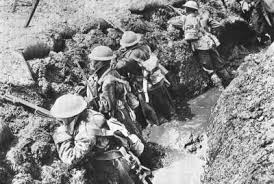
The Somme, the Marne, the several battles at Ypres, Verdun with its prolonged agony, this was World War I enmeshed in its trench warfare, stalemated armies, and colossal slaughter on a massive scale impacting five continents

Next year marks the centennial of the outbreak of World War I, for many years known as the Great War in which an estimated 10 million combatants perished along with many civilians.  While you don’t see much, if anything in the movies these days about the conflict, as a boy I used to regularly take in films like The Fighting 69th,  All Quiet on the Western Front, Sergeant York, and the classic Paths of Glory.  Of course there were then many veterans still In their early fifties, boosting demand for such films.

ww1amer

My father, a war veteran with inherited  Irish wit, could spin a story that simply wouldn’t lose its hold no matter how many times he told it, of artillery duels; driving an ambulance; the fragility of life with war’s tragedy compounded by the pandemic Spanish flu that would kill millions more.  When he died in the VA Hospital he left little apart from a prized heirloom of his hand-completed discharge papers, faded by nearly a century of time, yet still legible, listing his combat participation in France (Argonne sector, 16th Field Artillery, Battalion A). How superbly different from the impersonal DD 202 the military hands out these days.  He was proud of his service and lies with fellow soldiers in the veteran’s portion of St. Mary’s Cemetery in Salem, MA.

Early in my teaching career, I came across a student who wanted to focus her research on World War II, which fascinated her. That was fine with me, though I’ve always found the first of these world conflicts more intriguing and compelling.  In fact, it made World War II inevitable, given the punitive humiliation imposed by the Versailles Treaty on Germany with its reparation requirements, occupation of the Ruhr, loss of colonies and, in Europe, of German speaking territories (Bohemia and Alsace-Lorraine), thus making a psychopath like Hitler palatable in the wake of the explosive inflation and unemployment that followed.

Certainly, the earlier war vastly changed European and Middle East boundaries with the break-up of the several centuries old Ottoman Empire into Romania, Bulgaria, Yugoslavia, Lebanon, Syria, Iraq, Kuwait, Jordan and Palestine.  It also led to the remarkable founding of modern Israel after a two millennia hiatus and the chronic feud that exists between Israelis and  Palestinians, fueling the rebirth of Islamic fundamentalism and spilling over into a world-wide apparatus for terrorism.

In Germany’s obsession to knock out Czarist Russia from the war by creating instability, it smuggled Lenin into Russia, out of which came the Soviet Union with its tyrannous hegemony.

With respect to the events that took place in Kosovo in the 90s and, more recently, with our own incursions into Iraq, it’s clear that World War I has continued its subtle influence.  In many ways, the present Middle East ominously resembles the troubled Balkans that led to war.

Certainly, the World War I marked the collapse of an enduring intra-European peace, apart from the 1870 conflict between France and Germany, since Napoleon’s defeat at Waterloo in 1815.  It also decisively terminated the Victorian era that had survived Queen Victoria’s death in 1903 with its moral absolutes and vibrant idealism.  Anticipated by Zola and Nietzsche late in the previous century, not only were physical boundaries radically altered, but ideological ones too as a pervasive dissonance took hold following this opening act of strayed technological capability with its attendant horrors applied to the battlefield in the advent of tanks, rapid fire rifles, machine guns, long range artillery, motorized vehicles, submarines and aerial bombing and strafing.  Alas, it was at Ypres in early 1915 that the Germans added mustard gas to their arsenal.

Losses proved staggering with civilians for the first time deliberately targeted.  What Auden would later call the “age of anxiety,” had begun, epitomized in the cultural popularity of depth psychiatrists Freud and Jung.  Old universals toppled amid an inveterate skepticism filling the vacuum.  Culturally it took hold in poems like T. S. Eliot’s nihilistic Waste Land and Yeats’ s still often quoted “The Second Coming” with its annunciation of the apocalyptic of violence and cruelty beyond  the precincts of human decency, finding summary cognizance in Joyce’s Ulysses with Stephen Daedalus’s dictum , “History is the nightmare from which I’m trying to awake.”  Hemingway would famously call those coming of age during this conflict “the lost generation.”

World War I, as I’ve hinted, was important not only for its immense tragedy that might have been avoided had cooler heads prevailed over charged nationalism, but because it proffered prescient warnings to our own generation.  As Oxford historian Margaret Mullins reminds us in her NYT op ed, “The Great War’s Ominous Echoes” (December 13, 2013), our contemporary world milieu manifests many similarities to events just prior to the guns of August 1914:

1.      Globalization was taking place then as now, with every portion of the world exponentially linked by rail, steamship, telephone, telegraph and wireless.

2.     New ideologies–psychological and political–were underway, including fascism and communism.  Science, too, had begun its explosive advances that saw Einstein develop his theory of relativity. 

3.    With widening access to information and know-how, that time was also replete with terrorism as happened with the assassination of Austrian-Hungarian heir to the throne Archduke Ferdinand along with his wife by a Serbian nationalist in Sarajevo (Bosnia).  In America, President McKinley was murdered by an anarchist.  In the world at large, railways were continually under bomb attack.  Today that ability of technology to level the playing field through the Internet and social media has multiplied many fold and is thus suffused with even more danger as places of gathering.

4.   Then as now, key mistakes were being made as to the changing methodology of contemporary warfare.  In our own time, surgical strikes and carpet bombing may  no longer apply to obtaining a maximum result in a brief interval, as the paradigm has shifted to less visible targets who, in fact, may not even be there, having left their residue as an IED.  Moreover, the horror of civilian casualties often inflicted by aircraft, including drones, is now subject to instant playback in the media and social networks, leading to vigorous demands to cease

5.   Then, as now, rivalries were underway as new powers sought parity:  Germany with Britain; today, China with the U. S.  Growth of a rising economic power, unfortunately, can often translate into military prowess as with Germany and currently, China.  New coalitions mustering around key antagonists are once again taking shape as China moves to challenge America’s Pacific presence.  Accordingly, the dangers of an incendiary mistake become all too possible.

It’s been said that history repeats itself.  I hope not.

–rj

On Class Warfare in America: The Yacht Mentality Revisited

yachts3

I wanted to revisit my last post of several days ago, “The Yacht Mentality that Threatens our Economy,” with this apropos poem by William Carlos Williams, one of America’s foremost modernist poets.  As you may have surmised, it’s called “Yachts,” which I employed as my central metaphor in depicting the economic inequity rampant in our nation.

Williams, by the way, was a physician from Hoboken, NJ, who compassionately dedicated his practice to treating the poor, who were never far from his thoughts.  We see this vividly in his symbolically dense poem that comes close to being allegory in its one-to-one application, or depiction, of the tensions governing the relationship between the oligarchy of the economically privileged (shall we call them them the 1%?) and the majority, marginalized working class folk like you and me.  But first the poem, then my commentary:

Poem:

The Yachts

contend in a sea which the land partly encloses
shielding them from the too heavy blows
of an ungoverned ocean which when it chooses

tortures the biggest hulls, the best man knows
to pit against its beatings, and sinks them pitilessly.
mothlike in mists, scintillant in the minute

brilliance of cloudless days, with broad bellying sails
they glide to the wind tossing green water
from their sharp prows while over them the crew crawls

ant-like, solicitously grooming them, releasing,
making fast as they turn, lean far over and having
caught the wind again, side by side, head for the mark.

In a well guarded arena of open water surrounded by
lesser and greater craft which, sycophant, lumbering
and flittering follow them, they appear youthful, rare

as the light of a happy eye, live with the grace of all
that in the mind is fleckless, free and
naturally to be desired. Now the sea which holds them

is moody, lapping their glossy sides, as if feeling
for some slightest flaw but fails completely.
Today no race. Then the wind comes again.  The yachts

move, jockeying for a start, the signal is set and they
are off.  Now the waves strike at them but they are too
well made, they slip through, though they take in the canvas.

Arms with hands grasping seek to clutch at the prows.
Bodies thrown recklessly in the way are cut aside.
It is a sea of faces about them in agony, in despair

until the horror of the race dawns staggering the mind,
the whole sea becomes an entanglement of watery bodies
lost by the world bearing what they cannot hold.  Broken,

beaten, desolate, reaching from the dead to be taken up
they cry out, failing, failing! Their cries rising
in waves still as the skilled yachts pass over.

Commentary:

When you first get into this poem it seems to feature Man vs Nature, but by l. 13 with the specifics about the crew, which “crawls solicitously,” it dawns on you that it also takes in humans pitted against one another.

If the earlier portion of the poem (up to l. 13) gives an imaginative, blissful view of Nature in relation to Man and, in turn, of Man’s inter-relationships, the latter portion gives you the awful reality masked by the seeming tranquility, or the potential for revolt from the status quo of both Nature and Man.

Mention of a “race” sets the stage for transition into a contest for mastery, initially of yacht vs. yacht, but note how the diction changes here with sinister implications:

“Now the sea which holds them is moody”

 “As if feeling for some slightest flaw”

“Now the waves strike at them”

Note as well how the ominous turns into a personification of unleashed violence in what becomes a power struggle waged between haves and have nots, with the yachts metaphorized into repressive knife slashing entities indifferent to whom they maim:

“Bodies thrown recklessly in the way are cut aside.

“It is a sea of faces about them in agony, in despair.”

Williams’ subterranean intent now surfaces:  we have a revolt put down by the yachts, the poem’s symbol for connoting the wealthy, of the normally “solicitous,” or working classes, whose labor has made their wealth possible, though they’ve gleaned little for themselves, “bearing what they cannot hold.”

“…the horror of the race dawns staggering the mind,
the whole sea become an entanglement of watery bodies

The yachts, or impervious upper class, obviously win out on this particular day, but not without leaving in their wake their decimated victims:

“Broken,
beaten, desolate, reaching from the dead to be taken up
they cry out, failing, falling! their cries rising
in waves still as the skillful yachts pass over.

In sum, Williams has delivered a Marxist polemic of poignant genius in its thematic rendering of class struggle against inequity.  The very style of the poem adroitly reinforces this theme of worker repression by the economically removed in its run-on lines and skillful alliteration at poem end, the yachts unheeding of the crying wounded in “waves still as the skillful yachts pass over,” suggesting speed and, hence, indifference.  For Williams, this hierarchy “live(s) with the grace of all that in the mind is fleckless, free and naturally to be desired.”

In short, their narcissism of self-indulgence (materialism) mirrors behind its proffered beauty their willful escape from responsibility to the working classes on whom their wealth is built (“the crew crawls/ant-like, solicitously grooming them”).

In an America where 37% possesses half its wealth and the top 1% often pays minimal taxes, Williams’ poem reminds us that we have much work to do to render the American dream palpable for not just a few, but for the many.

–rj

The Yacht Mentality that Threatens our Economy

unemploy I turned on the TV while eating lunch yesterday to a feature called “Island Paradises,” thinking Hawaii or maybe some Caribbean gem like Dominica or St. Vincent’s.  Instead, it was about one man’s substantial investment, worth $28 million, in a plus 100 foot long yacht, sporting 3 recreational decks with pools, 7 bathrooms and 15 bedrooms, plus 3 bars and a below deck garage replete with several sleek motorized boats.  Docked in Ft. Lauderdale, it costs– Can you believe this?–$50,000 a fill-up.

I don’t know about you, but this kind of ostentatious display of wealth rankles me, not because I’m covertly envious, but because I think it represents excess and is just plain ethically wrong in a world of so many poor.  Again, I think of the 1% in my own country (USA), who own 37% of its wealth and whose income has actually increased since the economic downturn of 2008 (Pew Report, February 2013).  Meanwhile, hundreds of service food workers have staged walkouts in quest of a more sustainable minimum wage, presently $7.25 an hour. The average food service worker actually makes about $11 an hour, barely above the poverty line for a single parent with one child.

The President is compassionately urging an extension of unemployment benefits for 1.3 million presently receiving unemployment insurance.  (The total number of long term unemployed, however, stands at a stubborn 3.5 million.)  As he rightly put it in Saturday’s weekly address, “The holiday season is a time for remembering the bonds we share and our obligations to one another as human beings.”

It isn’t that the vast majority of these folks are free loaders.  It’s simply that they’ve been looking and can’t find work and that, by the way, is what the drop in unemployment to 7% really means, that thousands of despairing workers have simply given up looking for work. Unfortunately, the longer you’re out of work, the more companies shy away from you.  What’s more, in a strained economy, many companies are resorting to part-timers to circumvent having to pay benefits and to maximize profits.

What really hurts is when you’re past 50 and lose the job you’ve worked at a good many years, anticipating a reasonable retirement package just a few years up ahead.  This recently happened to a friend of ours, an engineer with a strong resumé in computer skills. Though he looked everywhere, he ended-up driving a school bus.  So even if you find work, you’re likely to find your sharply reduced wages sure to contribute to your continuing financial distress.  The situation for blacks and hispanics is even bleaker.

That yacht feature reinvests my thoughts as I write.  The obscenity of it!  The truth is, despite what conservative pundits tell you, a massive transfer of wealth is taking place in America and it’s not Robin Hood style from rich to poor.  Consider this from the Pew Report:

During the first two years of the nation’s economic recovery, the mean net worth of households in the upper 7% of the wealth distribution rose by an estimated 28%, while the mean net worth of households in the lower 93% dropped by 4%.

Think movie stars with their posh Bel-Air and Malibu compounds; instant millionaire athletes, Wall Street traders; bank CEOs.  Hey, think Walmart with its six family progeny having a bloated net worth of $144.7 billion.  Wal-Mart currently pays its “associates” $8.81 an hour.

Again, our President weighs-in:

If Members of Congress don’t act before they leave on their vacations, 1.3 million Americans will lose this lifeline. These are people we know. They’re our friends and neighbors; they sit next to us in church and volunteer in our communities; their kids play with our kids. And they include 20,000 veterans who’ve served this country with honor.

In the meantime, House Speaker John Boehner, emerging as America’s Scrooge, has served notice of his opposition to any extension of unemployment insurance, set to expire December 28.

This is America.  We can do better than a yacht mentality of self-absorption, extravagance and indifference.

–rj

The Heart of Darkness: The Syrian Inferno

Syria2

The civil war in Syrian, which began in March 2011, drags on with all its madness and no end in sight.  In that time, 125,000 (latest figures) have died and 2 million of Syria’s 6 million population fled, spilling its human burden into refugee camps in Lebanon, Jordan, Turkey and Iraq.

All wars are destructive, but civil wars usually are among the worst.  In our own civil war, 600,000 died, which is more than all our wars combined; more than a million perished in Spain; 2 million in Algeria and Korea.  One of the worst scenarios missed by the media is the loss of 5 million lives in the Democratic Republic of the Congo between 1998 and 2008.

The present conflict proves no exceptionWhile we normally associate casualties with the military waging war, the truth is that civilian casualties nearly always exceed military losses by a wide margin; for example, an estimated 20 million European civilians died in World War II.

Syria 3

In Syria,  a good many of these casualties are children.  Consider these recently released findings (UN High Commissioner Report):

11,000 children killed.

More than half of 70,000 families now without a father.

4000 children separated from their families.

Hundreds of children born in refugee camps stateless (unregistered births and no birth certificate).

Most children cut off from school.

All wars are tragic enactments of the primordial vestiges still resident in Man. This conflict, however, has seen some of their worst manifestations, with children deliberately targeted by sniper fire and even tortured.

Horrendous as all of this is, no one seems to have come-up with a chokehold to halt the carnage.  Maybe it’s too late anyway in a struggle that seems to have come down to attrition.  While the Assad regime has gained momentum lately against the rebels, the war has become more complicated with jihadists, including al Qaeda, pouring in from other nations. Increasingly, the struggle has turned sectarian, with Shiites pitted against Sunni. It’s Iraq all over again with long term, intractable violence the likely fallout even after any settlement is reached.

In my view, it needn’t have turned out this way had we armed the moderate rebels from the beginning, even as the Saudis had wanted, and before the entrance of Iranian-supported Hezbollah and al Qaeda in large numbers.  While the Obama administration finally did opt to supply at least light arms to the rebels, it turns out that after a year it hadn’t shipped any.  It’s simply too late to help now, since the old alibi that weaponry might fall into extremists hands has gained a validity that didn’t initially exist.

I blame President Obama for much of Syria’s pro-longed anguish.  From the very beginning, he has been ambivalent, or unable to come to a decision, despite his often pointed rhetoric should the Assad regime use chemical weapons:

We have communicated in no uncertain terms with every player in the region that that’s a red line for us and that there would be enormous consequences if we start seeing movement on the chemical weapons front or the use of chemical weapons (August 2012 News Conferences).

Then came his notorious aborted cruise missile launch in response to Syria’s calling his bluff with its chemical assault on civilians, resulting in a thousand deaths.  As it turns out, there had been previous, smaller scale chemical attacks and the President had not acted.  In mid stream, naval vessels off the Syrian coast ready to launch, the whole world watching, he did an about face, passing the puck to Congress, only to withdraw the vote option when Russia came up with its initiative to negotiate the destruction of the government’s chemical stockpile with Assad.  Got Obama off the hook, to say the least.

Imagine my surprise in all of this!  A Hamlet in the White House, this president suffers from an inability to act.  We should have seen this coming.  In election year 2012, he had the gall to use the bin Laden hit for political fodder, though the truth is he knew of bin Laden’s hideout  since  the summer of 2010, or nearly two years earlier, thus risking his escape.

As liberal Arianna Huffington shared with CBS: ‘We should celebrate the fact that they did such a great job. It’s one thing to have an NBC special from the Situation Room… all that to me is perfectly legitimate, but to turn it into a campaign ad is one of the most despicable things you can do” (Daily Mail).  It turns out that the White House had drawn up a contingency plan with a general for a fall guy should the assassination go awry.

Returning to the cruise missile fiasco, I like how House Democrat Adam Smith, a key member of the House Armed Services Committee, put it:

I don’t think you draw a line like that, that is not well thought out.  You do not say, ‘If you step across this line, we will commit U. S. Military force,’ unless you really mean it, unless you know the full implications of it.

Under the cover of the chemical weapons agreement things have gotten considerably worse for the rebels, with Assad’s forces launching daily bombing raids on the rebels and civilians in the areas they control.

Sadly the American public seems in lock-step with Obama, despite dissenters on his own White House team.  If you dip into Google and Twitter commentary, you’ll find Syria virtually absent as a search or discussion item.  We’re much more into Miley Cyrus.

I think of Auden’s poignant depiction in his “Musee des Beaux Arts” poem with its ironic undertones of the corner existence of human grief in the public world:

About suffering they were never wrong,
The Old Masters: how well they understood
Its human position; how it takes place
While someone else is eating or opening a window or just dully walking along.

………,,

In Brueghel’s Icarus, for instance: how everything turns away
Quite leisurely from the disaster; the ploughman may
Have heard the splash, the forsaken cry,
But for him it was not an important failure; the sun shone
As it had to on the white legs disappearing into the green
Water, and the expensive delicate ship that must have seen
Something amazing, a boy falling out of the sky,
Had somewhere to get to and sailed calmly on.

I think of Syria’s children.

–rj

Will tablets replace your TV? The new frontier of online video

iPad3

Just came across an interesting piece in the Economist  (November 9, 2013) on the growing popularity of online video in China that threatens TV.  In fact, a recent Chinese government reports says that only 30% of Beijing households watched TV in 2012.  Online video is big bucks in China with some 450 million viewers, or 80% of the connected population.    

We haven’t seen this drift in the West where TV sets are on 5 hours a day in the average American home.  That doesn’t mean China’s online video craze won’t happen here.  Who could have predicted the rapid downturn in PC demand that followed the rise of tablets three years ago?   Computers once priced in the $1000 range can be had now for $300 or less.  What’s more, tablet users are increasingly prone to downloading Amazon or iTune TV and movie offerings to their tablets.  Cable and satellite networks like DirecTV are catching on, and so you’re not confined to your TV anymore for personal viewing.  There they are, with all the convenience of portability, right on your tablet!  Hey, let’s not leave out Netflix.

And then there’s always been the ubiquitous YouTube, more popular than ever.  Forbes.com tells us that in 2012 one hour of YouTube video was uploaded every second.  In short, video making, like self-publishing, has become the province of the everyday Joe.   According to Brent Weinstein, Head of Digital Media at United Talent Agency, “Online video today is what TV was a couple of years after it came on to the scene” (Forbes.com).

YouTube, in fact, has been a honing ground for developing sophisticated expertise, spilling over into start up multi-channel networks (MCNs) such as Ted, TubeFilter and Kaltura-Connect coms with their dedicate devotees.

The big ops can read the tea leaves.  Just the other day I saw this catchy Hulu ad.  Get your first week free, then enjoy your favorite TV shows on your tablet for just $7.95 monthly.  With prices like that, cable and satellite TV had better watch out.

Of course we’re still talking about original TV programming, even if rechanneled; nevertheless, it isn’t hard to figure out where the math is taking us.  The bottom-line is that a revolutionary change in how we get our information and entertainment is underway.

According to the Economist, Chinese online video entrepreneurs started competing directly with TV programming five years ago, coming up with their own programming.  In the U. S,  you can see this same trend reflected in  Amazon, Netflix, and Hulu making their own programs to sidestep licensing costs and gain access to a potentially huge market.  Very soon, we’ll be talking about mobile networks.

For families who like to do their viewing together, no problem.  Internet TV is on its way and of course with Apple TV, no problem transferring your tablet videos, music and photos to a larger screen right now.

Usually the scenario is that when America sneezes, the world catches a cold.  With China, what’s happening marks a seismic shift.  Better, anyway, than its usual export of Asian flu!

–rj