Aldoran’s Solamente Tu (Only You)

AldoranThis song, though in another language, compels me to listen, and even when I don’t try to, it whirls through my head, refusing to go away. And I prefer it this way.

I’m writing of Pablo Aldorán’s Solamente Tú.

Alborán, just recently turned 25, writes much of his own music and was a Latin Grammy Award nominee in 2012 for his debut album by the same name, released in 2011.

Spanish, like all Romance languages, resonates with sensory beauty when put to music. All you need is to listen to get hooked. It’s also a fun way to learn Spanish. Alborán’s passionate intensity adds still more.

But sometimes you don’t need to understand another language. As is often the case with poetry, its kin, you need only to allow yourself to feel.

I wasn’t surprised, then, to find through translation that Solamente Tú is, indeed, poetry in its own right. Here are the words, rich in the metaphors of love, in both Spanish and English. You can access the song directly at youtube, but I like the album recording best.

Solamente Tú

Regálame tu risa,
enseñame a soñar
con solo una caricia
me pierdo en este mar
Regálame tu estrella,
la que ilumina esta noche
llena de paz y de armonía,
y te entregaré mi vida

Haces que mi cielo
vuelva a tener ese azul,
pintas de colores
mis mañanas solo tú
navego entre las olas de tu voz
y tú, y tú, y tú, y solamente tú
haces que mi alma se despierte con tu luz
y tú, y tú, y tú..

Enseña tus heridas y así la curará
que sepa el mundo entero
que tu voz guarda un secreto
no menciones tu nombre que en el firmamento
se mueren de celos
tus ojos son destellos
tu garganta es un misterio

Haces que mi cielo
vuelva a tener ese azul,
pintas de colores
mis mañanas solo tú
navego entre las olas de tu voz
y tú, y tú, y tú, y solamente tú
haces que mi alma se despierte con tu luz
y tú, y tú, y tú, y solamente tú
haces que mi alma se despierte con tu luz
y tú, y tú, y tú..

No menciones tu nombre que en el firmamento
se mueren de celos
tus ojos son destellos
tu garganta es un misterio

Hace que mi cielo
vuelva a tener ese azul,
tintas de colores
mi mañana solo tú
navego entre la sola de tu voz
y tú, y tú, y tú, y solamente tú
hace que mi alma se despierte con tu luz
y tú, y tú, y tú..

Only You

Give me your laughter as a gift,
Teach me to dream
With just a caress
I lose myself in this sea
Give me your star,
the one that lights up this night
full of peace and harmony,
and I will hand my life to you.

You make my sky
Have that blue again,
Spots of colors,
My mornings only you.
I sail among the waves of your voice,
and you, and you, and you, and only you
make my soul awaken with your light
and you, and you, and you…

Show your wounds and so it will heal them
That the whole world knows
That your voice keeps a secret.
Don’t mention your name, for in the heavens
they die of jealousy
Your eyes are sparkles
Your throat is a mystery.

You make my sky
Have that blue again,
spots of colors,
my mornings only you.
I sail among the waves of your voice
and you, and you, and you, and only you
make my soul wake up with your light
and you, and you, and you, and only you
make my soul wake up with your light
and you, and you, and you…

Don’t mention your name for in the heavens
they die of jealousy
Your eyes are sparkles
Your throat is a mystery.

You make my sky
have that blue again,
spots of colors,
my mornings only you.
I sail among the waves of your voice
and you, and you, and you, and only you
make my soul wake up with your light
and you, and you, and you…

Technology and the shrinking of community

I just read Frank Somerville’s recent post (July 3) on Facebook. For the record, he’s the nightly news anchor on KTVU in Oakland, CA. I don’t live anywhere near the West Coast, so I don’t get to watch him, but Somerville keeps a page on Facebook that I read daily for its keen insights, sensitivity, and passion for social justice. Thank goodness he’s out there and how I wish there were more people like him, concerned about doing the right thing.

I say this because, quite frankly, I’m damned tired of running into people on a daily basis who, just the opposite, are full of themselves in their thoughtlessness towards others, and making matters worse, frequently mean and calculatingly offensive. Unfortunately, the downside of technology can be the marginalization of community, despite a plethora of social media.

10351899_743347829061880_8323386999323754107_nSomerville laments how many people use the Internet to get back at others. Case in point, a waitress posting the $69 dining bill of former Oakland Raider Warren Sapp, who hadn’t left her a tip. Clearly, she sought to embarrass and humiliate Sapp, who later said that he didn’t like the service and her calling him and his friends boys. I know that I’ve done the same thing as Sapp on rare occasions. Tipping is a way of saying thank you and, likewise, an incentive to serve the public well. In Europe, you don’t generally tip, since a service charge is included, and, believe me, the service can get pretty lousy.

Meanness, unfortunately, runs amuck on the Internet due to the anonymity it provides for angry types low on self-image seeking compensation. I remember Edgar Allen Poe writing in his goose-bumpy short story, “The Cask of Amontillado,” of that most perfect kind of vengeance that allows its perpetrator impunity, or escape from accountability.

I often see Poe’s maxim raise its ugly head in reader comments, especially in discussion forums, and of course, par excellence, Twitter and Facebook. I find myself aghast, not only at the repugnant foreclosure of other viewpoints, but the sheer cowardice it masks, latent with resentment and a need to enhance self by controlling others or turning them into punching bags. Sadly, there have been instances where such verbal pugilism has taken on fatal consequences.

More often, I see the pervasive fallout of anonymity virtually daily when, like Somerville (more below), I’m driving, motorists who think rules are for other people–deliberately running traffic lights, stop signs, or not yielding right of way, or pulling out in front of you, or not signaling, or slowing traffic to a snail’s pace while on their cell phone or texting in public mastabatory self-indulgence.

My wife came home the other day, telling me of a woman who turned in front of her at a three way stop. She gave her the horn, getting the one finger salute in return. I’ve counseled her to not let such ilk spoil her day. You also just don’t know who you’re up against. Stats tell us an estimated 1500 die in road rage incidents every year. Anyway, I sometimes think there really is a bit of karma going around and that the chickens ultimately come home to roost.

Somerville ends his blog with his account of a guy with a mounted camera on his dash who comes up behind him “for no apparent reason” as he is on his way to work. Turns out, he can’t get rid of him. Pulling over, the guy draws along side of him, and Somerville, not wanting the incident to escalate, calmly asks, “What are you doing?, only to have the guy grin and keep videotaping him. Speeding off, Somerville finally loses him.

Hey, so creepy! You just never know what kind of oddball that anonymity may confront you with next.

–rj


Why some writers succeed and others don’t

I’ve learned that people will forget what you said, people will forget what you do, but people will never forget how you made them feel (Maya Angelou).

 Writing

I like to read and I read omnivorously, whether fiction or non-fiction. I marvel at the talent and effort that lies behind all good writing, the courage of writers to pursue their craft, given the minuscule few who get published, or receive pecuniary recompense, or the public’s accolades.

I marvel at their discipline in fending off that great tempter, procrastination, for writing well doesn’t come easily and what’s tedious we most always avoid.

And then there is the ephemerality of all success that mocks their efforts, that no matter how well crafted, compelling, or discerning, that best part of a writer’s self, succumbs, inevitably, to a world busy with its own pursuits, forgotten, no longer in print, to be given away, or tossed out.

I was reminded of this when I downloaded a Gutenberg ebook freebie from more than fifty years ago with its reading recommendations of many authors I’d never heard of, though I have graduate degrees in English and taught for forty years at the college level. The list of recommended classics in our schools today is, likewise, considerably different from those I pursued, studied and taught across the years. Taste changes, fame fades, and life moves on.

Writers, nonetheless, pursue their craft against all odds and sucking sweets elsewhere for varied reasons, foremost to find acceptance and, in that best of all possible worlds, the convergence, like two mighty streams, of avocation and vocation.

Whatever, successful fiction writers must be good at seduction, alluring us with suspense, well-crafted plot embedded with conflict, intriguing characters, good dialog, an accessible style; nonfiction writers must also prove themselves good at seduction, appealing to reader interests, their quest for information and know-how, their need to feel smart. Writing is all about closing the deal. Giving readers what they want.

As readers, we like cosying up. We like being wooed.

Successful writers know this!

–rj


Maleficent: a must see movie!

“No society treats its women as well as its men.”
UN Development Programme, 1997)

Jolie

There’s a new movie I’m wanting to see. It’s called Maleficent and stars Angelina Jolie.

It’s timely because it’s really about rape, which has now entered into virtually every fabric of American life, including our schools. On our higher college campuses, one out of five coeds will be raped.

Time Magazine in its recent cover issue on the subject, mentions that the University of Montana (Missoula) has averaged 80 rapes annually over the last two years. It isn’t unique: even the Ivy League schools have a high incident rate–that is, of reported rapes, twenty percent of them related to alcohol. Some experts speculate that most campus rape goes unreported.

Across the nation, the same 20% figure prevails, with 80% of rape victims below age 25, according to The National Intimate Partner and Sexual Violence Survey, done in 2010, and made public last year. Stalking, now abetted by smart technology, is even more widespread, or five times the number of rapes.

But let’s get down to bedrock: The survey estimated that 1.27 million American women were raped–or one woman every 29 seconds–and 5.1 million stalked–a fall out rate of one woman every 7 seconds.

Rape is so much a part of our national fabric that it’s found its way into a Walt Disney film in a grim version of Sleeping Beauty. In the eponymous film, Maleficent is a fairy initially enjoying unlimited aerial freedom in a forest setting (i.e, archetypal rendering of situational danger), who falls in love with Stefan, a human being, who betrays her.

Rape, in the film’s metaphorical version, is transposed into Stefan’s drugging Maleficent so that he can take her wings back to the king of humans. In this age of ambien, pervasive alcohol, and PT141 on the horizon, sounds familiar, doesn’t it?

In a cogent review, http://huff.to/1lbymvh, Hayley Krischer writes that “Maleficent is a commentary on current male and female relationships. It’s a commentary on rape culture. And much more, it’s a story that allows a woman to recover. It gives her agency. It gives her power. It allows her to reclaim the story. And this is something that can’t be ignored.”

Sadly, clipping a woman’s wings is what many men do, with rape its ultimate manifestation, taking away their ability to be fully themselves, free to pursue their dreams, able to soar above the nets of male malice, discrimination, exploitation and often betrayal. (Krischer reminds us that 70% percent of rapes are committed by someone the woman knows.)

While many gains have been made with the rise of feminism in the 1960s, the rape culture is still with us, and even more, of men who still try to clip a women’s wings through unequal pay, feminization of poverty, career barriers, sexual harassment, verbal abuse, and physical violence.

In a culture still dominated by testosterone driven men I doubt this sad scenario will ever fully vanish, but at least a film like Maleficent can give women awareness and its articulation, empowering them to keep their wings intact.

–rj


Christina Rossetti’s “After Death”: Her unction to the living


crossettiI have always liked the poetry of Christina Rossetti, Victorian England’s foremost female poet. Poetry ran in her genes. Her maternal grandfather had been a poet and translator; and, of course, so was her more famous brother, Dante Gabriel Rossetti, who also excelled at art.

I like to think of her in conjunction with the American poet, Emily Dickinson, our most prominent woman poet; in fact, they share the same birth year, (1830). Both suffered losses in love and never married.

Both were raised in devoutly religious homes. Dickinson’s grandfather was prominent in founding Amherst College, initially a school to train ministers. Rossetti’s mother was an evangelical. Both wrote a cerebral poetry of ardent sensitivity to life around them.

But there are differences, too. Religiously, Dickinson proved rebellious; at times, even skeptical.

On the other hand, Rossetti’s poetry is replete in piety. Still, thematically both poets seem often preoccupied with retreat and mortality. Strikingly, several of their poems feature a persona speaking from the grave.

Here is a poem I’ve always liked and taught in my literature classes for many years. Maybe you will like it too:

After Death

The curtains were half drawn, the floor was swept
And strewn with rushes, rosemary and may
Lay thick upon the bed on which I lay,
Where thro’ the lattice ivy-shadows crept.
He leaned above me, thinking that I slept
And could not hear him; but I heard him say:
“Poor child, poor child”: and as he turned away
Came a deep silence, and I knew he wept.
He did not touch the shroud, or raise the fold
That hid my face, or take my hand in his,
Or ruffle the smooth pillows for my head:
He did not love me living but once dead
He pitied me; and very sweet it is
To know he still is warm tho’ I am cold.

ANALYSIS

In this poem, a deceased person reminisces her funeral. She recalls the man she loved, filled with pity, gazing at her corpse and weeping.

But there is disillusionment on the persona’s part: her friend did “not touch the shroud, or raise the fold/That hid my face, or take my hand in his,/or ruffle the smooth pillows for my head.” In short,  he exhibited no commitment, even in the context of death. (It’s not what he does, but what he omits to do that matters here.) At best, his response proves ambiguous and we are left unsure his grief manifests love, for grief is not necessarily synonymous with love. We only know from the persona’s perspective that he “did not love me living.”

Ironically, the persona’s anguish eclipses that of the mourner, for what she yearned for in life was love and not the pity that comes from her death.

The poem’s last lines are saved from self-pity in their matter-of-factness: “He pitied me; and very sweet it is/To know he still is warm though I am cold.”

But the poem with its subtle “I am cold” also returns us to the theme of death and its inexorable alienation from life with which the poem opens. And even more: it hints at the persona’s repressed anguish in the close–“He still is warm though I am cold,” sparing these lines from their seeming sardonic, or derisive, tone. The truth she reaches for is that he did not make use of the opportunity to love her while she lived.

While pity may speak for the mourner’s potentiality for love, death has foreclosed on its possibility.

Mortality’s unction is that we fervently love while we can in this brief parenthesis of light.

–rj


A lingering malice that kills

To be happy in life comes down to feeling good about yourself. It isn’t about money, popularity, power, or other commonly assumed indicators of success. In fact, these may actually be forms of over compensation, masking our sense of unworthiness or inferiority.

Unfortunately, most of us think we have to earn our self respect by proving ourselves worthy in ways others will approve. Consequently, we allow others to become monitors of ourselves and miss living authentic lives. We are what we think about ourselves.

Where does it all begin, this failing to accept ourselves? Clearly, much of it comes from our childhood experiences, or the voices of the past, as these lay the foundation for self-esteem and the confidence it fosters–our ability to view others as friends, not rivals; colleagues, not conspirators; ourselves as lovable, attractive, and admired; not difficult to like, be around, or embarrassing.

Surprisingly, these voices often find their sources in the “friendly fire” of parents, teachers, siblings, and even playmates, who label us as unworthy through physical abuse, verbal assault, neglect, abandonment, and the social apartheid of cliques.

As a consequence, it’s been estimated that nearly 50% of us suffer from anxiety in its myriad forms–worry, panic, dread, phobias and defensive rituals. Unsure of ourselves, we relive our childhood trauma whenever we encounter people or circumstances echoing the voices of our past, or what we’ve assumed to be true about ourselves. The past colors our perceptions, often resulting in a paranoia that we aren’t liked, are being talked about, even plotted against.

Ironically, our negative attitude may turn our suspicions into reality, driving away the very people whose friendship can reassure us that we have worth. We can’t chance our being rejected yet again.

I’m struck with how many of those who get caught up in violence, frequently mass shootings, are unable to handle perceived rejection and, accordingly, act out. The recent killings of six young people in Santa Barbara by Elliot Rodger, age 22, can be added to a lengthy list. The focus of his anger shows the pattern–he aimed to get even with the women who had rejected him and the men they chose instead.

I’m aware that it can be argued that a good deal of such violent outbursts stems from mental illness. What normal person could possibly do such things? The fact is, they do, and what constitutes mental illness is often shrouded in legal ambiguity with court appointed experts often unable to agree. The vast majority of those with mental illness do not commit such acts anyway, and every day people we often live or work with often do.

Unfortunately, a good many of us are passive-aggressive, hiding our inner turbulence, only to have it spring like a panther into the open, suddenly, surprisingly, and vehemently. “But he seemed so quiet, always said hello, and sometimes offered help.”

By the way, you can find a good deal of what I call “angst poetry” online. Take this poem, for example. Appropriately, it’s titled “Rejection.”

 What are we so afraid of?
Afraid of wanting, but not being wanted
Afraid of feeling, but not being felt
Afraid of asking and being denied

 We all need love–and some of us, because of our childhood ghosts, require it even more.

–rj


Places to see before they disappear

Meet-me-in-Big-Sur6-640x354

The other day I perused the well-stocked magazine rack at my local Kroger and surprisingly came across a special Newsweek issue intriguingly entitled, “100 Places to Explore Before They Disappear.” Teeming with stunning photography you’re accustomed to seeing in magazines like National Geographic, it whets your appetite to get about and see some of these places, six of them right here in the USA. But the rub is that, given the rapidly accumulating consequences of climate change, you’d better do it soon.

As Christiana Figueres, United Nations Climate Chief, cautions, “There is no doubt, if elevated climate is not addressed, it presents a huge risk to many geographic regions around the world, particularly to low-lying islands and to coastal cities.”

As I see it, the catalyst behind these impending geographic upheavals comes down to water, either too much of it (e.g., rising sea levels) or too little (drought).

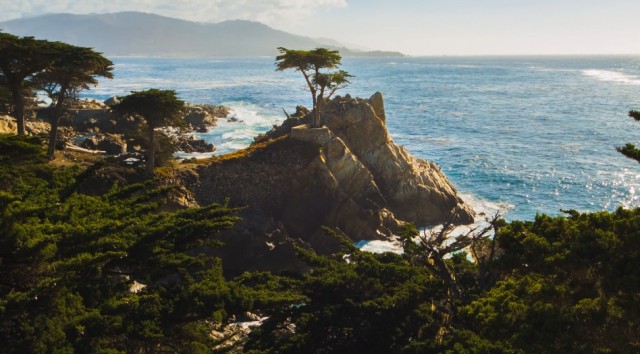
Let’s start with the USA: If there’s one place I absolutely adore above all of California’s myriad tapestry of exotic beauty, it’s Big Sur, hugging the central California coast for 90 miles between Carmel and Ragged Point.   For me, it’s a sacred place in its remoteness, adored by one of our most articulate poets on the environment, the late Robinson Jeffers, whose home is there. Severe drought conditions have converted this once verdant mountain area into a virtual tinder box. Just last year, a devastating forest burned 1000 acres and destroyed 34 homes. It happened in December, not in summer. Last year was California’s hottest year ever recorded. Severe drought and record temperature highs are continuing this year.

Other American vistas in danger:

The Florida Keys from Key Largo to Key West has experienced a sea-level rise of nine inches over the last century, threatening its ground water supply. In the next fifty years, experts are predicting that figure will double.

New Orleans, devastated by Katrina a decade ago, continues to struggle to find ways to protect itself from future storm surges, while concurrently sinking six feet below sea level.

New York City, much like New Orleans, faces a future onslaught of rising sea levels, something hurricane Sandy made very apparent.

The New Jersey shore, stretching 130 miles, has increasingly been exposed to flooding and erosion. Experts predict worse flooding over the next several decades.

Hawaii’s island gem, Kauai, with tourist meccas like Koloa, are now threatened by torrential rain.

The Newsweek issue doesn’t mention other American places under siege like Miami, Boston, Las Vegas and Los Angeles, the latter two running out of water.

It doesn’t get better anywhere else: In fact, it gets worse, especially in Africa with its already burgeoning population confronted not only by poverty, but political, religious and ethnic instability. Its once teeming wildlife, increasingly encroached upon by poachers, will in all probability disappear into memory, given the added stress of climate change with diminished rain and rising temperatures.

Meanwhile, in a throwback to Nero, Congress fiddles while America–and the world– burns in a costly game of partisan politics and subservience to fossil fuel lobbyists. Some not only deny the human contribution to climate change, but climate change itself, ludicrously placing themselves on equal footing with credentialed scientists.

I think again of Robinson Jeffers and his prescient poem, “Shine Perishing Republic,” with its theme of the American dream settling into “the mould of its vulgarity, heavily thickening to empire/And protest, only a bubble in the Molten Mass, pops/And sighs out, and the mass hardens.

It doesn’t have to be this way. While we aren’t able to halt climate change, the consequence of our dependency on fossil fuels, we can mitigate its effects. The lesson of evolution is the necessity of adaptation for an entity to survive. Thus far, we’re not doing very well at that.

–rj


Matthiessen’s The Snow Leopard: Still timely and eloquent

peter-matthiessen-with-leopard-for-web1

I finally got hold of the late Peter Matthiessen’s classic, The Snow Leopard, after a several week delay at Amazon, which was out of it. I had never read Matthiessen before, even though I knew he was a fervent lover of nature.

He began writing the book back in 1972, essentially a daily journal, shortly after the death of his wife, Deborah, from cancer. It tells of his trek across the Himalayas with field biologist George Schaller in quest of the Himalayan blue sheep and, for Matthiessen, in particular, the elusive snow leopard. It would win the National Book Award on its publication in 1978, our country’s most prestigious literary award.

I, too, confess to loving nature intensely to the point that my graduate prof in a Wordsworth course told the other students I had a leg up on comprehending Britain’s foremost nature poet.

In the middle part of my boyhood we lived in Philly, and I do mean the city. Occasionally we’d drive over to the Jersey coast for relief from the asphalt oven that is Philly in summer. For me, it was liberation to be among trees, fruit stands, and the shore.

I used to travel a lot, often abroad, always with camera ready, but I got complaints that there weren’t any people in my photos. I simply preferred landscape and I’m still that way.

But back to Matthiessen, I read several tributes following his death in April and even wrote my own in Brimmings a few weeks ago. I knew I had a lot of catching up to do. After all, he wrote some 33 books, both fiction and non-fiction, excelling at both.

Certainly, I had to read The Snow Leopard after coming upon one reader’s comment that he goes back to it every year, always gleaning new insights. For someone to do this–it’s rare we re-read a book, let alone, continually–implies considerable substance.

Similarly, I also liked what eminent travel writer Pico Iyer, who wrote the Introduction, had to say:

I have been reading Peter Matthiessen’s silver classic for more than a quarter century now, and every time I do, like any classic, it gives off a different light, growing as I do and shifting to meet the needs of every moment,

After comments like that, how could I not want to splurge my time indulging in this book. Out of curiosity, I googled “nature classics,” only to be disappointed to find no mention of the book that deserves company with the likes of Thoreau, Muir, Carson and Leopold. Perhaps it’s because The Snow Leopard, while surely taking in nature with eagle eye observation recorded in some of the most elegant prose ever, moves past nature into spiritual autobiography. In brief, the outer search for the snow leopard ultimately symbolizes his inward pilgrimage to find meaning and, with it, himself.

This said, I hadn’t previously known that Matthiessen was a serious devotee of Buddhism, that gentle faith, from which he continually draws strength and insight in this book, or a sense of what matters in a cosmos of flux and temporality:

Amazingly, we take for granted that instinct for survival, fear of death, must separate us from the happiness of pure and uninterpreted experience, in which body, mind, and nature are the same. And this debasement of our vision, the retreat from wonder, the backing away like lobsters from free-swimming life into safe crannies, the desperate instinct that our life passes unlived, is reflected in proliferation without joy, corrosive money rot, the gross befouling of the earth and air and water from which we came.

I wasn’t prepared for how unflinchingly honest this book is: “I am aware of all that is hollow in myself, all that is greedy, angry and unwise.” Matthiessen acknowledges that things were not well in his marriage with Deborah. There follows his intuitive decision to commit; his ineffectual attempts to show love. After her death It would be a year before this prolific writer found himself able to take up the pen again.

Deeply sensitive and rich in compassion, he is always aware of the plight of nature continually ravaged by humans in their relentless self regard and unbridled exploitation. He laments how even the Himalayas are being depleted of their forests, unsafe despite their remoteness, and with their loss, a habitat that gave sanctuary to unique animals like the blue sheep and snow leopards. Always in Matthiessen you have a sense of a paradise lost, with Man the driving agent of its extinction.

I wish I had time to explore the depth of the book’s many insights, for The Snow Leopard is surely a repository of cerebral wrestlings, an exploration of what it is to live meaningfully in the context of impermanence frequented with suffering. Accordingly, neither the past nor the future really matters, for it is in the Now that we find our paradise and thus our deliverance.

I close with Matthiessen’s sobering admonition:

…almost everywhere, a clear and subtle illumination that lent magnificence to life and peace to death was overwhelmed in the hard glare of technology. Yet that light is always present, like the stars of noon. Man must perceive it if he is to transcend his fear of the meaningless, for no amount of “progress” can take its place. We have outsmarted ourselves, like greedy monkeys, and now we are full of dread.

–rj

Convincing meteorologists that climate change is real

Obamaclimate

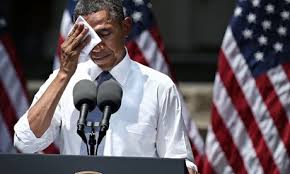
You can see from the above photo the challenge our president faces in convincing, of all people, our meteorologists, that climate change isn’t simply cyclic, but ongoing, posing devastating consequences for America, with no region spared. Further, we humans are its driving force.

The National Climate Assessment came out yesterday, only to be immediately dismissed as “alarmist” by–imagine my surprise–Mitch McConnell (R-Ky). Guess he must think the same about the recently released  UN Panel’s 40 volume plus study conducted by leading climate scientists. I’m reminded as a former prof of Victorian lit just what it must have been like for Darwin in the outpouring of public vitriol that followed upon his perceived tampering with hallowed establishment assumptions. By the way, I never cease to be amazed at the gall of politicians assuming equal footing with reputable scientists.

But it isn’t just the Republicans we have to worry about in Washington when it comes to taking climate change seriously and initiating immediate steps to at least mitigate its effects. You see this most pointedly when it comes to the Keystone XL project. Presently there’s a bipartisan effort to get a two-thirds majority in the Senate in favor of the project, assuring veto proof passage.   So far, 11 Democrats have shown willingness to join 45 Republicans in such a move, with one Democrat optimistic of getting several more.

As always, it’s the old song-and-dance scenario of jobs, when the fact is that if we were to put environment on a war-footing we’d have universal employment in harnessing the forces to slow global warming.   Solar energy has considerable promise, for example, and is already a key component in countries like Denmark. Instead of constructing pipelines with their potential for spills–and sabotage–we’d do better in shoring up our coast lines.

How wonderful it would be to see Republicans and Democrats give priority to long term public welfare rather than short term corporate interests and their reelection prospects. (Once again, a good point for term limits. If it exists for the Presidency, why not for Congress?)

As for the meteorologists, a George Mason University survey in 2010 showed only 19% of them accepted human activity as the primary contributor to global warming.  Some deny climate change period! (http://journals.ametsoc.org/doi/abs/10.1175/BAMS-D-13-00091.1 ) While good at short term forecasting, they fall considerably short at the long term. Public icons, they can be given to a narcissism of overreach. Unfortunately, 62% of us trust our TV weather forecasters more than we do climate scientists!

The greatest proofs of climate change lie not simply in natural catastrophes, but in their ever increasingly frequency. We have computer models for that!

above

–rj


Climate Change: Can we win the fight?

divest395581_155622104590737_1008694978_n

We just celebrated Earth Day on April 22, an annual fête of huge importance for those of us wanting to increase the public’s awareness of the challenge of climate change, and our substantial human contribution to it, and ways we might fight it.

It’s an important time for us in another way, too, as this yearly outpouring of Green advocacy transcending borders buoys up our enthusiasm, telling us we’re not alone in our caring. After all, sometimes it seems that we’re on this great big mountain we impulsively thought we could climb; so rituals of solidarity like Earth Day give us pause to catch our breath, reassess, and press on to our worthy goal of a humanity in harmony with nature as one species among others, each necessary to all. Just maybe we can pull this thing off. Anyway, good to dream big rather than live small.

The truth is that so much more needs to be done and that we’ve been moving at a snail’s pace in making climate change a palpable issue for the public. I saw this demonstrated all too clearly in the presidential debates in 2012, or just 18 months ago, with not a single question directed to environmental matters raised by debate moderators.

If the press can seemingly have no feel for the greatest issue ever to menace us with its destructive pay-load should we evade addressing it, then how much less can we expect the public to grasp what’s at stake? As is, individual lifestyle changes like driving less, getting rid of plastic, cutting back on electricity in our homes aren’t going to do the trick. We need more than bandages to treat the Earth’s hemorrhaging.

Now consider that a recent poll suggests that 37% of Americans don’t even believe in climate change. There exist also a good many, perhaps even more, who look at climate change as simply cyclic and that, just maybe, it might even right itself. Of course that view gets us off the hook and we can conduct business as usual.

Just recently the United Nations released the findings of its Intergovernmental Panel on Climate Change, a careful study by credentialed scientists encompassing some 40 volumes. Insiders say they toned down some of their language and projections so as not to unduly frighten, though their findings still emerge as deeply sobering, with none of us escaping vulnerability to what surely are predictions on an apocalyptic scale. In all honesty, I haven’t noticed any work-up by media or any concerted effort by members of Congress to hold hearings on the report and what we might do to save the day. Like many of you, I grow weary–and wary–of their feckless accommodations to corporate interests.

What’s vital is that we impact the political process, as happened with the Vietnam War, ultimately culminating in LBJ’s decision not to pursue reelection. It started with just a few protesters, then took hold and proved unstoppable. Unfortunately, I don’t see anything like this breaking out. I think this is because many of our projections for climate change impacting us lie still in the future, whereas flag covered body bags coming into Dover AFB were a daily, tangible occurrence, which the media ultimately caught up with when it perceived a muscular protest movement, packing a punch, that wasn’t going to go away.

On the other hand, if we haven’t been able to muster cadres of protestors against our Iraq and Afghanistan incursions with their costly toll in life and wounded for a dubious cause, how much less likely for an environmental movement devoid of blood and gore? And that’s what makes climate warming so horrendously insidious, or like some invisible killer we know is out there, but don’t know where he is, or when he’ll strike, or how.

Perhaps our young people will again show us the way as they did with Vietnam by way of their fossil fuel divestment sit-ins sweeping our college campuses, some 300 as I write, with several success stories, including Harvard with its $32 billion endowment. If it’s wrong to destroy our planet, it follows we shouldn’t be seeking to profit from those who do.   I wrote earlier of the Vietnam days when students rallied to make a difference. All of us: unions, retirees, teachers, tech workers, etc., might do well to follow their lead in choosing our retirement portfolios more discriminately.

But divestment has its limitations, too. While it was practiced widely in the 70’s and 80’s to pressure South Africa’s apartheid regime, the invariable result was that other investors stepped in. It’s true value lay in shaping public discourse, and I venture this holds true with this present endeavor.

Still, I question the wisdom of painting with a broad brush the fossil fuel industry as some kind of axis of evil. We need energy. Are our students willing to follow through and divest themselves of their cars and their electricity and take on an Amish likeness? We would do better to focus on the coal sector, our greatest polluter.

I still like our president–articulate in his efforts to assure health care access, social and economic equality, tax, immigration and drug sentencing reform. So far, he’s championed alternative energy efforts, sought restrictions on coal burning power plants, held out against the Keystone XL project, endorsed alternative energy efforts.

As for Keystone, he needs our support even as we must sustain, and grow our protests, to keep a fire under his feet. When I think of Keystone and the big money behind it–think Koch brothers–I get nauseous: the obscenity of it, given the perils of climate change; the stench of it, given its association with pet coke; the callowness of it, given its destruction of farmland, water aquifers, and wildlife habitat.

The President will presumably make his decision after this fall’s elections, but faces immense pressure, even in his own party. It isn’t a given he’ll opt for courage over pragmatism. In the end, it’s important we all get to the polls and endorse environmentally friendly candidates such as the courageous Gary Peters (D-MI), who hopes to succeed retiring senator Carl Levin (D-MI).   Peters has come out against Keystone, provoking the Koch brothers to contribute substantially to his Republican opponent, who now leads in campaign funding. Peters is our leading spokesperson on pet coke. (By the way, you can access online the Sierra Club’s political endorsements, which include Peters.)

If it came down to, say, an errant asteroid making its way to befuddle our planet as once happened, plunging the world into a rebirth of its pre-evolutionary darkness, then you can bet your life we’d all get off our bottoms and fight the good fight. Well, think of that asteroid as climate change.

–rj