When the Japanese Don’t Look Japanese

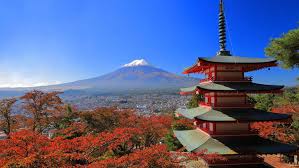
I remember Japan fondly, falling in love at first sight. It was twelve years after WWII and a place remarkably different from anywhere else and, in large measure, it has remained so.

It had been a long flight from Travis AFB in California, a brief stop in Honolulu for a crew change, then on to Wake Island, where President Truman had a few years before confronted a defiant General MacArthur, then on to Yamoto Air Station, 23 miles from Tokyo.

I was 17, an airman headed for Korea for the next 12 months. Yamoto meant processing before continuing on a C-47 for Osan AFB near Seoul.

Japan was then this kaleidoscope of sensuous bombast—human drawn rickshaws, coolies in straw conical hats, buckets suspended on long poles between their shoulders, and everywhere, women garbed in flowery kimonos on densely packed streets.

I would return to Japan twice on rest leave, the first time centering on Tokyo and its Ginza, even then, bustling with elegant department stores, game shops, restaurants, art galleries, theaters and night clubs, illuminated at night by a swarm of neon lights rivaling those of Vegas and New York. I would visit the grounds of the Imperial Palace, the Great Kanto Earthquake Memorial, and the Great Buddha of Kamakura bronze statue originally cast in 1252.

One of the supreme highlights was keeping company with American Quaker friends in Tokyo, who arranged a get-together with university students, fluent in English. They gave me a different war vista in narrating the American fire bombing of Tokyo, March 9-10, 1945, killing 100,000 civilians and leaving 1,000,000 homeless. I learned that it’s the victors who write the history we imbibe and I remain moved by their civility to me, an American serviceman.

A few days later, I journeyed by car with my friends, laboring up twisting mountain roads to the shrine city of Nikko 97 miles from Tokyo, where I lived several days in traditional Japanese manner, sleeping in minimalist fashion on a tatami soft mat made with rice straw fill, rolled out on the floor, then layered with a Shikifuton, or thin mattress, and a buckwheat hull pillow. To keep warm, an added Kakefuton , or soft quilt.

Following a hot bath, dressed in kimono, served a fish-seaweed meal, no links to an external world, I slept soundly.

I’m not certain how prevalent this ancient sleeping mode survives in modern Japan, though I know traditional inns abound in Kyoto, that magical city of April cherry blossom.

On my second visit, I took a long distance train from Tokyo to Fukuoka, one of Japan’s most populated cities on the southern island of Kyushu. I wish I could remember what I took in there, but I draw a blank, though I recall being dazzled by its department store elevators, on each floor, a young girl, often giggling at this lanky Westerner, helping you get on and off the escalator, and from my train window a passing landscape of brick houses contrasting with the fragile wooden structures dominant in central Honshu, Japan’s largest island.

There’s much I admire in the Japanese culture, still unique in spite of the cultural leveling you see in other nations, or what can be called Americanization, hastened by film and TV.

They’re surely the most hygienic-centered people I’ve known, indulging nearly daily in the hot bath and painstaking to remove their shoes before entering your home.

Streets are free of trash, yet you won’t find trash cans.

Politeness is the hallmark of Japanese culture, san often added to to a surname to render respect. It extends even to the language’s several pronouns, a tier gauged approach to courtesy.

Some of the customs are especially endearing. If given a gift with the donator present, you don’t open it, lest you hurt their feelings or, worse, feel pressured to masquerade your dislike on unwrapping it.

You reciprocate by sending a gift, usually candies.

Etiquette extends to not eating on a train or while walking.

Not interrupting

Not talking loud.

Not bragging.

Then there’s the ubiquitous honesty. Unlike in many countries, you don’t have to safeguard your pockets in a train station, not even on a packed commuter train.

Leave a camera on checking out of your hotel, housekeepers will see it to the registration desk.

You don’t shake hands or hug, bowing instead as a way of modesty and respect.

Sample your rice first, before nibbling other dishes, then go back to the rice, viewed as a palate cleanser.

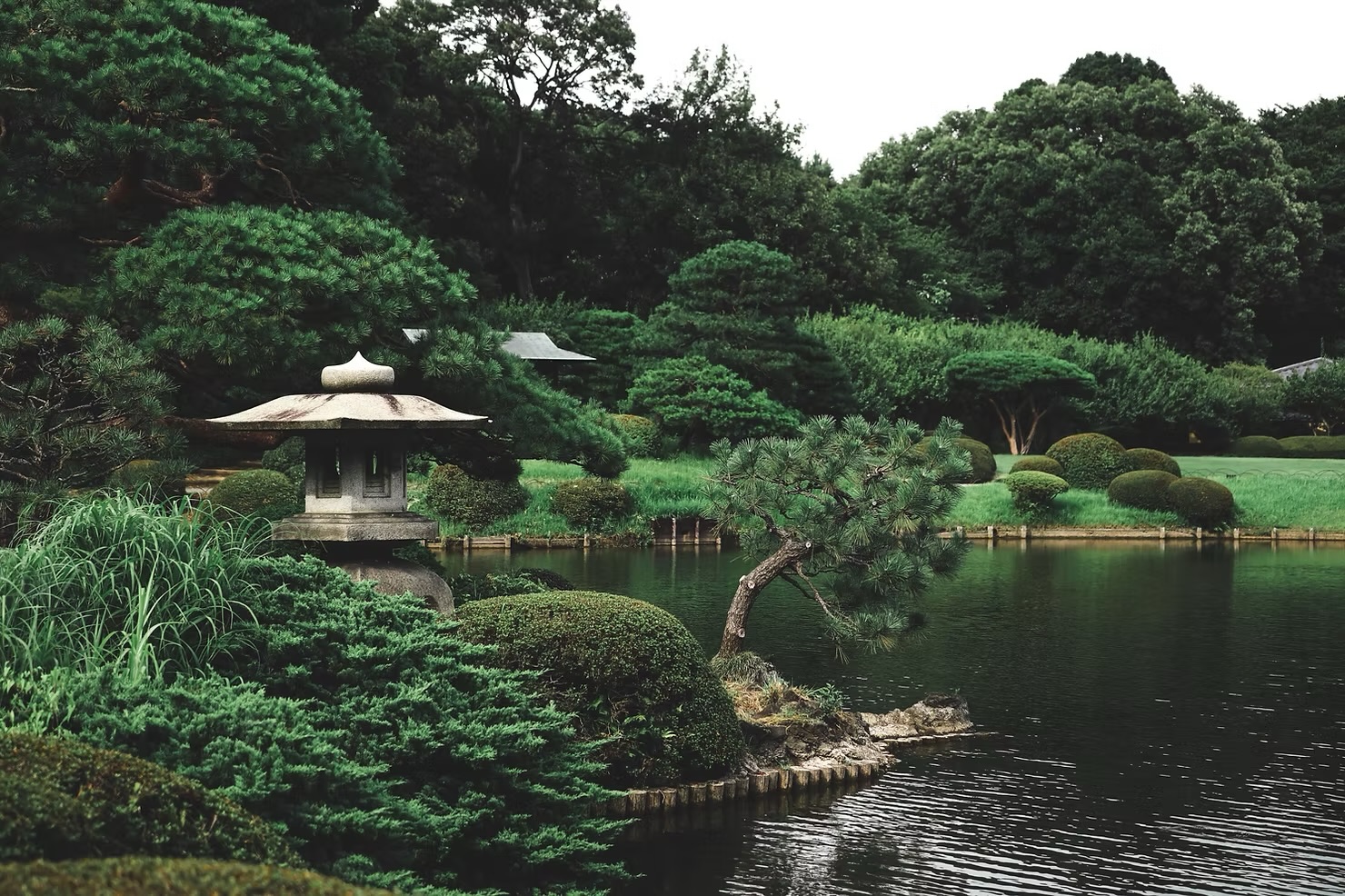
Japanese gardens obsess me. I’ve always wanted one. With their emphasis on simplicity, harmony, and verisimilitude with nature, they confer sanctuary from everyday bustle and induce an inner calm. Many Japanese homes feature their own courtyard garden, bringing nature close.

Then there’s the tea ceremony, derived from Zen Buddhism, emphasizing mindfulness and bonding between host and guest. Thankfully, it remains a revered ceremony.

As for crime, it’s rare in Japan, mass shootings virtually unknown. Contrast with this, the 400 mass killings (4 or more dead per incident) in the U.S. in the first six months of 2023.

Unlike America, it’s not about doing your own thing. It’s thinking about others and not bringing shame to your family.

But Japan’s changing, inevitably because unless it does, it will simply vanish in several generations. The Japanese aren’t replacing themselves and unless they do, its present population of 124 million will dwindle to 87 million by 2070.

Consequently, traditionally xenophobic and homogeneous Japan has turned to immigration to solve its labor needs and sustain its population. 3,000,000 immigrants now call Japan home, triple the number in 1990. They come from not only Asia, the Philippines, Vietnam, and Indonesia especially, but from Africa and the Middle East. There are cities where 10-15% are foreign born.
Today, you’ll find 113 mosques across Shinto-Buddhist Japan. In 1999, there were 15.

Will Japan’s new citizens bring their resentments with them, as in France, England, and Sweden?

Will they end-up in ghettoes of the unassimilated?

As their numbers swell with immigration and higher birthrates, will they overwhelm the world’s most exemplary society?

Will the Japanese fade like countless fauna and flora into memory, their substantial contributions to civilization relegated to history books like those of the fabled Pharaohs’ Egypt or Nebuchadnezzar’s Hanging Gardens of Babylonia?

In sum, what happens when the Japanese don’t look Japanese?

–rj

My passion for reading

I’m always on the look out for a good read, and it doesn’t matter whether it’s fact or fiction.  Biographies, memoirs, diaries, you name it.  But science fiction, romance, adventure, I like these, too.  And then there are the how-to books from zen to gardening, take your pick.

I probably read from 15 to 20 books yearly, not any record-setting pace, but I think a fair number.  I’ve many interests like gardening and studying Spanish, but I try never to crowd out a daily dose of a good book, investing at least an hour every day.

There are a lot of talented writers and engaging topics out there, so sometimes I find it hard to choose, since obviously you can’t read everything.  Book lists come in handy, but I tend to avoid the more popular ones like those in the New York Times or Amazon.  Sometimes I check-in with Publisher’s Weekly.  I’ll also look at the National Book Awards and Booker Prize listings online.  Occasionally, I’ll pick up a choice item on the recommendation of Fareed Zakaria, who always closes his GPS show with a super read.  And then there’s The New York Review of Books, which has never steered me wrong.

In a post I wrote just a few days ago, I mentioned I’d taken-up Mindfulness Meditation. As one of its weekly exercises, they ask you to break out of your habit modes by altering a specific routine; for example, change where you sit at the table at home.  The idea is to get you in-touch with your senses and stimulate awareness that can help you catch destructive thought patterns.  I’ve extended this habit-breaking strategy to my reading, exploring new vistas.  (By the way, novelty has a way of recharging brain cells, warding off dementia.)

It isn’t often I read a book originally written in a language other than English, the exceptions being classics such as The Divine ComedyLes Miserables, Anna Karenina and the like.  I know this is very parochial, since there are many exceptional reads not written by Anglos.  And so I opted for a different pathway a few days ago, downloading Natsume Sodeki’s The Gate (New York Review Books Classics).  Turns out, I made a wise choice.  I had never heard of Sodeki, nor ever read a Japanese novel.  Sodeki happens to be Japan’s most revered modern novelist, something I didn’t know, but now understand.  Discovering a game-changer, I want to read more works by Sodeki and others outside the groove.

I’m optimistic about the future of reading, despite the closing of many bookstores, the precarious profit margins for publishers, and the plethora of community budget woes putting the  squeeze on one of America’s unique treasures: the public library.  Last year more titles were published than ever, though not necessarily in traditional book format, since the times are a changing.  Like most everything else, books evolve with adaptation a corollary for survival.  Electronic books are here to stay and publishers who don’t render increased access to this new format are unlikely to survive.

A uniquely human endeavor, reading will endure.  A few years ago, it was widely forecast that the DVD would close movie theaters and end the big screen tradition.  Well, that hadn’t happened when last I looked and, similarly, TV never replaced the radio, witness the popularity of 24/7 radio talk shows or stations with dedicated music genres and their many listeners

But why this passion in me for reading? I read to be entertained, informed, inspired and, yes, sometimes to be chastised into seeing a new way of thinking.  But mostly, at least with regard to literary texts, I read to engage my feelings through their imaging in metaphor and articulation, often eloquently, into the truths of human experience.  It’s then I know I’m not alone, but linked with others in that existential quest for meaning and affirmation.  As such, reading grows my empathy and compels my compassion. What more could I ask?

A new rhythm that imperils: reflections on global warming

We owe our existence to it, yet we give it little heed, since it’s always there for us.  In my science classes we called it natural law, the material rules of nature that lie behind the structure and behavior of our universe.  Our earth, for example, rotates on its axis, allowing for alternations of light and dark.  It circles the sun with a mathematical precision on which we base our calendar.  There is the partnership of sun and moon exerting a gravitational force on a rotating earth that lifts and lowers its ocean waters with cyclic surety.  Like a camera lens set on infinity, the examples have no limit in their envisioning.

In sum, there exists a rhythm to the universe, which some have argued evidences a Mind at work, bestowing design and flowing with purpose.  Others, however, contend these laws are merely interplay of cause-effect mechanisms, devoid of intent and ethical regard, as reflected in Japan’s devastating tsunami in 2011, taking 20,000 lives. What we define as tragic is more likely our not heeding their operations.  It’s not wise to build on seismic faults or close to ocean shore.

As you may surmise, I draw comfort from these cosmic rhythms despite their indifference to our human schemes.  I know that tomorrow brings the dawn and, with it, the promise of new beginning.  In our human world, such fidelity is rare.

I find a discordant note, however, in our thoughtless disregard of those laws that sustain us, providing clean air, dependable rainfall, and abundant harvest.  In doing so, we’ve acerbated climate change, a crisis largely of our own making rather than merely cyclical change.  We’ve poisoned our air and water, slashed and burned our way through virgin forest, plundered our fellow animal species and squandered our water resources. Tomorrow’s wars are more likely to be waged over water, not oil.

In ten years, the African elephant, once a million, will vanish into memory along with the rhinoceros, all for the sake of trinkets and aphrodisiacs.  Today I saw the BBC news that sharks may soon become extinct, 100 million already killed, in a fishing industry that preys upon their fins to flavor Asian soup.

In our misdeeds, we’ve set other laws into motion that now imperil rather than sustain, generating melting glaciers that are raising sea levels and a warming tundra with potential for massive release of methane, a toxin deadlier than CO2.

Meanwhile, there was the media’s startling failure in last fall’s presidential debates to question the candidates on our generation’s most perilous challenge.  Locally in  places like Kentucky where I reside, cars sport “friends of coal” license plates and “environmentalist” suggests extremism.  Nationally, and globally, corporate interests prevail to uphold waste in the guise of growth.

As for the public’s response, I see its numbing indifference perhaps most vividly at grocery store checkout.  Though I provide my own cloth bags, I’m virtually self-conscious in my singularity amidst a sea of plastic supported by custom.

We are makers of a new rhythm, but this one brings no comfort.

rj