This says it all:
The Rain Forest’s Brave Defenders
This says it all:
The Rain Forest’s Brave Defenders

I’m a big fan of history, authentic history that’s unshackled from bias. I like knowing what really happened, when and how, and the lessons we can draw from history, lest we repeat its follies. Sometimes, though, history is like lining up for my morning cod liver oil as a child, good for me, but awful tasting stuff I want desperately to spit out, especially when learning of our continuing abuse of indigenous people, not only in America, but worldwide.
In North America, where I live, our crimes against native peoples comprise an unparalleled holocaust even by WWII’s blood-curdling horror show of 10 million Jews, Slavs, and Roma slaughtered in Nazi death camps. It began even before the notorious Indian Removal Act (1830), ordering Indians east of the Mississippi to move westward. Jefferson’s Declaration of Independence decries the Indians as “savages.”
Just how many indigenous people lived in North America, not including Mexico and Central America, prior to 1492, is a calculated estimate at best. The consensus, however, led by scholars Russell Thornton and David Stannard, poses a reasonable estimate of 7 million, with 75 million in the Western Hemisphere at large (see Russell Thornton, American Indian Holocaust and Survival: A Population History since 1492, Norman: University of Oklahoma Press, 1987; David E. Stannard, American Holocaust: The Conquest of the New World, (New York: Oxford University Press, 1992).
Thornton thinks that of some 5 million indigenous peoples within today’s continental United States, the vast majority were decimated by disease, starvation, forced labor, relocation, alcoholism, declining birthrates, and genocide. By 1900, that number had dwindled to 250,000. Of the 75 million indigenous in the Western Hemisphere, an estimated 70 million have perished consequent with European colonization since 1492.
Anthropologist explorer and advocate of indigenous interests, Wade Davis, wrote a definitive account of their plight, worldwide, in his 2001 book, Light at the Edge of the World: a Journey Through the Realm of Vanishing Cultures. It navigates, in particular, the pressures of modern civilization on ancient ways of life, harboring unique wisdom acquired over thousands of years of living in close contact with the natural world.
Wade explores several cultures, among them, Borneo’s Penan, northern Kenya’s pastoral nomads, and, tragically, the fate of Tibet and the coerced extinction of an ancient way of life. His book concludes with a model of hope in Canada’s designated vast homeland for the Inuit, Nunavut.
Passionate and eloquent, Wade delivers a salient polemic for doing everything we can to preserve these ancient cultures with their unique ways of imagining the human experience.
In our ethnocentrism, we may dismiss these cultures devoid of modern amenities as anachronisms, their loss of no consequence, perhaps even desirable: cessation of inter-tribal violence, improved health, social equity, education and employment options, etc.
Wade argues persuasively that when these unique societies fade, their former constituents most frequently find themselves adrift, subject to discrimination and poverty. He gives many examples such as the sad aftermath of the 1956 evangelical missionary intrusion of the Waorani, or Auca, habitat in remote Ecuador, its culture vanquished and displaced tribespeople reduced to menial labor in a modern landscape.
Space is crucial in positing who we are. When lost or compromised, we become adrift, flotsam in a larger current, severed from what conferred identity. This has also been the fate of Native Americans at large.
Spatial encroachment seems everywhere now, accelerated by corporate interests, technology, and human indifference. 98.9% of historical indigenous lands in North America have been lost since 1492 (environment.yale.edu). It continues unabated worldwide: Central America, the Amazon forest, Africa, where logging, mining, dam construction, oil drilling, pipe line installation and agribusiness, the foremost instigator, exact their toll upon historically indigenous land.
An estimated 370 million indigenous live in 90 countries and are notoriously abused. They exist as 5,000 distinct peoples, speaking 4,000 languages. 70% percent of the indigenous live in Asia.
Did you know that indigenous life expectancy is 20 years less than the rest of us? Or that comprising five percent of the world’s population, they’re 15% of the world’s impoverished?
We do a lot of talking about climate change, but how many of us realize the environment’s greatest defenders are the indigenous?
Occupying 25% of the world’s surface, they are guardians of “80% of its remaining biodiversity and 40 per cent of all terrestrial protected areas and ecologically intact landscapes” (Amnesty International).
20% of the world’s tropical carbon forest is stored in indigenous lands: the Amazon, Central America, Indonesia, the Democratic Republic of Congo (worldbank.org).
What’s more, their demise poses a visceral loss to all of us in the forfeiture of a unique diversity, reducing the world to a “monochromatic world of monotony,” Wade writes.
Tragically, in the last fifty years we have witnessed not only the loss of 1 million species of inestimable value to the biosphere upon which our existence depends, but the uniqueness and wisdom of cultures from which we can learn much to ameliorate our own. The parallel fate of these cultures, despite the UN’s passage of the Indigenous Bill of Rights, poses one of the urgent issues of our time.
Worldwide, some 300 million people, roughly 5 per cent of the global population, still retain a strong identity as members of an indigenous culture, rooted in history and language, attached by myth an memory to a particular place on the planet. Though their populations are small, these cultures account for 60 per cent of the world’s languages and collectively represent over half of the intellectual legacy of humanity. Yet, increasingly, their voices are being silenced, their unique visions of life itself lost in a whirlwind of change and conflict.
Wade argues that the loss of language diversity, in particular, underscores the accelerating demise of ethnosphere diversity through loss of habitat, acculturation and assimilation:
Of the more than two thousand languages in New Guinea, five hundred are each spoken by fewer than five hundred people. Of the 175 Native languages still alive in the United States, 55 are spoken by fewer than ten individuals.
….each language is, in itself, an entire ecosystem of ideas. and intuitions, a watershed of thought, an old-growth forest of the mind. Each is a window into a world, a monument to the culture that gave it birth, and whose spirit it expresses.
I’m very receptive to Wade. I’ve long been a student of culture. Wade’s book continues that interest and I recommend it, and all his books, as a collective, informed defense of the right of indigenous communities to a way of life, often superior to our own; the interplay of gathered insight through intimacy with Nature in its many vicissitudes.
I believe strongly in the gifts diversity confers, every culture a contributing chapter in the human narrative. Any diminishment of the ethnosphere consequent with cultural leveling alarms me. I believe it constitutes cultural genocide, whether by intent or omission.
Climate change is today’s most ardent threat to indigenous peoples, their ecosystems, upon which they depend for subsistence, vanishing rapidly as increasing temperatures; a greater suspectability to illness via vector borne and water borne diseases; drought; forest fires; and desertification exponentially occur.
In Northern climes, the Inuit, for example, are now facing a potential hunger crisis consequent with melting glaciers, rising seas, and diminished wildlife; on tropical islands, storms of increasing velocity occurrence and rising seas menace as never before.
The UN High Commissioner for Refugees informs us that there presently exist 37 million climate refugees, a disproportionate 15% of whom are indigenous peoples.
I find this an unfolding tragedy. Indigenous tribes have been stalwart stewards of the biosphere from whom we can learn, but conversely set upon by agriculture expansion, logging, and mining interests. Activists have been murdered, most recently, journalist Dom Philips and indigenous advocate, Bruno Pereira in Brazil. Pereira had been investigating criminal activity within the Amazonian indigenous reserve of the Javari Valley. Philips was there to document.
In 2020, Frontline Defenders reported that at least 331 human rights activists, mostly in Central and South America were murdered, 69% of whom were defending indigenous lands. Between 2017 and 2020, 25% of those murdered were indigenous, who comprise only 5% of the world’s population. In 2021, a known 33 indigenous people were killed.
As I write, photos of many of indigenous victims lie before me, a good number of them women along with their children. I can give you country by country analysis of the continuing bloodbath, with governments such as Brazil’s Bolsonaro indifferent to the crisis and the perpetrators remaining free.
Unfortunately, the indigenous often live in areas most vulnerable to climate change: the Arctic’s Inuit, Scandinavia’s Swami, the Amazon’s Yanomami, for example. Thus, their ardent defense of their diminishing environment made worse by exploiters.
Their demise poses an incalculable loss for all of us. Wade, with his typical acuity, summarizes its meaning well:
The ultimate tragedy is not that archaic societies are disappearing but rather that vibrant, dynamic, living cultures and languages are being forced out of existence. At risk is a vast archive of knowledge and expertise, a catalogue of the imagination, an oral and written literature composed of the memories of countless elders and healers, warriors, farmers, fishermen, midwives, poets and saints. In short, the artistic, intellectual and spiritual expression of the full complexity and diversity of the human experience.
Indigenous People’s Day will be observed October 10, 2022 in the U.S. in 26 states as part of a growing movement to replace the traditional Columbus Day. For me, it’s everyday I remember them, Earth’s guardians, beleaguered and increasingly vanishing along with their sacred habitat. They need your help.
—rj

Britain is experiencing an unprecedented heat wave today, with temperatures soaring to 104F over much of England. Scientists are apprehensive, their future model scenarios occurring faster than anticipated.
Meanwhile, we continue our dependency on fossil fuels, our president begging Saudi Crown Prince Mohammed bin Salman, yes, the same guy our intelligence names as ordering the killing of Washington Post Saudi critic, Jamal Khashoggi, to increase oil output.
Widespread reports have it that Biden is proposing to open up Alaska’s North Slope wilderness to drilling, despite the Interior Department’s initial draft supplemental impact statement, projecting a thirty year time bomb release of 284 metric tons of carbon into the atmosphere.
Under the proposal, ConocoPhillips would obtain drilling rights to five federal land sites, along with a processing facility, pipelines to transport oil, gravel roads, and at least one airstrip and a gravel mine site, according to the draft EIS.
The fallout would be consequential to wildlife as well, threatening caribou, polar bears and migratory birds.
Ominously, the Arctic and Antartica, which help cool the earth by reflecting sunlight back into space, are melting faster than other earth regions. Hence, the heat waves increasingly scorching the Earth. The proposal only increases the speed of melting ice, resulting in rising seas, release of methane, and alteration of sea currents such as the Gulf Stream
As I write, Alaska has been burning faster than in the last 80 years, with 500 fires since April of this year, the consequence of rising temperatures, increased vapor with accompanying lightning strikes, and accumulating kindle. 264 fires are currently burning across the state.
While I’m ashamed of Biden’s betrayal of his campaign pledges, what bothers me most is the public’s myopic indulgence to pursue life in a bubble, ignoring the ominous natural signatures to our coming doom.
Unless we amend our ways, our children will have no meaningful future.
—rj
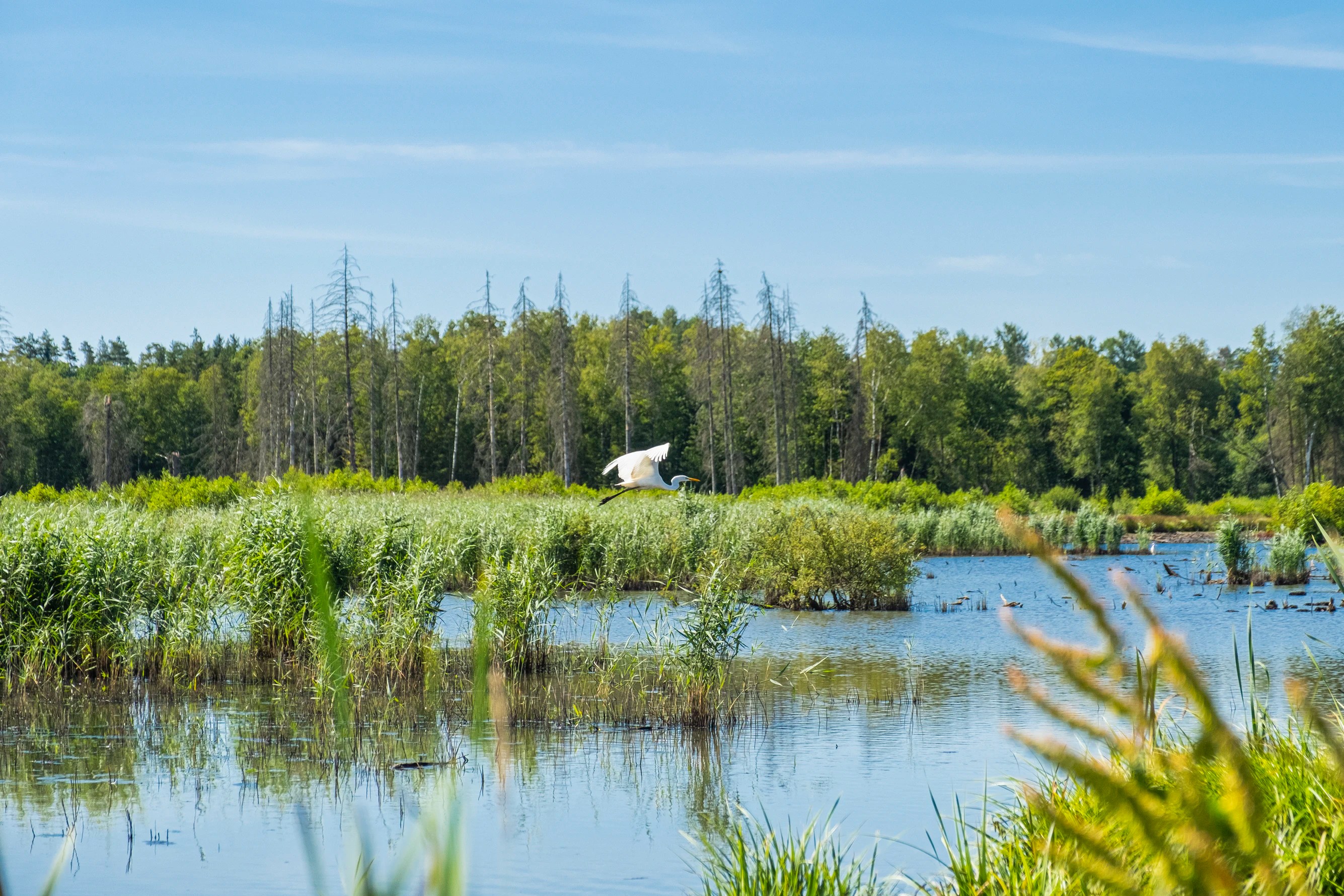
The only biodiversity we’re going to have left is Coke versus Pepsi. We’re landscaping the whole world one stupid mistake at a time. —Chuck Palahnuk, Lullaby
The year is 2060. You are gone, but your grandchild reads to her children from a book filled with drawings of creatures once abundant and a source of wonder, now the stuff of children’s story books, only not of some fearsome Tyrannosaurus Rex, Megalodon, or Woolly Mammoth, but of elephants, giraffes, lions, tigers, rhinos, whales and monarch butterflies, now vanquished, never to grace our earth again.
Distressingly, largely due to the exponential increase in the human footprint, this is our grandchildren’s bleak future. No more condors, manatees; no more of our closest relatives, chimpanzees, orangutans, and mountain gorillas, natural selection’s vast repertoire of unique, splendid entities reaching back several million years, thoughtlessly extinguished by Homo sapiens.
Apart from the scientific community, the public appears largely unaware, perhaps even indifferent, to this unprecedented threat to species loss and the risks it imposes for its own welfare. This extends to climate change, largely human induced. A current PEW poll reveals only 41% of Americans regard it as a priority issue.
As to how many species exist, whether flora or fauna, we don’t really know. New species are continually being discovered, while others have recently become extinct or face extinction. What we do know is that many species have gone extinct even before their discovery. An estimated million others are likely to go extinct in the next several decades.
This leaves us in a quandary: do we attempt to preserve existing species for future generations or do we simply resort to preserving those serving immediate human interests? Unfortunately, our present trending indicates the latter with species everywhere in free fall.
A useful acronym for the specifics governing this decline is HIPPO: habitat loss, invasive species, pollution, population growth, over exploitation:
Habitat: Three quarters of the earth’s terrestrial environment has been altered by human activity; 66% of the marine environment.
Invasive species: Since 1970, invasive, alien species have increased 70% across 21 countries.
Pollution: 300-400 million tons of heavy metals, solvents, toxic sludge among other wastes from industrial facilities have been dumped into the world’s waters.
Population growth: The world’s population averaged an annual 1.7 increase between 1950 (2.5 billion) and 2010 (6.9 billion). In 2022, world population has reached 7. 6 billion. (Pew Research). While the growth rate has generally been plummeting, not so in Africa, averaging an annual 2.54 increase. By 2050, Nigeria will overtake the U.S. in population (The Economist); 800 million by 2300 (qz.com).
Over-exploitation: In 1930, an estimated 10 million elephants roamed Africa. Currently, that number has dwindled to 416,000, largely due to poaching and conflict (World Wildlife Federation). On the high seas, factory ships are removing fish faster than they can be replenished. Japan continues to hunt whales. Sharks are killed in the thousands for their fins (fin soup a Chinese delicacy), their carcasses thrown into the sea. Chimpanzees, our closest relatives, hunted for meat and increasingly suffering habitat loss, are now a threatened species.
Climate change needs to be added, giving us HIPPCO. It ranks second to habitat loss in imperiling biodiversity. Largely due to climate change, we are losing our polar bears, just 31,000 remaining; coral reefs with their independent ecosystem, nourishing myriad aquatic life, are dying as the sea warms and storm intensity and frequency increase. The speed of heat increase due to reliance on fossil fuels over the last 100 years now exceeds that of the previous 10,000 years.
Extinction isn’t new to earth’s history. Geologists have noted five principal occurrences, the most famous that of 65 million years ago, when a 12 kilometer wide asteroid crashed into the Yucatan, leaving a crater 10 kilometers deep and 180 kilometers wide, killing 70% of the earth species, including the dinosaurs, ending the Mesozoic Era, or Age of Reptiles, and ushering in the Cenozoic Era and the rise of mammals after 10 million years of evolution.
Humans came late on the scene. In the 1980s, aquatic biologist Eugene Stoermer coined the term Anthropocene to depict a new epoch, human dominated. In this epoch, the Earth faces a new menace, wrought not by an asteroid, but by Man. The massive extinction of this human-centered epoch has been popularized as the Sixth Extinction.
The fundamental source of our dilemma is our disconnect from nature. We have fostered Nature as something apart from ourselves. It exists, but it’s outside ourselves, an entity to be exploited for human needs.
The truth is we exist as constituents of a vast biosphere complex of interrelated life forms dependent on one another for well-being. Remove an element of this web and you potentially unleash a house of cards scenario of collapse.
Take, for example, the chestnut tree dominating the forests of Eastern North America before European settlement. Tall, fast growing, numbering an estimated four billion, their canopy housed millions of birds and their nuts provided food for many birds, insects and mammals. Then came the Asian pathogen fungus Cryphonectria parasitica of the early 20th century. With the loss of these magnificent trees came the demise of caterpillars metamorphosing into moth pollinators, along with the plunge into oblivion of the once prodigious passenger pigeon.

In our earth’s nearly 4 billion year history, we estimate that of the 4 billion species evolved by nature, 99% are extinct. But such extinctions resulted from natural antecedents apart from human causation. Increasingly, Man has become the arbiter of species decline, not evolution or cyclic climate change, or asteroid collision. In the last 500 years, 900 species have gone extinct and the pace quickens.
Currently, 35,000 species face extinction risk, according to the International Union for Conservation of Nature’s Red List of Threatened Species:
Among these, 1 in 7 bird species.
A quarter of the world’s mammals
40% of amphibians
34% of conifers
37% of sharks and rays
21% of reptiles
33% of reef corals
It gets worse than that. The latest UN IPBES Global Assessment report (2019) forecasts more than a million species are likely to go extinct in coming decades.
The biosphere, which includes ourselves, is Nature’s survival gift, complex and delicate, requiring balance of its constituents. Safe-guarding it is crucial and its benefits not to be taken for granted. Healthy Plants convert the sun’s energy, making it available for other life forms. Bacteria and other living organisms convert organic matter into nutrients enriching the soil. Pollinators are essential to food production. Plants and oceans act as major carbon sinks. Did you know that of the 50,000 known medicinal plants, up to a fifth face extinction from deforestation? Or that approximately 120 drugs derived from rainforest plants are used to treat cancer, leukaemia malaria, heart diseases, bronchitis, rheumatism, diabetes, arthritis or tuberculosis?
As the late eminent biologist E. O. Wilson pleads in his compelling Half Earth,
The biosphere does not belong to us; we belong to it. The organisms that surround us in such beautiful profusion are the product of 3.8 billion years of evolution by natural selection. We are one of its present-day products, having arrived as a fortunate species of Old World primates. And it happened only a geological eyeblink ago. Our physiology and our minds are adapted for life in the biosphere, which we have only begun to understand. We are now able to protect the rest of life, but instead we remain recklessly prone to destroy and replace a large part of it.
Our Earth has taken ill and we are its cause. Paradoxically, we must be its healer.
—rj
“O if we but knew what we do
When we delve or hew —
Hack and rack the growing green!
Since country is so tender
To touch, her being só slender,
That, like this sleek and seeing ball
But a prick will make no eye at all,
Where we, even where we mean
To mend her we end her….”
--from “Binsey Poplars,” Gerard Manley Hopkins
According to the Intergovernmental Science-Policy Platform on Biodiversity and Ecosystem Services (IPBES), five principal forces are contributing to our ruthless assault on Nature and its demise: unprecedented environmental changes in land and sea use; direct exploitation of natural resources; pollution; invasion of alien species; and climate change. Their consequences for species survival should alarm all of us, since we are ecologically linked in dependency upon one another. Since 1970, wildlife population has declined by two-thirds, or some 68% (LIving Planet Report-2020).
Sadly, we are at war with nature, mindlessly exploiting ecosystems in pursuit of profit. The problem is universal, with substantial losses in mammals (65%); fish, amphibians and reptiles (45%). According to The Living Planet Index (LPI), one million species face extinction. Deforestation and agricultural expansion have contributed substantially to this decline. Ominously, they continue.
Let me give you one egregious example of a recent human created disaster scenario in an attempt to augment agricultural production by altering nature’s contour.
There lies a once flourishing body of water known as the Azul Sea, located between Kazakhstan and Uzbekistan. First mapped in 1850, it was sometimes dubbed the Blue Sea. Until the last century, it was the world’s third largest inland lake, exceeded only by the Caspian Sea and Lake Superior, extending 426 kilometers (265 miles) long and 284 kilometers (176 miles) wide.
Replenished by the 1500 mile Amu Darya and Syr Darya rivers, it supported nineteen villages dependent on its abundant fish. Things began to change in the 1930s as Soviet engineers schemed they could expand cotton and wheat output by diverting its water for irrigation. Huge channels were dug to supply water for millions of acres of farmland.
By the 1980s, the Aral Sea experienced sharp declines in area and volume, or 80% and 90% respectively.
The environmental fallout has been enormous, so much so that the lake has become increasingly dubbed the Aralqum Desert. Qum is the Uzbek word for dust.
Seventy percent of the Aralqum is now salt residue.
The fish have disappeared, fish factories abandoned and villages become ghost towns. Wind-swept, its dust pesticides have spread throughout the world. They’ve even been found in the blood of Antartica penguin and Greenland glaciers.
With the lake’s demise has come a change in the weather, with harsh summer heat and frigid winters. Winds abound.
Now one of the unhealthiest places on earth, respiratory disease and child mortality have increased sharply.
In better times. the Azul Sea featured an island sanctuary, Barsa-Kelmes, teeming with deer, wolves, and eagles. It’s just memory now.
And what about those other fresh water behemoths, Lake Superior and the Caspian Sea. Have we learned our lesson?
Fortunately, Lake Superior has largely avoided the fate of Lake Erie, contaminated by industrial and agricultural runoff. Nonetheless, it faces several incipient stressors, contributing to environmental degradation: mining, home development along its shores, airborne chemical pollutants, invasive species and climate change. In the last several years, Lake Superior is warming faster than many of the earth’s other water bodies, threatening its fish; wind speeds have increased 5% each decade since 1980; storm intensity and frequency have also increased.
The fate of the Caspian Sea, the world’s largest inland waterbody, is more troubling: According to the UN Environment Programme, the Caspian “suffers from an enormous burden of pollution from oil extraction and refining, offshore oil fields, radioactive wastes from nuclear power plants and huge volumes of untreated sewage and industrial waste introduced mainly by the Volga River” (Rpt. in The Nation. Thai Press). Climate change has led to increased evaporation, or by six centimeters annually.
The lake has seen the world’s largest sturgeon population decline by 90%.
Former home of one million seals which inhabited its shores and islands a century ago, fewer than 10% remain, the result of over-hunting and oil pollution. The species is now designated as endangered.
As Azer Garayev, the head of the Azerbaijan Society for the Protection of Animals, comments: “It would be so stupid to lose the Caspian like the Aral Sea. I don’t want to think about it. It would be a crime.”
Species population trends are important, for they are a measure of our ecological health. Unfortunately, we are living in a context of unprecedented change with a huge growth in the human footprint, spurred by global trade, population growth, urbanization, and consumption. We are losing our wilderness, our waterways are polluted, we lack clean air. We are raiding our resources faster than their ability to regenerate. As I write, 85% of our wetlands with their teeming diversity have been lost.
We are entities of a vast web of life. We belong not to ourselves, but to each other and to Nature, our great mother, on whom we depend for our health and prosperity.
–rj
“After the Dragonflies” by W. S. Merwin
Dragonflies were as common as sunlight
hovering in their own days
backward forward and sideways
as though they were memory
now there are grown-ups hurrying
who never saw one
and do not know what they
are not seeing
the veins in a dragonfly’s wings
were made of light
the veins in the leaves knew them
and the flowing rivers
the dragonflies came out of the color of water
knowing their own way
when we appeared in their eyes
we were strangers
they took their light with them when they went
there will be no one to remember us
When I lived in Kentucky and kept up a flower garden, I’d hear every now and then a whizzing sound above my head, look up, and see a dragonfly moving swiftly to snag its mid-air prey between its long legs. I never thought much about them as such. They were simply there.
I regret that now and am unlearning my indifference. Dragonflies, like many other insects, are disappearing, a reality Merwin hints at in this melancholic poem, treating mutability and, with it, loss; a nature tapestry vanishing before our very eyes.
The journal Biological Conservation informs us that 40% of insect species, and that’s in the millions, are in serious decline. “If we don’t stop it, entire ecosystems will collapse due to starvation,” says University of Sydney researcher Francisco Sánchez-Bayo. Our fate will be to perish with them.
Lamentably, dragonflies, these bejeweled aerial acrobats, are among those insects suffering decline. Fundamental inhabitants of freshwater ecosystems, their loss would have immeasurable consequence. Along with climate change, habitat encroachment and degradation have contributed to their falling numbers.
Folklore has it that dragonflies are emissaries of good fortune. And so it seemed for some 300 million years. Members of the phylum Arthropoda, they comprise some 5,000 species in varied sizes and hues.
Merwin’s poem, abjuring punctuation to simulate conversational flow, employs a temporal schema of past, present, and future to depict the incipient fate of dragonflies and, by implication, of other fated creatures, once of prodigious number, now facing not only decline, but future extinction. Contrast looms large in the poem’s time’s sequences.
The poem opens with the persona’s conjecturing past aeons before Man, when dragonflies “were as common as sunlight,”the double use of “were” in the opening lines contrasting their present decline. The simile associating their once prodigious numbers to the sun’s plentitude dazzles in its originality.
Employing kinetic imagery, the persona visualizes a former halcyon indulgence of lingering dragonflies amid time’s seeming suspension: “hovering in their own days/backward forward and sideways.”
Or like the varied probings of memory: “as though they were memory.” And, I might add, like the poem in its past, present and future interweave.
The jarring “now” in its emphatic positioning at the beginning of the fourth line transitions readers fully into the present with its glaring contrast.
Despite the miraculous artistry wrought by evolutionary mechanisms over vast stretches of time, there exist “grown-ups” who, suffering a disconnect with nature and “hurrying” to other pursuits, have never seen a dragonfly
That “they do not know what they/ are not seeing,” harbors the poem’s concluding warning. Not only does the present suffer a nature deficit, but future generations may never know dragonflies existed.
Exiled in the present, humans lack cognizance of that primordial garden, if not Edenic paradise, of teeming dragonflies, diaphanous creatures born of water, instinctual, spontaneous, integral eco entities not knowing Man:
the veins in a dragonfly’s wings
were made of light
the veins in the leaves knew them
and the flowing rivers
the dragonflies came out of the color of water
knowing their own way
The alienation motif follows with Man’s trespass. In time’s vast unfolding, the dragonflies had not known us: “when we appeared in their eyes/we were strangers.”
Unable to live in a human world, it’s as though they took flight, with consequential, if not incalculable loss for mankind. This is our future and the penultimate line stuns: “they took their light with them when they went.”
Creatures of a once thriving abundance, the dragonflies are extinct! We have come full circle, the sun’s plentitude of the opening line gone dark.
On a scientific note, dragonflies are often depicted as translucent creatures associated with the sun. Merwin, a mindful observer of nature and diligent keeper of a garden, was aware of this: “the veins in a dragonfly’s wings/were made of light.”
Biologically, we know they possess a variety of opsin genes that encode light sensors (science.com
The poem’s last line serves as warning: “there will be no one to remember us,” signifying our own ultimate demise, both as individuals and as species, as our survival cannot be severed from nature’s fate.
It also returns us to the “After” of the title, perhaps initially problematic. Now we know its why. In the immediate of a world devoid of dragonflies, we will have suffered a grievous loss beyond boundary. Merwin’s gift lies in making us feel that loss.
If nature’s eclipse emerges as seemingly ineluctable in this eco-poem, its melancholy consequence lies with Man as its implied source.
Merwin wrote this poem in 2016 when in his late eighties, going blind, and just three years before his death. If you look at the poem’s dictional element closely, you’ll notice its many verbal seeing and light allusions, beginning with the sun simile of the poem’s opening. The poem’s imagery is consistently visual.
Dragonflies are often described in biology depictions as translucent, their heads virtually a gigantic eye.
–rj

We’ve been hearing a lot about recent fires rampaging California, the “new normal” as they now call it. But the new normal is actually worldwide.
Just now, only because I read in Spanish daily, did I become aware of the widespread fires sweeping vast areas in South America that dwarf what’s been happening in California.
While most of you know about the Amazon fires in Brazil, I’ll venture only a few of you know about the vast Paraná delta wetlands of Argentina. In fact, I hadn’t previously heard of the Paraná, South America’s second longest river after the Amazon and eighth longest in the world.
As I write, multiple fires that began seven months ago continue to ravage this eco-sensitive marshland landscape, home to unique plant and animal life, with the smoke so intense it threatens the health of population centers like Rosario and Buenas Aires
Sadly, farmers and ranchers in the river’s Brazil basin have contributed to the fire menace and made things worse, lighting fires to clear land.
In Argentina, ganaderos, or ranchers, follow their example, annually igniting fires to regenerate grazing land and, so far, there isn’t any law to stop them in this country of heavy meat consumption and export.
Some have speculated arson by real estate speculators may be a contributory cause for this year’s fires. The land can be sold for real estate once the trees are gone. Two men have been charged with arson so far.
When rain does comes, it’s only in brief showers unable to penetrate the hardened, parched earth. While Environment Minister Juan Cabandié has openly accused ranchers of causing the fires, they deny it, arguing it isn’t in their interest and blaming the government for neglect instead.
As is, some 11,000 fires detected this year have razed an estimated 540 square kilometers of marshland, or three times the size of Buenas Aires.
Concurrently, the Argentine government is sponsoring a wetlands protection bill to protect the delta, but it must be approved by the Congress. As is, it lacks teeth. It doesn’t prohibit ranchers and farmers from their yearly ritual of burning grazing land.
Long term weather projections show little rain likely to occur. Meanwhile, some 750 unique animal species of the delta, already diminished by both climate change and humans, face imminent extinction.
–rj
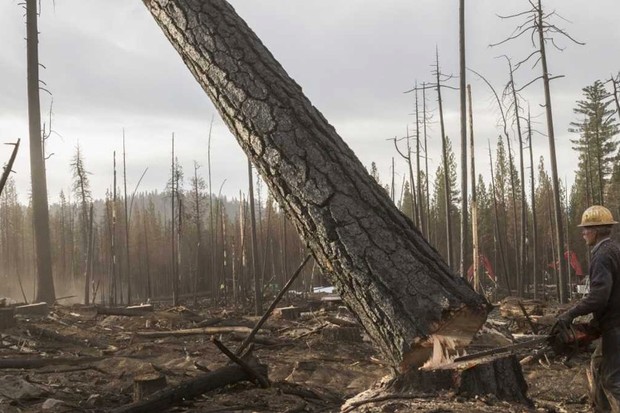
Mary Oliver wrote appealing nature poems, several of them featuring trees. Take her opening lines of “When I am among the trees,” for example, crafted in simplicity, yet resonant of the capacity of trees to yield serenity:
When I am among the trees,
especially the willows and the honey locust,
equally the beech, the oaks, and the pines,
they give off such hints of gladness.
I would almost say that they save me, and daily.
Trees, however, are in trouble these days, whether from disease, climate change, or human over-reach. Sentries of earth’s welfare, trees sequester carbon and discharge oxygen, mitigate heat stress, conserve water, preserve soil, anchor landscape and shelter animals. They are also a human resource for many of our needs, be it housing, furniture, fuel, or even boxes and paper.
It’s when seen as a commodity that the primary danger looms. Before the coming of Europeans to North America, vast virgin forests covered half the continent’s land area. In the three centuries that followed, settlers cut down trees for farms and pasture at a rapid pace, removing half of that native forest.
With the eclipse of farming as a primary means of subsistence in the 20th century, American deforestation has largely stalemated, with abandoned farms reverting to forest, government implementing federal and state safeguards, and private lumber interests investing in replanting.
Nonetheless, our forests remain under threat, the U. S. experiencing a 3% decline consequent with urban growth since 1997. There are big bucks to be made with logging. America happens to be the world’s fourth largest consumer of wood despite being just 6% of the world’s population. Unfortunately, it’s been the intrinsic legacy of capitalism to prioritize profit over social and environmental welfare.
As is, the old growth forest is virtually gone and with it, a once abundant wildlife. Remaining forest, often reduced to isolated tracts, may not offer sufficient habitat for animal survival. Meanwhile, illegal logging also continues.
It gets worse in third world countries like Indonesia and Brazil where forests are plundered daily both for profit and to make room for cattle ranches and palm oil plantations.
Indonesia has lost some 50% of its forest and at its present pace the lowland forests of Borneo and Sumatra will be gone in the next two years. Transparency International reported in 2019 that illegal logging had occurred in 37 of 41 of Indonesia’s national parks, abetted by political corruption .
I’ll not touch on other third world nations, Mexico, Ethiopia, the Democratic Republic of Congo, for example.
All of this fuels climate change with its devastating fallout: rising temperatures, depleted rainfall, long-term drought, burning forests, flora and fauna extinction; in turn, promoting abject poverty, hunger and disease, exacerbating refugee masses desperate for new homelands.
Each year, world forest removal equals the size of Greece, with consequential climate change hastening the doom of what remains.
If humans were wise, less given to comfort and custom, they could mitigate this unfolding scenario of disaster by consuming less meat, a primary instigator of deforestation and climate change:.
As a recent New Republic article points out,
The livestock industry directly produces more greenhouse gas than the ocean of petroleum burnt to power all the world’s planes, cars, ships, trains, and trucks. Abolishing the livestock industry and replacing it with vast new forests could achieve more than electrifying the entire transport sector, and it would be easier and quicker to accomplish because it requires no new technologies or dramatic infrastructural change.
To do so requires behavioral change, no easy thing. It needs to begin with the wealthy nations who consume the most meat.
With the third world poor, we must think long-term and invest in strategies that grow sustainability and encourage less dependence on livestock. As is, Africa, for example, contributes only 3.8% of emissions contributing to global warming, yet remains extremely vulnerable in its agricultural dependence on rainfall, now projected to decrease up to 50% in the next decade.
In actuality, some 1.3 billion people globally, directly or indirectly, support an estimated 600 million poor smallholder farmers in third world nations, with livestock one of the fastest growing agricultural sub-sectors in developing countries.
Given the exponential consequences of climate change, this poses apocalyptical consequences in coming decades. The burden must rest upon affluent nations in the meantime as developed nations transition to a new economic paradigm.
The need for brevity curtails my wanting to write more fully on a complicated subject with no simple, reductionist solutions. Forgive my seeming digression from the matter of trees, whose fate remains inexorably linked to our own.
–rj

As experts have warned and a rogue president, prioritizing reelection, has ignored, recharging the economy when Covid-19 continues to ravage has exacted a surge in the pandemic’s victims, with a new wave anticipated this fall.
But Americans are its lead cause, a spoiled populace ignoring the laws governing exit from the crisis, wearing a mask in public, practicing social distancing, limiting unnecessary activity. Fifty states, each with its own governance, unequal to enforcing these mandates of public safety, subservient to economic interests, fuel our crisis. Shamefully, we lead the world in the pandemic’s victims.
Meanwhile, climate change exacts its continuing world toll. We tied the record in May for the highest monthly average on record; investment in renewable energy has plummeted; in the next five years, five-hundred species will disappear as humanity continues its assault on Nature, despoiling fauna and flora in a greedy rush for profit. Worse is the meat industry, a virus hotspot, progenitor of the pandemic, not just now, but historically in its previously related strains.
As I write, the Amazon forest continues to burn to make room for cattle ranches, environmentalists have been killed or discredited, indigenous tribes decimated. In Croatia, yesterday, 50 million bees died, suspected victims of pesticides. You think it only happens abroad? It’s happening here. Last year in Texas, someone deliberately set fire to beehives, killing 500,000 bees. Almonds, a prime contributor to California’s agricultural sector, may soon devolve into memory.
Where do we go from here? For the sake of the present we are ravaging our children’s future. I think anew of poet Robinson Jeffers’ credo of “inhumanism,” a summons to abandon a plethora of mass murder and commodification, to simplify our lives, to embrace with stoic discipline those values that both uplift and secure our children’s destiny.
—rjoly
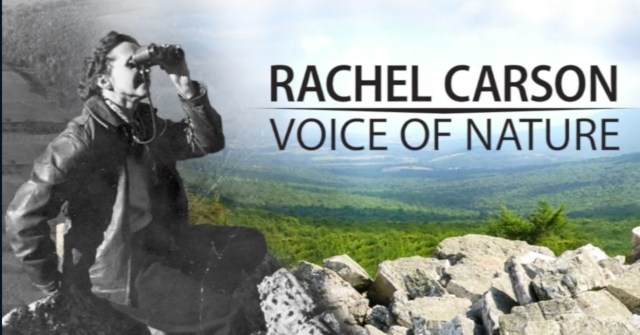
I’ve just finished reading Rachel Carson’s classic Silent Spring, written back in 1962, but still timely. President Kennedy read it eagerly, followed by Nixon in a time when presidents read books. (President Obama is another omnivorous reader in our own time.) Nixon was so deeply affected, that he founded the Environmental Protection Agency (EPA) as a safeguard.
I first became aware of the book in teaching college English composition classes where it appeared as an anthology excerpt, modeling sound expository writing. While Carson had written a thoroughly researched book steeped in chemical analysis, she did so in a way that rendered science transparent to the public, fostering its appeal, unlike a rival text written on the same topic that virtually no one read outside the science community.
Carson’s work models not only coherent analysis at its best, but delivers its thesis with a lyrical beauty underscoring its urgency and moving readers to call for policy change. In a letter to her close friend, Dorothy Freeman, she would write, “Once the emotions have been aroused—a sense of the beautiful, the excitement of the new and unknown, a feeling of sympathy, pity, admiration and love—then we wish for the knowledge of our emotional response. Once found, it has lasting meaning.”
A perfectionist, she researched exhaustively and revised continually, concerned not only with message, but delivery. She had begun her college days as an English major before switching to biology. Carson composed Silent Spring while battling aggressive breast cancer, initially misdiagnosed. She had planned to write four other science books. The miracle is that she produced anything at all.
Since those days of teaching writing and my growing commitment to the green movement and awareness of the existential, exponential threat of climate change, I have wanted to return to her foundational work. I’m not sure how many of us are into eco-literature and Silent Spring or her other noted works, The Sea Around Us (National Book Award Winner) and best selling, The Edge of the Sea, but I knew reading it fully was something I just had to do to do, not least, to honor her—she passed so quickly from us after Silent Spring—but also as a means to gauging our progress in addressing her concerns.
Silent Spring deals with the havoc waged by land, sea, and air to the environment through indiscriminate use of pesticides by federal, state and local communities in support of economic interests, e.g., logging, agriculture, community agendas, heedless of consequences, repeatedly so, even when evidence of harmful repercussions had proven pervasive. An act of willful hubris, a genocide against nature, it resembles our own era when fossil fuels, primary contributors to a changing climate, continue as principal sources of energy reliance.
Silent Spring can be painful reading in its strident account of corporate interests in liaison with government, pillaging our environment and disregarding human welfare. Today, nearly every plant, and animal, including ourselves, even where spraying has ceased, show chemical residue. Species have been sharply reduced, disturbing a complex ecology, while augmenting pest resistance and promoting cancer proliferation.
There was a strange stillness. The birds, for example—where had they gone? Many people spoke of them, puzzled and disturbed. The feeding stations in the backyards were deserted. The few birds seen anywhere were moribund; they trembled violently and could not fly. It was a spring without voices. On the mornings that had once throbbed with the dawn chorus of robins, catbirds, doves, jays, wrens, and scores of other bird voices there was now no sound; only silence lay over the fields and woods and marsh.
All of this fallout unnecessary, for safer biological tools had proven successful, yet still, the spraying continued. The corporate sector, spending $250,000, a huge sum at the time, resisted Carson’s assault, much like today’s Monsanto, arguing correlation not establishing causality, and disparaging Carson’s credentials: no Ph. D, no standing in the science community, no academic affiliation, a “bird lover,” her followers, “health quacks.” Shockingly, the American Entomological Society listed Velsicol, Monsanto, Shell Chemical Company, and other chemical corporations among their “sustaining associates.” One major pesticide firm threatened her publisher, Houghton Mifflin, with a lawsuit if the book were published without changes.
Carson was understandably surprised by the book’s smashing success, selling 65,000 copies in its first two weeks and its subsequent Book of the Month Club selection.
Against all odds, Silent Spring had found its way into the public’s consciousness. DDT was halted, though hypocritically allowed for export, much like cigarettes later on. As noted, the EPA came into being as the book’s consequence. In 1981, years after her passing in 1964, Carson was posthumously awarded our nation’s highest civilian honor, The Presidential Medal of Freedom.
Sadly, Carson’s critics have continued their assaults, covertly changing their tactics and employing political correctness. The late science fiction novelist, Michael Crichton, for example, a vociferous climate change denier, branded her “a mass murderess” for the ultimate banning of DDT and deaths of millions of African children from malaria, while others have dismissed her as a white elitist. They ignore that DDT was actually banned only domestically, subsequently proven ineffectual against increasing mosquito resistance abroad, and replaced by newer, more effectual pesticides and innovative pharmaceuticals to contain malaria. Ironically, Carson hadn’t actually called for its banishment, but for its judicial use along with other pesticides.
Among poisonous chemical substances Carson addressed in Silent Spring, herbicides continue as a primary public menace, particularly for gardeners using the ubiquitous box store Roundup. There have been three trials involving pesticide giant Monsanto, two in state courts and the other in federal court, with up to 100,000 plaintiffs, alleging resulting non-Hodgkin lymphoma and consistent Monsanto coverup. Significantly, on March 19, 2018, a unanimous jury found Monsanto culpable and $25 million was awarded to plaintiff Edwin Hardeman.
Dismayingly, Trump’s EPA has currently sanctioned Monsanto’s employment of a new crop herbicide, dicamba, resulting in widespread crop damage, and Monsanto’s presently facing legal intervention by the Ninth Circuit Court of Appeals. As with the frequent scenario Carson underscored in Silent Spring, corporate priorities like those of Monsanto have plunged headlong into pressing economic gains, even when their own studies revealed imminent liabilities, conspiring with the EPA to soft-pedal the herbicide’s dangers:
Documents filed in court show Monsanto met multiple times with EPA officials about the concerns, even editing EPA language about certain steps Monsanto should take in communications with retailers. In an October 2017 email, an EPA official forwarded a Monsanto official comment from the agency regarding the company’s product label, writing: “Like I said, no surprises.” (Carey Gillam, The Guardian, April 2, 2020).
After so many years, Carson’s legacy continues. The Sea Around US (1951) and Silent Spring have been translated into more than forty languages, with the latter averaging 25,000 sales annually. A collection of Carson’s unpublished work appears in Lost Words: The Discovered Writing of Rachel Carson., ed. Linda Lear (1998). For a biography, and there are several, I would begin with M. H. Lytle’s thorough and cogent, The Gentle Subversive: Rachel Carson, Silent Spring, and the Rise of the Environmental Movement (2007).
I’m glad to have read Silent Spring, which launched the modern day environmental movement, and unhesitatingly regard her as one of the foremost women of the last one-hundred years, unflinching, passionate, yet empirically based in her environmental witness. I end with the final paragraph of Silent Spring:
The “control of nature” is a phrase conceived in arrogance, born of the Neanderthal age of biology and philosophy, when it was supposed that nature exists for the convenience of man. The concepts and practices of applied entomology for the most part date from that Stone Age of science. It is our alarming misfortune that so primitive a science has armed itself with most modern and terrible weapons, and that in turning them against the insects it has also turned them against the earth.
–rj
 Brimmings: up from the well