We Are Losing Earth on Our Watch: The Unfolding Crisis of a Warming Planet


I wanted to walk my two miles this morning, but stepping outside, blasted by the double whammy of humidity and a temperature already at 83 F and rising fast, I thought better of it.

It’s like this virtually everywhere these days. Our children, vacationing in Palm Desert, CA, relayed it reached 118 F there yesterday.

2016 was the hottest year on record. This year is likely to be hotter still.

Some suffer grievously. There’s Phoenix, AZ, with its 27 straight days of 110 F plus temperatures, its denizens reliant on air conditioning to get them through. I ponder the city’s fate were the electric grid to give way. Fifteen percent of Phoenix’s population lives in poverty, many on the streets, exacerbating the heat’s impact. Last year’s heat waves killed 425 residents of Maricopa County, 56 percent of them homeless.

Duluth, MN, looks better everyday. It doesn’t surprise me that a growing number of families, sensing what’s likely to get a lot worse, are moving to this Lake Superior city known for its cool days even as the Twin Cities, to the South, bake. North Dakota, anyone?

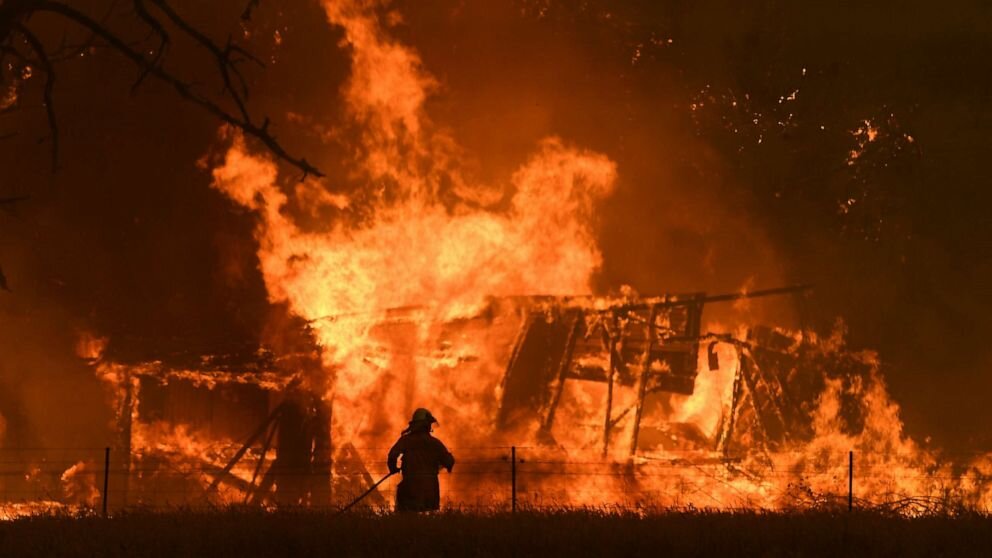
Along with record-breaking heat, come the inevitable forest fires. Everyone’s holding their breath in California, despite its recent heavy downpours and filling of depleted reservoirs, as soaring temperatures eclipse records.

Canada has fared badly, many fires still burning as plumes of toxic fumes drift southward to the US. 4200 fires, a record number, have occurred this year in Canada.

You’ve heard about the raging heat and accompanying fires in Italy, Greece, Algeria, and Crete fueled by spiraling heat waves, with many killed, thousands displaced, livelihoods gone, and animal habitats decimated.

It’s so much worse among developing countries, climate change not only bringing higher temperatures, but change in rainfall patterns, resulting in widespread famine and malnutrition as crops wilt in parched fields and cattle perish for lack of feed and water. This is especially true of Africa’s Central Sahel (Burkina Faso, Mali, and Niger), where temperatures are rising 1.5 faster than in the rest of the world. Privileged Western nations in their addiction to fossil fuels bear heavy responsibility for their plight. Unless we mend our ways, their desperation may be tomorrow’s world for our children, our spiraling heat waves and droughts the preface of things to come.


All of this isn’t unanticipated, as our sophisticated attribution science has consistently confirmed the likelihood of a warming world. It’s just that it’s happening sooner and with greater intensity than projected.

But let’s not simply blame this year’s El Niño, which does make for hotter weather. We humans have been engaged in a reckless plundering of our planet’s resources since the beginning of the industrial revolution in the late 18th century, accompanied by increasing reliance on fossil fuels, the consequence that we’re now 1.2 C warmer than in pre-industrial times.

75 percent of global greenhouse gases and 90 percent of carbon dioxide emissions come from burning fossil fuels. They trap heat and with their exponential increase now pose humanity’s greatest challenge in their dire consequences for life on earth.

Under the 2015, Paris Agreement, we’ve pledged a concerted effort to hold at 1.5 C.

That’s unlikely. The World Meteorological Organization (WMO) forecasts its breach as early as 2027, despite climatologists’ warning that any rise above that level would unleash irreversible catastrophic consequences.

Meanwhile, the fossil industry yesterday released its 2022 earnings report, announcing $200b in profits, surely an obscenity, given their primary contribution to the existential crisis that confronts us.

Shell says it will issue $3b to stock investors over the next three years through stock buybacks.

ExxonMobil, BP, and Shell not only boasted record profits, but gleefully announced they’ll be rolling back earlier plans to invest in low emissions ventures. It’s follow-the-money.

Concurrently, GOP congressional members lie-in-wait to ambush existing climate change mitigation efforts, should Trump—God help us—be reelected.

It’s urgent that Biden declare a climate emergency, joining the UK, New Zealand, and Japan. There’s much we could do under such a declaration to halt the fossil industry tycoons who prioritize profit over the welfare of the human community and our beleaguered earth, but don’t bet on it.

Unfortunately, he’s initiated policies contrary to his campaign pledge to fight fossil fuel emissions, pushing new pipelines, lifting taxes on gasoline and half-emptying the Strategic Petroleum Reserve to cushion consumers at the pump, removed sanctions on American involvement in Venezuelan oil, obsequiously begged the Saudis to increase oil production, opened northern Alaska wilderness to massive oil drilling, sold oil and gas leases in the Gulf of Mexico. All of this from a candidate pursuing the presidency, pledging to young people, “no more drilling on federal lands, period, period!”

Climate expert Peter Kalmus sums up our dilemma bluntly: “Mark my words: it’s all still just getting started. So long as we burn fossil fuels, far, far worse is on the way; and I take zero satisfaction in knowing that this will be proven right, too, with a certainty as non-negotiable and merciless as the physics behind fossil-fueled global heating. Instead, I only feel fury at those in power, and bottomless grief for all that I love. We are losing Earth on our watch. The Amazon rainforest may already be past its tipping point. Coral reefs as we know them will be gone from our planet by mid-century, and possibly much earlier given this surge in sea-surface temperatures. These are cosmic losses. And as a father, I grieve for my children.”

And I, along with many of you, grieve with him.

—rj

Mining the Ocean: The New Gold Rush

Mankind’s invasive footprint appears deplete of boundary, whether of earth, sky, or ocean depth, and not without consequences for an already shrinking biodiversity and a burning planet and, therefore, for ourselves.

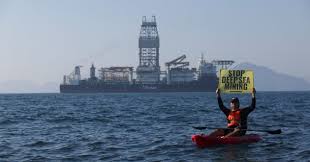
Today, July 9, 2023, marks an incipient crisis for our oceans, already menaced by rising temperatures, accelerating acidity and melting glaciers, all of it human induced. Applications to mine the sea can now begin.

It all goes back to 1982 when the United Nations negotiated The Convention on the Law of the Sea (Unclos), mandating a vast area of the ocean, a designated 53m sq. mile coastal economic zone, be excluded from seabed mining until the adoption of a code safeguarding the environment. Meanwhile, it approved an area of 1,700,000 sq. miles (half the size of Canada) known as the Clarion-Clipperton Zone, for seabed mining.

To this end, the International Seabed Authority was founded in 1994, with a current 167 subscribing members along with the European Union. After 28 years of negotiating, it has been unable to agree upon a code. It administers the Clarion-Clipperton Zone.

A clause in Unclos, however, provided an escape mechanism allowing any application for seabed mining be allowed should no code be adopted. Today, that moratorium ends.

We are caught in a catch 22 dilemma, compounded by both need and greed.

We rely upon nickel, cobalt and manganese, along with lithium from land resources, to propel our wind farms and electric vehicles. Potentially, the ocean seabeds offer us tons of needed minerals.

Even if there were a code, I seriously doubt it would be meaningfully implemented and mitigate environmental degradation to sea life.

The ISA has always been poorly funded and many of its negotiators have fishery interests. It has yet to deny any application for exploration, granting 31 of them. Five of them are by China. It lacks empowerment and resources to mandate candid environmental impact appraisals, leaving that up to the corporate sector.

We need to be doubly painstaking in assessing opening up our last earthly frontier for exploitation.

As environmental writer, Guy Standing (The Blue Commons: Rescuing the Economy of the Sea), cautions, “All of us should be deeply alarmed. The environmental impact of deep-sea mining could be catastrophic. Massive machines will scour the ocean bed to pick up polymetallic nodules, destroying everything in their path and creating sediment plumes that can suffocate coral reefs and other organisms hundreds of miles from the mining site. Mining will damage the ocean’s ability to act as a carbon sink, accelerating global warming. And new research suggests the polymetallic nodules could contain radioactive substances, endangering human health cautions.”

And what about noise, vibration and light pollution, or fuel leaks and chemical spills? The list is long and the unplanned for has a way of happening.

In June, the European Academies Science Advisory Council spoke of the dismal impacting on marine ecosystems and denounced “the misleading narrative” that deep-sea mining is necessary to harvesting the metals vital to a green economy. Lithium, not a pervasive ocean element, and other minerals vital to EV technology, are presently land-based. Further, technology constantly changes.

Our oceans comprise a vast cornucopia of biodiversity yet to be discovered. Consider the recent finding of 5,000 new species living on the seabed of the Clarion-Clipperton zone, open to deep-sea mining firms.

I fear where we’re about to tread.

I fear for ourselves.

And for our oceans, from whence we come.

–rj

Electric Vehicles Aren’t the Answer

Tesla Model 3

I’ve been doing a lot of research on electric cars, now being pushed by the government to mitigate carbon discharge. As I see it, it’s a technology not ready for prime time.

Initially, you pay several thousand dollars extra to own one, pay higher car insurance, and face a limited mileage range.

Charge stations? If you can find one, a long wait, not only to recharge, but maybe just to access.

As for the environment, I think EV’s make things worse: Let me count the ways:

Ok, EV’s don’t emit carbon when they’re moving. But not so in their manufacture. It takes a lot of fossil fuel to make them and even when you’re charging them, there’s the fossil fuel powering that electric grid.

I’ll be more specific: Before you even drive off the lot, your EV has emitted 10-20 tons of carbon in its manufacture.

How ironic! A technology hyped as a breakthrough in reducing climate change acceleration actually contributes to its continuance.

Your EV battery was likely mined in a third world country, exploiting laborers paid a minuscule wage, using heavy machinery powered by fossil fuels. Then comes the shipping of materials—trucks, ships, planes. Still more trucks on arrival to get to the manufacturing plant!

Battery plants are sprouting up in GA, KS, KY, NC, OH and TN. But these plants consume acreage, much of it forest and farmland, impacting biodiversity loss or causing degradation. Inevitably, more housing development for an influx of new workers, more roads, more traffic, more strip malls and, yes, more CO2 emission.

Mind you, this isn’t happening just in the USA. American entrepreneur Elon Musk’s new gigafactory in Germany is now open for business, designed to produce Teslas and batteries in mind-boggling numbers. Presently employing 3,000 workers, that number will swell to 12,000 workers at full production. Built in the heart of a dense forest, it comes at an enormous cost to the environment, particularly for wildlife with 365 acres/160 hectares already cleared and a water conservation area confronted by potential industrial waste contamination.

This epitomizes the slip-shod attention state and local governments often give to environment impact studies, fast-tracking as in the German scenario what salivates public approval and political longevity.

But there’s a sweet spot in all of this with the incipient promise of transportation powered by hydrogen. It’s decades away for full implementation, but it’s already begun with Toyota’s 2023 Mirai that generates power by combining hydrogen with oxygen from the outside air.

You never have to charge the car. That means you don’t have to fret about accessing a charging station in that long distance trip and time lost in lengthy recharging.

It takes five minutes to fill your tank at a local gas station offering hydrogen.

They also have better driving ranges, generally around 300-400 miles to a tank of hydrogen.

Hydrogen cars are lighter and faster.

If I were an investor, I’d place my bet on hydrogen powered transportation as a viable solution to the carbon discharging menace that EV technology cannot resolve.

For sure, it’s currently prohibitively expensive, with 98% of hydrogen produced through steam methane reforming technology with its obvious carbon dioxide consequence.

But scientists are working on cutting costs and achieving versatility, not just cars, but trains and planes. As I write, news comes of the first hydrogen train in North America—Canada’s French Alstom train running from Montmorency Falls in Quebec City to Baie-Saint-Paul. Experimental, it features two railcars, carrying up to 120 passengers and uses 50 kilograms of hydrogen daily, replacing 500 liters of diesel fuel that would have otherwise been used for the two-hour route.

Imagine a train that emits only water vapor!


And hats off to Toyota again for resisting the EV wave. Its hydrogen fueled Mirai XL gets 71 mpg and sells at a starting $49,500 (within the average price ballpark for a new car). Fully fueled with hydrogen, it has a 402 mile driving range.

But like EV vehicles, it’s not ready for prime time either, a fill-up costing you $80.00 for your 5.5 kg tank.

Unfortunately, US government involvement hasn’t been there, unlike Canada and Europe.

As for ourselves, our RAV lease is up in another year and we intend to purchase it, since it’s been so reliable and has low miles. If we were opting for a new car purchase, we’d choose a hybrid plug-in as the most sensible option until the non-polluting hydrogen car becomes more cost efficient.

Long term, I’m optimistic.

–rj

John Muir: Nature’s Gifted Scribe

Sierra Club founder John Muir was extraordinary, not only for his devotion to preserving nature’s wilderness, but for his eloquence in articulating its grandeur. An example:

Wonderful how completely everything in wild nature fits into us, as if truly part and parent of us. The sun shines not on us but in us. The rivers flow not past, but through us, thrilling, tingling, vibrating every fiber and cell of the substance of our bodies, making them glide and sing. The trees wave and the flowers bloom in our bodies as well as our souls, and every bird song, wind song, and tremendous storm song of the rocks in the heart of the mountains is our song, our very own, and sings our love. The Song of God, sounding on forever (from John of the Mountains: The Unpublished Journals of John Muir).

All told, he would publish 300 articles and 10 major books, not bad for someone who nearly lost his sight in a work accident.

One of his closest friends was President Theodore Roosevelt. In 1903, they would hike wilderness terrain together for two months. Inspired by Muir, Roosevelt designated 230 million acres of public land, including Yosemite and four other national parks and 18 national monuments, for preservation.

Earlier, in 1867, at age 29, Muir walked 1000 miles from Indiana to Florida, taking along only sugar and bread, buttressed by wild berries. (Muir never weighed more than 148 pounds. ) You can read an account of his journey: A Thousand Mile Walk to the Gulf (1916). Excerpt:

Though alligators and snakes naturally repel us, they are no mysterious evils. They dwell happily in these flowery wilds, are part of God’s family, unfallen, un-depraved and cared for with the same species of tenderness and love as is bestowed on angels in heaven or saints on earth.

John Muir was one of those rare people that cross our pathway in life’s journey, keenly sentient of life’s best values and eager to share. Of all the nature writers I’ve imbibed, I’ve not found his equal for rendering nature’s transcendent allure with lyrical cadence that informs, moves, and underscores its mystery and  moods, culminating in an elixir for healing both body and soul.

All good nature writing may well begin with Muir.

—rj


Under Threat: Kentucky’s Bernheim Forest

I’m saddened to learn this morning that Kentucky’s privately owned and managed Bernheim Arboretum and Research Forest is under threat from the Louisville Power Gas and Electric utility (LPGE) and Kentucky Utilities (KU), which want to route a gas pipeline through its largely intact woodland of 16,137 acres/6530 hectares. They argue their need to meet the growing energy demands of Bullitt County residents and are claiming eminent domain.

Like many self-interested utilities across the national landscape, they haven’t gotten the message. We don’t need more fossil fuel extraction and pipelines. What we do urgently need are renewable fuels. Unfortunately, Kentucky’s a red state, where environmentalists might as well come from Mars.

Home to 2100 species, some found nowhere else, the impact on the Bernheim Forest would menace habitat, migration routes, and streams that have enjoyed protection from its inception, bequeathed as a gift in 1929 by grateful German immigrant Isaac W. Bernheim.

The pipeline would transverse a corridor purchased in 2018 from funds provided by the Kentucky Heritage Land Conservation Fund and the US Fish and 
Wildlife Service’s Imperiled Bat Conservation Fund, with the stipulation it be preserved in perpetuity.

Located about sixty miles from our house, I’ve visited it several times in my younger years, relishing several of its more than forty miles of hiking and biking trails. I remember well its designated groves of native Kentucky flora.

Stop off at the friendly Visitor Center for maps or download them from its site: bernheim.org. I recommend the 1.5 miles as Arboretum Loop as your introduction to Bernheim, a place you can visit repeatedly, yet find something new.

For experienced hikers up to the challenge, there’s the 13.75 Millennium Trail that will you take you 6-7 hours to navigate. It’s rough, true wilderness terrain.
I had lost touch with the paradisiacal landscape, moving to New Mexico. Now I’m back, and I’ve joined its several hundred mentors in preserving its legacy.


Each day, it seems I learn of new challenges in the continuing assaults of fossil fuel and industrial interests on the environment. In Germany, despite its touted environmental safe-guards, billionaire Elon Musk has prevailed in a court decision, allowing the destruction of a remaining 205 acre forest near Berlin to build a giant Tesla factory employing 10,000 workers, despite concerns of conservationists and local residents. This comes in addition to a previous 75 acres/30 hectares of forest already cut.

Here at home, the Interior Department has singled its likely approval of the Alaska Willow Project, a ConocoPhillips endeavor to produce up to 629 million total barrels of oil over the next thirty years, equivalent to 278,000 metric tons of carbon dioxide over the project’s lifespan. (Biden had promised he’d be an environment president.) The consequences in an area warming four times faster than elsewhere will be devastating for already vanishing polar bears, caribou, walruses and an indigenous way of life.

The Bernheim Forest, in sum, is another chapter in our inveterate struggle for a green planet. Utilities need to respect wilderness preserves, not see them as green spaces to be exploited. A local court decision is anticipated by March. The case, now four years in litigation, will likely move to a higher jurisdiction regardless of the decision.

—rj

Heroes do Exist: Environment Champion, Bob Brown

Australian Bob Brown is a humble man who’s accomplished extraordinary things, not for himself, but for his fellow earthlings. His goodness makes the heart glad, inspires, and assures: that each of us, where we are, doing what we’re able, can foster needed change.

Brown had been a physician for twelve years, moving from the Sydney area to Tasmania out of love for wilderness. There, he would become active in the state’s environmental movement, subsequently founding The Wilderness Society and serving as its director for five years, a commitment leading to his giving up his medical practice.

Such dedication characterizes Brown, unstinting in his endeavors to promote a global democracy and green economy, single payer healthcare, human rights, and environmental welfare.

In 1982-3, The Wilderness Society helped organize resistance to the construction of a hydroelectric dam on the Franklin River in a large area of wilderness. 1500 showed up to blockade bulldozers. 600 were arrested, including Brown. He would spend nineteen days in prison. The good part: the day after his release, he was elected into Tasmania’s parliament.

Parliament, however, proved an unfriendly place, with only two other members voting to halt dam construction, despite 20,000 protestors on the streets of Hobart, the capital. In 1983, the issue moved to the Australian High Court, which ruled to halt the construction in a 4-3 vote.

Today, the wild river area attracts 200,000 visitors annually and has created thousands of jobs. The assertive protest efforts confirmed Brown’s belief that small, individual efforts at reform aren’t sufficient. Mass, collective protest is necessary to ward off powerful pecuniary interests.

In 1986, Brown was shot at and assaulted for protesting logging at Tasmania’s Farm House Creek.

In 1995, he was imprisoned twice for protesting logging in Tasmania’s Tarkine Wilderness.

In 2006, as a member of Tasmania’s Parliament, he initiated legal action to protect Tasmania’s Wielangta forest.

Additionally, he has authored bills advocating Death with Dignity, a nuclear free Tasmania, gay law reform, and lowering parliamentary salaries.

With the help of fellow Green members of Parliament (he was one of the Australia Green Party founders), the size of Tasmania’s Wilderness World Heritage Area has doubled to 1.4 million hectares.

In 2011, as the elected leader of the Greens, first in the world legislation was passed, mandating the reduction of greenhouse gas emission and the adoption of renewable energy resources.

In June 2912, Brown resigned from the Senate to found the Bob Brown Organization, a non-profit fund to assist Australian environmental campaigns and activists (bobbrown.org.au).

Now approaching 79, Brown is sanguine about his mortality: “I am an optimist. I’m also an opsimath. I learn as I get older. And I have never been happier in my life. Hurtling to death, I am alive and loving being Green.”

May Brown’s successful efforts kindle a fire in all of us to vehemently contest, whenever and wherever, those egocentric forces of greed that impede social equity, poverty’s elimination, a peaceful earth, and an abiding wilderness in which species achieve their destiny.

–rj

All Things are Full of God: Robinson Jeffers, Environment Poet

I’ve long revered Robinson Jeffers’ poetry, ahead of its time in addressing humanity’s pillaging of nature and its consequence.

Formerly one of our most esteemed poets, even making the cover of Time Magazine (1932), Jeffers fell out of favor with the entrance of America into WW Il. Another outplay of human interests gone amuck, he wanted no part in it. It violated his concept of “inhumanism,” the subordinating of anthropocentric interests to nature’s primacy. By 1965, much of his work was out of print.

That is no shame. Other American poets, like Dickinson and Whitman, out of joint with their times, have suffered banishment to benign forgetfulness.

As he later explained in his 1948 preface to the Double-Axe and Other Poems, “Inhumanism is the devaluation of human-centered illusions, the turning outward from man to what is boundlessly greater. The attitude is neither misanthropic nor pessimistic, nor irreligious.”

I’m not unaware that his poetry has aroused controversy with its misanthropic tenor, long narrative poems replete with violence and latent pessimism about humanity’s future.

With the 2022 UN supported IPCC study just out, conducted by more than 500 scientists from 40 countries, and running 8,000 pages, documenting climate change acceleration and biodiversity loss, Jeffers deserves the reappraisal of his poetry now underway.

Jeffers’ antipathy towards humanity is expressed in his poem, “Original Sin”:

As for me, I would rather be a worm in a wild apple than a son of man.
But we are what we are; and we might remember
Not to hate any person, for all are vicious;
And not to be astonished at any evil, all are deserved;
And not fear death: it is the only way to be cleansed

Much of his verse is rooted in Darwinian cataclysm. No Wordsworth, Jeffers wasn’t myopic about nature. He accepted its relentless tooth and claw interchange. Man, however, is the ultimate predator, which explains his hostility: “I’d sooner, except for the penalties, kill a man than a hawk” (“Hurt Hawks”).

Jeffers will not lament mankind’s ultimate passing:

I’m never sorry to think that here’s a planet
Will go on like this glen, perfectly whole and content, after mankind is
Scummed from the kettle.

Nature deserves reverence. In his poem, “Nova,” he writes,

…we know that the enormous invulnerable beauty of things
Is the face of God, to live gladly in its presence, and die without
grief or fear knowing it survives us”

In “The Answer,” he pens that

Integrity is wholeness, the greatest beauty is
Organic wholeness, the wholeness of life and things, the divine beauty of
the universe. Love that, not man

Man has violated that wholeness. In “Animals,” one of my favorites, Jeffers movingly nuances man’s estrangement from his fellow creatures:

At dawn a knot of sea-lions lies off the shore In the slow swell between the rock and the cliff,
Sharp flippers lifted, or great-eyed heads, as they roll
in the sea, Bigger than draft-horses, and barking like dogs Their all-night song. It makes me wonder a little
That life near kin to human, intelligent, hot blooded, idle
and singing, can float at ease
In the ice-cold midwinter water.

Jeffers’ poetry isn’t always easy to understand. Immensely learned, he can be deeply philosophic, much of his verse influenced by his wide reading in Lucretius, Nietzsche, Freud, Jung, Spengler, Vico, myth and anthropology.

Gifted, Jeffers read classical Greek and Latin at age 5, and as a teen, was fluent in French, German and Italian. Along with his brother, he had been educated in private schools in Geneva, Lausanne, Zurich, and Leipzig,

Recognized for his intellectual brilliance, he was admitted to Occidental College with junior standing, though only sixteen, graduating two years later. He went on to medical and forestry schools,dropping out to pursue his love for literature.

He settled with his beloved wife, Una, in Big Sur’s rugged landscape where the Santa Lucia mountains in Monterey County rise suddenly, adjacent to the Pacific ocean and not far from Carmel, a lush landscape of small farms and virgin redwood forest. I think of it as one of the most beautiful landscapes on earth. Jeffers described it as “the noblest thing I have ever seen.”

Big Sur

Relishing its beauty and isolation, he built his own house, now open to visitors, out of stone wrestled up with his own hands from the beach below, and called it Tor House. It includes Hawk Tower, where he wrote his poems each morning by a window offering mountain vistas. From it, absent of mist, visitors can glimpse many of the 2,000 cypress and eucalyptus trees he planted and hand-watered. The grounds include a well-maintained cottage garden.

Tor House merits visiting. The docent quality may vary, but here Jeffers is rekindled, few places so associated with a writer as Tor House. George Gershwin, Martha Graham, and Langston Hughes would be among those paying homage. It’s in the dining room, laid out like an English pub, that he slipped into eternity.

Jeffers settled in Big Sur in 1914. Nearby Carmel had only 350 inhabitants.

In his forward to Selected Poetry, he relished the afforded isolation, “purged of its ephemeral accretions. Men were riding after cattle, or plowing the headland, hovered by white sea-gulls, as they have done for thousands of years, and will do for thousands of years to come.”

Jeffers inspired novelist Henry Miller to settle nearby, where he would remain until Jeffers’ death in 1962. Others, like Ken Kesey and Hunter Thompson, would follow. Jack Kerouac’s Dharma Bums has its partial setting in Big Sur.

Jeffers wasn’t a rabid romantic. He knew intrusion would prove inevitable, expressing his resentment in his acclaimed pastoral lyric, “Carmel Point.”

The extraordinary patience of things!
This beautiful place defaced with a crop of suburban houses—
How beautiful when we first beheld it,
Unbroken field of poppy and lupin walled with clean cliffs;
No intrusion but two or three horses pasturing,
Or a few milch cows rubbing their flanks on the outcrop rockheads—
Now the spoiler has come: does it care?
Not faintly. It has all time. It knows the people are a tide
That swells and in time will ebb, and all
Their works dissolve. Meanwhile the image of the pristine beauty
Lives in the very grain of the granite,
Safe as the endless ocean that climbs our cliff.—As for us:
We must uncenter our minds from ourselves;
We must unhumanize our views a little, and become confident
As the rock and ocean that we were made from.

Poet Robert Hass deems Jeffers “the first American poet to grasp the devastating extent of the changes human technologies and populations were wreaking on the rest of the earth’s biological life” (“Introduction,” Rock and HawkA Selection of Shorter Poems by Robinson Jeffers).

Renowned physicist Freeman Dyson exclaims in The New York Review of Books that “Robinson Jeffers was no scientist, but he expressed better than any other poet the scientist’s vision. Ironic, detached, contemptuous like Einstein of national pride and cultural taboos, he stood in awe of nature alone. He stood alone in uncompromising opposition to the follies of the Second World War. His poems during those years of patriotic frenzy were unpublishable….I discovered Jeffers thirty years later, when the sadness and the passion of the war had become a distant memory. Fortunately, his works are now in print and you can read them for yourselves” (May 25, 1995).

Can I ever forget his magisterial “De Rerum Virtute,” alluding to Lucretius “De rerum natura”?

All things are full of God
Winter and summer, day and
night, war and peace are God …

One light is left us, the beauty of things
The immense beauty of the world, not the human world

Jeffers’ reputation may have suffered time’s undulations—a change in taste, or political rebuttal, or rebellion against his insistent passion and human dislike, but for environmentalists, he remains its patron saint, and I know that I, for one, adore him.

rj

Lobsters or Whales?


I was raised a New Englander and, by custom, eating lobster had been a staple in my diet. The problem with custom, however, is that we seldom question its tenets, propelling us to mindlessly continue behavior that scrutiny might render pause, if not discontinuance.

My misgivings began some years years ago when I found myself in a restaurant featuring a large water tank, containing lobsters scavenging its pebbled bottom, oblivious to their impending fate of being boiled live.

It spoiled everything for me. I no longer could enjoy squeezing the shell until it cracked, exposing the meat of the hideously killed creature.

Several years ago, my wife and I met up with our children in Maine, a favorite haunt for us with its rocky coasts, salty air, deep forests, quaint villages and, yes, super ice cream. In Maine, you eat crabs, clams, or lobsters. And so, here I am in a seafood restaurant, my family toiling at their lobsters; that is, except me.

But are lobsters sentient? Do they feel pain?

I say yes, based on recent science research, indicating their nervous system is complex. The fact they have a spine should suffice. When you drop them into that boiling water, however, they lack vocal chords to voice their screams.

You don’t really need the lab to confirm their suffering. Just witness a lobster or crab hurling itself violently against the sides of a pot of boiling water.

Opponents retort it’s simply reflex, taking us back to Descartes and his mechanistic assessment of animal behavior, ignoring their neurological components. On the other hand, crabs in a recent experiment rapidly adjusted their habits to avoid areas where they had previously experienced an electric shock.

A number of countries have taken legal measures to protect crustaceans like lobsters from unnecessary pain, among them, Norway, New Zealand, Austria and parts of Italy and Germany.

Switzerland set the precedent in 2018, banning boiling crustaceans alive, based on research indicating they feel pain. They needn’t possess a neocortex to experience pain. Biologist Robert Elwood, whose research led to Switzerland’s ruling, tells us that “crustacean brains and nervous systems are configured differently” (aldf.org).

But what about freezing them, a predominate recourse in shipping lobsters over long distances, say, to Biden’s recent celeb bash for the French president?

In June 2016, Italy’s highest court outlawed the practice, ruling it inflicted unjustifiable suffering. That makes sense. Freezing sentient creatures is no less repulsive than boiling them alive.

But environment also looms as a pressing concern involving the lobster industry.

Whole Foods has joined the debate, announcing it will no longer sell lobster after two consumer-focused environmental watchdogs— the Maine Stewardship Council and Seafood Watch—pulled their certifications due to concerns over impacts on North Atlantic right whales. The National Oceanic and Atmospheric Administration says it will reduce whale deaths and injuries by 69%.

This morning I woke to The Guardian’s lead article, “Save whales or eat lobster”: the battle reaches the White House” (11 December 2022), centering on the Federal court’s decision to curtail Maine’s lobster industry employing 10,000 workers in order to safeguard the diminishing North Atlantic right whales.

The Biden staff, nonetheless, ordered 200 lobsters be flown in for the Macron fete, despite the 2021 1st Circuit Court of Appeals decision reinstating a ban on lobster harvesting in some 940 square miles of the Gulf of Maine from October to January to protect endangered North Atlantic right whales menaced by entanglement in fishing gear and collision with large ships.

White House Executive Chef Cris Comerford responded that they wanted to “honor our lobstermen from Maine.” Meanwhile, the court’s decision is under fast track appeal.

I’m not hopeful. Sadly, politics often govern, expediency prevails, and the pecuniary nearly always wins, with accelerated biodiversity loss and climate warming their consequence.

My high regard for environmentalist Rachel Carson persists. An oceanographer by profession, her eloquent The Sea Around Us won the National Book Award, America’s highest literary award, in 1952.

Living summers on Southport Island, Maine, adjacent to touristy Boothbay, she loved the then abundant whale life. With her typical prescience, she also served an incipient warning: “We live in an age of rising seas,” she wrote. “In our own lifetime we are witnessing a startling alteration of climate.”

That was 1964, or 58-years ago.

The North American right whale, an endangered species under the Endangered Species Act, has since declined to a scant 340, of which only 100 fertile females remain. We know the seas are ubiquitously afflicted with fishing gear, imposing an immense burden and much suffering upon sea life.

The lobster industry, instead of shouting their outrage, would do better to observe the U.S. Oceanic and Atmospheric Administration mandate to employ multiple break points to pull up lobster traps in order to prevent right whale entanglement.

Declining rapidly in number, unless we protect these whales, they will have vanished forever.

–rj

No Longer Do the Seagulls Cry: Humanity’s Wounding of the Seas

The sea sings out for its singular subjects:
Arching whales that wave from their waves,
Turtles that teeter down their shining shores,
Coral reefs shining brightly as cities.

The sea sings out its suffering,
Knowing too much of waste, screeching sounds
And pernicious poison, its depths bruised by
Atrocities in the Atlantic,
Misery in the Mediterranean,
Its tides the preservers of time past.”
–Amanda Gorman, from “Ode to Our Ocean”

This morning comes dismal news that a fifth round of UN talks to reach agreement on a treaty to protect and manage our highly vulnerable oceans has stalled once again. No further discussions are scheduled.

The proposed treaty would protect 30% of the high seas lying 200 nautical miles off national jurisdictions and a legal means to enforcement.

Since the seas don’t belong to anyone, this apparently gives nations license to plunder and trash, imperiling biodiversity and, ultimately, fisheries on which a growing population will increasingly depend.

The seas, supplying 50% of the oxygen we breathe, home to the majority of earth’s biodiversity, is languishing, and humans are the source. 90% of big fish populations are depleted; 50% of coral reefs, formerly harboring abundant marine life, gone.

Let me give you just one stark example of human dereliction fouling our seas. There are many others:

Located halfway between California and Hawaii, there lies the drifting human debris known as the Pacific Garbage Vortex, its estimated size twice that of Australia. It doesn’t exist as a single entity, but rather as a vast garbage soup, much of it just below the surface, coagulating in ocean currents as a defiantly boundless  repository of ship castoffs and swept-up coastal discharge, the vast majority of it plastic substances.

Reliable aerial and trawl estimates (2015-16) inform us that 1.8 trillion plastic pieces are floating in the patch, equivalent to 250 pieces of debris for every human in the world. That was six years ago. Currently, 1.15-2.41 million metric tons of plastic are added each year (theoceancleanup.com),

Plastic infiltration of our oceans poses an immense menace to sea life. The International Union for Conservation of nature (IUCN) reports that 700 marine species have encountered sea debris, 17% of them endangered species, among them, seals, dolphins, and sea turtles entangled in abandoned fishing nets. Many sea creatures mistake the plastics for food, imperiling themselves and their offspring.

01becdf4-e2b3-4ad7-a46f-784bc60ab960

Collectively, these plastics block sunlight to the plankton and algae below, which are the primary feed resources of fish and turtles. Ultimately, this has consequences for predators like sharks, seals and whales. A world without whales? Our grandchildren reduced to viewing photographs?

Bad as all this is, the Pacific Garbage Vortex isn’t an isolated phenomenon. It’s simply the biggest. Located in the Pacific, Atlantic and Indian oceans, these vortexes manifest humanity’s global trashing of the ocean:

Is there any hope at all? Only if we reduce our use of plastics, a formidable challenge in an economy built on their low costs, or adopt biodegradable alternatives that are no easy sell. It’s simply cheaper to rely on plastics, a carbon-containing product present in the clothes we wear, our computers, laundry detergent, and even our children’s toys, ad infinitum. Plastics tend to ultimately find their way into landfills. And yes, into our oceans.

Greenpeace laments that “failure to deliver a treaty at these talks jeopardises the livelihoods and food security of billions of people around the world.”

Sadly, I find their admonition, though well-meaning, typically anthropocentric in its solely human focus, or the essence of what birthed these vortexes in the first place.

Have sea dwellers, many of them preceding Homo sapiens, no right to a space of their own?
–rj


The Inflation Reduction Act: Fossil Fuels Become Law

WASHINGTON, DC – JULY 21: Sen. Joe Manchin(D-WV) faces reporters as he arrives at a hearing of the Senate Energy and Natural Resources committee at the Dirksen S.O.B. at the U.S. Capitol, in Washington, DC. (Photo by Bill O’Leary/The Washington Post via Getty Images)

The so-called Inflation Reduction Act of 2022 promises much, but better read the fine print in this massive 700 page proposal.

A patchwork compromise with coal baron Senator Joe Manchin, its motivation is the Democratic Party leadership’s desperate need for a legislative victory in addressing escalating inflation, the primary concern of American voters, as the mid-term elections loom. Thus the bill’s name. (The previous version was called Build Back Better).

With close analysis, you’ll discover it isn’t up to the hype. While an unprecedented $369bn is dedicated to mitigating climate change, it locks in reliance on fossil fuel expansion by hamstringing the Interior Department: no renewable energy development on public lands unless drilling leases are also offered to oil and gas entities.

As such, this bill is pure political charade. Fossil fuels cause climate change, yet they’re locked into the bill’s provisions. There is no mechanism to phase them out.

What we get is the loosening of regulations regarding environmental review and, horribly, mandated drilling leases in Alaska’s Cook Inlet and the Gulf of Mexico. The result? More pipelines, oil leaks, methane leaks, wilderness lost, species endangered, and continuing temperature rise. In 2016, the U.S. averaged one crude oil spill every other day (undark.org).

There are no caps on carbon admissions!

While the legislation features tax credits for carbon capture and sequestration, the fallout is that this could extend the life of polluting coal plants, exposing the public to toxic fumes, and making it difficult to achieve clean power goals.

Not talked about is an ominous separate agreement to move a bill in September that could potentially weaken protections under the Environmental Policy Act, which grants communities a say in what happens to their local environment. This is subterfuge, pure and simple.

You’re told the legislation will reduce greenhouse gas admissions 40% by 2030 (Rhodium Group, rpg.com). Considering the pressing problems we have with securing energy resources, it’s dangerously possible that fossil fuels will gain the upper hand over renewables, upsetting any trajectory of even-handedness. As is, the Biden administration in early July held its first onshore lease auction, releasing a proposed plan for off shore drilling, despite Biden’s campaign pledge to cease new oil and gas development on federal lands and waters (insideclimatenews.org).

In short, the Inflation Reduction Act takes back what it gives out, a Faustian wager that forfeits the future for a short-sighted political shell game in the present.

I’m not saying there aren’t good things in the bill. And, yes, there are groups like Nature Conservancy, the Sierra Club, and Earth Justice, urging speedy passage of the legislation. They may be willing to drink the Kool-Aid, but not me, nor should you.

I go by the late E. O. Wilson, “Darwin’s heir,” my icon in environmental matters, who repeatedly denounced such organizations for their compromises, perpetuating environmental demise. They’ve thrown in the towel, their credo, Nature is already gone. We live in the Anthropocene. Wilderness must serve human needs (Wilson, HalfEarth: Our Planet’s Fight for Life).

This is a climate suicide pact,” comments Brett Hartl, government affairs director for the Center for Biological Diversity (CBD). “It’s self-defeating to handcuff renewable energy development to massive new oil and gas extraction.”

–rj