When the Shades Are Drawn: The Decline of Literary Reading

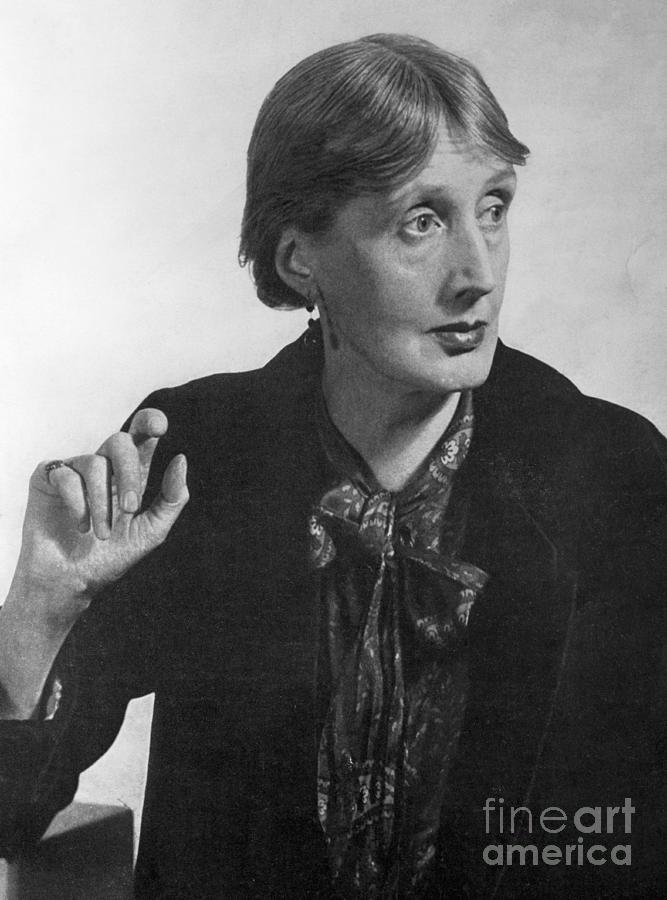
I’ve been an avid reader of cerebral Virginia Woolf for many years, enjoying not only her novels, but her highly polished essays such as “A Room of Her Own.” Thanks to the Yale Review Archives, I’ve just read “How Should One Read a Book?” (September 1, 2026). It was a different world then, absent of electronic media.

Today, reading is in sharp decline. According to the National Assessment of Educational Progress (February 2025), 33% of eighth graders lack basic reading skills, and only 14% of students read daily. Among adults, just 40% read a literary book.

This trend exacts a cost, as literature cultivates empathy and instills humane values. Active readers are more engaged in civic and cultural life. They contribute to their communities. In contrast, electronic media foster shorter attention spans and weaken intellectual skills (National Endowment for the Arts Assessment).

With AI increasingly doing our cognitive heavy lifting, our ability to think critically is further eroding.

If Woolf believed literature offered us a window into the world, today it seems the shades have been drawn.

—rj

No Other Land: A Story That Must Be Told

The Academy Awards take place tonight, but I may not watch.

I have misgivings, particularly about the industry’s apparent exclusion of films that highlight the Palestinian plight in Israel.

Like many others, I don’t miss theaters. It’s nice just lounging in an easy chair, scrolling through endless streaming choices on a big-screen TV, microwaved popcorn at hand. Traditional studios have taken the hint, shifting their priorities toward digital platforms.

A few times, I’ve ve been tempted to return to the theater to see films like Top Gun: Maverick for its effects, or Oppenheimer, for its brilliant portrayal of a conflicted scientist. But I always hold off, knowing that within months, I can rent or buy the film and avoid the steep ticket prices.

Now comes another film, a documentary No Other Land, winner of the Berlin International Film Festival and the Gotham Award for Best Documentary, now an Oscar nominee.

Yet no American studio dares to sponsor it.

Jointly directed by Palestinian and Israeli filmmakers, No Other Land lays bare the struggles of Masafer Yatta, a West Bank community facing near-daily assaults from Israeli Defense Forces and encroaching settlers who want them gone, the latter, an updated version of the Ku Klux Klan. The IDF claims it needs the land for a military training base.

Two weeks before the film’s Oscar nomination, masked settlers stormed Masafer Yatta, destroying homes. In one instance, caught on film, a resident was shot in the stomach. The filmmakers themselves have been harassed, even shot at, over five years of production.

Palestinian director Basel Adra, a Masafer Yatta resident, has been targeted multiple times. Yet he refuses to leave the land where his family has lived for generations.

His Israeli co-director, Yuval Abraham, told The New York Times:
“I look at Basel, who’s living a much more difficult life than myself, and as long as he’s continuing, I feel like I also have to continue. Even if reality is only changing for the worse, it’s not as if we know what would happen if there is no documentation.”

So far, the film has reached just 23 American theaters. Still, the directors hope for broader exposure to awaken audiences to Israel’s deepening colonization of the West Bank and shift public perception.

But in America, supporting Palestinian rights often invites accusations of antisemitism. Trump has proposed deporting Palestinian student protesters. As for Gaza, he advocates expelling its 2 million inhabitants without a right of return.

Ta-Nehisi Coates’ new book, The Message, devotes half its pages to his time in the West Bank. Some criticize him for omitting Hamas’ attack on Israel and its atrocities. Daniel Berner of The Atlantic calls Coates’s analysis simplistic. Yet liberal Israelis, though a minority, may find his perspective compelling.

Coates focuses on the West Bank, not Gaza. In an interview with New York Magazine, he remarked: “I don’t think I ever, in my life, felt the glare of racism burn stranger and more intense than in Israel.”

As expected, some have labeled him antisemitic. The New Republic sees it differently, calling the backlash a massive media failing: “Coates is not antisemitic to defend Palestinian human rights” (Shiner, October 2, 2024).

If No Other Land makes it to my local theater, I’ll give up my easy chair, venture out to the theater, pay the ticket price, not only to witness a remarkable documentary, undertaken at great risk, but to lend my support to a story centered in truths that must be told.

RJoly

Ambush at the White House: A Hero Humiliated

Zelensky arrived at the White House, mocked openly by Trump for not wearing a suit. Zelensky soon discovered that the anticipated signing of an agreement for access to 50% of Ukraine’s minerals offered no security guarantees. Unwilling to sign, Zelensky was lured into an ambush before a gathered press. If you are defined by the friends you keep, then the reality sinks in: Trump’s friend is Vladimir Putin. In what followed. he lavished praise for the dictator, who he said can be trusted to keep his word.

As usual, Trump couldn’t get the facts straight. Boasting of the US giving Ukraine $340b, the truth is $119b, a not inconsiderable sum, but Europe has given more at $138b.

Zelensky was expelled and the planned celebratory luncheon canceled.

Trump appears ready to cut off all military aid to the besieged nation. Meanwhile, the Russian press has been exuberant in its praise of Trump.

We are in a shameful moment of a fascist government, run by incompetents, trampling on dissent, imperiling our obligations to the marginalized, abandoning its allies, and subordinating itself to corporate oligarchy.

Stand up for Ukraine. Incorporate its flag into your FB profile. Support the boycott movement, the public protests. It isn’t just about Ukraine. It’s coming cuts to Medicaid, the suspension of environmental and health safeguards, the cut off of aid to developing nations.

America is engaged in a war—a moral one. We can win, and with your help, we will.

–RJoly

Putin’s Aggression, Trump’s Betrayal, and Europe’s Challenge

  • Photo by Ukraine.ua on September 07, 2023.

You may not have heard of Tim Snyder, but he’s worth knowing. A Yale professor of Eastern European history and authority on the Holocaust, his vitae includes sixteen books and many academic awards. A Brown and Oxford graduate, he speaks five European languages and reads in ten.

I mention him because of his ardent defense of a free Ukraine, whose fate now lies in jeopardy. This month he’s been in Ukraine, a participant in a dedication of a new underground school for children a mere twenty miles from the front and within twenty second reach of Russian cruise missiles.

Today marks the end of three years of Ukraine’s brave resistance to its Russian invaders, who now occupy twenty percent of its land. The school has to be underground, as Russian targets include schools as well as hospitals, civilian housing, energy infrastructure, and even shopping malls.

Now Ukraine confronts its most insidious danger—Trump’s abandonment of Ukraine. Snyder reminds us that Trump cares little about Europe. What matters is making deals in exchange for profit as seen in his demand Ukraine grant rights to fifty percent of its minerals. Like Gaza, Greenland, and the Panama Canal, it’s about adding real estate to his portfolio.

Ukraine’s destiny now lies in European hands, but their commitment isn’t assured. Rewarding Kremlin aggression makes more aggression likely, particularly involving the Baltic nations of Estonia, Latvia, and Lithuania, each with a considerable Russian minority similar to that of Ukraine.

There are ways you can help Ukrainians. Snyder sponsors Documenting Ukraine, which affords Ukrainians a voice. There is also Come Back Arrive, supporting Ukrainian soldiers; RAZOM assisting civilians; and United 24, the Ukrainian government’s site for donations.

Few will read my lengthy post, but for those who do, donate, if you can—and while at it, join the resistance. You know what I mean.

—RJoly

Defending Democracy: What We Must Do

A year ago this month, Russian opposition leader Alexei Navalny died in a labor camp under circumstances that strongly suggest Kremlin involvement. His courageous fight against Russian despotism should have inspired a global recommitment to democracy. Instead, we see authoritarianism advancing—both abroad and at home.

Donald Trump, long an admirer of Vladimir Putin, has once again echoed Kremlin propaganda, calling Ukrainian President Volodymyr Zelensky a “dictator” and blaming him for the war—simply because Zelensky rejected his negotiating Ukraine’s surrender on Putin’s terms.

Unsurprisingly, Russian state media has embraced Trump as a political rock star, amplifying his rhetoric to weaken Western resolve.

Meanwhile, here in the United States, our own democratic values are under siege, the rule of law undermined, institutions eroded, and authoritarianism on the rise.

The threats we face today, both at home and abroad, make the world more dangerous for all who believe in freedom.

But we will not stand idly by. We must resist—through the courts, in Congress, and in the streets through peaceful protest.

The fight for America’s soul is far from over. If we stay united, we will prevail. In two years, we have the opportunity to reclaim Congress, hold those who threaten democracy accountable, and ensure that America remains a beacon of freedom—not an ally to autocrats.

—R Joly

Reaping What We Sowed

Like many of you, I shudder at each day’s news. I ask, what have we done to ourselves, electing a convicted felon, rapist, and con srtist, wielding bluff, vengeance, and ridicule to smother dissent—a man nefarious in his acumen for malice, his syntax simplistic, governing by impulse and running the country by the seat of his pants; impulsive and isolationist, bent on walling out the interweave of the world’s nations and reviving imperialism.

Devoid of any empathy, he deigns to displace two million Palestinians from their homeland, negotiate Ukraine’s fate on Putin’s terms, bully allies Canada and Mexico, cut off aid to those in need, disenfranchise America’s working class, while deepening racial divides and fueling the oligarchy of greed.

Denying climate change despite accelerating consequences, he imperils evolution’s age wrought marvels and forfeits our children’s future.

Alas, we will reap what we have sowed; harvest tares and not wheat. —rj

When the Pen Speaks: The Buried Life

Some years ago, I was a National Humanities Seminar student at Claremont Graduate University in southern California.

It was an eight week seminar devoted to myth study, meeting several times weekly. On a given day, one of us would be responsible for introducing a thematic topic, followed by extended discussion, monitored by a chair nationally recognized for excellence in the subject.

My presentations differed from that of my cohorts, who confidently offered their insights orally, a few notes at the most. For some reason, I’ve always preferred a text, perhaps from being a very deliberative person, mindful of nuance and wanting to find a way of simplifying complexity. I like sorting out enigmas, something requiring reflection and precise articulation, all the bits and pieces I fear I’m likely to omit without a text.

I’ve often felt remorse for this, envying those who verbalize freely. It’s a gift I lack. Were I a more relaxed person, more confident in myself, maybe I could pull it off.

But then I remember that some of the greatest presentations, motivating a nation, inspiring action, were delivered from chiseled texts. We dub their articulators “orators,” but they spoke from manuscripts. Abraham Lincoln, Frederic Douglas, Winston Churchill, John Kennedy, Ronald Reagan, Barack Obama; perhaps the most eloquent of them all, Martin Luther King.

One day, a seminar member told me I became another person when I spoke from a text. I wasn’t offended. I knew its truth.

Franz Kafka comes to mind: “I write differently from what I speak, I speak differently from what I think, I think differently from the way I ought to think, and so it all proceeds into deepest darkness.”

And that’s perhaps the best excuse I can offer for my addiction to a text. When I take a pen in hand, I become a stranger to myself. Myriad voices tumble forth, competing to be heard. Writing taps an oceanic source, deep, fathomless, a wellspring the ancient Greeks called daimon, not evil, but spirit entities acting as intermediaries between man and the gods, or what Matthew Arnold termed “the buried stream” :

The eye sinks inward, and the heart lies plain,
And what we mean, we say, and what we would, we know.
A man becomes aware of his life’s flow,
And hears its winding murmur; and he sees
The meadows where it glides, the sun, the breeze.

And an unwonted calm pervades his breast.
And then he thinks he knows
The hills where his life rose,
And the sea where it goes (“The Buried Life”).

Older now, I no longer view my reliance on text as a shortcoming but as a conduit that allows me to distill complexity and find precision in the tumult of thought. Perhaps I do become another person when I read from a text, but maybe that person is closer to the truest version of myself.

Writing is not a retreat from spontaneity, but an invitation to clarity; not a crutch but a way of channeling what might otherwise remain unspoken. If history remembers its greatest orators as voices of change, it also remembers the words that gave them their power—carefully chosen, painstakingly shaped, delivered not despite their deliberation, but because of it.

–rj

Profits Over People: Trump’s Environmental Rollback

Multiple brown bear at McNeil River State Game Sanctuary fishing for salmon

This past week has been disastrous for the environment and public welfare. Trump withdrew the U.S. from the Paris Climate Agreement, ramped up efforts to expand fossil fuel production, attacked clean energy initiatives, rescinded EV rebates, placed environmental justice employees on paid leave, and halted crucial environmental litigation.

Trump, who dismisses climate change as a hoax, prioritizes profits above all else. His actions will have dire consequences: higher cancer rates in cities like L.A., more asthma attacks, skyrocketing hospital bills, and increased deaths among Americans.

Meanwhile, Alaska, now opened to massive drilling, is warming four times faster than the rest of the planet, wreaking havoc on ecosystems and threatening the survival of indigenous communities. —RJ

David Lynch: Visionary Filmmaker, Advocate for Inner Peace

Famed director, screenwriter, and actor David Lynch died on Thursday at age 78. Accolades have praised his visionary, surreal contributions to the film industry, featuring productions such as Mulholland Drive and the TV hit series Twin Peaks.

Although no official cause of death has been announced, informed sources suggest he may have been a victim of the LA fires. Forced to evacuate his home, his chronic emphysema reportedly worsened. In November, he said he required oxygen for “walking across the room” (Lynch death). A year earlier, he told sources he was unable to leave his house.

I owe a personal debt to Lynch. A few years ago, I began exploring ways to lessen my daily anxiety. Cognitive behavioral therapy, though offering insights for changing my mindset, hadn’t sufficed. I didn’t want medication with its potential side effects. I wanted to be me.

I turned to meditation, having been impressed by multiple neurological brain imaging studies at Harvard and Massachusetts General Hospital. They showed that meditation conducted on Transcendental Meditation practitioners facilitated anxiety reduction by promoting pacifying beta brain waves.

Looking first for a way to begin, I came across Lynch, who’d begun TM in 1973:

“I started Transcendental Meditation in 1973 and have not missed a single meditation ever since. Twice a day, every day. It has given me effortless access to unlimited reserves of energy, creativity and happiness deep within. This level of life is sometimes called ‘pure consciousness.’ It is a treasury. And this level of life is deep within us all,” he wrote.

Lynch dedicated himself to spreading the word, establishing the David Lynch Foundation for Consciousness Based Education to financially assist adults and children throughout the world to learn TM.

Convinced, I hired a TM instructor and did the training. But it’s important you have the right teacher. I did not.

I couldn’t stop the incessant mental gossip known as “the monkey mind.” That is, until I read Yongey Mingyur Rinpoche’s The Joy of Living. Everything fell into place. You listen to the chatter, returning to your mantra or breath when the mind engages or pursues.

I learned technique, using any of the five senses.

But it was Lynch who did the convincing. As he said, “If you don’t already meditate, take my advice: Start. It will be the best decision you ever make.”

–rj

Crossing the Line: Humanity’s Reckoning with a Planet on the Brink

The Pacific Palisades, Los Angeles, Jan. 9,2024. Photo: Mark Terrill

As Los Angeles burns, news comes that 2024 was the hottest year since the dawn of the Industrial Revolution.

Alarmingly, humanity has surpassed the critical 1.5°C (2.7°F) warming threshold—a limit meant to stave off the worst consequences of climate change. The fallout is clear: rising seas, relentless heat waves, severe droughts, catastrophic fires, and violent storms.  Currently, atmospheric CO2 levels have reached 410 parts per million—the highest in 3 million years—and continue to rise at an unprecedented pace.

At the heart of this crisis lies human-induced CO2 emissions, fueled by our continued reliance on fossil energy.

A 1.5°C rise may sound modest, but even at this level, irreversible damage has been done: collapsing ecosystems, intensifying weather extremes, emerging diseases, species extinction, and widespread social and economic turmoil.

The UN’s latest IPCC report demands urgent reflection: each additional 0.1°C of warming exacerbates extreme weather, disrupts food systems, and threatens a human population set to exceed 10 billion.  Between 2010 and 2019, heat-related deaths worldwide totaled 489,000 (WMO). Factoring in climate-induced malnutrition, disease, and disasters like floods and droughts, that number swells to 4 million. 

In short, neither humans nor other species evolved to survive an increasingly uninhabitable planet.

As Guardian columnist George Monbiot reminds us, “With the exception of all-out nuclear war, all the most important problems that confront us are environmental. None of our hopes, none of our dreams, none of our plans and expectations can survive the loss of a habitable planet. And there is scarcely an Earth system that is not now threatened with collapse “ (The Guardian, 28 September 2022).

–rj