Putin’s Aggression, Trump’s Betrayal, and Europe’s Challenge

  • Photo by Ukraine.ua on September 07, 2023.

You may not have heard of Tim Snyder, but he’s worth knowing. A Yale professor of Eastern European history and authority on the Holocaust, his vitae includes sixteen books and many academic awards. A Brown and Oxford graduate, he speaks five European languages and reads in ten.

I mention him because of his ardent defense of a free Ukraine, whose fate now lies in jeopardy. This month he’s been in Ukraine, a participant in a dedication of a new underground school for children a mere twenty miles from the front and within twenty second reach of Russian cruise missiles.

Today marks the end of three years of Ukraine’s brave resistance to its Russian invaders, who now occupy twenty percent of its land. The school has to be underground, as Russian targets include schools as well as hospitals, civilian housing, energy infrastructure, and even shopping malls.

Now Ukraine confronts its most insidious danger—Trump’s abandonment of Ukraine. Snyder reminds us that Trump cares little about Europe. What matters is making deals in exchange for profit as seen in his demand Ukraine grant rights to fifty percent of its minerals. Like Gaza, Greenland, and the Panama Canal, it’s about adding real estate to his portfolio.

Ukraine’s destiny now lies in European hands, but their commitment isn’t assured. Rewarding Kremlin aggression makes more aggression likely, particularly involving the Baltic nations of Estonia, Latvia, and Lithuania, each with a considerable Russian minority similar to that of Ukraine.

There are ways you can help Ukrainians. Snyder sponsors Documenting Ukraine, which affords Ukrainians a voice. There is also Come Back Arrive, supporting Ukrainian soldiers; RAZOM assisting civilians; and United 24, the Ukrainian government’s site for donations.

Few will read my lengthy post, but for those who do, donate, if you can—and while at it, join the resistance. You know what I mean.

—RJoly

Defending Democracy: What We Must Do

A year ago this month, Russian opposition leader Alexei Navalny died in a labor camp under circumstances that strongly suggest Kremlin involvement. His courageous fight against Russian despotism should have inspired a global recommitment to democracy. Instead, we see authoritarianism advancing—both abroad and at home.

Donald Trump, long an admirer of Vladimir Putin, has once again echoed Kremlin propaganda, calling Ukrainian President Volodymyr Zelensky a “dictator” and blaming him for the war—simply because Zelensky rejected his negotiating Ukraine’s surrender on Putin’s terms.

Unsurprisingly, Russian state media has embraced Trump as a political rock star, amplifying his rhetoric to weaken Western resolve.

Meanwhile, here in the United States, our own democratic values are under siege, the rule of law undermined, institutions eroded, and authoritarianism on the rise.

The threats we face today, both at home and abroad, make the world more dangerous for all who believe in freedom.

But we will not stand idly by. We must resist—through the courts, in Congress, and in the streets through peaceful protest.

The fight for America’s soul is far from over. If we stay united, we will prevail. In two years, we have the opportunity to reclaim Congress, hold those who threaten democracy accountable, and ensure that America remains a beacon of freedom—not an ally to autocrats.

—R Joly

When the Pen Speaks: The Buried Life

Some years ago, I was a National Humanities Seminar student at Claremont Graduate University in southern California.

It was an eight week seminar devoted to myth study, meeting several times weekly. On a given day, one of us would be responsible for introducing a thematic topic, followed by extended discussion, monitored by a chair nationally recognized for excellence in the subject.

My presentations differed from that of my cohorts, who confidently offered their insights orally, a few notes at the most. For some reason, I’ve always preferred a text, perhaps from being a very deliberative person, mindful of nuance and wanting to find a way of simplifying complexity. I like sorting out enigmas, something requiring reflection and precise articulation, all the bits and pieces I fear I’m likely to omit without a text.

I’ve often felt remorse for this, envying those who verbalize freely. It’s a gift I lack. Were I a more relaxed person, more confident in myself, maybe I could pull it off.

But then I remember that some of the greatest presentations, motivating a nation, inspiring action, were delivered from chiseled texts. We dub their articulators “orators,” but they spoke from manuscripts. Abraham Lincoln, Frederic Douglas, Winston Churchill, John Kennedy, Ronald Reagan, Barack Obama; perhaps the most eloquent of them all, Martin Luther King.

One day, a seminar member told me I became another person when I spoke from a text. I wasn’t offended. I knew its truth.

Franz Kafka comes to mind: “I write differently from what I speak, I speak differently from what I think, I think differently from the way I ought to think, and so it all proceeds into deepest darkness.”

And that’s perhaps the best excuse I can offer for my addiction to a text. When I take a pen in hand, I become a stranger to myself. Myriad voices tumble forth, competing to be heard. Writing taps an oceanic source, deep, fathomless, a wellspring the ancient Greeks called daimon, not evil, but spirit entities acting as intermediaries between man and the gods, or what Matthew Arnold termed “the buried stream” :

The eye sinks inward, and the heart lies plain,
And what we mean, we say, and what we would, we know.
A man becomes aware of his life’s flow,
And hears its winding murmur; and he sees
The meadows where it glides, the sun, the breeze.

And an unwonted calm pervades his breast.
And then he thinks he knows
The hills where his life rose,
And the sea where it goes (“The Buried Life”).

Older now, I no longer view my reliance on text as a shortcoming but as a conduit that allows me to distill complexity and find precision in the tumult of thought. Perhaps I do become another person when I read from a text, but maybe that person is closer to the truest version of myself.

Writing is not a retreat from spontaneity, but an invitation to clarity; not a crutch but a way of channeling what might otherwise remain unspoken. If history remembers its greatest orators as voices of change, it also remembers the words that gave them their power—carefully chosen, painstakingly shaped, delivered not despite their deliberation, but because of it.

–rj

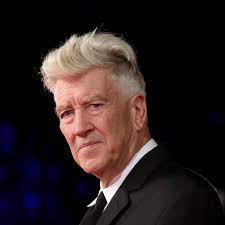
David Lynch: Visionary Filmmaker, Advocate for Inner Peace

Famed director, screenwriter, and actor David Lynch died on Thursday at age 78. Accolades have praised his visionary, surreal contributions to the film industry, featuring productions such as Mulholland Drive and the TV hit series Twin Peaks.

Although no official cause of death has been announced, informed sources suggest he may have been a victim of the LA fires. Forced to evacuate his home, his chronic emphysema reportedly worsened. In November, he said he required oxygen for “walking across the room” (Lynch death). A year earlier, he told sources he was unable to leave his house.

I owe a personal debt to Lynch. A few years ago, I began exploring ways to lessen my daily anxiety. Cognitive behavioral therapy, though offering insights for changing my mindset, hadn’t sufficed. I didn’t want medication with its potential side effects. I wanted to be me.

I turned to meditation, having been impressed by multiple neurological brain imaging studies at Harvard and Massachusetts General Hospital. They showed that meditation conducted on Transcendental Meditation practitioners facilitated anxiety reduction by promoting pacifying beta brain waves.

Looking first for a way to begin, I came across Lynch, who’d begun TM in 1973:

“I started Transcendental Meditation in 1973 and have not missed a single meditation ever since. Twice a day, every day. It has given me effortless access to unlimited reserves of energy, creativity and happiness deep within. This level of life is sometimes called ‘pure consciousness.’ It is a treasury. And this level of life is deep within us all,” he wrote.

Lynch dedicated himself to spreading the word, establishing the David Lynch Foundation for Consciousness Based Education to financially assist adults and children throughout the world to learn TM.

Convinced, I hired a TM instructor and did the training. But it’s important you have the right teacher. I did not.

I couldn’t stop the incessant mental gossip known as “the monkey mind.” That is, until I read Yongey Mingyur Rinpoche’s The Joy of Living. Everything fell into place. You listen to the chatter, returning to your mantra or breath when the mind engages or pursues.

I learned technique, using any of the five senses.

But it was Lynch who did the convincing. As he said, “If you don’t already meditate, take my advice: Start. It will be the best decision you ever make.”

–rj

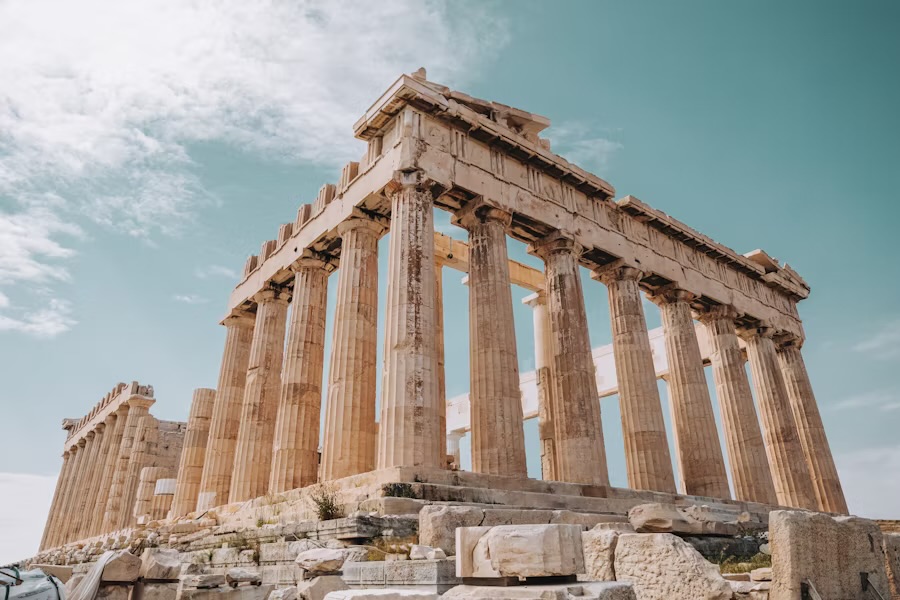
From Pietas to Relevance: Reflections on the Death of the Classics

Boston Latin School

The ancient classics, once the hallmark of the liberal arts, have increasingly vanished from today’s college campuses.

I remember with fondness my Massachusetts education. In the eighth grade, we read The Odyssey. In high school, I enrolled in what was dubbed the “classical” curriculum, emphasizing languages and the humanities.

In those days, you could major in Latin for four years, culminating in reading not only Cicero and Seneca, but Virgil’s The Aeneid, a work that’s impacted me immensely across the years.

If you’re lucky enough to get into Philips Exeter Academy, not far from where I lived, you’ll find the classics still in full bloom, courses not only in Latin, but Greek, to an advanced level. There’s even a classics club.

In the main, however, exposure to the classics has undergone steep decline.

An early harbinger, the year before I entered the University of North Carolina’s English Ph. D. program, the required Latin reading exam was dropped.

Today, issues of relevancy, racism, changing student interests, and funding have sped up a near universal decline in classics exposure across college campuses.

While Harvard and Princeton still retain courses in the classics, though in English and within a comparative global setting, other colleges have been dropping classics programs altogether, among them, Canisius College, Whitman College, Elmira College, the University of Vermont, Valparaiso University and Howard University, the only historically Black college to feature a classics department.

But back to my New England boyhood days, I remember going “junking” as we called it, ransacking antique stores, among their fare, scores of Latin public school primers, palpable evidence of a discarding of a former ubiquitous cultural presence.

In nearby Boston, there still exists its premium public educational institution, Boston Latin School, America’s first public school, founded in 1635, a year before Harvard College.

In keeping with its traditional Latin emphasis, options in Latin language courses remain, but the trend, as elsewhere, has been to evolve curriculum to service a diverse student body and transition to modern educational priorities.

I accept it’s at least better to retain the classics in English translation where budgets permit than to guillotine them altogether and acknowledge we live in a global village and musn’t exclude its verities of wisdom contributory to fostering a better world.

For nearly thirty years, I taught The Aeneid on a private university campus in a course called Western Classics, the only professor doing so. Its notion of self-discipline over impulsiveness, the obligation to duty (pietas) and mission (fatum) remain integral to civil integrity.

As the late academic Louise Cowan aptly put it, “To lose the classics is to lose a long heritage of wisdom concerning human nature, something not likely to be acquired again. Yet most college curricula now remain sadly untouched by their august presence, or at best make a gesture in their direction with a few samplings for select students. Such neglect is one of the most serious threats our society faces today” (“The Necessity of the Classics,” Modern Age Journal).

–RJ

Blurring Boundaries: Bruce Duffy’s Vision of Wittgenstein and Cambridge Minds

To behold death in the face of this once, he knew there could be no reincarnation, and he thought it a blessing, to have this once to swell forth, then to be enfolded like a seed into the sheltering darkness of eternity — to be lost in time among such furrows as the sea makes (Duffy, The World as I Found It).

When Joyce Carol Oates praised Bruce Duffy’s The World as I Found It (1987) as “one of the five best non-fictional novels,” I knew it would be my next read.

A blend of fact and fiction, it replays the legacy of esteemed philosopher Ludwig Wittgenstein’s complex life, thought, and turbulent relationships with fellow Cambridge contemporaries, Bertrand Russell and G.E. Moore.

Born into a  privileged Viennese family of wealth and culture, much of his adult life was impacted by a domineering father, his experience as a combat soldier, frequent retreats from public life, and sustained quest for truth.

Enigmatic, his thinking underwent continuous flux, making Duffy’s achievement quite remarkable.

Duffy didn’t have the resources of extant biographies at the time.

Adding to his  challenge was integrating Wittgenstein’s complex thought into his narrative, yet retaining readers unversed in analytical abstraction.

Wittgenstein premised the insufficiency of philosophy in ascertaining reality, its true function one of providing examples subject for further investigation. It mustn’t attempt to usurp science.

The World as I Found It unfolds episodically, interwoven with asides to the three philosophers—their temperaments, perspectives, strengths and weaknesses.

Of the three academic luminaries, Wittgenstein and Russell captivated my interest with their disparate temperaments: Wittgenstein, the youthful upstart; Russell, the widely celebrated academic renowned for his contributions to logic, epistemology, and the philosophy of mathematics.

In contrast, though the elder G.E. Moore, brilliant and benevolent, serves as mediator between the two rivals, his serene domesticity and lack of the same intense character traits, renders him less compelling than Russell, ebullient with conceit, yet haunted by self-doubt and bouts of jealousy, the putative exponent of free love; or Wittgenstein, volatile in temperament, given to barbed tongue directness, unsparing and wounding when critiquing his colleagues’ scholarly endeavors.

Wittgenstein emerges a good man, sincerely seeking life’s meaning and doing the right thing; Russell, in contrast, competitive and self-indulgent.

It appears Wittgenstein underwent some kind of religious conversion during his war years, though not in the conventional sense, perhaps influenced by Tolstoy, whose Gospel in Brief he carried everywhere and could virtually quote from memory. 

In fashioning a fictional biography, Duffy made numerous changes not conforming to the biographical facts or timelines:

No letters exist between Wittgenstein and his despotic father.

He assigns Wittgenstein two sisters. He had three.

Wittgenstein never met D. H. Lawrence, despite Bloomsbury’s Lady Ottoline Morrell’s best efforts.  

It was Wittgenstein’s excluded sister, Hermine, not Gretl, who sheltered Jews in Nazi occupied Vienna at great personal risk. This anomaly puzzles me.

Then there’s the inimitable, impulsive Max, rough in exterior, potentially violent, yet Wittgenstein’s faithful companion. Duffy confesses in his Epilogue that he never existed, reminding us of the controversy erupting on the book’s publication: Is it ethical to fictionalize historical figures and events, selectively altering character dynamics and outcomes to serve a narrative?

Still, the defining lineaments of Wittgenstein’s life are never distant: the interplay of a controlling father; the family’s wealth and cultural milieu; the several sibling suicides; the cottage built and retreated to in remote Norway; the two years of trench warfare on the Eastern Front in the Great War; the profound influence of Otto Weininger’s Sex and Character; the failed teaching stint in rural Austria; the abandonment of Cambridge; the late sojourn in Ireland and visit to America; the move into his physician’s home as he confronted his fatal prostate cancer. Even his last words, “I have lived a happy life.”

Seldom have I read a book so beautifully written and stylistically riveting, the cadence of its sprawling sentences endowed with verbal exactitude, rendering scenes and personages into palpable visages, an exemplar for aspiring writers.

The New York Review of Books deemed Life as I Found It a classic, restoring its availability in a handsome Classic Series edition, replete with Duffy preface and epilogue.

At its core, The World as I Found It  transcends philosophy, embracing the often contradictory lives of those driven to understanding their world.

A narrative about ambition, genius, and the human condition, it offers profound insights into the interplay of intellect, emotion, and morality.

—RJ


Beyond Self: The Power of Empathy in Troubling Times”

In this anxiety-ridden age, I’m sometimes tempted to tune out the endless cacophony and retreat into a myopic vista of self-concern. But in doing so, I’d foreclose on empathy, essential for promoting understanding, compassion, and a kinder world.

It’s why I read daily and widely. To not do so exacts a price I’m unwilling to pay. Favorite author Elif Shafak expresses my sentiment superbly:

“It is the Age of Angst indeed, but it will be a more dangerous and broken world if it were to become the Age of Apathy. The moment we become desensitised. The moment we stop following what is happening in Gaza, in Ukraine, in Sudan… the moment we stop thinking about our fellow human beings, and their stories and silences, here and everywhere…. the moment we stop paying attention, we stop connecting across borders, we stop caring.

“If there is one emotion that really should frighten us, it is the lack of all emotions. It is numbness. It is apathy.”

—rj

From Ally to Outlier: Türkiye’s Democratic Backslide

He is a weak ruler who needs religion to uphold his government; it is as if he would catch his people in a trap. My people are going to learn the principles of democracy, the dictates of truth, and the teachings of science.” — Mustafa Kemal Atatürk (Father of Modern Turkey)

If you’ve been reading the headlines, the 2024 BRICS assemblage of twenty heads of state has just concluded in Kansan, Russia. If you thought host Vladimir Putin lacks friends beyond China and North Korea, then you’re mistaken.

BRICS, in fact, is growing. This year’s consortium includes new members Egypt, Ethiopia, Iran, Saudi Arabia, and the United Arab Emirates in addition to its founding members: Brazil, Russia, India and South Africa (thus the acronym).

What you wouldn’t expect, being both a NATO member and EU candidate, is Türkiye’s applying for BRICS membership (September 2, 2024).

It would certainly surprise Mustafa Atatürk, Türkiye’s George Washington, who promoted Westernization, leading to the separation of religion and state, the ending of polygamy, the abolishing of the veil, the emancipation of women and the adoption of a Latinate script, replacing Arabic.

It’s past time to soft-pedal Türkiye, a subversive entity increasingly out-of-touch with the values of Western democracies.

Allow me to enumerate its transgressions:

1. Türkiye continues to discriminate against its 175,000 Christians in a country 95% Muslim. The primary lure of visitors to Istanbul is the famed Hagia Sophia cathedral, founded by Byzantine Emperor Justinian I in 537 CE. The conquering Sultan Mehmet II converted it into a mosque in 1453 CE. Atatürk, however, rescinded that action, designating it a museum. Türkiye’s high court annulled that decision in July 2020, a move hailed by Erdogan as “the second conquest of Istanbul.”

In the years 2018-2020, Türkiye deported more than fifty foreign Christian pastors on the pretext of constituting a threat to Turkish national security. As is, Christian ministers have no indigenous seminary, their future uncertain.

There was the notorious imprisonment of American Presbyterian pastor Robert Brunson, a 20-year resident of Türkiye on charges of  collusion with Kurds, undermining national security.  In response, Trump doubled tariffs in 2018 on Türkiye’s aluminum and steel, sending the lira into a steep decline. Brunson was released shortly after, having been imprisoned for two years  (Imprisonment).

Space does not allow for numerous other instances of religious intolerance
Middle East Forum

2. Türkiye continues to deny the Armenian Genocide (1915-1917) with its displacement, forced marches, compulsory Islamization, and mass murder of 1.1 million Armenians, along with expulsion and massacres of its Greek population. No serious historian denies its factuality.

3. It refuses to grant its sizable Kurdish minority a right to its culture and self-government.  In July, 2024, President Recep Erdogan made clear his plan to promote demographic change in Kurdish northern Syria by resettling three million Syrian Arab refugees there, along with building a city dedicated to their presence (Refugee Resettlement).

4. In Europe, Erdogan stubbornly resisted Finland and Sweden’s membership in NATO, holding out for fighter jets.

5. At home, Erdogan rules with a heavy hand, crushing political dissent, the right of free assembly and a free press. Scores of journalists, academics, judges, and civil servants have been imprisoned (Amnesty International).

6. As for Türkiye’s gifted literary community, intimidation has become ubiquitous, with some writers jailed or ostracized in the press. They include the journalist Can Dündar, poet Ilhan Sami Çomak, and politician Selahattin Demirtaş, who wrote three novels in jail. Nobel literary laureate Orhan Pamuk retains a security guard  (Dial World).

7. And then there is Türkiye’s most renowned writer, Elif Shafik, who has resided in London since 2013 and no longer writes in Turkish. Since 2010, fringe nationalists and Erdogan loyalists have confiscated her books and slandered her reputation.

As Shafak trenchantly observes, “It is tiring to be Turkish. The country is badly polarised, bitterly politicized. Every writer, journalist, poet knows that because of an article, a novel, an interview, a poem or a tweet you can be sued, put on trial, even arrested. Self-censorship is widespread”(Dial World).

8. Discrimination against the LGBTQ community is pervasive, extending to workplace, social settings, housing, and healthcare. Türkiye’s government officials, including Erdogan, have not been shy in disparaging gays. In Istanbul and Ankara, LGBTQ events have been frequently banned as affronts to public morality (RFI).

9. Türkiye has conducted an aggressive foreign policy, menacing its Mediterranean neighbors, pursuing illegal drilling that violates international maritime law. In response, the European Council has imposed sanctions.

It supported Azerbaijan with weaponry in the Nagornal-Karabakh conflict.

Türkiye has militarily intervened in Libya and Syria; in the latter, attacking Kurds aligned with U.S. forces opposing Syrian strongman Bashar al-Assad and a growing ISIS insurgence.

10. Of major concern is Erdogan’s brokering a $2.5 billion deal with Putin to purchase the Russian S-400 surface to air missile system, compromising American defense security, leading to previous president Trump’s curtailing shipment of F-35 jets to the country.

Unfortunately, efforts within Türkiye to check Erdogan’s growing powers have failed.

What can be done?

Not much, as no specific measure exists for expelling a NATO member. Such action would be unlikely anyway, pragmatists arguing the country’s considerable military strength and role as a buffer to Russian and Iranian interests in the Middle East.

As for the US embargo on jets, following Erdogan’s finally approving Sweden and Finland NATO membership, the Biden administration agreed to send Türkiye 40 F-16 fighter jets. The two nations have further set a goal of $100 billion in bilateral trade, up from $30 billion in 2023 (Reuters, September 23, 2024).

What remains a disciplinary possibility is that the EU may ultimately deny an intransigent Türkiye highly coveted EU membership. That’s probably wishful thinking, opponents arguing Türkiye formidable military as a necessary offset against Russian and Iranian hegemony in the region. Strategically, it controls the Bosporus Strait, linking the Black Sea to the Mediterranean .

It doesn’t help that there exists a lucrative tourism, grossing 40 million visitors in the first eight months of the current year, an increase of 7.1 % over the previous year.

Indeed, tourism is likely to increase, despite the US State Department’s issuing an advisory in October on traveling to the country. Terrorists have targeted tourist locations and the government has imprisoned thousands, including Americans, on scanty evidence of alleged ties with terrorists (Advisory).

Still, it isn’t all doom and gloom, Erdogan’s ruling party, the AKP, finishing second in the March 24, 2024 local elections.

Meanwhile, informed citizens committed to human rights will understandably refrain from traveling there.

–rj

School Safety and SROs: Examining the Aftermath of Apalachee High School Shooting

Again, another school shooting: two teachers and two students killed; another eight, including a teacher, wounded at Apalachee High School in Winder, GA.

So far this year, 45 shootings have occurred, but this is the worst.

You may remember that after the George Floyd killing by police (2020), a groundswell of anti-police rhetoric occurred, with calls to defund police and remove school resource officers (SROs). Subsequently, police budgets were slashed and 50 school districts across the country removed SROs from their schools.

A year before George Floyd, 2019 presidential candidate Kamela Harris told a college audience, “What we need to do about … demilitarizing our schools and taking police officers out of schools. We need to deal with the reality and speak the truth about the inequities around school discipline. Where in particular, Black and Brown boys are being expelled and or suspended as young as, I’ve seen, as young as in elementary school” (Interview, Benedict College, Columbia, SC.).

Some studies had argued that SROs resulted in a disproportionate number of minority students suspended or arrested, leading to greater recidivism.

In all fairness, Harris has walked back several of her earlier policy positions: decriminalizing illegal immigration, banning oil fracking, and eliminating private health insurance. The public deserves to know her present stance on SROs.

By the way, her Veep choice, Tim Waltz, known to be progressive, signed into Minnesota law (March 14, 2024), a bipartisan bill allowing SRO specified disciplinary protocol that includes prone restraint.

CNN reports that the shooting at Apalachee High School stopped when an unnamed SRO confronted the alleged fourteen year odd assailant, ordering him to get down on the floor (September 5, 2024).

Hopefully, his heroism will not go unnoticed.

–rj

Discovering Ourselves Through Writing

What to write about, or finding your subject matter, doesn’t come easily.

Some writers respond to prompts to get them started.

Most writers probably get started out of a chance remark thrown their way in casual conversation or through stimuli in something they’ve read, or a keen interest, say in health research or climate change, that drives their protocol.

Political writers with an agenda find an especially easy route, simply reacting to adversary axioms they view as detrimental to public welfare. They’re never out of material, the spring never running dry in a media era of incessant scrutiny.

Popular author Tim Cotton just throws a sentence out there, not knowing where he’s headed: “What you don’t know about me, and won’t care, is that everything I write starts with a random sentence, typed onto a screen with no idea where I am going.”

Probing deeper, however, you’ll find this may be misleading. Cotton doesn’t simply post an initial sentence without an underlying coterie of everyday happenings—a visit with his aging father, the dream residue of an afternoon nap, the challenge of what to keep or toss, etc.

The key is to be mindful and present in the ordinary, and Cotton does this better than most of us. I suspect he jots down incipient observations he can expand upon later. Like many writers, he may keep a journal.

No matter how the writing venture begins, it has its mysterious aspects that all of us know very well. I remember a fellow graduate seminar student telling me that my writing exhibited a different person from the one of daily conversation.

That doesn’t surprise me. However I begin writing, I tunnel into a buried mineshaft of a separate self, perhaps akin to what Jung called the Shadow, surfacing in the writing act like a Yellowstone geyser bursting from subterranean depths.

Occasionally, I’ll bump into something I wrote several years ago and come away, Did I write that?

The poet Coleridge famously ascribed his Kubla Khan poem to an afternoon opium induced nap. On the other hand, Harvard scholar John Livingston Lowes pointed out Coleridge’s possible myriad reading sources in The Road to Xanadu.

In short, the depth psychologists Freud and Jung were right: We file our experiences, even the most trivial, at the unconscious level, lying dormant, only to spill suddenly into awareness, triggered by associative stimuli.

And so Tim Cotton is also right. However you start, your writing will reveal unknown vistas, revelatory of a much wiser Self than that quotidian persona we publicly assume.

Cotton inspired this post. I simply typed the first sentence, not knowing what I’d say. I had no notes, did not google, etc. That concealed self, automatic writing psychic enthusiasts might call it, filled out the blank.

Our minds are a file cabinet of our human experience, waiting retrieval. Writing may prove laborious, but think of what you miss when you don’t bother to write—the confluence of your life’s journey and its meaning; above all, your linkage with wider humanity, fostering understanding and empathy.

A journey of serpentine twists, leading to unanticipated trajectories, you never really know where you’ll end up.

–rj