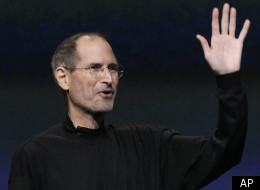
Apple Corporation: Too big for its britches?

Back in 2007, frustrated with my PC that was down to crawl speed, I bought my first Apple product, a MacBook Pro laptop. In computer time, it’s now old, going on ancient. For my purposes, however, it still works fine, though I should add more RAM to help things along when I download the new Lion operating system. My history with PCs had basically been three years and time for a new computer. And then the omnipresent battle against viruses. Four years into the MacBook and I still don’t employ anti-virus software.

Later I turned to the iPod for my music, with great satisfaction.

Last year, like so many, I got myself an iPad. This gadget has revolutionized my on-line habits. Now I use my laptop only for productivity needs such as on-line banking and word processing and, of course, synching my iPad. By October, the synching will itself be relegated to the trash heap, as Apple converts to the Cloud that will automatically store your data, no matter the Apple device. Apple technology is truly a beautiful thing.

There are things about Apple that irritate me. I never liked it that they initially entered into liaison with AT&T when coming out with the iPhone. Like most consumers I suspect, I prefer to choose from the wider market place, whether a car, a phone, a bank, etc. Currently, because of increased competition, Apple is expanding to include other carriers such as Verizon for the iPhone; Target and Best Buy for the iPad. Formerly, you had to buy directly from Apple online or an Apple store. While prices aren’t negotiable no matter where you buy, I purchased a Christmas iPad at Best Buy for my wife under a no interest agreement for three years. Ultimately, increased competition may lead to competitive pricing as well.

When it comes to iPad applications, Apple stands alone with currently some 400,000! Nonetheless, I remain partial to Amazon’s Kindle, both the device and the iPad application. This is doubtless because of the policy quirks of the Apple corporation. Initially they ventured into an agreement with book publishers, resulting in higher prices for e-books in their iBook application. Apple gets a 30% cut in the deal. The net result has been that Amazon was forced to raise their prices from the usual $9.99 to $11.99 or face publisher boycott. In the last several weeks, Apple has mandated Amazon, Barnes & Noble and others strip bookstore excess from their iPad applications to augment their iBook sales. In short, the buck is the bottom line, not the consumer, for this corporation that now rivals Exxon has the wealthiest corporation in America.

You can imagine how happy I was when Amazon announced it had gotten around the store prohibition by adopting a Clouds strategy. You can simply download Amazon’s Cloud reading application on your computer, then create a URL icon on your iPad. Further, you don’t need the iPad at all, as you have universal access on any tablet device and any computer anywhere in the world! The only drawback that I can see so far is that I can’t highlight passages, and this is a real bummer to a guy like me who can’t read without marking up a text. Thus I still do my Ipad reading with the old Kindle application, but have to switch to the Cloud icon when ordering. Hopefully, Amazon will remedy this drawback.

Still, Apple can be both ruthless and arbitrary. How do we know they won’t ultimately ban rival book applications from iPad altogether. Consider:

It doesn’t allow Adobe Flash.

It censors application content

Up to now, it hasn’t permitted newspaper and journal subscriptions in its iBook app. (This may be about to give way because of the competition.)

In sum, though Apple operates in the free market place, it does everything in its power to bend it to its supremely pecuniary interests.

Remedy, however, is fast-approaching as competition increases in the marketplace with ever improving product quality and, unlike Apple, consumer rather than proprietary interest propels its appeal.

Gloria Steinem: righting the hierarchy

There’s a great interview by Marianne Schnall in this morning’s Huffington Post Steinem Interview featuring feminist emissary, Gloria Steinem, still going strong at 77. On Monday, August 15, HBO will broadcast a biographical piece, “In Her Own Words.” While in our household we do have satellite TV, we’re unfortunately not signed up for HBO.

But back to the interview, which summarizes many goals still eluding one half of the human race:

1. Men sharing equally in child-raising.

2. Greater participation of women in the political process. (The U. S. ranks 70th.)

3. Ending domestic violence, sex trafficking, rape, serial killing, aborting female fetuses, female genital mutilation, child marriage, denying female children progtein, health care and education.

Where the interview misses crucially is its omission of the salient catalyst to affording balance to the gender hierarchy: the need to humanize men. In fairness, while Steinem does talk of the need to redefine gender roles, the crux is that men, the still entrenched power brokers, have to change to significantly improve women’s lot in life. I remember this poll taken several years back in which women were asked what they desired most in a male partner. It wasn’t looks, intelligence, even success. It was sensitivity. I’d go for empathy. Think about it, men: put yourself into women’s shoes and you’d change your ways on the quick.

The best psychology reading I’ve done over the years has been Carl Jung’s notion of anima and animus–that there exist countering social selves at the unconscious level, female and masculine dispositions if you will, that demand acknowledgement if we’re to find psychological wholeness.

Only as men give expression to their repressed anima can they find integration and well-being. Finding balance, it surely would make for a better world.

In liberating women, men ultimately liberate themselves.

Kudos to Rise of the Planet of the Apes

On Sunday morning last, my wife and I took in the new movie, Rise of the Planet of the Apes. When it comes to animals, I’ve a marshmallow heart. Where does this come from, this pull on my heartstrings? I only know that even as a boy roaming the waterfront streets of Philly’s tough Kensington I wanted desperately to take in every stray dog I’d come across. All my life I’ve owned pets, whether dogs, cats, mice, chickens, sheep–even lizards. I know that in 1996 I made a decision and never looked back in foregoing a meat-based diet as an ethical commitment not to inflict suffering on another sentient being. Apart from a few, our world doesn’t get it, wrapped as it is in its own comfort zone.

When I saw the movie with its colossal battle royal between angry apes and human culprits atop the Golden Gate, I wondered if it were just possible this film might help some among its millions of viewers to finally get it, too. If not to change their diets–custom’s hard for most of us to break–at least to make them aware of the inevitable cruelty that comes with meat-raising, animal experiments, trapping, bow-hunting, circuses, even horse racing in which 10,000 thoroughbreds are trucked to Canada or Mexico slaughterhouses. The long cortege of animal victims slips below the horizon.

Kudos then to producer and director Rupert Wyatt and 20th Century Fox. Amazingly, they didn’t use a single primate for their blockbuster, eliminating, stress, cages, and perhaps the pain we saw low-life handlers in the film dishing out to their charges. Relying instead on the latest savvy in computer generated, digital FX imaging, they were able to create an in-your-face simulation. As Wylie put it: “Personally, I had moral problems with the idea of using chimps.”

In this movie, we get the animal take on things. More than a popcorn movie, we see our cousins endowed with intelligence and, above all, the capacity to feel.

By movie end it’s evident we’re being set up for a sequel. They’re just animals, after all. As lords of the creation, we’re going to have to kick-ass.

Reflections on Democrat defeat in Wisconsin recall

Despite large scale union efforts and a tsunami of out-of state money, Wisconsin Democrats fell short in their bid to unseat six Republican state senate incumbents in yesterday’s recall election, with Republicans winning four of the six contests. Democrats, irate at Gov. Scott Walker and his allies whom they view as short-changing the collective bargaining rights of state workers, sought to even the score in an election some have viewed as a bellwether of public sentiment before the November 2012 national election. Democrats had wanted to go after the governor as well, but were preempted by a state law that mandates a governor serve at least one year.

While not taking sides, I am happy with the outcome. For me, the issue of political stability is what’s at stake in such recall elections. Think about the chaos resulting from special interest groups petitioning for recall elections whenever they disagree with their political leadership. Think about the wasted millions in costs. After all, there is a process for change. We call it the ballot box, a right open to citizens every two years. In the interim, we also have the courts. In this instance, the state court upheld the Republican decision-making process.

As is, twelve senate Democrats chose to abandon the decision process by leaving the state in order to prevent a quorum. Again, whatever happened to this thing we call democracy? If I can’t have my way, I’m going to pick-up my marbles and go home.

California’s been dealing with similar gridlock in its state assembly for many years. They also had a recall election, this one successful, in which they got rid of Governor Pete Wilson. His successor? A B-film actor and former body builder without a lick of political experience. Nothing changed. Some might argue things got worse.

Imagine if we acted this way at the federal level. We don’t like a president, so we decide on a recall, never mind waiting another four years.

Soon it will be the turn of Wisconsin Democrats to twist in the wind. Next Tuesday, recall elections for two senate democrats will take place. Where does the retribution end? I am sick of factional politics. Talk to a politician and you won’t get a straight answer. As the Indians had it,”White man speak with forked tongue.”

If you think about it, recall elections have the stuff of lynch-mob mentality behind them. No fair trial. Act on impulse. String ’em up.

I’m starting to think banana republic. Hey, would the last one out get the lights?

Hiroshima & Nagasaki: Reflections

Tomorrow, August 6, marks the occasion of the dropping of the A-bomb 66-years ago on Hiroshima, initiating the nuclear age, with the final chapter yet to be written. Truman gave permission, believing it would shorten the war and spare substantial American troop losses in fighting an entrenched enemy on their homeland. A few days later, it was Nagasaki’s turn. These cities had been spared up to then from the intense aerial bombing of other Japanese cities. There were some advisors who wanted to go after Kyoto, Japan‘s cultural and historic centerpiece.

All my life I was led to believe in the Truman scenario. Less naive in my older years, I know now that the dropping of the atomic bombs on Hiroshima and Nagasaki constitute crimes against humanity. I have met survivors of the Tokyo and Dresden fire-bombings. My sister-in-law survived the nightly Frankfurt bombings.

It wasn’t the first time American militarists committed such acts in WWII:

July 24-29, 1943, Hamburg was firebombed, killing 50,000 and producing 1 million refugees.

February, 1945, 2700 American and British bombers attacked Dresden, Germany, killing 35,000 civilians. Dresden made china and dolls, not armaments.

March 9-10,1945, fire-bombing killed 100,000 in Tokyo, with 100,000 wounded and 1 million refugees.

A month later, just several weeks before the end of hostilities in Europe, the medieval city of Wurzburg was bombed from the face of the earth.

We are good at decrying the crimes of our enemies. Unfortunately, the victors are the ones who write the official history. One of the sad things about war is how easy it becomes for humans to regress into savagery, losing their sense of fellow humanity.

As early as December, 1944, the Japanese were making peace overtures. Admiral William Leahy, chief of staff to both Roosevelt and Truman, wrote that “by the beginning of September [1944], Japan was almost completely defeated through a practically complete sea and air blockade” (I Was There, p. 259). In June, 1945, the Japanese were using the Soviets as intermediaries, offering peace to the Allies in exchange for retaining the Emperor. It was a dreadful mistake. The Soviets were planning to enter the war to pick up the spoils.

On July 27, 1945, the Potsdam Proclamation was broadcast in Japanese to the Japanese government, demanding unconditional surrender. The Japanese were willing to do so, Truman, however, deleted the Emperor provision from the Proclamation. In fact, the Proclamation called for criminal trials for those associated with the war. Truman had been advised by Secretary of War Stimson to allow for a constitutional monarchy. Stimson even made 11th hour pleas. Unfortunately, Truman was under the sway of hard liners such as Byrnes (Secretary of State) and Acheson (Under Secretary of State), men with no appreciation or exposure to the Japanese way of life.

With the dropping of the second bomb three days later on Nagasaki, the Russians entered the war. There are some who believe the bombs were dropped to impress the Soviets, now perceived as a potential adversary. (See Gar Alpervovitz. The Decision to Use the Atomic Bomb.)

Ironically, in the final peace terms, Japan was allowed to retain its emperor, who was also exempted from a war trial. It would make for a smooth occupational presence. More tragically, it came too late and thousands of civilians were vaporized, burned, or relegated to slow deaths from radiation. (66,000 died in Hiroshima; 39,000 in Nagasaki. These figures do not include the thousands who died later.)

The best contemporary book on these horrific bombings happens to be by a Japanese, Tsuyoshi Hasegawa, Racing the Enemy: Stalin, Truman, and the Surrender of Japan. He offers compelling evidence that the bombs were dropped to preempt Russia’s entrance into the war.

Postscript: Comments of Note:

“These two specific bombing sorties cannot properly be treated in isolation from the whole system of obliteration attacks…We are mindful of incendiary raids on Tokyo, and of the saturation bombings of Hamburg, Dresden, and Berlin…the policy of obliteration bombing as actually practiced in World War II, culminating in the use of atomic bombs against Japan, is not defensible on Christian premises.”(Atomic Warfare and the Christian Faith: Federal Council of Churches, March 1946)

“We were. . .twice guilty. We dropped the bomb at a time when Japan already was negotiating for an end of the war but before those negotiations could come to fruition. We demanded unconditional surrender, then dropped the bomb and accepted conditional surrender….The Japanese would have surrendered, even if the Bomb had not been dropped, had the Potsdam Declaration included our promise to permit the emperor to remain on his imperial throne.” (Hanson W. Baldwin [Former Naval officer, military analyst and journalist], Great Mistakes of the War).

Wise words from George Washington on government spending

Just moments ago I finished reading George Washington’s Farewell Address (1796), and I’m glad I did. While its language may be steeped in 18th century formality, it remains a sobering speech in its prescient wisdom. Had Congress over the years heeded our first president’s wise admonitions, we’d have avoided the divisive partisan rancor that imperils our financial solvency and our future. Make no mistake about it: We haven’t solved our financial dilemma in raising the debt ceiling. The truth is we spend too much while wanting more. If you spend, you must have revenue, today’s euphemism for taxes. To avoid raising taxes, you must cut your spending. Unfortunately, we’ve gotten ourselves into such a corner that we need to balance the equation, spending less and increasing revenue. The words below are Washington’s; the underlined passages, my own:

1. On political factions:

All obstructions to the execution of the laws, all combinations and associations, under whatever plausible character, with the real design to direct, control, counteract, or awe the regular deliberation and action of the constituted authorities, are destructive of this fundamental principle, and of fatal tendency. They serve to organize faction, to give it an artificial and extraordinary force; to put, in the place of the delegated will of the nation the will of a party, often a small but artful and enterprising minority of the community; and, according to the alternate triumphs of different parties, to make the public administration the mirror of the ill-concerted and incongruous projects of faction, rather than the organ of consistent and wholesome plans digested by common counsels and modified by mutual interests.

I have already intimated to you the danger of parties in the State, with particular reference to the founding of them on geographical discriminations. Let me now take a more comprehensive view, and warn you in the most solemn manner against the baneful effects of the spirit of party generally. Without looking forward to an extremity of this kind (which nevertheless ought not to be entirely out of sight), the common and continual mischiefs of the spirit of party are sufficient to make it the interest and duty of a wise people to discourage and restrain it.

It [party faction] serves always to distract the public councils and enfeeble the public administration. It agitates the community with ill-founded jealousies and false alarms, kindles the animosity of one part against another, foments occasionally riot and insurrection. It opens the door to foreign influence and corruption, which finds a facilitated access to the government itself through the channels of party passions.

2. On Federal deficits:

As a very important source of strength and security, cherish public credit. One method of preserving it is to use it as sparingly as possible, avoiding occasions of expense by cultivating peace, but remembering also that timely disbursements to prepare for danger frequently prevent much greater disbursements to repel it, avoiding likewise the accumulation of debt, not only by shunning occasions of expense, but by vigorous exertion in time of peace to discharge the debts which unavoidable wars may have occasioned, not ungenerously throwing upon posterity the burden which we ourselves ought to bear. The execution of these maxims belongs to your representatives, but it is necessary that public opinion should co-operate. To facilitate to them the performance of their duty, it is essential that you should practically bear in mind that towards the payment of debts there must be revenue; that to have revenue there must be taxes; that no taxes can be devised which are not more or less inconvenient and unpleasant; that the intrinsic embarrassment, inseparable from the selection of the proper objects (which is always a choice of difficulties), ought to be a decisive motive for a candid construction of the conduct of the government in making it, and for a spirit of acquiescence in the measures for obtaining revenue, which the public exigencies may at any time dictate.

The Constitution option?

As I write, we face an unbelievable, yet possible deadlock scenario in reaching compromise on lifting the debt ceiling as both political parties hunker down, unable to reach compromise on spending cuts. At this point, you’re hearing a lot about the Constitution option by which the President would simply raise the debt ceiling on his own. Former President Clinton said this is what he’d do and let the courts sort it out later. Many Democrats now concur. At the moment, the President has said he doesn’t think it applicable. Nor do I. Besides, it’s a very bad idea.

1. What is the Constitution option?

We’re talking about the 14th Amendment, Article 4, adopted in 1868. It says,

The validity of the public debt of the United States, authorized by law, including debts incurred for payment of pensions and bounties for services in suppressing insurrection or rebellion, shall not be questioned. But neither the United States nor any state shall assume or pay any debt or obligation incurred in aid of insurrection or rebellion against the United States, or any claim for the loss or emancipation of any slave; but all such debts, obligations and claims shall be held illegal and void.

2. Why it doesn’t apply to our present debt crisis:

The Article is part of the 14th Amendment pushed by radical Republicans in the post-Civil War era to extend their political power by ensuring the citizenship and voting rights of Negroes. One might think of the Amendment as the beginning of the Reconstruction era, since it sanctioned the dividing of the South into five military districts. Article 4 ironically disallows Southern, or Confederacy debt (e.g., reimbursement for the loss of slaves, etc.), while allowing for the legitimacy of the Federal debt. The Article became law in 1868 after its ratification by the States. At best, it recognizes the legitimacy of the national debt. The post-war government needed revenue sources after fighting an expensive conflict. It wanted to be paid. The Article doesn’t allot the right to increase that debt. I have yet to find any proponents of implementing this Article quoting beyond its first sentence. Reading the Article in its entirety clearly establishes its post-Civil War context and limitations.

3. Why it would be bad policy to invoke Article 4 of the 14th Amendment:

Resorting to this solution would set dangerous precedent, giving future presidents a blank check on spending without Congressional approval. The Constitution is clear on its mandate for a check-and-balance system of the Congressional, Judicial, and Executive branches of government. Besides, we want a solution to our overspending, and not its perpetuation.

In the short run, it would likely incite an impeachment attempt even though it would fail in the Senate, where Democrats hold a slight majority. At the very least, it would add to the fractiousness between the two parties and heat the political temperature still further as we head into an election year.

It’s sound policy, whether at the personal or government level, to always weigh the possible consequences of any decision. Decisions are like stones cast into the water. They make ripples.

A letter to Congress

The other night, President Obama asked Americans to contact their reps in Congress and urge them to pass a responsible deficit cutting bill. Many of you did that, resulting in a mammoth switchboard overload. My wife resorted to email, writing the following message:

Senator McConnell,

Please, please, please use your unparalleled power to limit cuts to Social Security, Medicare, Medicaid, etc., in the proposed budget. It is utter nonsense that we of the middle class get trampled on every time there is a financial crisis in this country.

My husband (retired) and I (close to retirement) have worked hard and, as millions of others in our tax bracket, deserve some consideration here. The GOP, mainly that damned Tea Party faction, is more than likely forcing us to look outside this once great nation for more comfortable living. Funny–I love my country; it’s getting so I just can’t afford it.

Please help put a stop to this foolishness. If our government fails in this crisis, we will have lost all hope.

More baloney

Last night, the President finally appealed to Americans to support deficit reduction, urging them to contact their representatives in Congress. Problem is that it’s not going to get the job done, as even Americans are divided as to the best approach.

Polls indicate that what Americans fear even more than the government defaulting on its loans are cuts in Medicare funding, and with good reason. It’s no secret Obama has been touting slicing some $600 billion dollars out of Medicare, largely by cutting back 30% on payments to doctors and hospitals. Finally, the AARP, usually in lock step with the Obama administration, is vociferously protesting and running spirited ads.

I just don’t see how it’s going to fly. Yesterday I had to visit my ophthalmologist. In the course of office banter, the deficit crisis came up, and I mentioned the proposal being kicked around in DC to cut back 30% on Medicare outlays. He shared that he didn’t know how he could absorb it. He might have to refuse Medicare clients. His current expenses were running so high it was possible that he couldn’t retire. This from a doctor!

Curiously, when I walked into the doctor’s office, virtually all of us were gray panthers, or getting there in a hurry. It’s reassuring that there are some 50 million of us and we do vote.

I’m not sure Americans remember that one of the President’s carrots for getting his Health Reform Bill passed was a promise to cut some $500 billion from Medicare by eliminating waste. Yeah some waste, but $500 billion’s worth? Hey, am I missing something here? Do the Dodgers still play in Brooklyn?

To play fair, I’m equally chagrined at the Republicans, intimidated by their purist Tea Party colleagues, resisting an increase in tax revenue. As I’ve pointed out in an earlier blog, it would solve our budget deficit problems in short order over a space of several years. You just can’t have your cake and eat it, too. We need a mix of cutting spending and raising revenue.

By the way, where are the cuts in benefit outlays for members of Congress? Oh, I forgot–they’re not under Medicare!

The psychology behind Obama’s decision making

It’s Monday and a new day begins for troubled markets as party chiefs once again try to resolve the deficit impasse that threatens a financial meltdown with global implications. Nevertheless, I remain optimistic that cooler heads will prevail and a deal will be struck, though perhaps to no one’s liking. Whatever we do, it’s probable our credit rating will drop from triple to double A, resulting in higher borrowing interest for everybody.

In this post, however, my focus is on the psychological dynamics at work in our President’s seeming inability to provide firm, creative, leadership across the board. Quite frankly, he lacks leadership spunk, the resourcefulness of occasionally putting up his dukes, or more bluntly, becoming a just plain son-of-a-bitch, Harry Truman style if you will. Mind you, we’re in a war, economically speaking, with high stakes. We can’t afford taking the wrong options. As on a real battlefield, leaders must develop a strategy and prove decisive in its execution. Our president, however, a kind man, lacks the killing instinct to get the job done. It’s never a straight path for him. He’d rather waddle. In my previous post, I spoke loud and clear on the President’s tendency to put up the white flag prematurely, undermining his promises, and in the process, giving strength to the opposition, who increasingly perceive him as vulnerable.

Why is he this way? With the increasing advances in neurobiology comes a possible answer. Medical researchers can now map and measure the brain’s capacity to respond to our emotions. Frankly, some of us are wired to be hot, or emotionally sensitive; conversely, there are the cold types, or those said to have “ice in their veins.” I suspect good relief pitchers in baseball belong to this tribe. The worst of the cold types, of course, are the sociopaths, who can shoot 76 teens in a Norwegian camp and argue afterwards how it was necessary. Neurology has grown so advanced that we can even detect who the sociopaths are.

In the realm of finance, an offshoot of neurology has been the development of neuroeconomics, or the study of the cognitive processes at work behind financial decision-making. Let’s take a case scenario: Investors in Wall Street who consistently earn little tend to be markedly conservative, with little appetite for risk. A few losses and they quickly panic. Often they’ll opt for investing in bonds rather than equities, even though over a sustained period, and despite market downturns, the latter out perform bonds. This conservatism, rampant among the hot types, has given rise to what’s known as “myopic loss aversion.” As British psychologist Kevin Dutton remarks, “Emotion, it would seem, is so oriented toward risk aversion that even when the benefits outweigh the losses it henpecks our brains into erring on the side of caution” (Split Second Persuasion, 20011, p. 208).

Our president, surely one of the more cautious and feeling presidents we’ve known, unfortunately mirrors the hot-wired grouping of those undermined by an excessive capacity for empathy. He can see, or better, feel both sides. The result: consensus or compromise, whittling down previous commitment.

In the business model, you may not like it, but the ruthless prove the most successful entrepreneurs, whether Bill Gates or Steve Jobs. In his now classic studies, Harvard’s Stanley Rachman studied bomb disposal experts with 10-years or more experience, specifically those decorated and undecorated. What separates the great ones from the merely good? Rachman made a startling find: the heart rate of the undecorated remained stable, even though subject to high stress. However, here’s the thumper, the heart rate of the decorated proved unstable. It went down!

Rachman discovered something else: not only did successful risk-taking have a physiological basis, but something additional was in the mix–confidence (Stanley Rachman, “Fear and Courage: A Psychological Perspective,” Social Research 71(1) (2004),14976).

Obama is fond of Abraham Lincoln, perhaps intuitively in seeking a mentor of what he would like in himself. While we obviously aren’t able to map Lincoln’s brain via an fMRI, we can presume he had the necessary prerequisite of confidence to make the crucial, hard decisions necessary to preserving the Union, whether in opposing the expansion of slavery, declaring war, changing generals, or issuing the Emancipation Proclamation. In the previous century, three presidents again demonstrated this confidence factor, the Roosevelts, and Ronald Reagan. Regardless of your politics, they inspired a nation with their own confidence and took us from the dark places into the light.

Unfortuately, Obama, a hot type, isn’t wired this way. In truth, he’s more Carteresque than vintage Lincoln. Compassion and equity surely have a place, but not when their offspring is paralysis.