Love as a many splendored thing

Recently one of America’s favorite singers, Rihanna, reconciled with her on and off again boyfriend, Chris Brown.  You’ll remember he had beaten her up several months earlier.

In a similar vein, about a year ago I got to know a girl in her early twenties who complained of her uneasy, abusive relationship with her boyfriend. While she didn’t tell us of any violence, she made it clear she was undergoing daily verbal abuse.  All of us, puzzled by the dynamics, wondered why she didn’t bang the door shut on the guy.

When it comes to this kind of thing,  I can be pretty sensitive.  My mother, after all,  endured an abusive relationship with my father across the years that sometimes included violence.

The poet Sylvia Plath, shortly before her suicide,  wrote famously of the masochism underlying such manacled couples as “a love of the rack and the screw.”  As a professor who taught this poem for many years, I take it she had in mind the role of culture in nurturing feminine subservience in a patriarchal world, the “for better or worse” syndrome of  the traditional marriage vow.   Women, however, were the only ones taking it seriously, as may still be the case.

But I think Plath’s conclusion errs in its reductionism.  In those days, few women had access to employment and thus independence.  And then there is evolution’s maternal instinct that still kicks-in, the children to be protected at all costs.

Today’s scene, however, is vastly different and still changing as women have secured options earlier women perhaps never thought about, since they were precluded possibilities.  And yet a good many women, and some men, still cling to demeaning liaisons.

The truth is that many relationships should never have had their genesis.   We live in a culture that dilutes love by conceiving it falsely, with our movies, harlequin novels, and music playing out the theme of lovers “as the luckiest people in the world.”

Romantic love, or ”being in love,” has a fixity about it, a must have it now and abundantly; a possessiveness centered in emotional absolutes.  Root bound, it cannot grow and lacks a future.   At best, it turns habit.

“Loving,”  on the other hand, is like a fine vintage that gets better with the years.  Here lies the advantage of postponing life choices until the grapes are ready.  I was raised in a world that told me that first love was true love.  This may be so for some, but I think not for many.

Unfortunately, a good many relationships pose a latent psychological component, or dread, that the late psychiatrist Reuven Bar-Levan nailed down persuasively when he wrote that “what holds people in destructive  and humiliating ’love’ relationships, and what makes them plead and even beg to be ’loved,’ is extreme fear of abandonment.  The force of this fear is so great that people degrade and humiliate themselves to avoid it”  (Thinking in the Shadow of Feelings, p. 145).

This dread, overwhelming and prevalent, primarily traces back to our parents and whether they succeeded in making ourselves feel lovable.  When missing, it pursues us, like a shadow, all of our life and through mistrust we prove quite capable of driving genuine love away in wanting rather than giving, demanding and not allowing.

Again, authentic love lacks stasis or rigidity.  As such, it maturates and transcends love’s vicissitudes because, with time, it grows in wisdom, acknowledging flux in all relationships, and allows even for exits, since loving abounds in the context of freedom, or ability to sometimes let go.  Genuine love has its ending ultimately in our mortality if from nothing else; but whatever its source, its loss results in sadness, not fear or anger.  Free from fear,  love thrives.

Removed from anxiety, love is, indeed, “a many splendored thing.”

The folly of being in control

Often life can unexpectedly catch us in a high wave and we lose our balance and may even go down.  Not liking this, we try to lasso life’s randomness through structure or control and spare ourselves surprise.  Though this may help some, it doesn’t always work and, oddly, may even work against us when control assumes our identity.

Some of us are more prone to controlling than others, having been forced out of our nest early to look after ourselves.  I think of children of alcoholics, for example, who must not only escape, but prevent betrayal reoccurring.

Control is a ritual to relieve mistrust and smooth out the winkles.  All of us resort to defense modes from time to time to cope with an often aggressive landscape of human ignominy and nature’s caprice. There exists, too, an existential dread in us, or sense of our impotency against life’s vagaries, resonating vulnerability and whispering our mortality.

But to live this way daily filters life’s joy and shrinks life to a prison cell.  While we need to be wary, we should drop the reins when control becomes its own end and we become its prisoner and it hurts more than it helps.  Control, at its extreme, masks a latent masochism or inverted narcissism that feeds upon its wounds.

We cannot know what each day brings, nor always preempt its events, but changing our thoughts can help ransom our freedom in a world where the surety remains that flowers do bloom and there are people worth loving who will love us.  Experience affirms that we find love only when we extend  our hand to grasp the extended warm fingers of those around us.

I can’t say just how we find the switch that turns on life, nor assure its recompense when we do; but I know that abundant living begins with a giving of ourselves, and not withdrawing and yields release from the confines of our fears.

In sum, we become our choices and when we commit we find life gives back.  William James, one of America’s foremost early psychologists, said it very well:  “The greatest discovery of my generation is that human beings by changing the inner attitudes of their minds can change the outer aspects of their lives.”

How do we do that?  It begins with realizing the futility of our attempts to impose order on life, for life has a way of happening.  What matters is living in the Now, one day at a time, one step at a time, finding joy in each other, delight in the canopy of the stars, and the promise of every new day.

–rj

Anxiety is not a mental illness: reflections on psychiatry’s abuse

300px-Cover_of_Diagnostic_and_Statistical_Manual_of_Mental_DisordersWell, that’s finally settled!  After months of vociferous debate the American Psychiatric Association has given its blessing to a revised edition of the Diagnostic and Statistical  Manual of Mental Disorders (DSM 5th edition), often called the Bible of psychiatric diagnosis.   A vital tool, it facilitates psychiatrists being on the same page.

Unfortunately, the DSM has often been fraught with opinion-based labeling, at times approaching the trendy and political, rather than drawing from established empirical data.  Casting a wide net, it can conceivably draw in most of us.  The inherent danger of psychiatry has always been its penchant for finding motive and making faulty inferences.  It loves labeling.

I’m reminded of a humorous rendition of this syndrome.  Two psychiatrists are talking to each other when a third party passes through the room and says, “Good morning!”  One of the psychiatrists then looks at the other and exclaims, “I wonder what he meant by that.”

Among some of the controversial changes in the revised DSM are the relegating of Asperger’s Syndrome to the expansive canopy of “autism spectrum disorder” (ASD). (No more Asperger Syndrome label.)

It also includes grief as a  clinical disorder, or variant of depression.   Many of us will find this a tough sell.

Better not be into loading-up on newspaper clippings, old photos (baseball cards?).  Hoarding, whatever that is, can get you into the psychiatric liturgy.

Ironically, sexual addiction gets left out.  Go figure!

Labeling is dangerous for its dead-end, stigmatizing write-offs.  An educator, I’m aware of the short-circuiting of a student’s potential when an impatient, frustrated teacher simply writes him or her off as essentially unable to learn.

Psychiatry needs to get at causes, not symptoms, often social (e.g., poverty, prejudice, abuse, etc.), and rely less on medication to address supposedly faulty neurotransmitters.  Increasingly, research has shown that much of the reported success of SSRIs and the like is mere placebo effect.

Lowering the threshold for DSM inclusion becomes reminiscent of the Pharisees with their penchant for jot and tittle inclusion or the sometimes purist application of Sharia law.

Next time you worry about something be careful not to share it with anyone, at least with a psychologist or psychiatrist.  Though anxiety per se is a fact of daily life and hardly rates as mental illness, count on it to land you a high rung in the DSM.

–rj

Who am I? Reflections on being an Introvert

Isabel Briggs Meyers

Mary takes her lunch alone, sitting on a bench.

Johnnie stays in his room, reading as his friends go off to play.

Susie likes to sew by the hours.

Neil is glad the party got cancelled.

I’ve always been interested in personality dynamics, or the way we interact with others,  our environment, and even ourselves.  Then I came across Carl Jung’s notion of two selves resident in all of us: one Extravert; the other, Introvert.

Unfortunately, psychology often goes astray, treating one dynamic as sum total, when both exist in perpetual tension, though one will prove primary. Think of it in terms of being left or right-handed.  We’re born with a tendency, or preference, to use one hand over the other.  While we use both hands throughout the day, that preference reveals itself when we take to writing our signature.  If you’re right-handed, try writing your signature with your left hand, or vice versa.

It was Katherine Briggs and her daughter, Isabel Meyers, however, who provided popular access to Jung’s personality archetypes, or modes, and built upon them through the eponymous inventory they developed.  Its advantage lies in its facility for speed, simplicity and scope in identifying sixteen distinct personality types.  The Meyers-Briggs Type Indicator (MBTI) is now routinely used universally, taking-on adjunct status in the business world as a screening tool for new employees or setting up work teams, etc.

The test measures four basic components comprising a personality type (see Tieger and Tieger, The Art of Speed Reading People [1998]):

1.    How we’re energized:  (E) Extraversion ——(I) Introversion

2.   How we access information:  (S) Sensing ——-(N)  Intuition

3.   How we make decisions:  (T) Thinking——(F)  Feeling

4.   How we organize our world:  (J) Judging——(P)  Perceiving

I remember taking the MBPI years ago and how accurate, despite its brevity, it turned out.  It was me!  INFP.  Like your fingerprints, it’s your fixed id when it comes down to what makes you tick. While you can’t put the MBPI under a microscope, we know empirically that it functions well in assessing personality dynamics.  It may even help you to better understand and relate to those around you or even to avoid relationships fraught with potential personality conflict.

What I’d like to do here has simply to do with Introversion, the canopy I come under, though I’ll also contrast it with Extraversion.

Introversion trademarks:  less talkative, more reserved; thinks first, then talks; slower, more precise conversation quietly delivered; focused; doesn’t mind being alone at times; shuns spotlight; cautious;  sequential in conversation, providing transitioning.

These traits are in marked contrast to those of the Extravert:

Extraversion trademarks:  noisy, enthusiastic;  talkative; thinks aloud; desultory  in  conversation; easily distracted; enjoys attention; impulsive; interrupts or finishes sentences.

In my school days I daily envied the football players who seemed always to hold their place in the sun, the focus of school assemblies, and loved by girls.  Older folks would tell me to enjoy this time as best ever, though I couldn’t fathom why.  Tall, gangly, pimple spattered and timid, I found shyness got me nowhere, except I compensated some through academics.

I can’t say life beyond high school made it any easier in a world enthralled with high profile athletes, movie stars, TV celebs,  charismatic politicians and other People Magazine types.

On the other hand,  I’ve found fellow soft-voiced Introverts with their reserve a relief to be around.  They tend not to dominate a conversation, or have need to gesticulate with their hands, or interrupt you at nearly every turn, or to stray in their attention.  There’s often a sincerity to them that one finds frequently missing with all-talk Extraverts.

Introverts are linear in their preferences. They shun the desultory, preferring to exhaust the topic before moving to the next and keep a steady gaze, unlike the perfidious Extraverts with their disconcerting, wandering eyes.

Extraverts draw strength by the numbers they keep.  They love Facebook and accumulating long lists of friends for validation.  They prefer doing over thinking, flamboyance rather than simplicity, the latest fashion, the flashy car, loud colors.  Introverts, not liking the spotlight, prefer simpler amenities, say a Prius over a Lexus; subdued colors, a less frenetic music.

Introverts are often strong people, able to find a pathway away from the crowd,  confident in their values while avoiding arrogance.  Revolution and social change begin most always with the Introverts, whom the Extraverts eventually follow.

Sometimes you can distinguish the two entities by way of the hobbies they keep.  If you like gardening or fishing,  reading or chess, sports like tennis or golf, you’re more likely to be an Introvert.  On the other hand, if you’re into team sports like softball, or enjoy card playing, or participating frequently in social networks, then it’s likely you’re an Extravert.

Extraverts and Introverts can be found across the job spectrum, so that generalizations can be faulty as to which occupations allure them.  Introverts, however, with their preference for fewer numbers, quieter spaces, and focused challenges, are often found in endeavors associated with medicine, college teaching, libraries, accounting, and computers.  On the other hand, Extraverts perhaps find greater contentment in occupations such as entertainment, marketing,  and public relations.

Introverts, as proponents of the inner life of the imagination, are often the Artisans, whether in painting, music or literature.  Extraverts, in their need for people, make for great actors.  We need both:  the Introvert to teach us to reflect; the Extravert, to make us laugh; the Introvert to broaden our horizons; the Extravert to make us feel good about ourselves.

But back to Introverts, per se, since this is my primary focus here.  We Introverts needn’t deem ourselves second-class citizenry in a gregarious world or be overwhelmed by the social pressures exerted on us in such a world.  I would even wager that overall we’re a happy, well-adjusted bunch, at peace with ourselves and proud of our contributions to making a better world.  I always remember that Steve Jobs was one of us.

Do well.  Be well!

–rj

Reflections on the psychology of lying

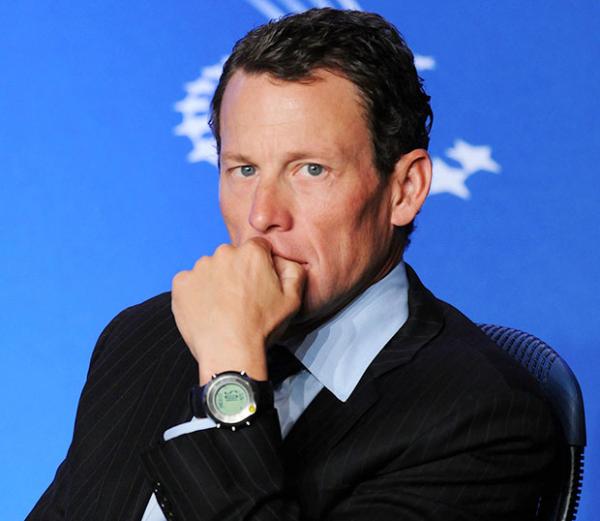
LanceArmstrong_620_011513I’ve always found it hard to understand how there are people who can look you in the eyes, never blink, and spin the biggest lie.  Of all the kinds of deceit, lying is probably its most common form.  My mind boggles at some of the big names across the years, not surprisingly, political:  Congressman Dan Rostenkowski; Washington mayor Marion Barry; and then there’s Bill Clinton (“I did not have sex with that woman”).

Lately, icons from the sports world have swollen their numbers, though like most liars, they’re often teflon coated when it comes to making the allegations stick. Think Bonds, Clemens, McGuire.  And now there’s Lance Armstrong and a confession–of a sort.

I probably don’t need to tell you that lying is also endemic to the business community.  It’s estimated that the average consumer is exposed to up to 200 lies daily via advertising.

But let’s not be self-righteous.  The truth is we all lie, so maybe our outrage is simply projection rather than seeing ourselves in the mirror.  Psychology Today (May 1, 1997) cites the 1996 study of lying  by University of Virginia psychologist Bella DePaulo, who found “most people lie once or twice a day.”

Lying sometimes comes with the territory, say law, politics, car sales.

Sometimes it may even seem the moral thing to do. Should a doctor tell every terminal patient his/her prognosis?

Sometimes lying may seem the only way to avoid being punished for telling the truth.  Should you tell your boss you were late because you got stuck in traffic rather than the truth you overslept?

Sometimes it may be wiser to tell your wife you like her new dress or hair-do than blurt out, “What were you thinking?

From another vantage point, lying can often be viewed as an ego prop for those with low self-esteem to boost themselves in the eyes of their beholders. The bigger the fish story, the better the payoff in admiration.

Lying is generally motivated by a desire to achieve a goal or to avoid responsibility for a behavior, e.g., overspending, drug addiction, etc.. There is, however, the  compulsive liar who does so inversely related to any goal.  Such behavior hints at a pyschiatric disorder, requiring treatment.  This also gets us into the criminal mind of the sociopath who can lie and even kill without remorse.  I think of Susan Smith (1994) who drowned her children, but initially claimed a black man had done it.

While granting that lying is an intrinsic human behavior, I still draw the line between the Lance Armstrongs who lie to mask their wrongdoing such as wholesale cheating or abuse of power and everyday Johns and Janes who lie to cover their embarrassment, or to prevent friction, or to opt for kindness.

What really arouses my disgust is when these self-serving schemers repeat their lies endlessly.  We had a decade of this in Armstrong’s case.

Ironically, we often reward our consummate liars. Though they didn’t make it into baseball’s Hall of Fame this year, Bonds and Clemens were candidates and drew over a third of the votes.  We also have two recently elected senators, one of whom falsely claimed service in Vietnam repeatedly; the other, to claims of Native American ancestry, presumably to take advantage of affirmative action. In reality, those who vote for such people share the same bottomline rationale of the end justifies the means.

The worst lies, the ones that grieve us and erode our trust, occur when we’re deceived by those we’ve invested our emotions in most, our family and friends. The medieval poet Dante assigned such people to hell’s deepest circle in The Inferno to keep company with the likes of Judas.

Liars are hard to detect because they ape sincerity, empowering their ability to manipulate the rest of us who want deeply to believe we’re being told the truth. This is why polygraphs aren’t always accurate, as they can’t readily filter out the feigner of sincerity.

Some have written in depth on the refined art of lying and strategies for its detection, the best of these being Paul Ekman’s classic 2009 book, Telling Lies:  Clues to Deceit in the Marketplace, Politics, and Marriage.  You’ll find his take on body language fascinating, although I’m dubious about this since body language can also be feigned.   Nonetheless, as an expert on emotions, he brings the closest thing to science on the subject, though he confesses the frequent difficulty, even then, of spotting the skilled liar.  Our best defense, in my own view, borrows from Reagan’s maxim:  “Trust and verify.”

We do know we resent people like Lance Armstrong, perhaps because he and others remind us of our own vulnerability to manipulation and the hurt we’ve experienced when our trust is violated

Procrastination: taking the thief captive

Do you procrastinate a lot? Do you live in the moment, caving in to impulses? I know I do, even though people think I’m productive. If I do accomplish anything, it’s generally out of remorse for having wasted yet another day getting very little done. Next thing I know, the days become weeks; weeks, months; then years. Getting something done at last takes on the note of self-flagellation. I must be punished.

It shouldn’t be this way for me or you. I honestly don’t believe it’s in our genes, which should come as good news, since it means we can do something about it.

The why of it:

Its formula is very simple. We don’t find hard work pleasurable, especially when it prevents us from engaging in socializing with friends, indulging in TV, web-surfing, or the social networks. Besides, we work all day. When we get home, other duties await us. Hey, give me a break!

Now this isn’t all bad. If we practice a structured procrastination that allows us to reward ourselves along the way, we actually might feel up to doing the laborious, but meaningful. The problem ensues when diversion turns into all play and no work. Johnny doesn’t finish his broccoli by first eating dessert.

Coping strategies

Say no

This is very hard. Behaviorists, in my mind the most insightful in the psychological sciences, have empirically demonstrated our relationship with other animals in being conditioned by stimuli-response mechanism. Behavior gets reinforced by the pleasurable and discouraged, even extinguished, by the unpleasurable.

Procrastination is a matter of being unable to control our urges. We confuse our desires with our needs. Fortunately, we can do exercises that strengthen our will power and, in the long run, foster our happiness. Try saying no to that extra portion or that invite out. Work on saying no to that impulse urge to buy those Bose noise cancelling headphones.

You can help yourself say no to interruptions by setting up time-space parameters. Set up a scheduled time slot, preferably in the early morning while your energy level is still high and before you do anything else. Work in a specific setting, conducive to focus, i.e., away from family, friends, loud noise, etc.

Say no to interruptions of any kind apart from emergencies. This is your time. Your space. Your closet from the world. Be ruthless.

Related to achieving impulse control, or delay of gratification, is improving your ability to focus. It’s why I’m high on yoga, meditation, or games of skill such as chess, sudoku, or scrabble. Besides, they stretch our brains as well. (See my previous post.)

The great pioneer in self-control studies was Walter Mischel of Columbia University and, later, Stanford. Ultimately he came up with the marshmallow test in which school children were offered a choice between an immediate treat or two treats if they could just wait a while. Those able to delay gratification seldom cheated, were more intelligent, more socially responsible, and more ambitious and likely to succeed. Being able to say no says something about you. It isn’t innate. It’s acquired. (For a fascinating look at Mischel’s work, see David Akst, We Have Met he enemy: Self Control in an age of Excess, Ch.8 (2011).

Set up daily tasks

I recommend shooting for one task per session, or daily. Take writing, for example. For longer pieces, I like to go for quantity, say five pages or a chapter. If learning a language, a minimum of 30 minutes or say 15 minutes for review, 15 minutes for new material, 15 minutes for listening practice. If it’s a household or outdoors project, spread it out, maybe into several days with specific goals established for each day. The idea is to take things in steps. Rome wasn’t built in a day, as the aphorism has it. I’ve always liked the Chinese way of putting it even better: “The longest journey begins with the first step.”

Be clutter free

You probably won’t see this mentioned very often when it comes to overcoming procrastination, but high on my list is a conducive work space. I just know I’m more motivated if I have a clean desk, organized shelves, good lighting, a comfortable chair. If nothing else, a clean space gives me a sense I’m in control. Hey, I can actually find things, whether in the office or shed. Your space should make you glad to be there.

Reward yourself

Try to make it fun. Take a break, maybe every 30 or 60 minutes. Pour another cup of coffee, or get into those freshly baked cookies. Don’t linger. 10 minutes and you should be back at it. Reward yourself for every step accomplished, not just at the end result. And when you do achieve the end result, hey, go for the Bose headphones!

Create time

How often have you said to yourself, fine and good, but I just don’t have the time? That’s nonsense. It’s been estimated that a commuter on a train or subway, just reading 15 minutes a day, could read several hundred books over a three year period or through a set of encyclopedias. I average a book nearly every 10 days simply by reading while waiting for a TV program or just to relax in bed before falling asleep. At the doctor’s office, I always have a book or smart phone along for e-books. You get the idea!

In college, I was an English major, specializing in Victorian literature. In the flow of things, I came across Anthony Trollope, one of the era’s most talented and prolific novelists. Trollope got some of his contemporaries mad. He was a postal inspector riding frequently on trains. He’d write for 20 minutes or so, then put the pen and paper away. Ultimately he wrote 47 novels, many of them still esteemed, and dozens of short stories.

Settle for imperfection

Chances are you won’t get it right the first time. Be easy on yourself. It isn’t where you begin, but how you end up.

Vary your routine

Doing things the same way day after day leads to staleness and diminished interest. Try shaking up your routine by substituting new tasks, new approaches, different rewards, etc.

Start right now

Resolutions are only as good as their implementation. Ben Franklin in his inimical wisdom, put it best: “You may delay, but time wiil not, and lost time is never found again.”

Brain-tickling: n- back tasking

I’ve just returned from North Carolina, visiting my wife’s father in a nursing home. He turns 92 this Christmas. Right now, he’s recovering from a series of falls, the last one resulting in a broken ankle and hence nursing facility. Daddy is lucky in some respects, for the facility strikes me as well run, with sensitive staff (blessed with a sense of humor), decent meals even if institutional, and clean premises.

Yet in all of this, I couldn’t help taking in the white-haired residents, all of them in wheelchairs. Some seemed fixed, no movement throughout the day, heads bent, silent. One dear lady, presumably a stroke victim, courageous, tried to greet strangers, but she might well have spoken another language. In place of words, cheerily pitched sounds, but murmurings for all of that. In nearly a day at the place, I saw few visitors. If “loneliness is and always has been the central and inevitable experience of every person,” as writer Thomas Wolfe held, then its apex must be old age.

And yet there are things we can do to ease our journey into our senior years. For some time, I’ve been exercising daily, and rigorously, on our elliptical machine. Now I’ve added strength exercises three times a week, using weights to enhance muscle growth. After recently taking a bone scan test, I was delighted to learn I hadn’t lost any height, an occurrence as high as 80% in seniors.

I keep up with testing in general, whether annual blood checks or colonoscopies every three years, given my family’s cancer history. I get a flu shot every fall.

I haven’t touched meat in 15-years. I learned just the other day that only 15% of vegetarians suffer heart attacks. That’s good enough for me.

So much of preserving good health lies in adopting a preventative regimen, as Medicare and health insurers now increasingly recognize and encourage.

But there’s an aspect of maintaining good health that needs more attention. Consider that half of those past 85 suffer dementia. Now that’s huge! Think of the cost and the suffering, the diminishment in human dignity. We need to exercise our minds as well as our bodies.

I subscribe to Massachusetts General Hospital’s Mind, Mood & Memory. In its recent issue, the newsletter notes the success of those who exercise their brains, hence slowing down Alzheimer’s, or even preventing it. Cross word puzzles, Sudoku games, learning a language, etc., all help–and a lot. This hits my palette, for I’ve generally favored games of mental skill like chess over games of chance.

New research indicates that the key to warding off dementia lies in boosting working memory. But how best to do this?

Turns out there’s a brain exercise called n-back that not only stimulates working memory (the kind used in reasoning and solving problems), but increases IQ. Hey, it actually makes you smarter!

Well, this got me going on my own research. I even bought the iPad application N-Back Suite. It’s as gorgeous as it’s friendly to users, allowing for stretching the mind through sensory stimuli (letters, images, sounds, colors, etc.).

With n-back tasking the idea is to remember items appearing in sequences. You can adjust your speed and there are ten levels of difficulty. Most of us will be lucky to get to level 3. It’s challenging.

It’s been tried with children and young adults, too. After 30 days of exercising for 20 minutes, results showed significant gains in fluid intelligence, i.e., the ability to recognize unfamiliar patterns and solve problems. IQ scores averaged 5 point gains. These results lasted 3 months, even though the participants were no longer doing the n-tasks. MGH neuropychologist Mimi Castelo calls the results “impressive.”

If all of this interests you, here are some web sites that offer sample n-back exercises. But don’t forget the iPad application I mentioned earlier.

http://dual-inback.com/nback.html

htpp://brainworkship.sourceforge.net

Good luck!

Harvesting awareness

Use your eyes as if tomorrow you would be stricken blind. Hear the music of voices, the song of a bird, the mighty strains of an orchestra, as if you would be stricken deaf tomorrow. Touch each object you want to touch as if tomorrow your tactile sense would fail. Smell the perfume of flowers, taste with relish each morsel, as if tomorrow you could never smell and taste again.

–Helen Keller

Are you a sleep walker? I’m not talking here of those who walk about rather than lie in bed when they sleep. I mean the way many of us live our lives, asleep to what goes on around us. Not surprisingly, we lose out on life’s conversation.

As sentient creatures, we’re able to respond to stimuli in the guise of sight, sound, touch, taste, and smell. Think about it! Just take away any one of them and you get the picture. While losing your sight or hearing are surely impacting losses that severely limit, so is the loss of other sensory capacities. Imagine what it would be like being unable to relish mashed potatoes with gravy or the pleasure of your tongue indulging a chocolate ice cream cone.

My favorite poet has always been John Keats, poet extraordinaire in his sensory awareness. Reading a Keats poem is something like being locked up in a bakery. The one thing he feared was death, which he viewed as horrible in its annihilation of the senses, an end rendering us but sod. But we don’t need to die to forfeit awareness. Some of us are downright zombies in the here and now.

We live in a world now pervasively scientific and technological. They have their place in helping us live more ably and comfortably. And yet they often fail us when we live only for the quantitative or functional. We are not simply physical or material creatures. We are spirit, with the capacities to not only think, but to feel and choose. What would our world be like if we didn’t have music, or image (art/photo/film), smells of freshly cut hay, dinner on the stove, or garden roses? What if we couldn’t feel that soft velvet, the clasp of warm hand, the softness of the beloved’s cheek?

More than ever, we live in a world that can so busy us that we can become callous to what really matters. Each day simply repeats yesterday’s routine. Tomorrow promises more of the same.
Life is brief and tomorrow shouldn’t be assumed, for we live in a random universe. Our heaven lies in the Now.

Here are some tips that may help you increase your awareness and, consequently, your pleasure in life’s rich tapestry:

Keep a journal or blog

I can’t think of a better way to improve my awareness of what happens around me, or within myself for that matter, than keeping a journal or maintaining a blog: who, what, when, where, how. Writing this blog is a prime example. I’ve been writing on myriad topics for almost a year. Thinking about a topic has kept me on my toes, forced me to think about what I hear, see, or do. Good journals and blogs can be on anything, but simply centering in doings is more like keeping a diary. It’s not going to grow the senses. Select like you would at a gourmet restaurant, choose according to your palette, but choose wisely. Write not only about what matters, but why it matters.

Find space

We all need moments for ourselves. I find some of my best times are when I’m outside, working in the yard, the world very far away. My senses are kindled, and the birds, rustling leaves, and even the lowly worm, get noticed. Though I’m raking leaves, I’m alive, my mind a bubbling stream.

Meditate

I’m still working on this. Health authorities increasingly cite research, indicating a host of benefits in its alleviating stress and consequent anxiety, those salient features of modern life. Ironically, letting go or emptying ourselves leads to replenishment of awareness as we become absorbed in our breathing rhythms and are reduced to the sensory essentials. You can meditate anywhere with no equipment needed. Yoga, especially hatha yoga because of its slow pace and easy postures, affords a wonderful way to purge life’s pollutants and yield not only relaxation, but a reduced heart rate, lower blood pressure, better sleep, and improved moods.

Read

Become an omnivorous devourer of books, quality magazines and journals. Reading stimulates and prompts new conversations. But choose wisely. Some books are meant to be read; others, to be chewed; some, to be spat out. Some magazines, pulp publications devoted to stardom and gossip, are better left in the rack.

React

Reacting is fundamental to achieving improved awareness. When you read, go to movies, converse with others, see or listen to the news, ask questions, make associations, think about the validity of underlying assumptions, reign in generalizations. Be wary of too much TV. It breeds passivity, dulls the senses, makes the mind lazy, steals time for better things. Socrates wisely tells us that the unexamined life isn’t worth living. Don’t be a sponge. Be a hose.

Change your routine

Waking or driving, do you take the same route to work or school? Try a different one.

Always eating at the same restaurants? Go for adventure. At home, why not try that new recipe?

Always watching the big three: football, basketball, baseball? Why not take a peek at soccer, lacrosse, or hockey?

I think you get my meaning. Routine dulls the senses. Hey, it happens in relationships, too. Take heed!

The psychology behind Obama’s decision making

It’s Monday and a new day begins for troubled markets as party chiefs once again try to resolve the deficit impasse that threatens a financial meltdown with global implications. Nevertheless, I remain optimistic that cooler heads will prevail and a deal will be struck, though perhaps to no one’s liking. Whatever we do, it’s probable our credit rating will drop from triple to double A, resulting in higher borrowing interest for everybody.

In this post, however, my focus is on the psychological dynamics at work in our President’s seeming inability to provide firm, creative, leadership across the board. Quite frankly, he lacks leadership spunk, the resourcefulness of occasionally putting up his dukes, or more bluntly, becoming a just plain son-of-a-bitch, Harry Truman style if you will. Mind you, we’re in a war, economically speaking, with high stakes. We can’t afford taking the wrong options. As on a real battlefield, leaders must develop a strategy and prove decisive in its execution. Our president, however, a kind man, lacks the killing instinct to get the job done. It’s never a straight path for him. He’d rather waddle. In my previous post, I spoke loud and clear on the President’s tendency to put up the white flag prematurely, undermining his promises, and in the process, giving strength to the opposition, who increasingly perceive him as vulnerable.

Why is he this way? With the increasing advances in neurobiology comes a possible answer. Medical researchers can now map and measure the brain’s capacity to respond to our emotions. Frankly, some of us are wired to be hot, or emotionally sensitive; conversely, there are the cold types, or those said to have “ice in their veins.” I suspect good relief pitchers in baseball belong to this tribe. The worst of the cold types, of course, are the sociopaths, who can shoot 76 teens in a Norwegian camp and argue afterwards how it was necessary. Neurology has grown so advanced that we can even detect who the sociopaths are.

In the realm of finance, an offshoot of neurology has been the development of neuroeconomics, or the study of the cognitive processes at work behind financial decision-making. Let’s take a case scenario: Investors in Wall Street who consistently earn little tend to be markedly conservative, with little appetite for risk. A few losses and they quickly panic. Often they’ll opt for investing in bonds rather than equities, even though over a sustained period, and despite market downturns, the latter out perform bonds. This conservatism, rampant among the hot types, has given rise to what’s known as “myopic loss aversion.” As British psychologist Kevin Dutton remarks, “Emotion, it would seem, is so oriented toward risk aversion that even when the benefits outweigh the losses it henpecks our brains into erring on the side of caution” (Split Second Persuasion, 20011, p. 208).

Our president, surely one of the more cautious and feeling presidents we’ve known, unfortunately mirrors the hot-wired grouping of those undermined by an excessive capacity for empathy. He can see, or better, feel both sides. The result: consensus or compromise, whittling down previous commitment.

In the business model, you may not like it, but the ruthless prove the most successful entrepreneurs, whether Bill Gates or Steve Jobs. In his now classic studies, Harvard’s Stanley Rachman studied bomb disposal experts with 10-years or more experience, specifically those decorated and undecorated. What separates the great ones from the merely good? Rachman made a startling find: the heart rate of the undecorated remained stable, even though subject to high stress. However, here’s the thumper, the heart rate of the decorated proved unstable. It went down!

Rachman discovered something else: not only did successful risk-taking have a physiological basis, but something additional was in the mix–confidence (Stanley Rachman, “Fear and Courage: A Psychological Perspective,” Social Research 71(1) (2004),14976).

Obama is fond of Abraham Lincoln, perhaps intuitively in seeking a mentor of what he would like in himself. While we obviously aren’t able to map Lincoln’s brain via an fMRI, we can presume he had the necessary prerequisite of confidence to make the crucial, hard decisions necessary to preserving the Union, whether in opposing the expansion of slavery, declaring war, changing generals, or issuing the Emancipation Proclamation. In the previous century, three presidents again demonstrated this confidence factor, the Roosevelts, and Ronald Reagan. Regardless of your politics, they inspired a nation with their own confidence and took us from the dark places into the light.

Unfortuately, Obama, a hot type, isn’t wired this way. In truth, he’s more Carteresque than vintage Lincoln. Compassion and equity surely have a place, but not when their offspring is paralysis.