Exploring the motives behind the Boston bombings

In Kentucky, this week brought news of a prisoner at the Eastern Kentucky Correctional Complex dead of stab wounds to his neck inflicted by another inmate.  Authorities are presently still investigating the incident, but what baffles even more is learning that the perpetrator was up for parole this June, or just two months from now.  Once again, human motives entice with their mystery and form the bedrock of modern psychology.

It was my wife who brought this anomaly to my attention, and I replied that maybe it was poor impulse control, which some experts have suggested lies behind a great deal of violence and criminality.  Having worked with juvenile youth in trouble with the law, I find much to support this view.  I also know that people, any of us, have different thresholds or breaking points, for acting out unconscious motives.

This leads to the great question as to whether human beings are fundamentally rational creatures.  The great Irish writer, Jonathan Swift, apparently didn’t think so, writing Gullivers Travels to debunk such pretense.  You’ll remember that in this precursor to Planet of the Apes,  the horses are invested with rationality in contrast to the Yahoos, or human kind, swayed by their passions.  Voltaire wasn’t far behind Swift in harboring a similar view in Candide, in which humanity’s misdeeds obliterate any claim to rationality.

In modern literature, Stevenson’s Dr Jekyll and Mr Hyde, Conrad’s The Heart of Darkness, and Golding’s Lord of the Flies continue in the same vein.  You might say it’s Thomas Hobbes’ philosophical dismissal of Man put to fiction:  “The source of every crime is some defect of the understanding; or some error in reasoning; or some sudden force of the passions.”

Freud and Jung, though perhaps relegated to the back burner these days, established that there lies in all of us powerful, unconscious dynamics motivating our behavior.  We are not always who we seem to be and, thus, may not always comprehend our own motivations.

Last week began with terror in Boston instigated by two brothers supposedly in their embrace of a militant, or jihadist, Islam.  I would quarrel with this, for their motives may again lie deeper in the quagmire of the psychological.  After their violence, the younger brother returned to campus and gave a lift in his car to another student.  Neighbors have commented on their surprise that these two could commit such mayhem.  The wife and in-laws of the older brother have expressed shock.

I think we’ve all seen this script before.  People can be masters of disguise, fooling neighbors, families and friends.  Now comes word from the New York police commissioner that the brothers may have been planning on skipping down to New York to party in the aftermath.  Such callousness, of course, reflects a total lack of conscience that made their savagery possible.

My point is that they may have been in denial of their true motivation, rooted in envy and personal ineffectuality and living primarily on welfare. Now the survivor is offering the conflicts in Iraq and Afghanistan as shallow justification, not radicalization by foreign sources.  More likely, in my mind, they were out to make headlines, buoying up their low self-esteem.  Humans, however, are frequently unable to deal with dissonant truths about themselves and thus will resort to rationalization.  As Sir Walter Scott aptly put it in Marmion, “Oh, what a tangled web we weave when first we practice to deceive.”

I haven’t read him, but Dr. Mark Leary of Duke University has written richly on the subject of motivation, twelve books in all.  One of the biggest motivators, according to Leary, seems to be our need to impress our fellows.  This helps explain the lust for social status–the big house, luxurious car, making big bucks, obtaining power.  But for those who can’t find entry, low self esteem may result in a murderous spite bent on inflicting pain.  Misdeeds like those of Aurora,  Virginia Tech,  or Newtown and, now Boston, are  wrought by losers seeking to get even.  As such, they will always constitute a clear and present danger.

Come to think of it, it was the Tsarnaev uncle in Maryland who publicly called his nephews “losers. ” He got that right!

–rj

Of Emily Dickinson and Spring Blooms

Foxgloves in the Homestead garden

The opening and the Close Of Being, are alike
Or differ, if they do,
As Bloom upon a Stalk–(1089)

I’ve always liked Emily Dickinson’s poetry.  She has this pithy way of putting things in a few, well-chosen words; a prism mind that turns things over for a thorough look; a quiet defiance that goes its own way with surprisingly modern skepticism;  a willingness to break free from fettering meter; best, a probing of the human heart in its pangs of love and grief.  I admire her honest wrestlings with God and matters of eternity.  She wanted to believe, but not by forfeiting her intelligence.

I  like how nature finds its way into virtually all the nearly 1800 poems she largely wrote in her upstairs bedroom at the Homestead, looking out on the main street of Amherst.  Every sort of plant and creature seemingly populates her poetry, including not only birds, flowers, butterflies and bees, but caterpillars and even snakes.  She kept an album of pressed plants and often slipped a flower in with her many letters.  While few Amherst villagers may have known the woman in white was a consummate poet, everyone knew she kept a great garden.

A holdout in that era’s high tide of Christian belief, she adopted her garden as her daily church, a  place of intimacy with the divinity of life:

Some keep the Sabbath going to church__
I keep it staying at home
With a Bobolink for a Chorister–
And an Orchard for a Dome–

Some keep the Sabbath in surplice–
I, just wear my Wings–
And insterad of tolling the Bell, for Church,
Our little Sexton–sings.

God preaches, a noted Clergyman–
And the sermon is never long,
So instead of getting to Heaven, at last–
I’m going, all along (236)

That garden and its seedlings had disappeared by 1915, when the Homestead’s attached conservatory, her father’s gift, was also dismantled.  Fortunately, beginning with 2005, that garden has been lovingly restored, based on diligent research, to its likely layout and, along with the Homestead, is now owned by Amherst College.

I bring up the subject of gardens because gardening is something I’m fond of as well. Every spring I re-thumb my garden magazines and books, looking for new ways to retool bloom and beauty.  This year, I thought of Emily Dickinson and my several visits to the Homestead.  Since it’s rare I can get back to Amherst in my birth state of Massachusetts, why not the next best thing and find room for a Dickinson look-a-like in my backyard, a space swimming in the flowers that Emily loved like violets and arbutus, daffodils, tulips and crocuses, daisies and roses.

Flowers, “Nature’s sentinels” (912), launched meditative moods in Dickinson, who drew upon metaphysical poets like Herbert and Vaughan for nuances of the Infinite.

For her, nature’s seasonal rounds resonated life’s own temporal rhythms with its undulations of joy and sadness; the immediacy of nowness and the anguish of letting go; the fact of mortality, and yet hints of something more.  That works for me as well. –rj

Overthrowing the tyranny of custom

I have always cared a great deal about animals.  I don’t know where it comes from, but I remember as a child wanting to take in every stray dog.  In 1996, I adopted a vegetarian diet to align my lifestyle with my conscience.  I wish I had done so much earlier but, for too many years, I had simply subscribed unquestionably to a pervasive culture.

The role of culture, often reinforced by religion, makes for an interesting study, since it may well be the primary instigator of human behavior and, unfortunately, a seminal source for a myriad repertoire of injustice, malice and cruelty practiced by humanity pervasively across the centuries.  As moderns, while we’ve made progress, we’re still on a steep climb.

In India, a land bound by tradition much like other Southeast Asian nations, practices sanctioning discrimination inherent with an age old caste system fell with the birth of an independent India in 1947, inspired by Mahatma Gandhi and led by its first prime minister, Jawarharlal Nehru.  There are no more Untouchables, a formidable achievement that hints humanity can often mend its ways.

Earlier, in the United States, slavery was abolished through the courageous intervention of Abraham Lincoln, though it took a civil war, 600,000 deaths, and Lincoln’s own life.  Not long after, in 1867, Tsar Alexander III emancipated Russia’s serfs.

Not long ago, but only in 1920 under the 19th Amendment, did women achieve the right to vote in the United States.  It was as late as 1971 before women could vote in progressive Switzerland in national elections and not until 1991 that they could vote on local issues in all cantons.  At last, conservative Saudi Arabia will allow women to vote, beginning in 2015.  They’re still, however, prohibited from driving cars under penalty of imprisonment and/or flogging.  Disenfranchisement of women extends to many orthodox synagogues and Roman Catholic constituencies as well, barring leadership and voting privileges.  Catholic women cannot become priests, bishops or cardinals, the latter obviously eliminating their inclusion in selecting a pope.

In my lifetime we’ve made considerable inroads against the weight of traditional custom that forbade birth control, abortion and equal employment opportunity.  I grew-up seeing the last vestiges of segregation fall before activist resistance and court decree.  Currently, gays and lesbians are on the threshold of gaining their own civil liberties that include same sex marriage and adoption rights.  Looking back to a little more than a century ago, it seems incredulous that someone like writer Oscar Wilde would be tried in court and sentenced to a multiple year jail term, which ultimately broke the man.

I first became aware of the role of culturally sanctioned wrong doing in preparing to teach Voltaire’s satirical parody of custom in Candide, which I heartily recommend if you haven’t read it.  Slavery, militarism, the abuse of women, the hypocrisy of religion, they all receive their fair share of Voltaire’s scorn.  What really opened my eyes, however, was Voltaire’s taking on the scourge of war that continues to plague mankind, often buttressed with the sanctimonious verbiage of patriotic shibboleths and conferment of divine blessing.  As Voltaire astutely observed in one of his many letters, wars kill and maim far more than all our natural disasters.

As I’ve said, fighting to undo custom is still a steep climb, or hard sell. That’s what makes custom such an insidious threat: “But we’ve always done it this way!”  Like morning oatmeal, we imbibe the prejudices of our parents, who learned them from theirs.  Unquestioning, we adopt the status quo invested by time and institutions. Our brains dulled by habit, we believe what we’re told by our informed guardians: the government and press.  We find fact in the textbooks of our schools, oblivious to their omissions.  We like sameness.  We grow accustomed to our chains.

I give thanks to the avatars that make custom tremble by engendering new ways of thinking rooted in compassion:  the sanctity of animal as well as human life; the right to individuality; the implementing of economic equality; the elimination of political and religious oppression; the accessibility of universal health care; the end of pejorative labeling of the mentally distressed; the right to death with dignity; the healing of a wounded, dying Earth;  the elimination of the scourge of war.

They crowd into my mind:  Gandhi, Nehru, Lincoln, Goldman, Sinclair, Baldwin, Friedan, Sanger, Carson, Singer, Mandela, King, Mill, Voltaire– and so many more–emissaries of Light, their torches lifted high, showing the way to a better world.

I dream most of all of that day when it will truly “be on earth as it is in heaven,” and “they shall beat their swords into plowshares, and their spears into pruninghooks: nation shall not lift up sword against nation, neither shall they learn war any more (Isaiah 2:4 [KJV:  Cambridge ed.]).

–rj

Further Reflections on the Mediterranean Diet Findings

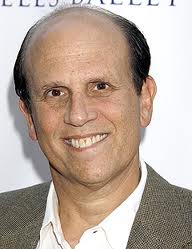
Michael Milken
Michael Milken

There’s been a lot of euphoria, I think mistaken, over the recent research  findings evaluating the Mediterranean diet.  (See my earlier post, “On the New Mediterranean study:  Proceed with Caution” [March 1, 2013.])  Not only was the alternative low fat diet administered in pedestrian fashion,  e. g., inadequate counseling, but a substantial number of those on the Mediterranean diet suffered heart attacks or strokes.  We need to remember that none of the participants had a history of either at the outset of  the experiment.

But let me be fair.  We’re all different and there’s no plug-in diagnostic that’s going to yield a universal physical metric.  This applies to diet, surely, and explains the plethora of approaches which work for some, but not others.  What we do know is that following a diet that emphasizes complex carbohydrates, low sugar, minimal saturated fats, and plenty of nutrient dense fruits and vegetables along with reduced sodium intake is beneficial.

The Mediterranean diet thus moves in the right direction, but would be even more effective were it to reduce meat and dairy product content.  We might then see not only reduction in coronary disease, but its reversal, which truly low fat diets (10% consumption of total calories) have consistently demonstrated in extended government studies.

But let me bring up the Michael Milken story.  Do you remember him?  One of Wall Street’s top investors, he was indicted by the government in 1989 for racketeering and securities fraud and served 22 months in prison.  What followed is a story that moves us with its redemption.

Worse than prison, Mike was diagnosed in 1993 with Stage IV prostate cancer at just age 46.  Biopsy indicated it had metastasized and spread to his lymph nodes; consequently, his doctor advised that his scheduled prostatectomy wouldn’t save him.

Mike responded where others might have given-up, launching vigorous research, founding the CaP Cure foundation, and making major changes in his diet by adopting a nonfat, vegetarian regimen.  For Mike, a typical diet will feature mushroom barley soup, a tofu mock egg salad sandwich replete with tofu, carrots and lettuce, and a black bean and corn salad, accompanied by a soy drink.

Mike also founded and heads the Prostate foundation, working closely with Major League Baseball and matching every donated dollar.

It’s now 20-years since that fatal diagnosis.  Mike?  He’s still out there going strong and giving hope to thousands.

You’ll find many of Mike’s favorite low fat, soy-based foods, compiled with the aid of Beth Ginsberg, a grad of the Culinary Institute of America, gathered in The Taste for Living World Cookbook.  With its subtly delicious recipes, it’s a best buy.

Thoreau’s Walden: a splendid friend

In a recent post, I mentioned how books can become special friends. Across the years, I’ve been entertained, inspired, comforted, and made wiser by many of them.  One special friend has been Henry David Thoreau’s Walden, a book I came upon early as an eager,  wide-eyed student in an American literature survey course way back when. Unfortunately,  Walden was dispensed in highlights, or teaspoon portions, which is like omitting the spices needed for a well-flavored soup.

Years later, I found my “friend” again, and this time read it all the way through in connection with filling in for a colleague on sabbatical.  I had my students read it in full as well, for Walden transcends the classroom in its call to take time out, reassess our values, and set our priorities straight.  It gets at the great Tolstoy question, “How ought we to live?”

One of the splendors of Walden is not just its message, but the succinct, aphoristic way it’s written, demonstrating Thoreau’s cultivation in his classic studies at Harvard.  I’ll share some of the passages that have made Walden so memorable for me and may encourage you to your own luxuriant read.

On temporal space:  

I went to the woods because I wished to live deliberately, to front only the essential facts of life, and see if I could not learn what it had to teach, and not when I came to die, discover that I had not lived.”

On individual responsibility:

What a  man thinks of himself, that it is which determines, or rather indicates his fate.”

On living life simply:  

Most of the luxuries, and many of the so-called comforts of life, are not only not indispensable, but positive hindrances to the elevation  of mankind. . .I am convinced that if all men were to live as simply as I did then, thieving and robbery would be unknown.  These take place only in communities where some have got more than is sufficient while others have not enough.”

On having goals:    

In the long run men hit only what they aim at. Therefore, though they should fail immediately, they had better aim at something high.”

On societal reform:  

“Morning is when I am awake and there is a dawn in me. Moral reform is the effort to throw off sleep.”

On technology:  

We do not ride on the railroad; it rides on us.”

On time:

Time is the stream I go a-fishing in.”

On solitude:  

Why should I feel lonely.  Is not our planet  in the Milky Way?”

–rj

Personal Reflections on Dave Brubeck

medium

We lost a great jazz musician this week, Dave Brubeck.  As I write, “Take Five” reverberates in my mind.  The two seem connected automatically.  Think of one, you think of the other.  He didn’t compose it  (that was Paul Desmond), but his fingerprints are all over it.

I didn’t know beans about jazz until one day, as a 19-year old air force serviceman stationed at Ellsworth AFB near Rapid City, SD, I was waiting to catch a bus back to base when I chanced upon one of those memorable chats we sometimes sereptiously run into with strangers we never meet again.  For some reason, we fell upon jazz, or rather he introduced me to it, mentioning names I’d never heard of like George Shearing and Dave Brubeck.

In coming days, I began tuning in, beginning with those muffled, soothing keyboard sounds of Shearing, whom I came to adore.  Soon I was into a growing repertoire of jazz greats–the likes of the inimical Duke, Mingus,  Satchmo, Montgomery and, of course, Dave Brubeck. I was hooked!

Across the years, my love for jazz hasn’t diminished, though I confess I’m not enamored of the popular species passed around today as “smooth jazz,” which I won’t pursue here.  I often like to think of jazz as today’s classical music.  I thought I had coined an original in that observation till one day I came across a jazz notable, name forgotten, saying the same thing.  Anyway, I appreciate the confirmation from a reputable source.

I also would contend that jazz has been our best art export, often taking on more popularity abroad in places like London and Paris than here at home where it seems relegated like poetry to backstage scenarios or college campuses, NPR and, sometimes, PBS.  If you’re looking for some great live renditions, you can still find them of course in New York, Chicago, and San Francisco.

Local gigs, alas, seem background to dinner conversation in most clubs these days, with dissonance smothering even the most sultry rhythms with one improvement:  in the old days when public smoking was in, you’d be lucky even to make out the combo in the densely floating haze.

The thing I like most about jazz and that binds me to it fiercely is its heart-and-soul improvisation.  If it isn’t there, hey, it ain’t jazz.  Jazz is the music of freedom, doing it your own way, always in  process, an ever happening.  Jazz makes me feel free, speaks to my uniqueness and yours, captivates with its reverberations of old themes in new ways.

Brubeck was the master improviser, fiercely independent, even defiant.  Ahead of his time, he ardently opposed segregation and refused to perform where it was practiced.

In music, he defined the octet, quartet and trio.  At his most innovative, he departed from the traditional 4/4 jazz beat, composing or playing at 5/4 (e.g., “Take Five”).  It didn’t stop there.

Few people know he barely survived the Battle of the Bulge, which saw his unit trapped behind enemy lines.

Or that he loved classical music deeply, especially Bach and Beethoven.  Like many of his cohorts, his roots lay in classical music and continues in contemporaries like Herbie Hancock and Alicia Keyes.  He aspired to writing serious pieces of his own, composing music for ballets, operas, and even a mass oratorio.  (He became a Catholic in 1980.)

Or that his Time Out album (1959) was the first jazz album to exceed a million sales.

Back in the summer of 1986 while a stipend summer student at Yale, I came across Dave Brubeck within touching reach when he performed on the New Haven Green. And of course it included the mesmerizing “Take Five.” I regret I was then too shy to shake his hand.

Brubeck, a deeply religious man, once described heaven as where his friends Satchmo, the Duke, and Basie were jamming all day, everyday, forever.  They’ve a new member now. and they’re jamming like crazy!

Thank you, Dave, for the music.  Thank you for the man you were.

rj

Jane Holtz Kay: a Voice in the Wilderness

The sun rises and sets each day, and every morning we wake anew to life’s daily rhythms. Busy with ourselves, we often miss what happens beyond our sphere, confirming Auden’s poignant observation concerning the personal nature of human suffering in his poem, “Musée des Beaux Arts”.

Take the death of Jane Holtz Kay, for example, from complications of Alzheimer’s Disease on November 5. Apart from a NYT piece (November 20, 2012) calling her “a prophet of global warming,” her death has been largely missed by media. It’s probable most of us have never heard of her. That’s been true of me.

Out of curiosity, I researched Wikipedia and came up with nothing. A google search reported her death and provided a link to a Guest Book, presently with eleven entries, written by those who knew her personally.  I checked the archives of  The Nation magazine as well, since I had learned she was its architecture critic for 30-years.  No mention of her death.

Perhaps what really matters in the context of our mortality is not who we were, but what we did.  We touched lives, bringing healing, insight, and acceptance. We left behind an ongoing legacy of wisdom and wise counsel, making the world better.

In 1997, Kay wrote a landmark book on automobiles: Asphalt Nation: How the automobile Took Over America and How We Can Take It Back.  A classic, it demonstrates not only the cost to our environment (carbon dioxide emissions speeding up global warming), but the destructive social aspect of cars themselves: the loss of historical sites, decline in public transit, suburban sprawl and, not least, the automobile’s weakening of social ties. Interestingly, she points out the Amish repudiation of cars is not because somehow the combustion engine is inherently evil, but because it dilutes proximity and, hence, community.

She had written three other books on monitoring our natural resources and managing our urban space, but Asphalt Nation, timely and passionate, may be her most memorable. She left unfinished a follow-up called Last Chance Landscape, dealing with the fallout of global warming in our immediate future.

I think she’d be pleased that coal, at least, seems on the decline in the U. S. But then there are those  troubling developments in China and India, where auto manufacturing is increasingly viewed as a linchpin to economic prosperity.  According to the World Resources Institute, 1200 coal powered plants are at least in the planning stage globally, with three-quarters of them slated for China and India (rpt. in Time, November 21, 2012). Since coal is the single, most contributing factor in accelerating global warming, we may just all be doomed if these coal plants come on-line.

Such environmental callousness chagrined Kay enormously, and sometimes she lamented that she felt like a voice in the wilderness with nobody listening. That’s what makes global warming so insidious: it seems distant, vague, not immediate, despite the increasingly savage storms, drought, flooding and record temperatures. It didn’t even emerge as an issue in the four recent election debates. It’s also an inconvenient issue when governments can’t manage their budgets

Though the earth still spins and life seems to go on, the truth is each day is lessened in its quality by our crimes against Nature’s delicate fabric.  While the world may little note Jane Holtz Kay, we ignore her legacy at our own peril.

rj

Wake-up call for Pakistan?

“I had a terrible dream yesterday with military helicopters and the Taliban. I have had such dreams since the launch of the military operation in Swat. I was afraid [of] going to school because the Taliban had issued an edict banning all girls from attending schools. Only 11 students attended the class out of 27. The number decreased because of Taliban’s edict. On my way from school to home I heard a man saying ‘I will kill you’. I hastened my pace… to my utter relief he was talking on his mobile and must have been threatening someone else over the phone.” (Malawa Yousufzai’s blog, 3 October 2009)

Finally, it seems volatile Pakistan is united by a heinous Taliban act, the October 9th shooting of 14-year old schoolgirl, Malala Yousufzai, along with two of her school mates. Malala’s offense? Her brave, public criticisms of Taliban restrictions on girls’ having access to education. Calls for more aggressive action against Taliban insurgents in Pakistan are now widespread, embracing even conservative Muslim factions.

Up to now, little has been done against the Taliban, who have concentrated their presence in remote northwestern Pakistan, including the Swat Valley where Malala lives. As I write, Malala appears to be making a slow recovery after a bullet pierced her neck and traveled to her spine. While she’s now able to move her hands and legs, following a reduction in sedatives, her prognosis for full recovery remains uncertain.

In a horrid compromise, Islamabad in 2007 agreed to the Talban occupation. After taking-over the Valley, the Taliban forced men to wear beards, blew up schools, many of them for girls, and forbade women access to the market place.

Pakistan’s army entered the valley in 2009 following these outrages, causing Taliban leaders to flee into Afghanistan. Nevertheless, the Taliban remain a formidable presence.

Malala’s ordeal isn’t an isolated incident. It’s happened in multiples, both in Pakistan and Afghanistan. Not long ago, it made headlines when Taliban gassed a school for girls in Afghanistan. In Pakistan, they recently beat-up a girl who wanted to go to school.

It saddens me that in the recent Biden-Ryan debate Malala’s horrid fate never received mention, even when our Afghanistan policy entered into the debate and a woman reporter served as moderator. The unrepentant Taliban leadership meanwhile promises they’ll try again, should Malala survive.

Surely such silence bodes ill for women in Afghanistan when coalition forces leave Afghanistan in 2014. Unless Islamabad opts for a decisive policy change towards its insurgent presence, the duress of women seeking self-realization through the liberation education provides is likely to continue. Up to now, Pakistan has sent mixed signals, more concerned with negating Indian influence in Afghanistan via destabilization than negotiated reconciliation with its neighbor that would also ameliorate life for many of Pakistan’s own beleaguered women.

While presently Pakistan’s military and political elite beat a path to her bedside, it’s probable they’ll re-clothe themselves in silence, unless Pakistanis continue to speak out.

One final thought: What’s happened to Malala again reveals the horrid calumny of doctrinaire ideology, whether religious or political, when polemic turns into hate and spills over into intolerance.

rj

Promises to keep

In 2008, an intelligent, compassionate, and eloquent Barack Obama was swept into the Presidency, becoming the nation’s first Black president, auguring a new day and “promises to keep” (Frost) for a better America.

Unfortunately, our president made some 500 promises he hasn’t kept . Here’s a composite of the better known ones:

Create a tax credit of $500 for workers

Repeal the Bush tax cuts for higher incomes

Train and equip the Afghan armed forces

End the use of torture

Close the Guantanamo Bay Detention Center

Restrict warrantless wiretaps

Seek verifiable reductions in nuclear stockpiles

Centralize ethics and lobbying information for voters

Require more disclosure and a waiting period for earmarks

Tougher rules against revolving door for lobbyists and former officials

Secure the borders

Provide a path to citizenship for undocumented immigrants

Reform mandatory minimum sentences

Secure nuclear weapons materials in four years

Strengthen antitrust enforcement

Create new financial regulations

Sign a “universal” health care bill

Create 5 million “green” jobs

Reduce oil consumption by 35 percent by 2030

Create cap and trade system with interim goals to reduce global warming

Cut the cost of a typical family’s health insurance premium by up to $2,500 a year

Now our President wants a second term. He’ll probably get it, considering the power of incumbency, with more broken promises to follow.

The Harry Nilsson legacy

Everbody’s talkin at me
I don’t hear a word they’re saying
Only the echoes of their mind

People stopping staring
I can’t see their faces
Only the shadows of their eyes

I’m going where the sun keeps shining
Through the pouring rain
Going where the weather suits my clothes
Backing off of the North East winds sailing on summer breeze
And skipping over the ocean like a stone

I first heard Harry Nilsson sing these lyrics, composed by Fred Neil, and a staple of the great music that helped make Midnight Cowboy one of the best films of 1969 as a graduate student in Chapel Hill, seeking time-out from academic rigor.

Over the years, I neither forgot the movie with its archetypal search for the lost Eden, nor its haunting lead song, which has remained my favorite, beating out even John Lennon’s “Imagine” and Linda Ronstadt’s smash hit, “Blue Bayou.” By the way, Lennon and Nilsson were drinking buddies at one point, and the Beetles admired his song-writing. He was prolific, often writing songs for other singers and bands, including Glenn Campbell and the Monkees.

There’s something about this song, maybe the way Nilsson sings it, that puts me in a buoyant mood setting out for a new day whenever I hear it.

Ironically, his name probably draws a blank for many young people, underscoring yet again the short tenure of fame in a world that moves on.

For the older generation, how can one forget his “I guess the Lord must be in New York City,” another great song from Midnight Cowboy:

I say good-bye to all my sorrows
And by tomorrow I’ll be on my way
I guess the Lord must be in New York City

Nilsson also wrote and sang the gentle lyrics of “Remember,” which was revived as part of the sound track for the popular movie, You’ve got mail:

Remember is a place from long ago
Remember, filled with every place you know
Remember, when you’re feeling sad and down
Remember, turn around

Life is just a memory
Close your eyes and you can see
Remember, think of all that life can be
Remember

I think of “Remember” as a lullaby, great for sleepless nights.

Nilsson also wrote other memorable songs, often sung by other artists:

“Sixteen Tons”
“Me and my Arrow”
“As Time Goes By”
“Coconut”
“A Love Like Yours”

I like it best when he sings his own lyrics in that mellifluous, cadenced voice that resonates so hauntingly, for Nilsson’s music, make no mistake about it, is about you and me in our everyday humanity, expectant, but often disappointed.

It’s quite amazing that this musical genius came from a rough, Brooklyn neighborhood and a broken home. He had just a ninth grade education. His mother was an alcoholic, and he would have six step-fathers. It was rare he gave a public concert. Only one album came out under his own name.

Among his admirers were the Beatles, who deemed him the best American solo singer-writer in America. He enjoyed close relationships with John and Ringo.

I think of him as being a lot like his contemporary, the English singer-songwriter, Nick Drake. Like Nilsson, Drake refrained from public concerts, remained relatively unknown, and was largely an influence. Today he’s recognized in the UK as one of its greatest singer-songwriters in the last 50 years. He was 26 when he died of a drug overdose for depression.

On January 15, 1994, Nilsson died from a heart attack. He was just 53.