Finding centeredness and discovering peace the Tao way

yin

Whenever I fix lunch for myself, which is usually everyday other than weekends, I like to read something with it, since my spouse isn’t normally present to make lunch interesting.  The other day I found a book on the shelf I hadn’t read since it first came out in 1990, Diane Drehler’s The Tao of Peace, predicated on Lao Tsu’s monumental Tao Te Ching, deriving back to two and a half millennia ago.  Translated more than any other work except perhaps the Bible and the Koran, this brief work may just well be the wisest book ever written, though relatively brief in its 5000 words.

Rich in its gleanings of human experience, it teaches the Tao (pronounced with a d), a term difficult to translate but approximating something like Reality, or Nature, or the system of things.  I like to think of its as the Way, referring to “the way of things”.  You name what humans encounter, the Tao Te Ching deals with it, offering seekers an inner peace in an often troubled world through simple, balanced living that promotes a psychological equilibrium.

In its Chinese text, the Tao is essentially a poem replete with an ambiguity that actually enriches its capability for multiple interpretation.  Accordingly, you can find many texts that are hardly word-for-word translations, but adaptations of what seems the salient undergrowth of each verse or numbered section.  Some adaptations excel, capturing not only the essential simplicity of the original manifested through its economy, but also its rich resonance latent in its density.  The very best renderings are sheer poetry, mirroring the Tao’s intent in brilliant, often modern, metaphor.  Drehler’s readings constitute revisions, rather than translations, but are sumptuous and compelling in their summary eloquence.  Here are a sample few:

The Tao as enduring counsel:

Why did the ancients cherish the Tao?
Because through it
We may find a way of peace,
Leaving behind a world of cares,
And hold the greatest treasure under heaven (Tao 62).

The Tao as journey:

A tree that reaches past your embrace grows from
one small seed,
A structure over nine stories high begins with a handful
of earth.
A journey of a thousand miles starts with a single step ((Tao 64)

The Tao as synthesis:

All life embodies yin,
And embraces yang,
Through their union (Tao 42).

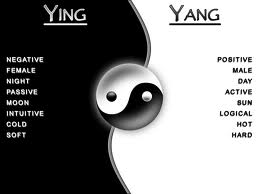
Yin and yang, by the way, are the composite opposites of natural phenomena that must blend to achieve an equilibrium that sustains rather than destroys.

Yin connotes the passive, creative entity associated with the earth, the feminine, valleys, streams and night (moon); yang, the assertive, or male element associated with mountains, the heavens, and the light (sun).. The Swiss psychiatrist Carl Jung drew heavily upon yin and yang for his concepts of anima and animus, the female and male, their synthesis necessary for humans to achieve individuation, or psychical unity,

One of my favorite Drehler renderings is Tao 76.

The Tao as flexibilty:

At birth all people are soft and yielding.
At death they are hard and stiff.
All green plants are tender and yielding.
At death they are brittle and dry.
When hard and rigid,
We consort with death.
When soft and flexible,
We affirm greater life.

But as I suggested at the outset, the Tao lends itself to varied readings encompassing the canopy of human experience.  I like, for example, Brian Browne Walker’s recent translation from the Chinese, Tao Te Ching of Lao Tsu.  It covers all the verses poetically and with a special capacity for capturing antithesis, ever at the core of Tao’s yin-yang approach to experiencing life wholly:

Tao’s warning to  Nature’s despoilers:

Those who dominate nature
And seek to possess it
Will never succeed,
For nature is a living system, so sacred
That those who use it profanely
Will surely lose it;
And to lose nature
Is to lose ourselves (Tao 29).

In closing, I’m absolutely in love with Walker’s verse tribute, here in bold, to the tenor of this great work, which I think you’ll like as well:

        I

       gratefully acknowledge

the wind and the rain,

the snow and the sun,

each and everyone,

the  trees, the water

singing beneath the

ice of frozen rivers,

the mountains

and valleys,

the cold ground

and warm grass

the light and the darkness,

the creatures, poetry,

music, family,

friends,

the gift and

mystery of my life,

the eternal

Tao.

————

May life always find you blessed with peace, centered in the wisdom of the abiding Tao!

rj

How fear erodes love

Like many of you, I follow the news, only to come away frequently dismayed. For all our pretense to rationality, people often seem governed more by passion than reason.  History strikes me as repeated scenarios of human excess, or what Freud astutely called manifestations of the Id, or pleasure principle. I like to think of this inchoate anomaly as the Child within.

There are pretty much seven salient emotions that define and undergird human behavior:  love, hate, hurt, anger, joy, sadness and, last but not least, fear.  The latter generally takes several primary forms: the fear of abandonment, of ineffectualness, of future events, and of mortality.

We’re all afraid in different ways to different degrees, but often don’t realize it, since it’s deeply imbedded within the Unconscious, tracing back to the loss of our hammocked security within our mother’s womb.  We carry no memory of those halcyon days of dependency, but the psyche remembers its glory and the anguish of its loss; so much so that we spend a good deal of our lives seeking commensurate bliss.

I’ve always relished the Edenic garden myth of Genesis with its several resonances of Man’s true estate.  In that story we learn that God made a woman to be a companion for the man he had made, for it wasn’t good for him to dwell alone.  In essence, we’re social creatures and need others to complete ourselves. But I wonder if there’s more going on here, say the underlying, primordial fear in whoever wrote this story of loneliness. Was the writer reflecting his own wrestlings with abandonment?

Such fear may lie behind the quest of so many for validation, whether through achievement, wealth, or power.  We want badly  to be esteemed. We want to draw the crowd.

This fear of abandonment doubtless explains a good deal of romantic love–a quest to find the parental surrogate with us “till death do us part.” Unfortunately, it may also fuel the often failure of this kind of love, since ultimately our happiness derives from within.  Sadly, it perpetuates relationships that frequently denigrate Self.  For a few, death is even preferable to rejection or desertion.

Our world is filled with children who never experienced kinship with an ideal mother in the first place, intensifying their adult quest and making them doubly vulnerable to masquerades of affection.  It may also explain, though inexcusable, much of the misogyny that still abounds expressed in myriad ways, sometimes brutally, by men who project their mother-loss on all women.

Fear of abandonment may lead to a need to control others, as if by putting them on a leash you can prevent their straying.

It also feeds jealousy, that brooding insecurity that suspicions a consort may be enamored away by someone more attractive.

It may likewise accentuate the need for young people to seek the crowded weekend bar, for what’s more hell for a single than a Saturday night alone?

Certainly, it factors into misbehavior and criminality, the need to gain attention or be confined and thus taken care of.

In the public realm, our insecurity renders politics manipulative, with appeals to our fears rather than the public good.  Government becomes a public parent, taking care of all, increasing our dependency, minimizing our self-sufficiency.  We now face an unprecedented federal debt that may do us all in.

Finding our way past this fear is problematic, since we tend to conflate all our fears with thoughts, and thus resort to rationalizations for what we do.  Fears like those of abandonment give rise to a sordid array of  compulsions and resultant follies

But back to where I began.  Properly motivated, love’s the grandest gig in town when conducted rationally in loving another for their individuality and not as some kind of throw pillow. Similarly, finding good friends enhances our lives, not because they cushion our loneliness, but because it makes good sense to bind with those with whom you share commonalty of interest.

Ultimately, our deliverance from anxiety over abandonment comes from diminishing the dominion of feelings; it begins with identifying them and uprooting them as our motivators: What am I really seeking in this relationship? Why am I not seeing the red flags?  Why this person?  Love must be built on more than a therapy for loneliness.  Love is marvelous.  For the right reasons!

Character: Passport to Destiny

English: Virgil Reading the Aeneid to Augustus...
English: Virgil Reading the Aeneid to Augustus, Octavia, and Livia (Photo credit: Wikipedia)

I’ve read a lot of books across the years, not surprising I suppose for someone who’s invested more than forty-years in academia.  Of those many books, there are a chosen few I’d take with me into island exile.  Let me list them.  I’d add some poets, too, but not right now:

David Copperfield
Walden
The Varieties of Religious Experience
On Liberty.
Mill’s Autobiography
The Odyssey
To Have or To Be
How to Find Freedom in an Unfree World
Ulysses
The Aeneid

I fashioned this list in less than a minute, since each of the items triggers easily recalled memories of excited discovery, awe, and insight.  David Copperfield, for example, I read in eighth grade. From the very beginning I loved it, identifying with David, whose childhood, in good measure, mirrored my own as well as that of Dickens.

Walden, with its eloquence, gave sanctuary not only in wilderness, but in its verbal tranquility.

And there’s John Stuart Mill, that proverbial “saint of rationalism,” two of his books here.  On Liberty taught me to hold out against censorship for the rest of my days; how to discern between just and unjust laws; the importance of protecting minority voices in a democratic society.

His Autobiography demonstrated a first rate humanity, a life of balanced thought and feeling, a passion for social justice. There isn’t any person I’d like to imitate more.

I could go on about the remaining works, too, as each of them has constituted a grace upon my life–a favoring of wisdom and influence.  Of all of them, the one I esteem most is surely Vergil‘s The Aeneid, which I chose to teach in my literature classes for a good many years.

Now I’m not about to launch a book review here.  I simply offer that this ancient, extended poem, ostensibly a tribute to his patron, Augustus Octavian, whom some historians rank as among the wisest of rulers, ultimately deals with what the Romans regarded as pietas, or the ability to rule one’s passions.  As such it mirrors the civic code for good leaders everywhere, sadly forfeited by most.

But The Aeneid is good for you and me as well in its call for balanced living in the stasis of mind and heart, thought and emotion, logos and pathos.  To conquer yourself is to conquer a world.

When I studied in Europe on two occasions, England and France, I came upon an important word, character, something I find rarely talked about in America.  Europeans would often talk of someone’s character, encompassing integrity markers like dependability, perseverance, equanimity, fairness, empathy, all adding up to a fundamental decency. It’s what Vergil advocated. It’s what Mill is all about. It’s what I’d like, when all things are said and done, people to say of me:  “I like his character.”  I think it’s what you want too.

Our schools need to inculcate character along with academics. What helps assure success isn’t so much raw intelligence or mastery of a discipline, but the ability to govern oneself exemplified in channeling our emotions into riverbeds of altruism that foster others even as it nurtures our best selves in well-doing.

I like how Daniel Goleman summed it up in his best selling Emotional Intelligence (1995):

Much evidence testifies that people who are emotionally adept–who know and manage their own feelings well, and who read and deal effectively with other people’s feelings–are at an advantage in any domain of life, whether romance and intimate relationships or picking up the unspoken rules that govern success in organizational politics.  People with well-developed emotional skills are also more likely to be content and effective in their lives, mastering the habits of mind that foster their own productivity (p. 36).

Life doesn’t just happen.  We make it happen, for good or bad. We do it best when we learn pietas, or character, with its legacy of decency and discipline fostering empowerment and destiny..

Be well,

rj

Of Emily Dickinson and Spring Blooms

Foxgloves in the Homestead garden

The opening and the Close Of Being, are alike
Or differ, if they do,
As Bloom upon a Stalk–(1089)

I’ve always liked Emily Dickinson’s poetry.  She has this pithy way of putting things in a few, well-chosen words; a prism mind that turns things over for a thorough look; a quiet defiance that goes its own way with surprisingly modern skepticism;  a willingness to break free from fettering meter; best, a probing of the human heart in its pangs of love and grief.  I admire her honest wrestlings with God and matters of eternity.  She wanted to believe, but not by forfeiting her intelligence.

I  like how nature finds its way into virtually all the nearly 1800 poems she largely wrote in her upstairs bedroom at the Homestead, looking out on the main street of Amherst.  Every sort of plant and creature seemingly populates her poetry, including not only birds, flowers, butterflies and bees, but caterpillars and even snakes.  She kept an album of pressed plants and often slipped a flower in with her many letters.  While few Amherst villagers may have known the woman in white was a consummate poet, everyone knew she kept a great garden.

A holdout in that era’s high tide of Christian belief, she adopted her garden as her daily church, a  place of intimacy with the divinity of life:

Some keep the Sabbath going to church__
I keep it staying at home
With a Bobolink for a Chorister–
And an Orchard for a Dome–

Some keep the Sabbath in surplice–
I, just wear my Wings–
And insterad of tolling the Bell, for Church,
Our little Sexton–sings.

God preaches, a noted Clergyman–
And the sermon is never long,
So instead of getting to Heaven, at last–
I’m going, all along (236)

That garden and its seedlings had disappeared by 1915, when the Homestead’s attached conservatory, her father’s gift, was also dismantled.  Fortunately, beginning with 2005, that garden has been lovingly restored, based on diligent research, to its likely layout and, along with the Homestead, is now owned by Amherst College.

I bring up the subject of gardens because gardening is something I’m fond of as well. Every spring I re-thumb my garden magazines and books, looking for new ways to retool bloom and beauty.  This year, I thought of Emily Dickinson and my several visits to the Homestead.  Since it’s rare I can get back to Amherst in my birth state of Massachusetts, why not the next best thing and find room for a Dickinson look-a-like in my backyard, a space swimming in the flowers that Emily loved like violets and arbutus, daffodils, tulips and crocuses, daisies and roses.

Flowers, “Nature’s sentinels” (912), launched meditative moods in Dickinson, who drew upon metaphysical poets like Herbert and Vaughan for nuances of the Infinite.

For her, nature’s seasonal rounds resonated life’s own temporal rhythms with its undulations of joy and sadness; the immediacy of nowness and the anguish of letting go; the fact of mortality, and yet hints of something more.  That works for me as well. –rj

Overthrowing the tyranny of custom

I have always cared a great deal about animals.  I don’t know where it comes from, but I remember as a child wanting to take in every stray dog.  In 1996, I adopted a vegetarian diet to align my lifestyle with my conscience.  I wish I had done so much earlier but, for too many years, I had simply subscribed unquestionably to a pervasive culture.

The role of culture, often reinforced by religion, makes for an interesting study, since it may well be the primary instigator of human behavior and, unfortunately, a seminal source for a myriad repertoire of injustice, malice and cruelty practiced by humanity pervasively across the centuries.  As moderns, while we’ve made progress, we’re still on a steep climb.

In India, a land bound by tradition much like other Southeast Asian nations, practices sanctioning discrimination inherent with an age old caste system fell with the birth of an independent India in 1947, inspired by Mahatma Gandhi and led by its first prime minister, Jawarharlal Nehru.  There are no more Untouchables, a formidable achievement that hints humanity can often mend its ways.

Earlier, in the United States, slavery was abolished through the courageous intervention of Abraham Lincoln, though it took a civil war, 600,000 deaths, and Lincoln’s own life.  Not long after, in 1867, Tsar Alexander III emancipated Russia’s serfs.

Not long ago, but only in 1920 under the 19th Amendment, did women achieve the right to vote in the United States.  It was as late as 1971 before women could vote in progressive Switzerland in national elections and not until 1991 that they could vote on local issues in all cantons.  At last, conservative Saudi Arabia will allow women to vote, beginning in 2015.  They’re still, however, prohibited from driving cars under penalty of imprisonment and/or flogging.  Disenfranchisement of women extends to many orthodox synagogues and Roman Catholic constituencies as well, barring leadership and voting privileges.  Catholic women cannot become priests, bishops or cardinals, the latter obviously eliminating their inclusion in selecting a pope.

In my lifetime we’ve made considerable inroads against the weight of traditional custom that forbade birth control, abortion and equal employment opportunity.  I grew-up seeing the last vestiges of segregation fall before activist resistance and court decree.  Currently, gays and lesbians are on the threshold of gaining their own civil liberties that include same sex marriage and adoption rights.  Looking back to a little more than a century ago, it seems incredulous that someone like writer Oscar Wilde would be tried in court and sentenced to a multiple year jail term, which ultimately broke the man.

I first became aware of the role of culturally sanctioned wrong doing in preparing to teach Voltaire’s satirical parody of custom in Candide, which I heartily recommend if you haven’t read it.  Slavery, militarism, the abuse of women, the hypocrisy of religion, they all receive their fair share of Voltaire’s scorn.  What really opened my eyes, however, was Voltaire’s taking on the scourge of war that continues to plague mankind, often buttressed with the sanctimonious verbiage of patriotic shibboleths and conferment of divine blessing.  As Voltaire astutely observed in one of his many letters, wars kill and maim far more than all our natural disasters.

As I’ve said, fighting to undo custom is still a steep climb, or hard sell. That’s what makes custom such an insidious threat: “But we’ve always done it this way!”  Like morning oatmeal, we imbibe the prejudices of our parents, who learned them from theirs.  Unquestioning, we adopt the status quo invested by time and institutions. Our brains dulled by habit, we believe what we’re told by our informed guardians: the government and press.  We find fact in the textbooks of our schools, oblivious to their omissions.  We like sameness.  We grow accustomed to our chains.

I give thanks to the avatars that make custom tremble by engendering new ways of thinking rooted in compassion:  the sanctity of animal as well as human life; the right to individuality; the implementing of economic equality; the elimination of political and religious oppression; the accessibility of universal health care; the end of pejorative labeling of the mentally distressed; the right to death with dignity; the healing of a wounded, dying Earth;  the elimination of the scourge of war.

They crowd into my mind:  Gandhi, Nehru, Lincoln, Goldman, Sinclair, Baldwin, Friedan, Sanger, Carson, Singer, Mandela, King, Mill, Voltaire– and so many more–emissaries of Light, their torches lifted high, showing the way to a better world.

I dream most of all of that day when it will truly “be on earth as it is in heaven,” and “they shall beat their swords into plowshares, and their spears into pruninghooks: nation shall not lift up sword against nation, neither shall they learn war any more (Isaiah 2:4 [KJV:  Cambridge ed.]).

–rj

Finding serenity

I mentioned in a recent post how I’ve been reading Natame Soseki’s The Gate. I’m nearing the end now and just came upon the protagonist, Sosuke, ruminating that “he must find a way to attain serenity in life, given his many troubles and high anxiety.”

Serenity, I had almost forgotten this word I used to bounce around in my thoughts like a rubber ball.  I think it a beautiful word, right up there with love, compassion, empathy, and the like.

But what is it really?

I’m not a religious person, but one of the best definitions comes from the Bible which speaks of “the peace that passes understanding.”

Similarly, theologian Richard Niebuhr said it exceptionally well in a prayer he devised that later became popular and is sometimes erroneously attributed to St. Francis of Assisi.

Its beginning goes like this:

God grant me the serenity
to accept the things I cannot change,
courage to change the things I can;
and wisdom to know the difference.

Alcoholics Anonymous has liked it so much that they recite it at the opening of their Twelve Step sessions.

Danger lurks, however, when we conflate serenity with passivity.  As the news media confirm daily, we live in a world of virtually palpable wrongdoing and robust evil, sometimes beyond words.   All good people must wage the fight, since indifference or passivity surely contributes to their dominion.

Serenity comes from accepting we may not realize our most ardent desires, even those bathed in love and compassion for those who suffer.  Paradoxically,  accepting our often ineffectuality makes room for serenity’s defining characteristic, transcendence.  I like how Bishop Desmond Tutu put it at a time of failing health:

I don’t think I’ve ever felt that same kind of peace, the kind of serenity that I felt after acknowledging that maybe I was going to die of this TB.

The way of serenity isn’t any sudden showering of the gods, for it necessitates self-emptying, or the surrendering of Ego that fosters our suffering with its myriad desires and its denial of our mortality.  Paradoxically, when we do so, it promotes our healing, or as Victor Frankyl expessed it, “The more one forgets himself–by giving himself to a cause to serve or another person to love–the more he actualizes himself.”

The good news is that we can cultivate serenity by pursuing several avenues that unlock bad habits, replacing them with alternatives promoting our well-being.  Here are some that help me:

Cognitive:  Change the way you respond to things that happen to you.  Do you act or react?  Why let someone’s curt remark destroy your day?  Are there positive alternatives to the negative way you’re interpreting things?  Negative thoughts produce emotional distress.  Pluck them by the root.

Music:  Shakespeare once famously said, “Music  hath charms to soothe a savage  breast.”  Avoid the frenetic.  Indulge the soothing.  Music reduces stress levels by 61%.

Exercise:   Physical activity relieves stress, besides being good for your health, giving you less to worry about.  You may want to add restorative yoga or Tai Chi, which have proven their worth over several millennia and are endorsesd by today’s medical community.

Interests:  Find something you like to do such as gardening, hiking, volunteering.

Friends:  Cultivate relationships with positive people.  Establish a support network.

Humor:   Laughter is its own medicine.  Research indicates it can promote blood flow, boost the immune system, and promote sound sleep.

Reading:  There are many fine reads out there written by experts on reducing stress.  Reading reduces stress by 68% according to cognitive neuropsychologist, Dr. David Lewis.  Reading works because it takes us out of ourselves which, of course, fosters serenity.

Eating:  Certain foods like blueberries, almonds, whole grains, and veggies can improve your mood and reduce stress.  You might like to peruse Elizabeth Somer’s thorough study, Food and Mood.

Organizing:  For some of us, including myself, neatness affords me a sense of being on top of things, and is thus its own tranquilizer.

Sleep:  Establish a regular schedule and keep to it.  Avoid stressful activities or exercise three hours before bedtime; same for intense mental activity.

Nature:  It isn’t accidental that nature inspires a lot of poetry or that many people opt for remote vacations away from our noisy world.  Nature enhances sensory awareness, and with it, provides relief from daily stress.  It’s as close as keeping a garden, taking a walk, and cutting the grass.  You can enhance your experience by learning the names of common trees, flowers and birds.  For me, it’s become synonymous with sanctuary.

Meditation:  I like this one best for its quick returns, especially mindfulness meditation.  (See my essay in Recent Posts, “Mindfuness and the recovery….”).  Breathing and focusing can produce immediate relief and the ability to let go of negative thoughts.  Combined with yoga or Tai Chi, you’ve a double whammy against anxiety.

In all honesty, I’ve not gotten there yet, but I’m trying, remembering that the longest journey begins with the first step.  Serenity comes down to doing what I can, subtracting the difference.

Baseball fever!

The crack of the bat; the thud in the mitt; smells of peanuts and cracker jacks; mustarded hot dogs washed down with cold beers.  The fever of it!  Baseball, America’s brain child, after a long winter, true harbinger of Spring, you’re back and I’m a young boy again, with dawn’s early light, heading for alleys, looking for buddies, looking for game.

Like eating Cheerios, I fed on baseball, the daily radio broadcasts pouring out their litany in days when TV was but a rumor.  Pa, ensconced in his leather chair, two virtues in exchange for his addiction to booze, a love for the game and a love for the news, rituals of redemption taking root in his child.

Growing-up in Philly’s waterfront Fishtown, tedious streets of inert row houses and white stoops; scarcely a tree, never a park, we gave it no thought,  adopting stick ball and banging our hits off factory facades, in the same way Ruth and Gehrig began their own long journey, Boys of Summer, with every stroke, tapping our dreams of something better than asphalt heat and danger-laden streets.

Philly sported two teams then, the A’s and Phillies.  I knew the player names readily, reiterated by baseball cards we’d get with our bubblegum and trade with each other, sitting on stoops on sultry summer evenings.

I remember the Whiz Kids winning the pennant in 1950, the euphoria sweeping Philly like an exuberant wind.  They played the World Series afternoons back then.

When I was twelve, I learned how to take the El and find my way to Shibe Park to watch the A’s play and usually lose.  After the game, I’d linger around the gate for autographs and recall, as if yesterday, wide-eyed like a boy hooking his first trout, the  thrill of Dave Philley being my first and, crazy kid that I was, grabbing his arm to touch one of the gods.

Baseball had an innocence back then–an absence of big money, drugs, and player mobility.  It was everything good that we’d like to be good again.  I liked the high mounds, the pitchers around for most of the game, so different from the formula of 100 pitches in vogue today.  It’s hard to win twenty games now, and we’ll never see 30 wins again.  Back then, teams like the Yankees sometimes sported three pitchers with twenty wins by season end.

Ted Williams batted 406 in 1941.  He did it without the sacrifice fly added later, which means he batted for an even higher average, going by today’s rules.

I remember Jackie Robinson’s coming into baseball and democratizing the game.

With sadness now, there’s been a sharp decline, after the long struggle, in African-American players these days.  Thank goodness for the Caribbean ball players who keep baseball from reverting to a white man’s game.

But there are changes that have made baseball better such as the playoffs and, in my opinion, the designated hitter.

What keeps my loyalty is the nature of the skills baseball demands.  Every position features its own requisites not easily acquired.  Baseball has few prodigies ready right out of high school.  Generally you hone your skills over several  seasons, playing college or minor league ball.  You learn by doing to play the game well.

If every position has its own repertoire, no less challenging is swinging the bat, with fast balls clocking 90 mph and more, mixed with curves, sliders and off speed pitches.  There are eight players in front of you and you need to hit the ball where they aren’t, a tall order  the very best players achieve only a third of the time.

What I like better than anything else is the stardom in reach for any player in any game at any moment:  the clutch hit, the stolen base, the home run, the pitcher’s shutout, the fielding gem; the sheer democracy of it, unlike any other sport I know.

Every at bat is the old West renewed, batter against pitcher, in strategy based on probability.

I relish the end game with its relief scenario.  Can the “fireman” put out the fire and save the game?  A duel indeed.  Good relievers require ice in their veins.

Baseball, more than any other sport, comes down to numbers, or record-keeping, with the Hall of Fame a pantheon of its greatest, and a way of measuring.

Football and basketball, today’s popular action sports, may enjoy the public eye but, for me, I revel in baseball’s ritual, the mindness in it, the individuality of it; the the crack of the bat, the thud in the mitt; smells of peanuts and crackerjacks, mustarded hot dogs washed down with cold beers. The sheer Americana of it!

–rj

My passion for reading

I’m always on the look out for a good read, and it doesn’t matter whether it’s fact or fiction.  Biographies, memoirs, diaries, you name it.  But science fiction, romance, adventure, I like these, too.  And then there are the how-to books from zen to gardening, take your pick.

I probably read from 15 to 20 books yearly, not any record-setting pace, but I think a fair number.  I’ve many interests like gardening and studying Spanish, but I try never to crowd out a daily dose of a good book, investing at least an hour every day.

There are a lot of talented writers and engaging topics out there, so sometimes I find it hard to choose, since obviously you can’t read everything.  Book lists come in handy, but I tend to avoid the more popular ones like those in the New York Times or Amazon.  Sometimes I check-in with Publisher’s Weekly.  I’ll also look at the National Book Awards and Booker Prize listings online.  Occasionally, I’ll pick up a choice item on the recommendation of Fareed Zakaria, who always closes his GPS show with a super read.  And then there’s The New York Review of Books, which has never steered me wrong.

In a post I wrote just a few days ago, I mentioned I’d taken-up Mindfulness Meditation. As one of its weekly exercises, they ask you to break out of your habit modes by altering a specific routine; for example, change where you sit at the table at home.  The idea is to get you in-touch with your senses and stimulate awareness that can help you catch destructive thought patterns.  I’ve extended this habit-breaking strategy to my reading, exploring new vistas.  (By the way, novelty has a way of recharging brain cells, warding off dementia.)

It isn’t often I read a book originally written in a language other than English, the exceptions being classics such as The Divine ComedyLes Miserables, Anna Karenina and the like.  I know this is very parochial, since there are many exceptional reads not written by Anglos.  And so I opted for a different pathway a few days ago, downloading Natsume Sodeki’s The Gate (New York Review Books Classics).  Turns out, I made a wise choice.  I had never heard of Sodeki, nor ever read a Japanese novel.  Sodeki happens to be Japan’s most revered modern novelist, something I didn’t know, but now understand.  Discovering a game-changer, I want to read more works by Sodeki and others outside the groove.

I’m optimistic about the future of reading, despite the closing of many bookstores, the precarious profit margins for publishers, and the plethora of community budget woes putting the  squeeze on one of America’s unique treasures: the public library.  Last year more titles were published than ever, though not necessarily in traditional book format, since the times are a changing.  Like most everything else, books evolve with adaptation a corollary for survival.  Electronic books are here to stay and publishers who don’t render increased access to this new format are unlikely to survive.

A uniquely human endeavor, reading will endure.  A few years ago, it was widely forecast that the DVD would close movie theaters and end the big screen tradition.  Well, that hadn’t happened when last I looked and, similarly, TV never replaced the radio, witness the popularity of 24/7 radio talk shows or stations with dedicated music genres and their many listeners

But why this passion in me for reading? I read to be entertained, informed, inspired and, yes, sometimes to be chastised into seeing a new way of thinking.  But mostly, at least with regard to literary texts, I read to engage my feelings through their imaging in metaphor and articulation, often eloquently, into the truths of human experience.  It’s then I know I’m not alone, but linked with others in that existential quest for meaning and affirmation.  As such, reading grows my empathy and compels my compassion. What more could I ask?

Mindfulness and the recovery of compassion, empathy and joy

Nearly always I come upon new reads, not through lists but, unexpectedly, in the marketplace of life.  I like it this way–the surprise of it, the joy of discovery, the smack of fate rather than coincidence, like the chance finding of a new friend or bumping into wise counsel, unanticipated, in a corner; its aftermath of empowering, the mystery and the beauty of it.

It happened for me this way yesterday when I came upon Mark Williams and Danny Penman’s Mindfulness:  An Eight Week Plan for Finding Peace in a Frantic World.  Intuiting a must read, I immediately downloaded the kindle version, which also features several sound tracks for the exercises.

I’ve been suffering lately from a good deal of anxiety, largely because of health issues.  I’m not used to things being this way and my need to control makes matters worse.  The trick in life is learning how to cope with issues you can’t always resolve.  While I know the script in my head, it’s quite another thing to carry out.

I like this new way of finding yourself and the freedom it brings, not in resolving, but in coping.  Mindfulness actually isn’t new, but a bedrock of Buddhism.  What changes the scorecard for me, however, is the empirical yield of sophisticated brain-scanning methodologies affirming its effectiveness.  What’s more, it can alter brain patterns long term for the better.  Studies show it substantially reduces depression and its frequent return,  improves blood pressure, lessens chronic pain, and boosts the immune system.  In daily life, it promotes empathy, compassion and joy.

I’ve always had great respect for the potential of meditation to promote both physical and emotional wellness.  My mind, however, works like a metropolitan airport, the runways always full.  Mindfulness meditation may thus work better for me, as instead of eliminating your thoughts, you passively observe them in conjunction with focusing on breathing.  You learn that you are not your thoughts and that thoughts can come and go like black clouds in the sky.  This gives you power to catch wrong thinking or patterns before they impact, and it lends space to help you heal.

Mindfulness is all about bringing us to our senses, and by this, I mean the sensory repertoire of touch, taste, sight, smell and sound.  We take ourselves too seriously and in doing so lose direct contact with the cornucopia of life’s potential blessedness all around us when we subjugate the sensory to the taunt reins of the cerebral.

As Williams and Penman point out, we spend our lives “on automatic pilot,” creatures of habit, oblivious to the priorities that really matter.  Mindfulness takes us out of ourselves, giving us power to discern and thus choose.

I began the eight week course yesterday with the “raisin” exercise, a simple endeavor lasting several minutes that helps rekindle the sensory, noting things like weight, texture, taste, smell and tongue movement.  Once again, I rediscovered Flaubert’s maxim that  “anything looked at long enough becomes interesting.”

I hope this exercise is a harbinger of future benefits as it delivered me from my self-concern, channeling my focus on the here and now.  I thought of other raisins to be savored:  a hooting owl in dawn’s pink-fingered rays, a mountain brook bubbling its way, a child’s innocent giggle, the sweet smell of morning cinnamon toast, the spring rose’s first blush.

I thought of Helen Keller’s eloquent wisdom:

“I who am blind can give one hint to those who see: Use your eyes as if tomorrow you would be stricken blind.  Hear the music of voices, the song of a bird, the mighty strains of an orchestra, as if you would be stricken deaf tomorrow. Touch each object as if tomorrow your tactile sense would fail. Smell the perfume of flowers, taste with relish each morsel, as if tomorrow you could never smell and taste again. make the most of every sense.”

Selah!  I am at peace.

–rj

Further Reflections on the Mediterranean Diet Findings

Michael Milken
Michael Milken

There’s been a lot of euphoria, I think mistaken, over the recent research  findings evaluating the Mediterranean diet.  (See my earlier post, “On the New Mediterranean study:  Proceed with Caution” [March 1, 2013.])  Not only was the alternative low fat diet administered in pedestrian fashion,  e. g., inadequate counseling, but a substantial number of those on the Mediterranean diet suffered heart attacks or strokes.  We need to remember that none of the participants had a history of either at the outset of  the experiment.

But let me be fair.  We’re all different and there’s no plug-in diagnostic that’s going to yield a universal physical metric.  This applies to diet, surely, and explains the plethora of approaches which work for some, but not others.  What we do know is that following a diet that emphasizes complex carbohydrates, low sugar, minimal saturated fats, and plenty of nutrient dense fruits and vegetables along with reduced sodium intake is beneficial.

The Mediterranean diet thus moves in the right direction, but would be even more effective were it to reduce meat and dairy product content.  We might then see not only reduction in coronary disease, but its reversal, which truly low fat diets (10% consumption of total calories) have consistently demonstrated in extended government studies.

But let me bring up the Michael Milken story.  Do you remember him?  One of Wall Street’s top investors, he was indicted by the government in 1989 for racketeering and securities fraud and served 22 months in prison.  What followed is a story that moves us with its redemption.

Worse than prison, Mike was diagnosed in 1993 with Stage IV prostate cancer at just age 46.  Biopsy indicated it had metastasized and spread to his lymph nodes; consequently, his doctor advised that his scheduled prostatectomy wouldn’t save him.

Mike responded where others might have given-up, launching vigorous research, founding the CaP Cure foundation, and making major changes in his diet by adopting a nonfat, vegetarian regimen.  For Mike, a typical diet will feature mushroom barley soup, a tofu mock egg salad sandwich replete with tofu, carrots and lettuce, and a black bean and corn salad, accompanied by a soy drink.

Mike also founded and heads the Prostate foundation, working closely with Major League Baseball and matching every donated dollar.

It’s now 20-years since that fatal diagnosis.  Mike?  He’s still out there going strong and giving hope to thousands.

You’ll find many of Mike’s favorite low fat, soy-based foods, compiled with the aid of Beth Ginsberg, a grad of the Culinary Institute of America, gathered in The Taste for Living World Cookbook.  With its subtly delicious recipes, it’s a best buy.