It’s time to write again about why I bother keeping a blog.
I can’t speak for others, only for myself.
What got me started this early morning was looking at a recent blog I subscribe to, and that’s very few. The writer says she’s moved from WordPress to her own domain, WordPress no longer giving her the expansive options she needs.
She doesn’t, however, specify, those needs.
Anyway, I’m glad for her success.
But wait a minute!
What do we mean by success where blogging’s concerned?
Is it all about numbers?
How many followers or comments or likes or hits?
If that’s so, then I’ve failed dramatically and the gig is up. Hey, best be movin’ on.
But I don’t play it this way, or like a lot of people who build-up masses of friends in Facebook, for example. as its own end. If you don’t hear from them again, even on your birthday, what the hell!
Yeah, I like to know people are out there, reading me for sure.
But for me, blogging has simply replaced my manuscript journal, Echoes, into which I poured myself for thirty years.
Which is another way of saying I blog foremost for myself, my posts serving to filter issues entangling my thoughts.
Blogging gives them release, enables me to scrutinize and deal with them, and just maybe, and best, provides catharsis.
I don’t blog for validation.
I blog because I’m excited about life, though often it puzzles me, especially suffering, violence, and ill-will. I want to sort it out, find equilibrium through understanding and, with it, empathy and compassion.
I blog, too, because I’ve always had this love affair with the beauty and power of words, the cadence of sentences harmoniously patterned, the sweep of metaphor that makes abstraction palpable.
If you want to join me in the conversation, all the better drinking coffee with you, bridging time and space.
There are millions upon millions of us writing blogs. We just may be rivaling the stars for sheer plentitude.
And so I’m grateful for you who do manage to find and read me.
And especially for the more than two hundred of you who follow me.
But again, I blog not to advance a particular ideology, or to serve pecuniary interests, or to assure myself I’m likable, even lovable, or to shore up verbal sandbags against tidal waves of loneliness.
I blog because I like keeping company with myself, for only then, liking myself, can I connect meaningfully with you in this one journey each of us makes beneath the vast canopy of the silent stars.
I saw a recent piece in the Huffington Post, called “7 Habits of Natural Leaders,” and found it riveting. You don’t necessarily have to be in a leadership position, however, to benefit from making these attributes staples of your everyday life.
I’ll list them and give my own take on each of the attributes:
1. They dare to fail: I was a prof for nearly forty years and found that most students opted to play it safe–take the easier courses, avoid the good, but tough professors who gave A’s only for singular achievement. I have often thought of Lincoln, who mostly failed in his early political efforts. But he never gave up, and the rest is history.
One of the problems with not assuming risk is that it can pursue us all our lives and we simply run away from all life’s tough spots and sometimes ourselves. If you think about it, we owe our country’s greatness to its founding fathers, willing to risk their lives to confront tyranny.
I have always liked how the poet Robert Browning famously put it: “A man’s reach should exceed his grasp, or what’s a heaven for?”
2. They follow their purpose. In short, they stay the course. Over my lifetime, I’ve found the real nemesis of success is not that we quit, but that we quit so soon. Consequently we find ourselves saying, “what if?, when with perseverance, we might have achieved our goals.
Strong people can be difficult to get along with, since passion often governs what they do. At the same time, I find them attractive people, the kind you want to be friends with. They have a vision, know what they want, follow their bliss, and are exciting to be around.
3. They give. I think we shouldn’t just think of giving in the way of money, but of ourselves. Currently, there’s a seeming panic going on about ebola. Several caretakers, or medical staff, have recently returned to the States, victims of the disease. What’s extraordinary to me is that they went to West Africa in the first place to confront this ugly disease. One of them has actually labored in Liberia for sixteen years, trying to improve its meager medical resources.
When it comes to the monetary aspect, while the vast lot of us aren’t rich, we can still give something. As Peter Singer, a philosopher who specializes in ethics, has said–if all of us in western counties just set aside five percent of our incomes for special needs, we’d eradicate poverty. I would add, maybe a good many of our diseases as well.
I do know that what we give of ourselves and our assets is a sure indicator of our capacity to love.
4. They give themselves a break: It’s important to sometimes treat yourself. Right now, I try to keep up my health as I grow older, working out on our elliptical machine and even lifting weights.
But I also schedule timeouts, one or two days when I don’t work out, like Wednesdays and Saturdays. It makes my exercise far more palatable, knowing tomorrow I can simply relax, and without the guilt. I sometimes suspect that dieters would be more successful if they’d cheat one day a week.
We Americans are hard-working and studies show we don’t take much time off.
That’s a pity!
5. They really listen: Now here’s a trait I’m trying hard to achieve. After all, when we interrupt or ignore what someone’s saying to us, it’s a form of self-absorption, maybe even narcissism. Certainly, it’s selfish
It’s also demeaning to others, a way of saying you don’t matter or what you’ve come to me with is trivial. I don’t want to be this way. I want to value people and for them to know that. I want them to feel when they talk to me that they’re the only one in the room. In short, that they matter, for they do.
6. They seek out new experiences and ways of thinking: Hey, I’m all over this one and hope you are, too. I like seeing new places, meeting people, chance conversations, reading serious books and magazines.
Guess that’s why I love being around college campuses, especially their real beauty–young people excited about life, filled with dreams, willing to challenge cultural norms turned into unthinking rituals.
Always, I yearn for stimulation, of being challenged to new ways of seeing things. TV doesn’t do that for me. I’m into romping blogs, trying new things, meeting people whose ideas may often challenge my own. I aim to grow, not stagnate, to wake tomorrow wiser than I am today.
7. They empathize with others: I like this a lot! Can’t come by a better trait than this, putting yourself in another’s shoes. This happened for me in a unique way many years ago when I took a chance and accepted an invitation form a college friend to visit his country, India.
I saw not only the Taj Mahal, but more importantly, how much the greater portion of humanity suffers in the shackles of ubiquitous poverty, disease and early demise.
I have learned since, and am still learning, the way of compassion, for people, animals and, yes, a wounded earth. I wish I were wealthy, not as its own end, but that I might empty my wallet for others.
If there really does exist what they call an “emotional quotient,” or EQ, then surely compassion is its ultimate marker.
All man’s troubles arise from the fact That we do not know what we are And do not agree on what we want to be –Vercours (You Shall Know Them)
Like all of you, I’ve been reading and viewing with horror the crimes of IS (Islamic State). Recently, for example, there was the video of captured Iraqi soldiers being herded in crouched chain formation, later ordered to get down in a shallow ditch, hands tied behind their backs, then shot. Human Rights Watch estimates between 560 and 770 were executed, though IS boasts it executed nearly 1700 soldiers after overrunning Camp Speicher near the city of Tikrit in Northern Iraq.
And then there have been the two recent IS videos showing the beheadings of American journalists, James Foley and Steven Sotloff. In the latter, the video ends with displaying Sotloff’s severed head lying beside his body.
IS has also been killing minority Christians and Yadzidis who refuse to convert along with Shiite Muslims, whom they regard as heretics. In one instance, 500 Yadzidis were buried alive.
IS atrocities are not isolated phenomena in the long list of “crimes against humanity” (International Criminal Court) in recent decades. Consider, for example, Rwanda in 1994 with the Hutu majority’s massacre of 800,000 Tutsis in just 100 days. Or Cambodia with its 2,500,000 dead at the hands of the communist Khmer Rouge regime in the late 70s.
But what makes for the forfeiture of humanity in atrocities such as those I’ve noted here? How is it that we can lose every sense of identity with our fellows? Is aggression, singular or collective, something innate, a legacy of evolutionary genetics compelling us to eliminate any perceived threat? Are we any better than warrior ants, the most warlike of any known insect group, who instinctively pursue extinction or enslavement of rival insect communities, are territorial, have a caste system, and are often suicidal in their assaults?
Here I turn to sociobiology, with its emphasis on biology as the catalyst in shaping social behavior among all organisms, including humans.
To begin with, things are not all bad about ourselves, genetically speaking. Yes, we seem to have genes that dispose us towards altruism, and we see such behavior demonstrated repeatedly in daily life right down to the motorist who allows you into his lane. At its most acute level, we see it played out on the battlefield when a soldier falls on a hand grenade, for example, to save the lives of his fellows.
The problem with genetic altruism is that self sacrifice would seem to run contrary to the notion of natural determinism, or the survival of the fittest, ensuring the likelihood of offspring, or evolution’s ultimate purpose. Surely, culture also intervenes here and refines genetic disposition as well.
Overall, however, altruism among social organisms is primarily carried out through “kin selection,” including ourselves. The net result is that the group, or family, survives. In short, even altruism can have its selfish component. Altruism, then, isn’t necessarily the angelic side of ourselves. But at least it’s a better option.
As for there being genes that prescribe aggression, as with altruism, none are known to exist . Behaviorally, however, genes confer a capability to develop a repertoire of aggressive responses, given stressed environments. Otherwise, aggression isn’t likely. For instance. the social history of the Hopi Indians, an agricultural tribe, exhibits minimal aggressive behavior, In fact, hopi means “peaceful.” On the other hand, the Apaches were often given to battle to protect their land and buffalo herds from intruders.
Similarly, I surmise that genetic disposition, or capability, might help explain the high incidence of crime among some marginalized, or disadvantaged, groups in a given society.
While culture can modify genetic attenuation, it cannot eliminate it. Evolution ultimately imposes limits on malleability of behavior.
The diabolic, however, breaks loose when a fanatical few entice the many to exact violence in contexts of societal duress such as in Nazi Germany and Stalinist Russia following upon the end of the Great War.
In the hands of ideologues, often in political or religious guise, all bets are off when it comes to humane resolution of social tensions, given–not genes as such–but their genetic disposition for either peace or war. Set loose, humans are capable of every vile act conceivable.
And so with IS and the danger it poses for all of us.
I just finished a two mile walk in a quiet, woody area close to where I live. I especially enjoy it because I keep company with a wide landscape of greenery, manicured gardens and, quite nice, I may see only one or two cars the whole way. Walking in the early morning makes me mindful of the gift of life and its cornucopia of sensory delights.
Even when you walk, I think you’ll find your mind keeps trolling, often in miscellanea you might miss in the course of your day heavy with things to do, choices to make and, not infrequently, problems to resolve. I haven’t any doubt about it–walking can unleash a spirit of meditation, leading to a stilling of troubled waters. Still more, it can endow us with a wisdom to discern between the wheat and the chaff, providing an equilibrium taking us through the hard places.
Of all things, as I was walking, appreciating the pristine beginnings of a new day with its abundant promise, my thoughts turned to a short poem that Tennyson wrote, called “Tears, Idle Tears,” a poem quite opposite in its mood to the joy I felt while walking this morning:
Tears, idle tears, I know not what they mean, Tears from the depth of some divine despair Rise in the heart, and gather to the eyes, In looking on the happy autumn-fields, And thinking of the days that are no more.
Fresh as the first beam glittering on a sail, That brings our friends up from the underworld, Sad as the last which reddens over one That sinks with all we love below the verge; So sad, so fresh, the days that are no more.
Ah, sad and strange as in dark summer dawns The earliest pipe of half-awakened birds To dying ears, when unto dying eyes The casement slowly grows a glimmering square So sad, so strange, the days that are no more.
Dear as remembered kisses after death, And sweet as those by hopeless fancy feigned On lips that are for others; deep as love, Deep as first love, and wild with all regret; O Death in Life, the days that are no more!
It isn’t my intent to give a full analysis of this poem, but simply to make several observations about the mindset that informs the poem and a lesson to be learned from it.
If the first stanza is thematic in its nostalgia, the next two stanzas clothe the poet’s lament in a series of similes that make for exquisite eloquence and a lingering pathos of melancholy.
The speaker’s unsolicited tears are as fresh as a ship’s sail that arises above the horizon, glittering in the first sunbeam of early dawn, tears elicited by recall of deceased friends now in the Underworld, who have suddenly sailed into his awareness. But they also vanish again into darkness similar to when the sun drops below the horizon, for memory can never render mortals corporeal again, given the finality of death. Tennyson, the great classicist, is drawing here, of course, upon legendary lore of the Underworld and the voyage of the dead.
But I like the third stanza best with its analogy to the last, sad day of a dying man, who in the early summer dawn awakes to hear the “earliest pipes of half-awakened birds” and sees for the final time the growing light upon the window casement. Ending with its consort of alienation from the vibrant world of the present–“so sad and strange”– is the import here, reinforcing the poem’s trenchant mood of nostalgia for happy days revoked by time and mortality.
All of this makes way for the final stanza where still more similes appear, the past being like remembering those we once kissed, now dead; or imagining kissing those we love, but who don’t reciprocate, underscoring yet again the irrevocability of the past and the frustration of human wish.
Tennyson had said his visit to Tintern Abbey near Wales had inspired this poem, as it had the great Romanticist poet, Wordsworth, who recalled the place in his famous “Tintern Abbey” poem. Wordsworth’s poem, however, recalls the past with joy, giving hope for future years.
While I appreciate Tennyson’s poem for its sincerity of lament and chiseled eloquence, I think we do better in light of the ephemerality of human experience to seize the day, or practice the wisdom of my favorite quotation from Helen Keller that I carried in my wallet for many years:
Use your eyes as if tomorrow you would be stricken blind. Hear the music of voices, the song of a bird, the mighty strains of an orchestra, as if you would be stricken deaf tomorrow. Touch each object as if tomorrow your tactile sense would fail. Smell the perfume of flowers, taste with relish each morsel, as if tomorrow you could never smell and taste again.
Walking this morning, I celebrated the vibrancy of the present. Better, I took possession of it.
We live busy lives and often it seems difficult to take time out, catch our breath, and maybe just reassess whether what we’re chasing is worth our time and worry.
In a frenetic world, we probably all have a favorite way of finding sanctuary–perhaps taking time off, or traveling to some idyllic spot, or just off to a meal out or a movie with sweetheart or family, or maybe indulging in a hobby or interest. Me, I like gardening.
I know one thing–we all need time-out, moments when we can drench ourselves in silence and apartness, returning renewed and, just maybe, wiser–the gift of self-reflection when we glimpse where we’ve been, and are, and where we need to go.
Cultivating quietness long term means we have to work at it, just like other good things in life. They say practice makes perfect. I don’t know about that, but I do know it makes things better.
Some find meditation important in gaining equilibrium, and I can endorse that, particularly the Zen kind with its focus on mindfulness that affords me access into myself without my need to control.
Lately, I’ve added poetry to ways I can augment my need to exit life’s speedway. I bathe in its wisdom, marvel at its concision, the depths of psyche it plums, its mellifluous stream of words, the cornucopia of tumbling imagery that makes me see again things I’ve missed or erringly tossed or lost in my life’s journey.
We busy ourselves in a world often filled with self-centeredness and aggressiveness that, if we’re not careful, can dull our humanity and turn our hearts to stone. Poetry helps us keep the wolves at bay–the world’s and our own–and with our best self, love and hope again.
Poetry does it all so well.
As poet Joseph Roux marvelously puts it, “Poetry is truth in its Sunday clothes.”
The other day, I had a solicitation in the mail from a magazine called Reminiscence. Apparently, a lot of folks like to engage in nostalgia. I confess I occasionally do the same, though I’m aware of how time can soften the contours of the past.
Lit Brothers
Still, I like to muse on past events that were really quite wonderful and that I wish I could relive again. After all, why are we given memory if we’re simply meant to forget? If I had to pick a year in which to indulge, it would be 1949. It was a good year for me and for America, too.
Collectively, it was a simpler time, relatively free from the frenetic pace, complexity and stress of today.
To be sure, segregation was still a factor in denying Blacks their portion of the American dream and women were still largely subservient to men. China had just fallen to the Communists. At the Kremlin, Stalin ruled with an iron fist and Russia had just tested the A-bomb. The Cold War was on in earnest and so we resorted to an ongoing airlift to save Berlin.
Nonetheless, we had a decisive president in Harry S. Truman, who never skirted making the hard choices like dropping the A-bomb to shorten a savage war or later dismissing a popular, but unruly general. In short, we felt safe.
Four years after World War II, we were at peace, with no protracted conflicts like Korea, Vietnam, Iraq and Afghanistan. We weren’t saddled with mind-boggling national debt, Congressional deadlock, inflationary pressures, the loss of our manufacturing base, or economic recession.
There weren’t any urban riots, decaying cities, or the threat of climate change that imperils our existence. We could never have imagined a 9/11 or the pervasiveness of terrorism.
Here are a few economic facts that put things into perspective about 1949:
Unemployment stood at just 3.8%.
Inflation, a mind-boggling 0.95%.
You could buy a house for an average $7500.
A car for $1400.
Gas, 17 cents for regular.
Let’s put it another way: $100 in 1949 now comes to $967.01 in 2014, with an average 3.5 inflation rate annually since that remarkable year (Bureau of Labor Statistics).
Most items were still made here in America, including TVs and cars. Cars had turned into long finned gargantuans replete with white wall tires and, with pent up demand, we couldn’t make them fast enough.
We were kings in forging steel and cities like Akron, Youngstown, Pittsburgh, Bethlehem and Lehigh lit up the night sky.
In New England, the textile mills of Lawrence, Lowell and North Adams hummed on.
We were good at making shoes and my father toiled in a neighborhood leather factory.
I was then a street urchin, much like Tom Sawyer, exploring the thoroughfares of Philadelphia, curious and, sometimes, mischievous. Occasionally, I played hooky, skipping school to walk downtown and visually rummage the big, many floor stores like Gimbels, Lit Brothers and Wanamaker’s, bustling with goods and replete with escalator stairs.
Yes, American cities once possessed vibrant downtowns that provided cohesion before the onset of suburban box stores and strip malls. Downtown was the place to be–shopping, movies, eateries.
Baseball was truly our national game, with many of the contests played in the afternoons. It was the era of greats like Williams, DiMaggio, and Musial. They hadn’t lowered the mound to boost hitters. No free agency meant modest salaries. Stadiums were named for people, not corporations or banks. Franchises didn’t move. Players didn’t cheat with drugs. Sundays and holidays meant doubleheaders. What a deal!
We didn’t have playgrounds in Kensington, the ethnic blue collar stronghold, dubbed Fishtown, where I lived near the Delaware River, but that didn’t stop us from playing stick ball, smashing cut-in-half tennis balls against factory facades. You determined singles, doubles, triples and home runs by window level.
I liked venturing down to the wharves, where I could see the cargo ships unloading, waive to their crews, and study their flags to learn their origin. It was here I developed my addiction to visit far off lands.
TVs initially with 4 inch screens, were now selling madly, or at the rate of 100,000 weekly, sadly hinting at foreclosure of neighborhood enclaves where we’d gather nightly on the white marble steps of our row housing, chatting our humanity until late evening breezes whispered their coolness and launched our escape from the steamy heat of asphalt streets and we could at last renew ourselves with sleep. We never dreamed of air conditioning, though a good many of us lived in upstair flats.
Despite TV’s inroads, radio still loomed large with shows like The Shadow, Jack Benny, Suspense and the Lone Ranger. Daytime–Arthur Godfrey was all the rage.
As for TV, showslike Mama, Texaco Theater, The Ed Sullivan Show, The Life of Riley were our staples. At most, you’d be lucky to have three channels, and after the 11 pm news, stations would shut down, sometimes to the National Anthem. They gave you a test pattern to help you get your “rabbit-ear” antennas right.
The music revolution hadn’t begun. No Elvis Presley. No Beatles. No Rock n’ Roll. No heavy metal or hip hop. We had Dick Clark and American Bandstand. Not knowing anything else, we were content.
Lyrics still rhymed, making them easy to remember. No CDs. Just vinyl records that could scratch easily, but the risk worth the sound!
Sinatra and Crosby reigned along with new stars like Rosemary Clooney, Frankie Laine, the Ames Brothers, and Dinah Shore. And then there was the handsome Mario Lanza, whose baritone thunder captured women’s hearts.
In 1949, you could escape Philly’s summer heat with a day movie for only a dime or a quarter at night, and even get in on a double header that included the world news and Disney cartoons. Bogart, Gable, Wayne, Cooper, Grant–and, yes,–Bob Hope (number one) were the big draws. On Saturday afternoons, a special treat with serial showings of Superman!
Despite technicolor and Gone with the Wind, color was rare.
Comedy was big and I laughed till my sides hurt at the likes of the three stooges, and Abbott and Costello. And then there were those shoot ’em up Westerns with Roy Rogers and Gene Autry, adept in singing prowess as well as gun savvy. Why we even got to know their horses, Trigger and Champion, unlike the plods of other Westerns apart from the Lone Ranger’s Silver.
Telephones weren’t in abundance, so sometimes we resorted to a neighbor’s phone or a telephone booth to make a call. To call long distance could be expensive, even intimidating, and thus rare. Nice, however to be out of reach. Or on the streets, free of distracted drivers.
Magazines, often pictorial, like Look, Life, and Saturday Evening Post, caught your eye and provided quick reads. And they cost cents, not dollars.
Yes, many doctors still made house calls and health costs were reasonable.
We didn’t have Interstates then. That would come with Eisenhower’s mandate. Main highways were mostly two lanes giving way occasionally to a third lane for passing. Crossing the Ben Franklin for the Jersey shore and fresh fruit took you through spacious countryside with luxuriant tomato farms. Mom and Pop cabins–no motel chains–offered accommodation for $3 a night.
There were only 150 million of us then and even California had ample elbow room. Worldwide, just under 2 billion people, meaning more manageable resources, less poverty, and a cleaner environment.
More of us began to fly–on noisy propeller contraptions that is. Passenger ships still plied the ocean like their ancient predecessors.
What I really liked were the trains and, especially, the sleek new diesel locomotives. Train stations were busy, exciting places, filled with shops, much the way it still is in Europe.
On a sadder note, I miss my once teeming family–my mother and father, brother, oodles of cousins, dear aunts and uncles, and childhood friends, in 1949, luxuriating in life’s bloom. As life stretches out, we mourn our losses as well as count our gains. We learn to appreciate what we cannot keep. I am glad for memory.
I could go on, but you get the picture, or at least my view of 1949–like a fine wine, a year of superbly good vintage. A time of innocence and simplicity, where less proved more, and thus possessed its own indulgent beauty.
But we can’t be Rip Van Winkles either. Time moves on, and we with it.
I just read Frank Somerville’s recent post (July 3) on Facebook. For the record, he’s the nightly news anchor on KTVU in Oakland, CA. I don’t live anywhere near the West Coast, so I don’t get to watch him, but Somerville keeps a page on Facebook that I read daily for its keen insights, sensitivity, and passion for social justice. Thank goodness he’s out there and how I wish there were more people like him, concerned about doing the right thing.
I say this because, quite frankly, I’m damned tired of running into people on a daily basis who, just the opposite, are full of themselves in their thoughtlessness towards others, and making matters worse, frequently mean and calculatingly offensive. Unfortunately, the downside of technology can be the marginalization of community, despite a plethora of social media.
Somerville laments how many people use the Internet to get back at others. Case in point, a waitress posting the $69 dining bill of former Oakland Raider Warren Sapp, who hadn’t left her a tip. Clearly, she sought to embarrass and humiliate Sapp, who later said that he didn’t like the service and her calling him and his friends boys. I know that I’ve done the same thing as Sapp on rare occasions. Tipping is a way of saying thank you and, likewise, an incentive to serve the public well. In Europe, you don’t generally tip, since a service charge is included, and, believe me, the service can get pretty lousy.
Meanness, unfortunately, runs amuck on the Internet due to the anonymity it provides for angry types low on self-image seeking compensation. I remember Edgar Allen Poe writing in his goose-bumpy short story, “The Cask of Amontillado,” of that most perfect kind of vengeance that allows its perpetrator impunity, or escape from accountability.
I often see Poe’s maxim raise its ugly head in reader comments, especially in discussion forums, and of course, par excellence, Twitter and Facebook. I find myself aghast, not only at the repugnant foreclosure of other viewpoints, but the sheer cowardice it masks, latent with resentment and a need to enhance self by controlling others or turning them into punching bags. Sadly, there have been instances where such verbal pugilism has taken on fatal consequences.
More often, I see the pervasive fallout of anonymity virtually daily when, like Somerville (more below), I’m driving, motorists who think rules are for other people–deliberately running traffic lights, stop signs, or not yielding right of way, or pulling out in front of you, or not signaling, or slowing traffic to a snail’s pace while on their cell phone or texting in public mastabatory self-indulgence.
My wife came home the other day, telling me of a woman who turned in front of her at a three way stop. She gave her the horn, getting the one finger salute in return. I’ve counseled her to not let such ilk spoil her day. You also just don’t know who you’re up against. Stats tell us an estimated 1500 die in road rage incidents every year. Anyway, I sometimes think there really is a bit of karma going around and that the chickens ultimately come home to roost.
Somerville ends his blog with his account of a guy with a mounted camera on his dash who comes up behind him “for no apparent reason” as he is on his way to work. Turns out, he can’t get rid of him. Pulling over, the guy draws along side of him, and Somerville, not wanting the incident to escalate, calmly asks, “What are you doing?, only to have the guy grin and keep videotaping him. Speeding off, Somerville finally loses him.
Hey, so creepy! You just never know what kind of oddball that anonymity may confront you with next.
I have always liked the poetry of Christina Rossetti, Victorian England’s foremost female poet. Poetry ran in her genes. Her maternal grandfather had been a poet and translator; and, of course, so was her more famous brother, Dante Gabriel Rossetti, who also excelled at art.
I like to think of her in conjunction with the American poet, Emily Dickinson, our most prominent woman poet; in fact, they share the same birth year, (1830). Both suffered losses in love and never married.
Both were raised in devoutly religious homes. Dickinson’s grandfather was prominent in founding Amherst College, initially a school to train ministers. Rossetti’s mother was an evangelical. Both wrote a cerebral poetry of ardent sensitivity to life around them.
But there are differences, too. Religiously, Dickinson proved rebellious; at times, even skeptical.
On the other hand, Rossetti’s poetry is replete in piety. Still, thematically both poets seem often preoccupied with retreat and mortality. Strikingly, several of their poems feature a persona speaking from the grave.
Here is a poem I’ve always liked and taught in my literature classes for many years. Maybe you will like it too:
After Death
The curtains were half drawn, the floor was swept
And strewn with rushes, rosemary and may
Lay thick upon the bed on which I lay,
Where thro’ the lattice ivy-shadows crept.
He leaned above me, thinking that I slept
And could not hear him; but I heard him say:
“Poor child, poor child”: and as he turned away
Came a deep silence, and I knew he wept.
He did not touch the shroud, or raise the fold
That hid my face, or take my hand in his,
Or ruffle the smooth pillows for my head:
He did not love me living but once dead
He pitied me; and very sweet it is
To know he still is warm tho’ I am cold.
ANALYSIS
In this poem, a deceased person reminisces her funeral. She recalls the man she loved, filled with pity, gazing at her corpse and weeping.
But there is disillusionment on the persona’s part: her friend did “not touch the shroud, or raise the fold/That hid my face, or take my hand in his,/or ruffle the smooth pillows for my head.” In short, he exhibited no commitment, even in the context of death. (It’s not what he does, but what he omits to do that matters here.) At best, his response proves ambiguous and we are left unsure his grief manifests love, for grief is not necessarily synonymous with love. We only know from the persona’s perspective that he “did not love me living.”
Ironically, the persona’s anguish eclipses that of the mourner, for what she yearned for in life was love and not the pity that comes from her death.
The poem’s last lines are saved from self-pity in their matter-of-factness: “He pitied me; and very sweet it is/To know he still is warm though I am cold.”
But the poem with its subtle “I am cold” also returns us to the theme of death and its inexorable alienation from life with which the poem opens. And even more: it hints at the persona’s repressed anguish in the close–“He still is warm though I am cold,” sparing these lines from their seeming sardonic, or derisive, tone. The truth she reaches for is that he did not make use of the opportunity to love her while she lived.
While pity may speak for the mourner’s potentiality for love, death has foreclosed on its possibility.
Mortality’s unction is that we fervently love while we can in this brief parenthesis of light.
“I can’t eat. I can’t sleep. I’ve been dreaming of my parents every day,” says Wang Zheng, a 31-year old engineer whose parents were aboard missing Malaysia Airlines Flight 370, now into its third week with still no positive yields as to its fate.
Ironically, new reports of possible debris 1500 miles off the coast of Western Australia aren’t offering the languishing families and friends the solace they seek–that their loved ones may still be alive, despite its sheer unlikelihood. As humans, hope is often all we can muster up against life’s irrational swells that confront, often adversely, randomly, and without closure, our daily quest for denominated happiness via health, work, food on our tables, and loved ones to share our good luck with on our return at day’s end.
Emily Dickinson said it well about the fervency of hope in her typically simple, yet elegant, observance,
Hope is the thing with feathers –
That perches in the soul –
And sings the tune without the words –
And never stops at all.
Of course, it’s good to have hope in life, since without it we’d find each other mutually insufferable, depressed cranks weighed down by hurt, anger, and resentment. I’m thinking just now of the biblical Job whose troubles were only made worse by his judgmental friends, devoid of empathy, callous to his personal suffering.
What prolongs our suffering, however, comes from our need to impose control, especially when it comes to life’s volatility, and thus hope may not really be what we need to shore us up. All of life is laced with the temporal, or ending, a serial repertoire of good-byes. In the vast aeons of Nature, even the mountains are born and die, our own existence as a species hardly a wink up against’s Nature’s several billion year legacy of genesis, maturation and decline. For most of us, coming to terms with our own mortality is our ultimate existential dilemma. and the stuff of poetry, say like Keats (e.g., “When I have fears that I may cease to be”).
The Buddha had it right: “All suffering is born of desire.” Our primary desire is often for permanence when the truth is that impermanence embraces everything. Again, we don’t like to say good bye. I knew this first hand as a child, preferring to make myself scarce rather than seeing loved ones off.
We spare ourselves considerable grief when we grasp this fundamental truth, an observation shared in universal creeds and philosophic rumination, affirmed by science. We can’t retain our youth; we forfeit our friends, sometimes our mates; we change our jobs and often our locales; we lose our parents; we see our children move out and sometimes far away; and, of course, we always must contend with that random press on human intent and happiness via cosmic intervention such as accident or natural disaster.
In all of this, it’s our human disposition to wander between past and future and thus miss out on what we do have–life in the Now–and living mindfully in its effulgence rather than hedonistically, which inevitably comes up short.
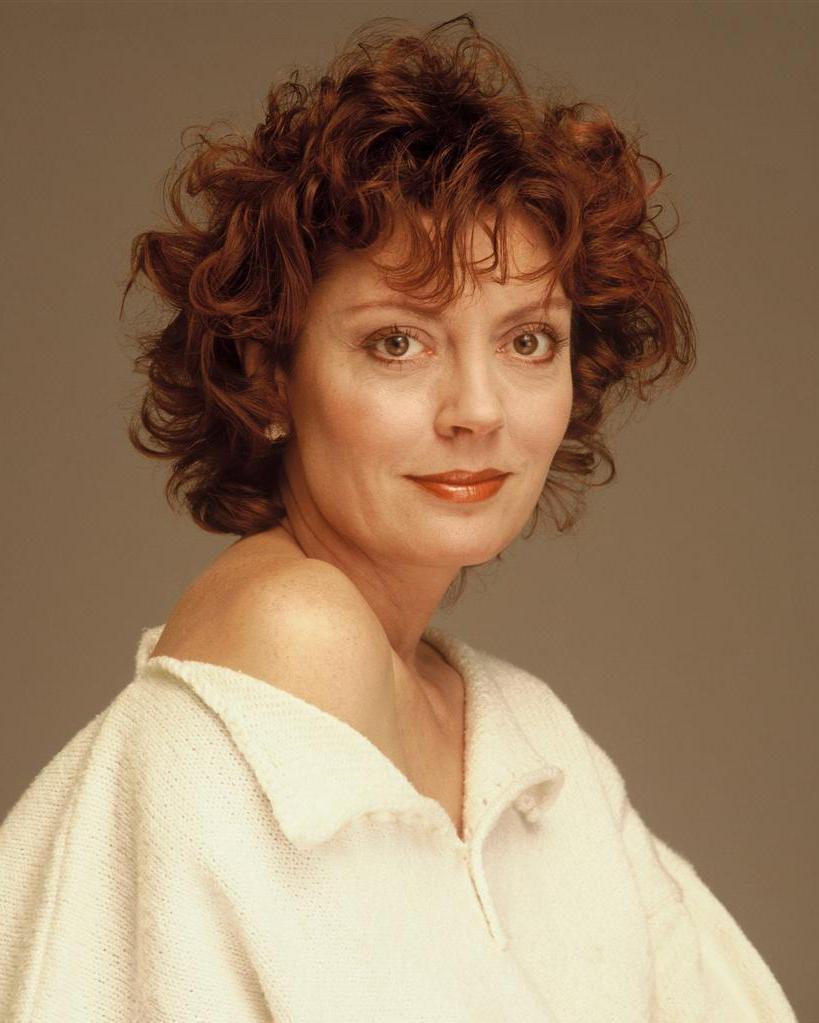
I was just reading about Susan Sarandon, whom I’ve long admired for not only her film achievement, but her compassion for those denied social justice. In her personal life, she mirrors the wisdom of seizing the day, or maximizing our present. Asked why she dissolved her 23-year relationship with Tim Robbins, with whom she had two children, she said that it came after performing in Ionesco’s Exit the King on Broadway, which deals with confronting mortality: “You can’t do a meditation on death and stay in a situation that’s not authentic” (Meg Grant, AARP Magazine, Feb/Mar 2014).
I also like her punchline simple formula for everyday happiness: “It’s the simple things. Good food. Good friends. Sunsets and sunrises. With age, you gain maybe not wisdom, but at least a bigger picture” (Grant).
Me, I call that wisdom: authentic living in the present. After all, the Now is all we really have, given the ephemerality of life’s myriad textures. Living it meaningfully–which is to say, mindfully–enables us to find freedom over circumstance and, with it, greater happiness
I turned on the TV while eatinglunch yesterday to a feature called “Island Paradises,” thinking Hawaii or maybe some Caribbean gem like Dominica or St. Vincent’s. Instead, it was about one man’s substantial investment, worth $28 million, in a plus 100 foot long yacht, sporting 3 recreational decks with pools, 7 bathrooms and 15 bedrooms, plus 3 bars and a below deck garage replete with several sleek motorized boats. Docked in Ft. Lauderdale, it costs– Can you believe this?–$50,000 a fill-up.
I don’t know about you, but this kind of ostentatious display of wealth rankles me, not because I’m covertly envious, but because I think it represents excess and is just plain ethically wrong in a world of so many poor. Again, I think of the 1% in my own country (USA), who own 37% of its wealth and whose income has actually increased since the economic downturn of 2008 (Pew Report, February 2013). Meanwhile, hundreds of service food workers have staged walkouts in quest of a more sustainable minimum wage, presently $7.25 an hour. The average food service worker actually makes about $11 an hour, barely above the poverty line for a single parent with one child.
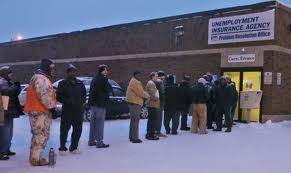
The President is compassionately urging an extension of unemployment benefits for 1.3 million presently receiving unemployment insurance. (The total number of long term unemployed, however, stands at a stubborn 3.5 million.) As he rightly put it in Saturday’s weekly address, “The holiday season is a time for remembering the bonds we share and our obligations to one another as human beings.”
It isn’t that the vast majority of these folks are free loaders. It’s simply that they’ve been looking and can’t find work and that, by the way, is what the drop in unemployment to 7% really means, that thousands of despairing workers have simply given up looking for work. Unfortunately, the longer you’re out of work, the more companies shy away from you. What’s more, in a strained economy, many companies are resorting to part-timers to circumvent having to pay benefits and to maximize profits.
What really hurts is when you’re past 50 and lose the job you’ve worked at a good many years, anticipating a reasonable retirement package just a few years up ahead. This recently happened to a friend of ours, an engineer with a strong resumé in computer skills. Though he looked everywhere, he ended-up driving a school bus. So even if you find work, you’re likely to find your sharply reduced wages sure to contribute to your continuing financial distress. The situation for blacks and hispanics is even bleaker.
That yacht feature reinvests my thoughts as I write. The obscenity of it! The truth is, despite what conservative pundits tell you, a massive transfer of wealth is taking place in America and it’s not Robin Hood style from rich to poor. Consider this from the Pew Report:
During the first two years of the nation’s economic recovery, the mean net worth of households in the upper 7% of the wealth distribution rose by an estimated 28%, while the mean net worth of households in the lower 93% dropped by 4%.
Think movie stars with their posh Bel-Air and Malibu compounds; instant millionaire athletes, Wall Street traders; bank CEOs. Hey, think Walmart with its six family progeny having a bloated net worth of $144.7 billion. Wal-Mart currently pays its “associates” $8.81 an hour.
Again, our President weighs-in:
If Members of Congress don’t act before they leave on their vacations, 1.3 million Americans will lose this lifeline. These are people we know. They’re our friends and neighbors; they sit next to us in church and volunteer in our communities; their kids play with our kids. And they include 20,000 veterans who’ve served this country with honor.
In the meantime, House Speaker John Boehner, emerging as America’s Scrooge, has served notice of his opposition to any extension of unemployment insurance, set to expire December 28.
This is America. We can do better than a yacht mentality of self-absorption, extravagance and indifference.

 It’s time to write again about why I bother keeping a blog.


 Brimmings: up from the well