Love as a many splendored thing

Recently one of America’s favorite singers, Rihanna, reconciled with her on and off again boyfriend, Chris Brown.  You’ll remember he had beaten her up several months earlier.

In a similar vein, about a year ago I got to know a girl in her early twenties who complained of her uneasy, abusive relationship with her boyfriend. While she didn’t tell us of any violence, she made it clear she was undergoing daily verbal abuse.  All of us, puzzled by the dynamics, wondered why she didn’t bang the door shut on the guy.

When it comes to this kind of thing,  I can be pretty sensitive.  My mother, after all,  endured an abusive relationship with my father across the years that sometimes included violence.

The poet Sylvia Plath, shortly before her suicide,  wrote famously of the masochism underlying such manacled couples as “a love of the rack and the screw.”  As a professor who taught this poem for many years, I take it she had in mind the role of culture in nurturing feminine subservience in a patriarchal world, the “for better or worse” syndrome of  the traditional marriage vow.   Women, however, were the only ones taking it seriously, as may still be the case.

But I think Plath’s conclusion errs in its reductionism.  In those days, few women had access to employment and thus independence.  And then there is evolution’s maternal instinct that still kicks-in, the children to be protected at all costs.

Today’s scene, however, is vastly different and still changing as women have secured options earlier women perhaps never thought about, since they were precluded possibilities.  And yet a good many women, and some men, still cling to demeaning liaisons.

The truth is that many relationships should never have had their genesis.   We live in a culture that dilutes love by conceiving it falsely, with our movies, harlequin novels, and music playing out the theme of lovers “as the luckiest people in the world.”

Romantic love, or ”being in love,” has a fixity about it, a must have it now and abundantly; a possessiveness centered in emotional absolutes.  Root bound, it cannot grow and lacks a future.   At best, it turns habit.

“Loving,”  on the other hand, is like a fine vintage that gets better with the years.  Here lies the advantage of postponing life choices until the grapes are ready.  I was raised in a world that told me that first love was true love.  This may be so for some, but I think not for many.

Unfortunately, a good many relationships pose a latent psychological component, or dread, that the late psychiatrist Reuven Bar-Levan nailed down persuasively when he wrote that “what holds people in destructive  and humiliating ’love’ relationships, and what makes them plead and even beg to be ’loved,’ is extreme fear of abandonment.  The force of this fear is so great that people degrade and humiliate themselves to avoid it”  (Thinking in the Shadow of Feelings, p. 145).

This dread, overwhelming and prevalent, primarily traces back to our parents and whether they succeeded in making ourselves feel lovable.  When missing, it pursues us, like a shadow, all of our life and through mistrust we prove quite capable of driving genuine love away in wanting rather than giving, demanding and not allowing.

Again, authentic love lacks stasis or rigidity.  As such, it maturates and transcends love’s vicissitudes because, with time, it grows in wisdom, acknowledging flux in all relationships, and allows even for exits, since loving abounds in the context of freedom, or ability to sometimes let go.  Genuine love has its ending ultimately in our mortality if from nothing else; but whatever its source, its loss results in sadness, not fear or anger.  Free from fear,  love thrives.

Removed from anxiety, love is, indeed, “a many splendored thing.”

When media masquerades

Following Tuesday’s State of the Union speech, the Republicans delivered the customary rebuttal, this year, featuring Senator Marco Rubio as their spokesperson.  Then came the now infamous water bottle moment, washing away not only Rubio’s thirst and whatever substantive remarks he made, but possibly notions of his fitness to seek higher office in 2016.  Mind you, I’m not a Republican, nor a Democrat either, having voted the Green Party last November.  I do, however, have a sense of fair play and I found the media’s persistent, even gleeful replay of a human moment thoroughly annoying and partisan.

I don’t know  about you, but sometimes I prefer avoiding the mass media altogether, since it frequently seems to thrive on the negative and sensational to the point of hinting at animosity, or an underbelly of petty meanness analogous to an undercurrent of daily life manifesting itself in the personality that enjoys another’s fall, the venom of daily gossip with fondness for spilling confidences, speculation, insinuation, ridicule and invasion of privacy or creeping over every fence and peering into every window. Its dynamics, whether public or private, are worth exploring, since they have a human origin. The media likewise strays when it embraces advocacy journalism driven by concealed biases or panders to special interest groups or omits asking the right questions.

Like many of you, Karen and I have recently caught-up with Downton Abbey, TV’s highbrow soap opera that has hooked millions in Britain and America (second in viewers to this year’s Superbowl).  Weaving its spell through subtle intra-episode suspense played out in a facsimile of Edwardian elegance contesting with working class aspirations, its characters, all of them, major or minor, are remarkably chiseled into a sharpened relief, foregrounding their composite individuality, and avoiding stereotype.  As with Shakespere’s Iago, insinuation rather than outright deed works its scourge among some of them. Thomas and O’Brien come to mind as primary instigators, motivated by malice, fomenting innuendo.

As such, they’re not strikingly different from an errant press.  Appropriately, one of Downton Abbey’s other candidates for “dishonorable mention” is Sir Richard Carlisle, hard-ball, newspaper mogul who thrives on scandalizing adversaries, influence peddling, and unbridled intimidation.  He decides what makes or doesn’t make news, as his personal needs dictate.  We are not far from how real media works to manipulate opinion or affirm its biases or cast its critics into disrepute.

While I fervently believe in a free press, devotee that I am of John Stuart Mill (On Liberty), I’ve become wiser with the vintage of my years as to its capabilities for abuse as in outing a CIA operative and endangering intelligence sources in adversary nations; or of unbalanced reporting, whether by design or neglect; or of slanting the news through connotative nuance; or of a more sinister modus operandi of interpretive journalism pursuing an a priori agenda of prejudices.

I wish I had time and space to write more fully on the press, both as to its assets and liabilities; but suffice it to say, there lies a latent psychology underlying its behavior, since it’s so human in its making.  Putting ourselves on the alert, we diminish its power to manipulate us.

Be well,

rj

On the joys of learning Arabic script

Just by way of follow-up on my attempting to learn the Arabic alphabet and fuel my brain, I’ve surprised myself in learning about ten letters already in the last several days since my previous post.  My Apple iPad app helps me a lot, as it groups letters by similarity, and so you quickly begin to recognize that letters fall into families.

Seems to me, this is a good way to learning inventories, whether of vocabulary, birds, trees, flowers, etc.  If you do this with a language with many English cognates like Spanish or French you can actually acquire a reading vocabulary of several thousand words in a matter of an hour since, for example, our –ion ending words are virtually the same in spelling and meaning in those languages, confirming the wise pedagogic axiom of proceeding from the known to the unknown.

I haven’t actually practiced writing the letters at this stage, but see a challenge when it comes to connecting the letters in script.  You also mustn’t make the frequent Westerner mistake of writing the characters from left to right. In its cursiveness, Arabic script reminds me of the now defunct shorthand secretaries learned years ago.

What always amazes me when you start a new interest is its snowball effect, or tendency to get larger as you get into it.  Now I’m becoming aware of just how dynamic and relevant Arabic is in its growing number of speakers and considerable literary heritage. (The Arabian Nights comes to mind).  And of course there’s the sacred Koran, recited in mosques around the world.

I’ve also learned that Arabic script is employed in writing Farsi (Iran), Urdu (India and Pakistan), the latter rivaling Hindi in its vast number of speakers.  Additionally, a score of other tongues use Arabic script.

If you go beyond written Arabic, you quickly learn how important it becomes to choose its dialect version wisely as considerable variations exist between, say, Egyptian versus Iraqi Arabic.  If I were to actually make a stab at acquiring conversational, or everyday Arabic, I’d probably pick the Jordanian variant simply because several of my student friends in France years ago came from there, and I associate them with many kindnesses. I also happen to like Jordan’s progressive royal family.

220px-RichardFrancisBurtonArabic has rekindled my memories of reading the biography  of ebullient 19th century explorer Sir Richard Burton (1821-1890), who lived one of the most remarkable lives on record, with a facility for learning languages quickly, including Arabic, without an accent.  (See Lovell’s A Rage to Live).

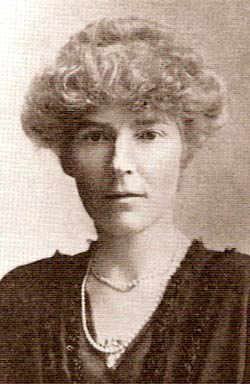
tresi827And not to be outdone, there’s the extraordinary story of Gertrude Bell (1868-1926), fluent master of Arabic, advisor to kings, and a principal architect of the post-Ottoman Middle East.  (See Wallach’s Desert Queen).

On more familiar grounds to most of us, though I’ve not read his classic work, The Seven Pillars, we have the saga of Bell’s good friend, T. E. Lawrence (1888-1935), better known to millions as Lawrence of Arabia via the movie version of his storied life.  By the way, all three acquired Arabic outside the classroom, or without formal study.

In sum, there are so many reasons that can enter into your choice of a language to study:  ease, heritage, utility, etc.  One that’s often missed, however, is distinctiveness.  If you want to find a less traveled path, try taking-up Swedish or even a language drenched in euphonious vowel syncopation like Hawaiian or Maori that always leaves me mesmerized.  You’ll have a leg-up on the herd and find new friends, flattered that you chose their language and culture.

I happen to find this also occurs with a language like Arabic. Though it’s a first language for millions, it’s still a rare acquisition for Westerners.  And among languages, for me at least, it smacks of the exotic.

rj

Learn a new language to keep your mind young

As an older, retired person I’m aware of the need to keep my mind in shape just like my body.  How can I forget when I’m bombarded with all these health memos of a possible tie-in between lack of brain stimulus and dementia, including Alzheimer’s? That’s a frightening scenario I want to avoid, if I can.

Fortunately, my iPad tablet’s a big help via its many learning and game applications.  For me, maybe it’s the professor in me, but I prefer problem activities that test my mental skills rather than dexterity.  Sudoku is my favorite, though I’m also fond of games like Whirly Words, Word Ladder, BrainExl, and N-back Suite, the latter especially challenging.

One thing that’s important in keeping your brain young is adding variety to your mental life by trying new things, not necessarily games, but things like learning bridge or taking-up gardening or starting a blog site, which forces you to be observant and creative.

My primary hobby other than keeping a blog or gardening is studying languages. They say that when you can pair vocation with avocation you’ve punched the right ticket.  In my case, definitely Yes, so I was delighted the other day, though I’ve heard it before, that one of the best exercises to keep your brain young is taking-up a new language.  According to Neuromage (Oct. 15, 2012)), studying a new language intensively “over a short time stimulates the growth of the hippocampus, the brain region involved in learning, memory and spatial navigation.” This study involved new recruits at the Swedish Armed Forces Interpreter Academy who committed 13 months of study to mastering a foreign language.

Brain scans before and after three months of study indicated “significant” brain growth, while those studying medicine and cognitive science in the university showed static results.  What’s more, and again I’ve seen multiple research studies on this, those who are bilingual or multilingual develop Alzheimer’s disease at a more advanced age.

Applying this research to myself and in keeping with the idea of something new to energize my gray matter, I’ve hit upon giving the Arabic alphabet a go.  We’ll see what happens after that.  I just thought it would be thoroughly brain-stimulating, given its particular challenges as a script you read from right to left and its omitted vowels like its semitic neighbor, Hebrew.  While the Arabic alphabet has 28 letters, there are actually nearly three times more than that, as letter forms change according to where they occur–beginning, middle or end.  Apple just happens to have a marvelous application, Arabic Alphabet, to facilitate mastery of this often intimidating script.

Can you teach an old dog new tricks?  Well, I did learn ancient Greek many moons ago and, later, the Cyrillic alphabet used in several slavic languages, including Russian.  Anyway, I’ll let you know later as to how this wild experiment turns out.

Be well.

rj

The folly of being in control

Often life can unexpectedly catch us in a high wave and we lose our balance and may even go down.  Not liking this, we try to lasso life’s randomness through structure or control and spare ourselves surprise.  Though this may help some, it doesn’t always work and, oddly, may even work against us when control assumes our identity.

Some of us are more prone to controlling than others, having been forced out of our nest early to look after ourselves.  I think of children of alcoholics, for example, who must not only escape, but prevent betrayal reoccurring.

Control is a ritual to relieve mistrust and smooth out the winkles.  All of us resort to defense modes from time to time to cope with an often aggressive landscape of human ignominy and nature’s caprice. There exists, too, an existential dread in us, or sense of our impotency against life’s vagaries, resonating vulnerability and whispering our mortality.

But to live this way daily filters life’s joy and shrinks life to a prison cell.  While we need to be wary, we should drop the reins when control becomes its own end and we become its prisoner and it hurts more than it helps.  Control, at its extreme, masks a latent masochism or inverted narcissism that feeds upon its wounds.

We cannot know what each day brings, nor always preempt its events, but changing our thoughts can help ransom our freedom in a world where the surety remains that flowers do bloom and there are people worth loving who will love us.  Experience affirms that we find love only when we extend  our hand to grasp the extended warm fingers of those around us.

I can’t say just how we find the switch that turns on life, nor assure its recompense when we do; but I know that abundant living begins with a giving of ourselves, and not withdrawing and yields release from the confines of our fears.

In sum, we become our choices and when we commit we find life gives back.  William James, one of America’s foremost early psychologists, said it very well:  “The greatest discovery of my generation is that human beings by changing the inner attitudes of their minds can change the outer aspects of their lives.”

How do we do that?  It begins with realizing the futility of our attempts to impose order on life, for life has a way of happening.  What matters is living in the Now, one day at a time, one step at a time, finding joy in each other, delight in the canopy of the stars, and the promise of every new day.

–rj

Trust me!

Wingswept FarmKentucky
Wingswept Farm (Kentucky)

I’m not upset that you lied to me, I’m upset that from now on I can’t believe you.”     –Frederick Nietzsche 

Karen and I were recently visiting our friends’ new horse farm when I spotted a mare and her two young saddlebred foal companions (see photo) and decided I’d saunter over and say hello.  Just wished I’d had some peppermints along.  I started with the mare and took her stillness beneath my hand as consent.  Of course, the foals wanted in on the action, too, though each time I’d reach out, ever so slowly, they’d flinch. In short, they hadn’t yet learned to trust, at least with regards to me. Trust, after all, is one of those life staples you must earn.

In our human world we can be skittish, too, when it comes to trust, especially if memories linger in us of its betrayal as in a broken promise, lying, infidelity, irresponsibility, abandonment and, alas for children, poor parenting.  It’s hard finding an antonym for trust, but deceit comes to mind.  For the great Italian poet Dante, it was the worst of human short comings and he classified its several types into betrayal of family, friends, and nation.

I wish I could say trust has the numbers, or upper hand, when it comes to humans, but I know better and so do many of you, and so I treasure it when, serendipity, I stumble on it.  Being from New England and growing-up along its coast, I think then of lighthouses, rock solid, faithful sentries shredding the darkness with their rotating beams of pulsating light.

I’ve always held the acute test of trust lies in the context of anonymity, or when we think no one’s watching.  If someone runs stop signs, they probably take other short cuts from honor as well, making up their own rules that serve their interests.  Deceit, if you will, is uppermost rooted in narcism, or satiating ourselves, damn our fellows.

Deceit or fraud gets frequently collectivized in power and money conclaves, with near daily sightings of their misdeeds in government and banking. The aftermath, of course, is the bruising recession fallout for the rest of us, instigated by CEO greed and spendthrift bureaucrats that jeopardizes our future.

I hurt when trust gets violated by manipulative charlatans.  I want to believe the ad tells the truth or a doctor’s new book isn’t a facade for making money or that my local car dealer is giving me the best deal.  I want to believe that my friend will keep his word, that my life partner will always love me and my children live honorably.

If love is life’s consummate grace, without trust it will prove tenuous, or like a house built upon the sand, succumb to time’s erosion.  Love may be life’s elixir, but to be trusted may be even better.

Idealist that I am, I want to believe, not doubt; to embrace, not shun.  Like the young foals, I don’t really want to flinch.

Anxiety is not a mental illness: reflections on psychiatry’s abuse

300px-Cover_of_Diagnostic_and_Statistical_Manual_of_Mental_DisordersWell, that’s finally settled!  After months of vociferous debate the American Psychiatric Association has given its blessing to a revised edition of the Diagnostic and Statistical  Manual of Mental Disorders (DSM 5th edition), often called the Bible of psychiatric diagnosis.   A vital tool, it facilitates psychiatrists being on the same page.

Unfortunately, the DSM has often been fraught with opinion-based labeling, at times approaching the trendy and political, rather than drawing from established empirical data.  Casting a wide net, it can conceivably draw in most of us.  The inherent danger of psychiatry has always been its penchant for finding motive and making faulty inferences.  It loves labeling.

I’m reminded of a humorous rendition of this syndrome.  Two psychiatrists are talking to each other when a third party passes through the room and says, “Good morning!”  One of the psychiatrists then looks at the other and exclaims, “I wonder what he meant by that.”

Among some of the controversial changes in the revised DSM are the relegating of Asperger’s Syndrome to the expansive canopy of “autism spectrum disorder” (ASD). (No more Asperger Syndrome label.)

It also includes grief as a  clinical disorder, or variant of depression.   Many of us will find this a tough sell.

Better not be into loading-up on newspaper clippings, old photos (baseball cards?).  Hoarding, whatever that is, can get you into the psychiatric liturgy.

Ironically, sexual addiction gets left out.  Go figure!

Labeling is dangerous for its dead-end, stigmatizing write-offs.  An educator, I’m aware of the short-circuiting of a student’s potential when an impatient, frustrated teacher simply writes him or her off as essentially unable to learn.

Psychiatry needs to get at causes, not symptoms, often social (e.g., poverty, prejudice, abuse, etc.), and rely less on medication to address supposedly faulty neurotransmitters.  Increasingly, research has shown that much of the reported success of SSRIs and the like is mere placebo effect.

Lowering the threshold for DSM inclusion becomes reminiscent of the Pharisees with their penchant for jot and tittle inclusion or the sometimes purist application of Sharia law.

Next time you worry about something be careful not to share it with anyone, at least with a psychologist or psychiatrist.  Though anxiety per se is a fact of daily life and hardly rates as mental illness, count on it to land you a high rung in the DSM.

–rj

Something worse than global warming?

We hear much about global warming these days, understandable given its smothering consequences for all life on earth.  Unfortunately, humans have at large remained callous to making lifestyle changes that may delay its full onset or lessen its consequences.  Recent research clearly indicts us as primary contributors to climate change in our dependency on fossil fuels.  Last year was the hottest on record.

Bad as the global warming scenario may be, I would argue we face a greater crisis elsewhere, simply because it’s happening right now and we’ve less than 20-years to find a solution.   I’m writing about the exponential increase in resistant microbes.  I don’t mean to push the panic button, but this isn’t a false alarm.

I wish things were otherwise, but an ostrich stance just won’t do.  Like many of you, I’ve read articles, even books, promising  not only the extinction of many of our primary diseases, but the near abolishment of death itself, or at least pervasive longevity.  This optimism, swelled by genetic research, hints at our finding targeted therapies that can prevent, modify, or eliminate diseases like cancer, diabetes, and dementia.  With dietary alterations, we may even speed the healing.

I’ve read recently that it’s essentially only 25-years and we’ll find medicine revolutionized.  Labs will diagnose your genomes and, like today’s culture specimens, suggest a solution.  No more fussing with finding the right medication and risking their frequent side effects.  We sometimes call it “metric” medicine, treatment individually tailored to get at or prevent what may ail you.

Unfortunately, this heaven-on-earth scenario isn’t likely to happen any time soon, given the inveterate increase of microbes resistant to antibiotics.  Again, its threat dwarfs the crisis of global warming.  As Professor Sally Davies, England’s chief medical officer, recently shared with parliament members, “It is clear that we might not ever see global warming; the apocalyptic scenario is that when I need a new hip in 20-years, I’ll die from a routine infection because we’ve run out of antibiotics” (“Antibiotic ‘Apocalypse’ Warning”).  www.bbc.co.uk).

By the way, think twice when it comes to a hospital stay.  Currently between 5 to 10 percent of patients develop an infection.  90,000 of them die, up from 13,300 just back in 1992 (www.medicine.net).  The cost impact of infections is enormous at $20 billion annually and eight million additional hospital days (Centers for Disease Control and Prevention [April 2011]).

Now the World Health Organization warns that we’ve reached a crucial point in the matter of resistant microbes.  Consider the present situation:

Presently we’re down to just two antibiotics for treating MRSA and one of these isn’t very good.  (MRSA now exceeds AIDS in annual U. S. mortality.)

With highly prevalent gonorrhea, we’re just about out of remedy.

And then there are candida, malaria, tuberculosis, staph and even UTI’s, all of them exhibiting increasing insensitivity to antibiotics.

Like global warming, we’ve done a lot of this to ourselves.

1.  Antibiotics are overly prescribed or treatment isn’t fully carried out.

2.  Hospital staff don’t consistently practice good hygiene.

3.  Cattle are fed antibiotics to inhibit disease and encourage growth.

4.  We’re destroying our rainforests, with their potential for new antibiotic substances.

5.  Ubiquitous use of antibacterial soaps and napkins, etc, increasing germ tolerance.

6.  Increased travel to underdeveloped countries, raising the possibility of Superbug contagion.

Matters aren’t helped by the scourge of HIV and TB raging across Africa, largely due to patient mismanagement of medications.  In India, currently, there’s a new Superbug that’s made its appearance, infecting even the water supply in Delhi. Compounding its threat is widespread travel these days, and the bug’s recent appearance in North America.  The sad fact is that exotic diseases are potentially only an air flight away.

This is always the ultimate threat–that somewhere, somehow, a new infection source will emerge for which we haven’t any remedy.  As Dr. Davis Agus reminds  us, even in the context of his best selling The End of Illness (2011) with its vibrant optimism, “The swine flu scare that occurred in 2009 will some day be dwarfed by a real epidemic that will spread rapidly through virgin immune systems and kill millions in its path (as happened, for example, in the flu pandemic of 1918, when an estimated 50 million to 100 million people died” (p. 277).

As I write, a new TB strain has made its appearance in Papua and like AIDS in Africa,  is badly managed.  Experts fear it may soon defy any cure.

Of course there are optimists who argue we’ll come up with treatment solutions.  We always have.

The reality is we’ve very little time and the research isn’t promising.  As Professor Hugh Pennington of the University of Aberdeen bluntly puts it, “We have to be aware that we aren’t going to have new wonder drugs coming along because there just aren’t any.”

Who am I? Reflections on being an Introvert

Isabel Briggs Meyers

Mary takes her lunch alone, sitting on a bench.

Johnnie stays in his room, reading as his friends go off to play.

Susie likes to sew by the hours.

Neil is glad the party got cancelled.

I’ve always been interested in personality dynamics, or the way we interact with others,  our environment, and even ourselves.  Then I came across Carl Jung’s notion of two selves resident in all of us: one Extravert; the other, Introvert.

Unfortunately, psychology often goes astray, treating one dynamic as sum total, when both exist in perpetual tension, though one will prove primary. Think of it in terms of being left or right-handed.  We’re born with a tendency, or preference, to use one hand over the other.  While we use both hands throughout the day, that preference reveals itself when we take to writing our signature.  If you’re right-handed, try writing your signature with your left hand, or vice versa.

It was Katherine Briggs and her daughter, Isabel Meyers, however, who provided popular access to Jung’s personality archetypes, or modes, and built upon them through the eponymous inventory they developed.  Its advantage lies in its facility for speed, simplicity and scope in identifying sixteen distinct personality types.  The Meyers-Briggs Type Indicator (MBTI) is now routinely used universally, taking-on adjunct status in the business world as a screening tool for new employees or setting up work teams, etc.

The test measures four basic components comprising a personality type (see Tieger and Tieger, The Art of Speed Reading People [1998]):

1.    How we’re energized:  (E) Extraversion ——(I) Introversion

2.   How we access information:  (S) Sensing ——-(N)  Intuition

3.   How we make decisions:  (T) Thinking——(F)  Feeling

4.   How we organize our world:  (J) Judging——(P)  Perceiving

I remember taking the MBPI years ago and how accurate, despite its brevity, it turned out.  It was me!  INFP.  Like your fingerprints, it’s your fixed id when it comes down to what makes you tick. While you can’t put the MBPI under a microscope, we know empirically that it functions well in assessing personality dynamics.  It may even help you to better understand and relate to those around you or even to avoid relationships fraught with potential personality conflict.

What I’d like to do here has simply to do with Introversion, the canopy I come under, though I’ll also contrast it with Extraversion.

Introversion trademarks:  less talkative, more reserved; thinks first, then talks; slower, more precise conversation quietly delivered; focused; doesn’t mind being alone at times; shuns spotlight; cautious;  sequential in conversation, providing transitioning.

These traits are in marked contrast to those of the Extravert:

Extraversion trademarks:  noisy, enthusiastic;  talkative; thinks aloud; desultory  in  conversation; easily distracted; enjoys attention; impulsive; interrupts or finishes sentences.

In my school days I daily envied the football players who seemed always to hold their place in the sun, the focus of school assemblies, and loved by girls.  Older folks would tell me to enjoy this time as best ever, though I couldn’t fathom why.  Tall, gangly, pimple spattered and timid, I found shyness got me nowhere, except I compensated some through academics.

I can’t say life beyond high school made it any easier in a world enthralled with high profile athletes, movie stars, TV celebs,  charismatic politicians and other People Magazine types.

On the other hand,  I’ve found fellow soft-voiced Introverts with their reserve a relief to be around.  They tend not to dominate a conversation, or have need to gesticulate with their hands, or interrupt you at nearly every turn, or to stray in their attention.  There’s often a sincerity to them that one finds frequently missing with all-talk Extraverts.

Introverts are linear in their preferences. They shun the desultory, preferring to exhaust the topic before moving to the next and keep a steady gaze, unlike the perfidious Extraverts with their disconcerting, wandering eyes.

Extraverts draw strength by the numbers they keep.  They love Facebook and accumulating long lists of friends for validation.  They prefer doing over thinking, flamboyance rather than simplicity, the latest fashion, the flashy car, loud colors.  Introverts, not liking the spotlight, prefer simpler amenities, say a Prius over a Lexus; subdued colors, a less frenetic music.

Introverts are often strong people, able to find a pathway away from the crowd,  confident in their values while avoiding arrogance.  Revolution and social change begin most always with the Introverts, whom the Extraverts eventually follow.

Sometimes you can distinguish the two entities by way of the hobbies they keep.  If you like gardening or fishing,  reading or chess, sports like tennis or golf, you’re more likely to be an Introvert.  On the other hand, if you’re into team sports like softball, or enjoy card playing, or participating frequently in social networks, then it’s likely you’re an Extravert.

Extraverts and Introverts can be found across the job spectrum, so that generalizations can be faulty as to which occupations allure them.  Introverts, however, with their preference for fewer numbers, quieter spaces, and focused challenges, are often found in endeavors associated with medicine, college teaching, libraries, accounting, and computers.  On the other hand, Extraverts perhaps find greater contentment in occupations such as entertainment, marketing,  and public relations.

Introverts, as proponents of the inner life of the imagination, are often the Artisans, whether in painting, music or literature.  Extraverts, in their need for people, make for great actors.  We need both:  the Introvert to teach us to reflect; the Extravert, to make us laugh; the Introvert to broaden our horizons; the Extravert to make us feel good about ourselves.

But back to Introverts, per se, since this is my primary focus here.  We Introverts needn’t deem ourselves second-class citizenry in a gregarious world or be overwhelmed by the social pressures exerted on us in such a world.  I would even wager that overall we’re a happy, well-adjusted bunch, at peace with ourselves and proud of our contributions to making a better world.  I always remember that Steve Jobs was one of us.

Do well.  Be well!

–rj

Reflections on the psychology of lying

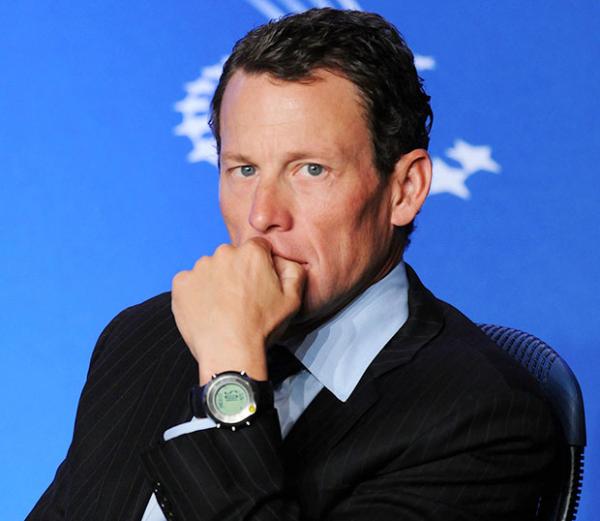
LanceArmstrong_620_011513I’ve always found it hard to understand how there are people who can look you in the eyes, never blink, and spin the biggest lie.  Of all the kinds of deceit, lying is probably its most common form.  My mind boggles at some of the big names across the years, not surprisingly, political:  Congressman Dan Rostenkowski; Washington mayor Marion Barry; and then there’s Bill Clinton (“I did not have sex with that woman”).

Lately, icons from the sports world have swollen their numbers, though like most liars, they’re often teflon coated when it comes to making the allegations stick. Think Bonds, Clemens, McGuire.  And now there’s Lance Armstrong and a confession–of a sort.

I probably don’t need to tell you that lying is also endemic to the business community.  It’s estimated that the average consumer is exposed to up to 200 lies daily via advertising.

But let’s not be self-righteous.  The truth is we all lie, so maybe our outrage is simply projection rather than seeing ourselves in the mirror.  Psychology Today (May 1, 1997) cites the 1996 study of lying  by University of Virginia psychologist Bella DePaulo, who found “most people lie once or twice a day.”

Lying sometimes comes with the territory, say law, politics, car sales.

Sometimes it may even seem the moral thing to do. Should a doctor tell every terminal patient his/her prognosis?

Sometimes lying may seem the only way to avoid being punished for telling the truth.  Should you tell your boss you were late because you got stuck in traffic rather than the truth you overslept?

Sometimes it may be wiser to tell your wife you like her new dress or hair-do than blurt out, “What were you thinking?

From another vantage point, lying can often be viewed as an ego prop for those with low self-esteem to boost themselves in the eyes of their beholders. The bigger the fish story, the better the payoff in admiration.

Lying is generally motivated by a desire to achieve a goal or to avoid responsibility for a behavior, e.g., overspending, drug addiction, etc.. There is, however, the  compulsive liar who does so inversely related to any goal.  Such behavior hints at a pyschiatric disorder, requiring treatment.  This also gets us into the criminal mind of the sociopath who can lie and even kill without remorse.  I think of Susan Smith (1994) who drowned her children, but initially claimed a black man had done it.

While granting that lying is an intrinsic human behavior, I still draw the line between the Lance Armstrongs who lie to mask their wrongdoing such as wholesale cheating or abuse of power and everyday Johns and Janes who lie to cover their embarrassment, or to prevent friction, or to opt for kindness.

What really arouses my disgust is when these self-serving schemers repeat their lies endlessly.  We had a decade of this in Armstrong’s case.

Ironically, we often reward our consummate liars. Though they didn’t make it into baseball’s Hall of Fame this year, Bonds and Clemens were candidates and drew over a third of the votes.  We also have two recently elected senators, one of whom falsely claimed service in Vietnam repeatedly; the other, to claims of Native American ancestry, presumably to take advantage of affirmative action. In reality, those who vote for such people share the same bottomline rationale of the end justifies the means.

The worst lies, the ones that grieve us and erode our trust, occur when we’re deceived by those we’ve invested our emotions in most, our family and friends. The medieval poet Dante assigned such people to hell’s deepest circle in The Inferno to keep company with the likes of Judas.

Liars are hard to detect because they ape sincerity, empowering their ability to manipulate the rest of us who want deeply to believe we’re being told the truth. This is why polygraphs aren’t always accurate, as they can’t readily filter out the feigner of sincerity.

Some have written in depth on the refined art of lying and strategies for its detection, the best of these being Paul Ekman’s classic 2009 book, Telling Lies:  Clues to Deceit in the Marketplace, Politics, and Marriage.  You’ll find his take on body language fascinating, although I’m dubious about this since body language can also be feigned.   Nonetheless, as an expert on emotions, he brings the closest thing to science on the subject, though he confesses the frequent difficulty, even then, of spotting the skilled liar.  Our best defense, in my own view, borrows from Reagan’s maxim:  “Trust and verify.”

We do know we resent people like Lance Armstrong, perhaps because he and others remind us of our own vulnerability to manipulation and the hurt we’ve experienced when our trust is violated