Retired English prof (Ph. D., UNC), who likes to garden, blog, pursue languages (especially Spanish) and to share in serious discussion on vital issues such as global warming, the role of government, energy alternatives, etc. Am a vegan and, yes, a tree hugger enthusiastically. If you write me, I'll answer.
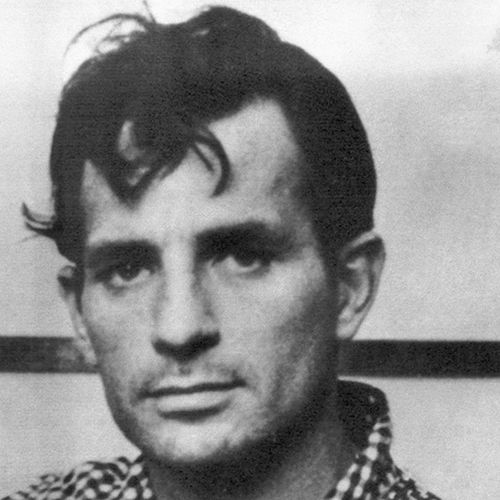
Jack Kerouac turned 102 a week ago. The fierceness of his writing overwhelms, lyrical, sensory, harnessing human moods, a fiery warmth beneath a canopy of gazing stars on cold stellar nights:
“Fury flashing on rocks that rise like gloomy sea shroud towers out of the cove, the bingbang cove with its seas booming inside caves and slapping out, the cities of seaweed floating up and down you can even see their dark leer in the phosphorescent seabeach nightlight.”
—Big Sur
“…the only people for me are the mad ones, the ones who are mad to live, mad to talk, mad to be saved, desirous of everything at the same time, the ones who never yawn or say a commonplace thing, but burn, burn, burn like fabulous yellow roman candles exploding like spiders across the stars and in the middle you see the blue centerlight pop and everybody goes ‘Awww!’”
—Jack Kerouac, On the Road
“We were never really born, we will never really die. It has nothing to do with the imaginary idea of a personal self, other selves, many selves everywhere: Self is only an idea, a mortal idea. That which passes into everything is one thing. It’s a dream already ended. There’s nothing to be afraid of and nothing to be glad about. I know this from staring at mountains months on end. They never show any expression, they are like empty space. Do you think the emptiness of space will ever crumble away? Mountains will crumble, but the emptiness of space, which is the one universal essence of mind, the vast awakenerhoo 0d, empty and awake, will never crumble away because it was never born.”
—The Portable Jack Kerouac
The world you see is just a movie in your mind. Rocks dont see it. Bless and sit down. Forgive and forget. Practice kindness all day to everybody and you will realize you’re already in heaven now. That’s the story. That’s the message. Nobody understands it, nobody listens, they’re all running around like chickens with heads cut off. I will try to teach it but it will be in vain, s’why I’ll end up in a shack praying and being cool and singing by my woodstove making pancakes.
While democracy has been widely touted as the best form of government, it’s had many detractors in Britain and America, who fearing a working class majority of the uninformed, intellectually unprepared, politically manipulated by partisan interests, proposed education in the liberal arts as a safeguard for assuring an informed, discriminating electorate.
One thinks of Matthew Arnold’s classic Culture and Anarchy and John Henry Newman’s The Idea of a University as examples. The truth is it hasn’t worked to salvage democracy. As Costica Bradatan comments in his insightful book, In Praise of Failure, “Populism and authoritarianism are flourishing today in places with remarkably high educational levels. For all the self-flattering talk about civic-mindedness and political engagement, the citizenry in the West is in no better shape than it was one hundred years ago. And we seem resigned to the situation.”
Derek Bok, former president of Harvard, comments in his Universities in the Marketplace that the arts and sciences faculties “display scant interest in preparing undergraduates to be democratic citizens, a task once regarded as the principal purpose of a liberal education.”
Viewing our current political milieu, I see only the debris of a once heralded idea to make government truly feasible in the best interests of our nation. Alas, not since the Civil War, has America been so fractured in its allegiances.
Alexander Hamilton, suspicious of public sovereignty, supported the idea of the Electoral College. That certainly hasn’t worked.
Back in England, John Stuart Mill proposed a plutocracy of the educated allowed multiple votes. Fortunately, it wasn’t well-received.
As for the prototype Athenian democracy, women couldn’t vote, nor foreigners and slaves.
I confess I don’t know the answer, except to offer that democracy, for all its liabilities, surpasses those protocols previously attempted.
Oh, my god! We’re all in trouble. Here we are, facing a presidential election, caught in a catch-22 situation, the choice between a president clearly showing incipient symptoms of mental decline, and an ex-President promising revenge and demagoguery. Biden’s lapses have been widely reported in the press for some time: tumbling on aircraft steps, lingering pauses in speech delivery, mix-up in identifying political leaders, befuddled recall of events.
Now comes the President’s frantically called press gathering, just 23 minutes warning in the aftermath of special prosecutor Robert Hur’s devastating findings on Biden’s alleged national security lapses: storage of top secret files in his Delaware home and sharing of classified information with the ghostwriter of his memoirs, Mark Zwonitzer.
Hur’s office considered charging Zwoniker, who has been cooperative, but the ghostwriter had previously destroyed the interview tapes with Biden when he learned of the special counsel probe, resulting in the improbability of a conviction for lack of evidence.
Hur found the president’s recall of how the classified documents ended-up in his basement as “hazy.” He had said he found them in his then rented house in Virginia.
What really instigated Biden’s frenetic press appearance was probably Hur’s reporting the President’s inability to recall when his son Beau died of brain cancer: “I don’t need anyone, I don’t need anyone to remind me when he passed away,” the President angrily retorted.-
Biden couldn’t even recall the dates he’d been vice-president.
The reality is that his combative press conference only seems to lend credence to Hur’s allegations of a President of “diminished faculties in advancing age.”
About to leave the room, Biden returned to the lectern to respond to a reporter’s belated question on the Gaza crisis. Committing yet another gaffe of mistaken identity, piling up in recent days to the chagrin of his staff, Biden confused Egyptian leader Abdel Fatah al-Sisi as “the president of Mexico.”
Several days earlier in Nevada, he confused deceased French president Francois Mitterand with current French president Emmanuel Macron. Mitterand died in 2015.
This past Wednesday, Biden said he had interviewed Germany’s chancellor Helmut Kohl in 2021. Kohl died in 2017.
I think of Ronald Reagan in his second term, then America’s oldest president, falling asleep in cabinet meetings. A few years later, 1994, Reagan announced his Alzheimer diagnosis. The signs, however, of its progression had already been evident while in office.
I wish our President well, but I fear the fallout of mental facility in a nuclear age, the challenge of climate warming, the looming threat of a Russia-China-Iran alliance, and still more, to nightmare my sleep.
Hiding presidential infirmity has a long history, embracing Woodrow Wilson, Franklin Roosevelt, Dwight Eisenhower, John Kennedy, and Ronald Reagan. We’ve mustered through so far, but why take the risk?
Faulting Republican Robert Hur constitutes its own partisanship.
As Democratic strategist James Carville candidly put it, “I don’t know how you get out of this.”
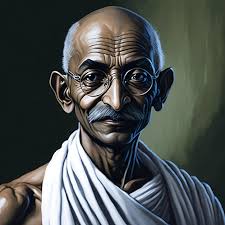
Today marks Martyr’s Day in India. On this day, January 30, 1948, Mahatma Gandhi, father of a free India, visiting New Delhi to address an evening Hindu prayer meeting, was gunned down by nationalist Nathuram Vinayak Godse, who fired three bullets into his chest, killing him. Godse believed Gandhi was overly conciliatory to Muslims.
Falling to the ground, Gandhi reputedly moved his hand to his forehead in the Hindu sign of forgiveness, his final words, “He Ram, He Ram” (“Oh God, Oh God”).
This happened a mere five months after India had won independence from British rule.
Committed to the Tolstoy principle of non-violence, Gandhi would be appalled at the changes sweeping across today’s India in the wake of a Hindu fundamentalism of tsunami proportions not adverse to employing violence against those perceived as threatening its interests, augmented by a Modi government keen to buttress its hegemony by supporting religious bias.
A few days ago, January 22, saw the dedication of the new Ram temple in Ayodhya, said to be Ram’s birthplace. Ram is the seventh avatar of the god, Vishnu, and regarded as deity.
_=Ram Temple, Inauguration Day
Modi had promised the temple in his initial run for prime minister and was present to inaugurate the temple: “Today, our Ram has come. After centuries of patience and sacrifice, our Lord Ram has come,” said Modi.
Built on a 70-acre site previously occupied by the four century old Babri Mosque, torn down in 1992 by a frenzied Hindu mob, thousands died in the sectarian violence that followed. None of the perpetrators were sentenced.
Not that any of this mattered to the Bharatiya Janata Party (BJP) of Narendra Modi, entrenched in power since 2014. The Ram Temple symbolizes the supremacy of both the BJP and a Hindu culture that discourages pluralism.
In contrast, India’s founding fathers, recognizing the myriad religious diversity of India—Muslims, Buddhists Christians, and Jains—eschewed pandering to any faction.
Ironically, India seems to be following in the steps of Pakistan, deliberately created as a Muslim state.
Chillingly, there’s the legacy of Hindu nationalist M. S. Golwalkar, advocating that “minorities in Hindusthan must either adopt the Hindu culture and language, must learn to respect and hold in reverence Hindu religion, must entertain no idea but those of the glorification of the Hindu race and culture, i.e., of the Hindu nation and must lose their separate existence to merge in the Hindu race, or may stay in the country, wholly subordinated to the Hindu Nation, claiming nothing, deserving no privileges, far less any preferential treatment – not even citizen’s rights.”
Modi deemed Golwalkar one of his primary influences in his 2008 book, Jyotipunj (Beams of Light).
Today’s Hindu dominated India, 80% of its population, increasingly imposes Golwalkar’s dictum of a monolithic culture impervious to those it views as interlopers, deserving of restriction and possibly extinction.
In the first eight months of 2023, 525 attacks on Christians occurred. In the state of Manipur, 642 churches were torched by Hindu arsonists “receiving support from people in power,” said the United Christian Forum (UCF).
Notorious was the killing of Australian missionary Graham Stuart Staines in 1999, along with his two sons, Philip (aged 10) and Timothy (aged 6), burnt to death by a Hindu Nationalist group named Bajrang Dal. Stains, a medical doctor, had come to India several years earlier to treat lepers and minister to the poor. He was accused of “forced conversions,” a common rumored charge among Hindu nationalists.
As is, Christians comprise a mere 2.3 % of India’s teeming population.
Indian Muslims, comprising the third largest Muslim population in the world, have likewise been continuously assaulted, often accused of cattle rustling.
2020 saw the Delhi riots, killing 53 people, 40 of them Muslim. In its aftermath, Modi denied his government discriminates against Muslims, despite the BJP’s legislating the Citizen’s Act, restricting citizen eligibility of undocumented immigrants, largely Muslim, and prohibiting proselytizing by Muslims and Christians.
An investigation of the Delhi riots by the independent Delhi Minorities Commission found the violence “planned and targeted” and several police actively participating in attacking Muslims. A subsequent video confirmed several policemen beating five seriously injured Muslim men lying on the street and forcing them to sing the Indian national anthem to prove their patriotism.
I won’t go into persecution of the Sikh population, increasingly viewed as disloyal citizenry, seeking establishment of an independent state. Canadian and American intelligence agencies have uncovered assassination plots, one of them succeeding in Canada, against Sikh diaspora leadership.
Meanwhile, President Biden went all out for the state visit of Prime Minister Midi, hosting a vegetarian dinner on June 21, 2023, despite protestors among Democrats and the urgings of Human Rights Watch and Amnesty International that he confront Modi on the matter of human rights in India. The President would later say he did so in private conversation with Modi, but if so, any details were excluded from his public closing summation.
India, which held so much promise for an enlightened democracy upon its emergence as a free nation, has altered its raison d’être over the last decade, increasingly disenfranchising its minorities and critics.
I have wondered how my friends are faring in Kerala, where the apostle Thomas ministered to the natives 2000 years ago. Its Christian community is India’s largest . Unfortunately, the Catholic leadership has cozied up to the BJP in return for its support of a good price for Kerala rubber. I find it a dubious Faustian exchange, prioritizing profit over the welfare of Christians elsewhere in the nation.
I think back to my privileged visit years ago to Gandhi’s simple bed, cup, and walking stick. I had read about him at age ten, which began my lifetime devotion to this great man, advocate of non-violence, charity to the poor, abolishing caste, proponent of women’s emancipation and, of course, India’s freedom. His impact on Martin Luther King and the American civil rights movement is fully acknowledged.
It’s Martyr’s Day as I said at the outset. Is it conceivable Gandhi’s leading India’s into the promise land of sovereignty has transpired into a new tyranny of oppression, imposed not by a foreign entity, but by an Indian government weaponizing nationalism for its own ends?
Sadly, Modi and the BJP enjoy widespread favorability in today’s India, assuring long term oppression of India’s religious and political minorities, usurping the enlightened legacy of Gandhi and Nehru with their targeted bigotry.
KHAN YUNIS, GAZA -t. (Photo by Ahmad Hasaballah/Getty Images)
If ever there’s been a clarion call for the United States to abandon its military support for Israel, it’s now. Prime Minister Natanyahu has made it clear to Washington that there will be no Palestinian state on the West Bank, rejecting Secretary of State Blinken’s recent plea for a two state resolution as Israel’s surest means to security.
Nor will the Prime Minister, a friend of Donald Trump since the 1980s, scale back Israel’s offensive in Gaza until total victory and return of remaining hostages is achieved.
As I write, nearly 25,000 Palestinians have been killed, two-thirds of them women and children; hospitals, mosques, churches and refugee camps bombed; and a frightened civilian population, 1.9 million of them, or 80% of the Gaza population, herded into a southern corridor, and confronted with disease and starvation.
This constitutes the true genocide, which South Africa has brought to the attention of the International Court of Justice (ICC), the UN’s highest court. Fifty-six other nations support the suit, but not the United States and UK. The European Union has chosen silence.
KHAN YUNIS, GAZA – General view of buildings which were destroyed during Israeli bombardment. Photo by Ahmad Hasaballah/Getty Images)
South Africa has also filed a referral to the International Criminal Court (ICC), not to be conflated with the ICJ, though both are located in the Hague. The ICJ can issue arrest warrants, as it did for Vladimir Putin, who must now avoid signatory countries that include South Africa.
What’s not received ample attention is the economic plight Palestinians face. Before Hamas’ October 7 incursion, 400,000 Palestinians were employed by Israel, largely in construction, agriculture and service sectors. I87,000 Gazans have had their work permits canceled; similarly, 167,000 Palestinians on the West Bank.
In the meanwhile, Israel has set up worker recruiting offices in India and Sri Lanka, with the goal of importing between 50,000 to 100,000 replacements.
This may be part of a long term stategy by Israeli nationalists to encourage Palestinians to leave Israel. Take, for example, Finance Minister Bezalel Smotrich’s call for Palestinian residents of Gaza to leave, replaced by Israelis, who could “make the desert bloom.”
Unfortunately, the Biden administration, despite its call for a cease fire and a two state solution, is unwilling to risk political capital and rebuff Netanyahu by suspending military aid to Israel.
By default, it’s rendered the US complicit in Israel’s criminality, angered Progressives, alienated the Muslim community, made the US a global atavar of hypocrisy, and risks dragging the country into a wider conflict, inflicting incalculable consequences, both home and abroad.
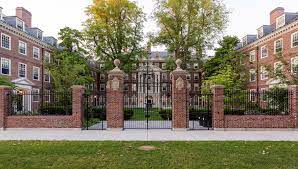
The headlines shout the news of Harvard president Claudine Gay’s resignation.
It should have happened speedily, but not because she allegedly soft-pedaled campus protests calling for intifada while omitting Hamas’ atrocities and was consequently judged antisemitic by Israel supporters. I believe the presidents of Harvard, Penn, and MIT were essentially ambushed when they were interviewed—or is it interrogated?—by a House committee that had already made-up its mind.
As a former academic for nearly forty years, I firmly support the ACLU in its lawsuit defending University of Florida chapter of Students for Justice in Palestine, ordered deactivated in Florida’s public colleges by Governor DeSantis (ACLU defends).
Protecting the First Amendment is paramount and criticism of Israel shouldn’t be conflated with antisemitism.
Despite the ruckus over her “it depends on context” when asked if threatening Jews with genocide violated Harvard’s code of conduct, I think she was right.
As I write, seventeen members of Biden’s campaign staff sent an anonymous letter to Biden, calling for a permanent truce in Gaza and suspension of arms shipments to Israel.
Is it antisemitic to want the killing of Palestinian civilians, now exceeding 21,000, to stop? Whole families have been wiped out by incessant Israeli bombings; thousands more, nearly half of them children, wounded. Survivors haven’t any place to go. Schools, mosques, churches, hospitals and refugee camps haven’t found reprieve from largely American supplied weaponry. Survivors face disease and famine.
Was UN Secretary-General António Guterres antisemitic in saying Hamas violence didn’t happen in a vacuum”? Further, that “hospitals have turned into battlegrounds,” amid “the constant bombardment of all parts of Gaza” and rendered Palestinians homelessness and “without the essentials to survive”?
Meanwhile, West Bank violence continues unabated, with little said about repeated settler incursion on Palestinian lands and a vast expansion of Israeli settlements, rendering any two state resolution increasingly implausible.
A recent poll indicates 61% of the American public fault Biden’s strident support of Israel. Are they therefore antisemitic as well ?
Would it surprise you to learn that most orthodox Jews are anti-Zionists?
And then there’s that gadfly Jewish socialist senator from Vermont. I better stop. I think you see where I’m coming from.
Harvard was right to initially support its beleaguered first black president and just second female holding that post in its nearly 400 year history.
At least, in the beginning. But then money has a way of changing minds.
What began as a trickle became a tsunami, 1600 big spending Jewish alumni, some of them billionaires, pulling back from any more donations to the university.
Conservative Washington Post columnist George Will had said suspending giving wouldn’t dent Harvard policy, Harvard enjoying a 51 billion dollar endowment.
But he was wrong. 45% of Harvard’s 2022 $5.8 billion income came from donations.
When it comes to Gay’s several instances of plagiarism, I part ways with Harvard. Like most academics—I taught college English for forty years—I take plagiarism seriously. Failure to attribute sources constitutes both theft and fraud. The unveiling of her academic misdeeds called for immediate termination of employment.
In an opt-ed yesterday in The Guardian, former Secretary of Labor, Robert Reich, decries what he sees as a threat to campus free speech, donators marshaling monetary divestiture to secure their political perspective. He has a point.
Reich says, however, that he’s unable to comment knowledgeably on Gay’s alleged ¡plagiarism, but notes the bulk of the charges originated from the online conservative journal WashingtonFreeBeacon (Robert Reich).
So what? Does the source taint its accuracy? It’s the old guilt by association trick McCarthy played so notoriously.
The Left were privy to the allegations for some ten days, but buried it. Not until conservatives persistently pursued the story, led by Christopher Rufo, did the budding scandal take hold in the NYT, The Guardian, CNN and elsewhere.
If you pressed me, I could show you the specifics of Gay’s many instances of lifted passages, fifty initially in number with six more added the day before her resignation after meeting with the Harvard Corporation.
Ultimately, the new revelations piled on top of spiraling donator backlash, proved the straw that broke the camel’s back.
Did she get banished from the campus? Don’t even go there! Harvard, which initially made light of the charges, subsequently helped her correct the faulty passages in eight of her publications and reappointed her to her professorship in the Political Science Department.
If the shoe were on a student’s foot, the frequent punishment at reputable universities is expulsion for a year.
Talk about a double standard and the blatant hypocrisy of its Veritas motto, Harvard, you don’t walk the talk.
Writing anonymously for the Harvard Crimson, a student on the Honor Council that tries such cases, wrote, “When my peers are found responsible for multiple instances of inadequate citation, they are often suspended for an academic year. When the president of their university is found responsible for the same types of infractions, the fellows of the Corporation unanimously stand in support of’ her.” (Harvard president).
But why did an illustrious Ivy League university prove so intransigent in all of this is the bottomline question.
In a recent op-ed, black law school professor and former Harvard graduate Winkfield Tryman, Jr., comments that the plagiarism charges “are well deserved” and “not racial in nature…No one in good faith should defend President Gay because she is the first black president of Harvard. And yet, many are coming to her defense. Having finally got their wish of a Black president of Harvard, Harvard seems unwilling to let her go. The racial wagons have circled around Gay, with President of the NAACP alleging that White Supremacy is afoot and Morehouse President David Thomas claiming in a Forbes interview that Gay is a scholar at the “top of her profession… as qualified as any President Harvard has ever had” (Newsweek).
Truth be told, this illustrious Harvard prez “at the top of her profession” has published a mere eleven papers and not one book.
Now that’s a first, but of a dubious kind. Her predecessor, Larry Becow, the son of immigrants, and whose mother survived Auschwitz, wrote four scholarly books and scores of peer reviewed articles.
Unfortunately, this debacle at Harvard unfairly triggers a mindset of suspicion of legitimate black scholars, deflating their credentials and singular achievements.
Welcome to the New Year and my sixth annual Draw-bag Booklist I’ve curated from the very best sources. Perhaps you’ll find pleasure among several of those books listed. I personally use my list to prevent my straying from the reading trail, taking time out only for the best reads, ample in their pleasure, abundant in their wisdom and solace:
FICTION:
Boyd, William. The New Confessions. (Boyd specializes in whole life narrative, delivered in conversational prose, and unfailingly riveting. Famous for AnyHuman Heart, this cerebral novel also has its many fans.)
Cain, James. The Postman Always Rings Twice. (Modern Library lists Cain’s novel among the best 100. A mystery classic, it’s been turned into a movie seven times.)
Chekhov, Anton. Peasants and Other Stories. (Famed critic Edmund Wilson collected and wrote the introduction to these late short stories of Chekhov that scrutinize Russian society, each a genre masterpiece.)
Colette. The Pure and the Impure. (Colette thought this novel the best she’d written and nearly autobiographical. Published in 1934, it explores love’s labyrinths, especially among women. Get the recent New York Review of Books edition. Insightful critic Judith Thurman wrote the introduction.)
Duffy, Bruce. The World As I Found It. (Joyce Carol Oates deemed it “one of the five best books,” a blend of fact and fiction, centering on philosophers Bertrand Russell, G. E. Moore, and Ludwig Wittgenstein; on display, their disputes, contradictions, and follies.)
Gilbert, Elizabeth. The Signature of All Things. (The author of Eat, Love, Pray pens a page turner, reviving the milieu of the late 18th and 19th centuries and the courage and achievements of its remarkable female protagonist. Meticulous in its underlying research and compelling in its superlative prose, you’ll grow fond of this book.)
Laestadius, Ann-Helén. Stolen. (An indigenous Sámi author’s novel reveals a repressed culture struggling for survival in Scandinavia. A best seller in Sweden.)
Santayana, George. The Last Puritan: A Memoir in the Form of a NoveI. (Words fail to adequately express my devotion to Santayana, an eclectic essayist, scintillating in observation, endowed with sagacity, verbally in command, cultural connoisseur, ever eloquent, and unflinchingly honest. The Last Puritan, his only novel among his many publications, tells the story of Puritan descendant Oliver Alden, embedded in its strictures, seeking escape, yet unable to break their hold. Published in 1936, it finished second to Gone with the Wind in popularity.)
Smith, Betty. A Tree Grows in Brooklyn. (A favorite American classic, it tells the story of a young girl at the turn of the 20th Century and her family’s struggle with poverty. Replete with wisdom, poignant and beautifully told, it deserves its wide esteem.)
Spark, Muriel. A Far Cry From Kensington. (A widow in a postwar London publishing firm reminisces. Somewhat autobiographical.)
Strout, Elizabeth. Olive Kitteridge. (This book won a Pulitzer Prize. Comprised of thirteen stories, centering around its eponymous protagonist, it narrates the fear of change, yet the hope it may bring.)~~
E. B. White. Charlotte’s Web. (Among the most beloved stories for children, White, celebrated for his prose mastery, wrote it late in his career, narrating the friendship between livestock pig Wilbur and barnyard spider Charlotte. Publishers Weekly thought it the best children’s story ever written. Adults admire it too.)
Non-Fiction
Bradatan, Costica. In Praise of Failure: Lessons in Humility. (Failure can help us find our better selves. Portraitures of Weil, Gandhi, Cioran, Mishima, and Seneca by a renowned contemporary philosopher guaranteed to inspire.)
Dawidziak, Mark. A Mystery of Mysteries.(Edgar Allen Poe’s last days and untimely death have been shrouded in mystery. Dawidziak’s research into primary resources offers convincing explanatory evidence unveiling Poe’s final days.)
Hume, David. Treatise on Understanding. (Must reading by a landmark empiricist that continues to reverberate in its bold analysis of the human mind.)
Malik, Kenan. Not So Black and White: A History of Race from White Supremacy toIdentity. (A stunning refutation of identity politics on the subject of contemporary racism by a noted Observer columnist.)
Marsh, Henry. And Finally: Matters of Life and Death. (A neuroscientist confronts his mortality with lessons for all of us. Of Marsh, The Economist writes, “neuroscience has found its Boswell.”)
Mill, John Stuart Mill. Three Essays on Religion: Nature, the Utility of Religion, andTheism. (In these essays, published posthumously, “the saint of rationalism” advocates a humanism grounded in reason, and serving human needs. Mill is among those who have influenced me profoundly.)
Nussbaum, Martha. Justice for Animals. Our Collective Responsibility. (One of the most salient pleas for the rights of animals you’ll ever read.)
Raban, Jonathan. Passage to Juneau: A Sea and Its Meaning. (Acclaimed literary travel writer, Raban pens a biographical travel venture of middle-age. Many consider this book his finest.)
Saunders, George. A Swim in the Pond in the Rain. (Seven masterful Russian short stories, with subsequent analysis. You’ll never read a short story the same way again. Saunders is one of America’s most gifted writers and winner of the prestigious Booker Prize.)
Snyder, Timothy. The Road to Unfreedom. (A sobering review of the rise of contemporary authoritarianism by an eminent Yale historian.)
Thunberg, Greta. The Climate Book. (A compendium of the latest on the past, present and future of climate change compiled from more than 100 experts.)
Thurman, Judith. A Left-Handed Woman: Essays. (Second volume of New Yorker essays by one of our preeminent biographers and essayists, winner of the National Book Award for her biography of Isaac Dinesen. Vivid, unforgettable portraitures of bold, independent women.)
The lines are long at the Seattle Aquarium’s annual February Octopus Week, with the Octopus Blind Date on St. Valentines Day its highlight, attracting hundreds, if not thousands, to witness a potential Octopus mating.
By any measure, Octopuses are wondrous creatures as smart as your golden retriever. With a larger centralized brain than that of all animals except birds and mammals, they’re neurological marvels with advanced capabilities.
Amazingly, each of its eight legs contains a mini brain, assisting the primary brain in local control. Evolving over 300 million years into complex organisms, octopuses are the most cerebral of the invertebrates. We humans are late interlopers, having been here by most scientific estimates a mere 200,000 years as recognizable homo Sapiens.
Endowed with nine brains in all, 500 million neurons, and three hearts, they can open prescription bottles, use tools, deceive predators, and exhibit personalities. The two supplementary hearts help in supplying oxygen. Octopus blood is blue because of its oxygen-carrying pigment, hemocyanin.
Octopuses can even distinguish people, some of whom they dislike, which shows they have memory. Affectionate, they like having visitors scratch their heads.
They’re enthusiastic when it comes to toys. Throw them a bottle or ball and they’ll play with it.
And those large eyes, so human like, yet far more complex, never cease to fascinate aquarium goers.
They’re masters at camouflage too, not merely to evade predators, as changing color can reflect their moods and health.
Sadly, octopuses have short lifespans, at most, two or three years. After mating, males become senescent and females die when their eggs hatch.
Found in all oceans, 300 known species of octopuses exist, varied in size and weight. No other invertebrates come close to these creatures in beauty, intelligence, capability, and complexity.
I recommend watching the Oscar winning Netflix documentary, My Octopus Teacher, to appreciate more fully the wondrous splendor of these evolutionary miracles of the sea.
Curious, exploratory, and affectionate, they face an ominous future, as Octopus is increasingly a featured menu option in haute cuisine restaurants of the Western world.
Culinary octopus fare isn’t anything new, of course, particularly in Asia. It’s simply that economic interests have moved to exploit increased demand and replace diminished sea life largely from over fishing.
Between 1950 and 2015, the harvesting of wild octopuses has increased tenfold, or to an estimated 359,000 tons annually, principally by China Japan, and Mexico. African fisheries have now joined them, expanding their catch to octopuses and contributing to a further decline in their numbers.
Ominously, Spanish international NuevaPescanova has recently announced plans to open the world’s first commercial octopus farm in 2024 in the Canary Islands, entailing the slaughter of 3000 tons of Octopus vulgaris per year, i.e., 1 million octopuses. Octopuses would be killed by placing them in water at -3C/26F temperature.
Jonathan Birch, associate professor at the London School of Economics, headed a review of more than 300 scientific studies, revealing that octopuses feel pain and pleasure, leading to their designation as “sentient beings” in the UK’s Animal Welfare (Sentience) Act 2022.
Prof Birch believes that high-welfare octopus farming is “impossible” and that killing them by “ice slurry” assures their slow, painful death.
Proponents, however, argue that octopus farming is necessary for the protection of wild stock, the same argument they used to justify the farming of salmon, now a lucrative industry supplying 70% of consumed salmon.
Further, we are living in a time of growing human population, with the UN projecting a population of 9.7 billion by 2050, much of it occurring in developing nations deeply affected by climate change, reducing their food resources.
Proponents contend that aquaculture assures a safer consumer foodstuff, free of mercury, lead, and parasites, pointing to salmon farms as an example.
But this isn’t true, as farmed salmon are deliberately fattened, and, consequently, prone to accumulating more PCBs (polychlorinated biphenyls), a persistent organic pollutant.
As for parasites, sea lice infestations have been widely reported in aquaculture farms in Canada, the UK, Norway, and Ireland. Sea lice chew on salmon, creating lesions that dilute a proper salt-to-water balance.
Aquatic farming results in still further decline in wild fish numbers. Currently, one third of the world’s catch is used as feed for its farmed captives.
Unfortunately, the harvesting of farmed octopuses suggests a further expansion of factory farming with its inherent cruelties and environmental consequences.
Currently, some 550 species of sealife are now farmed, from oysters and shrimp to salmon, trout, and bluefin tuna, and this is only the beginning
The bottomline is whether an intelligent creature, the octopus, should be exploited at all.
Are there no boundaries for humans? Must we someday awake to find we’ve emptied the seas? That dolphins, whales, and octopuses are simply the stuff of memory relegated to children’s picture books?
I finished reading E.B. White Essays moments ago. Since the essay genre happens to be my favorite indulgence, I found White fascinating, the great master, and among the finest American essayists of the last century that includes the likes of Didion, Dillard, Wallace, Baldwin and Sontag.
White wrote several thousand essays, 1800 of them for the New Yorker. I have liked his modesty, his unaffected style, keen powers of observation, evocative musings, and love of nature.
He adored Thoreau’s Walden, my favorite American classic. Like Thoreau, White questioned some of the assumptions of his fellows, that technology assured happiness and that man could improve upon nature.
How can I not admire this good man who found beauty in life’s complexity and changing moods?
I must say a chill went up my spine when I read “Here is New York,” written in a steamy 1948 summer and, for many critics, the finest tribute ever rendered to Gotham. White was deeply troubled by the advent of the atom and hydrogen bombs, fearing their exponential future consequences. America had escaped WWII’s destruction, but danger stalked its future, with New York vulnerable as a primary target:
The subtlest change in New York is something people don’t speak much about but that is in everyone’s mind. The city, for the first time in its long history, is destructible. A single flight of planes no bigger than a wedge of geese can quickly end this island fantasy, burn the towers….
I can’t say I’ve ever encountered anything more prescient than this foreboding passage written 52 years before 9/11.
But this is partially witness to why White is worth your time, observant, asking the hard questions, sifting out the implications.
Unfortunately, if you google “greatest 20th century American essayists,” he gets omitted. This is perhaps due to his three best selling children’s books, including Charlotte’s Web, resulting in his essay prowess being overshadowed.
Those of us who did English composition in our freshman year of college are more apt to associate him with Strunk and White’s Elements of Style, one of the most effective writing guides ever published. White had studied at Cornell under Dr. William Strunk, Jr. who had originally published it in 1920. White revised it in 1959, adding to it substantially. A no nonsense guide, it called for concise prose, accurate grammar, unified paragraphs, concrete description, and avoidance of the passive voice.
White carried out its precepts and is famed as a writer of the unembellished style, direct, easy to follow, yet sophisticated in its declarative sentence structure and keen observations with their implications. You’ll not find many subordinated clauses or inverted sentences. No semicolons or dashes. No arcane vocabulary.
Of the 31 essays in this collection, chosen by White for inclusion, my favorite is “Back to the Lake,” moving in its reminiscence as he takes his eleven year old son back to the Maine lake of his childhood, an essay critic Joseph Epstein remarks “shimmers like a perfect poem; everything in it clicks” in its theme of birth, rebirth, and death:
When the others went swimming, my son said he was going in, too. He pulled his dripping trunks from the line where they had hung all through the shower and wrung them out. Languidly, and with no thought of going in, I watched him, his hard little body, skinny and bare, saw him wince slightly as he pulled up around his vitals the small, soggy, icy garment. As he buckled the swollen belt, suddenly my groin felt the chill of death.
Though critics often refer to White’s humor, there looms a stubborn apocalyptic streak in his writing as in “Here is New York.” Or take this passage:
I think when the end of the world comes the sky will be its old blue self, with white cumulus clouds drifting along. You will be looking out of a window, say, at a tree; and then after a bit the tree won’t be there any more, and the looking won’t be there any more, only the window will be there, in memory—the thing through which the looking has been done. I can see God, walking through the garden and noticing that the world is done for, reach down and pick it up and put it on His compost pile. It ought to make a fine ferment.
White struggled with general anxiety, beginning in his childhood. There were so many fears that plagued him, especially about his health. He was afraid of meeting people and of giving speeches. He didn’t show when being awarded the Presidential Medal of Freedom. He avoided parties and weddings.
White would ultimately be honored with virtually every literary prize, including a Pulitzer, yet remained a shy, unassuming man, modest in his wants, relishing farm life in Maine.
Some readers may find White too dry or intellectual for their taste and some of his essays dated or discursive. White was never fated to win the Nobel, but he always made sense in half the space, which would have made Strunk smile. White excels when he foregoes political commentary, taking up instead depictions of everyday life:
I like the cold. I like the snow. I like the descent to the dark, cold kitchen at six in the morning, to put a fire in the wood stove…. I steal down in my wrapper carrying a pair of corduroy pants…and fill the kettle with fresh spring water…with a poker I clear the grate in the big black Home Crawford 8-20, roll up two sheets of yesterday’s Bangor Daily News, and lay them in the firebox along with a few sticks of cedar kindling and two sticks of stovewood on top of that” (“The Winter of the Great Snows”).
I have loved keeping company with White these last several days, his honesty, clarity, remonstrances, love for animals and nature uplifting. So many passages, wise and luxurious in sentiment like this one from “Letter from the East”:
With so much that is disturbing our lives and clouding our future, beginning right here in my own little principality, with its private pools of energy (the woodpile, the black stove, the germ in the seed, the chick in the egg), and extending outward to our unhappy land and our plundered planet, it is hard to foretell what is going to happen. I know one thing that has happened: the willow by the brook has slipped into her yellow dress, lending, along with the faded pink of the snow fences, a spot of color to the vast gray-and-white world.
White passed from us at his beloved North Brooklin home in Maine on October 1, 1985. He was 86.
His legacy, like that of Thoreau, will endure, for talent always makes room for itself.
The photos featured in today’s media of masses of Palestinians fleeing Israel’s incessant bombing validates the truth that “a photo is worth a thousand words,” but in a sad way.
As I write, more than 11,000 Palestinians have died, 4000 of them children, and 25,000 have been wounded. The violence continues, Israel stubbornly ruling out a cease fire, demanding Hamas first release its 240 hostages.
The news on the West Bank is dismal as well. An area much larger than Gaza and an Arab majority, it has seen 175 civilians killed, nearly all of them Palestinians, 33 of them children, since Hamas’ incursion into Israel on October 7. Israel holds several thousand West Bank prisoners, hundreds without charge or trial.
The UN Office for the Coordination of Humanitarian Affairs reports that more than 1000 Palestinians with title to their land have been forcibly removed from their homes on the West Bank since October 7.
This follow a long history of settler intimidation, abetted by Israel Defense Forces, targeting Bedouin herders, Palestinian olive groves and farms. Homes are burned and protestors killed, yet the media allows this criminality to go unreported. It cares only about normalization, not Palestinian grievances.
Al Jazeera has it right: “Were the American media and political establishment not so firmly committed to transmitting a thoroughly decontextualised version of this war – and of Israel/Palestine in general – perhaps a news anchor would ask whether it never occurred to Israel that the Palestinians would ever “retaliate” for 75 years of ethnic cleansing, suffocating blockades and massacres” (https://www.aljazeera.com/opinions/2023/11/12/how-americas-bloodthirsty-journalism-cheers-on-israels-war-on-gaza).
While Hamas’ barbarism is surely condemnable, it’s the nature of Israel’s disproportionate response that troubles the international community. Disallowing humanitarian aid, curtailing food, water, and energy, bombing hospitals, ambulances and mosques, a refugee camp two days in a row, justifies growing international rage.
Ordering 1.2 million Palestinians to abandon their homes in north Gaza, with no real place to flee while denying them subsistence, constitutes a glaring war crime.
Concurrently, the United States, Great Britain, and France have contributed to Israel’s unmeasured response, accelerating arms shipments to Israel and making themselves complicit
Israeli repression of Palestinians, often violent, has its lengthy narrative. With the seizure of the West Bank following the 1967 War, a new chauvinism of a greater Israel ensued to the detriment of Palestinians in the Negev, Gaza, and the Golan Heights, resulting in the rise of Hamas, a Palestine offshoot of the Muslim Brotherhood.
In 1983, Israel conspired with Christian Phalangists in Lebanon in the massacres of several thousands of Palestinians and was found culpable by both the UN’s and Israel’s own subsequent investigations. The UN termed it “genocide.”
In the aftermath of 1948’s birth of the state of Israel and its victory over Arab armies, Israel expelled 750,000 Palestinians from their homeland, many of whom populate today’s Gaza and West Bank.
Five years ago, during the Great March of Return in Gaza, Israelis killed hundreds of peaceful demonstrators and wounded several thousand others.
While we hear a lot about a two state remedy, it’s unlikely, since it takes a marriage of minds for that to happen. Palestinians don’t trust Israelis, especially a government led by nationalist leadership under Netanyahu. They’ve also witnessed the second class citizenship of Arabs granted citizenship.
There do exist Israelis who want to address Palestinian grievances, but do so at great cost. Many have been arrested, their identities and addresses posted online, their families threatened.
In 1995, a religious extremist killed Prime Minister Yitzhak Rabin, who had sought to implement the Oslo Accords with its provision for Palestinian self rule in Gaza and the West Bank: “We who have fought against you, the Palestinians, we say to you today in a loud and a clear voice: Enough of blood and tears. Enough… We are today giving peace a chance and saying to you and saying again to you: Enough.”
In the aftermath of Rabin’s assassination, Netanyahu came to power, resulting in negotiations for a just settlement with the Palestinians being abandoned in favor of surveillance and military might. Hamas was to be controlled, not dismantled. Netanyahu needed Hamas to offset the West Bank’s Palestinian Authority, open to negotiation. October 7 changed the venue.
Zionism is the real culprit here. Israel has never subscribed to the two state idea in which Palestinians would be masters of their own house.
Addressing Palestinian members of Knesset in 2021, far right Defense Minister Bezalel Smotrich said, “It’s a mistake that Ben-Gurion didn’t finish the job and didn’t throw you out in 1948.”
Recently, Smotrich has voiced sentiment for a one state Israel: “Peace will not emerge so long as we maintain our hold on starting assumptions that this land is fated to contain two collectives with conflicting national aspirations. If this is the case, our grandchildren and our great grandchildren will inevitably be destined to live by the sword….The ‘Palestinian People’ is but a counter-movement to the Zionist movement. Those who choose not to let go of their national ambitions will receive aid to emigrate to one of the many countries where Arabs realize their national ambitions, or to any other destination in the world.”
Is it conceivable that Israel’s vociferous response, defiant of the international community’s call for a ceasefire, is deliberately strategic? That not only Hamas should be eliminated, but the Palestinian presence once and for all? Make it so intolerable for them that they’ll leave?
Ominously, Prime Minister Benjamin Netanyahu, addressing his country on October 28, quoted Deuteronomy: 25:17: “You must remember what Amalek did to you.” If you continue to verse 19, you’ll read, “You shall blot out the memory of Amalek from under heaven. Never forget!” In 1st Samuel 15: 2-3, the Hebrew Bible exhorts, “Now go, attack Amalek, and proscribe all that belongs to him. Spare no one, but kill alike men and women, infants and sucklings, oxen and sheep, camels and asses!”








 Brimmings: up from the well