
Politics can be a mean way of life, filled with scurrilous attacks on opponents, replete with prevarication, and downright lying. I stay away from it, as much as possible.
Case in point, just the other day former Vermont governor and one time seeker of the Oval Office, Howard Dean, took a shot at Wisconsin governor, Scott Walker, commenting on MSNBC’s Morning Joe: “The issue is, how well-educated is this guy?”
Walker, who may throw his hat into the ring for the Republican nomination in 2016, dropped out of college almost at the finish line in the spring of his senior year to join the Red Cross.
Our Constitution, however, lists only three prerequisites for our nation’s highest office: natural born citizen, at least 35 years old, and a minimum of 14 years lived in the United States.
Maybe Dean and others of his stripe might want to try amending our Constitution to secure their elitist government.
I would contend our government is just too elitist as it is, an oligarchy of power interests distanced from the vast majority of working Americans, three quarters of whom don’t sport a college degree.
I would also question the underlying assumption that a college degree automatically confers knowledgeability on anyone for any job.
I was a prof for 40 years and I can tell you first hand my students learned best, not from books or lecture, but hands-on. That’s what internships are all about, Dean, and you of all people, a medical doctor, should know this, since M. D.’s do a year of internship followed by several years of residency.
I have to confess I made a lot of dumb mistakes as a young prof despite 10 years of college before I was really fit to step into the classroom.
I would like to ask Dean how it was, judging by his own maxim, he was suddenly fit to be governor having trained to be a physician. That’s a huge gap. Maybe Rand Paul can help us out here.
My father had only an elementary school education, dropping out of the public schools like so many of his generation in the pre-World War I years. Like several of my uncles, he worked as a leather tacker for all of his working life in a brutal environment of body-sapping humidity and toxic fumes in one of the most deprived areas of Philly.
But for all his lack of schooling, he was one of the wisest men I’ve known across a life time, intuitive, and possessed of a healthy dose of skepticism whenever the facts didn’t seem to line up.
Not only do I owe my love of baseball to him, but the importance of being aware of what’s going on the world. The TV evening news with John Cameron Swayze or Douglas Edwards was time out and you’d better not be talking while they were on.
Every Sunday morning, he’d send me up the block for the Philadelphia Inquirer, just a dime then (imagine!) and split the newspaper with me on my return, which I’d eagerly devour, sprawled out on the floor. At 10, I was fully aware of a new war in a far off place called Korea, and spell bound by the firing of MacArthur not long after.
I remember his love for Winston Churchill, who had warned the West in the early thirties of the menace of Joseph Stalin.
My father was always slow to swallow the government line, speculating that we might never really know the facts behind that “surprise” attack on Pearl Harbor, a surmise that historian John Toland’s recent book. Infamy: Pearl Harbor and Its Aftermath, lends credence to.
I take offense when the snobs start wagging their tongues, the privileged lording it over the common herd, whether in the political area or anywhere else
Money, celebrity and, unfortunately, education–one of the most rampant bastions of elitism– can become divisive weaponry in putting down others to boost yourself up.
Or to efface those opinions you don’t like. Dummies!
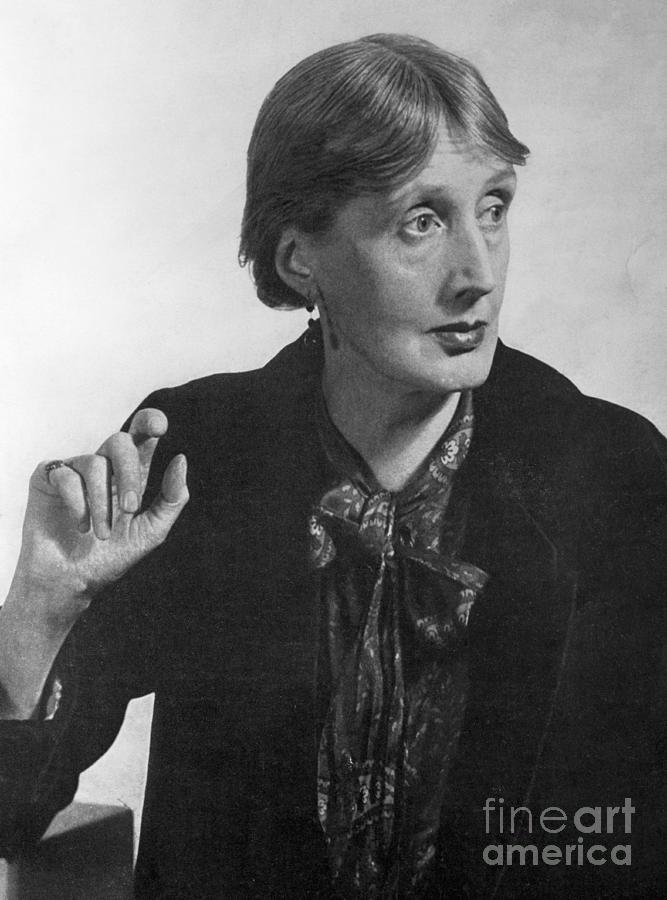
Snobs always want to impress. As Virginia Woolf put it, herself a snob, “The essence of snobbery is that you wish to impress other people.”
I like best how one of my favorite authors, D. H. Lawrence, who came from miner stock, defined it: “[Snobbery] is the desire for what divides men and the inability to value what unites them.”
Ah, let me call to mind just a few names of those from a humble way of life, without college diplomas, who have made a positive mark upon the world. You just may be surprised:
In Science:
Thomas Edison
George Washington Carver
In Business:
Henry Ford
John D. Rockefeller
Steve Jobs
Mark Zuckerberg
In the Arts
Thomas Hardy
Mark Twain
William Faulkner
Vincent Van Gogh
William Shakespeare
In Politics
Andrew Jackson
John Glenn
Winston Churchill
Abraham Lincoln
These are my heroes.
These are my greats!
My favorite people also spring from everyday people I’ve known who never did a mean social thing in their lives like dismissing others for their lack of money, possessions, or the right diploma; or practicing a trade; or for being Black, Asian, Hispanic, Muslim, or gay; or because their political beliefs don’t mesh.
I measure people by a different yardstick: people who inspire with their kindness and compassion, from every walk of life, whose praise comes from the mouths of others and not their own; whose intelligence makes room for them to lead; who, to go back to Lawrence, unite rather than divide.
I like Shaw’s wisdom in his play Pygmalion, where he has Professor Henry Higgins put his finger on what makes for good manners–not whether what you do is in itself good or bad, but that you behave the same way towards everyone.
I must warn, however of another kind of elitism that has taken vogue, of a pride in defiance, or smashing icons for its own sake; a snobbery of rebellion where even norms that have given life grace, and with it, expectancy, are trampled upon in a frenzied allegiance to a vulgarity of self-indulgence of antinomian hue.
Snobbery is a way of life that will always be with us, but you and I, forewarned, needn’t embrace it and, by doing so, gain so much more.
–rj


 Brimmings: up from the well