
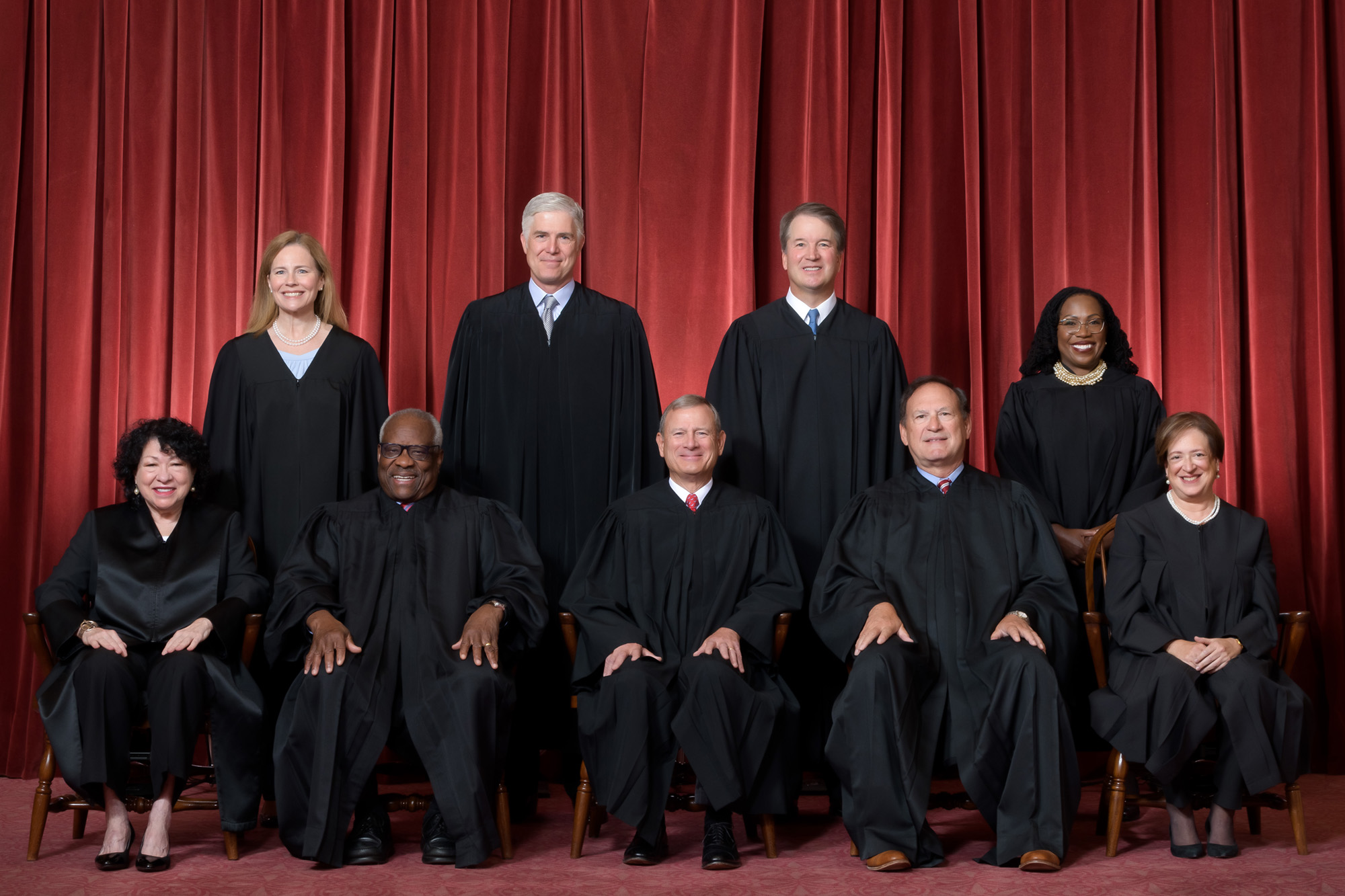
I had been opposed to packing the U.S. Supreme Court—that is, expanding the court to thirteen members. I’ve changed my mind.
In fact, I regard it as a necessity, given the threat of two more years of Trump, even if Democrats control both the House and Senate subsequent to the mid-terms.
As is, there is little Democrats can do to stop him. While the House may very well vote to impeach him, removing him from office requires a two-thirds majority of 67 senators to convict. Even with a likely Democratic surge, all polls indicate that Democrats will fall short of that number. I am, of course, assuming Republicans will not join Democrats in voting for conviction.
The Roberts Court has inflicted serious limitations on what Congress can do. In its 2024 decision, Trump v. United States, it ruled presidents have immunity from prosecution in connection with their core constitutional powers and presumptive immunity for other official acts.
The new Congress can halt funding for the Iran war, but the Trump administration can simply use existing funds to continue the conflict.
Congressional committees can initiate investigations into Trump administration excesses, and the judiciary may rule against its mandates, but Trump has proven able to delay enforcement by repeated appeals, ultimately to the Supreme Court.
Congress can endeavor to restrict funding, but the president can veto, requiring a two-thirds majority to overcome.
It’s imperative that, with all deliberate speed, we liberate the highest court from its Republican tenure.
It is this court that has ruled corporations are people, ushering in massive financial contributions motivated by pecuniary interests.
It is this court that overthrew Roe v. Wade (1973), which had granted women abortion rights.
It is this court that, in rulings such as AT&T Mobility v. Concepcion, restricted class-action lawsuits, making it far more difficult for consumers to hold large corporations accountable.
It is this court that allowed partisan gerrymandering (Rucho v. Common Cause, 2019), resulting in the ongoing erosion of voting rights.
It is this court that created steeper hurdles for holding prosecutors and state institutions accountable for constitutional violations (Connick v. Thompson).
Chief Justice Roberts counters that the court should not be mischaracterized as a partisan entity, but through its ongoing rulings, it has emerged as clearly partisan, unheeding of safeguards to protect public welfare and, worse, enhancing the president over the sovereignty of Congress, eroding the Founding Fathers’ constitutional framework of checks and balances.
To protect our nation from the erosion of democracy, it is time to restore our nation to sanity and expand the U.S. Supreme Court.
—RJ

