Growth is Good?

When driving, I not infrequently see bumper stickers proclaiming, “Growth is Good.” I’m not sure about that. I never have been.

I’m drawn to solitude. I can’t fully explain why; I only know it has always been so.

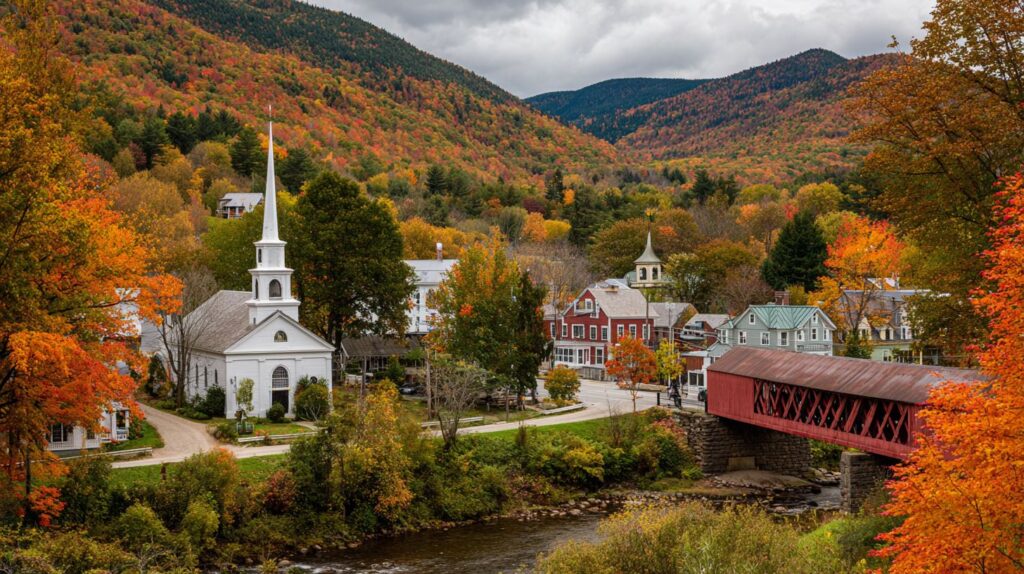
From childhood, I loved my native New England—its rural charm, its villages gathered around commons harkening back to Revolutionary times. I miss the sea, the rolling mountains, the stone walls and white-steepled churches.

Vermont has long held me in its grip, with Maine not far behind—rural, twisting lanes with scant traffic, mountains rising beyond charming villages, the faint salt scent of the seashore.

For all my love of open space, my early years were divided between rural Rowley, MA, and Philadelphia. I’ll take Rowley any day over the so-called City of Brotherly Love. I have returned to Philadelphia twice; both visits stirring up memories I would rather forget—urban blight, high crime, dirty streets, endless row houses and sweltering summer nights.

When I lived in Rowley in the 1950s, the town numbered about 1,600 souls. Thirty-five miles north of Boston, it has since tripled in population to roughly 6,400 and become a fashionable bedroom community for Boston’s well-paid professionals, aided by the MBTA Commuter Rail—a comfortable fifty-five-minute jaunt into Boston’s North Station.

We lived on Bennett Hill Road, a mile’s walk from the common. In summer I would rush out the door, glove hooked over my bicycle’s handlebar, eager for baseball on the green.

I loved walking that narrow, curving road lined with beach plum bushes and open fields, breathing the smell of nearby salt marsh bordering the ocean, as I waited for the school bus at the corner.

Home was a two-hundred-year-old house set on twenty-six wooded acres of pine. Its long driveway was lined with boulder stone walls in the old New England manner, guarded by towering elms like ancient sentries.

Deep in those woods I had a private place I visited often, drawn by its stillness—the scent of pine rising from fallen needles that softened the earth beneath my feet.

Today, Rowley finds itself embroiled in debate over a state mandate requiring density zoning for roughly six hundred new multi-family housing units near the train station.

Bennett Hill Road has changed. The beach plum bushes are gone; open fields have yielded to wooded suburban enclaves. In the 1950s, the average home sold for $10,000. Today it approaches $1 million.

I cannot forecast Rowley’s fate, though I hope it doesn’t become another Danvers or Peabody—once distinct towns now absorbed into the dense sprawl of greater Boston.

A major development called “Rowley Farms” proposes a “town within a town,” combining denser housing and retail—an idea that would have been unimaginable in 1957.

Bumper stickers may insist that growth is good. I remain unconvinced. I am, and likely will remain, a stubborn holdout for a way of life that prized quiet contentment—secluded from the noise, the restlessness, and the accumulated griefs of urban life.

—rj

The Shouting Silence

D.G. Chapman, Upsplash

Silence has always allured me, most often when it is bound to expanses empty of people—though not always. I can find it just as readily in a library, or even in my own home when left to myself.

It is not, I believe, a resistance to an oppressive environment—work, academics, trauma, peer pressure, or the quotidian churn of human caprice—what psychiatry terms “psychological reactance.” It goes deeper than that, perhaps rooted in my introversion, which inclines me away from crowds and constant social encounter.

I carry memories of three landscapes that produced instant rapture: a sense of detachment, of absence from time itself—something larger than me, and yet intimately felt.

The first occurred when I was a graduate student in North Carolina, visiting the hillside at Kitty Hawk where the Wright brothers first achieved sustained flight in their ungainly aerial contraption. I had gone with friends, who wandered along the beachfront below, leaving me alone atop the hill. There, history seemed to recede. The wind moved through the grass, the sky stretched open and unmarked, and for a moment the present dissolved, as though time itself had paused in reverence.

Then there was Arlington National Cemetery, its vast rows of symmetrical white grave markers extending beyond easy comprehension. The stillness there was not empty but weighted, a silence shaped by collective sacrifice. For a brief moment, the eternal peace of America’s fallen became my own.

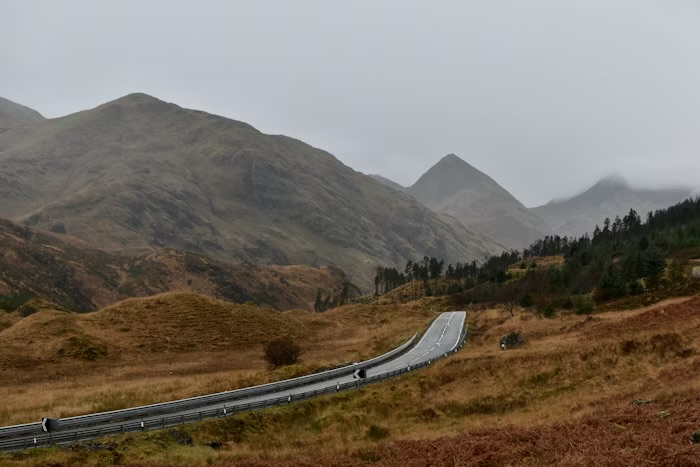
Most memorable of all were Scotland’s Highlands. Driving eastward from Edinburgh, they rose suddenly and unexpectedly across the horizon—rugged, green, and seemingly untouched by human intrusion. I pulled over, stepped out, tested the firmness of their verdure beneath my feet, and listened to what I can only call their shouting silence. That moment remains my most cherished travel memory.

As an English major in college, I once took a course devoted entirely to Wordsworth—England’s great poet of landscape. I am, perhaps, a rarity in having read all of his several hundred poems. Among them, “Tintern Abbey” most fully captures my response to those landscapes:

“…that serene and blessed mood,
In which the affections gently lead us on,—
Until, the breath of this corporeal frame
And even the motion of our human blood
Almost suspended, we are laid asleep
In body, and become a living soul…”

Literary scholars describe this response under the notion of the sublime: the experience of being overwhelmed through intimacy with nature, a flash of clarity in which one intuits a larger coherence behind nature’s mystery. Wordsworth gives it further voice:

“And I have felt
A presence that disturbs me with the joy
Of elevated thoughts; a sense sublime
Of something far more deeply interfused,
Whose dwelling is the light of setting suns,
And the round ocean and the living air,
And the blue sky, and in the mind of man….”

Psychology approaches the experience from another angle. One theory frames it as a sensory reset—the mind’s need to unburden itself from obligation and affliction, a release from the cognitive overload of daily life.

I am especially drawn to E. O. Wilson’s Biophilia Hypothesis, which proposes that humans evolved in constant contact with nature, calibrating the nervous system through millennia of hunter-gatherer life. In that context, a deserted landscape could signal safety—the absence of predators, permission to rest.

Another perspective, the Default Mode Network, suggests that quiet environments can trigger awe by suspending habitual rumination. Freed from constant external demands, the mind drifts toward reflection, memory, and imaginative connection. In such moments, the brain is allowed to hear the rhythms it evolved to monitor.

This makes intuitive sense. We live in a world saturated with anthropophonic noise—human-made sound without pause or mercy. Though nature is never truly silent—wind, water, and the subtle movements of life persist—these sounds soothe rather than assault. They restore rather than demand.

Wordsworth seems to anticipate this longing even in the heart of the city. In “Composed upon Westminster Bridge, September 3, 1802,” he finds London redeemed by a rare moment of stillness:

“Earth has not any thing to show more fair:
Dull would he be of soul who could pass by
A sight so touching in its majesty:
This City now doth, like a garment, wear
The beauty of the morning; silent, bare,
Ships, towers, domes, theatres, and temples lie
Open unto the fields, and to the sky;
All bright and glittering in the smokeless air.
Never did sun more beautifully steep
In his first splendour, valley, rock, or hill;
Ne’er saw I, never felt, a calm so deep!
The river glideth at his own sweet will:
Dear God! the very houses seem asleep;
And all that mighty heart is lying still!”

Perhaps silence, then, is not an absence but a presence—one that returns us to ourselves, quiets the mind’s noise, and restores a way of listening we once possessed, and have not entirely forgotten.

Three Places I Remember Most: Reveries in Stillness


There are three places I’ve been that I’ve loved the most, but not in the way most travelers recount their memories.

Each remains a palpable memory, not because they yielded an Eiffel Tower, Cancun beach, or haute cuisine New York restaurant; but on the contrary, a stunning silence, sweeping me out of myself and a landscape weighted with human duplicity.

In those moments I floated, unmoored from gravity, a wanderer among the stars —part of everything that has been or ever will be, glimpsing eternity beneath all mortal breath, my entrance into epiphany.

It happened first for me years ago at Arlington National Cemetery, the white rows glimmering in the rays of early morning sun.

The second at Kitty Hawk, where the Wright brothers’ fragile dream first lifted from the earth. I stood alone, wombed in stillness, as if the air itself remembered that first exultant rise.

Most memorable of all, traveling eastward from Edinburgh, and suddenly they unfurled, the Highlands, spectacular in their rolling verdure. I stepped from the car into a silence so immense it seemed alive.

In its haunting stillness, I understood Emily Brontë’s fierce passion for the Yorkshire moors, resounding in her poetry and prose:

“you are not broken for needing stillness
you are not flawed for shrinking from noise
your mind is simply attuned to something different
something more aligned with the quiet current
that flows beneath all of existence.”

Like Emily, I exalt in that stillness, shaking hands with Eternity.

Time Musings

Can you hold time in your hand? Place it on your dresser? Put it in your wallet?

Can something impalpable exist?

And yet we measure by it—past, present, future.

While physicists debate its existence, intuitively we believe in it.

Like we do God.

We age by it. We are not what we once were.

Gardeners know its passage, from seed to birth, ripening to harvest.

Or as the Rubaiyat of Omar Khayyam renders it, “One thing is certain, and the Rest is Lies; The Flower that once has blown for ever dies.”

Perhaps we’d do better to conceive time as flow, or infinity’s rhythm, with neither beginning nor ending, our lives but a wink amid a stellar darkness of unending boundary, a universe among universes, yielding mystery and wonder to finite eyes.

Always Was, Is, and Shall Be.

If we truly believe in time, it behooves us to use it wisely, alter our history, relish awareness, and live in the present.

Or as Mark Twain, one of America’s genuine truth-sayers, put it, “There isn’t time, so brief is life, for bickerings, apologies, heartburnings, callings to account. There is only time for loving, and but an instant, so to speak, for that.”

–rj