On living with ambiguity

Those of you familiar with the Myers-Briggs Type Indicator will recall that its end letter comes down to either a P or a J, denoting perception vs judgment modalities.  P types can tolerate, if not thrive on, open-ended movies.  Conversely, J’s like their movies to end with all the pieces in place.  As essentially an everyday existentialist, I’ve always found bonafide certainty elusive.  Thus, I generally come out in the wash as a P, with speculation often more fun for its U-Turn potential than the dead end of the J alternative.

But hold your horses. This doesn’t mean I’m closed to fixed verities and the closure they provide.  Who wants to cast his fate with an ambiguous lover, or speculate about whether he’ll have his job next month or, omigod, is it cancer?  Like the next guy, I want the bad guys rounded-up and justice meted out.  What a wonderful world it’d be if we could truly accept things as they appear, knowing nobody practices deceit, a world with no need for lawyers to protect us from the fraudulent.  No need for the clergy either to put right God’s way of doing things.  And so with psychiatrists, since there’d be nothing to be anxious about in a world absent of unknowns.  But as Voltaire’s Candide discovered the hard way, we don’t live in the best of all possible worlds.

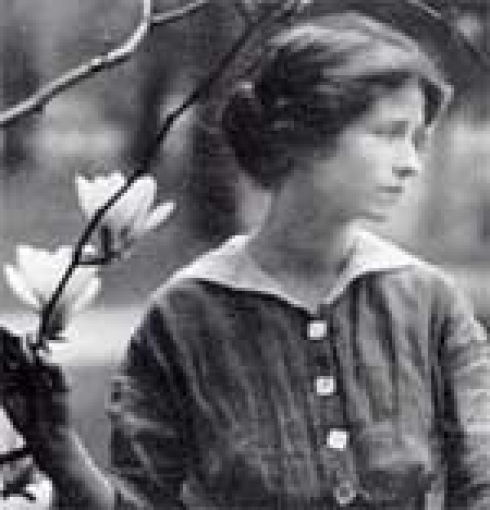
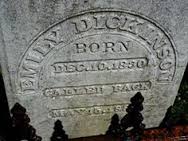
I wouldn’t even be writing this entry if it hadn’t been for coming, serendipity fashion, upon Emily Dickinson’s powerful poem, “We Grow Accustomed to the Dark” with its blunt rendering of our stumbling angst in a cosmos devoid of moon and stars to light our journey through the metaphysical night, reminding me again of ambiguity’s pervasiveness and our struggles to find our way:

We grow accustomed to the Dark—
When light is put away—
As when the Neighbor holds the Lamp
To witness her Goodbye—
A Moment—We uncertain step
For newness of the night—
Then—fit our Vision to the Dark—
And meet the Road—erect—
And so of larger—Darkness—
Those Evenings of the Brain—
When not a Moon disclose a sign—
Or Star—come out—within—
The Bravest—grope a little—
And sometimes hit a Tree
Directly in the Forehead—
But as they learn to see—
Either the Darkness alters—
Or something in the sight
Adjusts itself to Midnight—
And Life steps almost straight.

Here Dickinson fashions the poem’s edifice by way of analogy from everyday life of our initial difficulty seeing things when suddenly plunged into darkness until our vision adjusts and we find our way, or think we do (“And life seems almost straight”).  The equivocation comes in the persona’s almost, which we mustn’t miss in Dickinson’s typical closet subtlety, perhaps mirroring the metaphysical poets Donne and Herbert she read avidly.

When the narrator tells “Of something in the sight/Adjusts itself to Midnight,” we come to the bottom line of how we manage our journey through the psyche’s dark night (“Those Evenings of the Brain”), perhaps through religious faith, a mainstream fixture for many in the Calvinist Amherst of her time.

My point, and I think Dickinson’s as well, is that in a cosmos absent of Divine revelation and explicit meaning, our need for closure–to abolish life’s curves and set its steps straight, exerts itself in human constructs, epistemologically, whether done through provisos of faith or artist metaphor.

It isn’t just nature that abhors a vacuum.  We despise it too.  In the end, Jung is wrong, for we are all J’s at heart!  Life is very often a search for meaning and, if tenuous in its ambiguity, compels us to define it, however vulnerable its artifice.

–rj

Intimations of Mortality: Keats revisited

75px-JohnKeats1819_hiresI have always been fond of the poet, John Keats.  Maybe it’s because he seems to have been down on his luck so early in life and I just happen to be drawn to underdogs.  When he was just eight, he lost his father, who died falling from a horse.  At fourteen, his mother succumbed to TB, a disease that would prey upon the family, taking his brother, Tom, at nineteen and himself at barely twenty-five.  Meanwhile, lawyers consumed the family inheritance.

Keats always had a premonition of an early death, not surprising given the family history, but he didn’t know he was already ailing with TB when he became engaged to the girl next door, the coquettish Fanny Brawne in the fall of 1818.

The following year saw Keats penning in a six week period  the masterpieces for which he is now famous, poems like “Ode to a Nightingale,” “Ode to Melancholy,” “Ode to a Grecian Urn,” “Ode to Psyche,” and “La Belle Dame Sans Merci.”

On February 3, 1820, he coughed up blood in his bedroom and with his typical courage, exclaimed:  “I cannot be deceived in that color; that drop of blood is my death warrant. I must die.”

He would travel to Italy in a last desperate attempt to recover his health, only to die a few weeks later, attended by a lone friend.  Today he lies in Rome’s Protestant Cemetery.  Engraved on his tombstone is Keats’ chosen epitaph:  “Here lies one whose name was writ in water.”

I have always been attentive to Keats, visiting his last London Home, Wentworth Place,  in lovely Hampton Heath, and his last abode abroad, a small apartment in Rome adjacent to the Spanish Steps, Rome’s gathering place for throngs of young people from across the globe, presumably oblivious in the “mackerel crowded seas” (Yeats) to the drama enacted next door eclipsed by time.  I have also been to the cemetery, moved and reflecting on what might have been a different outcome with a better shuffling of the cards of fate.

He had aimed to write the best poetry of which he was capable and though dying so young, achieved a poetry the world still marvels at.   No poet, not even Shakespeare, Milton, or Wordsworth achieved such mastery at so young an age, laboring against illness, family misfortune, financial duress, rejection by the critics, and the anguish of loving a flirtatious Fanny, who often provoked his jealousy.

Of all the Romantics, he strikes me as the most poignant, ever aware of life’s brevity, or how temporality colors all, testing the significance of human assertion itself.  Paradox always characterizes his poetry and centers in the conflict of dream vs. reality.  Unlike many Romantics, Keats ultimately opts for truth in the interplay of mind and feeling.

I have been thinking a lot about him lately in conjunction with the cancer hoops I’ve had to jump through these pastt several months.  I had gone to an osteopath seeking relief for my back pain only to be told xrays showed a lump adjacent to the left clavicle, which might be cancerous.  A subsequent CT scan, though it showed no malignancy, revealed a large thyroid nodule, and I was again cautioned it might be cancer.  They found me a surgeon and in the meantime I had an ultrasound guided fine needle aspiration biopsy, which indicated another, smaller nodule on the left side of the thyroid.  The pathology report came back negative.

By then I met with my surgeon, who surprised me in light of the biopsy:  “I can’t guarantee you don’t have cancer.  FNAs have false negatives up to 20% of the time.”

While waiting for surgery five days away, I visited my dermatologist to check on a knee sore, which turned out inconsequential,  Alas, however, she found a black mole that might be melanoma, the most aggressive of cancers.  And so I had to go into surgery facing the double whammy of two cancers at separate sites, metastasis a distinct possibility.

The surgery went well.  The surgeon didn’t find cancer, so only a partial thyroidectomy was done, allowing me to perhaps avoid medication.  But I still hadn’t gotten the lab results on that black mole.  I had to actually call to get the report.  It was a precursor dysplasia nevus, which can turn into melanoma if not removed.  Even though benign, having dysplasia nevi increases your chances of getting melanoma, so it means constant vigil to catch early changes.

And so now you know why my thoughts have been so filled with Keats, though in this medically sophisticated age I’ve come upon some luck this dear poet was denied.  Living with premonition of his own demise, Keats wrote what may be my favorite poem, and I mean of any poet,

When I have fears that I may ease to be
Before my pen has gleaned my teeming brain,
Before high-pilèd books, in charactery,
Hold like rich garners the full ripened grain;
When I behold, upon the night’s starred face,
Huge cloudy symbols of a high romance,
And think that I may never live to trace
Their shadows with the magic hand of chance;
And when I feel, fair creature of an hour,
That I shall never look upon thee more,
Never have relish in the faery power
Of unreflecting love—then on the shore
Of the wide world I stand alone, and think
Till love and fame to nothingness do sink.

If you look at this poem carefully, you’ll find it fascinating in its astute organization; for example, the poem actually consists of one sentence, or subordinate clauses coalescing into a main clause at poem end.  In turn, this lends an accumulative buttressing of the persona’s earlier mention of his “piled up hopes.”.So many hopes, teeming high, but cut off by mortality.

The poem’s structure also features an antithesis between thinking and feeling in its three quatrains prior to the closing couplet in this Shakespearian sonnet.

Strikingly in consort with its theme, each quatrain moves us closer to the reality of death, with a progressive abstraction in the imagery with each succeeding quatrain:

Increasing abstraction:

rich garners

cloudy symbols

faery power

nothingness

These quatrains also unleash inexorable transitory strictures of foreclosure, feeding into the “nothingness” of the closing couplet in which death renders all human dreams, whether of love or fame, insignificant.

Increasing transitoriness:

autumn

one night

one hour

The poem’s imagery is likewise supportive of the theme, with an imagery cluster featuring darkness, shadows and clouds,

For the poet, death represents closure on love and artistry and fame.  I remember reading one of Keats’s letters in which he called death “the great divorcer.”

The truth is that ultimately we all get our ticket punched; but for Keats, he was so young,  talented, and in love.  Sometimes life can be cruelly unfair.  Nonetheless, with the quiet courage that always characterized him, he accepted his fate.

There are lessons here for all of us: to pile up the nows, knowing the temporality that governs us all; to live quietly and simply, centered in the right values; to discern those issues that matter;  above all, to love amply those around us.

–rj

The Smile that Hides the Soul

I have a number of books that supposedly clue you into discerning the personalities of people based on their physical gestures, things like hands on hips,  the turned up corners of the mouth, the wrinkling of the forehead or lifting of the eyebrows,  etc.  The problem is that body language can differ from one culture to another.  While close spatial contact with lots of touching may convey caring in, say, a Hispanic culture, it’s apt to raise the specter of territorial invasion among white North Americans.  I know families, for example, that simply don’t touch.

My take on kinetics, or body language, is to approach the subject with caution.  But it’s more than this, too.  I’m simply suspicious of reductionist approaches that promise us a mirroring of the human psyche and, often as not, a means to its manipulation, if we just read the body cues right and fine-tune our approach.

No, we humans are offspring of eons of evolutionary survival stratagems that camouflage thoughts, and with good reason in a world that often cannot tolerate a baring of the soul with its sonar witness to salient distress as a life component we’re uncomfortable  acknowledging.  We feel safer behind walls.

Thus we’re prone to exercising considerable dissembling skills to avoid alienating our fellows and exacerbating our isolation, for no matter what form physical pain, anguish, and grief assume, there’s always the immense individuality of suffering which even the greatest empathy cannot transcend.

Emily Dickinson, like all gifted poets grounded in sensory acuity, knew this well, typically drawing upon Nature for analogies of  concealment, undermining the conflation of appearance with reality in “The Wounded Deer Leaps Highest” with its successive examples of a deer’s leap, a gashed rock, a sprung trap, and, in the human realm, flushed cheeks and even laughter, suggesting a dynamism masking covert wounding:

A wounded deer leaps highest
I’ve hunter the hunter tell;
Tis but the ecstasy of death,
And then the brake is still.

The smitten rock that gushes,
The trampled steel that springs;
A cheek is always redder
Just where the hectic stings!

Mirth is the mail of anguish,
In which it caution arms
Lest anybody spy the blood
And “You’re hurt exclaim.

As the closing stanza poignantly bears witness, we put on a brave act hiding our grief, as though expressing it were a weakness, with resulting pity simply reinforcing our isolated fate.  Culture has insisted men, in particular, should be very good at this.

We are complex in our emotions and body language.  In the space of three years, Dickinson  would lose 26 friends and relatives to death; but she also knew that life goes on and the game must still be played.

–rj


The quest for individuation: a Jungian looks at Matthew Arnold’s “The Buried Life”

Intelligent Life, the free cultural news magazine of The Economist, recently featured a fascinating several day exploration of the labyrinthian stream flowing beneath Paris’ infrastructure with its scenarios ranging from party venues to ossuaries and catacombs.

In those outliers of thought that often follow a stimulus, I found myself musing a poem I had presumed I’d long ago relegated to absentia, seeing I retired from college teaching seven years ago.  But there it was, Matthew Arnold’s “The Buried Life,” in bold dress on my mental screen, refulgent in its own musings, pre-Freud, pre-Jung, cogently exploring in all its ebb and flow the subterranean river of the Unconscious that lies deep within all of us, frequently surfacing to veto or check our best intent with intuitive urgency.

Then I thought of  Jung’s concept of the Shadow, that primordial aspect of ourselves that can express itself suddenly, individually and collectively, when repressed or unintegrated into consciousness, disrupting relationships and even contributing to social disorder.  It isn’t evil in itself, or some kind of resident demon we try our best to confine.  The Shadow, no intrinsically Hyde element spotting the cultured Dr. Jekyll of the day world, has potentiality for making ourselves whole as we acknowledge undeveloped aspects of ourselves.

Arnold’s prescient poem acknowledges the Shadow’s salient wisdom in shaping our psyches, especially in regard to our inhibitions, though of course he comes too early (1822-1886) to use that term. On the surface, the poem muses on how even lovers sometimes paradoxically conceal themselves from each other, given the intransigent ego in all of us. Here, the poem begins its prison imagery, prominent throughout the poem.

      Alas! Is even love too weak to unlock the heart, and let it speak?
      even lovers powerless to reveal
      To one another what indeed they feel?

But the poem probes far deeper in exploring a resident conflict within ourselves arising from the tension between the Ego and the Unconscious, or Shadow element familiar to Jungians.

    Ah! well for us, if even we,
   Even for a moment, can get free
   Our heart, and have our lips unchained;
   For that which seals them hath been deep-ordained!

Arnold gives tribute to this dimension working its will in us, instinctually, covertly, as our true source of identity.  It works in stealth to keep us from tampering with its design to foster wholeness, for the human proclivity is to falsify true feelings in servility to convention:

    Fate, which foresaw
    How frivolous a baby man would be–
    By what distractions he would be possessed,
    How he would pour himself in every strife,
    And well-nigh change his own identity–
    That it might keep from his capricious play
    His genuine self, and force him to obey
    Even in his own despite his being’s law,
    Bade through the deep recesses of our breast
    The unregarded river of our life
    Pursue with indiscernible flow its way;
    And that we should not see
    The buried stream, and seem to be
    Eddying at large in blind uncertainty,
    Though driving on with it eternally.

This is hardly Freud’s dynamic of repression at work, but rather the Jungian perspective that each of us is actually two entities in antithesis.  The “unregarded river” can be thought of as our instinctual self, defiant of culture, and a legacy of our evolutionary past, the Shadow entity resident in us analogous to the dark side of the moon. 

Amid the often banality of our commercial world, we sometimes long for communion with this alter ego.  Adroitly, Arnold coalesces mining and river imagery here.  We yearn to track the line of ourselves, plumb to its depths, and extract its ore.  At this level, the poem anticipates Jung’s concept of “individuation,” or the quest for wholeness; a pilgrimage for conjunction of the Conscious and the Unconscious:

    But often, in the world’s most crowded streets,
    But often, in the din of strife,
    There rises an unspeakable desire
    After the knowledge of our buried life;
    A thirst to spend our fire and restless force
    In tracking out our True, original course;
    A longing to inquireInto the mystery of the heart which beats
    So wild, so deep in us–to know
    Whence our lives come and where they go. 

Alas, we never do succeed wholly, so deep is that hidden Self, and so we withdraw from the fray, giving ourselves up to distractions:

    But deep enough, alas! none ever mines
.……………….
    Hardly had skill to utter one of all
    The nameless feelings that course through our breast,
    But they course on forever unexpressed.
    And long we try in vain to speak and act
    Our hidden self, and what we say and do
    Is eloquent, is well–but ’tis not true!

But neither can we escape this longing within for something more:

    From the soul’s subterranean depth upborne
    As from an infinitely distant land,
    Come airs, and floating echoes, and convey
    A melancholy into all our day.

Sometimes, however, there occur those transient moments lovers experience, near mystical, when we intuit and achieve unity with our instinctual self, fathom all things about ourselves, and live genuinely with those we love:

    When our world-deafened ear
    Is by the tones of a loved voice caressed–
    A bolt is shot back somewhere in our breast,
    And a lost pulse of feeling stirs again.
    The eye sinks inward, and the heart lies plain,
    And what we mean, we say, and what we would, we know,
    A man becomes aware of his life’s flow,
    And hears its winding murmur; and he sees
    The meadows where it glides, the sun, the breeze.
    And there arrives a lull in the hot race
    Wherein he doth forever chase
    That flying and elusive shadow, rest.
    An air of coolness plays upon his face, and an unwonted calm pervades his breast.
    And then he thinks he knows
    The hills where his life rose, and the sea where it goes.

Some years ago, psychiatrist Reuven Bar-Levav cogently observed that “most people today are at least superficially aware of unconscious motives, but few realize how powerful and how prevalent they are.  Man is not what he claims to be” (Thinking in the Shadows, p. 19).  Arnold uncannily fathomed this in “The Buried Life” more than 150 years ago, anticipating depth psychology and Jung in particular.  Across the years,  I have always found this poem riveting for its profundity, beauty and sincerity.

I hope you will like this poem, too.

Do well.  Be well. 

–rj