On Reading A.S. Byatt’s Possession: A Serendipitous Find

I’ve been reading A. S. Byatt’s Possession, published in 1990 and now hailed as a contemporary masterpiece.

Each year, I compile a carefully chosen list of books I hope to read. Possession was among them, though I can’t quite recall how I first came upon Byatt.

It has turned out to be an inspired choice—a rare literary mystery centered on a scholarly quest to uncover a suspected love affair, pieced together from newly discovered letters between the Victorian poet Randolph Henry Ash, modeled on the married Robert Browning, and poet Christabel LaMotte, inspired by Christina Rossetti.

If such a relationship can be proven, it would mark a major coup for the novel’s modern-day protagonists, Roland and Maud, who join forces to solve this academic puzzle.

I won’t be a spoiler; I’m still reading, mesmerized by Byatt’s creative brilliance. Drawing on her vast knowledge of Victorian literature, she invents letters, diaries, and poems that feel astonishingly authentic—plausible echoes of Browning and Rossetti themselves.

There’s also a compelling counterpoint: as Roland and Maud pursue their literary investigation, they, too, seem to fall in love. And the suspense deepens with rival scholars competing to uncover the same secret.

Possession won the Booker Prize and became an international favorite, translated into more than thirty languages. A film version followed—all of which amazes me, as I wouldn’t have expected a novel so steeped in academia to achieve bestseller status.

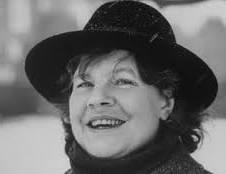
Byatt, an academic for many years and fluent in several languages, left teaching in 1983 to write full time. Gifted with formidable imagination, she could also be intimidating in her intellectual precision and resistance to literary fashion. Critic, novelist, short-story writer, and essayist, she produced twenty-five books and, in 1999, was made a Dame Commander of the Order of the British Empire (DBE) for her services to literature.

Her prose is detailed, introspective, and resonant—at times, poetic. More than any writer I’ve read, she possessed an extraordinary gift for mimicry, able to write convincingly in many voices.

I’ve especially liked this passage, though there are many others:

It is a dangerous business, reading of the passions of the dead. We try on their feelings, like garments, and for a moment we seem to stand in their light — and yet, as we close the book, we find ourselves once again alone in our own darkness, aware that our borrowed flame is only memory’s trick.

She is the writer’s writer.

As Jay Parini wrote in his 1990 New York Times review, “Possession is a tour de force that opens every narrative device of English fiction to inspection without, for a moment, ceasing to delight.”

–rj

On Reading Cormac McCarthy’s All the Pretty Horses

I have now read Cormac McCarthy’s All the Pretty Horses, remarkable in its stark, yet lyrical beauty reminiscent of Hemingway and Faulkner, intense in its palpable confrontation of goodness with evil; an elegy for a lost way of life; a saga of idealism’s betrayal; of mythic passage from innocence into knowledge offering no redemption, apart from the grace of endurance and a refusal to forfeit honor.

The traditional rancher spreads of west Texas have fallen on hard times, threatening a way of life. The novel opens appropriately with the death of central protagonist John Grady Cole’s grandfather, a former baron among ranch owners. The ranch, grown to 18,000 acres in 1871, has been sold, an inheritance lost. Working with horses is the only life Grady knows:

The Grady name was buried with that old man the day the norther blew the lawnchairs over the dead cemetery grass. The boy’s name was Cole. John Grady Cole.

The first of a three novels known as the Border Trilogy, All the Pretty Horses underscores the death of the Western frontier, once ripe with promise of plenitude—fortunes to be made and dreams fulfilled.

Foregrounded in historical fact, a pastoral, unfenced way of life has fallen prey to change—the dividing of holdings among family, increased taxation, a drift of young people to the cities, mechanization, the invasion of industry, government’s encroachment, relentless droughts—above all, the railroad’s ubiquity, all of which McCarthy turns into metaphor for an agrarian culture bound by hard labor and a code of honor irretrievably lost. Metaphor becomes elegy.

All the Pretty Horses  narrates the journey of cowboys John Grady and his friend Lacey Rawlins from West Texas into Mexico, joined later by a mysterious youth, Jimmy Blevins, who owns a gun and rides an elegant bay mare, foreshadowing trouble ahead.

The novel abounds in resounding passages, poetic in resonance, like this one of stellar vastness, a cosmos indifferent to Man and of a fusion with nature and of a connection now severed:

He lay on his back in his blankets and looked out where the quartermoon lay cocked over the heel of the mountains. In that false blue dawn the Pleiades seemed to be rising up into the darkness above the world and dragging all the stars away, the great diamond of Orion and Cepella and the signature of Cassiopeia all rising up through the phosphorous dark like a sea-net. He lay a long time listening to the others breathing in their sleep while he contemplated the wildness about him, the wildness within.

Acquaintance with archetype helps readers tap more easily into the novel’s multiple levels of meaning—the hero archetype of initiation, trial, and return; the paradisiacal garden of northern Mexico’s La Purisima with its grassland abundance, grazing cattle of upwards of a thousand head, and 400 horses, attended by valeros, finding fulfillment in their labor; a siren temptress, Alejandra, the forbidden fruit, daughter of wealthy hacendado Don Héctor:

She passed five feet away and turned her fineboned face and looked full at him. She had blue eyes and she nodded or perhaps she only lowered her head.

The hero’s mentor appears, Dueña Alfonsa, great aunt of Alejandra, delivering stern warning from experience, that fate often annuls human wish and that economic and social determinism govern universally. Unlike traditional mentors, she’s unhelpful, even sinister, serving as forewarner and enforcer of social codes.

Not unexpectantly, trespass —Grady and Alejandra have become lovers—makes inevitable Grady’s expulsion from paradise, commencing an ordeal with uncertain outcome in a world where idealism is often judged as weakness and evil corrupts honor with impunity.

Unjustly imprisoned, Grady and Rawlins undergo brutal imprisonment for a crime they never committed. Blevins has  been executed earlier by a rogue officer. We have reached the novel’s nadir, a replay of mythic hell. A Mexican prison, governed by bribery and savagery, tests their courage and capacity to endure.

Dueña Alfonso buys their freedom, under condition he not return to La Purisima, only to have Grady resist and encounter Alejandra’s rejection.  Rawlings has returned to Texas.

Throughout, the novel remains faithful to its hero archetype—the hero, wiser now, returns to exact justice, wounded not only by a rifle’s bullets, but a pervasive knowledge of human capacity for caprice and injustice. Grady’s loss of his horses is inextricably linked to his identity. He returns to reclaim them, necessitating violence.

Restoration of wrong occurs, but not without a tarnished innocence and a sadness that knowledge brings.

Symbolism abounds, particularly through the horses of the narrative that give rise to the novel’s title. Virtual characters, they symbolize a dying way of life and nature’s nobility.

Grady’s affinity with horses affirms a vestige of traditional human communion with nature, once vibrant, but now vulnerable to a modern world in disconnect.

I have only one criticism, and that concerns its last fifty pages in which the prose splendor slackens and we arrive at a conclusion seemingly hurried and simplistic, anticlimactic in contrast to the mesmerizing narrative of its preceding pages that sustain a reader’s interest.

But make no mistake. McCarthy succeeds in writing an extraordinary novel, and I am embarrassed to have not caught-up with him sooner.

He passed from us in 2023 at age 89, having written twelve novels, several plays and short stories. Several of his books became movies.

He was his own person, disdaining celebrity status, living much of his life in poverty. Like Grady, he persevered. Recognition came late, beginning with All the Pretty Horses, which won the National Book Award, our nation’s highest literary award. He was 59 and now famous.

I intend to continue with his trilogy, then on to Blood Meridian, which many critics regard as his opus magnum.

Transcending time and geography, McCarthy rivals Faulkner as our greatest American author.

–rj


Noted Author Revisits The Brothers Karamazov

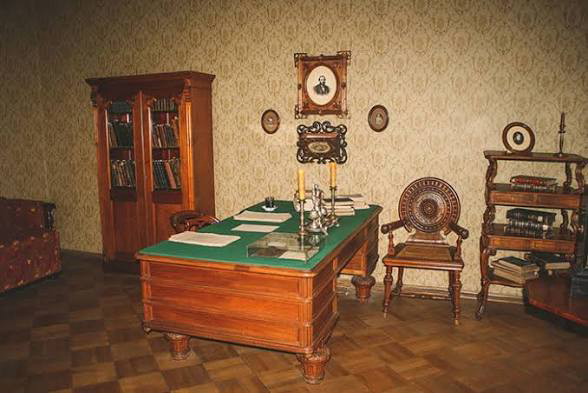
Dostoevsky’s desk

Ove Knausgaard, of My Struggle fame, has often spoken of his admiration for Dostoevsky, who with Proust and Joyce, comprise for him literature’s olympian triad.

While Dostoevsky has always had his admirers that include philosophers Wittgenstein, Heidegger and Camus, he has also had a principal detractor in Vladimir Nabokov who, in his Cornell lectures, dismissed him as a “claptrap journalist and a slapdash comedian, suffering from a fundamental “lack of taste,” manipulating readers through pathos.

In his recent New Yorker essay, “The Light of the Brothers Karamazov” (October 21, 2025), Knausgaard offers readers an informative social, cultural, and authorial milieu, helpful in deriving the novel’s meaning.

Knausgaard sees the novel as a chorus of perspectives, resistant to a gradient analysis. In short, the novel is open-ended.

There isn’t anything new about this view, which emanates from Russian critic Mikhail Bakhtin’s Theory of Polyphony and Dialogism, “a plurality of independent and unmerged voices and consciousnesses, a genuine polyphony of fully valid voices.” 

Some will find Knausgaard’s approach the easy exit from the ambiguity that stalks this classic, each character virtually constructed apropos of a rubric.

Dimitri, immensely proud and of a violent temper, it is the military; for the middle one, Ivan, who is rational, cold, and analytical, it is the university; while for the youngest, Alyosha, who is warm, considerate, always accepting, it is the church. In addition, there is the servant Smerdyakov, presumed to be the illegitimate child of Fyodor and the intellectually disabled Lizaveta, nicknamed Stinking Lizaveta.

There exists the more traditional reading of the novel as a theological and cultural debate between Western and Slavic ways of life; of rationalism pitted against Russian spirituality, as represented in the Russian Orthodox Church.

In this view, Alyosha’s spiritual maturation and advocacy of active love constitutes the antithesis of his brother Ivan’s intellectualism, and clarifies the novel’s intended resolve, one latent with tension as to life’s purpose in the context of omnivorous suffering and evil. As Alyosha remonstrates in conversation with Ivan, “Love life more than its meaning.”

The Brother’s Karamazov is principally a wrestling with the problem of evil, the nemesis of theological belief.

In getting down to the roots of an author’s likely intent, a cultural or historical perspective is invaluable in keeping readers from superimposing their opinion on a text. Knausgaard is exemplary in providing this background,

Shortly before undertaking the novel, Dostoevsky’s epileptic son, nearly three years old, died following a three hour seizure. Filled with grief and guilt—his son had inherited his epilepsy— Dostoevsky began The Brothers Karamazov, his eleventh and final novel. The novel’s Alyosha bears the name of his son. Heeding his wife’s counsel, he sought the Church’s comfort, visiting the Optina Pustyn monastery and conversing with the monastery’s elder, Ambrose. Alyosha does the same.

Like the later Solzhenitsyn, and many Russians still, Dostoevsky was deeply devoted to the Russian Orthodox Church, and his Ivan incarnates the antithesis of Russian spirituality—Western in its secular rationalism, ultimately devoid of moral boundary. Dostoevsky is decisively slavophile.

I have been to Russia, visited Dostoevsky’s confining, upstairs apartment in St. Petersburg, where he penned his masterpiece; attended a crowded orthodox mass, where worshippers stood, movingly singing their hymns, a capella

I came away from Russia, convinced that Russia is different—neither Western nor Asian—a repository of spirituality reflected in its literature, music and art. Russia cannot be fully comprehended apart from this awareness.

Ivan in his direct assault on Christ via The Grand Inquisitor tale, read in the context of Russia’s rampant human suffering, seems, nonetheless, to have the upper hand, reviving the oft-played notion of John Milton’s being of the devil ‘s party in writing Paradise Lost. 

That the novel is best understood as polyphonous, a disparate coterie of life perspectives, undifferentiated in significance, does injustice to the novel’s complex subtlety that underpins its greatness. 

The novel has its imperfections, as Nabokov noted. Like many readers, I find Alyosha insufficient as a counterweight to Ivan. When we leave off the novel, it is Ivan, not Alyosha, we remember.

Knausgaard informs us that unlike Tolstoy and Turgenev, Dostoevsky labored in poverty to support his family and suffered continuous stress to meet serial deadlines.

In her biography of her husband, his widow Anna indicated he lamented with each novel his inability to find time for revision.

Four months after the novel’s completion, Dostoevsky was dead.

Any final interpretation proves more elusive still in the aftermath of the prolonged stench of the corpse of the saintly monk Zosima, in whom Alyosha had confided. No expectant miracle occurs in liaison with his death.

What lies behind this intentional addition?

Perhaps, it represents Dostoevsky’s understandable lingering doubt, even amidst faith, or as Tennyson put it, “there is more faith in honest doubt than in half the creeds.”

Knausgaard seems to give ground to the notion of Alyosha’s centrality toward essay end:

…there is no doubt that Alyosha represents an ideal for Dostoyevsky—he bears the name of his dead son, Alexei Fyodorovich, and is the character who, in thought and in action, is most closely associated with the novel’s consistent notion of the good. But in comparison with the presence of Dmitri and Ivan—perhaps that of Dmitri in particular—he pales.

I agree with Knausgaard on the overpowering logic of Ivan’s assault on God’s inadequate justice, but then the problem of evil never evades those of genuine religious sensibility and the novel faithfully reflects this inner, cognitive dissonance.

Knausgaard undervalues the novel’s theistic thrust in embracing divergent narrator purviews, qualitatively equal.  The Brother’s Karamazov, on the contrary, emerges a vigorous theodicy, defending faith in a world replete with anguish.

I am sympathetic with Albert Camus appraisal of the novel as existential, humanity granted freedom to make choices. I agree with his conclusion that the novel, in its final chapters, reaches for a religious conclusion, confirmed by Ivan’s descent into madness. Camus’ view bears semblance to Dostoevsky’s religious sensibility, however troubled.

Others argue that Dostoevsky deliberately destabilized his text, offering no firm resolution to the quandary of faith in a world of evil.

The novel’s resultant ambiguity is its strength, positing the need for repeated reading and, with it, new understanding. And for believers, sober challenge to the veracity of faith.

I like Knausgaard’s close, seemingly coming to terms with the novel’s complexity:

I write this in the certainty that this interpretation, too, will dissolve as soon as you open the book and begin to read it anew. This is what makes “The Brothers Karamazov” a great novel. It is never at rest. 

—rj

Reading Ove Knausgaard at 4 AM: A Friend to See Me Through the Night

I woke up at 4 a.m. this morning, dawn’s light still absent, an annoying habit of mine, worsened by turning-in too late, despite ardent resolve to do better. God knows, I need more than four hours of sleep, and I pay for it, drifting off repeatedly as day unfolds.

To cope, I try teasing myself back to slumber—whatever works—like counting up to 100 in Italian, gleaned from daily Italian lessons. Or better, groping for the iPad beside me to resume my daylight read, Karl Ove Knausgaard’s massive My Struggle, despite blue light barriers to sleeping well.

I read a lot—mainly books I often list in Brimmings each New Year’s Day. Right now, I’m deep into Book Two of My Struggle, part of a six-volume series totaling nearly 3,600 pages—or three times the length of War and Peace.  In contemporary writing, only Elena Ferrante’s Neapolitan Novels, at roughly 2,000 pages, come close in length. (Proust’s Remembrance of Things Past runs to 3000 pages across seven volumes.)

Overall, Book Two details Knausgaard’s move to Sweden, his family life with second wife, Linda, and their three children; the tensions arising from his obligations to family life and dedication to writing:

Now I had everything I had dreamed of having since I was a teenager: a family, a wife, children—yet none of it made me happy. On the contrary, I was constantly on the verge of tears, I was always angry, always tired.”

The love I had for Linda was not stable and warm but consuming and often destructive.

I’m attempting all six volumes. I wonder how many have done this and for what reasons. My guess is very few have climbed the mountain, but I’m liking the climb.

In his penchant for recalling past event, interspersed with personal reflection narrated over several volumes, Knausgaard has often been compared with Marcel Proust.

While his prose may lack Proust’s lyricism, it compensates with acute playback of places lived, voices heard, and life’s everyday ironies. It’s like he’s sitting across from you, filling the room, talking to you directly.

Though he’s won several Scandinavian literary awards, he’s yet to take home a prestigious International Booker translation prize or Nobel.

Writing in Norwegian hasn’t helped. There are only 5.5 million Norwegians. It’s the uphill climb all non-English writers face in an industry still dominated by native Anglophones.  And so I commend  The New York Review of Books for its continued effort to revive works originally not written in English.

Some critics think Knausgaard narcissistic for his self-focus, but they forget: he’s writing memoir. Anyway, when is writing anything but a quest to be heard or validated? I think they’re being simplistic.

In Norway, readers were shocked at Knausgaard’s inclusion of family and friends, names unchanged, intimate details not held back. An uncle threatened to sue and former wife, Linda, suffered mental distress, requiring therapy.

Knausgaard can make anyone uncomfortable. He doesn’t hold back about life’s often brutal truths. But to me, that’s his strength. I like writers who unflinchingly deliver human experience.

Knausgaard writes what’s known as autofiction, a blurring of the distinction between the factual and the fictional. Memory, subject to filtering, is unreliable. We cannot even say we fully know ourselves. By this yardstick, even autobiography becomes an act of arbitrary inventory—selecting, omitting, fabricating—and, hence, approximates fiction, or as Knausgaard puts it, memory “is not a reliable quantity in life” as it  “doesn’t  prioritise the truth, but rather self-interest.”

I admire his directness and minute detail. I revel in his feel for nature’s splendors, vignettes of people and their eccentricities, the fiery fever of first love; thoughts on today’s politics, obsessions imposing self-censure, the ennui often accompanying contemporary existence, and not least, the myriad burdens of the writer’s life.

I always longed to be away from it. So the life I led was not my own. I tried to make it mine, this was my struggle, because of course I wanted it, but I failed, the longing for something else undermined all my efforts.

The foregoing passage helps explain the series title, My Struggle, with its provocative echoes of Hitler’s Mein Kampf.  Knausgaard’s struggle, however, is an existential one—that of locating oneself in a world often hostile to individuality, of finding balance between writing and family, each under pressure of cultural conformity.

…perhaps it was the prefabricated nature of the days in this world I was reacting to, the rails of routine we followed, which made everything so predictable that we had to invest in entertainment to feel any hint of intensity?

Knausgaard’s critique of cultural homogenization, creeping across Europe like some unchecked fungus, especially resonates with me:

There was the revulsion I felt based on the sameness that was spreading through the world and making everything smaller? If you traveled through Norway now you saw the same everywhere. The same roads, the same houses, the same gas stations, the same shops. As late as the sixties you could see how local culture changed as you drove through Gudbrandsdalen, for example, the strange black timber buildings, so pure and somber, which were now encapsulated as small museums in a culture that was no different from the one you had left or the one you were going to. And Europe, which was merging more and more into one large, homogeneous country. The same, the same, everything was the same.

Thoughts arise of  a visit to Moscow’s Red Square with my students, of fast-food chains—TGI Friday’s, McDonald’s, Pizza Hut, KFC—littering its periphery, exporting America’s consumer culture and eroding local identity; memories of a journey to France—a student lamenting time and money visiting Europe, only to find blue jeans, blaring American music, and global brands echoing home.

There ‘s a humility clinging to Knausgaard’s narrative, a confessed reticence to assert himself in a society indifferent and perhaps judgmental in its appraisal of those differing from the norm:

I subordinated myself, almost to the verge of self-effacement; some uncontrollable internal mechanism caused me to put their thoughts and opinions before mine.

I saw myself as the weak, trammeled man I was, who lived his life in the world of words.

My Struggle abounds in quotable reflections that I hasten to underscore like this hauntingly melancholic passage, evoking a past where dignity, nature, and artistry coexisted—however harsh the drawbacks of its era:

…if there was a world I turned to in my mind, it was that of the sixteenth and seventeenth centuries, with its enormous forests, its sailing ships and horse-drawn carts, its windmills and castles, its monasteries and small towns, its painters and thinkers, explorers and inventors, priests and drugstores. What would it have been like to live in a world where everything was made from the power of your hands, the wind, or the water? What would it have been like to live in a world where the American Indians still lived their lives in peace? Where that life was an actual possibility? Where Africa was unconquered? Where darkness came with the sunset and light with the sunrise? Where there were too few humans and their tools were too rudimentary to have any effect on animal stocks, let alone wipe them out? Where you could not travel from one place to another without exerting yourself, and a comfortable life was something only the rich could afford, where the sea was full of whales, the forests full of bears and wolves, and there were still countries that were so alien no adventure story could do them justice, such as China, to which a voyage not only took several months and was the prerogative of only a tiny minority of sailors and traders, but was also fraught with danger. Admittedly, that world was rough and wretched, filthy and ravaged with sickness, drunken and ignorant, full of pain, low life expectancy and rampant superstition, but it produced the greatest writer, Shakespeare, the greatest painter, Rembrandt, the greatest scientist, Newton, all still unsurpassed in their fields, and how can it be that this period achieved this wealth? Was it because death was closer and life was starker as a result? Who knows?

Knausgaard has this way of arresting you mid-thought and making you reassess your values.

Book 2  emphasizes the fissure between the expected of you and living your true self. For writers living in a world of the utilitarian with its compromises, the challenge of finding equilibrium can be daunting :

To write is to carve a path through the wilderness. It is to find something that has not been said before, something you can believe in, something that gives meaning to your life.

Again, the unstinting honesty, whether commenting on contemporary mores, engaging in philosophic reflection, or offering informed opinion separating the trivial from the significant.

They say Book 6, 1000 pages long, is steep in philosophical reflection. Whatever, I look forward to the climb.

The New Yorker critic James Wood praises Knausgaard’s ability to extract the profound from the mundane as “hypnotically compelling.”

The Atlantic’s William Deresiewicz applauds Knausgaard’s philosophical depth as a “contemporary Proustian endeavor.”

Life is never simple for Knausgaard in his dense weave of mystery and randomness, of inheritance and free will, of human frailty and moral striving..
I find that compelling.

And so, even when I awake, the silent stars my sole companions, I find pleasure in his company, a friend to see me through the night.

–rj

 

David Copperfield: An Enduring Nexus

Those of us who read fiction do so for many reasons, the majority perhaps to relieve the tedium of a long flight or empty minutes in the lobby of a doctor’s office, or as a verbal nightcap absolving the tensions of a frenetic day of undulating joy and sorrow, nuanced by disappointment or regret.

As a child, I read to escape into a fantasy world remote from the quotidian squalor of waterfront Philly and the domestic insecurity of a single parent home suffused with alcoholic addiction. In these maturer years, I read fiction mostly for connection and inspiration that my strivings have mattered, despite my myriad blunderings, providing solace and meaning—and best, that I am not alone.

Of the books I’ve read, David Copperfield resonates most by way of nexus: a childhood annulled by environment, a sensitive child seeking emancipation, a failed marriage and, at last, a soulmate found. It was Dicken’s “favorite child” among his fourteen completed novels over a brief twenty years.

In many ways, David Copperfield navigates the journey of its protagonist for sovereignty over life’s intemperate intrusions, impeding one’s happiness; the fissuring of expectation and event; in Tom Wolfian parlance, the looming challenge of having the “right stuff” to break through.

Observing the mythic triad of separation, trial, and restoration, David’s journey becomes our own.

I first came upon David Copperfield when in the eighth grade in Massachusetts at age thirteen. How wonderful the schools were then. Instantly, the book became a first love, an affection that has endured.

This novel differs from Dickens’ earlier ones, its early chapters autobiographical and penned in first person. A novel of memories and reflections, it plays down his usual melodrama.

As for its teeming, colorful characters—a Dickensian constant—latent behind their public personae lies a good deal of dissonance, the incongruity loved by Shakespeare between appearance and reality:

Micawber, outwardly jovial, masking an inner angst and volatile moods as debtor prison looms ever closer.

The narcissist Steerforth, whose duplicity manipulates David, but
achieves a lesson learned.

Mr. Dick, whose labored utterances suggest mental illness, sympathetically drawn.

I know David Copperfield ends in fairytale recompension, resilence rewarded, injustice vanquished—if only life were like that. Still, we need to dream that life may sometimes prove compensatory, a lotus land dulling life’s transgressions.

There’s so much in David Copperfield that revives dormant memory of my own childhood and early adulthood, its idealism and reality’s harshness; not least, growth paradoxically through failure.

It works the same way for many others as well. I think of a couple that nightly reads five pages of the novel to each other before turning in.

I understand that. As said, I also read to connect.

–rj