The news out of India is disturbing, violence and repression of those opposed to Prime Minister Narendra Modi and his Bharatiya Janata party (BJP) daily occurrences.
Recently reelected to a third five-year term, but with diminished support that’s resulted in a loss of his parliamentary majority, Modi must now rely on a coalition government to maintain power.
This hasn’t proved a roadblock to his recent cabinet appointments, none of them Muslim, though India has a burgeoning Muslim population exceeding 200 million, presently 14% of the country’s population. Nor has it tempered his embrace of a Hindu hegemony (Hindutva).
Speaking out against his policies and the BJP risks severe consequences.
Many of his political opponents have been jailed on trumped up charges of corruption, while others are under investigation.
In March, 2024, Modi’s government froze the bank accounts of its main adversary, the Nationalist Congress Party, alleging non-payment of taxes.
In 2023, it eliminated the country’s chief justice as one of three commissioners overseeing elections. The BJP now enjoys a majority vote.
For another example, there’s the ongoing harassment of Waheed-Ur-Rehman, arrested in 2019 and held for two years, much of it in solitary confinement, for his opposition to the crackdown on Kashmir resistance to the suspension of Kashmir’s semi-autonomous status.
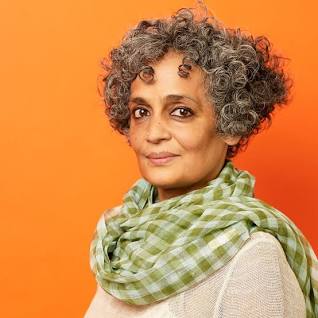
Now comes the BJP’s newest outrage in pursuing prosecution of 1997 Booker Award winner Arundhati Roy (The God of Small Things) for her remarking in 2010 that Kashmir was never a part of India.
Kashmiri academic Sheikh Showkat Hussain, who appeared with her at the rally in Delhi, will also be prosecuted under India’s Unlawful Activities Prevention Act (1967).
Roy has been a longtime critic of Modi policy.
If media pundits thought the Modi government would learn from its election setback, they’re sadly mistaken.
The BJP has become even more vindictive—more arrests, more violence.
In 2023, the Biden administration gave Modi a lavish welcome, replete with a state dinner. Talk about Kissinger, expediency is still in vogue.
Entrepreneurial moguls Bill Gates and Elon Musk, who view India as an investment quarry, sent their congratulations to Modi on his win.
At the just concluded G7, a lengthy queue assembled to do acquiescence to its invited guest.
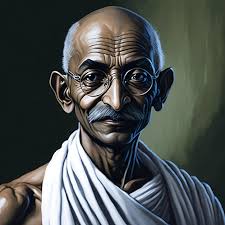
Today marks Martyr’s Day in India. On this day, January 30, 1948, Mahatma Gandhi, father of a free India, visiting New Delhi to address an evening Hindu prayer meeting, was gunned down by nationalist Nathuram Vinayak Godse, who fired three bullets into his chest, killing him. Godse believed Gandhi was overly conciliatory to Muslims.
Falling to the ground, Gandhi reputedly moved his hand to his forehead in the Hindu sign of forgiveness, his final words, “He Ram, He Ram” (“Oh God, Oh God”).
This happened a mere five months after India had won independence from British rule.
Committed to the Tolstoy principle of non-violence, Gandhi would be appalled at the changes sweeping across today’s India in the wake of a Hindu fundamentalism of tsunami proportions not adverse to employing violence against those perceived as threatening its interests, augmented by a Modi government keen to buttress its hegemony by supporting religious bias.
A few days ago, January 22, saw the dedication of the new Ram temple in Ayodhya, said to be Ram’s birthplace. Ram is the seventh avatar of the god, Vishnu, and regarded as deity.
_=Ram Temple, Inauguration Day
Modi had promised the temple in his initial run for prime minister and was present to inaugurate the temple: “Today, our Ram has come. After centuries of patience and sacrifice, our Lord Ram has come,” said Modi.
Built on a 70-acre site previously occupied by the four century old Babri Mosque, torn down in 1992 by a frenzied Hindu mob, thousands died in the sectarian violence that followed. None of the perpetrators were sentenced.
Not that any of this mattered to the Bharatiya Janata Party (BJP) of Narendra Modi, entrenched in power since 2014. The Ram Temple symbolizes the supremacy of both the BJP and a Hindu culture that discourages pluralism.
In contrast, India’s founding fathers, recognizing the myriad religious diversity of India—Muslims, Buddhists Christians, and Jains—eschewed pandering to any faction.
Ironically, India seems to be following in the steps of Pakistan, deliberately created as a Muslim state.
Chillingly, there’s the legacy of Hindu nationalist M. S. Golwalkar, advocating that “minorities in Hindusthan must either adopt the Hindu culture and language, must learn to respect and hold in reverence Hindu religion, must entertain no idea but those of the glorification of the Hindu race and culture, i.e., of the Hindu nation and must lose their separate existence to merge in the Hindu race, or may stay in the country, wholly subordinated to the Hindu Nation, claiming nothing, deserving no privileges, far less any preferential treatment – not even citizen’s rights.”
Modi deemed Golwalkar one of his primary influences in his 2008 book, Jyotipunj (Beams of Light).
Today’s Hindu dominated India, 80% of its population, increasingly imposes Golwalkar’s dictum of a monolithic culture impervious to those it views as interlopers, deserving of restriction and possibly extinction.
In the first eight months of 2023, 525 attacks on Christians occurred. In the state of Manipur, 642 churches were torched by Hindu arsonists “receiving support from people in power,” said the United Christian Forum (UCF).
Notorious was the killing of Australian missionary Graham Stuart Staines in 1999, along with his two sons, Philip (aged 10) and Timothy (aged 6), burnt to death by a Hindu Nationalist group named Bajrang Dal. Stains, a medical doctor, had come to India several years earlier to treat lepers and minister to the poor. He was accused of “forced conversions,” a common rumored charge among Hindu nationalists.
As is, Christians comprise a mere 2.3 % of India’s teeming population.
Indian Muslims, comprising the third largest Muslim population in the world, have likewise been continuously assaulted, often accused of cattle rustling.
2020 saw the Delhi riots, killing 53 people, 40 of them Muslim. In its aftermath, Modi denied his government discriminates against Muslims, despite the BJP’s legislating the Citizen’s Act, restricting citizen eligibility of undocumented immigrants, largely Muslim, and prohibiting proselytizing by Muslims and Christians.
An investigation of the Delhi riots by the independent Delhi Minorities Commission found the violence “planned and targeted” and several police actively participating in attacking Muslims. A subsequent video confirmed several policemen beating five seriously injured Muslim men lying on the street and forcing them to sing the Indian national anthem to prove their patriotism.
I won’t go into persecution of the Sikh population, increasingly viewed as disloyal citizenry, seeking establishment of an independent state. Canadian and American intelligence agencies have uncovered assassination plots, one of them succeeding in Canada, against Sikh diaspora leadership.
Meanwhile, President Biden went all out for the state visit of Prime Minister Midi, hosting a vegetarian dinner on June 21, 2023, despite protestors among Democrats and the urgings of Human Rights Watch and Amnesty International that he confront Modi on the matter of human rights in India. The President would later say he did so in private conversation with Modi, but if so, any details were excluded from his public closing summation.
India, which held so much promise for an enlightened democracy upon its emergence as a free nation, has altered its raison d’être over the last decade, increasingly disenfranchising its minorities and critics.
I have wondered how my friends are faring in Kerala, where the apostle Thomas ministered to the natives 2000 years ago. Its Christian community is India’s largest . Unfortunately, the Catholic leadership has cozied up to the BJP in return for its support of a good price for Kerala rubber. I find it a dubious Faustian exchange, prioritizing profit over the welfare of Christians elsewhere in the nation.
I think back to my privileged visit years ago to Gandhi’s simple bed, cup, and walking stick. I had read about him at age ten, which began my lifetime devotion to this great man, advocate of non-violence, charity to the poor, abolishing caste, proponent of women’s emancipation and, of course, India’s freedom. His impact on Martin Luther King and the American civil rights movement is fully acknowledged.
It’s Martyr’s Day as I said at the outset. Is it conceivable Gandhi’s leading India’s into the promise land of sovereignty has transpired into a new tyranny of oppression, imposed not by a foreign entity, but by an Indian government weaponizing nationalism for its own ends?
Sadly, Modi and the BJP enjoy widespread favorability in today’s India, assuring long term oppression of India’s religious and political minorities, usurping the enlightened legacy of Gandhi and Nehru with their targeted bigotry.
Every morning I awaken to a country bristling with hate, intolerance, and violence.
Trump bullied his way to the presidency, exploiting public anxieties, e. g., steel belt resentment of jobs sent abroad, latent fears of a changing demographic replacing White homogeneity, evangelical rancor against abortion, and Islamaphobia, which sees every Muslim as a potential terrorist.
Trump pledged he’d limit Muslim immigration and reduce refugee numbers. Shortly into his tenure, he attempted a 90-day immigration ban on seven Muslim nations, fortunately curtailed by the courts, though the recent SCOTUS decision suggests he may now have the upper hand.
One of his gallery of appointed rogues includes top advisor Stephen Bannon, known for his misogynist views on women and feminism that plague our nation.
Early on, Trump appointed the now disgraced retired general Mike Flynn as national security advisor, who’d previously depicted Islam as a “malignant cancer.”
Since his election, hate crimes have risen sharply. Think Progress has mapped their occurrence from the election through February, 2017, recording 261 hate crimes, 41% of which have been linked to Trump’s rhetoric.
But I want to be fair. Much as I dislike Trump, hate in our country has many sources and targets.
Violence comes from the Left as well as the Right. 13% of the 261 incidents included attacks on Trump supporters.
Now comes the June 14 shooting of four Republican congressmen, one of them critically, while practicing for the annual Congressional Baseball Game for Charity in Alexandria, VA by a disgruntled Bernie supporter.
There’s also Black violence, targeting Whites, often police, the abused becoming the abuser, the most notorious being the Dallas sniper ambush of twelve policemen, five of them killed (June 8, 2016).
Even liberals can become intolerant, as one of my favorites, simply because he’s so even-handed, Fareed Zakaria, reminds us: “American universities these days seem to be committed to every kind of diversity except intellectual diversity. Conservative voices and views, already a besieged minority, are being silenced entirely….Freedom of speech is not just for warm, fuzzy ideas that we find comfortable. It’s for ideas that we find offensive.”
Alarmingly, the number of hate groups in The USA has proliferated, according to the Southern Poverty Law Center, increasing from 892 in 2015 to 917 last year. This number doesn’t track, however, widespread cyperspace hate raconteurs, whose venom sometimes seeps into social violence such as Dylan Roof’s heinous murder of nine Black church members:
ACTIVE HATE GROUPS 2016
KU KLUX KLAN ……………….130
NEO-NAZI…………… ………… 99
WHITE NATIONALISTS……..100
RACIST SKINHEAD. …………..79
CHRISTIAN IDENTITY……… ..21
NEO-CONFEDERATE…………..43
BLACK SEPARATIST…………..193
ANTI-LGBT……………………….52
ANTI-MUSLIM………………….101
GENERAL HATE………………..101
Total: 917 Active Hate Groups (“The Year in Hate and Extremism,” Intelligence Report, SPLC, Spring 2017, Issue 162.)
Top five states for hate groups? This may surprise you!
It’s not any better abroad. Britain’s decision to exit the European Community, which requires open borders of its members, parallels the upset victory of Donald Trump, many of the pro-exit voters older, working class Whites. France has its Le Pen; the Netherlands, its Geert Wilder; Germany its AFD (Alternative for Germany).
All of this comes down to the age old problem of the Other. Unfortunately, for all our supposed sophistication in today’s world of technological prowess, we’re still engulfed in the tribalism of our ancient progenitors, hostile to the outsider. And it’s not likely to get better, given the increasing anachronism of national borders that same technology makes possible.
Still, I am not without hope that the good side of humanity will ultimately prevail. Or as gifted Palestinian-American poet Naomi Shihab Nye puts it,
My father’s hopes travel with me
years after he died. Someday
we will learn how to live. All of us
surviving without violence
never stop dreaming how to cure it.
True peace is achieved
By centering And blending with life (Tao 22).
You hear a lot about being centered, but just what is it?
The ancient Greeks advocated “the golden mean,” or middle way.
Roman writer Vergil based his Aeneid on Pietas, or something akin to self-control.
Perhaps drawing on his Hellenic education, St. Paul advised moderation in all things.
Excess is always dangerous in any pursuit, for it forecloses on alternatives that may prove more tempered and thus wiser than those fostered by our passions.
Unfortunately, indulgence, or excess, defines history with its repeated accounts of obsession gone astray for power and possession. History is narcissism writ large.
At the everyday level, we hear continually of people who have ruined their lives and hurt others simply because they were unable to rule themselves.
Because self-interest especially dominates in politics and religion, I generally am suspicious of them both. As I write, there’s the rancor in Congress over raising the debt ceiling so government can pay its bills. Currently, however, a persistent few are willing to shut down government unless they have their way. As I’ve written in an earlier blog, political parties lead to narrow partisanship, as President Washington so wisely observed in his Farewell Address.
In religion, we needn’t dial back to the Crusades or Inquisition to access the violence of fanatical fundamentalism. If you look at a worldwide map, you’ll find religious mayhem abundantly distributed, whether in the Middle East, India, Pakistan, Thailand, Burma, the Philippines, and Indonesia. As for Africa, there’s last week’s heinous massacre at Nairobi’s West Gate Mall in Kenya by Somali militants, who selectively shot non-Muslims. Nigeria has its own ongoing debacle with Islamic extremists. These things happen because without centeredness we lack balance and thus forfeit stability and often our humanity, too.
On the other hand, fraudulent centeredness can possess its own rigidity if focused merely on ourselves. True centeredness serves as a reference point that proffers balance, always its marker, between extremes. Think acoustics. Think harmony.
Centeredness promotes equilibrium, a check on ego, a capacity to not confuse the parts with the whole, enabling us to respond more patiently and thus more wisely. A state of being, it isn’t found in having.
Centered people aren’t dismayed by the fallout of time or chance. They see the evolving pattern and not the ephemeral circumstance. They’re grounded in the Eternal, not the transitory. Thus change and loss and disappointment don’t throw them off balance. In touch with themselves, they live in harmony with nature’s artifice. .
Writing from a jail cell and facing imminent execution, St. Paul could cogently advise his friends that they pursue “all that is noble, all that is just and pure, all that is lovable and gracious, whatever is excellent and admirable–fill all your thoughts with these things.”
This is centeredness. This is harmony. This is the fabric of Eternity.


 Every morning I awaken to a country bristling with hate, intolerance, and violence.
  Brimmings: up from the well