My fierce love for books has its ancient beginnings as a seven year old, sprawled on a Philly tenement floor, enthralled with a Christmas gift, Twain’s HuckleberryFinn.
Moments ago I rediscovered this passage from France’s Michel Houellebecq, who has this special capacity to rattle the cages of accepted opinion—daring, provocative, forthright—writing novels you simply don’t walk away from.
I had read his Submission several years ago, an initial novel that launched his fame. His take on literature, a dying indulgence in a digital age, is poignant with meaning for me, for literature has surely been among life’s greatest gifts to me:
“…the special thing about literature, the major art form of a Western civilization now ending before our very eyes, is not hard to define. Like literature, music can overwhelm you with sudden emotion, can move you to absolute sorrow or ecstasy; like literature, painting has the power to astonish, and to make you see the world through fresh eyes. But only literature can put you in touch with another human spirit, as a whole, with all its weaknesses and grandeurs, its limitations, its pettinesses, its obsessions, its beliefs; with whatever it finds moving, interesting, exciting, or repugnant. Only literature can grant you access to a spirit from beyond the grave—a more direct, more complete, deeper access than you’d have in conversation with a friend” (Submission).
I have not found a more eloquent articulation of my own passion for literature and think often of what I would have missed had I not been introduced to literary reads—above all, to see past the literal text and be transported into a galaxy of resonance where words could mean beyond themselves, open new vistas, shaping life, capable of numinosity, a sense that life exceeds appearances, infinite in its labyrinthian corridors, a non-ending conversation with what is, has been, and will endure.
I’ve been reading A. S. Byatt’s Possession, published in 1990 and now hailed as a contemporary masterpiece.
Each year, I compile a carefully chosen list of books I hope to read. Possession was among them, though I can’t quite recall how I first came upon Byatt.
It has turned out to be an inspired choice—a rare literary mystery centered on a scholarly quest to uncover a suspected love affair, pieced together from newly discovered letters between the Victorian poet Randolph Henry Ash, modeled on the married Robert Browning, and poet Christabel LaMotte, inspired by Christina Rossetti.
If such a relationship can be proven, it would mark a major coup for the novel’s modern-day protagonists, Roland and Maud, who join forces to solve this academic puzzle.
I won’t be a spoiler; I’m still reading, mesmerized by Byatt’s creative brilliance. Drawing on her vast knowledge of Victorian literature, she invents letters, diaries, and poems that feel astonishingly authentic—plausible echoes of Browning and Rossetti themselves.
There’s also a compelling counterpoint: as Roland and Maud pursue their literary investigation, they, too, seem to fall in love. And the suspense deepens with rival scholars competing to uncover the same secret.
Possession won the Booker Prize and became an international favorite, translated into more than thirty languages. A film version followed—all of which amazes me, as I wouldn’t have expected a novel so steeped in academia to achieve bestseller status.
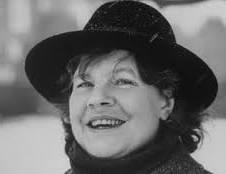
Byatt, an academic for many years and fluent in several languages, left teaching in 1983 to write full time. Gifted with formidable imagination, she could also be intimidating in her intellectual precision and resistance to literary fashion. Critic, novelist, short-story writer, and essayist, she produced twenty-five books and, in 1999, was made a Dame Commander of the Order of the British Empire (DBE) for her services to literature.
Her prose is detailed, introspective, and resonant—at times, poetic. More than any writer I’ve read, she possessed an extraordinary gift for mimicry, able to write convincingly in many voices.
I’ve especially liked this passage, though there are many others:
It is a dangerous business, reading of the passions of the dead. We try on their feelings, like garments, and for a moment we seem to stand in their light — and yet, as we close the book, we find ourselves once again alone in our own darkness, aware that our borrowed flame is only memory’s trick.
She is the writer’s writer.
As Jay Parini wrote in his 1990 New York Times review, “Possession is a tour de force that opens every narrative device of English fiction to inspection without, for a moment, ceasing to delight.”
Ove Knausgaard, of My Struggle fame, has often spoken of his admiration for Dostoevsky, who with Proust and Joyce, comprise for him literature’s olympian triad.
While Dostoevsky has always had his admirers that include philosophers Wittgenstein, Heidegger and Camus, he has also had a principal detractor in Vladimir Nabokov who, in his Cornell lectures, dismissed him as a “claptrap journalist and a slapdash comedian, suffering from a fundamental “lack of taste,” manipulating readers through pathos.
In his recent New Yorker essay, “The Light of the Brothers Karamazov” (October 21, 2025), Knausgaard offers readers an informative social, cultural, and authorial milieu, helpful in deriving the novel’s meaning.
Knausgaard sees the novel as a chorus of perspectives, resistant to a gradient analysis. In short, the novel is open-ended.
There isn’t anything new about this view, which emanates from Russian critic Mikhail Bakhtin’s Theory of Polyphony and Dialogism, “a plurality of independent and unmerged voices and consciousnesses, a genuine polyphony of fully valid voices.”
Some will find Knausgaard’s approach the easy exit from the ambiguity that stalks this classic, each character virtually constructed apropos of a rubric.
Dimitri, immensely proud and of a violent temper, it is the military; for the middle one, Ivan, who is rational, cold, and analytical, it is the university; while for the youngest, Alyosha, who is warm, considerate, always accepting, it is the church. In addition, there is the servant Smerdyakov, presumed to be the illegitimate child of Fyodor and the intellectually disabled Lizaveta, nicknamed Stinking Lizaveta.
There exists the more traditional reading of the novel as a theological and cultural debate between Western and Slavic ways of life; of rationalism pitted against Russian spirituality, as represented in the Russian Orthodox Church.
In this view, Alyosha’s spiritual maturation and advocacy of active love constitutes the antithesis of his brother Ivan’s intellectualism, and clarifies the novel’s intended resolve, one latent with tension as to life’s purpose in the context of omnivorous suffering and evil. As Alyosha remonstrates in conversation with Ivan, “Love life more than its meaning.”
The Brother’s Karamazov is principally a wrestling with the problem of evil, the nemesis of theological belief.
In getting down to the roots of an author’s likely intent, a cultural or historical perspective is invaluable in keeping readers from superimposing their opinion on a text. Knausgaard is exemplary in providing this background,
Shortly before undertaking the novel, Dostoevsky’s epileptic son, nearly three years old, died following a three hour seizure. Filled with grief and guilt—his son had inherited his epilepsy— Dostoevsky began The Brothers Karamazov, his eleventh and final novel. The novel’s Alyosha bears the name of his son. Heeding his wife’s counsel, he sought the Church’s comfort, visiting the Optina Pustyn monastery and conversing with the monastery’s elder, Ambrose. Alyosha does the same.
Like the later Solzhenitsyn, and many Russians still, Dostoevsky was deeply devoted to the Russian Orthodox Church, and his Ivan incarnates the antithesis of Russian spirituality—Western in its secular rationalism, ultimately devoid of moral boundary. Dostoevsky is decisively slavophile.
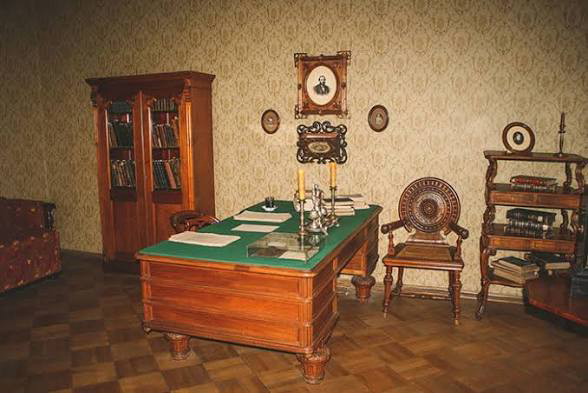
I have been to Russia, visited Dostoevsky’s confining, upstairs apartment in St. Petersburg, where he penned his masterpiece; attended a crowded orthodox mass, where worshippers stood, movingly singing their hymns, a capella.
I came away from Russia, convinced that Russia is different—neither Western nor Asian—a repository of spirituality reflected in its literature, music and art. Russia cannot be fully comprehended apart from this awareness.
Ivan in his direct assault on Christ via The Grand Inquisitor tale, read in the context of Russia’s rampant human suffering, seems, nonetheless, to have the upper hand, reviving the oft-played notion of John Milton’s being of the devil ‘s party in writing Paradise Lost.
That the novel is best understood as polyphonous, a disparate coterie of life perspectives, undifferentiated in significance, does injustice to the novel’s complex subtlety that underpins its greatness.
The novel has its imperfections, as Nabokov noted. Like many readers, I find Alyosha insufficient as a counterweight to Ivan. When we leave off the novel, it is Ivan, not Alyosha, we remember.
Knausgaard informs us that unlike Tolstoy and Turgenev, Dostoevsky labored in poverty to support his family and suffered continuous stress to meet serial deadlines.
In her biography of her husband, his widow Anna indicated he lamented with each novel his inability to find time for revision.
Four months after the novel’s completion, Dostoevsky was dead.
Any final interpretation proves more elusive still in the aftermath of the prolonged stench of the corpse of the saintly monk Zosima, in whom Alyosha had confided. No expectant miracle occurs in liaison with his death.
What lies behind this intentional addition?
Perhaps, it represents Dostoevsky’s understandable lingering doubt, even amidst faith, or as Tennyson put it, “there is more faith in honest doubt than in half the creeds.”
Knausgaard seems to give ground to the notion of Alyosha’s centrality toward essay end:
…there is no doubt that Alyosha represents an ideal for Dostoyevsky—he bears the name of his dead son, Alexei Fyodorovich, and is the character who, in thought and in action, is most closely associated with the novel’s consistent notion of the good. But in comparison with the presence of Dmitri and Ivan—perhaps that of Dmitri in particular—he pales.
I agree with Knausgaard on the overpowering logic of Ivan’s assault on God’s inadequate justice, but then the problem of evil never evades those of genuine religious sensibility and the novel faithfully reflects this inner, cognitive dissonance.
Knausgaard undervalues the novel’s theistic thrust in embracing divergent narrator purviews, qualitatively equal. The Brother’s Karamazov, on the contrary, emerges a vigorous theodicy, defending faith in a world replete with anguish.
I am sympathetic with Albert Camus appraisal of the novel as existential, humanity granted freedom to make choices. I agree with his conclusion that the novel, in its final chapters, reaches for a religious conclusion, confirmed by Ivan’s descent into madness. Camus’ view bears semblance to Dostoevsky’s religious sensibility, however troubled.
Others argue that Dostoevsky deliberately destabilized his text, offering no firm resolution to the quandary of faith in a world of evil.
The novel’s resultant ambiguity is its strength, positing the need for repeated reading and, with it, new understanding. And for believers, sober challenge to the veracity of faith.
I like Knausgaard’s close, seemingly coming to terms with the novel’s complexity:
I write this in the certainty that this interpretation, too, will dissolve as soon as you open the book and begin to read it anew. This is what makes “The Brothers Karamazov” a great novel. It is never at rest.
I remember it well. I was a young graduate student, privileged to study under one of the world’s foremost professors of Victorian literature, a renowned authority on Thomas Hardy.
The course was rigorous. We read the greats of the age—Macaulay, Tennyson, Browning, Dickens, Mill, Newman, Arnold, Morris, Ruskin, the Rossettis, Swinburne, Hopkins, Pater, and of course Hardy. Yet strikingly absent was Rudyard Kipling. Our professor dismissed him as the mere voice of imperialist Britain—an attitude then dominant in the Academy, and one I suspect still lingers on American university campuses.
I had never read Kipling. I had not yet learned to question. I accepted what I was told.
It was only later, during a summer course at Exeter College, Oxford, that I encountered another view: one that esteemed Kipling’s literary brilliance without committing the American folly of conflating his politics with the merits of his artistry.
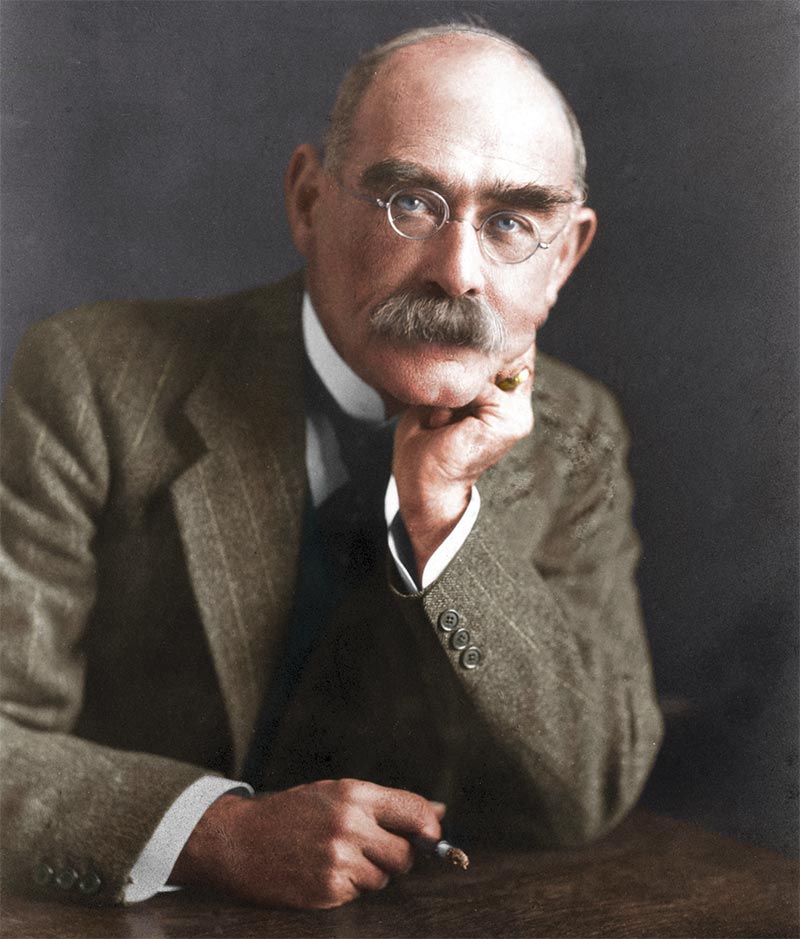
Kipling’s literary range was astonishing. His verse, endowed with rhythmic command, borders on the hypnotic. He opened poetry to colloquial speech and became a supreme craftsman of the ballad form.
Yes, he gave voice to Empire in works like The White Man’s Burden, Kim, and The Jungle Books. But he also revered Indian culture—its spirituality, wisdom, and sensory richness. Often, with subtle irony, he questioned the very order he seemed to affirm.
Perhaps his greatest achievement lies in the short story. With precision and nuance, he crafted narratives of extraordinary compression, modern in their suggestiveness, wide-ranging in their scope. The Man Who Would Be King remains a masterpiece—its sweep and power undiminished. Kipling’s influence on Conrad, Maugham, Hemingway, Borges, and others is beyond doubt.
He was awarded the Nobel Prize in Literature in 1907—the first English-language writer to receive it—honored for his “power of observation, originality of imagination, virility of ideas, and remarkable talent for narration.”
Kipling’s stories, like all enduring art, probe psychological depths. They are complex, skeptical of conventional wisdom, and riveting in their precision.
In today’s multicultural Britain, he is taught in context: his genius as a storyteller acknowledged, his colonial perspective rejected. Lewis, Tolkien, and Pullman have recognized him as a precursor to modern fantasy.
In India, where he was born and spent his early years, his reception is understandably ambivalent: many readers disdaining his imperial condescension, yet acknowledging his literary craftsmanship. Salman Rushdie has called Kim “one of the greatest novels written about India,.” Other Indian writers continue where Kipling left off, offering vivid vignettes of India, but through an Indian prism.
Controversy about his place in the Western literary canon remains. Vladimir Nabokov, in his Cornell lectures, dismissed Kipling for his moralizing, He deemed his indulgence in exotic adventure stories as juvenile. Great literature, he argued, obeys the aesthetic imperative of narrative neutrality, or distance, as in Flaubert and Joyce.
On the other hand, the late eminent Yale critic Harold Bloom came to Kipling’s defense. In his The Western Canon. Bloom lists Kipling among hundreds of writers deserving inclusion in the canon. Bloom saw Kipling as a myth maker and gifted story teller, especially in his short stories. On the other hand, he found his poetry “scarcely bear reading.”
While I find merit in both Nabokov’s and Bloom’s arguments, I lean towards Bloom’s appraisal as more balanced. I have long resisted either/or equations, particularly as to the political or aesthetic. Over a lifetime, I have frequently found reasoned judgment occupies a middle place. I have given my own arguments earlier in this essay for his belonging in the canon.
Whatever a reader’s verdict, Kipling was a singular voice, very much his own man. In short, authentic. As he said in an interview shortly before his death,
“The individual has always had to struggle to keep from being overwhelmed by the tribe. To be your own man is a hard business. If you try it, you’ll be lonely often, and sometimes frightened. But no price is too high to pay for the privilege of owning yourself” (Qtd. in the Kipling Journal, June 1967).
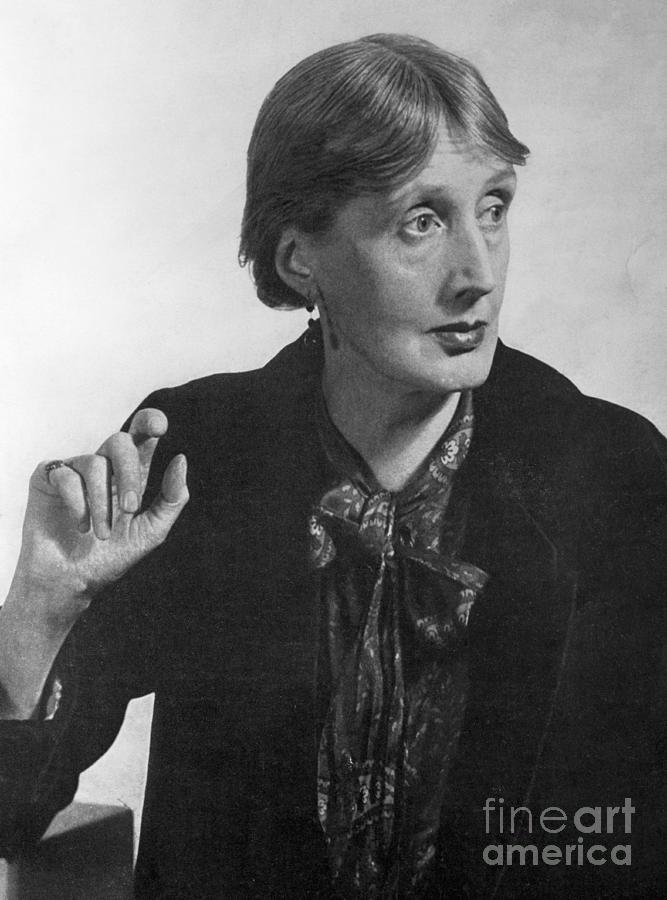
I’m almost done reading Virginia’s Woolf’s Diary, 1918-1941. She means much to me ever since Howard Harper, a Woolf authority at UNC, introduced her to me.
Such a scintillating intellect. Writing didn’t come easily to her, frequented with anxiety, sensitivity to criticism, writer’s block, and bouts of depression. Without husband Leonard, I doubt she’d have pulled off her prodigious achievement.
The Diary serves largely as her workbook of creative struggle—getting things right, the interplay of new formulations, the unleashing of her interiority.
The Diary catalogues books she’s reading and plans to read. It teems with recall of literary and artist luminaries she knew intimately, many associated with the Bloomsbury Group to which she belonged—Strachey, Forster, Keynes, and her sister Vanessa Bell among them. Henry James, George Meredith and T. S. Eliot were frequent household guests.
She’s opinionated about several of her rivals, Joyce for instance. She adored Proust: “My great adventure is really Proust. Well—what remains to be written after that? You can’t go further than that.” And, of course, there were Shakespeare, Dostoevsky, Tolstoy, and not least, Dante, to whom she turned often.
She read Homer, Plato, Aristotle, Sophocles, and Euripides in the original Greek and continued so throughout her life. I have her essay, “On Not Knowing Greek.”
Woolf spoke French fluently and read Proust, Gide, Flaubert and Maupassant in French. I hadn’t known until reading the Diary that she read Dante’s The Divine Comedy in Italian.
Largely self-educated apart from courses in the classics taken at the Women’s Department of King’s College (Women were excluded from Oxford and Cambridge), her intellectual achievements are extraordinary.
I introduced my students in Modern Novel to her “A Room of Their Own,” a feminist classic elaborating the interiority of female consciousness and exposing the barriers silencing women’s voices. And then, there was Mrs. Dalloway and To a Light House, now canon staples of English literature.
Nonetheless, in reading the Diary I found myriad passages that grieve me. She could be elitist, contemptuous of the working class; condescending towards blacks; antisemitic: “I do not like the Jewish voice: I do not like the Jewish laugh”; she felt uncomfortable in the company of the disabled.
In many ways, her views were not atypical of the mindset of the snobbish British upper class in the days of Empire.
Despite these faults, I try always to separate the artistry from the life; otherwise, there would be few artists to pursue, given the human proclivity to misbehave.
And so, over the years, I keep coming back to Woolf—her ability to recreate the inner life, to make universal the world of the quotidian; the beauty of her lyrical prose, her experimentations with narrative, her wrestlings with life’s frequent inequities.
I’ve always been a devotee of the poetry of William Butler Yeats, though not of his metaphysics or his politics. Certainly, his reception in Ireland over the years has been bleak, the latest hostile critic, contemporary novelist Sally Rooney piling on, dismissing his politics as fascist, with the takeaway he isn’t worth reading.
Though he flirted with authoritarianism, agitated by the chaos he associated with democracy, he supported the Free State and later repudiated Mussolini, whom he initially admired. He was never the likes of Ezra Pound. In one of his final poems, “Politics,” he expresses his disillusionment with political ideologies proffering easy remedies for society’s ills.
Yeats should not be judged removed from the convulsions that gave birth to an Ireland free of its English masters.
Ireland’s ostracizing of its literary giants has a long history, not only with Yeats, but James Joyce, Samuel Beckett, Frank O’Connor, Sean O’Faoláin, and the late Edna O’Brien, all of whom chose exile.
I bristle against censorship and book banning to which it often leads. Things are changing in Ireland, a nation I know well, but old attitudes can find an audience still.
Yeats remains worth reading, his poetry arguing for itself in its craftsmanship, beauty, and relevance. His often quoted “The Second Coming” hovers over us in its prescient warning of autocracy’s sinister reach.
“A Prayer for My Daughter” remains among my favorite Yeats poems—subdued in tone, subtle in rhythm, redolent in wisdom.
Written in 1919 in the context of Ireland’s incipient nationalism that would spark a civil war and the country’s ultimate partition, the poem expresses Yeats’ hopes for his new daughter in a less turbulent future.
A poem abundant in symbolism, Yeats prays she shun hatreds, value inner over external beauty, find solace in tradition and ceremony.
I value the poem, not least, for its relevance to our own time.
Excerpt:
May she become a flourishing hidden tree That all her thoughts may like the linnet be, And have no business but dispensing round Their magnanimities of sound, Nor but in merriment begin a chase, Nor but in merriment a quarrel. O may she live like some green laurel Rooted in one dear perpetual place.
My mind, because the minds that I have loved, The sort of beauty that I have approved, Prosper but little, has dried up of late, Yet knows that to be choked with hate May well be of all evil chances chief. If there’s no hatred in a mind Assault and battery of the wind Can never tear the linnet from the leaf.
An intellectual hatred is the worst, So let her think opinions are accursed. Have I not seen the loveliest woman born Out of the mouth of Plenty’s horn, Because of her opinionated mind Barter that horn and every good By quiet natures understood For an old bellows full of angry wind?
This last stanza obviously alludes to Maude Gonne, who had become a strident voice of Irish nationalism and to whom Yeats had twice proposed marriage, but was rejected.
In 1990, I was privileged to meet and converse with Anne, the daughter in this poem.
Whatever our views on artists such as Yeats, or antisemite T.S. Eliot, or Chilean fervent communist Pablo Neruda, I subscribe to the autonomy of art. It’s narcissistic to think artists must share our views.
I don’t know if he still walks the planet. He’d be at least 85. I tried looking him up on the Internet, but there were hundreds with his name.
He was just a young prof teaching an evening course, IntroductiontoLiterature, at Eastern Michigan University. He would change my life.
The course featured OedipusRex, GulliversTravels, TheGreatGatsby, AFarewelltoArms; short stories by Mansfield, Hemingway, Faulkner, Fitzgerald and Jackson.
He had a unique way of teaching, like a language teacher, parsing a verb cluster, focusing on verbal inflection. Literature became electric, pulsating with nuance.
It was beautiful! It was inspiring.
He taught me to see behind the literal—that good writers, like their poet kin, weave multiplicity; that the literal isn’t the text. It’s what lies underneath. Hemingway critics dubbed it “the iceberg technique,” three quarters hidden.
Words were never simple things. They were latent with connotation.
He taught me the subtlety of irony, the discrepancy between statement and meaning, expectation and event, appearance and reality; the role of symbol in undergirding theme and prognosticating outcome.
In short, he taught me how to read: Good readers were translators. Literature exhibits its own grammar of codes and rules, imposing a specific exegesis.
He and I clicked. He had wanted me to take a creative writing course with him, but I had other priorities then.
He urged me to pursue a Ph. D. and join the profession.
Two years later, I began the long journey that would define my life.
Being an English prof won’t get you riches, but making hoards of money was never my life acumen. Ironically, the money pursuit may make us poorer. Saul Bellow, my favorite novelist, conveyed my aversion to the Faustian wager aptly in SeizetheDay: “Uch! How they love money, thought Wilhelm. They adore money! Holy money! Beautiful money! It was getting so that people were feeble-minded about everything except money. While if you didn’t have it you were a dummy, a dummy!”
I owe considerably to a young zealous professor with Keatsian fervor for the aesthetic dominion, who gave me entrance to “the milk of Paradise” (Coleridge, “Kubla Khan”).
I can’t believe it! Another year has passed. Last year, I drew up my first annual Draw-Bag Reading List (2019). Happy to say, I’m glad I did it, as it structured my reading. While I didn’t get to read every book, I did read many and the plan kept me motivated. This year I’ve had better sense to list authors alphabetically, along with annotated commentary to remind myself just why I should read a particular book. There are so many wonderful books out there that I had difficulty choosing which ones should make my list.
I can’t say when I learned to read, but it was early, nor who my teachers were that taught me how, but I’m grateful. I am so much an offspring of the books I’ve read that I can’t fathom a life without them. In the witness of others, we find community and with it, both solace and wisdom.
A Happy New Year to all of you, filled with many hours of good reading.
FICTION:
Aciman, André. Call me by Your Name. (Coming of age novel by famed Egyptian writer)
Adiche, Chimanda Ngozi. Americanah. (Prize-winning novel by a Nigerian immigrant to U. S., who discovers what it means to be Black in America.)
Akhmatova, Anna. You Will Hear the Thunder. (Shafak says this is a book that makes her wish she could speak Russian.)
Alameddine, Rabih. An Unnecessary Woman. (Nominated for National Book Award, tells story of a 72 year old divorced woman who translates literature in her Beirut apartment.)
Atwood, Margaret. The Testaments. (The sequel to The Handmaid’s Tale.)
Benjamin, Walter. The Arcades Project. (You’ll never see an urban landscape the same way again. Written by a superb intellect and rebel.)
Brookner, Anita. Hotel du Lac. ( Brookner’s novels center on intelligent, marginalized women attempting to find themselves in a society where the greedy and shallow often win out over the kind and generous.)
Choi, Susan. Trust Exercise. (Love between teens at a performance school meets teacher intervention. Pulitzer nominated.}
Clegg, Bill. Did You Ever Have a Family? (Nominated for Booker Prize, what happens when life throws you a curve.)
Eugenides, Jeffrey. Middlesex. (One of the most beautifully told family sagas treating issues of identity.)
Ishiguro, Kazuo. An Artist of the Floating World. (About aging, memory, solitude, loss, and art set in post war Japan.)
Johnson, Denis. Twain Dreams. (A novella of the American West that captures the ending of a way of life and the unfolding of a new America.)
Kafka, Franz. The Trial. (The classic novel that propelled Kafka to fame.)
Lerner, Ben. 10:04. (“Lerner captures what it’s like to be alive now, during the twilight of an empire, when the difficulty of imagining a future is changing our relationship to both the present and the past,” —Publisher)
Melville, Herman. Benito Cereno. (Poet Gary J. Whitehead wrote a screenplay adaptation.)
Mitford, Nancy. In Pursuit of Love. (Sardonic portraitures of upper class English life, mirrored on her own.)
Obreht, Téa. The Tiger’s Life. (Set in an unnamed Balkan country, a story of love, loss, and legend and novel debut by a Serbian-American novelist recognized as one of our most talented young writers.)
O’Brien, Edna. Country Girl. (Her debut novel that shocked Ireland with its sexual frankness. O’Brien considered one of the greatest living Irish authors.)
Robinson, Marilynne. Lila. (Girlhood lived on the fringes of society by one of our finest contemporary novelists,)
Rooney, Sallie. Conversations. (Remarkable debut novel by an Irish 26-year old that has rocked the literary world.)
Rooney, Sallie. Normal People. (Rooney’s most recent second novel many say is even better than Conversations. On Obama’s 2019 reading list.)
Rushdie, Salmon. Quichotte: A Novel. (Rushdie delivers with wit and humor reminiscent of Don Quixote}.
Shafak, Elif. The Bastard of Istanbul. (Good intro to Shafak, in my view, one of our foremost women authors.)
Wharton, Edith. The House of Mirth. (Perhaps America’s best female novelist, Wharton’s 1905 portrayal of upper class mores remains timely and brilliant.)
NON-FICTION
Ackerman, Diane. One Hundred Names for Love: A Stroke, A Marriage, and the Language of Healing. (Ackerman endures as one of my favorites. This book narrates what happens in a loving marriage when your spouse undergoes a devastating illness.)
Amanat, Abbas. A History of Modern Iran. (One of the best places to begin.)
Baldwin, James. Notes of a Native Son. (Baldwin’s first book (1955), a collection of ten riveting essays still relevant by a remarkable writer.)
Boska, Bianca. Cork Dork: A Wine-Fueled Adventure Among the Obsessive Sommeliers, Big Bottle Hunters, and Rogue Scientists Who Taught Me to Live for Taste. (Sensory, fascinating exploration of wine aficionado expertise.)
Carson, Rachel. Silent Spring. (The early classic that would initiate environmental consciousness.)
Epictetus. The Enchiridion. (Stoicism, with its philosophy of rational living and quest of virtue, begins with this ancient work.)
Goldstein, Joshua S. and Steffan A. Qvist. A Bright Future: How Some Countries Have Solved Climate Change and the Rest Can Follow. (Some countries have replaced fossil fuels. We can do the same by mid-century if we have the courage.)
McKibben, Bill. Falter: Has the Human Game Begun to Play Itself Out? (“As climate change shrinks the space where our civilization can exist, new technologies like artificial intelligence and robotics threaten to bleach away the variety of human experience.”)
Montgomery, Sy. How to be a Good Creature. (National Book Award finalist. Book features 13 animals from whom author has x learned life lessons.)
Piketty, Thomas. Capital in the Twenty-First Century. (Ground-breaking history and analysis of capitalism and its contemporary contribution to rising inequality.)
Rich, Nathaniel. Losing Ground: A Recent History. (In 1979, we knew about global warming and how to stop it. This book tells of those who risked their careers to convince the world to take action before it was too late.)
Solnit, Rebecca. A Field Guide to Getting Lost. (Essays in Wanderlust, or of wandering, getting lost, and exploring new vistas and relationships.)
Stein, Murray. Map of the Soul—Persona: Our Many Faces. ((I knew Murray and his family well in my early youth. Murray went on to become a leading Jungian, the famed Swiss psychiatrist who influenced me profoundly.)
Wallace-Wells, David. The Uninhabitable Earth: New A Story of the Future. (The consequence in our near future of our not taking action to mitigate climate change.)
Wohlleben, Peter. The Hidden Life of Trees. What They Feel and How They Communicate. (The title says it all. You’ll never look at a tree the same way again.)
All of us have a favorite book we wouldn’t mind reading again. For me, it’s David Copperfield, simply because I identify with much of what happens in it. The same holds true for Rebecca Mead in her bibliomemoir, My Life in Middlemarch, which explores Eliot’s masterpiece as a personal game changer.
I’ve always liked Eliot immensely as well (see Brimmings, 8/17/16), especially for her bottom line, “the truth of fellow feeling,” as she aptly phrased it in Adam Bede. As Eliot put it later, “The only effect I ardently long to produce by my writings, is that those who read them should be better able to imagine and to feel the pains and the joys of those who differ from themselves in everything but the broad fact of being struggling erring human creatures.”
She had been raised in a fiercely Calvinist home, sharing its piety, until she began reading German “higher criticism,” which read the Bible as a human rather than divine construct. Rejecting Christian theology, she retained its ethic core of human sympathy, or what today we term empathy, i.e., the putting of yourself in another’s shoes.
Put into practice, we’d wake to a better world.
Although I had read Middlemarch way back in grad school and made Eliot a centerpiece in my later teaching of Victorian lit classes, the years had taken their toll, so I wanted to pursue Eliot’s classic again as backdrop for Mead’s book, and I’m glad I did.
Mead skillfully assembles the nuances of both Middlemarch and Eliot’s life that have resonated for her over the years, underscored through subsequent re-reads; for example, Eliot’s rural upbringing, her several loves until finding in her middle years a sustaining relationship with a fellow writer, her delineation of love’s growth and the empowerment of women—or lack thereof.
But some readers may think Mead lapses into narcissism, reading herself into Middlemarch. Mead devotes, for example, considerable space to Eliot and her companion, George Lewes and his three children, drawing a parallel to her own commitment to a man with three children: “…a few years later [following a failed relationship] I met a man who had three sons, not very different in age than were the Lewes boys when George Eliot met George Lewes.”
At another juncture, she reflects at length on Eliot’s maternal relationship with her stepson “Thornie,” and her own role as a step-mother.
She later notes that Eliot and Lewes lived, though briefly, in her Dorset town of Radipole, now incorporated into Weymouth.
Eliot prefaced each of her many chapters with an epigrammatic quotation. Mead extrapolates several of these for her own chapter headings, rendering them congruous with events and discoveries in her personal life.
Ironically, Eliot had written an early article for the WestminsterReview decrying readers who overly identify with a character, as Mead acknowledges.
In her defense, while the analogies do pile-up, it’s a minus only if we leave things there. It’s not the analogies, but their lessons that matter. Besides, we’ve all come across books delivering a right uppercut that staggers us into questioning our assumptions and grants us new vistas and resulting options.
Some books not only make us wise, but better people for having spent time in their company. If we lose ourselves in such books, might we not also find ourselves there as well? Thus, I fully enter into her meaning when she writes that “there are books that seem to comprehend us just as much as we understand them, or even more. There are books that grow with the reader, as the reader grows, like a graft to a tree.”
If Mead strays, it may be she admires Eliot to excess, sometimes appearing defensive when finding Eliot in real life not quite the paragon of moral virtue given off in her novels. She could sometimes prove harsh, if not cruel, in her patronizing and judgmental strictures. So George Eliot was no St. Teresa of Avila. I rejoice!
Perhaps what Mead appreciates most in Middlemarch is Eliot’s psychological acuity as the first novelist to dwell on the interior life of her characters, fraught with tensions delivering them from stereotype. Governed by every human emotion and vicissitude of mood, affected by both choice and chance, they become ourselves and enter into our experience. Mead quotes D. H. Lawrence pioneer observation, “It was she who started putting all the action inside.”
As a former international correspondent and, currently, a staff writer for the New Yorker, the ability to discern the unspoken when interviewing would obviously appeal to Mead:
“…being a journalist for all these years had taught me a few things: how to ask questions, how to use my eyes, how to investigate a subject, how to look at something familiar from an unfamiliar angle.”
It may seem incredulous, but in deftly applying these skills it’s as though Mead just pulled off a live interview with her subject, intuited the unspoken, enabling both biography and memoir; thus my earlier term, bibliomemoir, or a book about a life of reading.
I think of other salient bibliomemoirs, notably Phyllis Rose’s A Year of Reading Proust: A Memoir in Real Time and William Deresciewicz’s A Jane Austen Education: How Six Novels Taught Me About Love, Friendship and the Things That Really Matter. There is also Helen Macdonald’s Hawk, winner of the Samuel Johnson Prize, that I recently read and esteem greatly. Reading My Life in Middlemarch has opened up a new portal of discovery for me via this sub-genre.
In many ways, Middlemarch’s supreme ambience is one of melancholy in its depiction of the changing fortunes of its principal characters as they experience the dissonance between desire and result; and yet the novel rebounds with achieved happiness for several of its characters, including its heroine, Dorothea, whose initial disillusionment yields to a discerning maturation.
As Mead observes in quoting Eliot, “We cannot give the young our experience. They will not take it. There must be the actual friction of life, the individual contact with sorrow, to discipline the character.”
Paradoxically, however, Eliot does a whole lot of that in her thumping moral asides, awkwardly delivered in convoluted prose, throughout her novels. Jane Austen. on the other hand, succeeded without the editorializing often repugnant to contemporary readers.
In reading Middlemarch again, I remembered my own lugubrious involvement with a chosen author–in my case, James Joyce–the tracing of a life, traveling, papers, interviews, contact with manuscripts and, yes, myriad readings of authorities on one’s subject.
Mead proves scrupulous and unsparing, eloquent and moving, in exploring authorial events possibly shaping the novel’s characters, commanding a prose that often approximates poetry. That said, In her scholarship, she owes a considerable debt, among others, to Rosemary Ashton’s 142 Strand: A Radical Address in Victorian London.
If you read Middlemarch, whether for the first time or anew, I highly recommend you try out Mead’s testament of affection as a sequel to this greatest of Victorian novels.
I did, and for all my reading of Middlemarch and study of George Eliot over the years, Mead made me wiser and more sensitive to Eliot’s resonance in my own life and for
our own time.
I’ve been thinking about memorizing some of my favorite poems. I remember how in the fifth grade in Philly each of us had to take a chair beside our teacher’s desk when our time came and recite a poem of at least 28-lines.
I honesty can’t recall the purpose of the exercise and don’t even remember the poem I chose. I suspect Mrs. Hazlitt was trying to instill in us a kinship with poetry, allowing us to choose freely a poem that struck our fancy and have us, through memorizing it, engage it thoroughly.
Some of the boys I hung out with made quite a feat of it, putting away more than the minimal requirement in pursuit of bragging rights.
I wonder if some teachers still encourage memorizing an occasional poem. I was in education, if you count college teaching, for forty years and can’t remember any pedagogy recommendation or state mandated requirement. Except for my fifth grade teacher, I never bumped into a memorization stipulation again.
As it stands, I’m curious if poetry is given any serious attention in today’s public schools in our information age of sophisticated technology and pervasive teaching to the test, though I suspect it might still happen in the private sector, or prep schools.
I happen to think there’s value in memorizing poetry. Let me count the ways, pilfering a famous line from Elizabeth Barrett Browning’s sonnet, “How do I Love Thee,” certainly a poem widely loved by the Victorian middle classes and probably frequently memorized by bedazzled lovers.
It exercises my brain: Now don’t laugh. I’ve gathered quite a few years along the way, and I’d like to think, that just maybe, it’s something I can do to ward off dementia or Alzheimer’s. They say doing mind-things like crossword puzzles, chess, Sudoko, or learning a new language may possibly massage our gray matter. Why not add memorization to the list and, while at it, pursue some of the mellifluously expressed truths of human experience?
It helps me navigate stress: I think it much nicer to draw on a Shakespeare passage to relieve a bout with insomnia than count sheep or numbers backward. If you’re into the Bible, young David sang psalms to the troubled King Saul to relieve his anxiety. I can almost guarantee that not a few have found Psalm 23 (the shepherd’s psalm) a good fit for tight places.
It’s an accomplishment in its own right: Hey, how many people today, even among English majors–or profs like me–can strut their stuff with Hamlet’s famed soliloquy or pull off Keats’ glorious seasonal indulgence by reciting his sensory sonnet, ” To Autumn”?
By the way, when I was learning my trade, I was lucky to come across one of the most memorable teachers I would ever encounter, Dr Maddox, up there in years, but able, effortlessly, to take a poem or prose passage in our American Literature class and embellish it with effortless recall of kindred passages across the spectrum. In doing so, he resonated the beauty at the center of literary art.
It makes a poem a part of you: I’m assuming some of you who read my posts enjoy poetry, since I write about poetry every so often or employ it in my blog. It can be hard work, but memorizing a poem has a way of getting into the sinew of your psyche, or what we used to call, soul.
But why bother with the memory stuff when you can just whip out your smartphone and google up your favorite poem?
Besides, poetry memorization was well-suited for times of isolation; but in our electronic age, no such thing. We’re all virtually connected–wherever, whenever. Ours is a noisy, busy, meddlesome world.
In rebuttal, I like how Brad Leithauser put it in his engaging New Yorker piece, “Why We Should Memorize” (2013): “The best argument for verse memorization may be that it provides us with knowledge of a qualitatively and physiologically different variety: you take the poem inside you, into your brain chemistry if not your blood, and you know it at a deeper, bodily level than if you simply read it off a screen.”
I like that! We wear wedding rings, collect CD’s and DVD’s, record on our VCR’s, store our photos, etc., so they can be with us whenever we want them, and often we do, for they represent life moments when we laughed or cried or were intrigued, spellbound, elated. and, of course, loved–wives, sweethearts, children, friends, pets. As such, they comprise our “spots of beauty” in a sea of flux, bequeathing ports of safety and solace defiant of time.
But when you memorize a poem, it transcends any material repository of recall. Indeed, I think of it as something akin to the communion service, the bread and wine becoming flesh.
I’m with Keats in all this. “A thing of beauty is a joy forever.” How much more so, when through memory it becomes a salient part of you and me!


 All of us have a favorite book we wouldn’t mind reading again. For me, it’s
 Brimmings: up from the well