
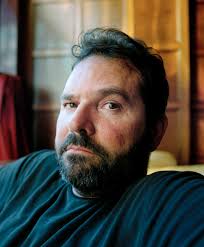
I hadn’t heard of Denis Johnson (1949–2017) until I read an Esquire article enthusiastically recommending Netflix’s 2025 film Train Dreams, an adaptation of Johnson’s 2011 novella of the same title.
I liked what I read—the story of a shy man, Robert Grainier, who finds words difficult. He arrives as an orphaned child in Idaho’s rugged panhandle at the advent of the twentieth century. A day laborer, he joins crews cutting giant timber and building massive railroad trestles; later, he founds his own venture, hauling freight across the Idaho wilderness by horse-drawn wagon. He falls in love. They have a child and build a cabin in the woods. Joy and grief follow.
The story transcends Grainier, who lives into old age as a witness to a vanished America we will not see again—a sweep of history moving from horses to railroads, cars, electricity, telephones, television, aviation and rockets into space.
I watched the film and read the novella, whose 117 pages go quickly. Directed by Clint Bentley and co-written with Greg Kwedar, the film stars Joel Edgerton as Grainier and richly deserves its critical acclaim, with several reviewers calling it one of the most moving cinematic works of the new century.
Nominated for four Oscars, the film fleshes out the book’s narrative. Page and screen offer apples and oranges, distinct yet equally absorbent and moving tellings, each capturing the life of a simple, everyday man carrying his grief with quiet dignity, portraying life’s randomness and impermanence through rhythmic sequences and soft-lit photography.
The book itself leaves no word wasted, flashing with lyrical intensity. Wolves howl. Sentry spruces keep watch, piercing solemn, low-wandering cumulus flotsam. Short sentences mirror time’s passage, moving like water slipping over smooth stones. The book ends, leaving behind a haunting lingering. Not surprisingly, critics have dubbed it an epic masterpiece rendered in brevity.
Johnson began as a poet and went on to write short stories, nine novels, a novella, and two plays. Train Dreams won an O. Henry Award, one of the top honors for American and Canadian short fiction, and was named a finalist for the Pulitzer Prize in 2012. Earlier, his Vietnam War novel, Tree of Smoke (2007), won the National Book Award.
I now think of him as one of our contemporary best, agreeing with the critics ranking him alongside Cormac McCarthy in chronicling the American experiment, though doing it more gently, measuring what was gained against so much irretrievably lost.
rj

