The Fountain of Youth: We are all Ponce de Leon

medical-symbol1As a 12-year old Florida school boy, I was introduced early to the 16th century Spanish explorer Ponce de Leon, whom legend says came to Florida in quest of the Fountain of Youth.  Drink or bathe in its waters and you could be young again.  A story-line like this isn’t unique, finding its replay in myth and legend throughout the world. 

Its insistence  doesn’t surprise us at all, since it mirrors our consummate dream to stay young, not for its own sake, but because we associate youth with beauty, vigor, and libido, or from another angle, the absence of chronic ills like coronary disease, cancer, arthritis, and God only knows what, that often define our later years.  All the parts are new and they work well and at 25 we may sometimes think ourselves immortal.  We dream not just ordinary dreams, but visionary ones that say I can and I will.

Sooner or later, we are all Ponce de Leon, clutching to “the splendors in the grass” (Wordsworth).  Our ads promulgate our folly with promised effulgences of youth’s attributes, abolishing gray, dissolving winkles, restoring passion.

But even medicine itself increasingly wanders into the Ponce de Leon camp these days, some doctors proffering we may soon banish the ills of our human sojourn, advancing our life span dramatically into the 100 year range what with the promise of genetics making individualized therapies possible, perhaps a pill as it were targeting your specific ill, say cancer.

This is pretty much the message of Dr. David Agus’ fascinating The End of Illness, sort of what we do now at the car shop or electronics outlet, plugging into a computer that in seconds spits out solution.  He tells the story of 44-year old Bill Weir, host of ABC’s Nightline, who volunteered to go live, or cameras rolling in prime time, as the newest medical technology imputed his medical data at USC University Hospital.

It was the whole works, including not only blood tests and CT scans, but DNA analysis to assess his hereditary risk for illnesses such as heart disease, Alzheimer’s disease, colon cancer and about 32 other disease scenarios.  A CT uncovered substantial calcium build-up in Weir’s coronary arteries, narrowing his arteries and portending a possible heart attack in the next several years.  He had seemed a very healthy man until testing found him out.

The point is that we can increasingly predict and find impending diseases, and employing  intervention therapy, reduce if not eliminate, their threat.  Because of the high expense, sounds to me like you want to make sure you and your loved ones have the best possible medical coverage.  In the end, prevention may well be less costly than treating a patient with cancer, heart disease or diabetes.

Here I agree with those in Agus’ camp.  Take those prescribed pills, undergo the recommended testings, etc.  Consider pancreatic cancer, for example, a disease that takes no prisoners and recently killed actor Patrick Swayze, astronaut Sally Ride, and Apple’s Steve Jobs.  It’s an insidious illness that manifests its symptoms when it’s usually too late.  Still, you can undergo an annual complete abdominal ultrasound, MRI, or CT and gain a chance to nip the culprit in the bud.

But do I think medicine in the next 25 years will largely eliminate illness?  I will only say I think the jury’s still out on this one, though I’m doubtful. There is the expense; human inertia; new diseases in an increasingly global village appearing, impervious to our best antibiotics and the lengthy interval in developing new ones.  Even Agus contradicts his own optimism in predicting the inevitability of a pandemic:

The swine flu scare that occurred in 2009 will someday be dwarfed by a real epidemic that will spread rapidly through virgin immune systems and kill millions in its path (as happened, for example, in the flu epidemic of 1918, when an estimated 50 million to 100 million people died) (p. 277).

And I think the title of his book extravagant.  It may spawn sales, but little else, for fragile beings that we are, fraught with mortality, we share the fate of all living creatures, governed in the end by entropy.  We will never arrest illness completely, though we may at times lessen its impacting, and even its timing, by employing health enhancing strategies that will also lend quality to our lives.

At present, the American medical establishment is in breakdown mode.  While heart disease has shown a decrease, cancer continues to plague us.  Apart from disease, our doctors kill up to 200,000 patients yearly by way of medical mistakes; 50 million of us have no insurance; 25 million of us are underinsured.  Meanwhile, our unhealthy lifestyle continues to menace both our health and our wallets.  We have more diabetics than ever, for example.  Many of us are just plain fat.

I’d like to continue this subject in a later post and tell you things you can do specifically to help safeguard the health of yourself and loved ones, though I can’t promise you centenarian status.  Only 1 in 20,000 achieves that!

–rj

Confessions of a reluctant vegan

Food for Life distributes food on an internati...

I never thought I’d give-up meat.   Up to my mid fifties, I ate meat at virtually every meal, starting out with bacon and eggs in the morning; baloney sandwiches or a Big Mac for lunch; chicken or hamburger paddy at night.  Once a week I’d treat myself to a bucket of KFC chicken.  A steak was the right choice for special nights out.

Then it happened.  Karen shared an article she had just read in our local newspaper on the horrors of the turkey industry.  I’ll spare you the details, but it was pretty awful.

Both Karen and I then decided on switching to a veggie diet, though still including animal products such as eggs and cheese.  We made that decision the night before Thanksgiving Day, 1996, and we’ve been vegetarians now for close to 17-years and never looked back.

People choose vegetarianism for any of several reasons such as reducing weight, lowering heart risk, and promoting the environment.  We chose vegetarianism for ethical reasons, believing it wrong to inflict suffering on any sentient creature.  As the saying goes, always remember that the meat you eat once had a face.

The vegetarian diet, once you get past the meat cravings, is actually pretty good.  Sometimes it’s even too easy, what with all the veggie substitutes out there there for turkey, ham,  chicken and the like.  I can make a pasta dish complete with soy meatballs and fool people every time.  I can also fashion you a sumptuous veggie chili that tastes every bit like the original.  By the way, becoming a vegetarian doesn’t necessarily translate into a better diet than the ASD if you just gorge on junk foods like chips and sweets.

Transitioning to a vegan diet, however, has been a real challenge.  I chose to go this way about 15 months ago when a routine blood test showed my glucose at 108, meaning I was pre-diabetic.  It’s in this stage that you can make lifestyle changes that can prevent or delay the onset of diabetes.  I also found out I had high insulin resistance, meaning the insulin that the pancreas pumps out to handle blood sugar was having difficulty entering my cells, where it does its work.

I had to do two things in a hurry:  refine my diet even more by eliminating virtually all highly concentrated sugar foods such as soda, which I drank daily; candy, and baked goods.  I also needed to avoid refined, or processed, food products with their white flour, fructose, corn syrup and high sodium that are probably, along with meat and dairy, instigators of many of our health ills like obesity, coronary disease and, possibly, cancer.

I needed to eliminate foods having cholesterol content as well, which meant giving up cheese, one of my favorite foods.  Fatty foods clog the mitochondria, or cell gateways through which insulin accesses the cells, and obviously don’t do the arteries any good either.

Now I may surprise you when I say I don’t like going vegan–no more kitsch, or cheese, or morning fried eggs with buttered toast, or even pizza.  No more lovely potato salad.   No more sumptuous chocolate bars, cheese cake, apple pie.  Not even fruit juice.

It seems a diet made for hell, not heaven.  Frozen vegetables and mountains of lettuce just don’t cut it for me.  It’s like I’m turning into some kind of bunny.  It may have been ok for Gandhi, but hey, I’m not Gandhi.  Mexicans may love their beans, but day after day, it gets old for me.

What really makes things worse is that I’ve always been a slender guy not needing to lose weight.  On this diet over the past year, however, I’ve shed 15 pounds and have to cram nuts to steady my weight.  Weight loss may be great for most diabetics, who tend to be overweight, but not for yours truly.

At times I’m strongly tempted to compromise and resume the vegetarian diet, but then I remember it didn’t do anything for my insulin resistance, except maybe to encourage it.  Doing vegan, however, combined with aerobic exercise 5 times a week, I’ve cut my insulin resistance nearly in half, dropped my fasting glucose below 100, and have begun to transition from small LDL-p particles to the safer, large LDL-p particles.  Trigylcerides and bad cholesterol are way down;  HDL, the good cholesterol, is up sharply.  I think that’s where the second life style change kicks in.  You can’t just eat nutritionally dense foods.  You have to exercise vigorously 5 times a week for 30 minutes.  Even better, add resistance exercise 2 to 3 times a week.

But back to veganism.  Maybe it’s like being a baby again and Mama’s stand-by:  “Now eat up your veggies.  This bite’s for Mama.  This one for Papa.  This one for….

To put it frankly, I wish there were an easier, more appetizing route to good health.  But then again, all the studies that count show that diet matters and that a plant saturated diet does best for fostering good health.  The soundest dietary advice I ever got was put so simply by nutrition expert Michael Pollan in his fine book, In Defense of Food:  “Eat food. Not too much. Mostly plants.”  Though it isn’t easy, my own experience confirms its wisdom.

–rj

The Smile that Hides the Soul

I have a number of books that supposedly clue you into discerning the personalities of people based on their physical gestures, things like hands on hips,  the turned up corners of the mouth, the wrinkling of the forehead or lifting of the eyebrows,  etc.  The problem is that body language can differ from one culture to another.  While close spatial contact with lots of touching may convey caring in, say, a Hispanic culture, it’s apt to raise the specter of territorial invasion among white North Americans.  I know families, for example, that simply don’t touch.

My take on kinetics, or body language, is to approach the subject with caution.  But it’s more than this, too.  I’m simply suspicious of reductionist approaches that promise us a mirroring of the human psyche and, often as not, a means to its manipulation, if we just read the body cues right and fine-tune our approach.

No, we humans are offspring of eons of evolutionary survival stratagems that camouflage thoughts, and with good reason in a world that often cannot tolerate a baring of the soul with its sonar witness to salient distress as a life component we’re uncomfortable  acknowledging.  We feel safer behind walls.

Thus we’re prone to exercising considerable dissembling skills to avoid alienating our fellows and exacerbating our isolation, for no matter what form physical pain, anguish, and grief assume, there’s always the immense individuality of suffering which even the greatest empathy cannot transcend.

Emily Dickinson, like all gifted poets grounded in sensory acuity, knew this well, typically drawing upon Nature for analogies of  concealment, undermining the conflation of appearance with reality in “The Wounded Deer Leaps Highest” with its successive examples of a deer’s leap, a gashed rock, a sprung trap, and, in the human realm, flushed cheeks and even laughter, suggesting a dynamism masking covert wounding:

A wounded deer leaps highest
I’ve hunter the hunter tell;
Tis but the ecstasy of death,
And then the brake is still.

The smitten rock that gushes,
The trampled steel that springs;
A cheek is always redder
Just where the hectic stings!

Mirth is the mail of anguish,
In which it caution arms
Lest anybody spy the blood
And “You’re hurt exclaim.

As the closing stanza poignantly bears witness, we put on a brave act hiding our grief, as though expressing it were a weakness, with resulting pity simply reinforcing our isolated fate.  Culture has insisted men, in particular, should be very good at this.

We are complex in our emotions and body language.  In the space of three years, Dickinson  would lose 26 friends and relatives to death; but she also knew that life goes on and the game must still be played.

–rj


Finding serenity

I mentioned in a recent post how I’ve been reading Natame Soseki’s The Gate. I’m nearing the end now and just came upon the protagonist, Sosuke, ruminating that “he must find a way to attain serenity in life, given his many troubles and high anxiety.”

Serenity, I had almost forgotten this word I used to bounce around in my thoughts like a rubber ball.  I think it a beautiful word, right up there with love, compassion, empathy, and the like.

But what is it really?

I’m not a religious person, but one of the best definitions comes from the Bible which speaks of “the peace that passes understanding.”

Similarly, theologian Richard Niebuhr said it exceptionally well in a prayer he devised that later became popular and is sometimes erroneously attributed to St. Francis of Assisi.

Its beginning goes like this:

God grant me the serenity
to accept the things I cannot change,
courage to change the things I can;
and wisdom to know the difference.

Alcoholics Anonymous has liked it so much that they recite it at the opening of their Twelve Step sessions.

Danger lurks, however, when we conflate serenity with passivity.  As the news media confirm daily, we live in a world of virtually palpable wrongdoing and robust evil, sometimes beyond words.   All good people must wage the fight, since indifference or passivity surely contributes to their dominion.

Serenity comes from accepting we may not realize our most ardent desires, even those bathed in love and compassion for those who suffer.  Paradoxically,  accepting our often ineffectuality makes room for serenity’s defining characteristic, transcendence.  I like how Bishop Desmond Tutu put it at a time of failing health:

I don’t think I’ve ever felt that same kind of peace, the kind of serenity that I felt after acknowledging that maybe I was going to die of this TB.

The way of serenity isn’t any sudden showering of the gods, for it necessitates self-emptying, or the surrendering of Ego that fosters our suffering with its myriad desires and its denial of our mortality.  Paradoxically, when we do so, it promotes our healing, or as Victor Frankyl expessed it, “The more one forgets himself–by giving himself to a cause to serve or another person to love–the more he actualizes himself.”

The good news is that we can cultivate serenity by pursuing several avenues that unlock bad habits, replacing them with alternatives promoting our well-being.  Here are some that help me:

Cognitive:  Change the way you respond to things that happen to you.  Do you act or react?  Why let someone’s curt remark destroy your day?  Are there positive alternatives to the negative way you’re interpreting things?  Negative thoughts produce emotional distress.  Pluck them by the root.

Music:  Shakespeare once famously said, “Music  hath charms to soothe a savage  breast.”  Avoid the frenetic.  Indulge the soothing.  Music reduces stress levels by 61%.

Exercise:   Physical activity relieves stress, besides being good for your health, giving you less to worry about.  You may want to add restorative yoga or Tai Chi, which have proven their worth over several millennia and are endorsesd by today’s medical community.

Interests:  Find something you like to do such as gardening, hiking, volunteering.

Friends:  Cultivate relationships with positive people.  Establish a support network.

Humor:   Laughter is its own medicine.  Research indicates it can promote blood flow, boost the immune system, and promote sound sleep.

Reading:  There are many fine reads out there written by experts on reducing stress.  Reading reduces stress by 68% according to cognitive neuropsychologist, Dr. David Lewis.  Reading works because it takes us out of ourselves which, of course, fosters serenity.

Eating:  Certain foods like blueberries, almonds, whole grains, and veggies can improve your mood and reduce stress.  You might like to peruse Elizabeth Somer’s thorough study, Food and Mood.

Organizing:  For some of us, including myself, neatness affords me a sense of being on top of things, and is thus its own tranquilizer.

Sleep:  Establish a regular schedule and keep to it.  Avoid stressful activities or exercise three hours before bedtime; same for intense mental activity.

Nature:  It isn’t accidental that nature inspires a lot of poetry or that many people opt for remote vacations away from our noisy world.  Nature enhances sensory awareness, and with it, provides relief from daily stress.  It’s as close as keeping a garden, taking a walk, and cutting the grass.  You can enhance your experience by learning the names of common trees, flowers and birds.  For me, it’s become synonymous with sanctuary.

Meditation:  I like this one best for its quick returns, especially mindfulness meditation.  (See my essay in Recent Posts, “Mindfuness and the recovery….”).  Breathing and focusing can produce immediate relief and the ability to let go of negative thoughts.  Combined with yoga or Tai Chi, you’ve a double whammy against anxiety.

In all honesty, I’ve not gotten there yet, but I’m trying, remembering that the longest journey begins with the first step.  Serenity comes down to doing what I can, subtracting the difference.

Mindfulness and the recovery of compassion, empathy and joy

Nearly always I come upon new reads, not through lists but, unexpectedly, in the marketplace of life.  I like it this way–the surprise of it, the joy of discovery, the smack of fate rather than coincidence, like the chance finding of a new friend or bumping into wise counsel, unanticipated, in a corner; its aftermath of empowering, the mystery and the beauty of it.

It happened for me this way yesterday when I came upon Mark Williams and Danny Penman’s Mindfulness:  An Eight Week Plan for Finding Peace in a Frantic World.  Intuiting a must read, I immediately downloaded the kindle version, which also features several sound tracks for the exercises.

I’ve been suffering lately from a good deal of anxiety, largely because of health issues.  I’m not used to things being this way and my need to control makes matters worse.  The trick in life is learning how to cope with issues you can’t always resolve.  While I know the script in my head, it’s quite another thing to carry out.

I like this new way of finding yourself and the freedom it brings, not in resolving, but in coping.  Mindfulness actually isn’t new, but a bedrock of Buddhism.  What changes the scorecard for me, however, is the empirical yield of sophisticated brain-scanning methodologies affirming its effectiveness.  What’s more, it can alter brain patterns long term for the better.  Studies show it substantially reduces depression and its frequent return,  improves blood pressure, lessens chronic pain, and boosts the immune system.  In daily life, it promotes empathy, compassion and joy.

I’ve always had great respect for the potential of meditation to promote both physical and emotional wellness.  My mind, however, works like a metropolitan airport, the runways always full.  Mindfulness meditation may thus work better for me, as instead of eliminating your thoughts, you passively observe them in conjunction with focusing on breathing.  You learn that you are not your thoughts and that thoughts can come and go like black clouds in the sky.  This gives you power to catch wrong thinking or patterns before they impact, and it lends space to help you heal.

Mindfulness is all about bringing us to our senses, and by this, I mean the sensory repertoire of touch, taste, sight, smell and sound.  We take ourselves too seriously and in doing so lose direct contact with the cornucopia of life’s potential blessedness all around us when we subjugate the sensory to the taunt reins of the cerebral.

As Williams and Penman point out, we spend our lives “on automatic pilot,” creatures of habit, oblivious to the priorities that really matter.  Mindfulness takes us out of ourselves, giving us power to discern and thus choose.

I began the eight week course yesterday with the “raisin” exercise, a simple endeavor lasting several minutes that helps rekindle the sensory, noting things like weight, texture, taste, smell and tongue movement.  Once again, I rediscovered Flaubert’s maxim that  “anything looked at long enough becomes interesting.”

I hope this exercise is a harbinger of future benefits as it delivered me from my self-concern, channeling my focus on the here and now.  I thought of other raisins to be savored:  a hooting owl in dawn’s pink-fingered rays, a mountain brook bubbling its way, a child’s innocent giggle, the sweet smell of morning cinnamon toast, the spring rose’s first blush.

I thought of Helen Keller’s eloquent wisdom:

“I who am blind can give one hint to those who see: Use your eyes as if tomorrow you would be stricken blind.  Hear the music of voices, the song of a bird, the mighty strains of an orchestra, as if you would be stricken deaf tomorrow. Touch each object as if tomorrow your tactile sense would fail. Smell the perfume of flowers, taste with relish each morsel, as if tomorrow you could never smell and taste again. make the most of every sense.”

Selah!  I am at peace.

–rj

Further Reflections on the Mediterranean Diet Findings

Michael Milken
Michael Milken

There’s been a lot of euphoria, I think mistaken, over the recent research  findings evaluating the Mediterranean diet.  (See my earlier post, “On the New Mediterranean study:  Proceed with Caution” [March 1, 2013.])  Not only was the alternative low fat diet administered in pedestrian fashion,  e. g., inadequate counseling, but a substantial number of those on the Mediterranean diet suffered heart attacks or strokes.  We need to remember that none of the participants had a history of either at the outset of  the experiment.

But let me be fair.  We’re all different and there’s no plug-in diagnostic that’s going to yield a universal physical metric.  This applies to diet, surely, and explains the plethora of approaches which work for some, but not others.  What we do know is that following a diet that emphasizes complex carbohydrates, low sugar, minimal saturated fats, and plenty of nutrient dense fruits and vegetables along with reduced sodium intake is beneficial.

The Mediterranean diet thus moves in the right direction, but would be even more effective were it to reduce meat and dairy product content.  We might then see not only reduction in coronary disease, but its reversal, which truly low fat diets (10% consumption of total calories) have consistently demonstrated in extended government studies.

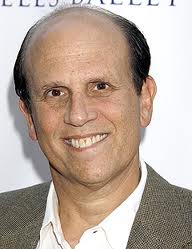
But let me bring up the Michael Milken story.  Do you remember him?  One of Wall Street’s top investors, he was indicted by the government in 1989 for racketeering and securities fraud and served 22 months in prison.  What followed is a story that moves us with its redemption.

Worse than prison, Mike was diagnosed in 1993 with Stage IV prostate cancer at just age 46.  Biopsy indicated it had metastasized and spread to his lymph nodes; consequently, his doctor advised that his scheduled prostatectomy wouldn’t save him.

Mike responded where others might have given-up, launching vigorous research, founding the CaP Cure foundation, and making major changes in his diet by adopting a nonfat, vegetarian regimen.  For Mike, a typical diet will feature mushroom barley soup, a tofu mock egg salad sandwich replete with tofu, carrots and lettuce, and a black bean and corn salad, accompanied by a soy drink.

Mike also founded and heads the Prostate foundation, working closely with Major League Baseball and matching every donated dollar.

It’s now 20-years since that fatal diagnosis.  Mike?  He’s still out there going strong and giving hope to thousands.

You’ll find many of Mike’s favorite low fat, soy-based foods, compiled with the aid of Beth Ginsberg, a grad of the Culinary Institute of America, gathered in The Taste for Living World Cookbook.  With its subtly delicious recipes, it’s a best buy.

What if: Reducing chronic worry

We worry about a great many things:  How will my interview go? What will people think of me?  Will I pass the test?  How will I pay this bill?  Will I get the loan?  Do I have cancer?  When worry becomes chronic, it can be debilitating, souring our relationships, triggering illness, and fostering pessimism.

Worrying is always an exercise in control.  It prospers because it temporally gives us a fix, falsely giving us a sense we’re in charge, only to reach an inevitably higher threshold to keep our anxieties in check.

One lasting memory I have of my father was his spending long hours in his favorite chair looking out the window, deep in thought, most of it worry.  In doing so he lost a great deal of life’s joy.  It’s what worry does in overdrive. If he had been paid for every worry he’d have been very rich.

Worry is a bully you need to standup to, not indulge, to make it go away.

It’s also a habit and in this case, needs undoing, and like all bad habits, can be unlearned.

The good news is that its remedy may be less difficult than you may have expected, or a matter of getting a handle on it by changing the way you think about life’s inevitable stresses.

The vast majority of our worries fall into three categories, each with its own remedy:

1.    The unimportant:  So much of what we worry about turns out to be trivial if you apply the test of time.  You’re having trouble with a neighbor. That can be unpleasant. Or what about the deadline for getting that assignment done at work?  Or that you may not get that job or promotion you had your heart set on?  Or that Nancy or Bill may not return your affection?  For perspective, ask yourself what would something like this matter a hundred years from now?  

 2.   The unsolvable:   Common sense should tell us the futility of worrying about fixed verities like death and taxes that can’t be changed no matter how we try.  I know such things can be scary, but we lessen our anxiety when we accept life’s randomness and adopt coping strategies to keep ourselves reasonably safe, and pile-up while we can, the nows of life around us as in fostering good relationships, doing what we enjoy, and thinking positively.

3.   The uncertain:  This category may include what we worry about most.  Will I still have a job?  How can I pay my bills?  Is it cancer?  If we could predict the future, we’d invest wisely and profit immensely in the best stocks, bonds and real estate. But even here, the experts at this sort of thing often predict wrongly and fail miserably. The consolation is that most of the uncertainties we worry about never happen or that we”ve simply squeezed out alternative possibilities with one scenario conclusions, making ourselves miserable.  As Montaigne in his inveterate wisdom once put it, “My life has been full of miserable misfortunes, most of which never happened.”  The trick is to accept uncertainty by not reaching conclusions you’ve no way of knowing are inevitable. It’s always a good thing to question your assumptions and consider alternative outcomes.

Summary:  Worry has a positive role when it alerts us to take action as a preventative. It’s why we save for retirement, buy life and health insurance, limit our indebtedness, change our diet, etc.  It becomes a weight when we wake to it, carry it throughout the day, and take it to bed with us at night.  It can harm relationships and affect our physical and mental health.  Remembering the three primary worry types and putting their coping strategies into daily practice can help you retrieve the happiness you mislaid.

Be well,

rj

The folly of being in control

Often life can unexpectedly catch us in a high wave and we lose our balance and may even go down.  Not liking this, we try to lasso life’s randomness through structure or control and spare ourselves surprise.  Though this may help some, it doesn’t always work and, oddly, may even work against us when control assumes our identity.

Some of us are more prone to controlling than others, having been forced out of our nest early to look after ourselves.  I think of children of alcoholics, for example, who must not only escape, but prevent betrayal reoccurring.

Control is a ritual to relieve mistrust and smooth out the winkles.  All of us resort to defense modes from time to time to cope with an often aggressive landscape of human ignominy and nature’s caprice. There exists, too, an existential dread in us, or sense of our impotency against life’s vagaries, resonating vulnerability and whispering our mortality.

But to live this way daily filters life’s joy and shrinks life to a prison cell.  While we need to be wary, we should drop the reins when control becomes its own end and we become its prisoner and it hurts more than it helps.  Control, at its extreme, masks a latent masochism or inverted narcissism that feeds upon its wounds.

We cannot know what each day brings, nor always preempt its events, but changing our thoughts can help ransom our freedom in a world where the surety remains that flowers do bloom and there are people worth loving who will love us.  Experience affirms that we find love only when we extend  our hand to grasp the extended warm fingers of those around us.

I can’t say just how we find the switch that turns on life, nor assure its recompense when we do; but I know that abundant living begins with a giving of ourselves, and not withdrawing and yields release from the confines of our fears.

In sum, we become our choices and when we commit we find life gives back.  William James, one of America’s foremost early psychologists, said it very well:  “The greatest discovery of my generation is that human beings by changing the inner attitudes of their minds can change the outer aspects of their lives.”

How do we do that?  It begins with realizing the futility of our attempts to impose order on life, for life has a way of happening.  What matters is living in the Now, one day at a time, one step at a time, finding joy in each other, delight in the canopy of the stars, and the promise of every new day.

–rj