
Sheer Lunacy: Trump’s Assault on the Environment

The Trump administration’s assault on the environment in the context of exponential climate change exhibits all too well the earmarks of corporate denial in the pursuit of monetary gain that will reap catastrophic consequences.

When Rachel Carson’s Silent Spring appeared in 1962, it moved two presidents to take action, Kennedy ordering an investigation of pesticide use and Nixon founding the Environmental Protection Agency.

Unfortunately, Trump’s EPA version bears little resemblance and to chart his myriad changes would try your patience.

I confess to being an environmental zealot. I read eco literature vividly, keep up with the latest happenings, donate regularly to environmental groups.

I support protecting endangered species like the whooping crane, manatee, blue and finback whales. I accept evolution’s tapestry of a variegated offspring, reaping the legacy of successful adaptation over vast aeons of time, our human presence but a wink by comparison.

I do not subscribe to the administration’s either/or assumption of jobs vs. environment. On the contrary, abundant studies show commitment to the Green New Deal would inaugurate new technologies and promote GNP growth. According to a University of Massachusetts study, commitment to a climate jobs program would generate 1.5-2 million net jobs annually for a decade (Pollin et al.).

Trump and his lackeys ignore such research. They are of a stubborn mindset, devotees of fossil industry interests,

Recently, this administration waived thirty environmental and public health studies in pursuit of building a wall through the Lower Rio Grande Valley National Wildlife Refuge, placing endangered species habitats and ecosystem corridors in jeopardy.

Meanwhile, they’ve slashed the EPA budget by 65%, cancelled or unenforced dozens of environmental rules, opened the Arctic National Wildlife Refuge and US coastal waters to oil drilling, slated public lands with their indigenous monuments for auctioning, and severely reduced national park staffing.

As for the Endangered Species Act, this administration has compromised it to allow for economic considerations. Good-bye, my beloved manatees, the Everglades, Yosemite as we once knew it in its pristine beauty,

As Rachel Carson reminds us, “Beauty — and all the values that derive from beauty — are not measured and evaluated in terms of the dollar.” (Lost Woods).

Addendum:

Yesterday, my heart quickened as Dee Dee and I drove into Lexington, honked our horn at several groups of Trump protestors gathered along the way, who exuberantly reciprocated our waves.

We learned we’re not alone.

Collectively, it is our duty to resist.

RJ
Trump Environmental Rollbacks: Travesty in the Making

The Trump administration is accelerating its broad assault on environmental protections and climate change mitigation, putting both public health and the planet at risk. It began with the U.S. withdrawal from the Paris Climate Agreement, a pact signed by 200 nations.

Dismantling Biden’s Inflation Reduction Act, Trump has rolled back roughly 125 environmental policies in just two months, issuing executive orders to expand oil and gas drilling on public lands and increase logging in national forests.

Meanwhile, 1,600 workers have been cut from the National Oceanic and Atmospheric Administration (NOAA), undermining critical weather forecasting and public safety.

Aid to developing countries for green initiatives, once provided through the International Partners Group, has been halted.

FEMA, responsible for disaster relief, is under review.

The Environmental Protection Agency (EPA)—established by Richard Nixon in response to Rachel Carson’s Silent Spring—has pivoted to pro-fossil fuel advocacy. Forget about EVs, charging stations, or clean energy incentives.

It doesn’t stop there. Reuters reports today that the Department of Energy is considering slashing millions in funding for two major carbon capture projects in Louisiana and Texas. These projects, once fully operational, could remove an estimated two million metric tons of carbon annually.

Long standing congressional mandated legislation such as the Clean Air Act, the National Environmental Policy Act, the Clean Air Act, the Endangered Species Act, the Noise Reduction Act, and the Endangered Species Act face Trump’s bludgeoning. The courts must act to stop the carnage.

All of this comes as the world falls short of its pledge to limit warming to 3.6°F (1.5°C) above pre-industrial levels.

Trump, of course, remains unbothered. He has long dismissed climate change as a “hoax.”

Unfortunately, we will all pay an incalculable price for electing a renegade despot, mindlessly sabotaging the public’s welfare and our children’s future.

—rj

You have every right to be afraid!

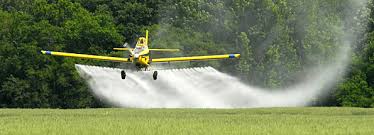
cropsprayingMany of us rightfully fear a Trump presidency for what it may mean for the welfare of our citizenry and nation.
Will Affordable Health Care (AHC) and Medicare be on the chopping block?

If you’re an undocumented immigrant, will Trump carry out his often repeated pledge to deport illegals and build a wall on the border with Mexico?

Will he foreclose on refugees, many of them Muslims?

On the the world stage, will he roll back Obama’s executive order that has restored relations with Cuba?

Will he undo the nuclear treaty with Iran?

While all of these concerns are legitimate, I’d argue that they pale up against the incipient threat posed by climate change, an issue virtually missing from the presidential debates, despite the earth’s very survival being at stake.

Alarmingly, in his October 100-day preview, Trump, who has repeatedly declared global warming a hoax, pledged he’d repeal the Clean Power Plan, withdraw from the historic Paris agreement (signed by 120 nations, setting targets for carbon), and lift restrictions on oil and gas development on public lands.

He’s also told us he’ll revive Keystone XL.

In recent days, the press has been focused on his potential choice for the important Secretary of State position. Nobody’s talking, however, about whom he’ll appoint as Secretary of the Interior.

At the moment, the scenario for environmental disaster looms large in Trump’s choice of Myron Ebell to oversee the transition of the Environmental Protection Agency, ironically founded by Richard Nixon. Ebell doesn’t believe in climate change either.

He’s also associated with the Competitive Enterprise Institute (http://SafeChemicalPolicy.org), which underplays the environmental and health consequences of industrial chemicals.

Ebell could also be Trump’s choice to head the EPA. For the record, Ebell opposes government efforts to curb global warming and the Paris Agreement.

As I write, it isn’t far-fetched that Trump might give the nod to Forrest Lucas for Secretary of the Interior. Lukas has contributed mega-bucks to Trump and Pence’s campaigns. An oil executive, he’d be in charge of our national parks and public lands. Native Americans–think North Dakota pipeline–might raise their eyebrows, given that one of the Department’s tasks is to monitor programs relating to Native Americans.

We haven’t heard yet on who’ll fill the Department of Energy either, but if Ebell doesn’t get the EPA or Interior nomination, he’d likely fill this vacancy. This, again, is a pivotal cabinet post, affecting environment in the Department’s mission to research, regulate, and develop energy technology and resources.

In the meantime, climate change isn’t when, but now. Lamentably, we learned just last week that due to the summer melting of Arctic ice, warm waters have swept over the South Pacific, killing coral, and substantially damaging the famed Great Barrier Reef off Australia’s coast.

We ‘re getting more droughts and flooding than the norm..

2016 will go down as our hottest year since we began keeping track of temperatures.

Scientists tell us we’re on pace, despite December’s Paris agreement, for an increase in earth’s average temperature of 3.5 Celsius, if not more, by 2100.

What this means to our children is that coastal cities like NewYork, Míami, and New Orleans will be mere abstracts of memory, or like the Atlantis of ancient myth, lost beneath the sea.

–rj

Reflections on the Supreme Court’s EPA Rebuff

A-polar-bear-and-her-cubs-007This has been a busy time for America’s highest court, with gargantuan issues–gay marriage, Obama Care, and approval of a controversial capital punishment drug, cases decided by razor thin majorities.

No less important, perhaps the most impacting of all, is the Supreme Court’s decision ultimately affecting climate change; namely its one vote majority ruling against the EPA’s Mercury and Toxic Standards (MATS) provision, designed to reduce mercury and other air pollutants from the nation’s myriad power plants, especially those utilizing coal.

Though MATS wasn’t specifically disavowed, the Court ruled that the EPA must consider the financial burden it imposes. Accordingly, the case goes back to the U.S. Court of Appeals for the District of Columbia to deliberate new guidelines.

I think the decision horrendous in the context of the preeminent threat we and, especially posterity, face in the context of climate change, which the vast weight of environmental science affirms is human induced.

In fact, if we don’t get our act together, we may find ourselves joining the plethora of species we’ve either driven into extinction or endangered.

On the other hand, I laud justice Elena Kagan, who wrote the minority decision in the 5-4 verdict:

Over more than a decade, EPA took costs into account at multiple stages and through multiple means as it set emissions limits for power plants. And when making its initial ‘appropriate and necessary’ finding, EPA knew it would do exactly that — knew it would thoroughly consider the cost-effectiveness of emissions standards later on. That context matters.

While it’s probable the lower court won’t gut the act, but simply mandate that EPA integrate cost factors upfront, not after-the-fact, as it had done, this may sadly take another five years and still be subject to legal scrutiny.

Climate change, in the meanwhile, isn’t about to go into a stall while we continue to rely upon coal as an energy source for many of our power plants.

The corollary is that like a credit card we don’t pay off, our delay will exact cost burdens exceeding mere cash reckonings in hazarding the health of both ourselves and the impinging on the ecological interplay upon which we depend.

Nobody wants to pay more for energy costs any more than we relish replacing a malfunctioning stove or fridge for a newer, more efficient model, at increased cost. Alas, sometimes it is what it is and we move on.

What moved me to write this post as I awoke today to a new dawn outside my window is a news story just out of the BBC, reporting on “Irreversible Change to Sea Life from CO2, compiled by twenty-two experts in the journal Sciencehttp://www.bbc.co.uk/news/science-environment-3336902

Coral reefs, polar bears, many fish–all gone by century end as oceans continue to heat up, lose oxygen, and become more acidic, consequent with our embrace of CO2 energy sources.

And we’ll not be spared either, as the ocean out of which all life came and upon which it substantially depends, not only overwhelms our coast lines, but our ecosystems as well.

This is the true cost of our delay and our neglect, unacknowledged by the Court as in the  public’s greater interest and for the well-being of Mother Earth.

–rj


Expanding the energy portfolio: Utilities awaken

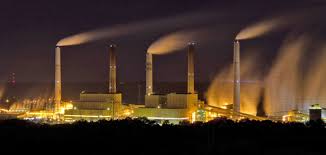
coalEvery month our local power cooperstive, Blue Grass Energy, sends us its superbly put together magazine, Kentucky Living, filled with helpful tips on home maintenance, gardening, recipes, recommended books, regional activities, events, etc.

With all its feel good staples, it’s easy to lose sight of its primary purpose as a public relations gimmick to elicit the public’s support. Your power company is on your side, helping you enjoy the good life, offering some of the lowest energy costs in the nation, largely through the state’s substantial coal reserves.

Its editorials, however, consistently make clear that this good life is under a black cloud via the EPA’s increasingly heavy hand, encouraged by Obama’s executive decisions restricting power plant emissions at heavy local cost and marginalization of its coal resources. In its use of coal as their primary energy source, states like Kentucky, not wealthy by any yardstick, will bear a larger cost burden than other states, which they simply can’t afford, the utilities say.

Tuesday is election day and according to the latest polls, Mitch McConnell. is poised to be reelected to yet another term and possibly become senate majority leader, meaning still more congressional gridlock.

Mitch says, “I strongly oppose the EPA’s efforts to shut down Kentucky’s coal industry. I will fight to ensure the future of existing coal-fired power plants.”

He has announced that one his priorities will be to defund the EPA.

His main opponent, Alison Lundergan Grimes, touted as the Democrats’ best shot at ending McConnell’s perennial reign, has simply been a mirror to McConnell on coal issues and climate change. She has even resorted to ludicrously painting McConnell as unfriendly to the state’s coal industry, including miners, even though they’ve repeatedly come to his defense.

As for Libertarian candidate, David Patterson, he tells us that “CO2 is not a pollutant in the quantities seen today.”

Fortunately, aside from the usual debacle of politics, Kentucky utilities are starting to get the message, with movement underway to harvest clean, alternative technologies. The East Kentucky Power Cooperative, for example (which affects our household) has invested $1.7 billion to help clean-up carbon emissions at its coal-fired power plants.

With the hand-writing on the wall, Kentucky’s utilities are pursuing a diverse energy grid, including not only natural gas, but solar, wind, hydro and landfill gas.

All of this will impose increased costs, but the alternative in the context of the exponential menace of climate change makes these efforts of acquiring a diverse energy portfolio least costly in the long term.

–rj