Business as Usual: Lockdown Unenforced

Protestors in Texas

As experts have warned and a rogue president, prioritizing reelection, has ignored, recharging the economy when Covid-19 continues to ravage has exacted a surge in the pandemic’s victims, with a new wave anticipated this fall.

But Americans are its lead cause, a spoiled populace ignoring the laws governing exit from the crisis, wearing a mask in public, practicing social distancing, limiting unnecessary activity. Fifty states, each with its own governance, unequal to enforcing these mandates of public safety, subservient to economic interests, fuel our crisis. Shamefully, we lead the world in the pandemic’s victims.

Meanwhile, climate change exacts its continuing world toll. We tied the record in May for the highest monthly average on record; investment in renewable energy has plummeted; in the next five years, five-hundred species will disappear as humanity continues its assault on Nature, despoiling fauna and flora in a greedy rush for profit. Worse is the meat industry, a virus hotspot, progenitor of the pandemic, not just now, but historically in its previously related strains.

As I write, the Amazon forest continues to burn to make room for cattle ranches, environmentalists have been killed or discredited, indigenous tribes decimated. In Croatia, yesterday, 50 million bees died, suspected victims of pesticides. You think it only happens abroad? It’s happening here. Last year in Texas, someone deliberately set fire to beehives, killing 500,000 bees. Almonds, a prime contributor to California’s agricultural sector, may soon devolve into memory.

Where do we go from here? For the sake of the present we are ravaging our children’s future. I think anew of poet Robinson Jeffers’ credo of “inhumanism,” a summons to abandon a plethora of mass murder and commodification, to simplify our lives, to embrace with stoic discipline those values that both uplift and secure our children’s destiny.

—rjoly

Is Anybody Listening? Voter Apathy on Climate Change

American media should be ashamed! Here we are, facing an unparalleled survival crisis, yet the absence of climate change from Thursday’s Democrat debate. (No opportunity for discussing the Green New Deal.) Then there is the apathy of many Americans. Three recent state voter surveys sadly show the absence of climate change as a top five issue for prospective voters. Meanwhile, the Trump assault on environment continues, with the Arctic opened this week to new oil exploitation, even as the world burns and the Arctic melts. I leave you this recent op-ed excerpt from Naomi Klein, one of our foremost writers on the subject: rj

“Wherever in the world they live, this generation has something in common: they are the first for whom climate disruption on a planetary scale is not a future threat, but a lived reality. Oceans are warming 40% faster than the United Nations predicted five years ago. And a sweeping study on the state of the Arctic, published in April 2019 in Environmental Research Letters and led by the renowned glaciologist Jason Box, found that ice in various forms is melting so rapidly that the ‘Arctic biophysical system is now clearly trending away from its 20th-century state and into an unprecedented state, with implications not only within but also beyond the Arctic.’ In May 2019, the United Nations’ Intergovernmental Science-Policy Platform on Biodiversity and Ecosystem Services published a report about the startling loss of wildlife around the world, warning that a million species of animals and plants are at risk of extinction. ‘The health of ecosystems on which we and all other species depend is deteriorating more rapidly than ever,’ said the chair, Robert Watson. ‘We are eroding the very foundations of economies, livelihoods, food security, health and quality of life worldwide. We have lost time. We must act now.´”

–rj

Coming to Our Senses

Image result for amphibiansindangerDo you remember any of those asteroid disaster movies? Depending on how you do the counting, there were at least seven of these goosebump films, assuring you nightly bouts with insomnia. One of my favorites has to be Meteor (1979), staring Sean Connery. That ominous prelude:

Its power is greater than all hydrogen bombs. Its speed is higher than any rocket ever conceived. Its force can shatter continents. Its mass can level mountain ranges. It cannot think. It cannot reason. IT CANNOT CHANGE ITS COURSE.

In the movie, the danger was sufficient that both the United States and Soviet Union suspended their cold war animosity to mutually merge efforts to ward off an impending doomsday scenario.

Today, Earth faces an apocalyptic fate all too real, fostered not by a fast approaching asteroid straight out of science fiction, but largely of our own making in real time: climate change.

It’s difficult to believe that there are skeptics about something seemingly so obvious and menacing like climate change. A bit like believing the earth is flat. Several months ago, I actually had my barber tell me the earth was flat and I nearly fell out of the chair!

Between May 23 and May 26, or just a few days from now, elections for the European Parliament will take place. As a prelude, the German populist party, Alternative für Deutschland (AfD), hopes to augment its appeal by stridently dismissing human caused climate change as Klimawandelpanik (climate change panic). They are backed by the European Institute of Climate and Energy (EICK), a consortium of conservative scientists, with links to their counterparts in the United States.

In America, we of course have Donald Trump leading the anti-climate change brigade. Additionally, there are entities like the Committee for a Constructive Tomorrow and the Heartland Institute, the latter funded by fossil fuel interests.

They argue that human induced climate change is simply an unsettled matter, with no definitive science resolving the issue. To buttress their claims they like to draw on the The Petition Project that presents 31,000 signatories from the science community, supporting the conclusion that “there is no convincing scientific evidence that human release of carbon dioxide will, in the foreseeable future, cause catastrophic heating of the Earth´s atmosphere” (Petition Project).

In rebuttal, co-authored consensus studies of climate change by seven eminent scientists averaged a 97% probability of human causation (John Cook, et al). I should point out that far more than seven scientists have underscored the human factor. What happens is that when research establishes probability, scientists move on. Why belabor the obvious?

And then there’s the science of climatology, which exceeds meteorology, the latter fairly reliable for short term forecasts we’re accustomed to getting daily on our TVs or smart phones. Climatologists, in contrast to meterologists, can pickup likely long term weather patterns; let’s say, for example, fifty years into the future through applied physics, computer models, and statistical analysis. Overwhelmingly, given the current projections of rising atmospheric temperatures, the future weather landscape poses survival implications for a vastly changed earth.

Even when we humans accept climate change as a reality (very true these days in Europe), we’re wired through evolution to take stock of palpable, more immediate threats such as job loss, divorce, a declining economy, or possible physical danger such as a street mugging, not abstract, long-range scenarios. It doesn’t affect me now, so why bother?

We judge weather short-term through memory and emotion, not seeing developing long term patterns. Climate change thus poses a peculiar, subtle kind of threat, silent, ubiquitous, insidious, and unrelenting.

In the meantime, we know that climate change is accelerating with devastating consequences and that we are its seminal source. We’ve had several recent United Nation reports on the imperiled status of the Earth, but now comes its sobering May 6, 2019 findings:

1. One million of some 8 million plant and animal species are on the verge of extinction. Flora and fauna that form vital components of an ecological complex vital to our survival should be as imperative a priority as climate change. 66% of marine life and 75% of land environments have been “severely altered,” according to the report. Ten percent of insects, 40% of amphibians, 33% of marine mammals, and a third of reef-forming corals face extinction.

2. The impact of human population growth with its fossil fuel dependence,, urban growth, deforestation, expanding agriculture, excessive meat eating, ruthless plundering of exotic species, along with pollution, drives climate change and species extinction.

Meanwhile, Donald Trump has taken America out of the Paris Treaty, which at least attempted to set goals for diminishing carbon release into the atmosphere, and surrounded himself with lackeys denying climate change.

Concurrently, the Arctic and Antarctica continue their meltdown, the seas keep rising, and submerged coasts proliferate. Our oceans, covering 71% of the earth’s surface, grow polluted with human contaminants, much of it plastics. Alarmingly, water temperatures are rising, imperiling the Gulf Stream and Humboldt current on which much of Europe and the United States depend as moderating influences on climate.

Forest fires and drought have become common calendar features, not only in California, but globally. Heat waves scorch Siberia, while record floods inundate Midwest farmlands and hurricanes intensify and become more frequent.

Unfortunately, the seeds of our demise are primarily fueled by market economies with their dependency on growth, leading to still further decimation, not only of Nature, but from the economic inequity that results. Oxfam tells us that in 2016 the wealthiest 62 people owned half as much as the world’s poorest people.

Desperate people worry about their immediate needs, not nature. They farm animal sanctuaries, log and burn forest to expand grazing and plant palm plantations, fish the seas to exhaustion, poach elephants, rhinos and other game.

Alarmingly, a current 2019 Pew Research Center poll shows climate change hovering next to last place as a bottom priority with the economy, health care costs, and education taking the top tiers ([https://www.people-press.org/2019/01/24/publics-2019-priorities-economy-health-care-education-and-security-all-near-top-of-list/]

In America, some twenty Democrats have announced their candidacy for the presidency, yet only two as of this writing have a defined strategy for combating climate change! The leading candidate, Joe Biden, still finds a place for coal, natural gas, and nuclear energy. He seems not to have heard of the Green New Deal (GND), our best shot yet at slowing both climate change and eliminating the income disparity emanating from an exploitive economy dependent on fossil fuels.

I worry about my grandchildren. What kind of a world are we about to bequeath them?

If we can’t come to our senses, give-up our selfish behavior, change our priorities, persist in denying the seriousness of climate change and our complicity, then we are indeed in trouble, the quality of life itself profoundly diminished, if not imperiled.

As Mark Twain memorably put it, “Better to build dams than wait for a flood to come to its senses.”

–R. Joly
Expanding the energy portfolio: Utilities awaken

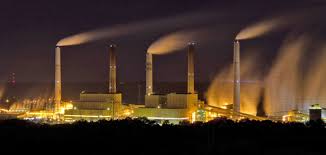
coalEvery month our local power cooperstive, Blue Grass Energy, sends us its superbly put together magazine, Kentucky Living, filled with helpful tips on home maintenance, gardening, recipes, recommended books, regional activities, events, etc.

With all its feel good staples, it’s easy to lose sight of its primary purpose as a public relations gimmick to elicit the public’s support. Your power company is on your side, helping you enjoy the good life, offering some of the lowest energy costs in the nation, largely through the state’s substantial coal reserves.

Its editorials, however, consistently make clear that this good life is under a black cloud via the EPA’s increasingly heavy hand, encouraged by Obama’s executive decisions restricting power plant emissions at heavy local cost and marginalization of its coal resources. In its use of coal as their primary energy source, states like Kentucky, not wealthy by any yardstick, will bear a larger cost burden than other states, which they simply can’t afford, the utilities say.

Tuesday is election day and according to the latest polls, Mitch McConnell. is poised to be reelected to yet another term and possibly become senate majority leader, meaning still more congressional gridlock.

Mitch says, “I strongly oppose the EPA’s efforts to shut down Kentucky’s coal industry. I will fight to ensure the future of existing coal-fired power plants.”

He has announced that one his priorities will be to defund the EPA.

His main opponent, Alison Lundergan Grimes, touted as the Democrats’ best shot at ending McConnell’s perennial reign, has simply been a mirror to McConnell on coal issues and climate change. She has even resorted to ludicrously painting McConnell as unfriendly to the state’s coal industry, including miners, even though they’ve repeatedly come to his defense.

As for Libertarian candidate, David Patterson, he tells us that “CO2 is not a pollutant in the quantities seen today.”

Fortunately, aside from the usual debacle of politics, Kentucky utilities are starting to get the message, with movement underway to harvest clean, alternative technologies. The East Kentucky Power Cooperative, for example (which affects our household) has invested $1.7 billion to help clean-up carbon emissions at its coal-fired power plants.

With the hand-writing on the wall, Kentucky’s utilities are pursuing a diverse energy grid, including not only natural gas, but solar, wind, hydro and landfill gas.

All of this will impose increased costs, but the alternative in the context of the exponential menace of climate change makes these efforts of acquiring a diverse energy portfolio least costly in the long term.

–rj


After we Murder Nature, then What?

environment

After we murder Nature, then what? I know some of you may think this a dubious assumption as to possibility, and I would be among you–that is, until recently.

As is, Nature has atrophied and we live increasingly in asphalt environments, with Nature relegated to a few urban parks and, even then, they tend not to be passive parks given over to Nature, but to ball fields, children’s playgrounds, etc.

As evidence of our increasing sequestering of Nature, consider that more of us in the USA and Canada visit local zoos than attend professional sports events combined!

The pity is that Man is himself the evolutionary outcome of millions of years of a once teeming biodiversity. The question then follows as to what happens to us when we marginalize the very sources of our being and our future.

I’ve seen science estimates of the number of species of existing plants and animals as somewhere between 5 and 100 million. We know that invertebrates vastly outnumber vertebrates like ourselves, perhaps some 10 million, of which only a million have been identified.

Zoologist Edward O. Wilson tells us that if humans were to suddenly disappear, all would still be well on earth; conversely, were the invertebrates to disappear, life would soon revert to its initial state a billion years ago of myriad algae, bacteria, and a few multi-celled organisms (In Search of Nature, 153).

In short, we are intertwined with nature right down to the tiniest organism.

Our mistake is to think that even the smallest entities of Nature, so staggering in numbers, cannot be vulnerable to human excesses:

When a valley in Peru or an island in the Pacific is stripped of the last of its vegetation, the result is likely to be the extinction of several kinds of birds and some dozens of plant species. Whereas we are painfully aware of that tragedy, we fail to perceive that hundreds of vertebrates will also vanish (Wilson, 145).

 As is, humans from their earliest beginnings up to the last century had already wiped out an estimated 10% of flora and fauna species. Alarmingly, bird population is declining rapidly, with a drop of 25% in bird species. Presently, the drop-off in all species, not only birds, is occurring 100 to 1000 times higher than in pre-human times.

Consider the continuing decimation of the Amazonian rainforest, the world’s foremost repository of biodiversity with huge implications for pharmaceuticals, agriculture and oil substitutes and, of course, climate change. Each year, we lose to chainsaws an area approximating half the size of Florida!

Unfortunately, we’ve inherited a primordial disposition that prioritizes personal safety, followed by family, tribe, then outsiders ((Wilson 186), a selfishness that unless it gives way to altruism expressed in environmental regard, is likely to doom us.

Today, we’re hearing a lot about climate change, and it certainly can’t be minimized, since we are largely responsible for it. But it’s not just a matter of carbon, but our burgeoning numbers, with corresponding exponential demands on limited resources. The more population increases, the more decimation, with habitats reduced and species extinguished, many of unknown importance to our survival. Consider Nigeria with its present population of 175 million (2013). PEW research estimates it will reach 440 million by 2050, exceeding the USA population.

Although population rates are declining, the world’s population will be just under 10 billion by 2050, with sub-Saharan Africa experiencing explosive growth, an area already confronted by widespread poverty, disease, and ethnic conflict. Unfortunately, in many places, cultural traditions and religious beliefs continue to dominate.

We can still save the day, but it’s unlikely that we care enough to act meaningfully and quickly.

Take where I live, Kentucky, where we have two senate candidates, Democrat and Republican, trying to shout down each other in denouncing President Obama’s policies affecting environment, especially coal. Accordingly, reducing the powers of the EPA is a foremost goal for both.

Unfortunately, evolution gave homo sapiens a well-developed brain, but pulled up short in maximizing a moral prowess vital to its long term survival.

–rj


Places to see before they disappear

Meet-me-in-Big-Sur6-640x354

The other day I perused the well-stocked magazine rack at my local Kroger and surprisingly came across a special Newsweek issue intriguingly entitled, “100 Places to Explore Before They Disappear.” Teeming with stunning photography you’re accustomed to seeing in magazines like National Geographic, it whets your appetite to get about and see some of these places, six of them right here in the USA. But the rub is that, given the rapidly accumulating consequences of climate change, you’d better do it soon.

As Christiana Figueres, United Nations Climate Chief, cautions, “There is no doubt, if elevated climate is not addressed, it presents a huge risk to many geographic regions around the world, particularly to low-lying islands and to coastal cities.”

As I see it, the catalyst behind these impending geographic upheavals comes down to water, either too much of it (e.g., rising sea levels) or too little (drought).

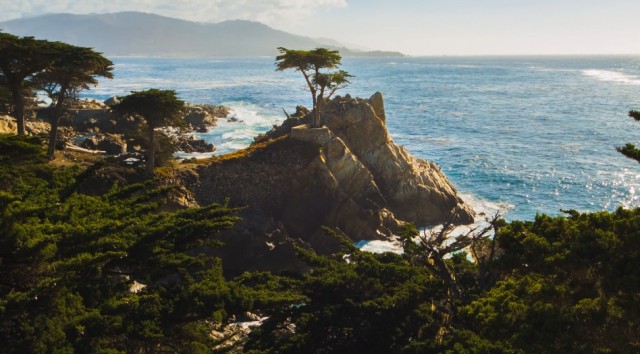
Let’s start with the USA: If there’s one place I absolutely adore above all of California’s myriad tapestry of exotic beauty, it’s Big Sur, hugging the central California coast for 90 miles between Carmel and Ragged Point.   For me, it’s a sacred place in its remoteness, adored by one of our most articulate poets on the environment, the late Robinson Jeffers, whose home is there. Severe drought conditions have converted this once verdant mountain area into a virtual tinder box. Just last year, a devastating forest burned 1000 acres and destroyed 34 homes. It happened in December, not in summer. Last year was California’s hottest year ever recorded. Severe drought and record temperature highs are continuing this year.

Other American vistas in danger:

The Florida Keys from Key Largo to Key West has experienced a sea-level rise of nine inches over the last century, threatening its ground water supply. In the next fifty years, experts are predicting that figure will double.

New Orleans, devastated by Katrina a decade ago, continues to struggle to find ways to protect itself from future storm surges, while concurrently sinking six feet below sea level.

New York City, much like New Orleans, faces a future onslaught of rising sea levels, something hurricane Sandy made very apparent.

The New Jersey shore, stretching 130 miles, has increasingly been exposed to flooding and erosion. Experts predict worse flooding over the next several decades.

Hawaii’s island gem, Kauai, with tourist meccas like Koloa, are now threatened by torrential rain.

The Newsweek issue doesn’t mention other American places under siege like Miami, Boston, Las Vegas and Los Angeles, the latter two running out of water.

It doesn’t get better anywhere else: In fact, it gets worse, especially in Africa with its already burgeoning population confronted not only by poverty, but political, religious and ethnic instability. Its once teeming wildlife, increasingly encroached upon by poachers, will in all probability disappear into memory, given the added stress of climate change with diminished rain and rising temperatures.

Meanwhile, in a throwback to Nero, Congress fiddles while America–and the world– burns in a costly game of partisan politics and subservience to fossil fuel lobbyists. Some not only deny the human contribution to climate change, but climate change itself, ludicrously placing themselves on equal footing with credentialed scientists.

I think again of Robinson Jeffers and his prescient poem, “Shine Perishing Republic,” with its theme of the American dream settling into “the mould of its vulgarity, heavily thickening to empire/And protest, only a bubble in the Molten Mass, pops/And sighs out, and the mass hardens.

It doesn’t have to be this way. While we aren’t able to halt climate change, the consequence of our dependency on fossil fuels, we can mitigate its effects. The lesson of evolution is the necessity of adaptation for an entity to survive. Thus far, we’re not doing very well at that.

–rj


Convincing meteorologists that climate change is real

Obamaclimate

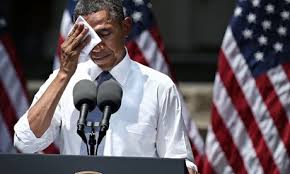
You can see from the above photo the challenge our president faces in convincing, of all people, our meteorologists, that climate change isn’t simply cyclic, but ongoing, posing devastating consequences for America, with no region spared. Further, we humans are its driving force.

The National Climate Assessment came out yesterday, only to be immediately dismissed as “alarmist” by–imagine my surprise–Mitch McConnell (R-Ky). Guess he must think the same about the recently released  UN Panel’s 40 volume plus study conducted by leading climate scientists. I’m reminded as a former prof of Victorian lit just what it must have been like for Darwin in the outpouring of public vitriol that followed upon his perceived tampering with hallowed establishment assumptions. By the way, I never cease to be amazed at the gall of politicians assuming equal footing with reputable scientists.

But it isn’t just the Republicans we have to worry about in Washington when it comes to taking climate change seriously and initiating immediate steps to at least mitigate its effects. You see this most pointedly when it comes to the Keystone XL project. Presently there’s a bipartisan effort to get a two-thirds majority in the Senate in favor of the project, assuring veto proof passage.   So far, 11 Democrats have shown willingness to join 45 Republicans in such a move, with one Democrat optimistic of getting several more.

As always, it’s the old song-and-dance scenario of jobs, when the fact is that if we were to put environment on a war-footing we’d have universal employment in harnessing the forces to slow global warming.   Solar energy has considerable promise, for example, and is already a key component in countries like Denmark. Instead of constructing pipelines with their potential for spills–and sabotage–we’d do better in shoring up our coast lines.

How wonderful it would be to see Republicans and Democrats give priority to long term public welfare rather than short term corporate interests and their reelection prospects. (Once again, a good point for term limits. If it exists for the Presidency, why not for Congress?)

As for the meteorologists, a George Mason University survey in 2010 showed only 19% of them accepted human activity as the primary contributor to global warming.  Some deny climate change period! (http://journals.ametsoc.org/doi/abs/10.1175/BAMS-D-13-00091.1 ) While good at short term forecasting, they fall considerably short at the long term. Public icons, they can be given to a narcissism of overreach. Unfortunately, 62% of us trust our TV weather forecasters more than we do climate scientists!

The greatest proofs of climate change lie not simply in natural catastrophes, but in their ever increasingly frequency. We have computer models for that!

above

–rj


Climate Change: Can we win the fight?

divest395581_155622104590737_1008694978_n

We just celebrated Earth Day on April 22, an annual fête of huge importance for those of us wanting to increase the public’s awareness of the challenge of climate change, and our substantial human contribution to it, and ways we might fight it.

It’s an important time for us in another way, too, as this yearly outpouring of Green advocacy transcending borders buoys up our enthusiasm, telling us we’re not alone in our caring. After all, sometimes it seems that we’re on this great big mountain we impulsively thought we could climb; so rituals of solidarity like Earth Day give us pause to catch our breath, reassess, and press on to our worthy goal of a humanity in harmony with nature as one species among others, each necessary to all. Just maybe we can pull this thing off. Anyway, good to dream big rather than live small.

The truth is that so much more needs to be done and that we’ve been moving at a snail’s pace in making climate change a palpable issue for the public. I saw this demonstrated all too clearly in the presidential debates in 2012, or just 18 months ago, with not a single question directed to environmental matters raised by debate moderators.

If the press can seemingly have no feel for the greatest issue ever to menace us with its destructive pay-load should we evade addressing it, then how much less can we expect the public to grasp what’s at stake? As is, individual lifestyle changes like driving less, getting rid of plastic, cutting back on electricity in our homes aren’t going to do the trick. We need more than bandages to treat the Earth’s hemorrhaging.

Now consider that a recent poll suggests that 37% of Americans don’t even believe in climate change. There exist also a good many, perhaps even more, who look at climate change as simply cyclic and that, just maybe, it might even right itself. Of course that view gets us off the hook and we can conduct business as usual.

Just recently the United Nations released the findings of its Intergovernmental Panel on Climate Change, a careful study by credentialed scientists encompassing some 40 volumes. Insiders say they toned down some of their language and projections so as not to unduly frighten, though their findings still emerge as deeply sobering, with none of us escaping vulnerability to what surely are predictions on an apocalyptic scale. In all honesty, I haven’t noticed any work-up by media or any concerted effort by members of Congress to hold hearings on the report and what we might do to save the day. Like many of you, I grow weary–and wary–of their feckless accommodations to corporate interests.

What’s vital is that we impact the political process, as happened with the Vietnam War, ultimately culminating in LBJ’s decision not to pursue reelection. It started with just a few protesters, then took hold and proved unstoppable. Unfortunately, I don’t see anything like this breaking out. I think this is because many of our projections for climate change impacting us lie still in the future, whereas flag covered body bags coming into Dover AFB were a daily, tangible occurrence, which the media ultimately caught up with when it perceived a muscular protest movement, packing a punch, that wasn’t going to go away.

On the other hand, if we haven’t been able to muster cadres of protestors against our Iraq and Afghanistan incursions with their costly toll in life and wounded for a dubious cause, how much less likely for an environmental movement devoid of blood and gore? And that’s what makes climate warming so horrendously insidious, or like some invisible killer we know is out there, but don’t know where he is, or when he’ll strike, or how.

Perhaps our young people will again show us the way as they did with Vietnam by way of their fossil fuel divestment sit-ins sweeping our college campuses, some 300 as I write, with several success stories, including Harvard with its $32 billion endowment. If it’s wrong to destroy our planet, it follows we shouldn’t be seeking to profit from those who do.   I wrote earlier of the Vietnam days when students rallied to make a difference. All of us: unions, retirees, teachers, tech workers, etc., might do well to follow their lead in choosing our retirement portfolios more discriminately.

But divestment has its limitations, too. While it was practiced widely in the 70’s and 80’s to pressure South Africa’s apartheid regime, the invariable result was that other investors stepped in. It’s true value lay in shaping public discourse, and I venture this holds true with this present endeavor.

Still, I question the wisdom of painting with a broad brush the fossil fuel industry as some kind of axis of evil. We need energy. Are our students willing to follow through and divest themselves of their cars and their electricity and take on an Amish likeness? We would do better to focus on the coal sector, our greatest polluter.

I still like our president–articulate in his efforts to assure health care access, social and economic equality, tax, immigration and drug sentencing reform. So far, he’s championed alternative energy efforts, sought restrictions on coal burning power plants, held out against the Keystone XL project, endorsed alternative energy efforts.

As for Keystone, he needs our support even as we must sustain, and grow our protests, to keep a fire under his feet. When I think of Keystone and the big money behind it–think Koch brothers–I get nauseous: the obscenity of it, given the perils of climate change; the stench of it, given its association with pet coke; the callowness of it, given its destruction of farmland, water aquifers, and wildlife habitat.

The President will presumably make his decision after this fall’s elections, but faces immense pressure, even in his own party. It isn’t a given he’ll opt for courage over pragmatism. In the end, it’s important we all get to the polls and endorse environmentally friendly candidates such as the courageous Gary Peters (D-MI), who hopes to succeed retiring senator Carl Levin (D-MI).   Peters has come out against Keystone, provoking the Koch brothers to contribute substantially to his Republican opponent, who now leads in campaign funding. Peters is our leading spokesperson on pet coke. (By the way, you can access online the Sierra Club’s political endorsements, which include Peters.)

If it came down to, say, an errant asteroid making its way to befuddle our planet as once happened, plunging the world into a rebirth of its pre-evolutionary darkness, then you can bet your life we’d all get off our bottoms and fight the good fight. Well, think of that asteroid as climate change.

–rj


The UN Panel Report on Global Warming: Is anyone Listening?

Credit: ReutersStringer

If you’ve been keeping up with news about the environment, you’re perhaps aware of this week’s biggest news event, not the elusive search for Malaysia Airlines Flight MH370, or the status quo of Ukraine, or the achieved pinnacle of 7 million enrollees under the Affordable Health Care Act, but the dismal impact studies just completed of the United Nations’ Intergovernmental Panel on Climate Change.  At least this is as it should be, though you’d never know it, given the paucity of TV coverage of the Panel’s exhaustive findings (32 volumes summarized in 49 pages).

Turns out that yesterday’s coverage of the Panel’s released findings by news cable giants CNN, MSNBC, and Fox News was virtually absent, according to media monitoring service, TV Eyes, scanning Monday’s coverage between 6 a.m. and noon: CNN, 40 seconds; MSNBC, 20 seconds; and no surprise, Fox News’s total silence.

Only new comer Al Jazeera America zeroed in on the report, featuring an in depth analysis of the substantial effects of global warming on Bangladesh, which has been battling rising sea levels.

One of the Panel’s projections deals with emerging migrant hoards seeking refuge in other countries.  I didn’t see Al Jazeera’s footage, but I’m aware that India is feverishly building a wall to stem the influx of Bangladesh refugees. (By the way, if you like your news unbiased, al Jazeera is your best bet.)

This sad scenario of media indifference mirrors the largely disturbing absence of the American public’s concern with the issue of global warming, humanity’s greatest threat to its survival since its inauguration into the nuclear age in 1945 and the subsequent threat of nuclear proliferation.

For many, it comes down to jobs vs. environment, or the prioritizing of entitlement interests when the fact is that poverty is likely to grow, not diminish, and affect even the richer nations as global warming’s exponential effects take hold in the guise of drought, record heat waves, forest fires, fierce storms, reduced food production, disease and social violence. Global warming’s incipient effects are already impacting plants and animals and acidifying the oceans with deadly consequences for marine life.

Humans are the primary instigators of global warming, with carbon emissions continuing to rise, and China, the U. S., and India leading the way. Here in my state of Kentucky with its coal slave mentality, the state government has just cut annual coal mine inspections down from 6 to 4.  Sadly, I live in a state where many cars sport specialized plates, bearing “Friends of Coal,” and power companies wage incessant scare propaganda equating coal reduction with rising energy costs and job reduction instead of implementing focused research on clean coal technology.  As I write, a Kentucky coal ash plant has been caught by hidden camera dumping coal ash into the Ohio River and is being sued by the Sierra Club and Land Justice.

Again, Kentucky isn’t alone, but part of a mind-sweep that embraces America. For example, initiatives to promote recycling by outlawing plastic bags are continually defeated even in more friendly environmental places like Seattle.  (I have to confess I feel conspicuous, a seemingly rare upstart, when carrying my cloth bags into Krogers.)

In drought plagued California, swimming pools still adorn Malibu, ball parks sport well manicured grass, and golf courses like Pebble Beach and Cypress Point Club nurture their resplendent greens, even as farmers curtail their crops and California’s biggest cash crop of almond and walnut groves lie in dusty peril.

Golf interests say water consumption amounts to only 1% of California’s total, but omit a plethora of other environmental burdens like fertilizers, pesticides, herbicides, and fungicides, which contribute to contamination of groundwater aquifers and surface waters.

This may seem off the subject, but there’s a new movie in town, Noah, that’s been drawing crowds, grossing $42 million in its initial weekend viewing. I bring it up because in my youthful days of religiosity I remember it took the biblical Noah a year to build the ark and round up the selected progeny of animals (although it escapes me as to what happened to the plants, since there’s no clear indication of their inclusion, though all the animals taken in were herbivores).

Anyway, the guy must have seemed some kind of crazy.  After all, the earth, nourished by mist, hadn’t ever experienced rain before. The gospel of Luke (17:25-27, KJV) makes analogy to Noah and his time, saying

As it was in the days of Noah, so shall it be also in the days of the son of man. They did eat, they drank, they married wives, they were given in marriage, until the day Noah entered into the ark, and the flood came, and destroyed them all.

Looks like Hollywood missed a golden opportunity of transforming an ancient saga of environmental survival into a film of contemporary relevance.

–rj


A new rhythm that imperils: reflections on global warming

We owe our existence to it, yet we give it little heed, since it’s always there for us.  In my science classes we called it natural law, the material rules of nature that lie behind the structure and behavior of our universe.  Our earth, for example, rotates on its axis, allowing for alternations of light and dark.  It circles the sun with a mathematical precision on which we base our calendar.  There is the partnership of sun and moon exerting a gravitational force on a rotating earth that lifts and lowers its ocean waters with cyclic surety.  Like a camera lens set on infinity, the examples have no limit in their envisioning.

In sum, there exists a rhythm to the universe, which some have argued evidences a Mind at work, bestowing design and flowing with purpose.  Others, however, contend these laws are merely interplay of cause-effect mechanisms, devoid of intent and ethical regard, as reflected in Japan’s devastating tsunami in 2011, taking 20,000 lives. What we define as tragic is more likely our not heeding their operations.  It’s not wise to build on seismic faults or close to ocean shore.

As you may surmise, I draw comfort from these cosmic rhythms despite their indifference to our human schemes.  I know that tomorrow brings the dawn and, with it, the promise of new beginning.  In our human world, such fidelity is rare.

I find a discordant note, however, in our thoughtless disregard of those laws that sustain us, providing clean air, dependable rainfall, and abundant harvest.  In doing so, we’ve acerbated climate change, a crisis largely of our own making rather than merely cyclical change.  We’ve poisoned our air and water, slashed and burned our way through virgin forest, plundered our fellow animal species and squandered our water resources. Tomorrow’s wars are more likely to be waged over water, not oil.

In ten years, the African elephant, once a million, will vanish into memory along with the rhinoceros, all for the sake of trinkets and aphrodisiacs.  Today I saw the BBC news that sharks may soon become extinct, 100 million already killed, in a fishing industry that preys upon their fins to flavor Asian soup.

In our misdeeds, we’ve set other laws into motion that now imperil rather than sustain, generating melting glaciers that are raising sea levels and a warming tundra with potential for massive release of methane, a toxin deadlier than CO2.

Meanwhile, there was the media’s startling failure in last fall’s presidential debates to question the candidates on our generation’s most perilous challenge.  Locally in  places like Kentucky where I reside, cars sport “friends of coal” license plates and “environmentalist” suggests extremism.  Nationally, and globally, corporate interests prevail to uphold waste in the guise of growth.

As for the public’s response, I see its numbing indifference perhaps most vividly at grocery store checkout.  Though I provide my own cloth bags, I’m virtually self-conscious in my singularity amidst a sea of plastic supported by custom.

We are makers of a new rhythm, but this one brings no comfort.

rj