Susan Sontag’s Regarding the Pain of Others: A Review

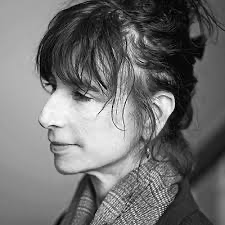
Deborah Feingold/Corbis via Getty Images) Susan Sontag (Photo by Deborah


Taking photos is now so universally accessible via our smartphones that we’re likely to take it for granted.

Until recently, it required buying a dedicated camera, inserting a film roll, setting the lens, then waiting—perhaps a week or more—to see the results of a distant lab.

I think of photos as a freeze on time, lovers as Keats reminded us, still fresh in their youth; sons and daughters, children still; parents and grandparents as we remember them. But photos, buttressed with videos, do even more, providing a window on what ails us.

Susan Sontag in her splendid book I’ve just read, Regarding the Pain of Others, argues that the visual not only helps us remember, but sensitizes us to the plight of those who acutely suffer while we warm ourselves under the blankets on cold winter nights, our bellies full. A moralist and cultural critic, she takes on the scourge of war’s ravages, a predominantly male enterprise it seems, unleashing the human capacity to inflict limitless evil, often with impunity.

Photography reminds us of Hiroshima and Nagasaki viewed aerially following their atom bomb devastations, incinerating 200,000 civilians within minutes; of emaciated prisoners released from Nazi death camps, the residue of 12 million exterminated; of ethnic strife in Bosnia in 1992, culminating in Srebrenica; of the dead and dying of 9/11; the machete butchering, killing 500,000 Tutsis in Rwanda. We cannot afford to let their horrors be relegated to the dumpsters of oblivion.

I remember Vietnam and My Lai (1968) and the American massacre of 500 villagers, the burning of their village, that consolidated American resistance to a needless, barbarous conflict consuming 64000 allied lives and 900,000 Vietnamese, ending a president’s re-election bid. Without film crews, we would have lacked evidence, much like when unleashed Soviet troops raped 130,000 German women after taking Berlin.

The trail is long. Much of Sontag’s narrative isn’t pleasurable reading to be sure, but without photography’s capability for exactitude, man’s inhumanity will never be addressed and perhaps, though distantly, vanish like slavery from the human repertoire. It is our duty not to turn aside, but remember and, beyond acknowledgement, understand war’s antecedents and protest their repetition.

I mourn Sontag’s passing from us in her prime—her cerebral introspection of what ails us, delivered always with compassion and unceasing hope that we can and will do better.

After reading her book, I thought of Palestinians in the Gaza strip, desperate for food, killed daily, many of them women and children. As I write, the UN Office for the Coordination of Humanitarian Affairs (OCHA) informs us that 900 Palestinians seeking food have been killed since mid-May. Unlike other conflicts, the foreign press has been banned from access to Gaza.

I think, too, of Putin’s accelerated nightly aerial assaults, on Ukraine, targeting civilian infrastructures: hospitals, ambulances, apartment buildings, shopping malls and, by day, farmers plowing their fields.

Photography offers documentation. Sontag was right: without photography, we are denied access to the truth and the scourge of war is assured its continuence.

—rj


Finding Myself and Contentment, Too

Time moves swiftly, and I’m astonished that twenty years have passed since I retired from teaching. On the whole, these years have been rich and fulfilling, offering me the space to rediscover myself, travel widely, and immerse myself in new pursuits—whether delving into meditation, completing a course on the Brazilian basin, or exploring the ever-expanding frontiers of AI. Most recently, I’ve taken up the challenge of learning to read Italian.

I read voraciously across a vast range of subjects, continually captivated by the alchemy of syntax and the resonance of wisdom—each new insight opening doors to deeper understanding, heightened empathy, and more meaningful conversation.

In essence, I’ve spent these years following my own path, embracing the art of self-cultivation, and discovering a quiet, enduring contentment—even in a world often burdened with turmoil.

rj

When the Shades Are Drawn: The Decline of Literary Reading

I’ve been an avid reader of cerebral Virginia Woolf for many years, enjoying not only her novels, but her highly polished essays such as “A Room of Her Own.” Thanks to the Yale Review Archives, I’ve just read “How Should One Read a Book?” (September 1, 2026). It was a different world then, absent of electronic media.

Today, reading is in sharp decline. According to the National Assessment of Educational Progress (February 2025), 33% of eighth graders lack basic reading skills, and only 14% of students read daily. Among adults, just 40% read a literary book.

This trend exacts a cost, as literature cultivates empathy and instills humane values. Active readers are more engaged in civic and cultural life. They contribute to their communities. In contrast, electronic media foster shorter attention spans and weaken intellectual skills (National Endowment for the Arts Assessment).

With AI increasingly doing our cognitive heavy lifting, our ability to think critically is further eroding.

If Woolf believed literature offered us a window into the world, today it seems the shades have been drawn.

—rj

Julia Thurman: Crafting Worlds with Words

The writers I admire most never use a careless word. Their sentences are unimprovable —Judith Thurman, A Left-Handed Woman.

There exist those books we scarce can put down, riveting us with suspense, prose eloquence, and resonance of human experience.

Others, we struggle with, bored or chagrined by their non-relevance or absurdities. The usual counsel is to jettison them quickly.

Had I done so with Julia Thurman’s A Left-Handed Woman, a book largely focused on fashion couture, playground of wealthy indulgence, I’d have lost out immensely.

Collectively, Thurman’s adroitly articulated 39 essays, gathered mostly from fifty years of writing for The New Yorker, transcend her primary fashion genre, yielding portraitures mostly of heroic women finding autonomy in a patriarchal milieu, leading to my admiration for Thurman, awe at her salient intelligence, fine-tuned to meticulous observation and set-apart brilliance in prose mastery.

As Henry Finder, one of her editors at The New Yorker observes, “She’s not happy with a paragraph until it sings.”

Thurman’s acumen is indisputable, having achieved numerous awards that include a National Book Award for Non-fiction for her biography, Isak Dinesen: The Life of a Writer (1983), inspiring the hit movie, Out of Africa.

Her Secrets of the Flesh: A Life of Colette (1999), earned a finalist National Award for Nonfiction.

She is a recipient of the Ordre des Artes et Lettres by the French government for her contributions to French literature.

A Left-Handed Woman has won PEN’s award for essay excellence .

Nothing surprises me about Thurman. Is there anything she misses in her myriad subject matter teeming with wide-ranging vignettes on not only fashion designers such as Sara Berman, Isabel Toledo, Elsa Schiaparelli , Miuccia Prada Guo Pei and Ann Lowe, but disparate entities like Margaret Fuller, Emily Dickinson, Elena Ferrante, Lee Miller, Eva Zeisel, Amelia Earhart, Isa Genzken, Greta Stern, Alison Bechdel, Laura Elizabeth Ingalls Wilder, Rachel Cusk, Yasmina Reza, Vladimir and Vera Nabokov, and even Helen Gurley Brown and Cleopatra, among still others, their successes and, yes, the not infrequent intrusions of fate cascading fame and fortune to their doom.

While men do appear in her essays, they’re a distinct minority, sometimes perversely objectifying women as ancillaries of male prerogative:

Conversely, she writes of women, “I scoured literature for exceptions, and there were some. But nearly all of them had achieved distinction at a price their male counterparts didn’t have to pay. In that respect, one might say they were all left-handed: they defied the message they were not right.”

My favorite essays come toward the book’s close, featuring Simone de Beauvoir and in a surprising thematic shift, Thurman’s memoir of cave exploration, torch in hand, accompanying renowned French anthropologists at ancient Dordogne cave painting sites, Chauvet and Niaux.

I believe Thurman is right in crediting de Beauvoir with the genesis of the modern feminist movement with her seminal The Second Sex. As for her revels exploring caves and pedaling across French landscape, it’s truly a tour de force.

One last thing: Thurman is a self-taught fluent speaker of two languages beyond her native English that include French and Italian, highly engaged as she is in French and Italian literary and artistic culture.

She also achieved reading fluency in Danish as prerequisite to her research on Isak Dinesen.

Favorite passages:

“What we bring with us—embedded in our flesh and bugging it; embedded in art and animating it—is the mystery of how we become who we are.”

“There’s a hidden cavity in every story, a recess of meaning, and it’s often blocked by the rubble of your own false starts, or by an accretion of received ideas left behind by others. That updraft of freshness is typically an emotion you’ve buried.”

“The transcendence of shame is a prominent theme in the narrative of women’s lives. The shame of violation; the shame of appetite; the shame of anger; the shame of being unloved; the shame of otherness; the shame, perhaps above all, of drive.”

“Most of the time, a piece of prose lies on the page bristling with cleverness, yet inert, until I hit upon the precise sequence of words—the spell, if you like—that brings it to life. At that moment, language recovers its archaic power to free a trapped spirit.”

“She could love and desire intensely, but rarely at the same moment, and she could think and feel deeply, but not often in the same sentence.”

—rjoly

The Positives of a Reading List

Being an avid reader, I’m fond of booklists from those in the know as to their verdict on the best out there. Every New Year’s Day, I post my own favorites for the ensuing year, as much for myself as for others, as a way of disciplining my reading.

With booklists in mind, I couldn’t resist getting Swiss researcher Chiareto Calò’s well-received book, The Library of Humanity: The Most Influential Books. Besides, at just $1.99, how could I go wrong?

Calò lists 300 books, fiction and non-fiction, poetry and plays, across several continents and timelines, including our own.

I like how he succinctly previews each selection with a page or two, giving readers more than a mere listing.

But mind you, he surprisingly lapses in omitting writers like Cicero, Heraclitus, George Eliot and works like Goethe’s Faust.

He also makes some selections I think might be questioned.

Still, he makes up for such lapses, with inclusion of important works most of us have probably missed, to which I plead guilty and fervently hope to make amends.

For example, though I knew of the Epic of Gilgamesh, pre-dating Homer by 1500 years, I had never read it.

At least until yesterday, coming away dazzled by the splendor of its poetic rendering of the human journey.

And I’ve yet to read the Vedas, Hesiod’s Theogony, Aeschylus’ Oresteia, or that great Indian epic, The Ramayana. And so it goes.

But as I said, I mean to mend my ways.

Next stop, ancient Egypt and the Story of Sinuhe.

–rj

Carl Sagan and My Incalculable Debt


I’ve always admired Carl Sagan, taken from us so early at age 62.

Renowned for his contributions to space exploration and the search for extraterrestrial life, his thirteen year running public TV series, Cosmos, garnered an international audience of 500 million.

A prodigious scholar, he wrote some 600 papers and twenty books.

He wasn’t a child of privilege. His family knew poverty firsthand.

Sagan taught at Harvard for five years as an assistant professor following his undergraduate and graduate studies at the University of Chicago, only to be denied tenure. They said his interests were too broad.

Cornell immediately offered him a teaching position, and he would teach there, loved by his students and esteemed by colleagues, until his death thirty years later. Following his death, Smithsonian Magazine declared him “irreplaceable.”

I liked him especially for his advocacy of skepticism and embrace of reason and scientific methodology.

There’s a biblical proverb I remember: “Let another man praise you, and not your own mouth; A stranger, and not your own lips” (Proverbs 27:2).

Sagan was never given to affectation or condescension, an anomaly among eminent professors from elite universities I’ve known across the years:

“I think I’m able to explain things because understanding wasn’t entirely easy for me. Some things that the most brilliant students were able to see instantly I had to work to understand. I can remember what I had to do to figure it out. The very brilliant ones figure it out so fast they never see the mechanics of understanding.”

Along with Voltaire, Hume, Mill, and Russell, I owe Sagan an incalculable debt in helping me find the truth of reason that has set me free from the cultural biases, of which all of us are heirs.

–rj

Dr. Henry Marsh’s And Finally: Matters of Life and Death


Am reading Henry Marsh’s And Finally: Matters of Life and Death. Marsh is a retired brain surgeon, who recently was diagnosed (2021) with advanced prostate cancer, presently in remission, but with a 75% chance of reoccurrence.

His previous books include Do No Harm and Admissions: Life as a Brain Surgeon, both well received. Professionally, he has published 179 papers in peer reviewed journals and performed 50,000 surgeries over a 40-year span.

In his fulsome writing, Marsh reminds me of the late neurosurgeon Oliver Sacks, gifted in eloquence, humble, and unfailingly compassionate.

Perhaps I’m stereotyping, but he’s unlike many in the medical sciences, consumed by professional interests and profit motive, insensitive or ignorant of the arts and, professionally, objectifying their patients rather than seeing them as individuals, each with gradients of need and longing.

One of his cherished accomplishments is the creation of two balcony gardens for neurological patients at St. George’s hospital

Impressively, he’s been working pro bonum with colleagues in Ukraine since 1992. Neither cancer nor the Russian 2022 invasion of Ukraine has deterred the good doctor visiting the country regularly to consult and advise colleagues.

At home, Marsh is an assisted dying activist.

Of his previous Do No Harm, now translated into 37 languages, The Economist wrote that it’s “so elegantly written it is little wonder some say that in Mr Marsh neurosurgery has found its Boswell.”

Marsh reads widely, owns several thousand books, keeps a garden, raises bees, and enjoys woodcrafting.

I’m early in my reading of And Finally, so I’ll delay full commentary for another post when fully read. But let me share a passage I read this morning that amplifies Marsh’s writing talent infused with observation and an affinity for nature, under assault by climate change:

The {COVID} lockdown coincided with perfect spring weather – so fine, prolonged and warm that it spoke of climate change. The bushes in the little paradise of my back garden almost all burst into flower all at once, and the trees went from being bare winter skeletons to towers of spreading green leaves in a matter of days. The bees came rushing out of their hive in front of my workshop and shot up into the sunlight, rejoicing in vertical zigzags. And the lockdown brought complete peace and quiet. The air felt as fresh as if you were in the countryside and the sky was a clear and deep blue. The only sounds were of birds singing, children playing and the wind in the trees. And at night, at first there was a full moon, looking down kindly on the suddenly silent city, and you could see the stars. It was a vision of heaven, here in London, SW19. Time had stopped. Eternity is not the infinite prolongation of time but instead its abolition.

The silence and clear air, and the return of birdsong, reminded us of what we have already lost with cars, pollution and the changing climate, and the unnaturally fine weather told us that Nature is out of joint, and that there is much, much worse to come.

I feel it in my bones. This is going to be a great read.

—rj


David Copperfield: An Enduring Nexus

Those of us who read fiction do so for many reasons, the majority perhaps to relieve the tedium of a long flight or empty minutes in the lobby of a doctor’s office, or as a verbal nightcap absolving the tensions of a frenetic day of undulating joy and sorrow, nuanced by disappointment or regret.

As a child, I read to escape into a fantasy world remote from the quotidian squalor of waterfront Philly and the domestic insecurity of a single parent home suffused with alcoholic addiction. In these maturer years, I read fiction mostly for connection and inspiration that my strivings have mattered, despite my myriad blunderings, providing solace and meaning—and best, that I am not alone.

Of the books I’ve read, David Copperfield resonates most by way of nexus: a childhood annulled by environment, a sensitive child seeking emancipation, a failed marriage and, at last, a soulmate found. It was Dicken’s “favorite child” among his fourteen completed novels over a brief twenty years.

In many ways, David Copperfield navigates the journey of its protagonist for sovereignty over life’s intemperate intrusions, impeding one’s happiness; the fissuring of expectation and event; in Tom Wolfian parlance, the looming challenge of having the “right stuff” to break through.

Observing the mythic triad of separation, trial, and restoration, David’s journey becomes our own.

I first came upon David Copperfield when in the eighth grade in Massachusetts at age thirteen. How wonderful the schools were then. Instantly, the book became a first love, an affection that has endured.

This novel differs from Dickens’ earlier ones, its early chapters autobiographical and penned in first person. A novel of memories and reflections, it plays down his usual melodrama.

As for its teeming, colorful characters—a Dickensian constant—latent behind their public personae lies a good deal of dissonance, the incongruity loved by Shakespeare between appearance and reality:

Micawber, outwardly jovial, masking an inner angst and volatile moods as debtor prison looms ever closer.

The narcissist Steerforth, whose duplicity manipulates David, but
achieves a lesson learned.

Mr. Dick, whose labored utterances suggest mental illness, sympathetically drawn.

I know David Copperfield ends in fairytale recompension, resilence rewarded, injustice vanquished—if only life were like that. Still, we need to dream that life may sometimes prove compensatory, a lotus land dulling life’s transgressions.

There’s so much in David Copperfield that revives dormant memory of my own childhood and early adulthood, its idealism and reality’s harshness; not least, growth paradoxically through failure.

It works the same way for many others as well. I think of a couple that nightly reads five pages of the novel to each other before turning in.

I understand that. As said, I also read to connect.

–rj

Jack Kerouac: Soulful Wanderer

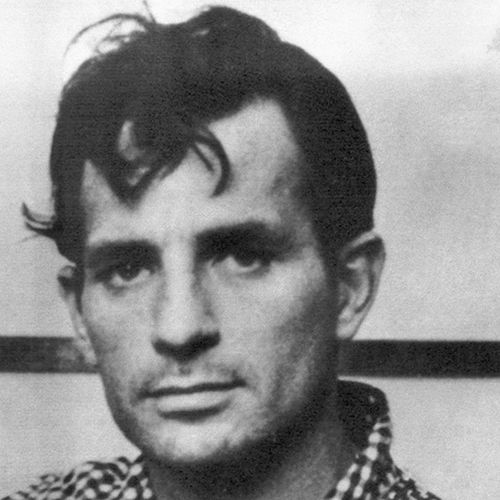
Jack Kerouac turned 102 a week ago. The fierceness of his writing overwhelms, lyrical, sensory, harnessing human moods, a fiery warmth beneath a canopy of gazing stars on cold stellar nights:

“Fury flashing on rocks that rise like gloomy sea shroud towers out of the cove, the bingbang cove with its seas booming inside caves and slapping out, the cities of seaweed floating up and down you can even see their dark leer in the phosphorescent seabeach nightlight.”

Big Sur

“…the only people for me are the mad ones, the ones who are mad to live, mad to talk, mad to be saved, desirous of everything at the same time, the ones who never yawn or say a commonplace thing, but burn, burn, burn like fabulous yellow roman candles exploding like spiders across the stars and in the middle you see the blue centerlight pop and everybody goes ‘Awww!’”

—Jack Kerouac, On the Road

We were never really born, we will never really die. It has nothing to do with the imaginary idea of a personal self, other selves, many selves everywhere: Self is only an idea, a mortal idea. That which passes into everything is one thing. It’s a dream already ended. There’s nothing to be afraid of and nothing to be glad about. I know this from staring at mountains months on end. They never show any expression, they are like empty space. Do you think the emptiness of space will ever crumble away? Mountains will crumble, but the emptiness of space, which is the one universal essence of mind, the vast awakenerhoo 0d, empty and awake, will never crumble away because it was never born.”

The Portable Jack Kerouac

The world you see is just a movie in your mind.
Rocks dont see it.
Bless and sit down.
Forgive and forget.
Practice kindness all day to everybody
and you will realize you’re already
in heaven now.
That’s the story.
That’s the message.
Nobody understands it,
nobody listens, they’re
all running around like chickens with heads cut
off. I will try to teach it but it will
be in vain, s’why I’ll
end up in a shack
praying and being
cool and singing
by my woodstove
making pancakes.

—The Portable Kerouac

I miss you, Jack. You left us all too soon.

rj

Democracy’s Failure

While democracy has been widely touted as the best form of government, it’s had many detractors in Britain and America, who fearing a working class majority of the uninformed, intellectually unprepared, politically manipulated by partisan interests, proposed education in the liberal arts as a safeguard for assuring an informed, discriminating electorate.

One thinks of Matthew Arnold’s classic Culture and Anarchy and John Henry Newman’s The Idea of a University as examples. The truth is it hasn’t worked to salvage democracy. As Costica Bradatan comments in his insightful book, In Praise of Failure, “Populism and authoritarianism are flourishing today in places with remarkably high educational levels. For all the self-flattering talk about civic-mindedness and political engagement, the citizenry in the West is in no better shape than it was one hundred years ago. And we seem resigned to the situation.”

Derek Bok, former president of Harvard, comments in his Universities in the Marketplace that the arts and sciences faculties “display scant interest in preparing undergraduates to be democratic citizens, a task once regarded as the principal purpose of a liberal education.”

Viewing our current political milieu, I see only the debris of a once heralded idea to make government truly feasible in the best interests of our nation. Alas, not since the Civil War, has America been so fractured in its allegiances.

Alexander Hamilton, suspicious of public sovereignty, supported the idea of the Electoral College. That certainly hasn’t worked.

Back in England, John Stuart Mill proposed a plutocracy of the educated allowed multiple votes. Fortunately, it wasn’t well-received.

As for the prototype Athenian democracy, women couldn’t vote, nor foreigners and slaves.

I confess I don’t know the answer, except to offer that democracy, for all its liabilities, surpasses those protocols previously attempted.

—rj