
Why some writers succeed and others don’t

I’ve learned that people will forget what you said, people will forget what you do, but people will never forget how you made them feel (Maya Angelou).

 Writing

I like to read and I read omnivorously, whether fiction or non-fiction. I marvel at the talent and effort that lies behind all good writing, the courage of writers to pursue their craft, given the minuscule few who get published, or receive pecuniary recompense, or the public’s accolades.

I marvel at their discipline in fending off that great tempter, procrastination, for writing well doesn’t come easily and what’s tedious we most always avoid.

And then there is the ephemerality of all success that mocks their efforts, that no matter how well crafted, compelling, or discerning, that best part of a writer’s self, succumbs, inevitably, to a world busy with its own pursuits, forgotten, no longer in print, to be given away, or tossed out.

I was reminded of this when I downloaded a Gutenberg ebook freebie from more than fifty years ago with its reading recommendations of many authors I’d never heard of, though I have graduate degrees in English and taught for forty years at the college level. The list of recommended classics in our schools today is, likewise, considerably different from those I pursued, studied and taught across the years. Taste changes, fame fades, and life moves on.

Writers, nonetheless, pursue their craft against all odds and sucking sweets elsewhere for varied reasons, foremost to find acceptance and, in that best of all possible worlds, the convergence, like two mighty streams, of avocation and vocation.

Whatever, successful fiction writers must be good at seduction, alluring us with suspense, well-crafted plot embedded with conflict, intriguing characters, good dialog, an accessible style; nonfiction writers must also prove themselves good at seduction, appealing to reader interests, their quest for information and know-how, their need to feel smart. Writing is all about closing the deal. Giving readers what they want.

As readers, we like cosying up. We like being wooed.

Successful writers know this!

–rj
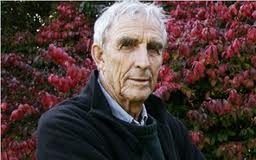


Peter Matthiessen: Homegoing

matthiessen

We lost a great writer, Peter Matthiessen, this past weekend. A co-founder of the renowned Paris Review and author of thirty-three books, both fiction and non-fiction, his supreme subject was Nature and, sadly, Man’s pervasive impact upon it:

Species appear, and left behind by a changing earth, they disappear forever, and there is a certain solace in the inexorable. But until man, the highest predator, evolved, the process of extinction was a slow one. No species but man, so far as is known, unaided by circumstance or climactic change, has ever extinguished another. (Wilderness in America [1959]).

Along with other environmentalists, I mourn his loss since his death silences a powerful voice of advocacy for what remains.

I think of the great writers of Nature who have borne sensitive witness to the fragile cocoon of Nature that includes ourselves that I have read across the years, works both of poetry and prose that have refined my sensitivity, shaped my priorities, and taught me awareness of the transience of all living things. All of them have been my teachers.

In poetry, I think of Wordsworth, Shelley, Keats, Hopkins, Dickinson, Frost, Jeffers, for example; as for prose–Thoreau, followed by Muir, Carson, Wilson, Dillard, McKibben and, of course, the most prodigious–Matthiessen.

Of all the books Matthiessen wrote, two stand out to me in particular as robust reads: Shadow Country, a novel featuring a desperado gunned down by his own neighbors in the lawless Everglades wilderness of the nineteenth century; the other, Snow Leopard, a non-fictional account of Matthiessen’s search for the elusive snow leopard in the Himalayas. More than a travel adventure, it depicts the author’s spiritual journey. As stimulating as it is beautiful, lucid in its prose and stunning in its imagery, it may just be one of the finest books to treat both Nature and the Soul ever written and deserves many re-readings.

Both Shadow Country and Snow Leopard won National Book Awards, our country’s most prestigious literary prize. (Matthiessen is the only writer to receive multiple National Book Awards.)

Matthiessen was not your ordinary person. A former CIA spy, son of a well-to-do family, initially conservative in his politics, he ultimately moved to the Left, championing American Indians, Cesar Chavez and exploited migrants, opposed the Vietnam War (bravely refusing to pay taxes) and, of course, became a committed environmentalist.

A deeply spiritual man, he embraced Buddhism following the death of his second wife in 1972, ultimately becoming a Buddhist priest. Snow Leopard reflects a Zen ambience throughout and its acceptance of the Now as the only true consolation we have in a transitory cosmos.

Though he fought ardently for conserving nature, he was troubled by the exponential excesses wrought by anthropocentric interests. As he would lament, “I can hardly point to a victory that we ever won as conservationists that hasn’t been overturned.”

Not all was lost, however:

 …we won some, too — there were long-lasting victories. And if nothing else, we stalled — stalled them off, the developers and exploiters.

All of us Greens will miss him, and yet there remains the fervent advocacy of his many books championing justice; respect for other species and their habitat; the simple life lived mindfully, free from material desire; the valuing of each other.

There couldn’t have been a finer man.

–rj