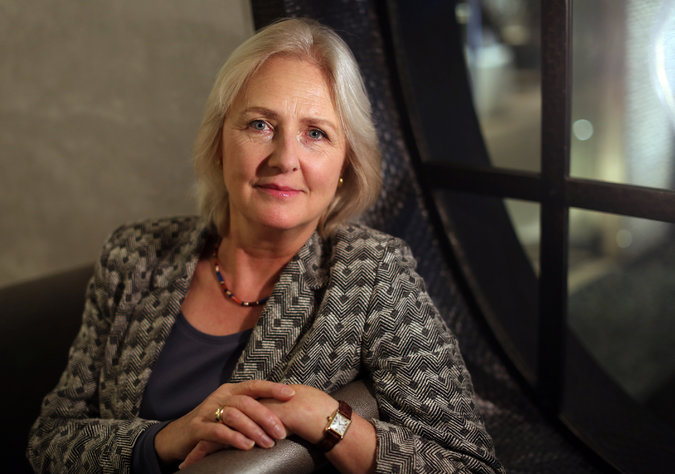
Why I persist in keeping a journal

journaling

“The nicest part is being able to write down all my thoughts and feelings; otherwise, I might suffocate.” — Anne Frank

I’ve been keeping a journal for 34 years.  It wasn’t easy to get into the habit.  I had tried doing it as early as age 12, then at 19, but it didn’t stick.  To pick-up a good habit, I find I have to stay with it up to 6 weeks for it to take hold.  Conversely, bad habits often proliferate easily because they involve more pleasure or less work, as in overeating, not exercising, delaying paying your bills, etc.

But why did I even bother?  The vast body of us don’t keep journals and don’t seem to lack for it, though the conundrum also exists that we’d all be impoverished had there been no journals, at least those of us caring about sensitivity woven into wise reflection, left by a retinue of masters like Woolman, Thoreau, and Woolf, or 12 year old Anne Frank’s precocious attempt to transcend human ignominy that moves us to compassion for every victim of  its malevolence.

In our digital era I’ve often lamented the eclipse of letter writing by email, doubtless apprehensive about the fate of hand-written journals. I think of prodigious letter writers like Jefferson and Voltaire, Dickinson and Keats, and many others, and of our loss had they written emails instead, substituting speed and convenience for their crafted labor, unveiling individuality and subtle conscience.

Fortunately, I find a positive in today’s proliferation of blogs, many of them genre journals of infinite, attractive scope capturing every conceivable interest.  My own blog comprises a journal likeness in its series of reflections on sundry subjects.  So then, why do I still pursue the old fashioned, hand-written kind?

Frankly, one reason I carry on is to beat back time in a world suffused with the temporal.  We do this with photos, reinforcing memory and preserving the essence of our experience.  So with words, and maybe even better, for while a photo yields only the external, a journal can be likened to a CT scan, imaging the otherwise concealed, defining who we really are; but more than that, journals hold in stasis, like art itself, our life passage in this parenthesis of light,  or as Keats memorably said of art, “When old age shall this generation waste,/Thou shall remain.”

For me, being faithful to my journal secures my privacy latent with its honesty, compromised by blogs, and lends affectionate intimacy with my past, though that’s sometimes painful, yet worth its filtering into insight honed by time.  Journals not only record, they clarify,

I confess that journals can be defiant creatures emotionally straying off course, and thus our vigil to seal off their access as passwords to ourselves.  Like barometers, they reflect our pressure points, for honest journals tell us we’re never one self, but many, which often nudges us to stop writing them.  As author William Boyd puts it, “We keep a journal to entrap that collection of selves that forms us, the individual human being” (Any Human Heart).

Labored sometimes in the soul’s night, my keeping a journal pays dividends nonetheless, for it nourishes that inner part of me, or serves as a rare friend who heals simply by listening

–rj

World War I Centennial: Ominous Echoes?

ww1

The Somme, the Marne, the several battles at Ypres, Verdun with its prolonged agony, this was World War I enmeshed in its trench warfare, stalemated armies, and colossal slaughter on a massive scale impacting five continents

Next year marks the centennial of the outbreak of World War I, for many years known as the Great War in which an estimated 10 million combatants perished along with many civilians.  While you don’t see much, if anything in the movies these days about the conflict, as a boy I used to regularly take in films like The Fighting 69th,  All Quiet on the Western Front, Sergeant York, and the classic Paths of Glory.  Of course there were then many veterans still In their early fifties, boosting demand for such films.

ww1amer

My father, a war veteran with inherited  Irish wit, could spin a story that simply wouldn’t lose its hold no matter how many times he told it, of artillery duels; driving an ambulance; the fragility of life with war’s tragedy compounded by the pandemic Spanish flu that would kill millions more.  When he died in the VA Hospital he left little apart from a prized heirloom of his hand-completed discharge papers, faded by nearly a century of time, yet still legible, listing his combat participation in France (Argonne sector, 16th Field Artillery, Battalion A). How superbly different from the impersonal DD 202 the military hands out these days.  He was proud of his service and lies with fellow soldiers in the veteran’s portion of St. Mary’s Cemetery in Salem, MA.

Early in my teaching career, I came across a student who wanted to focus her research on World War II, which fascinated her. That was fine with me, though I’ve always found the first of these world conflicts more intriguing and compelling.  In fact, it made World War II inevitable, given the punitive humiliation imposed by the Versailles Treaty on Germany with its reparation requirements, occupation of the Ruhr, loss of colonies and, in Europe, of German speaking territories (Bohemia and Alsace-Lorraine), thus making a psychopath like Hitler palatable in the wake of the explosive inflation and unemployment that followed.

Certainly, the earlier war vastly changed European and Middle East boundaries with the break-up of the several centuries old Ottoman Empire into Romania, Bulgaria, Yugoslavia, Lebanon, Syria, Iraq, Kuwait, Jordan and Palestine.  It also led to the remarkable founding of modern Israel after a two millennia hiatus and the chronic feud that exists between Israelis and  Palestinians, fueling the rebirth of Islamic fundamentalism and spilling over into a world-wide apparatus for terrorism.

In Germany’s obsession to knock out Czarist Russia from the war by creating instability, it smuggled Lenin into Russia, out of which came the Soviet Union with its tyrannous hegemony.

With respect to the events that took place in Kosovo in the 90s and, more recently, with our own incursions into Iraq, it’s clear that World War I has continued its subtle influence.  In many ways, the present Middle East ominously resembles the troubled Balkans that led to war.

Certainly, the World War I marked the collapse of an enduring intra-European peace, apart from the 1870 conflict between France and Germany, since Napoleon’s defeat at Waterloo in 1815.  It also decisively terminated the Victorian era that had survived Queen Victoria’s death in 1903 with its moral absolutes and vibrant idealism.  Anticipated by Zola and Nietzsche late in the previous century, not only were physical boundaries radically altered, but ideological ones too as a pervasive dissonance took hold following this opening act of strayed technological capability with its attendant horrors applied to the battlefield in the advent of tanks, rapid fire rifles, machine guns, long range artillery, motorized vehicles, submarines and aerial bombing and strafing.  Alas, it was at Ypres in early 1915 that the Germans added mustard gas to their arsenal.

Losses proved staggering with civilians for the first time deliberately targeted.  What Auden would later call the “age of anxiety,” had begun, epitomized in the cultural popularity of depth psychiatrists Freud and Jung.  Old universals toppled amid an inveterate skepticism filling the vacuum.  Culturally it took hold in poems like T. S. Eliot’s nihilistic Waste Land and Yeats’ s still often quoted “The Second Coming” with its annunciation of the apocalyptic of violence and cruelty beyond  the precincts of human decency, finding summary cognizance in Joyce’s Ulysses with Stephen Daedalus’s dictum , “History is the nightmare from which I’m trying to awake.”  Hemingway would famously call those coming of age during this conflict “the lost generation.”

World War I, as I’ve hinted, was important not only for its immense tragedy that might have been avoided had cooler heads prevailed over charged nationalism, but because it proffered prescient warnings to our own generation.  As Oxford historian Margaret Mullins reminds us in her NYT op ed, “The Great War’s Ominous Echoes” (December 13, 2013), our contemporary world milieu manifests many similarities to events just prior to the guns of August 1914:

1.      Globalization was taking place then as now, with every portion of the world exponentially linked by rail, steamship, telephone, telegraph and wireless.

2.     New ideologies–psychological and political–were underway, including fascism and communism.  Science, too, had begun its explosive advances that saw Einstein develop his theory of relativity. 

3.    With widening access to information and know-how, that time was also replete with terrorism as happened with the assassination of Austrian-Hungarian heir to the throne Archduke Ferdinand along with his wife by a Serbian nationalist in Sarajevo (Bosnia).  In America, President McKinley was murdered by an anarchist.  In the world at large, railways were continually under bomb attack.  Today that ability of technology to level the playing field through the Internet and social media has multiplied many fold and is thus suffused with even more danger as places of gathering.

4.   Then as now, key mistakes were being made as to the changing methodology of contemporary warfare.  In our own time, surgical strikes and carpet bombing may  no longer apply to obtaining a maximum result in a brief interval, as the paradigm has shifted to less visible targets who, in fact, may not even be there, having left their residue as an IED.  Moreover, the horror of civilian casualties often inflicted by aircraft, including drones, is now subject to instant playback in the media and social networks, leading to vigorous demands to cease

5.   Then, as now, rivalries were underway as new powers sought parity:  Germany with Britain; today, China with the U. S.  Growth of a rising economic power, unfortunately, can often translate into military prowess as with Germany and currently, China.  New coalitions mustering around key antagonists are once again taking shape as China moves to challenge America’s Pacific presence.  Accordingly, the dangers of an incendiary mistake become all too possible.

It’s been said that history repeats itself.  I hope not.

–rj

On Class Warfare in America: The Yacht Mentality Revisited

yachts3

I wanted to revisit my last post of several days ago, “The Yacht Mentality that Threatens our Economy,” with this apropos poem by William Carlos Williams, one of America’s foremost modernist poets.  As you may have surmised, it’s called “Yachts,” which I employed as my central metaphor in depicting the economic inequity rampant in our nation.

Williams, by the way, was a physician from Hoboken, NJ, who compassionately dedicated his practice to treating the poor, who were never far from his thoughts.  We see this vividly in his symbolically dense poem that comes close to being allegory in its one-to-one application, or depiction, of the tensions governing the relationship between the oligarchy of the economically privileged (shall we call them them the 1%?) and the majority, marginalized working class folk like you and me.  But first the poem, then my commentary:

Poem:

The Yachts

contend in a sea which the land partly encloses
shielding them from the too heavy blows
of an ungoverned ocean which when it chooses

tortures the biggest hulls, the best man knows
to pit against its beatings, and sinks them pitilessly.
mothlike in mists, scintillant in the minute

brilliance of cloudless days, with broad bellying sails
they glide to the wind tossing green water
from their sharp prows while over them the crew crawls

ant-like, solicitously grooming them, releasing,
making fast as they turn, lean far over and having
caught the wind again, side by side, head for the mark.

In a well guarded arena of open water surrounded by
lesser and greater craft which, sycophant, lumbering
and flittering follow them, they appear youthful, rare

as the light of a happy eye, live with the grace of all
that in the mind is fleckless, free and
naturally to be desired. Now the sea which holds them

is moody, lapping their glossy sides, as if feeling
for some slightest flaw but fails completely.
Today no race. Then the wind comes again.  The yachts

move, jockeying for a start, the signal is set and they
are off.  Now the waves strike at them but they are too
well made, they slip through, though they take in the canvas.

Arms with hands grasping seek to clutch at the prows.
Bodies thrown recklessly in the way are cut aside.
It is a sea of faces about them in agony, in despair

until the horror of the race dawns staggering the mind,
the whole sea becomes an entanglement of watery bodies
lost by the world bearing what they cannot hold.  Broken,

beaten, desolate, reaching from the dead to be taken up
they cry out, failing, failing! Their cries rising
in waves still as the skilled yachts pass over.

Commentary:

When you first get into this poem it seems to feature Man vs Nature, but by l. 13 with the specifics about the crew, which “crawls solicitously,” it dawns on you that it also takes in humans pitted against one another.

If the earlier portion of the poem (up to l. 13) gives an imaginative, blissful view of Nature in relation to Man and, in turn, of Man’s inter-relationships, the latter portion gives you the awful reality masked by the seeming tranquility, or the potential for revolt from the status quo of both Nature and Man.

Mention of a “race” sets the stage for transition into a contest for mastery, initially of yacht vs. yacht, but note how the diction changes here with sinister implications:

“Now the sea which holds them is moody”

 “As if feeling for some slightest flaw”

“Now the waves strike at them”

Note as well how the ominous turns into a personification of unleashed violence in what becomes a power struggle waged between haves and have nots, with the yachts metaphorized into repressive knife slashing entities indifferent to whom they maim:

“Bodies thrown recklessly in the way are cut aside.

“It is a sea of faces about them in agony, in despair.”

Williams’ subterranean intent now surfaces:  we have a revolt put down by the yachts, the poem’s symbol for connoting the wealthy, of the normally “solicitous,” or working classes, whose labor has made their wealth possible, though they’ve gleaned little for themselves, “bearing what they cannot hold.”

“…the horror of the race dawns staggering the mind,
the whole sea become an entanglement of watery bodies

The yachts, or impervious upper class, obviously win out on this particular day, but not without leaving in their wake their decimated victims:

“Broken,
beaten, desolate, reaching from the dead to be taken up
they cry out, failing, falling! their cries rising
in waves still as the skillful yachts pass over.

In sum, Williams has delivered a Marxist polemic of poignant genius in its thematic rendering of class struggle against inequity.  The very style of the poem adroitly reinforces this theme of worker repression by the economically removed in its run-on lines and skillful alliteration at poem end, the yachts unheeding of the crying wounded in “waves still as the skillful yachts pass over,” suggesting speed and, hence, indifference.  For Williams, this hierarchy “live(s) with the grace of all that in the mind is fleckless, free and naturally to be desired.”

In short, their narcissism of self-indulgence (materialism) mirrors behind its proffered beauty their willful escape from responsibility to the working classes on whom their wealth is built (“the crew crawls/ant-like, solicitously grooming them”).

In an America where 37% possesses half its wealth and the top 1% often pays minimal taxes, Williams’ poem reminds us that we have much work to do to render the American dream palpable for not just a few, but for the many.

–rj

The Yacht Mentality that Threatens our Economy

unemploy I turned on the TV while eating lunch yesterday to a feature called “Island Paradises,” thinking Hawaii or maybe some Caribbean gem like Dominica or St. Vincent’s.  Instead, it was about one man’s substantial investment, worth $28 million, in a plus 100 foot long yacht, sporting 3 recreational decks with pools, 7 bathrooms and 15 bedrooms, plus 3 bars and a below deck garage replete with several sleek motorized boats.  Docked in Ft. Lauderdale, it costs– Can you believe this?–$50,000 a fill-up.

I don’t know about you, but this kind of ostentatious display of wealth rankles me, not because I’m covertly envious, but because I think it represents excess and is just plain ethically wrong in a world of so many poor.  Again, I think of the 1% in my own country (USA), who own 37% of its wealth and whose income has actually increased since the economic downturn of 2008 (Pew Report, February 2013).  Meanwhile, hundreds of service food workers have staged walkouts in quest of a more sustainable minimum wage, presently $7.25 an hour. The average food service worker actually makes about $11 an hour, barely above the poverty line for a single parent with one child.

The President is compassionately urging an extension of unemployment benefits for 1.3 million presently receiving unemployment insurance.  (The total number of long term unemployed, however, stands at a stubborn 3.5 million.)  As he rightly put it in Saturday’s weekly address, “The holiday season is a time for remembering the bonds we share and our obligations to one another as human beings.”

It isn’t that the vast majority of these folks are free loaders.  It’s simply that they’ve been looking and can’t find work and that, by the way, is what the drop in unemployment to 7% really means, that thousands of despairing workers have simply given up looking for work. Unfortunately, the longer you’re out of work, the more companies shy away from you.  What’s more, in a strained economy, many companies are resorting to part-timers to circumvent having to pay benefits and to maximize profits.

What really hurts is when you’re past 50 and lose the job you’ve worked at a good many years, anticipating a reasonable retirement package just a few years up ahead.  This recently happened to a friend of ours, an engineer with a strong resumé in computer skills. Though he looked everywhere, he ended-up driving a school bus.  So even if you find work, you’re likely to find your sharply reduced wages sure to contribute to your continuing financial distress.  The situation for blacks and hispanics is even bleaker.

That yacht feature reinvests my thoughts as I write.  The obscenity of it!  The truth is, despite what conservative pundits tell you, a massive transfer of wealth is taking place in America and it’s not Robin Hood style from rich to poor.  Consider this from the Pew Report:

During the first two years of the nation’s economic recovery, the mean net worth of households in the upper 7% of the wealth distribution rose by an estimated 28%, while the mean net worth of households in the lower 93% dropped by 4%.

Think movie stars with their posh Bel-Air and Malibu compounds; instant millionaire athletes, Wall Street traders; bank CEOs.  Hey, think Walmart with its six family progeny having a bloated net worth of $144.7 billion.  Wal-Mart currently pays its “associates” $8.81 an hour.

Again, our President weighs-in:

If Members of Congress don’t act before they leave on their vacations, 1.3 million Americans will lose this lifeline. These are people we know. They’re our friends and neighbors; they sit next to us in church and volunteer in our communities; their kids play with our kids. And they include 20,000 veterans who’ve served this country with honor.

In the meantime, House Speaker John Boehner, emerging as America’s Scrooge, has served notice of his opposition to any extension of unemployment insurance, set to expire December 28.

This is America.  We can do better than a yacht mentality of self-absorption, extravagance and indifference.

–rj

The Heart of Darkness: The Syrian Inferno

Syria2

The civil war in Syrian, which began in March 2011, drags on with all its madness and no end in sight.  In that time, 125,000 (latest figures) have died and 2 million of Syria’s 6 million population fled, spilling its human burden into refugee camps in Lebanon, Jordan, Turkey and Iraq.

All wars are destructive, but civil wars usually are among the worst.  In our own civil war, 600,000 died, which is more than all our wars combined; more than a million perished in Spain; 2 million in Algeria and Korea.  One of the worst scenarios missed by the media is the loss of 5 million lives in the Democratic Republic of the Congo between 1998 and 2008.

The present conflict proves no exceptionWhile we normally associate casualties with the military waging war, the truth is that civilian casualties nearly always exceed military losses by a wide margin; for example, an estimated 20 million European civilians died in World War II.

Syria 3

In Syria,  a good many of these casualties are children.  Consider these recently released findings (UN High Commissioner Report):

11,000 children killed.

More than half of 70,000 families now without a father.

4000 children separated from their families.

Hundreds of children born in refugee camps stateless (unregistered births and no birth certificate).

Most children cut off from school.

All wars are tragic enactments of the primordial vestiges still resident in Man. This conflict, however, has seen some of their worst manifestations, with children deliberately targeted by sniper fire and even tortured.

Horrendous as all of this is, no one seems to have come-up with a chokehold to halt the carnage.  Maybe it’s too late anyway in a struggle that seems to have come down to attrition.  While the Assad regime has gained momentum lately against the rebels, the war has become more complicated with jihadists, including al Qaeda, pouring in from other nations. Increasingly, the struggle has turned sectarian, with Shiites pitted against Sunni. It’s Iraq all over again with long term, intractable violence the likely fallout even after any settlement is reached.

In my view, it needn’t have turned out this way had we armed the moderate rebels from the beginning, even as the Saudis had wanted, and before the entrance of Iranian-supported Hezbollah and al Qaeda in large numbers.  While the Obama administration finally did opt to supply at least light arms to the rebels, it turns out that after a year it hadn’t shipped any.  It’s simply too late to help now, since the old alibi that weaponry might fall into extremists hands has gained a validity that didn’t initially exist.

I blame President Obama for much of Syria’s pro-longed anguish.  From the very beginning, he has been ambivalent, or unable to come to a decision, despite his often pointed rhetoric should the Assad regime use chemical weapons:

We have communicated in no uncertain terms with every player in the region that that’s a red line for us and that there would be enormous consequences if we start seeing movement on the chemical weapons front or the use of chemical weapons (August 2012 News Conferences).

Then came his notorious aborted cruise missile launch in response to Syria’s calling his bluff with its chemical assault on civilians, resulting in a thousand deaths.  As it turns out, there had been previous, smaller scale chemical attacks and the President had not acted.  In mid stream, naval vessels off the Syrian coast ready to launch, the whole world watching, he did an about face, passing the puck to Congress, only to withdraw the vote option when Russia came up with its initiative to negotiate the destruction of the government’s chemical stockpile with Assad.  Got Obama off the hook, to say the least.

Imagine my surprise in all of this!  A Hamlet in the White House, this president suffers from an inability to act.  We should have seen this coming.  In election year 2012, he had the gall to use the bin Laden hit for political fodder, though the truth is he knew of bin Laden’s hideout  since  the summer of 2010, or nearly two years earlier, thus risking his escape.

As liberal Arianna Huffington shared with CBS: ‘We should celebrate the fact that they did such a great job. It’s one thing to have an NBC special from the Situation Room… all that to me is perfectly legitimate, but to turn it into a campaign ad is one of the most despicable things you can do” (Daily Mail).  It turns out that the White House had drawn up a contingency plan with a general for a fall guy should the assassination go awry.

Returning to the cruise missile fiasco, I like how House Democrat Adam Smith, a key member of the House Armed Services Committee, put it:

I don’t think you draw a line like that, that is not well thought out.  You do not say, ‘If you step across this line, we will commit U. S. Military force,’ unless you really mean it, unless you know the full implications of it.

Under the cover of the chemical weapons agreement things have gotten considerably worse for the rebels, with Assad’s forces launching daily bombing raids on the rebels and civilians in the areas they control.

Sadly the American public seems in lock-step with Obama, despite dissenters on his own White House team.  If you dip into Google and Twitter commentary, you’ll find Syria virtually absent as a search or discussion item.  We’re much more into Miley Cyrus.

I think of Auden’s poignant depiction in his “Musee des Beaux Arts” poem with its ironic undertones of the corner existence of human grief in the public world:

About suffering they were never wrong,
The Old Masters: how well they understood
Its human position; how it takes place
While someone else is eating or opening a window or just dully walking along.

………,,

In Brueghel’s Icarus, for instance: how everything turns away
Quite leisurely from the disaster; the ploughman may
Have heard the splash, the forsaken cry,
But for him it was not an important failure; the sun shone
As it had to on the white legs disappearing into the green
Water, and the expensive delicate ship that must have seen
Something amazing, a boy falling out of the sky,
Had somewhere to get to and sailed calmly on.

I think of Syria’s children.

–rj

Will tablets replace your TV? The new frontier of online video

iPad3

Just came across an interesting piece in the Economist  (November 9, 2013) on the growing popularity of online video in China that threatens TV.  In fact, a recent Chinese government reports says that only 30% of Beijing households watched TV in 2012.  Online video is big bucks in China with some 450 million viewers, or 80% of the connected population.    

We haven’t seen this drift in the West where TV sets are on 5 hours a day in the average American home.  That doesn’t mean China’s online video craze won’t happen here.  Who could have predicted the rapid downturn in PC demand that followed the rise of tablets three years ago?   Computers once priced in the $1000 range can be had now for $300 or less.  What’s more, tablet users are increasingly prone to downloading Amazon or iTune TV and movie offerings to their tablets.  Cable and satellite networks like DirecTV are catching on, and so you’re not confined to your TV anymore for personal viewing.  There they are, with all the convenience of portability, right on your tablet!  Hey, let’s not leave out Netflix.

And then there’s always been the ubiquitous YouTube, more popular than ever.  Forbes.com tells us that in 2012 one hour of YouTube video was uploaded every second.  In short, video making, like self-publishing, has become the province of the everyday Joe.   According to Brent Weinstein, Head of Digital Media at United Talent Agency, “Online video today is what TV was a couple of years after it came on to the scene” (Forbes.com).

YouTube, in fact, has been a honing ground for developing sophisticated expertise, spilling over into start up multi-channel networks (MCNs) such as Ted, TubeFilter and Kaltura-Connect coms with their dedicate devotees.

The big ops can read the tea leaves.  Just the other day I saw this catchy Hulu ad.  Get your first week free, then enjoy your favorite TV shows on your tablet for just $7.95 monthly.  With prices like that, cable and satellite TV had better watch out.

Of course we’re still talking about original TV programming, even if rechanneled; nevertheless, it isn’t hard to figure out where the math is taking us.  The bottom-line is that a revolutionary change in how we get our information and entertainment is underway.

According to the Economist, Chinese online video entrepreneurs started competing directly with TV programming five years ago, coming up with their own programming.  In the U. S,  you can see this same trend reflected in  Amazon, Netflix, and Hulu making their own programs to sidestep licensing costs and gain access to a potentially huge market.  Very soon, we’ll be talking about mobile networks.

For families who like to do their viewing together, no problem.  Internet TV is on its way and of course with Apple TV, no problem transferring your tablet videos, music and photos to a larger screen right now.

Usually the scenario is that when America sneezes, the world catches a cold.  With China, what’s happening marks a seismic shift.  Better, anyway, than its usual export of Asian flu!

–rj

Our Survival at Stake: Do We Have a Future?

Sir Francis Bacon
Sir Francis Bacon

As much as we can do it, we should avoid living our lives on assumption that a belief is true simply because we’ve been told it’s so by family, government, religion, politics, economics, or the collective culture in which we’ve been raised.  The only fixed verities are those within the scope of natural law with its defined predictability confirmed by replication.  Our responsibility should be to explore those verities affecting our well-being and allow them fullest scope.  We never escape the inexorable operation of those laws, for whatever we do, there is always a consequence. But sometimes we get to choose.

There is no inherent purpose to life, though many moralists like Tolstoy have implied one in asking, How ought we to live?  Nature works through selection only, reinforcing those causal elements promoting regeneration.  Often it works with infinitesimal numbers, a million seeds to effect a single germination.  It has no ethics.  It is devoid of Mind.

We pride ourselves on our freedom, but we are overwhelmingly conditioned by biology and complex behavioral repertoires sanctioned or extinguished by environment.  It is not the future that shapes us, but what has happened to us that defines what we think and do.  Conversely, this defines our tragedy that may doom us on this earth.

We were not born into a preset regimen other than one genetically imposed, so Locke was right about the tabla rasa, or clean slate, notion of our infancy.  Preconditioning is what happens as we make our journey. It follows that each of us needs to recover that initial state; that what I believe or do should be based on immediate consequences rather than because I am told to do so by law,  government, religion or individuals.  We do need laws in a world of many to ensure equal access to the trough in the context of safety, but there is nothing sacrosanct about any law, belief or opinion that allows it to go unexamined.

One of the inherent drawbacks of the human condition is superimposing belief and practice on others.  History, accordingly, is often bloodied with the cruelties of absolutism forced on others, often in the context of religion or secular ideology.  This week, the Ukraine remembers its 3 million dead, starved to death in 1932-33 by a Stalinist regime bent on enforcing collectivization of that nation’s farmland.

Other than climate change, humanity’s greatest threat comes from Islamic extremists bent on returning to the way of the sword, or Jihad, in imposing their beliefs.  The danger lies in Islam’s not merely being a set of beliefs, but a whole way of life regulating every human behavior, codified ultimately in Sharia mandate.

I alluded earlier to the behavioral quirk in us that may cause our doom.  Conditioned as we are by immediate consequences, we often cede the future for the dividends of the present.  Such is our present circumstance with meeting the exigencies of global warming, declining resources, and burgeoning population. 

In short, unless we can render the future more palpable, allowing us to help shape it for those who come after; indeed, assure its livability with reasonable happiness, then we may be moving into our final chapter.  While altruism is a tenant within humanity and perhaps, in evolutionary vein, promoting survivability (see E. O. Wilson, Sociobiology, 1975), we too often exercise our limited freedom for the immediate.  Like the heroic soldier forfeiting his life on the battlefield to save the lives of his fellows, we need to emulate a consciousness of others that may often conflict with our personal happiness and achievement.

Evolution, paradoxically mindless, has always arbitrated for the future over the present as denominator of survivability and made you and me possible.

The Renaissance philosopher I’ve admired all my life, Francis Bacon, summed it all up in saying, “Nature to be commanded must be obeyed.”  Do not base your life on the beliefs of others.  Live for the world of ideas and sort out those verified by the best science.  Live in the fullest moment of today, but not without regard for the future of your fellows.

–rj

Medicine discovers meditation

stressFunny how the poets I read and taught in college have a way of popping up in my mind, even though I’ve been away from that scene for seven years now.  Take, for instance, the English poet Wordsworth.  He’s famous for his nature poetry and talks about “wise passivity,” by which he meant suspending the thinking part and simply letting the senses imbibe the stillness we often find in nature and arriving at the things that really matter. I’d say he was right on the mark, especially with our modern way of living crowding our space to be ourselves, muffling the intuitive stream that fosters coherence and confers tranquility.

A few days ago I was rummaging through the Tao Te Ching, which I like to do every now and then, since it’s densely packed with wise counsel, and came upon this passage that got me started on this present blog entry:

Act by not acting,
Accomplish by not straining
Understand by not knowing. (63)

 Simple but profound, such counsel promotes understanding and, with it, healing.  We need to teach ourselves to be still that we may intuit the essentials and practice mindfulness, something the East with its contemplative traditions discovered several millennia ago, anticipating poets like Wordsworth and, now, contemporary medicine.  The ancients were right all along about meditation as essential to our best selves.  In a time of ever increasing stress, we need its solace more than ever.  Consider this sober warning in the Harvard Newsletter (March 2011):

Over the years, researchers have . . . gained insight into the long-term effects stress has on physical and psychological health. Over time, repeated activation of the stress response takes a toll on the body. Research suggests that prolonged stress contributes to high blood pressure, promotes the formation of artery-clogging deposits, and causes brain changes that may contribute to anxiety, depression, and addiction. More preliminary research suggests that chronic stress may also contribute to obesity, both through direct mechanisms (causing people to eat more) or indirectly (decreasing sleep and exercise).

With available electroencephalogram testing of alpha brain waves along with pulse rate monitoring and even MRI brain scans focusing on “gray matter” in the brain areas responsible for memory, self-awareness and empathy, we now have empirical data gathered by professionals that can be replicated.  In sum, we know meditation works, which means that it can assuage pain and prevent or heal some of our entrenched ills, whether physical or psychological. The paradigm of medical reliance on medication, surgery, diet and exercise is expanding.  In short, a quiet revolution is underway as medicine discovers the ancient axiom that mind and body are one.

Perhaps its seed was planted most notably in the fascination the Beatles showed for Maharishi Mahesh Yogi, founder of  Transcendental Meditation.  Luminaries such as film director David Lynch; TV notables, Ellen Degeneres and Oprah swear by it.  Hey, George Stephanopoulos is into it too.  TM prides itself on research findings, at this juncture, some 700 plus, allegedly confirming its effectiveness in reducing stress, depression, high blood pressure and cardiac risk.

BensonMedicine started to look seriously at a supplementary role for meditation with Harvard’s Herbert Benson putting it to the test via the rigors of refined imaging, using TM volunteers.  As he put it, “Three decades ago it was considered scientific heresy for a Harvard physician and researcher to hypothesize that stress contributed to health problems and to publish studies showing that mental focusing were good for the body.”  Benson opened up medicine to meditation’s possible inclusion with his best selling (four million copies) The Relaxation Response in 1975.  “With meditation alone, the T.M. practitioners brought about striking physiologic change.”

Benson subsequently converted TM into a simple two step approach:  repeat a word or phrase of your own choosing and disregard distracting, every day thoughts by returning to your word or phrase.

Benson’s work was soon popularized in the public world through Norman Cousins, physician Dean Ornish, and a Barbara Walter’s ABC interview.  Still, the medical community for nearly 15 years dismissed Benson’s findings as largely a placebo effect.  That changed as other universities took up their own research, supporting Benson.  Today, Harvard has launched an endowed professorship dedicated to continuing research and treats thousands of clients seeking relief from stress with the Benson method.  Relaxation Response therapy is, in fact, incorporated into specialized programs at Boston’s Harvard linked Beth Israel and Massachusetts General hospitals, with fourteen affiliates nationally.

Today the meditation mainstream seems to be shifting to what’s called “mindfulness meditation,” an adaptation of the Zen approach to medication pioneered by Jon Kabat-Zinn at the University of Massachusetts to treat patients with debilitating diseases and chronic pain.  Like relaxation response meditation, mind-based stress reduction, or MBSR, is science centered, except it differs in how it approaches meditation.  Instead of a word, or mantra, and returning to it when your thoughts wander, you allow your thoughts, noting them, though not analyzing them, returning to focus on your breathing.  The idea is to objectify rather than personalize your thoughts, enabling you to better deal with them.  It’s been shown to activate the gray matter in those areas of the brain responsible for memory, a sense of self and empathy.  It inculcates self acceptance and helps us see that memory belongs to the past and isn’t real.

As such, it works well as a backdrop to the now widespread cognitive approach in counselingYou can actually practicemindfulness” anywhere, or while walking, listening to music, taking in conversation.  Allegedly, it can, with time, help  you become more empathetic through your heightened awareness of your own responses and thus a more diligent listener in social contexts

Whether you use a mantra or mindfulness approach doesn’t really matter since both result in a relaxation effect, though in my very limited experience I find the mantra version easier than mindfulness, which by its very nature can sometimes be distressing.  But there are many kinds of meditation formats, so you may want to search for what makes you most comfortable.  What’s worked especially well for me is known as Restorative Yoga, a derivative of Hatha yoga combining breathing, imaging, muscle relaxation and mild body postures.  I was introduced to it through Nurrie and Rick Stearn’s helpful book, Yoga for Anxiety:  Meditations and Practices for Calming Mind and Body.  Yoga might just be the most integrative of all approaches, administrating to both body and spirit.

I have to be candid: meditation does have its skeptics, some of them arguing that the alleged empirical effects can be attributed to advocate or placebo causes.  Personally, I’ve always found the latter untenable, since if it promotes healing, then the placebo response actually validates the psychosomatic power of the mind, which is ultimately what meditation is all about.

Others argue that random controlled trials (RCT), the gold standard, are lacking, and I’ve found this to have validity; for example, if you turn to the highly regarded Cochrane database, combing scores of medical journals, only one study turns up and it’s equivocal, recommending more randomized testing.

For all the claims that meditation can reduce the risk of heart attack and stroke, the American Heart Association has reserved judgment.  While its definitive report, published in April of this year, does indicate that TM can reduce blood pressure, it urges more research and assigns a lower rating to alternative meditation therapies.  I don’t see a problem here.  Meditation shouldn’t occur in isolation, but in concert with medication when needed, surgery when required, healthier food choices, and regular exercise as constants.

Meditation enthusiasts will rave about its benefits, how it’s made them calmer, more relaxed, better able to deal with both themselves and others, etc., but this is the stuff of anecdote, not science,  Just how do you quantify happiness?  And yet if we see behavioral change such as freedom from drugs; a happier disposition; a gentler, more loving person, we may not be able to measure it, but we know something is going on.

Frankly, I’m impressed with what doctors like Benson and Kabat-Zinn have uncovered.  To be sure, it’s a new science with bumps that need smoothing out, but its future lies in its promise and the empirical base on which it rests.

It seems The American Psychological Association APA) is on board, giving a resounding endorsement to MBSR.  (See Davis and Hayes.  “What are the benefits of mindfulness?” Monitor on Psychology.  July/August2012.  Vol. 43, No. 7.)

Of course, you can resort to SSRIs like Effexor, Zoloft and Lexapro, or quick fixes through benzies like Xanax or Valium, but they come with baggage, or side effects, sometimes worse than any proffered cure.  By the way, research has demonstrated that MBSR is at least half as effective in treating stress as SSRIs.  It’ so effective that the UK’s National Institute for Health and Clinical Excellence has listed MBSR among primary therapies for depression.

As a final caveat, do you remember James Randi, skeptic extraordinaire, debunker of the paranormal?  Though he dismisses TM for its lavish claims that include levitation and psychic prowess to influence social behavior, he nonetheless can accept a relaxation response as ameliorating physical and psychological health, whether through meditation or some other means like music or just plain rest.

That makes sense to me.  After all, isn’t this what meditation comes down to–indulgence in time out?  We all need that.

Teach us to be still.

–rj


Related articles

Do Elephants Think?: And Why it Matters

Elephants stroke and lay brush on a dead friend

I stopped eating meat on Thanksgiving Day, 1996.  I wish I had done it earlier.  I did it for ethical reasons, not health issues.  It’s always struck me that vertebrate animals have consciousness and, as sentient creatures, feel pain.  I’ve been around them enough to know they feature personalities from somber to gregarious, suspicious to fawning.  Despite what you hear about sheep, I had one that was quite the bully.  I’m not censuring those who eat meat. It’s simply a personal decision I made born of compassion, though eventually I might have arrived at the same decision for the sake of the earth, or even for better health.

I love all animals, though most of my life I’ve been a dog person.  I just lost my Bichon buddy several weeks ago after twelve years and though I know time softens grief, he’ll always be somewhere in my thoughts and, certainly, every Bichon  I come across will rekindle memories of my faithful, gentle friend.

In a wider scope, there are undomesticated animals that utterly fascinate me, particularly for their remarkable intelligence, emotion and sensitivity; for instance, apes, whales, dolphins, and elephants.  We know that elephants can weep, mourn for their dead, have long memories, and practice a complex social life.

If elephants have consciousness, and other animals as well, shouldn’t it change how we treat them? Our dilemma stems from our walling ourselves off from them, since anthropomorphizing them, or using words projecting human parity like “love,” “sorrow,” and “regret,” brings them disturbingly close and imposes guilt.  Accordingly, the Canadian government dubs that nation’s annual seal pup clubbing via neutral words like “cull,” “harvest'” or “management plan.”  It’s been said many times that vegetarianism would prosper were we to consider that what we eat may once have possessed a face.

Of course there are those who regard ameliorative efforts to change the lot of animals from prey and product to fellow creatures and companions as an attack on humanity’s rightful role to primacy and a romp in sensitivity.  After all, they’re “simply” animals and we’ve been eating them from prerecorded history, though it begs the question and may point to our ecological follies in substituting anthropocentrism for a rational alternative underscored by climate change.

In an extended, informative analysis, “Do Elephants Have Souls?,” published in The New Atlantis (Winter/Spring 2013), ” managing editor Caitrin Nicol prodigiously uncovers evidence that elephants indeed think with all its implications.

Elephants are among those few animals (dolphins, the great apes, magpies, and man) who recognize themselves in a mirror.

While they may not have refined tools like we do, they’ll employ grass to clean their ears; can dig ponds, subsequently camouflage them with bark and grass.

Nicol tells us that domesticated Asian elephants are known to plug their bells with mud to slip past their human sentries at night and fetch banana treats.

As I mentioned earlier, elephants often bury their dead.  Coming across skeletons, they’ll  hold a vigil.  They’ve been known to react to humans wearing ivory bracelets.

The latter is fundamental to why they’re disappearing so rapidly.  We like them for the wrong reasons.  Sadly, they’re being poached in record numbers from guarded sanctuaries like those in Kenya and South Africa, not just for ivory anymore, but to raise money for terrorists to buy arms.  Recently there have been instances of hundreds of elephants killed in one go.  Even more hideously comes the recent discovery in Zimbabwe’s largest national reserve of cyanide poisoned water resources that take out not only elephants, inflicting lingering, agonizing death, but cause the demise of a vast number of other animals.  Man’s satiety for cruelty breaks the heart.

One thing we can do is to stir the consciences of the Chinese and Vietnamese, who enjoy a large trade in ivory trinkets.  But in our business as usual world of dulled sensitivity and engrained cultural mores, this isn’t likely to happen, though every day we delay contributes further to sealing their doom.

We also need to undertake rewarding villagers who protect the herds with not only money, but daily staples.  Poverty  is so universal in Africa that a relatively few coins at the bottom level makes for an enticing motive nearly impossible to break.  One pair of tusks can easily command  $15,000 on the high end market.

Currently, an estimated 25,000 elephants are poached every year.  At this rate, these glorious, intelligent creatures will vanish into memory within a decade.  Just two centuries ago, twenty-six million elephants roamed Africa’s savannas.  That number has dropped some 98%, says Nicol.

As I see it, it’s not only poaching that threatens, but exploding population as well, with seven children per family now the average in sub-Sahara Africa.  Roaming creatures with gargantuan appetites, elephants are likely to be increasingly viewed as competitors for grazing land that could be used for cattle and farming.

On the plight of animals in general, Nicol movingly quotes the naturalist Henry Beston who in Outermost House (1928) wrote, “We need another and a wiser and perhaps  a more mystical concept of animals….In a world older and more complete than ours they move finished and complete, gifted with extensions of the senses we have lost or never attained, living by voices we shall never hear.  They are not brethren, they are not underlings; they are other nations, caught with ourselves in the net of life and time.” 

As is, we are witnessing an undiminished tragedy of huge proportion affecting not only elephants but other sentient creatures like whales, sharks, and rhinos that, unstopped, ultimately impoverishes all of us and lasts forever.

–rj


Detroit elects a white mayor: earnest on a nation’s future

duggan

Yesterday, in case you missed it, off year elections took place across America, most notably in Virginia, New Jersey and New York, the results ho-hum, or going according to the pundits.  There was one race, however, that grabbed my attention–the election of Mike Duggan as Detroit’s new mayor.  Duggan happens to be white in a city 80% black. He’s the first white in 40 years elected to that office.

It’s understatement, of course, to say he faces a gargantuan challenge in a floundering, virtually bankrupt, city plagued with endemic poverty and violent crime.  Detroit, by any measure, has become a largely vaporized city, with empty lots and boarded-up houses.  When I lived there in the 60s, the factories still hummed and population stood well over a million in our nation’s fifth largest city.  Today it’s shrunk to just over 700,000 as thousands of the city’s middle class blacks have joined long-gone whites in the suburbs.

In Detroit, it isn’t about color anymore, but about desperation.  I find a silver lining in this sad news–that yes, a populace rightly harboring resentment for past wrongs can move past bitterness, and even prejudice, to embrace giving the tools to the person who can get the job done.

I would love it just as much to see white majorities reciprocate.  We have a black president, historic–yes–but the truth is the majority of whites voted against him both in 2008 and 2012.  I’d like to think it didn’t come down to race, but I shed naivety when I grew up, and I’m wary.

But for today, I’m ecstatic about what happened in Detroit yesterday and you should be too, given our still all too prevalent tensions among races and ethnicities, despite our nation’s model, e pluribus unum (one out of many).  Only a few months ago wounds reopened with the Zimmerman trial.

As always, Dr. King put it eloquently in his “I Have a Dream” speech of 50 years ago:

The marvelous new militancy which has engulfed the Negro community must not lead us to a distrust of all white people, for many of our white brothers, as evidenced by their presence here today, have come to realize that their destiny is tied up with our destiny. They have come to realize that their freedom is inextricably bound to our freedom. We cannot walk alone

The bottom line is that what matters most isn’t color, but compassion centered in human need. Yesterday, Detroit paid earnest on the city’s–and nation’s–future.

Dr. King would be proud.

–rj