Reflections on Spring’s delicate weave

Nothing is so beautiful as Spring –
When weeds, in wheels, shoot long and lovely and lush;
Thrush’s eggs look little low heavens, and thrush
Through the echoing timber does so rinse and wring
The ear, it strikes like lightnings to hear him sing;
The glassy peartree leaves and blooms, they brush
The descending blue; that blue is all in a rush
With richness; the racing lambs too have fair their fling.         

What is all this juice and all this joy?
   A strain of the earth’s sweet being in the beginning
In Eden garden. – Have, get, before it cloy,
   Before it cloud, Christ, lord, and sour with sinning,
Innocent mind and Mayday in girl and boy,
   Most, O maid’s child, thy choice and worthy the winning.

(Gerard Manley Hopkins: “Spring,” Poems and Prose [Penguin Classics, 1985])
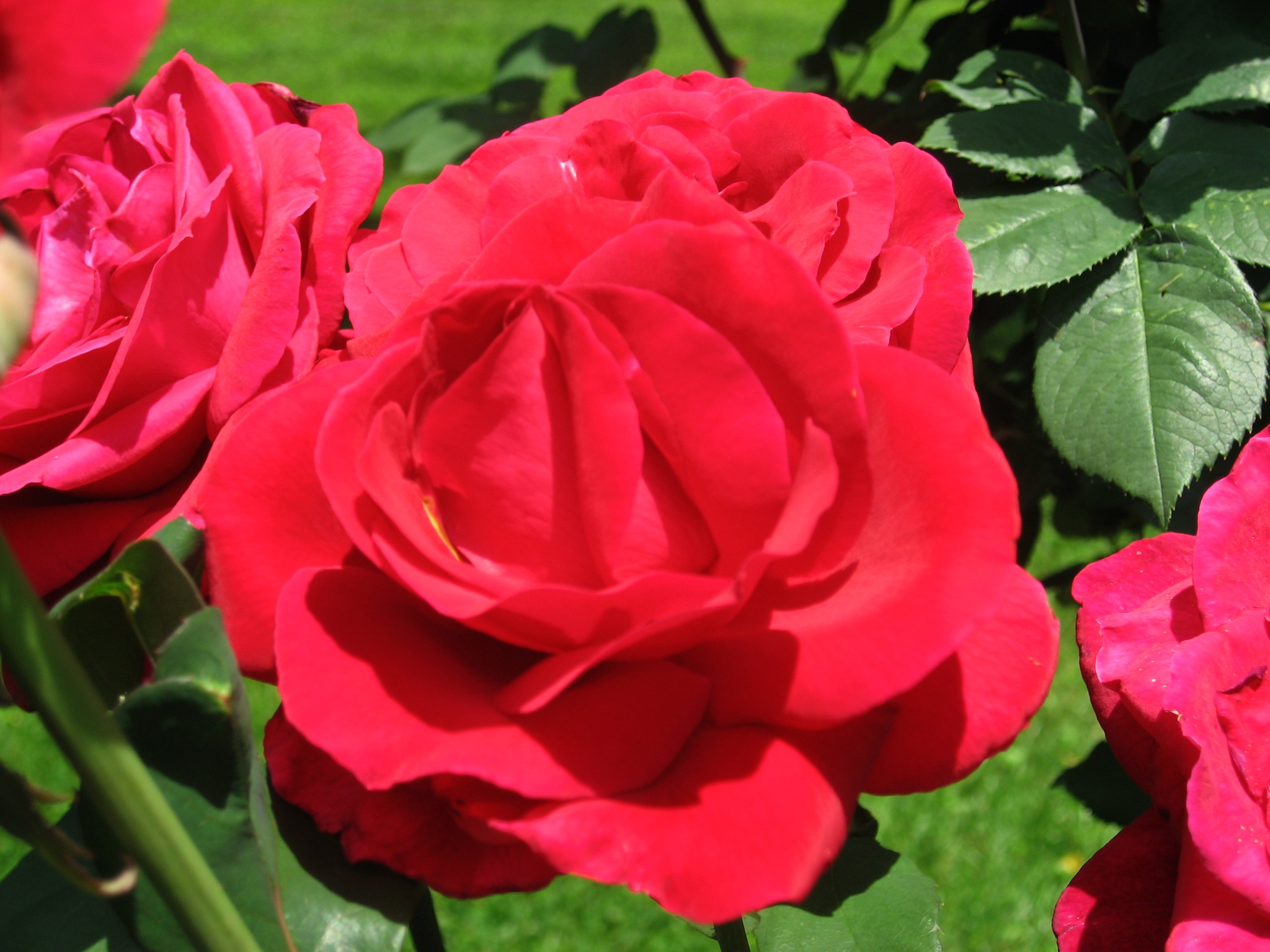
photo_20Karen reminded me this morning that come bedtime tonight we’ll need to move our clocks one hour forward. And I’m thinking, can it be that time again?

Actually, it’s something I should welcome, a kind of herald, if you will, of spring’s approach and our soon deliverance from winter’s long night.

I do love its entrance. For one thing, there’s the pleasure of working outside again, hoeing away winter’s scattered debris. They say we’re having temperatures in the high fifties here in Kentucky this weekend and already, in excited revery, I’m planning my priorities for making the weekend count, beginning with haircuts for the shrubbery, a few dead tree limbs to trim, and mulching the rose bed into weedless blackness.

I notice the box stores and gas stations are getting ready, too, witness the potted pansies peeking over their rims that I saw at Walmart today and the high piled bags of mulch when I pulled in for gas this morning.

As a former student and teacher of myth, I can understand the archetypal reverence for this season, mirrored in story, music, and dance celebrating regeneration, or earth’s greening. And there’s that beautiful story the Greeks loved to tell of Persephone’s return from the Underworld in consort with every spring, rekindling a dormant landscape into verdant tapestry. Spring is Easter and Passover, celebrations of passage from death and bondage to new life and future hope. Universally, the egg is its symbol.

But I’m also cognizant that spring isn’t always kind and sometimes lashes its way into entrance, forsaking sweet whisperings redolent of incipient blessedness. In Kentucky, for example, it brings not only the Kentucky Derby, but tornado sirens and, on occasion, flooding, reminding us of the delicate weave of life and death, sorrow and joy that has always defined our destiny.

Alas, we ourselves have been playing havoc with that balance, unwittingly triggering with our technology, fossil fuel dependence, and ravaging of our resources, whether of mineral, plant or animal, our own demise. As in T. S. Eliot’s magnificent Wasteland poem, we have springs more often associated with too little rain, or hot summers arriving too soon, suggesting spring’s own waning in the growing menace of global warming. Our earth weeps to be delivered, but there are no saviors among us to redeem and restore.

But then there are those momentary lulls when Equinox hovers in a topography of gentle wind and earth rages with the fever of life and healing and languorous days of apple and cherry blossom, lilacs, tulips, hyacinths and daffodils and we dream not of a distant heaven, but bathe in a heaven brought down to earth in renewal of Edenic splendor.

Would that this could always be. In the meantime, pile up the nows of halcyon days that sew warmth and bloom and hope.

Be well,

rj
On the sweet sorrow of parting with my books

I’ve always liked a good book, whether for information, a good story, or shared wisdom. Years ago, I met a fellow who felt similarly about them, calling books “friends. Because I was only 16, I may have heard what he said, but I didn’t comprehend its nuance. Now I can say the same thing too.

It was hard for me when I retired from teaching college classes seven years ago to part with many of my “friends,” companions over several decades and often linked to special memories of impassioned purchases or a special eloquence that my underlining makes clear. But I couldn’t possibly house all of them, and so the culling began.

Those that made the cut continue to entice me whenever I fetch them off the shelf. And yet some survivors I’ll still have to cull, since I haven’t looked at them in several years. Perhaps calling it a pruning makes the task a bit easier than a culling with its resonance of the trash man’s visit every Thursday. Is this something you do to friends, many of them orphans in a world remarkably sensate in its pursuits and capacity to commit loveless acts?

Dismiss me as a sentimentalist, but I think I understand the psychology behind my reluctance to let go of books, or anything else, given the many losses I’ve known across the years of friends, and animals, and places. Collecting is my mortal, ineffectual, finger-in-the-dike attempt to hold off time’s wash.

I’ve some books I’ll neither cull nor prune. Like my pets over the years, I know their names and cherish their memory. These are books I’d take into that proverbial island exile, tomes like Dickens’ David Copperfield; Hardy’s The Mayor of Casterbridge; Thoreau’s Walden; the poetry of Keats, Dickinson and Larkin; Browne’s How to be Free in an Unfree World; Fromm’s To Be or to Have? Lighthouses in the cosmic night, they’ve made me think hard and live more wisely and, hence, made life better, centered in verities like love, trust, hope, and gratitude.

Ours is a time when hardbound books may vanish into an electronic sinkhole, replaced by shades of their former semblance. While I enjoy megasecond possession, I miss the excitement of purusing bookstore shelves; the feel of that new book in my hands; the ease of skimming its pages, back and forth; and, often, that serendipity discovery or new find, like a romantic love, unexpectedly and wonderfully!

This morning, while eating breakfast, I was backtracking through the late Merle Shain’s Hearts that We Broke Long Ago, a slender work teeming with observation and counsel housed in eloquence, when I came upon her borrowing from playwright Eugene O’Neill, which exemplifies why you can add Shain’s work to my island list:

“Why am I afraid to dance, I who love music and rhythm and grace and song and laughter?  Why am I afraid to live, I who love life and the beauty of flesh and the living colors of earth and sky and sea? Why am I afraid to love, I who love love? Why am I afraid, I who am not afraid? Why must I be so ashamed of my strength, so proud of my weakness? Why must I live in a cage like a criminal, defying and hating, I who love peace and friendship? Why was I born without a skin? O God, that I must wear armor in order to touch or be touched” (from The Great God Brown, quoted in Shain, pp. 34-35).

Good books with passages like these have a way of giving life back to us, or second chance to seize the day and with quick step, live it boldly, slipping the manacles of fear. It’s not easy to part from such friends!

rj

On the new Mediterranean Diet Study: Proceed with Caution

I’ve been reading about the excitement in the medical community over the results of the first sustained clinical study of the effects of switching to the much touted Mediterranean diet for those at high risk for cardiac disease.  You can read the results in detail at the the New England Journal of Medicine website (NEJM.org).  You’ll recall that this diet abounds in olive oil, nuts, beans, vegetables and fish.  Whether participants took statins, were diabetic, or hypertensive, or overweight, the results across the board showed a 30% reduction in heart attacks, stroke, and death.

The study, encompassing 7,447 people in Spain, employed two diet regimens:  the Mediterranean and a low fat diet.  Up to now, evidence for the efficacy of the Mediterranean diet has been inconclusive, while the low fat approach hasn’t been shown to be effective in previous studies, primarily because many people find it hard to stay with.

Unfortunately, appearance, as in so many things, may not be the reality, given the human tendency, even in the sciences, to make unwarranted associations; for example, while the medical establishment has pummeled cholesterol as the primary villain in cardiac disease and urged us to cut down on organic meats, the truth is that only about 20% of our total cholesterol derives from our food.  That helps explain why nearly half of those suffering heart attacks have low LDL levels.  Inflammation, not cholesterol, is more likely a primary instigator.

While olive oil, a staple of the Mediterranean diet, is widely believed to reduce inflammation, thus promoting a healthy heart, it actually impairs endothelial function like most oils and should be avoided.  I have to scratch my head sometimes at the absurdity of health authorities telling us to reduce saturated fat foods, then waxing enthusiastic about olive oil, which is 14% saturated fat!  Ironically, canola and flax seed oil are better for you because of their greater omega-3 content, though still to be avoided.  (See Vogel RA. Corretti MC. Plotnick GD. The postprandial effect of components of the Mediterranean diet on endothelial function. Journal of the American  College of Cardiology. 36(5):1455-60, 2000 Nov 1).

Behind the diet’s success lies its plethora of vegetable, fish, whole grains and, yes, red wine.  In any event, the new research doesn’t halt or reverse heart disease because it doesn’t limit oils. On the other hand, low fat diets (10 % max) do succeed when consistently followed. The problem is getting people to stick with a sharply reduced fat diet ( i. e., vegan), an admitted weakness in the just concluded study. Not incidentally, those on the low fat diet were, for a time, not given the ample support those on the Mediterranean diet enjoyed, which in my view suggests bias or pedestrian methodology from the very outset.

What’s more, the study’s low fat group consumption was a mere 37%, and not the 10% of truly low fat diets shown to prevent and reverse heart disease. It should be noted, as well, that many of the study’s proponents have ties to food interests, including the Spanish government.

But let’s look at the facts about the original Lyon Heart Study (1995), which utilized the Mediterranean diet, specifically Cretan version, for its research findings, launching near universal medical endorsement along with a tsunami of new cookbooks. Mortality rates from heart disease declined by 70% among those on the Cretan diet vs those on a normally prescribed diet for reducing coronary risk.

In retrospect, the facts are that the Lyon diet actually reduced total fat consumption from the 40% in the Cretan diet to 30% and limited dairy intake and meats, while emphasizing salads, vegetables and grains.

But then why did the Cretans enjoy a lower mortality rate, considering their higher fat in-take?  For one thing, they still ate a largely plant diet and worked very hard.  For another, the study found that canola oil with its high omega-3 fatty acids was a significant  factor, not olive oil, which has a low omega-3 content.  Omega-3 fatty acids reduce inflammation whereas omega-6 fatty acids can increase it.

However, what the media ignores is that by the end of the Lyon Diet Heart Study, nearly four years after its start, fully 25% of the subjects on the Mediterranean Diet had either died or undergone a cardiovascular event.

If you’re like me, you’ve grown tired of medical flip-flops.  In some circles, physicians like Dr. Walter Willett at Harvard’s school of Public Health have been promoting unlimited quantities of so called “good fats.” The truth is that fats play a leading role in fostering heart disease through weight gain. Saturated fat can mount up and is especially dangerous.  Olive oil is rich in the latter.  The clincher for me, at least, is the Vogel study I alluded to earlier.

The bottom line, as in so many areas of life, is to be wary of new enthusiasms in medicine that have their vogue, only to fade quickly–in part, because they’ve often proven dangerous. The Mediterranean diet goes right in its emphasis on whole grains, vegetables, and omega-3 fatty acids.  It goes wrong when we misuse it to overeat or
overload with fats of any kind.

A low fat diet at 10% of total calories combined with unrefined foods and low glycemic load remains the pathway to optimal digestive and coronary health. When adhered to, its potential to reverse heart disease has been demonstrated consistently, something the Mediterranean diet per se cannot claim.

rj

Further Reflections on Translators: vital but unappreciated

Constance Garnett
Constance Garnett

I was delighted at the good response to my most recent post re: the challenges translators face, the essentiality of their calling and, alas, their neglected status.

I took up as well the specific arduous skills necessary to literary translation, concluding with Edith Grossman’s telling reminder that the translator’s ultimate task in literary matters is to get readers to “perceive the text emotionally and artistically in a manner that parallels and corresponds to the esthetic experience of its first readers” (Why Translation Matters).

In regard to Grossman’s rejoinder, I want to bring up an illustration of what happens when translators fall down on the job, which may have happened with regard to Constance Garnett, who almost singularly put Russian literature on the map for English readers, translating 71 volumes of principal writers including Pushkin, Tolstoy, Dostoevsky, Chekhov, and Turgenev.

In doing so she merits high praise, for Russian, and I say this first hand, doesn’t come easily to most of us, even with linguistic acumen, given its heavy inflection, shifting stress, many exceptions, absence of cognitive vocabulary, and vast repertoire of idiom.

In the matter of style, she wrote an ornate Victorian prose.  While often eloquent, it doesn’t reflect the robust nature of the Russian vernacular, thus violating our fundamental axiom that translation achieve authenticity, or reenactment of the native text.  As I pointed out, this poses the ultimate translator challenge, requiring a translator to exercise a creative dexterity in her own right, and even more so in rendering poetry.  Done well, as Grossman does in her painstaking translations of Cervantes, it merits our highest praise and deserves far more accolades than it, sadly, receives.

Literary translation is fraught with the land mines of replaying rhythms, rhyme schemes, syllabication, and nuances. It’s no place for the faint-at-heart.

I grew up on Constance Garnett’s translations and am grateful for her opening the door for me to the golden age of Russian literature.  But then I was very young and didn’t know the way of superlative translation as its own creative enterprise, transcending the verbal and recreating the dynamism of the original.  I didn’t know how much I had still missed, for the reader’s link with a translator lies salient in trust, since few of us achieve such intimacy with a second language.  As such, translators become our filters into knowing.

We should listen carefully to Joseph Brodsky, emigre poet, and Nobel Laureate, in his admonition we approach Garnett cautiously:  “The reason English-speaking readers  can barely tell the difference between Tolstoy and Dostoevsky is that they aren’t reading the prose of either one.  They’re reading Constance Garnett” (Rachel May, The Translator in the Text: On Reading Russian Literature in English).  Often she would simply omit or treat difficult passages superficially, working quickly.

We should choose our translators carefully whenever we can, based on reputable sources, often scholarly.  In reading Russian literature I recommend the husband-and-wife couple Richard Pavear and Larissa Volokhonsky.  Both offer impeccable credentials and are recipients of the highly esteemed PEN Translation Prize for their interpretations of The Brothers Karamazov and Anna Karenina.

The lot of the literary translator isn’t an easy one as The New Yorker reminds us:  “Poor Mrs. Garnett!  Translators suffer a thankless and uneasy afterlife…Translators are, for eternity, sent up, put down, nitpicked and, finally, overturned” (David Remick, “The Translation Wars,” November 7, 2005).

In closing, I would add another caveat:  Translation, even when done well, lends you this strange after taste, or belaboring; a sense of lingering nuance I may have missed or syntax I may have put better.  But then this is a good thing, too, indicating a conscientiousness intrinsic and defining of all good translation.

Do good.  Be well!

rj

Translators: vital but unappreciated

translationIt’s one thing to learn to speak another language, quite another to really show mastery.  For example, a speaking vocabulary of the most frequent 2500 words along with a hundred or so primary phrases will likely enable you to converse adequately in every day situations.  Even more so, if you acquire vocabulary by way of topic categories you’re likely to use, say computer or  newspaper vocabulary.

If you really want to ease your way, though it takes considerable discipline and putting it to use, a vocabulary of the right 7000 words from daily life will give you ease, not only in speaking, but over most intermediate level reading matter in your chosen language.  There’s a good book out there you might look at:  Frederick Bodmer’s The Loom of Language: an Approach to the Mastery of Many Languages, which lists essential words in nine European languages.

By the way, the CIA and the military operate expedited, or crash programs, for quick acquisition of oral fluency, usually consisting of 6-8 hour sessions daily over a six month period for the more difficult languages like Chinese, Arabic or Farsi.

It’s quite another thing to be a translator, and here I’ve in mind two kinds:  first, the oral or playback kind you find in the UN General Assembly when you put on your headphone set and, bingo, there it is, instant playback in your own language.  There are schools for this kind of thing too, of which the Monterey Institute is among the most notable.

School can only do so much.  You need an excellent ear and ability to focus and retain, along with a nearly native facility requiring foreign residency for at least a year to get the real hang of the second language and, maybe, the plus of leaving your accent behind.  I remember meeting a sixteen year old Russian  girl at the prestigious Moscow State University doing precisely that as a result of a one year stint as a high school exchange student in Arizona.

If you do a really good job of it, you’ll have a leg-up on other applicants for positions with the government, courts, and medicine (e.g., patient interpreter), and in the travel industry and more.

The second kind of translating skill I’ll call “textual” in that it doesn’t require oral facility, but rather analytical skills and a huge range of specialized vocabulary for reading in a chosen area like medicine or law.  Again, this has its occupational value for auspices involved internationally such as government, banking and business.  After all, somebody has to put product directions into another language, nowadays usually Spanish in North America.

There’s a species here of textual translation that I’ll dub “literary,” or dealing with the literary arts and, I think, the most challenging form of language mastery.  Paradoxically, it’s under-appreciated by those benefitting most from it, not only readers, but publishing houses.

I started reading the classics as a youngster, reading through much of Hugo, Stendhal, Mann, and especially Tolstoy and Dostoevsky, the latter two invariably translated by Constance Garnett, whose life story I’ll perhaps recount in a future post, since it’s quite remarkable.  While I devoured these writers, I took translators for granted, as nearly all of us do even as adults.

My awareness of the translator’s role, however, became an increasing corollary of my academic career teaching many non-English writers in translation.  My curiosity grew especially with poetry, for here we’re dealing especially with matters of rhythm, rime,  dictional resonance, and syntactical ordering.  How faithful is the English rendition to the artist’s conception in its native version?

I also became intrigued as to the inveterate number of translations contemporary English language poets were undertaking.  For example,  one of my favorite poets, W. S.  Merlin, is widely known for his translated renditions of Spanish verse.  Then there is Northern Ireland’s Seamus Heaney with his translation of Beowulf from Old English.  Did Heaney really master Old English, or did he simply draw upon extant translations and fashion a synthesis?

In all honesty, I don’t know the answer as to whether some translators simply transpose.  In short, do some “translators” cheat?

On the other hand, Garnett was genuine and put the Russian classics on the map for English readers.  And I suspect Merlin is genuine, given his academic training in Romantic languages and experience living abroad.  I could name others, especially with regard to translators of classical authors like Allen Mandlebaum.

But to my main point again, true finesse at literary translation requires consummate sensitivity to language as an almost organic entity with a life of its own.  Imagine the mountain a translator must climb to translate authors like Proust or Borges.  And the other way, too, like rendering Joyce into Russian, while remaining faithful to his stylistic innovations.  And even with a writer like Flaubert, for whom le mot juste was the bottom line of his aesthetic approach  along with cadence, and–voila–what a formidable challenge for the translator whose skill must always be measured in proportion to her fidelity to preserve not only his narrative, but the methodology that housed it, authenticating the individuality of the genius behind it.

To do this requires a similar creative capacity in the new language, for genuine translation is really about paraphrase and not word-by-word rendering, and even more than that.  True literary translators are indeed artists in their own right as guardians of their sacred texts, granting admittance only upon maximum surveillance.

In this, we’re a long ways from the increasing vogue for cut and paste technologies that give you an instant read-out of a foreign text.  Their fault lies in their absence of the human factor behind language use, with stilted language and sometimes absurd concoctions reminding us of T.S. Eliot’s Prufrock with his “No, that’s not what I meant at all.” When it comes to literary translation, it may give you sense, but not the artistry of the source text.

In all of this, what boggles my mind is the talent required to translate well, compounded by the translator’s frequent absence from general regard even among our leading publishers who are likely to conflate translation with narrative, omitting the authorial presence that gave it birth.

By the way,  a good read into the exigencies of literary method is Edith Grossman‘s Why Translation Matters.  A renowned Cervantes translator,  she reminds us that “the grand goal of the translator” is to have “the readers perceive the text emotionally and artistically in a manner that parallels and corresponds to the esthetic experience of its first readers.”

In sum, the challenges are many for the dedicated translator and the payoff generally not financial but in a job well done.  Not a bad goal for any profession

rj

Love as a many splendored thing

Recently one of America’s favorite singers, Rihanna, reconciled with her on and off again boyfriend, Chris Brown.  You’ll remember he had beaten her up several months earlier.

In a similar vein, about a year ago I got to know a girl in her early twenties who complained of her uneasy, abusive relationship with her boyfriend. While she didn’t tell us of any violence, she made it clear she was undergoing daily verbal abuse.  All of us, puzzled by the dynamics, wondered why she didn’t bang the door shut on the guy.

When it comes to this kind of thing,  I can be pretty sensitive.  My mother, after all,  endured an abusive relationship with my father across the years that sometimes included violence.

The poet Sylvia Plath, shortly before her suicide,  wrote famously of the masochism underlying such manacled couples as “a love of the rack and the screw.”  As a professor who taught this poem for many years, I take it she had in mind the role of culture in nurturing feminine subservience in a patriarchal world, the “for better or worse” syndrome of  the traditional marriage vow.   Women, however, were the only ones taking it seriously, as may still be the case.

But I think Plath’s conclusion errs in its reductionism.  In those days, few women had access to employment and thus independence.  And then there is evolution’s maternal instinct that still kicks-in, the children to be protected at all costs.

Today’s scene, however, is vastly different and still changing as women have secured options earlier women perhaps never thought about, since they were precluded possibilities.  And yet a good many women, and some men, still cling to demeaning liaisons.

The truth is that many relationships should never have had their genesis.   We live in a culture that dilutes love by conceiving it falsely, with our movies, harlequin novels, and music playing out the theme of lovers “as the luckiest people in the world.”

Romantic love, or ”being in love,” has a fixity about it, a must have it now and abundantly; a possessiveness centered in emotional absolutes.  Root bound, it cannot grow and lacks a future.   At best, it turns habit.

“Loving,”  on the other hand, is like a fine vintage that gets better with the years.  Here lies the advantage of postponing life choices until the grapes are ready.  I was raised in a world that told me that first love was true love.  This may be so for some, but I think not for many.

Unfortunately, a good many relationships pose a latent psychological component, or dread, that the late psychiatrist Reuven Bar-Levan nailed down persuasively when he wrote that “what holds people in destructive  and humiliating ’love’ relationships, and what makes them plead and even beg to be ’loved,’ is extreme fear of abandonment.  The force of this fear is so great that people degrade and humiliate themselves to avoid it”  (Thinking in the Shadow of Feelings, p. 145).

This dread, overwhelming and prevalent, primarily traces back to our parents and whether they succeeded in making ourselves feel lovable.  When missing, it pursues us, like a shadow, all of our life and through mistrust we prove quite capable of driving genuine love away in wanting rather than giving, demanding and not allowing.

Again, authentic love lacks stasis or rigidity.  As such, it maturates and transcends love’s vicissitudes because, with time, it grows in wisdom, acknowledging flux in all relationships, and allows even for exits, since loving abounds in the context of freedom, or ability to sometimes let go.  Genuine love has its ending ultimately in our mortality if from nothing else; but whatever its source, its loss results in sadness, not fear or anger.  Free from fear,  love thrives.

Removed from anxiety, love is, indeed, “a many splendored thing.”

When media masquerades

Following Tuesday’s State of the Union speech, the Republicans delivered the customary rebuttal, this year, featuring Senator Marco Rubio as their spokesperson.  Then came the now infamous water bottle moment, washing away not only Rubio’s thirst and whatever substantive remarks he made, but possibly notions of his fitness to seek higher office in 2016.  Mind you, I’m not a Republican, nor a Democrat either, having voted the Green Party last November.  I do, however, have a sense of fair play and I found the media’s persistent, even gleeful replay of a human moment thoroughly annoying and partisan.

I don’t know  about you, but sometimes I prefer avoiding the mass media altogether, since it frequently seems to thrive on the negative and sensational to the point of hinting at animosity, or an underbelly of petty meanness analogous to an undercurrent of daily life manifesting itself in the personality that enjoys another’s fall, the venom of daily gossip with fondness for spilling confidences, speculation, insinuation, ridicule and invasion of privacy or creeping over every fence and peering into every window. Its dynamics, whether public or private, are worth exploring, since they have a human origin. The media likewise strays when it embraces advocacy journalism driven by concealed biases or panders to special interest groups or omits asking the right questions.

Like many of you, Karen and I have recently caught-up with Downton Abbey, TV’s highbrow soap opera that has hooked millions in Britain and America (second in viewers to this year’s Superbowl).  Weaving its spell through subtle intra-episode suspense played out in a facsimile of Edwardian elegance contesting with working class aspirations, its characters, all of them, major or minor, are remarkably chiseled into a sharpened relief, foregrounding their composite individuality, and avoiding stereotype.  As with Shakespere’s Iago, insinuation rather than outright deed works its scourge among some of them. Thomas and O’Brien come to mind as primary instigators, motivated by malice, fomenting innuendo.

As such, they’re not strikingly different from an errant press.  Appropriately, one of Downton Abbey’s other candidates for “dishonorable mention” is Sir Richard Carlisle, hard-ball, newspaper mogul who thrives on scandalizing adversaries, influence peddling, and unbridled intimidation.  He decides what makes or doesn’t make news, as his personal needs dictate.  We are not far from how real media works to manipulate opinion or affirm its biases or cast its critics into disrepute.

While I fervently believe in a free press, devotee that I am of John Stuart Mill (On Liberty), I’ve become wiser with the vintage of my years as to its capabilities for abuse as in outing a CIA operative and endangering intelligence sources in adversary nations; or of unbalanced reporting, whether by design or neglect; or of slanting the news through connotative nuance; or of a more sinister modus operandi of interpretive journalism pursuing an a priori agenda of prejudices.

I wish I had time and space to write more fully on the press, both as to its assets and liabilities; but suffice it to say, there lies a latent psychology underlying its behavior, since it’s so human in its making.  Putting ourselves on the alert, we diminish its power to manipulate us.

Be well,

rj

On the joys of learning Arabic script

Just by way of follow-up on my attempting to learn the Arabic alphabet and fuel my brain, I’ve surprised myself in learning about ten letters already in the last several days since my previous post.  My Apple iPad app helps me a lot, as it groups letters by similarity, and so you quickly begin to recognize that letters fall into families.

Seems to me, this is a good way to learning inventories, whether of vocabulary, birds, trees, flowers, etc.  If you do this with a language with many English cognates like Spanish or French you can actually acquire a reading vocabulary of several thousand words in a matter of an hour since, for example, our –ion ending words are virtually the same in spelling and meaning in those languages, confirming the wise pedagogic axiom of proceeding from the known to the unknown.

I haven’t actually practiced writing the letters at this stage, but see a challenge when it comes to connecting the letters in script.  You also mustn’t make the frequent Westerner mistake of writing the characters from left to right. In its cursiveness, Arabic script reminds me of the now defunct shorthand secretaries learned years ago.

What always amazes me when you start a new interest is its snowball effect, or tendency to get larger as you get into it.  Now I’m becoming aware of just how dynamic and relevant Arabic is in its growing number of speakers and considerable literary heritage. (The Arabian Nights comes to mind).  And of course there’s the sacred Koran, recited in mosques around the world.

I’ve also learned that Arabic script is employed in writing Farsi (Iran), Urdu (India and Pakistan), the latter rivaling Hindi in its vast number of speakers.  Additionally, a score of other tongues use Arabic script.

If you go beyond written Arabic, you quickly learn how important it becomes to choose its dialect version wisely as considerable variations exist between, say, Egyptian versus Iraqi Arabic.  If I were to actually make a stab at acquiring conversational, or everyday Arabic, I’d probably pick the Jordanian variant simply because several of my student friends in France years ago came from there, and I associate them with many kindnesses. I also happen to like Jordan’s progressive royal family.

220px-RichardFrancisBurtonArabic has rekindled my memories of reading the biography  of ebullient 19th century explorer Sir Richard Burton (1821-1890), who lived one of the most remarkable lives on record, with a facility for learning languages quickly, including Arabic, without an accent.  (See Lovell’s A Rage to Live).

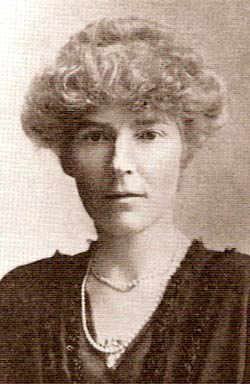
tresi827And not to be outdone, there’s the extraordinary story of Gertrude Bell (1868-1926), fluent master of Arabic, advisor to kings, and a principal architect of the post-Ottoman Middle East.  (See Wallach’s Desert Queen).

On more familiar grounds to most of us, though I’ve not read his classic work, The Seven Pillars, we have the saga of Bell’s good friend, T. E. Lawrence (1888-1935), better known to millions as Lawrence of Arabia via the movie version of his storied life.  By the way, all three acquired Arabic outside the classroom, or without formal study.

In sum, there are so many reasons that can enter into your choice of a language to study:  ease, heritage, utility, etc.  One that’s often missed, however, is distinctiveness.  If you want to find a less traveled path, try taking-up Swedish or even a language drenched in euphonious vowel syncopation like Hawaiian or Maori that always leaves me mesmerized.  You’ll have a leg-up on the herd and find new friends, flattered that you chose their language and culture.

I happen to find this also occurs with a language like Arabic. Though it’s a first language for millions, it’s still a rare acquisition for Westerners.  And among languages, for me at least, it smacks of the exotic.

rj

Learn a new language to keep your mind young

As an older, retired person I’m aware of the need to keep my mind in shape just like my body.  How can I forget when I’m bombarded with all these health memos of a possible tie-in between lack of brain stimulus and dementia, including Alzheimer’s? That’s a frightening scenario I want to avoid, if I can.

Fortunately, my iPad tablet’s a big help via its many learning and game applications.  For me, maybe it’s the professor in me, but I prefer problem activities that test my mental skills rather than dexterity.  Sudoku is my favorite, though I’m also fond of games like Whirly Words, Word Ladder, BrainExl, and N-back Suite, the latter especially challenging.

One thing that’s important in keeping your brain young is adding variety to your mental life by trying new things, not necessarily games, but things like learning bridge or taking-up gardening or starting a blog site, which forces you to be observant and creative.

My primary hobby other than keeping a blog or gardening is studying languages. They say that when you can pair vocation with avocation you’ve punched the right ticket.  In my case, definitely Yes, so I was delighted the other day, though I’ve heard it before, that one of the best exercises to keep your brain young is taking-up a new language.  According to Neuromage (Oct. 15, 2012)), studying a new language intensively “over a short time stimulates the growth of the hippocampus, the brain region involved in learning, memory and spatial navigation.” This study involved new recruits at the Swedish Armed Forces Interpreter Academy who committed 13 months of study to mastering a foreign language.

Brain scans before and after three months of study indicated “significant” brain growth, while those studying medicine and cognitive science in the university showed static results.  What’s more, and again I’ve seen multiple research studies on this, those who are bilingual or multilingual develop Alzheimer’s disease at a more advanced age.

Applying this research to myself and in keeping with the idea of something new to energize my gray matter, I’ve hit upon giving the Arabic alphabet a go.  We’ll see what happens after that.  I just thought it would be thoroughly brain-stimulating, given its particular challenges as a script you read from right to left and its omitted vowels like its semitic neighbor, Hebrew.  While the Arabic alphabet has 28 letters, there are actually nearly three times more than that, as letter forms change according to where they occur–beginning, middle or end.  Apple just happens to have a marvelous application, Arabic Alphabet, to facilitate mastery of this often intimidating script.

Can you teach an old dog new tricks?  Well, I did learn ancient Greek many moons ago and, later, the Cyrillic alphabet used in several slavic languages, including Russian.  Anyway, I’ll let you know later as to how this wild experiment turns out.

Be well.

rj

The folly of being in control

Often life can unexpectedly catch us in a high wave and we lose our balance and may even go down.  Not liking this, we try to lasso life’s randomness through structure or control and spare ourselves surprise.  Though this may help some, it doesn’t always work and, oddly, may even work against us when control assumes our identity.

Some of us are more prone to controlling than others, having been forced out of our nest early to look after ourselves.  I think of children of alcoholics, for example, who must not only escape, but prevent betrayal reoccurring.

Control is a ritual to relieve mistrust and smooth out the winkles.  All of us resort to defense modes from time to time to cope with an often aggressive landscape of human ignominy and nature’s caprice. There exists, too, an existential dread in us, or sense of our impotency against life’s vagaries, resonating vulnerability and whispering our mortality.

But to live this way daily filters life’s joy and shrinks life to a prison cell.  While we need to be wary, we should drop the reins when control becomes its own end and we become its prisoner and it hurts more than it helps.  Control, at its extreme, masks a latent masochism or inverted narcissism that feeds upon its wounds.

We cannot know what each day brings, nor always preempt its events, but changing our thoughts can help ransom our freedom in a world where the surety remains that flowers do bloom and there are people worth loving who will love us.  Experience affirms that we find love only when we extend  our hand to grasp the extended warm fingers of those around us.

I can’t say just how we find the switch that turns on life, nor assure its recompense when we do; but I know that abundant living begins with a giving of ourselves, and not withdrawing and yields release from the confines of our fears.

In sum, we become our choices and when we commit we find life gives back.  William James, one of America’s foremost early psychologists, said it very well:  “The greatest discovery of my generation is that human beings by changing the inner attitudes of their minds can change the outer aspects of their lives.”

How do we do that?  It begins with realizing the futility of our attempts to impose order on life, for life has a way of happening.  What matters is living in the Now, one day at a time, one step at a time, finding joy in each other, delight in the canopy of the stars, and the promise of every new day.

–rj