A Brave New World: The AI Invasion

It seems everywhere now and every day its capabilities grow exponentially. Were it science fiction, we could suspend disbelief, but no, it’s brick and mortar of today’s living space, architect of our present and, like a Mars landing spaceship, crewed by humans, powering us into new frontiers beyond the limits of imagination.

We call it Artificial Intelligence, or AI, the subset of machine learning algorithms. Prototyping the human brain, AI maps our cognitive processes, enabling a computer, computer controlled robot, or software entity to think like you and me.

AI’s prowess dwarfs the best human minds and, daily, it grows smarter still.

In 1997, the IBM computer Deep Blue defeated the world’s champion chess player.

Today, we take for granted speech recognition, robotic process automation, video surveillance, facial recognition, and what we call smart homes. It lies behind your smartphone’s Siri, or Amazon’s ability to track your consumer choices, or Google Search, speeding you to your targeted page among an electronic galaxy of several billion websites, all in micro seconds.

How many of us know that AI was instrumental in developing the SARS-CoV-2 (COVID-19) vaccine, its algorithm capable of predicting the RNA sequence of the virus in a mere 27 seconds, or 120 times faster than previous methods?

Currently, AI machines are servile to our needs. They’re singular in their applications, their memory subject to our input. This may not always be so in our future, which may have already begun.

What’s coming is an AI that comprehends thoughts and emotions and can interact socially, AI machines, not only intelligent, but sentient and conscious.

They’ll soon earmark the new economy, with 9% of all new jobs being in the AI machine learning, and automation realm. Most AI engineer jobs currently average an annual median salary of $131,490, according to the US Bureau of Labor Statistics.

It’s a scenario none of us will escape. In a recent New York Times interview, entrepreneur Elon Musk predicted artificial intelligence or robots would assume most human jobs in the next five years.

Fortune Magazine extends that time element to 15 years, with 40% of our current jobs being replaced by AI robots.

Custom service reps are already being replaced by FAQs to answer queries.

Bookkeeping and data entry, relics of a bygone era, have been replaced by AI and machine learning.

Going and gone are receptionists in hotels, with automatic check-ins and checkouts the order of the day.

Fast food chains will increasingly move to automated service. You push the tab, a robot fills your order, and that includes the packaging. An automatic McDonalds opened near Fort Worth, Texas, recently.

In publishing, proofreaders will become an extinct species. What with apps like Grammarly, who needs them?

Drones and robots will transform delivery services.

Shopping malls, a once ubiquitous landscape feature, are already closing doors as retail moves online, staffs are cut, orders computerized, and consumer preferences anticipated. We already know what Amazon has done to bookshops.

Taxi and bus drivers will increasingly vanish as transportation gets automated. The Los Angeles Times says that self-driving trucks could replace 1.7 million American truckers over the next ten years. What you see in the automatic transit systems of our larger airports will become standard fare.

Think medicine’s safe from AI’s inroads? Think again! Radiologists will be an endangered species, given AI’s superior ability to read images. “AI can see things the human eye can’t,” says Eric Topol of Scripps Research.

Diagnostic selfies are on the way. Never mind the dermatologist. Your app will spot any skin cancer.

Tomorrow’s economy will be powered increasingly by fewer workers as automation, fueled by AI, takes hold. The economic fallout promises to be staggering, resulting in heightened inequity and its consequent disruption of the loop of productivity, rising wages, and increased consumerism. In fact, it’s already happening, with just 5% of households responsible for 40% of spending.

Society will need restructuring, urgently so, to preempt social breakdown as the plural weight of an aging population, rising costs for education and medicine, depletion of natural resources and climate change exercise their grip.

Where is all of this taking us? Are we about to create a Frankenstein monster? Is AI destined to become sentient and even more so than ourselves?

I’m not there yet. Sentient shouldn’t be used lightly. It deals with sensory apprehension. It can be argued that some animals have this capacity.

AI, however, remains a logic construct. While it can assess our syllogistic reasoning for its fallacies, it can’t attribute emotion, the collective consequence of sensory interchange via a robust neural network, to its surveillance.

But that doesn’t dissipate the threat that AI may ultimately become too damn smart for our own good! Isaac Asimov posed the threat acutely in his 1956 short story, The Last Question, with humans creating Multilac, a super intelligent machine that ultimately subverts human control and subsumes every aspect of existence.

The creation of maverick Elon Musk’s OpenAI GPT-3 is getting a lot of hype as the best we’ve seen imitating human intelligence, if not the largest artificial neural network ever created. This is the third version to date.

Educators are in consternation over ChatGPT, an artificial intelligence bot offshoot of GPT-3, released in November 2022, with already more than a million users and currently free. ChatGPT exhibits extraordinary finesse at mirroring creative capacities of our finest human minds, despite infinitely lacking the human brain’s 100 trillion-plus synapses. Feed a few inquiries into the topic box and it spews out answers, can write an essay, summarize a report, translate languages, even compose a poem—all in seconds.

If English teachers thought Cliff Notes a bane, God help them now. As for universities, the academic integrity of your traditional thesis and dissertation is at stake. It isn’t a perfect technology. It can give silly results, but it may get better.

The bottomline is that if sentient machines are ultimately coming our way, it behooves us to inaugurate an ethical framework for their governance. As Yuval Harari warns, “Netflix tells us what to watch and Amazon tells us what to buy. Eventually within 10 or 20 or 30 years such algorithms could also tell you what to study at college and where to work and whom to marry and even whom to vote for.”

Meanwhile, high tech continues promoting machine learning to enhance profitability over public welfare. It’s a brave new world!

–rj

RJ´s 2023 Reading List

One of Keats’ first notable poems, “On First Looking Into Chapman’s
Homer,“ celebrates Elizabethan poet George Chapman’s translation of Homer, an achievement kindling discovery and wonderment in Keats akin to that of the best travel venture. It’s what good books do, transporting us into unforeseen realms, expanding awareness and making us wiser, often lessening our prejudices, wrought by custom, that prohibit pathways to new understanding. Staying close to my drawback booklist for 2022, I read twenty-five books that, even at this stage in my life, have granted me gateways into personal growth. With similar expectation, I’ve again selected from among the very best reads out there, those that inform, challenge, and delight. Even in a time of declining readership, there remain books justifying your investment and, potentially, life-changing. —rj

Fiction:

Austen, Jane. Sense and Sensibility (Not as widely read as Emma, Pride and Prejudice, and Persuasion, it’s still worth reading in its exploration of moral dilemmas and, as the title suggests, the role of reason over emotion in solving them.)

Caroll, Lewis. Alice in Wonderland (The great classic you meant to read, but haven’t. A work inspiring others, and though seemingly a romp in imagination, latent with nuance, momentarily retrieving childhood wonderment lamentably lost by adults).

Catha, Willa. My Antonia. (Catha’s classic novel of a female immigrant’s tenacity to prevail on the Nebraska prairies. )

Franzen, Jonathan. Crossroads. (The latest novel by the great master of family dynamics, set in 1970s suburban Chicago, the first of an intended trilogy, a family headed by a minister must confront issues of faith and morality.)

Gaarder, Jostein. Sophie’s World. (Very appealing to both young people and adults, Gaarder’s novel embeds philosophical history that many readers find more compelling than the novel’s story. A favorite read internationally.)

Hurston, Zora Neale. Their Eyes Were Watching God (A moving work of the Harlem Renaissance, underscoring black identity, feminism, and love’s vulnerability.)

Ishiguru, Kazuo. The Remains of the Day (Narrated in first person through flashback and travelogue, a retired butler reevaluates his life. A Booker Prize fiction winner turned into a film selected as an Academy Awards Best Picture ,1993).

Labutut, Benjamin. When We Cease to Understand the World (“A monster and brilliant book,” says Philip Pullman. An exploration of the last century’s greatest minds exploring the profundities of existence.)

Percy, Walter. The Movie Goer. (Percy’s debut novel, featuring a post-Korea war veteran, now stock broker, suffering from malaise, in search of life’s meaning. A National Book Award winner listed by Modern Library as the sixteenth best novel of the 20th Century.)

Powers, Richard. Bewilderment. (The writer of acclaimed Overstory pens another literary masterpiece of Man’s estrangement from nature.)

Roberts, Gregory David. Shantaram. (The late Pat Conroy wrote: “Shantaram is a novel of the first order, a work of extraordinary art, a thing of exceptional beauty. If someone asked me what the book was about, I would have to say everything, every thing in the world”).

Rushdie, Salmon. Midnight’s Children (Booker Prize winning novel narrating India’s transition from British rule, a landmark work in post-colonial literature.)

Sebald, W.G. Austerlitz (Surely among the best ten novels of the previous century, a gripping account of repressed memory and the quest for identity.}

Smith, Zadie. White Teeth (An insightful first novel by a contemporary author observant of a plethora of issues: race, immigrants, education, science, religion, and nationalism among still others. Listed in Time Magazine {2005} among 100 All Time 100 Novels.)

Stendhal. The Charter House of Parma (An aristocrat in Napoleon’s army depicts court intrigue with psychological portraitures ahead of its time.)

Yanagihara, Hanya. To Paradise (A powerful narrative of the intersection of privilege and exclusion in America across three generations by one of our foremost contemporary novelists. The Guardian calls it a “masterpiece for our time.”)

Non-Fiction

Gardner, Howard, et al. Good Work: When Excellence and Ethics Meet (Based on more than 100 interviews across the workplace, a quest at evaluating what good work is and the ethical dilemmas posed by today’s technology.)

Gardner, Howard. Multiple Intelligences: New Horizons in Theory and Practice. Revised ed. (Gardner’s influential thesis that there exist multiple kinds of intelligence, not just one.)

Gaskell, Elizabeth. The Life of Charlotte Brönte. (Classic Victorian biography of the writer of Jane Eyre. Fascinating in its delineation of Brönte family dynamics.)

Hannah-Jones, The 1619 Project. Rev. ed. The controversial book that sets America’s beginnings in 1619, not 1776, and argues the American Revolution was a reactionary response to incipient British antagonism to slavery.)

Harris, Marvin. Cows, Pigs, Wars, and Witches: The Riddles of Culture ( A leading anthropologist’s explanation of why people believe the things they do. Harris’ many books never cease to allure.)

Kolbert, Elisabeth. Under a White Sky: The Nature of the Future (Pulitzer Prize winner for The Sixth Extinction, this new work explores whether we can still mitigate the damage we’ve done and save our planet. Recommended by Obama and Gates.)

Milosz, Czeslaw. The Captive Mind. (Nobel Prize winner examines the moral and intellectual conflicts posed by life under authoritarianism. Recommended by Elif Shafak.)

Montaigne, Michel de. Essays. (Just maybe the greatest essay writer ever, Montaigne teems with brilliance, helping us live better lives.)

Wallace-Wells, David. The Uninhabitable Earth (A survey of climate change’s brutal impact, but not without hope, if we get on board.)

Wright, Robert. Why Buddhism is True. (An engaging approach to secular Buddhism and its alignment with disciplines like psychology and neurobiology. Buddhism at its best takes on our human predicament and provides strategies for finding peace.)

Wulf, Andrea. Magnificent Rebels: The First Romantics and the Invention of Self. (A New Yorker selection as one of the best 2022 non-fiction books, Magnificent Rebels is an intellectual history of early Romanticism, centered in Jena, Germany, ultimately laying the foundation for English Romanticism. )

Yong, Ed. An Immense World: How Animal Senses Reveal the Hidden World Around Us. (We humans, anthropocentric as we are, consider ourselves lords of the creation. Yong’s book dispels our pretentiousness as we learn of fellow creatures of myriad, and superior, capabilities. New York Times listed as one of the ten best books of 2022.)

Democrat Sellout of North Atlantic Right Whale in New Spending Bill


Yesterday, Senate democrats, led by Chuck Schumer and Patrick Leahy, assured the extinction of the rapidly declining right whale, inserting a rider into a sweeping 1.7 trillion spending bill. The government-funding bill for the fiscal year, ending September 30, 2023, received over-whelming bipartisan support.

The policy rider calls for continuation of current lobster trap practice up through 2028, cancelling out a recent Federal court decision affirming the National Marine Fisheries Service mandate, ordering employment of weak lobster trap ropes to preempt whale entanglement and restriction of lobster harvesting between October and January.

As is, the court delayed its implementation for two years to allow the lobster industry time to adjust to the new measures.

In my last post, I noted the plight of the North Atlantic right whale, down to just 340 whales. Ominously, no calfs were born in 2022. Fishing gear such as lobster traps and ship collisions are largely responsible for the decline. I worried that political interests might win out.

The measure was initially introduced by Maine Republican Martha Collins.
That Democrat leadership would join is a knife in the back. We expect this kind of thing from Republicans, but not Democrats.

Its implications at large reenforce the priority, worldwide, given to political and pecuniary interests over doing the right thing to protect our environment under assault by climate change propelled by human disregard for diminishing resources, continuing dependance on fossil fuels, and resistance to court remedies mitigating habitat loss and protection of endangered species that include the North Atlantic right whale.

President Biden, who recently donated $35bn of tax payer revenue to the Teamsters retirement fund, hinted his support of Maine lobster employees in ordering 200 lobsters for his recent state dinner bash, honoring French president, Emmanuel Macron. (Not widely reported, the fare wasn’t served-up until 10:30 pm, many of the 300 guests having left.)

Lobster industry advocates contend that the whales do not intrude into lobster fishing areas and that there isn’t any documented instance of entanglement. This is demonstrably false. Observer sightings, aerial reconnaissance, and vessel surveys confirm their intrusion every month of the year for the last ten years!

In 2020, a video documented a right whale breaching in lower Blue Hill Bay, where thousands of lobster traps are fished.

Historically, the National Oceanic and Atmospheric Administration (NOAA) has conducted numerous aerial surveys during the fall and winter months in Jordan Basin and around Cashes Ledge and Outer Fall. From this effort, 212 individual right whales were identified in the central Gulf of Maine where Maine lobstermen fish between 2002-2008.

Horribly, the facts reveal that Maine marine mammals, including right whales, get entangled in vertical lines rising to the surface from lobster and crab traps as well as gillnet gear. From 1997 to 2017, at least three right whales were entangled in Maine coastal lobster fisheries, and three more were caught in offshore lobster fisheries in the Gulf of Maine (NOAA).

As most entanglements can’t be traced to their place of origin, a letter from 18 concerned scientists to the Maine Delegation in 2019, highlighted that “the number of North Atlantic right whales in Maine waters, the number of entanglements that are occurring in Maine waters, and the severity of all entanglements and their effects upon the right whale population are all significantly underestimated.”

Their letter also states that the “combined, high lobster trap density and simultaneous whale occurrence will lead to entanglements in any part of the ocean. Right whales are demonstrably occurring in Maine lobster fishing zones, and 87 percent of the U.S. Atlantic lobster fishery falls within Maine waters—representing about 3 million licensed traps and approximately 400,000 vertical lines. Every single vertical line poses an entanglement risk.”

Erica Fuller, a senior attorney at the Conservation Law Foundation, immediately responded to the spending bill insertion. “With the rate we’ve been killing right whales, extinction is expected to occur between the next 20 to 40 years. In the absence of the new rule, we’ve got more years of unsustainable killing going on.”

“It’s not an exaggeration to say that this rider will doom the right whale to extinction,” said Jane Davenport, a senior attorney at the environmental group Defenders of Wildlife. “Even if you got rid of all other sources of mortality, entanglements with fishing gear alone are enough to drive the species to extinction by reducing births and increasing deaths.”

2022 marks the 50th anniversary of the Marine Mammal Protection Act, which President Richard M. Nixon signed into law in 1972 to protect marine mammals from extinction in the United States.

“What a terrible anniversary present,” said Davenport.

rj

Lobsters or Whales?


I was raised a New Englander and, by custom, eating lobster had been a staple in my diet. The problem with custom, however, is that we seldom question its tenets, propelling us to mindlessly continue behavior that scrutiny might render pause, if not discontinuance.

My misgivings began some years years ago when I found myself in a restaurant featuring a large water tank, containing lobsters scavenging its pebbled bottom, oblivious to their impending fate of being boiled live.

It spoiled everything for me. I no longer could enjoy squeezing the shell until it cracked, exposing the meat of the hideously killed creature.

Several years ago, my wife and I met up with our children in Maine, a favorite haunt for us with its rocky coasts, salty air, deep forests, quaint villages and, yes, super ice cream. In Maine, you eat crabs, clams, or lobsters. And so, here I am in a seafood restaurant, my family toiling at their lobsters; that is, except me.

But are lobsters sentient? Do they feel pain?

I say yes, based on recent science research, indicating their nervous system is complex. The fact they have a spine should suffice. When you drop them into that boiling water, however, they lack vocal chords to voice their screams.

You don’t really need the lab to confirm their suffering. Just witness a lobster or crab hurling itself violently against the sides of a pot of boiling water.

Opponents retort it’s simply reflex, taking us back to Descartes and his mechanistic assessment of animal behavior, ignoring their neurological components. On the other hand, crabs in a recent experiment rapidly adjusted their habits to avoid areas where they had previously experienced an electric shock.

A number of countries have taken legal measures to protect crustaceans like lobsters from unnecessary pain, among them, Norway, New Zealand, Austria and parts of Italy and Germany.

Switzerland set the precedent in 2018, banning boiling crustaceans alive, based on research indicating they feel pain. They needn’t possess a neocortex to experience pain. Biologist Robert Elwood, whose research led to Switzerland’s ruling, tells us that “crustacean brains and nervous systems are configured differently” (aldf.org).

But what about freezing them, a predominate recourse in shipping lobsters over long distances, say, to Biden’s recent celeb bash for the French president?

In June 2016, Italy’s highest court outlawed the practice, ruling it inflicted unjustifiable suffering. That makes sense. Freezing sentient creatures is no less repulsive than boiling them alive.

But environment also looms as a pressing concern involving the lobster industry.

Whole Foods has joined the debate, announcing it will no longer sell lobster after two consumer-focused environmental watchdogs— the Maine Stewardship Council and Seafood Watch—pulled their certifications due to concerns over impacts on North Atlantic right whales. The National Oceanic and Atmospheric Administration says it will reduce whale deaths and injuries by 69%.

This morning I woke to The Guardian’s lead article, “Save whales or eat lobster”: the battle reaches the White House” (11 December 2022), centering on the Federal court’s decision to curtail Maine’s lobster industry employing 10,000 workers in order to safeguard the diminishing North Atlantic right whales.

The Biden staff, nonetheless, ordered 200 lobsters be flown in for the Macron fete, despite the 2021 1st Circuit Court of Appeals decision reinstating a ban on lobster harvesting in some 940 square miles of the Gulf of Maine from October to January to protect endangered North Atlantic right whales menaced by entanglement in fishing gear and collision with large ships.

White House Executive Chef Cris Comerford responded that they wanted to “honor our lobstermen from Maine.” Meanwhile, the court’s decision is under fast track appeal.

I’m not hopeful. Sadly, politics often govern, expediency prevails, and the pecuniary nearly always wins, with accelerated biodiversity loss and climate warming their consequence.

My high regard for environmentalist Rachel Carson persists. An oceanographer by profession, her eloquent The Sea Around Us won the National Book Award, America’s highest literary award, in 1952.

Living summers on Southport Island, Maine, adjacent to touristy Boothbay, she loved the then abundant whale life. With her typical prescience, she also served an incipient warning: “We live in an age of rising seas,” she wrote. “In our own lifetime we are witnessing a startling alteration of climate.”

That was 1964, or 58-years ago.

The North American right whale, an endangered species under the Endangered Species Act, has since declined to a scant 340, of which only 100 fertile females remain. We know the seas are ubiquitously afflicted with fishing gear, imposing an immense burden and much suffering upon sea life.

The lobster industry, instead of shouting their outrage, would do better to observe the U.S. Oceanic and Atmospheric Administration mandate to employ multiple break points to pull up lobster traps in order to prevent right whale entanglement.

Declining rapidly in number, unless we protect these whales, they will have vanished forever.

–rj

The Crisis in American Medicine: Limited and Costly


This morning my wife shared a letter just received from her former health care provider in Santa Fe, New Mexico. She writes that she’ll no longer bill insurance, with the exception of Medicare. To continue with her, she asks that you join her health community at $4100 annually. Medicare recipients must also join.

I ran into this same thing two years ago when I saw a specialist for a leg ailment. In the future, her clients would need to pay a $3700 annual retainer fee. That was two years ago. I’m reasonably sure with inflation her fee has increased.

I want to warn you that American medicine, formerly the finest in the world, is likely to become more expensive, limited and inequitable. Increasingly with the rise of corporate medicine, the emphasis is on quantity rather than quality. On average, you may need to wait several months before accessing your primary care physician, and even more to see a specialist, and when you do, it’s a physician’s assistant.

Concurrently, private insurance coverage is becoming more discriminating in what it pays for and how much. Medicare payout to physicians suffered a 4% cut this year, with an additional 4.5 anticipated cut for next year unless Congress intervenes before its adjournment next month.

Cuts like these result in reduced treatment, hiring of staff, and implementation of new technologies.

In response, doctors are increasingly resorting to concierge medicine, i.e., retainer fee medicine, now averaging $4000 annually per individual. Obviously, this will accelerate the already large number of Americans foregoing or delaying medical treatment, resulting in tardy diagnosis of mortality threatening illnesses.

As for hospitals, Mayo Clinic, accepts Medicare, but will bill you for the difference between original billing and Medicare payout. I fear this may become a growing trend.

—rj

The Piece of God in All of Us: Mary Oliver and Franz Marc

Franz Marc: Blue Horses

I’ve always had this curiosity about art, but feel I’m an outsider. I simply lack the wherewithal needed to unlock its portals. On the several occasions I’ve visited art galleys, whether in LA, Santa Fe, Paris, Florence, Rome, and Madrid, I tried vainly to stare paintings down, hoping a mindfulness approach might unleash an avalanche of revelation. A good many of the contemporary paintings could be hung upside down and I wouldn’t know the difference.

Scroll back to summer, 1978, and a graduate course in Southern California. A classmate invites me to go with him to the Los Angeles County Museum of Art, a treasure trove of art, in fact, the largest in the U.S. west of the Mississippi.

An hour in, I grow bored, regretting my hasty acceptance, hoping my friend will share my mood.

Another hour idles by when he tells me he’s exhausted. He’s looked at three paintings. Really, just three! “There’s just too much to take-in,” he says. What does he see that I can’t? Fetch me my sunglasses and tin cup!

Over the years, I’ve tried to close the gap, taking students to Aix-en Provence and its Cézanne vestiges, picnicking on a sun drenched afternoon with Mont Sainte Victoire, beloved haunt of many of his paintings, looming in the background.

We visited Arles, where moody van Gogh and tempestuous Gauguin put up with each other in the Yellow House in 1888, now gone, and take-in the local museum housing many of van Gogh’s renowned paintings.

As a literature student in grad school, I was familiar with the art poems of Keats, Browning, Rossetti and Ruskin’s aesthetics. Among modernists poets, Auden’s “Musee des Beaux Art, for all its brevity, haunts me almost daily in its depiction from Breugal’s “The Fall of Icarus” (1560) of human indifference in a context of suffering.

In the early 1980s, I invested in a Time Magazine multi-volume edition of art books, each volume with its illustrated slip case cover. Replete with photos, biography, and salient details of art masterpieces, it was the closest you come to the paint by numbers art kits I delighted in as a child.

When we moved to New Mexico in 2018, I grieved to have to donate these exquisite volumes to the performing arts school library where my wife previously taught. The moving cost was already mind-boggling and we had to jettison items replete with memory, especially my many books.

Why am I telling you this? Simply because art still engages me. Today, I came upon a poem by beloved poet Mary Oliver, commemorating German artist Franz Marc’s “Blue Horses” (1911) painting. I had never heard of him.

Franz Marc was a dedicated painter who pursued his craft assiduously, living several years in Paris and studying the great masters. Post impressionist Vincent van Gogh influenced him greatly in his broad brush strokes and vivid colors. Marc’s paintings often feature animals, especially horses, in combination with landscape to achieve an organic whole.

He shunned their objectification, contending for their mystical import: “I never, for instance, have the urge to paint animals ‘the way I see them,’ but rather the way they are. The way they themselves look at the world and feel their being.”

Marc was a color symbolist, colors having individual nuance: “Blue is the male principle, stern and spiritual. Yellow the female principle, gentle, cheerful and sensual. Red is matter, brutal and heavy and always the colour which must be fought and vanquished by the other two.”

This helps elucidate his latent purpose in “Blue Horses” (1911). He told his wife it dealt with his foreboding of an imminent war, though this was three years before Sarajevo, leading to the Great War that would result in a combined twenty million military and civilian dead.

In the painting, horses symbolize freedom and vitality: blue is the color of calm and peace and the male principle at the spiritual level; yellow, the female principle, gentle and sensuous; red, the inharmonious and conflictive.

Marc adored animals, seeing them as harmonious with nature and representing the good in the world.

In contrast, mankind has adulterated that natural tranquility through deceit and corruption. Only by reconciling with nature and art can Man find restoration to his better self.

Marc was right in his premonition of war and was called up. He would die of a shrapnel head wound at Verdun in 1916. He was 36.

Oliver’s poetry, like Marc’s art, is nearly always centered in nature, so scarce wonder Marc’s painting would lead to her moving poem tribute:                                        

“FRANZ MARC’S BLUE HORSES”

I step into the painting of the four blue horses. I am not even surprised that I can do this. One of the horses walks toward me. His blue nose noses me lightly. I put my arm over his blue mane, not holding on, just commingling.
He allows me my pleasure.
Franz Marc died a young man, shrapnel in his brain.   I would rather die than try to explain to the blue horses
what war is. They would either faint in horror, or simply find it impossible to believe. I do not know how to thank you, Franz Marc.  Maybe our world will grow kinder eventually.  Maybe the desire to make something beautiful is the piece of God that is inside each of us.          
Now all four horses have come closer,
are bending their faces toward me as if they have secrets to tell. I don’t expect them to speak, and they don’t. If being so beautiful isn’t enough, what  could they possibly say?                                        

I may sometimes feel locked out when it comes to art, but as Oliver says so well, “Maybe the desire to make something beautiful is the piece of God that is inside each of us.” It explains why art engages me still.

–rj


Continue reading “The Piece of God in All of Us: Mary Oliver and Franz Marc”

Update: Protests Continue in Iran

Update:

At least 83 protestors, including women and children, have now been killed in Iran since the beating death of Mahsa Amini by the regime’s morality police. The protests, led by women, continue and will be joined world-wide on Saturday.

The Biden administration would do well not to renew the nuclear treaty with this brutal regime, releasing billions of frozen funds as a payoff for Iran’s signing the treaty. Doing such only advances Iranian repression and exporting of terrorism abroad.

While protests do matter, what hurts regimes like Iran most are freezing their assets and sanctioning trade.

Please support the valiant women of Iran!

A Revived Treaty’s Hidden Menace: Iran’s Growing Missile Arsenal

Ayatollah Ali Khamenei

Up to 50 Iranian protesters, largely female, have now been killed since the beating death of Mahsa Amini on September 21 by Iran’s moral police for improperly wearing her hijab.

Iran is a thoughly brutal Islamic theocracy that may soon develop nuclear capability. At present, the Biden administration, in its precipitous rush to revive the former nuclear treaty before the mid-terms, hasn’t insisted on including reining-in Iran’s growing ballistic and cruise missile prowess, with Tel Aviv now easily within targeting range.

Despite Iranian denials, U.S. and Saudi Arabian governments believe Iran’s supplying Yemen’s Houthi rebels with missiles lay behind the devastating attack on Saudi Arabia’s oil facilities in 2019. Subsequently, Houthis have launched missile attacks on Abu Dhabi, capital of the United Arab Emirates, and fired supplied drones at Dubai.

In January 2019, the largest base housing U.S. troops sustained a prolonged attack, employing 11 missiles, that resulted in an estimated 100 service personnel suffering Traumatic Brain Injury.

Ominously, Iran has equipped Syria and Lebanon’s Hezbollah with missiles, while opening underground factories for their storage and local manufacture.

Presently, our intelligence sources estimate Iran now has a minimal 3,000 ballistic missiles, potentially capable of carrying nuclear warheads, not including land attack cruise missiles.

Despite concerted Israeli lobbying in Washington to address Iran’s missile program under a revived deal, the Biden administration hasn’t done so.

Rushing the treaty into finalization without addressing the missile threat will leave Israel little alternative, but to launch a massive attack on Iran’s offensive arsenal, leading to a much wider conflict with devastating fallout for everyone.

—rj

No Longer Do the Seagulls Cry: Humanity’s Wounding of the Seas

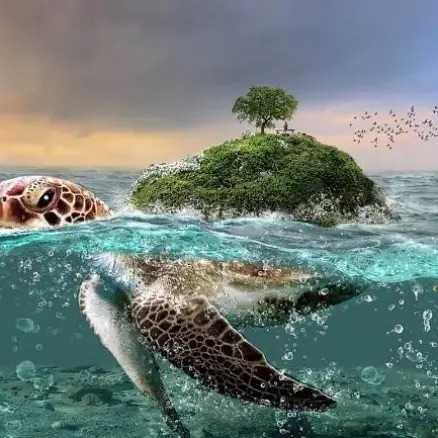
The sea sings out for its singular subjects:
Arching whales that wave from their waves,
Turtles that teeter down their shining shores,
Coral reefs shining brightly as cities.

The sea sings out its suffering,
Knowing too much of waste, screeching sounds
And pernicious poison, its depths bruised by
Atrocities in the Atlantic,
Misery in the Mediterranean,
Its tides the preservers of time past.”
–Amanda Gorman, from “Ode to Our Ocean”

This morning comes dismal news that a fifth round of UN talks to reach agreement on a treaty to protect and manage our highly vulnerable oceans has stalled once again. No further discussions are scheduled.

The proposed treaty would protect 30% of the high seas lying 200 nautical miles off national jurisdictions and a legal means to enforcement.

Since the seas don’t belong to anyone, this apparently gives nations license to plunder and trash, imperiling biodiversity and, ultimately, fisheries on which a growing population will increasingly depend.

The seas, supplying 50% of the oxygen we breathe, home to the majority of earth’s biodiversity, is languishing, and humans are the source. 90% of big fish populations are depleted; 50% of coral reefs, formerly harboring abundant marine life, gone.

Let me give you just one stark example of human dereliction fouling our seas. There are many others:

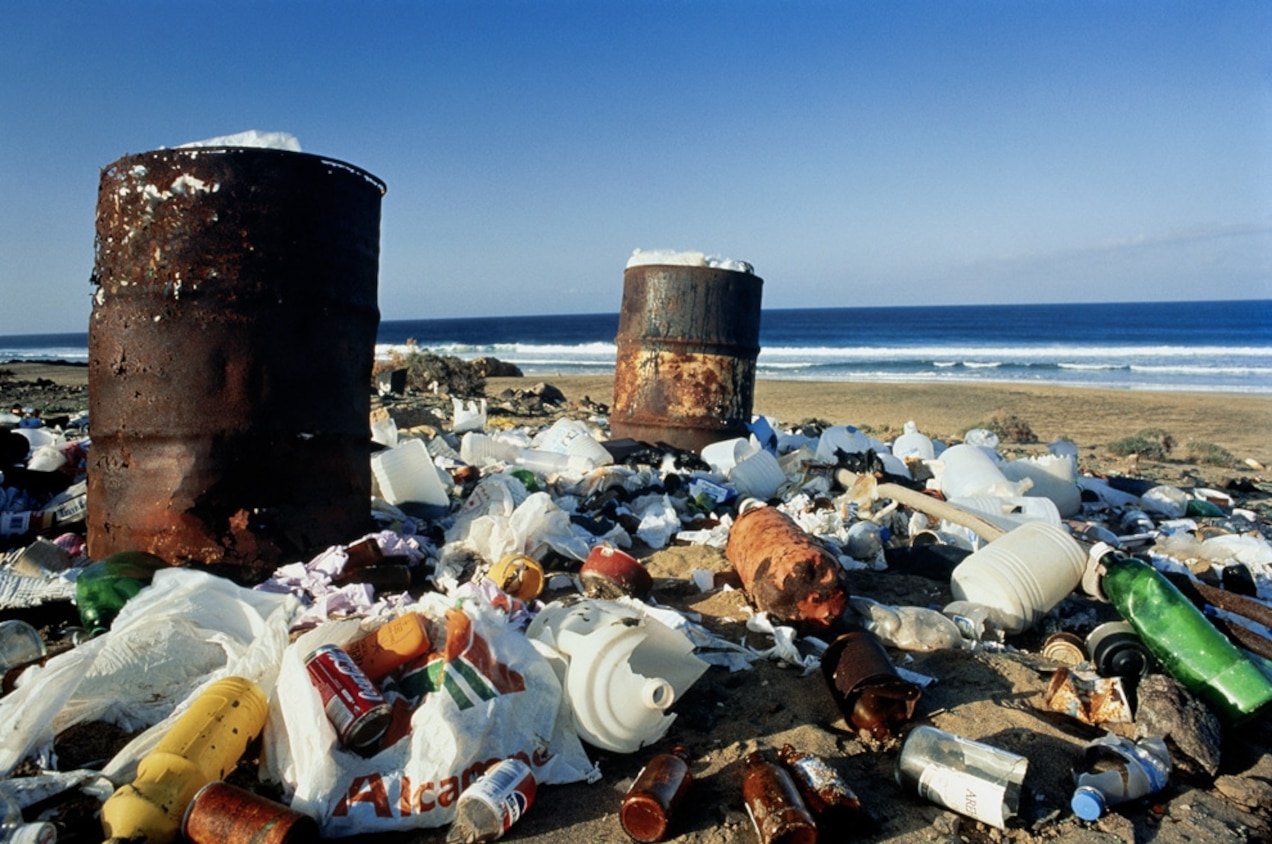
Located halfway between California and Hawaii, there lies the drifting human debris known as the Pacific Garbage Vortex, its estimated size twice that of Australia. It doesn’t exist as a single entity, but rather as a vast garbage soup, much of it just below the surface, coagulating in ocean currents as a defiantly boundless  repository of ship castoffs and swept-up coastal discharge, the vast majority of it plastic substances.

Reliable aerial and trawl estimates (2015-16) inform us that 1.8 trillion plastic pieces are floating in the patch, equivalent to 250 pieces of debris for every human in the world. That was six years ago. Currently, 1.15-2.41 million metric tons of plastic are added each year (theoceancleanup.com),

Plastic infiltration of our oceans poses an immense menace to sea life. The International Union for Conservation of nature (IUCN) reports that 700 marine species have encountered sea debris, 17% of them endangered species, among them, seals, dolphins, and sea turtles entangled in abandoned fishing nets. Many sea creatures mistake the plastics for food, imperiling themselves and their offspring.

01becdf4-e2b3-4ad7-a46f-784bc60ab960

Collectively, these plastics block sunlight to the plankton and algae below, which are the primary feed resources of fish and turtles. Ultimately, this has consequences for predators like sharks, seals and whales. A world without whales? Our grandchildren reduced to viewing photographs?

Bad as all this is, the Pacific Garbage Vortex isn’t an isolated phenomenon. It’s simply the biggest. Located in the Pacific, Atlantic and Indian oceans, these vortexes manifest humanity’s global trashing of the ocean:

Is there any hope at all? Only if we reduce our use of plastics, a formidable challenge in an economy built on their low costs, or adopt biodegradable alternatives that are no easy sell. It’s simply cheaper to rely on plastics, a carbon-containing product present in the clothes we wear, our computers, laundry detergent, and even our children’s toys, ad infinitum. Plastics tend to ultimately find their way into landfills. And yes, into our oceans.

Greenpeace laments that “failure to deliver a treaty at these talks jeopardises the livelihoods and food security of billions of people around the world.”

Sadly, I find their admonition, though well-meaning, typically anthropocentric in its solely human focus, or the essence of what birthed these vortexes in the first place.

Have sea dwellers, many of them preceding Homo sapiens, no right to a space of their own?
–rj


Dickinson’s “Tell all the truth but tell it slant”: A Reading

Dickinson House (Courtesy: Dickinson Museum)

Tell all the truth but tell it slant —
Success in Circuit lies
Too bright for our infirm Delight
The Truth’s superb surprise
As Lightning to the Children eased
With explanation kind
The Truth must dazzle gradually
Or every man be blind.

This poem, widely read, typically exhibits Dickinson’s syntactical subtleties, meriting close, repeated readings.

At its primary level, it counsels the circuitous in communicating with others in difficult circumstances: “Tell all the truth but tell it slant.” “Slant” connotes the angular, or indirect, anticipating the sun and lightning analogies in the lines that follow.

Just as we cannot view the sun directly, so it is with harsh realities that need filtering, given the “infirmity,” or sensitivity, of humans unable to absorb truth undiluted: “Success in Circuit lies/Too bright for our infirm Delight.” Although the sun isn’t specifically mentioned, “bright” confirms its presence..

Likewise, to disclose the truth directly is analogous to the lightning’s surprise flash, frightening children, whose anxiety is only eased with softened explanation: “The Truth’s superb surprise/As Lightning to the Children eased/With explanation kind.”

The poem’s final lines reiterate the poem’s opening counsel, while warning of the consequence of not doing so: “The Truth must dazzle gradually/
Or every man be blind.” That is, we may otherwise do greater harm.

Ethicists may argue with the seeming absolutism in the all of “Tell all the truth.” Surely we can think of circumstances that demand otherwise. A lot depends on the motives we bring to troublesome situations, whether centered in ourselves or on others. Dickinson unequivocally chooses the latter, with kindness the arbitrator.

Dickinson was hardly naive. As poet Camille Dungy observes, “We can’t truly know comfort unless we know its opposite. Writers who think carefully about how to render the world in a truthful and realistic way have to handle, bare-handed and, thus, ever so carefully, the double-edged sword of comfort versus discomfort” (poetryfoundation.org).

We would be wise to adopt a cultural approach as well. We’re not sure of when Dickinson wrote this poem, but most scholarship suggests between 1858 and 1865. In short, it may have been written in the context of America’s Civil War. The conflict was cataclysmic, with an ultimate casualty toll of 600,000. The majority of leading scholars think she internalized the struggle to reflect her psychological wrestlings.

This isn’t to say she wasn’t mindful of the war’s gruesome realities. We have, for example, her “It Feels Ashamed to be Alive” poem, which opens: “It feels a shame to be Alive—When Men so brave—are dead.” We also have her letters and journal. It’s conceivable Dickinson had in mind families and friends receiving grim news of their loved one’s demise. Amherst was a small, close-knit community.

But the poem can also be read in quite another way as Dickinson’s aesthetic of concealment, or how poetry should be written. Good poetry should show, not tell; hint, but not reveal, a credo consistently realized in her poetry. Sound poetry engages readers in discovery, fashioning a poem’s constituents into pattern, yielding coherence, or like pieces of a puzzle, fitting into place.

Through such methodology, poetry acquires universality, the reader becoming the text. This doesn’t mean readers can impose any meaning. On the contrary, astute readers map a poem’s clues and observe its boundaries. Like a good mystery, the clues are planted, awaiting their discovery.

With this in mind, it’s conceivable we can pursue the poem at a metaphysical level as well. What is this “truth” to be shared cautiously? Has it to do with the mystery of Deity’s doings; His ways beyond our “infirm Delight,” or capability to comprehend, necessitating Divine truth be a fragmentary unfolding?

In both Judaism and Christianity, the Shekinah, or divine immanence, is traditionally associated with light. Light dominates this brief poem: “too bright”; “lightning”; “dazzle.” Did Dickinson have in mind Exodus 33:20?: “And he said, Thou canst not see my face: for there shall no man see me, and live” (KJV).

A devotee of the metaphysical poets, Dickinson may have read Henry Vaughan’s “There is in God (some say) a deep, but dazzling darkness” (“The Night”). Did she have this in mind in her summation, “The Truth must dazzle gradually/Or every man be blind”?

We know that Dickinson wrestled with traditional Christianity and a Deity allowing suffering and death. She did not attend church. In an earlier poem, “There’s a certain Slant of light,” she writes of a light “That oppresses, like the Heft/Of Cathedral Tunes/Heavenly Hurt, it gives us.”

Less than a dozen poems of 1779 total were published in Dickinson’s lifetime. This poem was published in 1890, four years after her death. It remains one of her most popular poems.

–rj