An Owl’s Story: Carl Safina’s Alfie and Me

There exist those books you wish wouldn’t end. Carl Safina’s Alfie and Me: What Owls Know and Humans Think was that kind of book for me.

I had read Safina’s excellent View from Lazy Point several years ago, impressed with its detailed oberservations of wildlife and an arctic indigenous community across four seasons. That same concern for indigenous well-being and the plight of animals in a changing world continue with Alfie and Me.

Safina, a widely published ecological author and Endowed Professor of Nature and Humanity at Stony Brook University, is an expert in marine biology and recipient of many honors, including a MacArthur Fellowship, sometimes dubbed “the genius grant.”

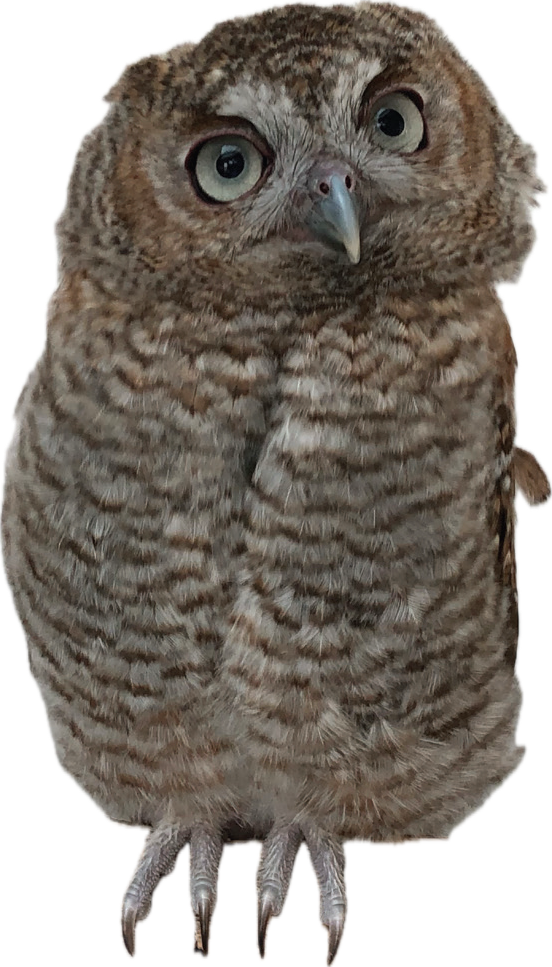
In all his writings, Safina’s focus is on how humans relate to nature, a theme manifestly central to Alfie and Me, chronicling the story of an orphaned Eastern screech owl found in Safina’s Long Island backyard in 2018. Over the course of eighteen months, Safina and his wife, Patricia, nurtured the owl—whom they named Alfie—until her eventual release, creating a rare, intimate portrait of interspecies connection and nature’s resilience.

Safina becomes nearly a helicopter parent, monitoring Alfie’s daily development, torn between fostering her independence and protecting her from the harsh realities of the wild: “… I knew—as she did not—the relative meaninglessness of a life without risks.” An estimated two thirds of young screech hours die shortly after leaving their parents’s nest.

I found myself anxious for Alfie’s survival. Would she learn to fly, to hunt, to mate? Could she survive storms, drought, and the many predators that lurk in her world?

Species survival today depends not only on healthy ecosystems, but increasingly on humans recognizing their relationship with nature as essential to mutual survival.

Safina criticizes Western philosophy for severing this connection, beginning with Plato’s split between the material and spiritual worlds—deeming the material inferior and ultimately fueling nature’s exploitation: “Plato and his followers were perhaps the first people to feel revulsion toward the world. By forever separating our material world from the realm of perfection, Plato propounded a stark dualist doctrine,” Safina says.

For Safina, “This might be the most consequential idea in the history of human thought, its implications almost literally Earth-shattering. Most fundamentally, we are left with: an existence at odds with itself.”

Descartes and Bacon subsequently embodied a modern mechanistic view of nature, oblivious to nature’s sanctity and evolutionary intelligence, leading to its objectification. “The great blindness of the West is to grope the world as inventory,” Safina writes.

In contrast, Safina draws richly from Eastern traditions, which emphasize the unity of all life and the reverence owed to the source from which we came. Although his book is replete with references to Hindu, Buddhist, and Taoist thought, he finds Confucianism especially compelling for its focus on relationships.

Safina also turns to Indigenous cultures as contemporary models of living in harmony with nature. Their ways often involve mindful observation and sustainable stewardship rooted in mutual respect: “For most of human history, Native peoples, more intimate with their existence than we with ours, perceived that Life and the cosmos are mainly relational,” Safina says.

Reading Alfie and Me, I couldn’t help but think of the estimated one billion birds projected to die globally in 2025. According to the Audubon Society, North America alone has lost 25% of its bird population since 1970—about 3 billion birds. Contributing factors include climate change, deforestation, pesticides, habitat destruction, urban structures, insect decline, and free-roaming cats.

Safina’s book appeared in 2023, or before the current avian flu outbreak, which over the past 18 months has led to the confirmed deaths of millions of wild birds in North America—many of them common backyard visitors. The virus has now reached poultry as well, despite the culling of over 166 million birds. A future in which birds no longer sing at sunrise, once unthinkable, now feels disturbingly plausible.

This avian decline is largely human-made, driven by an economy that prioritizes profit over preservation

Why write about birds, some might ask. Shouldn’t human needs come first?

Safina answers with the words of Catholic monk Thomas Merton: “Someone will say you worry about birds: why not worry about people? I worry about both birds and people. … It is all part of the same sickness, and it all hangs together.”

Alfie and Me is not only a poignant narrative about an orphaned owl, but also a powerful meditation on our shared existence, affirming Safina’s truth: “that no isolated separation is possible. We are participant members in one existence—of life, of the cosmos, of time.”

–rj

The Lights Are Flashing Red

Famed entomologist E. O. Wilson passed into infinity in December, 2021.
He was 92.

I came upon him late in my life, but not too late for him to have left me with a reverence for his boundless intellect, inveterate inquisitiveness, and fervent championing of our fellow creatures, mostly outside human ken, myriad species vital to Man’s survival, yet victims of humanity’s arrogant trespass.

Recently, an extended research project, launched by the World Wildlife Fund, revealed that of the 32,000 species it analyzed, 69% of them are in decline. Shockingly, 2.5% of mammals, fish, reptiles, birds and amphibians have gone extinct just since 1970 (World Wildlife Report).

While species extinction surely is an integral fact of our 4.5 billion old planet’s history, the salient evidence of natural selection favoring those able to adapt to largely inveterate climate distillations, several near-Earth object (NEOs) visitations, volcanic acidification of oceans and acid rain, impacting land chemistry, their repetition has become marginalized by evolution’s new arbiter of destiny, homo sapiens.

“The message is clear and the lights are flashing red,” says WWF International’s Director General Marco Lambertini, one of the report’s authors.

Climate change threatens the next massive die-off, witnessed in every day record breaking temperatures, accelerating violent storms, rising sea levels, droughts, and massive fires.

Meanwhile, we continue to pour heat-trapping gases like carbon dioxide and methane into the atmosphere. All of this affects habitat, destroying the intricate ecological web that sustains us.

It doesn’t make for breaking news headlines, but should, that the Arctic
is warming four times faster than the rest of our planet, threatening the demise of the jet stream, resulting in still more climate instability.

We live our lives addicted to trivia, fingers in our ears, indifferent to the existential challenge that poses our extinction. It seems a human predilection to forfeit the future for indulgence in the ephemeral present. Rome burns while Nero plays his fiddle.

Thus far, efforts to mitigate climate change and restore balance have failed to achieve their targets. We even have a candidate running for the presidency who’s pledged to roll back environmental regulations.

Not to be outdone, we have President Biden’s recent approval of the Willow Project (March 1923), allowing ConocoPhillip’s massive oil drilling rights on Alaska’s North Slope in the National Petroleum Reserve, despite his campaign promise he’d prohibit drilling on public lands (The Willow Project).

We knew where Trump stood, but we trusted Biden, whose administration has also approved the auctioning off of 73 million acres of waters in the Gulf of Mexico to offshore oil and gas drilling interests, encompassing an area twice the size of the Willow Project (Common Dreams).

Universal human-induced loss of forest, wetlands, and ecosystems hastens the trajectory of apocalyptic consequence for future generations.

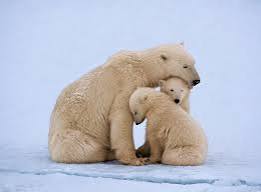
Meanwhile, beleaguered polar bears attempt to adapt, but aren’t succeeding. Given the melting ice, they cannot access their traditional foods, resulting in their numbers declining 30% since 1980 (Polar bear decline).

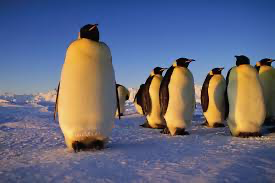
Penguins haven’t fared any better, their numbers declining up to 10% (Penguins declining).

Truth be known, we’re approaching a tipping point at which the ecosystem collapses.

E. O. Wilson rightly faulted humans for earth’s crisis: “Deeming ourselves rulers of the biosphere and its supreme achievement, we believe ourselves entitled to do anything to the rest of life we wish. Here on Earth our name is Power” (Half-Earth: our Planet’s Fight for Life).

Each species is its own miracle. By the century’s end, most of today’s faltering species will be gone:

No birdsong to greet the new day,
No crickets rubbing their wings;
An absence of croaking frogs at the pond,
Zinging dragonflies but memory.
Amid parched landscape, a wounding silence.

–rjoly

Everything’s on Fire: Devastation in Argentina’s Paraná River Delta

We’ve been hearing a lot about recent fires rampaging California, the “new normal” as they now call it. But the new normal is actually worldwide.

Just now, only because I read in Spanish daily, did I become aware of the widespread fires sweeping vast areas in South America that dwarf what’s been happening in California.

While most of you know about the Amazon fires in Brazil, I’ll venture only a few of you know about the vast Paraná delta wetlands of Argentina. In fact, I hadn’t previously heard of the Paraná, South America’s second longest river after the Amazon and eighth longest in the world.

As I write, multiple fires that began seven months ago continue to ravage this eco-sensitive marshland landscape, home to unique plant and animal life, with the smoke so intense it threatens the health of population centers like Rosario and Buenas Aires

Sadly, farmers and ranchers in the river’s Brazil basin have contributed to the fire menace and made things worse, lighting fires to clear land.

In Argentina, ganaderos, or ranchers, follow their example, annually igniting fires to regenerate grazing land and, so far, there isn’t any law to stop them in this country of heavy meat consumption and export.

Some have speculated arson by real estate speculators may be a contributory cause for this year’s fires. The land can be sold for real estate once the trees are gone. Two men have been charged with arson so far.

When rain does comes, it’s only in brief showers unable to penetrate the hardened, parched earth. While Environment Minister Juan Cabandié has openly accused ranchers of causing the fires, they deny it, arguing it isn’t in their interest and blaming the government for neglect instead.

As is, some 11,000 fires detected this year have razed an estimated 540 square kilometers of marshland, or three times the size of Buenas Aires.

Concurrently, the Argentine government is sponsoring a wetlands protection bill to protect the delta, but it must be approved by the Congress. As is, it lacks teeth. It doesn’t prohibit ranchers and farmers from their yearly ritual of burning grazing land.

Long term weather projections show little rain likely to occur. Meanwhile, some 750 unique animal species of the delta, already diminished by both climate change and humans, face imminent extinction.

–rj


China Destroys Ivory Stocks: Too Little too Late?

06sino-ivory02-blog480

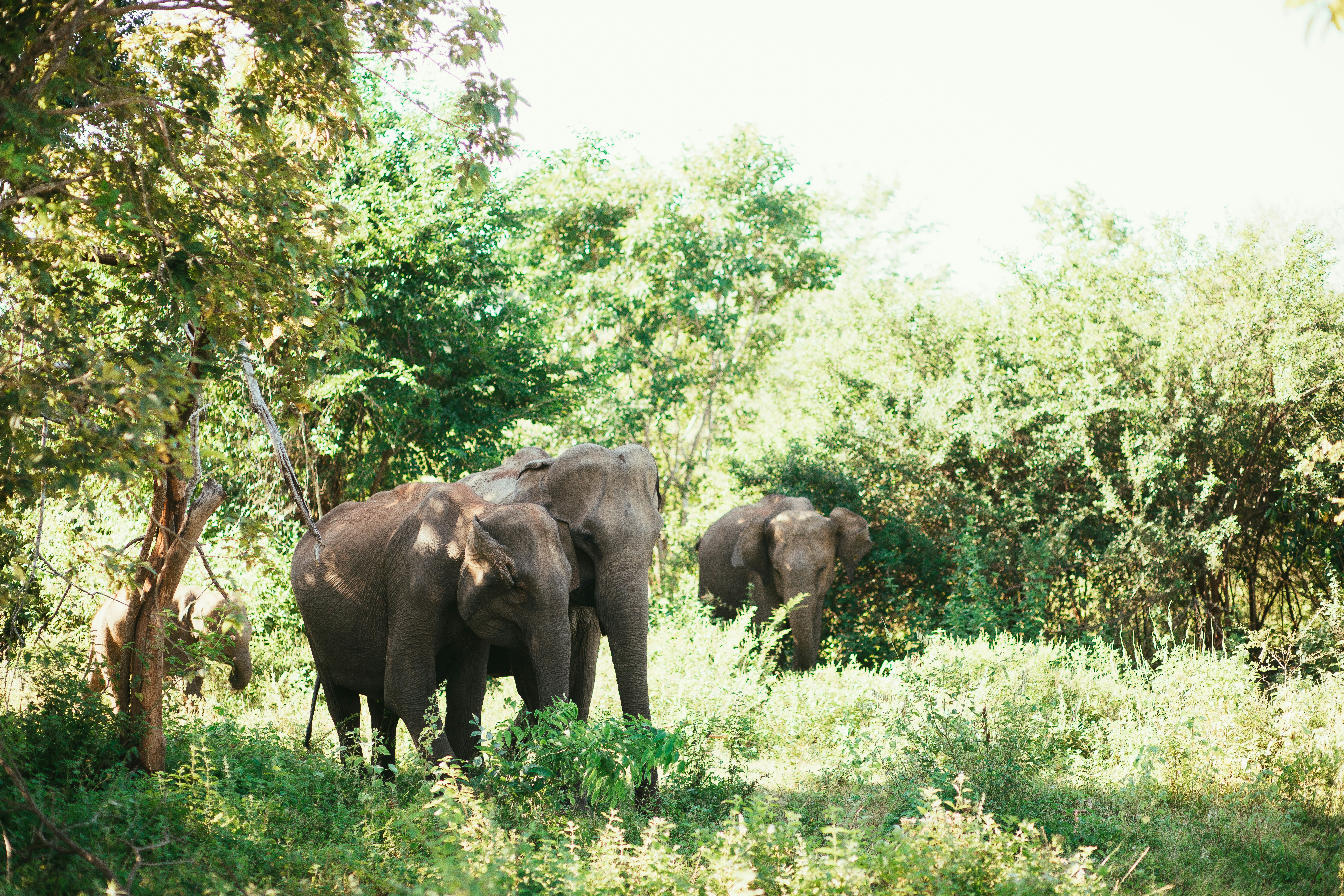
I’m pleased again at another good omen for the environment in learning of China’s destruction yesterday of six tons of seized ivory ornaments and tusks.  This is exciting, since China has been overwhelmingly the prime market for ivory, where it’s turned into trinkets and statuary, and it’s the first time China has done this.  Hopefully, it won’t be the last.  This comes on the heels of Tanzania’s recent destruction of four tons of ivory, adding up to about forty slaughtered elephants.  In addition to Tanzania, Kenya and Gabon have recently destroyed large caches of ivory.

Still, China has a long ways to go.  As reported in the NYT on Monday, The Wildlife Conservation Society says that there may be as much as forty-five tons in the total ivory inventory in China, not including Hong Kong.  Let’s face it:  ivory can be lucrative, fetching $1000 a pound.  In poverty stricken Africa, poachers in the field rarely command such profit, pocketed by sophisticated  black market smugglers, but minimally still incentive enough.  Elephant poaching is further exacerbated as the continent’s many warring factions use ivory sales to purchase arms.

What shocks me is our own large stash of ivory, with six tons of ivory destroyed last November.  I guess I shouldn’t be so naive.  We have a large Chinese immigrant community, especially on the West Coast, where demand for ivory, rhino horn, tortoise and shark fin can ratchet up lucrative profits.  In fact, we’re downright hypocrites.  The good old USA ranks second to China in consumption of illegal animal products, including not only those I just mentioned, but even tiger bone!  Nothing is sacred; nothing off limits for crime syndicates operating internationally.

Unabated, the trade will peter out in about ten years.  We’ll simply have run out of elephants, rhinoceroses, sharks and tigers.

But just maybe the window’s opened a bit with China’s move, offering a new vista of hope.  As China’s legacy of ancient wisdom has it, “The longest journey begins with the first step” (Lao Tzu).

–rj