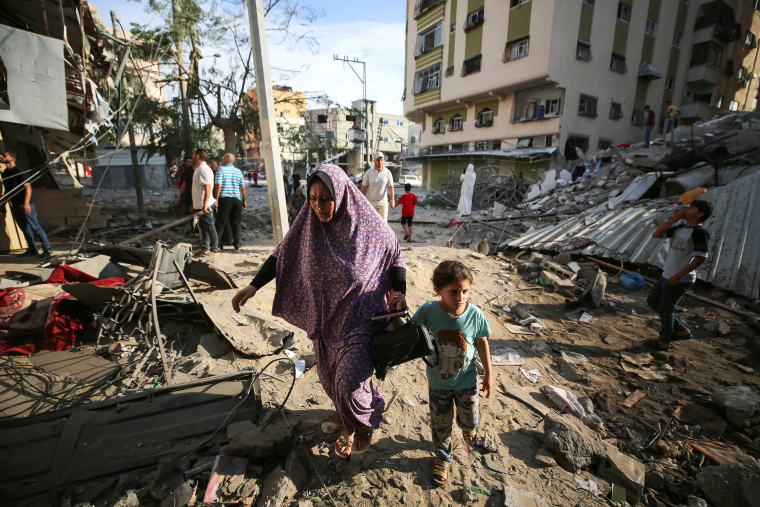
The Amazon, COP30, and Our Vanishing Future

It has barely made the headlines, but the UN’s COP30 climate summit is now underway in Belém, Brazil. COP—the Conference of the Parties under the UN Framework Convention on Climate Change—has met annually for three decades, each gathering framed as another decisive moment for the planet.

More than 100 American environmental leaders are in attendance. Missing, however, is President Trump, who still calls climate change a “hoax.” His absence is symbolic, but not surprising: it reflects a larger political reluctance to acknowledge the crisis unfolding around us.

Even among nations that accept the science, there is growing tension between the high costs of climate mitigation and the competing pressures of social needs. Yet this framing—climate action versus human welfare—is a false narrative. Climate disruption is already degrading food systems, water security, economic stability, and public health. Inaction is the costliest option of all.

COP’s central mandate is clear: limit global temperature rise to 1.5°C above pre-industrial levels, as pledged in the 2015 Paris Agreement. Countries submit national climate plans (NDCs), augmented every five years. But despite the Agreement’s “ratchet mechanism,” current projections put us on track for 2.5°C to 3°C of warming by century’s end.

At those levels, the world becomes unmistakably harsher: failing crops, drying rivers, rising seas, disappearing species, and regions becoming uninhabitable under extreme heat. And nowhere is the alarm more urgent than in the Amazon Basin.

I’ve been studying this region for years, most recently through an eight-week online course under the auspices of the University of São Paulo.

The Amazon is not merely a forest—it is one of Earth’s greatest climate regulators. Spanning more than seven million square kilometers and home to an extraordinary share of the planet’s animals and plants, it stores 150–200 billion tons of carbon in its intact ecosystems. It cools the continent, generates rainfall, and sustains the livelihoods of millions.

But the Amazon is weakening under relentless human encroachment: logging, mining, agribusiness, hydroelectric projects, roads, railways, and shrinking indigenous territories. Fourteen percent of its pristine forest has already vanished; another seventeen percent is degraded.

Scientists warn that if deforestation—now around 14–17%—reaches 20–25%, the forest may tip into irreversible decline, releasing vast stores of carbon and destabilizing global climate systems, including the Atlantic ocean currents that moderate Europe’s weather.

This would be more than a regional tragedy. It would be a global catastrophe.

The people with the most to lose are those who have protected the forest the longest. When Europeans arrived in 1500, 8–10 million indigenous people lived throughout the Basin. Today, only about 2–2.5 million remain, yet they still speak 300 languages across more than 400 groups. Their 12,000-year history of sustainable land management is one of humanity’s greatest environmental achievements—and one of its least respected.

Meanwhile, fossil fuel interests continue drilling and recording historic profits. Their influence hangs heavily over every climate summit, often shaping negotiations more than science does.

This is the dangerous paradox at the heart of COP30: we gather each year to declare urgency, even as our actions fall fatally short of what the moment demands.

The Amazon is nearing a threshold from which we cannot retreat. The window for preserving a habitable planet is still open, but narrowing fast. What we need now—what COP30 must deliver—is not another set of distant promises but a global commitment to end deforestation, accelerate renewable energy, and center indigenous stewardship.

The science is clear. The stakes are overwhelming. What remains uncertain is our political will.

If the world cannot act decisively now, in Belém—on the doorstep of the very forest that helps stabilize the Earth—then when?

—rj
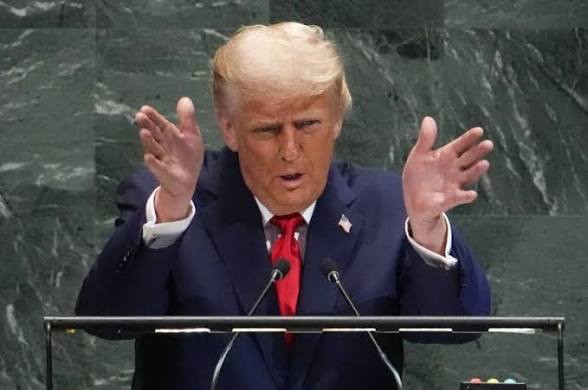
Mental Decline on Exhibit: The Spectacle of Trump at the UN

Trump’s address to the U.N. General Assembly last week, too long and consistent only in its rambling, narcissism, and cantankerous bombast, surely rates as one of America’s most embarrassing spectacles on display before world leaders. Clearly, we are witnessing a leader’s mental decline, posing grave danger, not only for our nation, but the world at large.

It began when he stepped on an escalator that stopped moving midway. Trump thought it not accidental.

Addressing the UN, Trump showed the world how to win friends and influence people:

“I’m really good at this stuff. Your countries are going to hell.”

Trump’s your consummate ego-maniac. It’s always about him:

“No president or prime minister. And for that matter, no other country has ever done anything close to that restoring stability and I did it in just seven months. It’s never happened before. There’s never been anything like that. Very honored to have done it.”

In his megalomania, Trump presented himself as the world’s greatest peacemaker, no thanks to the UN:

“I ended seven wars, dealt with the leaders of each and every one of these countries, and never even received a phone call from the United Nations offering to help in finalizing the deal. All I got from the United Nations was an escalator that on the way up stopped right in the middle. If the First Lady wasn’t in great shape, she would’ve fallen. But she’s in great shape…. Everyone says that I should get the Nobel Peace Prize for each one of these achievements….”

On climate change, ignoring decades of peer-reviewed science, Trump excoriated renewable energy efforts as a “green scam.”

So much of what Donald says isn’t easy reading. Take this example from his UN speech:

“Nothing bad can happen, it can only good happen.”

I ask myself, How did this guy get into Penn’s prestigious Wharton School of Business? I remember a former Wharton prof allegedly saying he was “the dumbest student” he ever had (William T. Kelley, Wharton Professor of Marketing). Wharton was selective in those days, taking in transfers by the bushel, including Trump, a Fordham student. And then there were the family connections. For the record, Trump didn’t graduate with honors.

Trump displays all the earmarks of lacking impulse control. I used to give him a pass—ok, he’s impulsive—my mistake, only to realize this is a psychological disorder that can lead to harmful consequences, if not professionally addressed.

Think about it, an impulsive man in thought and action able to trigger a nuclear response. He called war hero John McLain “a loser.” Biden is “sleepy Joe.” Zelensky is “ungrateful.”

We have on our hands a president who skips his morning intelligence briefings, runs government by the seat of his pants. Acts on whim.

For 57 minutes before the UN, he rambled on—angry, vengeful, inflammatory. His speeches grow darker in their menacing.

Essentially, he was telling UN delegates they could go to hell.

We’ve had presidents who’ve been physically impaired (Wilson, FDR), but never one mentally incapacitated.

Some propose impeachment. That’s been tried twice, but with no result, Republican lackeys to the rescue.

There does exist the 25th Amendment allowing for removal of a president unable to govern.

Either way, impeachment or invoking the 25th, we await the midterms, expectant of a substantial majority who will act this time to assure the safety of its citizenry and restore dignity to our nation and garner respect from world leaders.

RJ

The Truth Must be Told: The Tragedy of Gaza


As we all know, several thousand Gaza Hamas fighters bulldozed their way through an Israeli security fence on October 7, 2023, and committed some of the most barbaric crimes against humanity not seen since Cambodia, Rwanda, and the Holocaust.

More than 1400 Israelis died, most of them civilians, some slaughtered in nearby fields while celebrating the ending of Sukkot, an annual fall event in the Jewish calendar; others, in their beds on nearby kibbutzim. Reports are that Hamas insurgents raped, pillaged, and slaughtered even children, including babies. More than 200 civilians and soldiers were taken hostage, including citizens of other countries. Israeli wounded stands at 4600.

The Israeli response has been unceasingly withering in Gaza, Prime Minister Netanyahu declaring war on Hamas, calling up 300,000 reservists, bombing Gaza’s civilian infrastructure daily, and ordering one million Gaza civilians to evacuate to southern Gaza.

A land invasion of Gaza by Israel Defense Forces (IDF) is anticipated. They will face up to 50,000 Hamas fighters, dispersed in a labyrinthian tunnel weave, threatening a Stalingrad consequence of casualties in house-to-house fighting. American pressure has slowed any launching of an immediate invasion, but not halted the daily bombing, killing 700 civilians in the last twenty-four hours, half of them women and children.

Hezbollah, to the north in Lebanon, have been firing rockets into nearby Israeli border towns, forcing their evacuation and possibly opening a second front in a dangerously escalating Middle East conflict. Iran has pledged to intervene if Israel launches a land invasion of Gaza.

In the meantime, the death toll of Gaza civilians now exceeds 5,000, including more than 2000 children, the cut off of food, water, and energy to Gaza, the forestalling of shipments of humanitarian aid from Egypt, which threatens the closure of hospitals treating thousands of wounded civilians. Mass starvation and disease looms as an aftermath, Israel insisting that hostages be released, despite international calls for restraint and observance of humanitarian values.

Recently, a Christian hospital in Gaza came under rocket attack, killing 500 people among those taking shelter. International intelligence indicates it was an errant Hamas rocket that caused this tragedy. Nonetheless, the World Health Organization has documented 171 Israeli attacks on health care in the occupied Palestinian territory,” killing 473 health workers.

As I write, unrest continues on the West Bank, with some 100 Arab protestors killed. A pending historic security alliance has been withdrawn by the Saudis and Israel’s peaceful relationship with Jordan has been strained. Settler crimes against West Bank farmers have been chronicled over the years, with killing of livestock, destruction of olive groves, and slaying of those who resist.

The U.S. response has been typical, Biden ordering two aircraft carriers into the gulf and threatening to intervene should Hezbollah open a second front.
It has called for a two state settlement for many years, yet overlooked Israeli intransigence. It gives $3 billion in aid annually to Israel and recently concluded a $37 billion loan agreement in military aid. Israel will have access to the F-35, the world’s most advanced fighter jet.

At home, dissenters are regaled as antisemitic. Many, including Democrats, have called for disbandment of Palestinian student campus organizations and denounced the growing Leftist faction in the Democratic Party that includes Bernie Sanders. Frenzied Republicans, increasingly resistant to continuing aid to Ukraine, have no difficulty supporting huge expenditures to Israel. Lindsey Graham says, “Do whatever the hell you have to do to defend yourself. Level the place!”

There is, in short, a context for Arab and Palestinian resentment and outburst.
We seem to have learned nothing from the rage that lay behind the 9/11 horror. We began two long wars, fought by America’s poor White and Blacks. We lost both. Did Vietnam teach us nothing?

Do we lust for another war? Have we forgotten George Washington’s warning to avoid “entangling alliances”? “The nation which indulges toward another an habitual hatred or an habitual fondness is in some degree a slave” (Farewell Address).

UN secretary-general António Guterres speaks for me: “Hamas did not happen in a vacuum. The Palestinian people have been subjected to 56 years of suffocating occupation.” He likewise condemned Hamas: “No injustice to the Palestinians justifies the appalling attacks by Hamas.”

The Israeli response to Guterres? “Due to his remarks we will refuse to issue visas to UN representatives” (Gilad Erdan, Israel ambassador to the UN). “The time has come to teach them a lesson. Guterres should resign.”

Hamas was elected to power in 2006. There have been no elections since. Does “Israel’s right to defend itself” (Biden) justify its war on Gaza civilians, half of whom are children?

Ultimately an apartheid Israel will reap its own folly. Israel’s growing Arab population will soon outnumber Israelis. It will become a South Africa before Nelson Mandela’s victorious crusade for a liberated biracial nation enjoying equity.

-rj

Coming to Our Senses

Image result for amphibiansindangerDo you remember any of those asteroid disaster movies? Depending on how you do the counting, there were at least seven of these goosebump films, assuring you nightly bouts with insomnia. One of my favorites has to be Meteor (1979), staring Sean Connery. That ominous prelude:

Its power is greater than all hydrogen bombs. Its speed is higher than any rocket ever conceived. Its force can shatter continents. Its mass can level mountain ranges. It cannot think. It cannot reason. IT CANNOT CHANGE ITS COURSE.

In the movie, the danger was sufficient that both the United States and Soviet Union suspended their cold war animosity to mutually merge efforts to ward off an impending doomsday scenario.

Today, Earth faces an apocalyptic fate all too real, fostered not by a fast approaching asteroid straight out of science fiction, but largely of our own making in real time: climate change.

It’s difficult to believe that there are skeptics about something seemingly so obvious and menacing like climate change. A bit like believing the earth is flat. Several months ago, I actually had my barber tell me the earth was flat and I nearly fell out of the chair!

Between May 23 and May 26, or just a few days from now, elections for the European Parliament will take place. As a prelude, the German populist party, Alternative für Deutschland (AfD), hopes to augment its appeal by stridently dismissing human caused climate change as Klimawandelpanik (climate change panic). They are backed by the European Institute of Climate and Energy (EICK), a consortium of conservative scientists, with links to their counterparts in the United States.

In America, we of course have Donald Trump leading the anti-climate change brigade. Additionally, there are entities like the Committee for a Constructive Tomorrow and the Heartland Institute, the latter funded by fossil fuel interests.

They argue that human induced climate change is simply an unsettled matter, with no definitive science resolving the issue. To buttress their claims they like to draw on the The Petition Project that presents 31,000 signatories from the science community, supporting the conclusion that “there is no convincing scientific evidence that human release of carbon dioxide will, in the foreseeable future, cause catastrophic heating of the Earth´s atmosphere” (Petition Project).

In rebuttal, co-authored consensus studies of climate change by seven eminent scientists averaged a 97% probability of human causation (John Cook, et al). I should point out that far more than seven scientists have underscored the human factor. What happens is that when research establishes probability, scientists move on. Why belabor the obvious?

And then there’s the science of climatology, which exceeds meteorology, the latter fairly reliable for short term forecasts we’re accustomed to getting daily on our TVs or smart phones. Climatologists, in contrast to meterologists, can pickup likely long term weather patterns; let’s say, for example, fifty years into the future through applied physics, computer models, and statistical analysis. Overwhelmingly, given the current projections of rising atmospheric temperatures, the future weather landscape poses survival implications for a vastly changed earth.

Even when we humans accept climate change as a reality (very true these days in Europe), we’re wired through evolution to take stock of palpable, more immediate threats such as job loss, divorce, a declining economy, or possible physical danger such as a street mugging, not abstract, long-range scenarios. It doesn’t affect me now, so why bother?

We judge weather short-term through memory and emotion, not seeing developing long term patterns. Climate change thus poses a peculiar, subtle kind of threat, silent, ubiquitous, insidious, and unrelenting.

In the meantime, we know that climate change is accelerating with devastating consequences and that we are its seminal source. We’ve had several recent United Nation reports on the imperiled status of the Earth, but now comes its sobering May 6, 2019 findings:

1. One million of some 8 million plant and animal species are on the verge of extinction. Flora and fauna that form vital components of an ecological complex vital to our survival should be as imperative a priority as climate change. 66% of marine life and 75% of land environments have been “severely altered,” according to the report. Ten percent of insects, 40% of amphibians, 33% of marine mammals, and a third of reef-forming corals face extinction.

2. The impact of human population growth with its fossil fuel dependence,, urban growth, deforestation, expanding agriculture, excessive meat eating, ruthless plundering of exotic species, along with pollution, drives climate change and species extinction.

Meanwhile, Donald Trump has taken America out of the Paris Treaty, which at least attempted to set goals for diminishing carbon release into the atmosphere, and surrounded himself with lackeys denying climate change.

Concurrently, the Arctic and Antarctica continue their meltdown, the seas keep rising, and submerged coasts proliferate. Our oceans, covering 71% of the earth’s surface, grow polluted with human contaminants, much of it plastics. Alarmingly, water temperatures are rising, imperiling the Gulf Stream and Humboldt current on which much of Europe and the United States depend as moderating influences on climate.

Forest fires and drought have become common calendar features, not only in California, but globally. Heat waves scorch Siberia, while record floods inundate Midwest farmlands and hurricanes intensify and become more frequent.

Unfortunately, the seeds of our demise are primarily fueled by market economies with their dependency on growth, leading to still further decimation, not only of Nature, but from the economic inequity that results. Oxfam tells us that in 2016 the wealthiest 62 people owned half as much as the world’s poorest people.

Desperate people worry about their immediate needs, not nature. They farm animal sanctuaries, log and burn forest to expand grazing and plant palm plantations, fish the seas to exhaustion, poach elephants, rhinos and other game.

Alarmingly, a current 2019 Pew Research Center poll shows climate change hovering next to last place as a bottom priority with the economy, health care costs, and education taking the top tiers ([https://www.people-press.org/2019/01/24/publics-2019-priorities-economy-health-care-education-and-security-all-near-top-of-list/]

In America, some twenty Democrats have announced their candidacy for the presidency, yet only two as of this writing have a defined strategy for combating climate change! The leading candidate, Joe Biden, still finds a place for coal, natural gas, and nuclear energy. He seems not to have heard of the Green New Deal (GND), our best shot yet at slowing both climate change and eliminating the income disparity emanating from an exploitive economy dependent on fossil fuels.

I worry about my grandchildren. What kind of a world are we about to bequeath them?

If we can’t come to our senses, give-up our selfish behavior, change our priorities, persist in denying the seriousness of climate change and our complicity, then we are indeed in trouble, the quality of life itself profoundly diminished, if not imperiled.

As Mark Twain memorably put it, “Better to build dams than wait for a flood to come to its senses.”

–R. Joly