
Small Changes, Big Results: Lessons from Atomic Habits

I’ve finally bitten the bullet and started reading James Clear’s Atomic Habits, the celebrated bestseller that has sold over 25 million copies and been translated into more than sixty languages.

I rarely read self-improvement books—not because I’ve arrived at perfection (far from it), but because I gravitate toward literary and intellectual works, and leisure time is finite. Still, Atomic Habits begins with such clarity and momentum that I can already tell it will be a quick read for me—simply because I can’t put it down.

The title itself hints at the premise: small, almost imperceptible changes that compound over time. Baby steps, if you will, that quietly evolve into daily discipline and, eventually, a better self. I’ve long believed that we can’t really make friends with the outer world until we make friends with ourselves, and Clear’s approach aligns with that idea.

Go to bed a little earlier, away from blue screens. Make your bed when you rise. Keep your bathroom tidy. Simple acts, but ones that generate momentum and a sense of self-respect. Want to read more? Start with a single page. Avoiding exercise? Take a five-minute walk. Clear gives modern life to an ancient axiom: “The longest journey begins with a single step.”

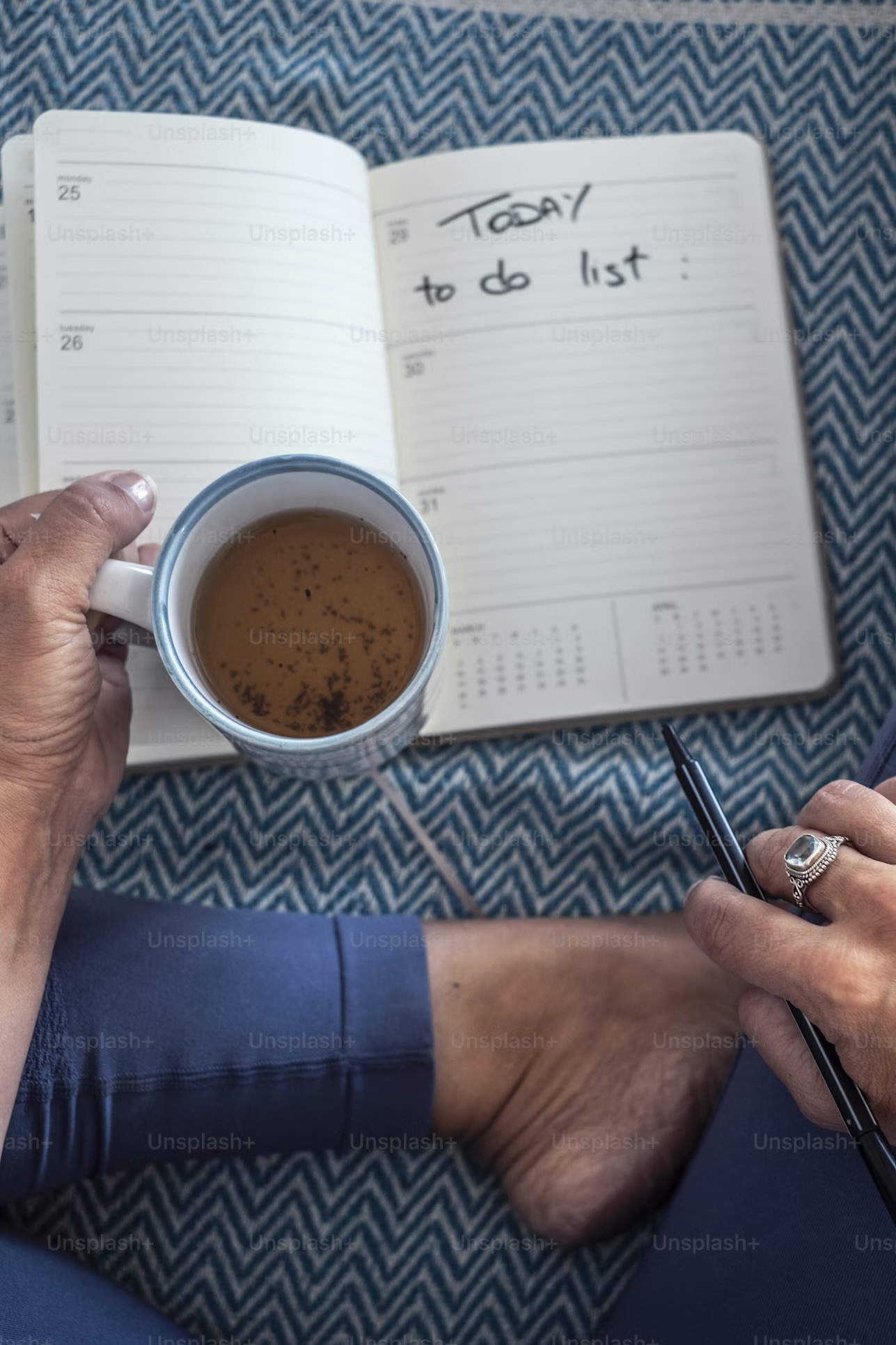
This is one of those books I’m reading with a journal nearby, interacting with the text—even if only a paragraph at a time. That, too, is a habit I know would enrich my life, but one I’ve too often postponed.

The irony is that when we fail to act on habits we know would improve our lives, the result isn’t neutrality—it’s to sour on ourselves.

Being up in years, my gray matter has shifted. Memory doesn’t cooperate the way it once did. There was a time I could glance at a list of twenty French or German words and walk away minutes later with them securely lodged in mind. No longer.

That frustration nearly convinced me to abandon my desire to read in Italian. But Atomic Habits reframed the problem: it isn’t the goal that matters so much as the process—where I am today versus where I was yesterday. Incremental steps still count. And so I persist with Italian, imperfectly, patiently.

It’s time for breakfast now—but not before I make my bed.

—rj
Books I Read in 2025

Byatt, A.S. Possession.

Defoe, Daniel. Moll Flanders.

Grant, Richard. Dispatches From Pluto: Lost and Found in the Mississippi Delta.

Haruf, Kent. Plainsong.

Hemingway, Ernest. A Moveable Feast. 

Knaussgaard, Karl Ove. My Struggle. Bk. 1.

Knausgaard, Karl Ove. My Struggle. Bk. 2.

Knausgaard, Karl Ove. My Struggle. Bk. 3

Knausgaard, Karl Ove. My Struggle. Book 4.

Kristof, Nicholas. Chasing Hope.

Landon, Brooks. Building Great Sentences: How to Write the Kinds of Sentences You Love to Read.

McCarthy, Cormac. All the Pretty Horses.

Mitford, Jessica. Hons and Rebs.

Rufo, Christopher F. The Cultural Revolution: How the Radical Left Conquered Everything.

Salina, Carl. Alfie and Me: What Owls Know, What Humans Believe. 

Sontag, Susan. Regarding the Pain of Others.

Sumption, Jonathan. The Challenges.

Woolf, Virginia. Diary, 1918-41.

Finding New Ways to Choose Books I Want to Read

Every New Year’s Day for the past six years I’ve posted on Brimmings my annotated recommendations for the finest fiction and nonfiction reads. I spend hours culling my lists from authoritative sources. I give emphasis to canonical works, both domestic and international—books intellectually stimulating, challenging, and broadening, the kind that will still be read generations hence. Often one of my criteria has been to fill gaps in my own reading, those books I should have read long ago, but somehow missed.

But lately I’ve been musing on a new way of choosing books—more personal than public, more in keeping with my desire to read systematically, to fill in the areas I don’t know well but should.

While my published lists have value, they fall short of providing full acquaintance with an author through a single recommendation. A fragmented forest, bisected by a highway or development, comes to mind—isolated stands of trees cut off from the territorial expanse essential for their flourishing.

It used to be that when I encountered a great writer for the first time, I would read five books: two about the author (often biographies), and three by the author. It worked well—Tolstoy, for example.

But now I want to do better still.

Perhaps I could read not only by author but by theme—a focus on, say, the environment, doing a minimal five books, maybe beginning with the late E. O. Wilson, who never disappoints, or the sagacious Carl Sagan. Reading only The Great Gatsby hardly gives one the fullest sweep of Fitzgerald’s range and mastery. It’s like movie buffs: if you admire Tom Hanks, you don’t stop at one film.

To really round out my education, I should read chronologically, starting with the classics. I’ve read and taught Euripides’ Medea, but it’s only one play—nineteen of his tragedies survive.

So yes, I can focus on an author or a theme—or read chronologically across disciplines.

Here’s another approach: why not read geographically, and I mean largely internationally? I know so little of Chinese literature, philosophy, and culture—the same for India and Japan.

Or I could venture a European country that most readers overlook—Finland, for example, a nation whose people are addicted to both writing and reading, dark interminable Arctic nights surely contributing. I already have Finland on my list.

I’ll still publish my annual New Year’s list, but when push comes to shove, know that privately I’ll be trekking the road not taken.

–rj