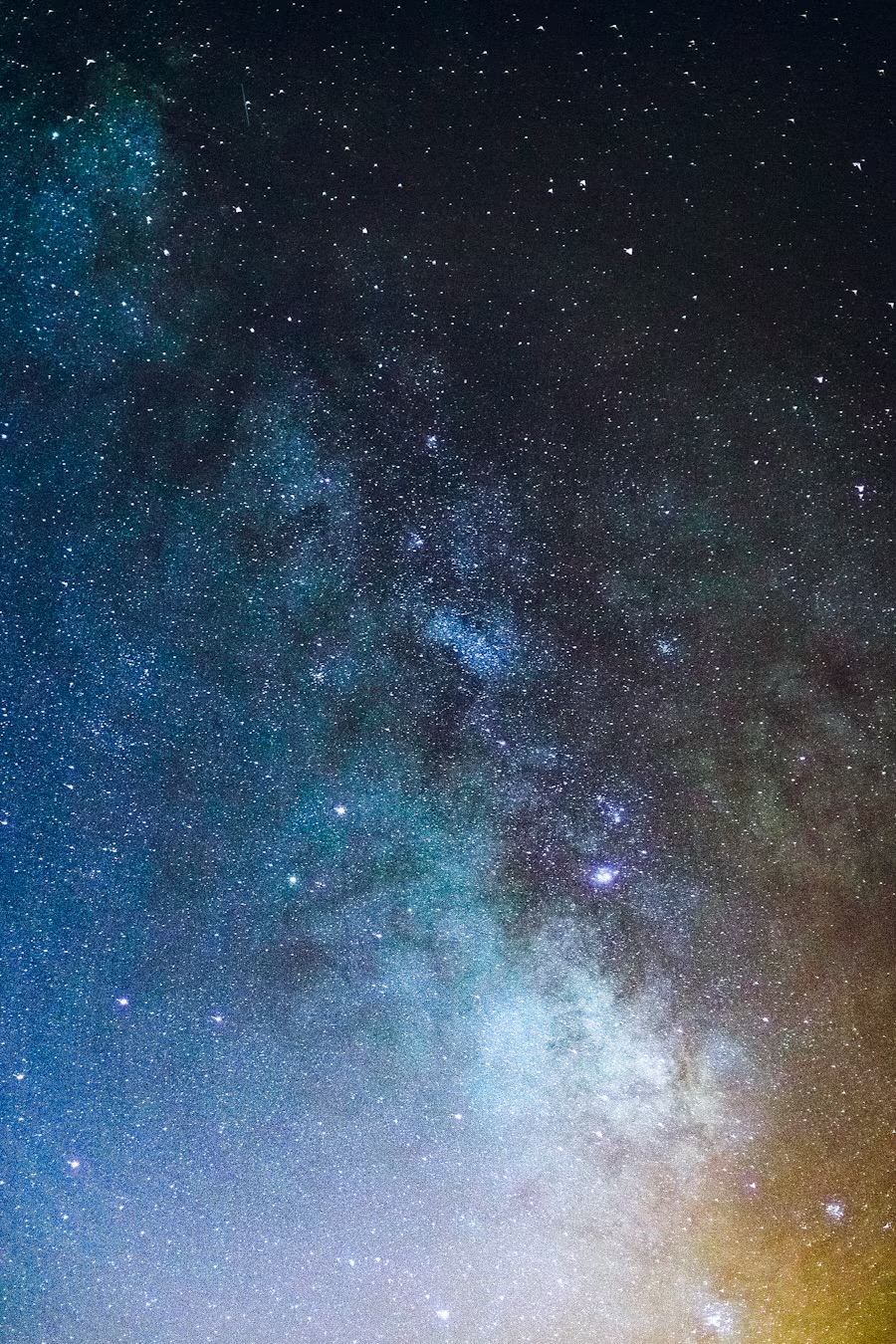
Our universe is mind-boggling in its vastness and mystery. Astronomers estimate it contains on the order of a septillion stars—roughly a 1 followed by twenty-four zeroes—though such figures apply only to the observable universe, bounded by the reach of our most powerful telescopes.
Though stars appear to us as ageless fixtures of deep time, they too—like all things—have beginnings and endings.
Our universe itself burst into being some 13.8 billion years ago. It continues to expand as galaxies rush away from one another, yet it will not expand forever in any form recognizable to us. Ultimately, it will be unable to sustain the structures that make matter—and life—possible.
How it ends remains a matter of fierce conjecture. The leading scenario suggests that as galaxies drift ever farther apart, they will fade beyond visibility; their stars will exhaust their fuel, leaving space cold, dark, and diffuse—a state known as thermodynamic equilibrium, or maximum entropy.
Sleep well, however. Such an ending lies far beyond the human temporal imagination.
Our sun, a middle-aged star at roughly 4.6 billion years old, has another four or five billion years ahead of it. Before its quiet extinction, it will grow hotter and brighter, boiling away Earth’s oceans and transforming the planet into a scorched desert—an irreversible greenhouse effect.
What truly unsettles me is the possibility that other universes may have existed before our own. Classical Big Bang theory posited a singular origin—a point of infinite density from which space and time themselves emerged. More recent theories challenge this view, suggesting instead that our universe may be one episode in an endless cycle of expansion and contraction.
The mystery deepens further. Might other universes exist now, alongside our own? Many physicists think so. If space extends infinitely beyond the observable horizon—currently about 46 billion light-years in radius—there may be regions forever beyond our capacity to detect, perhaps governed by laws of physics unlike our own.
The takeaway is not randomness, but recurrence: a cosmos governed by patterned transformation—birth, death, and regeneration repeating across unimaginable scales.
The end of Earth, and even of our universe, would not mark finality, but transformation.
Our suffering arises from clinging to permanence. The Buddha may have intuited this truth 2,500 years ago: reality is not static but dynamic—endless flux, expansion and contraction. Modern physics echoes the insight in the laws of thermodynamics: energy is neither created nor destroyed, only transformed; and all systems tend toward entropy.
We live, then, not in a fragile accident, but in a universe shaped by the regularity of change itself.
Ove Knausgaard, of My Struggle fame, has often spoken of his admiration for Dostoevsky, who with Proust and Joyce, comprise for him literature’s olympian triad.
While Dostoevsky has always had his admirers that include philosophers Wittgenstein, Heidegger and Camus, he has also had a principal detractor in Vladimir Nabokov who, in his Cornell lectures, dismissed him as a “claptrap journalist and a slapdash comedian, suffering from a fundamental “lack of taste,” manipulating readers through pathos.
In his recent New Yorker essay, “The Light of the Brothers Karamazov” (October 21, 2025), Knausgaard offers readers an informative social, cultural, and authorial milieu, helpful in deriving the novel’s meaning.
Knausgaard sees the novel as a chorus of perspectives, resistant to a gradient analysis. In short, the novel is open-ended.
There isn’t anything new about this view, which emanates from Russian critic Mikhail Bakhtin’s Theory of Polyphony and Dialogism, “a plurality of independent and unmerged voices and consciousnesses, a genuine polyphony of fully valid voices.”
Some will find Knausgaard’s approach the easy exit from the ambiguity that stalks this classic, each character virtually constructed apropos of a rubric.
Dimitri, immensely proud and of a violent temper, it is the military; for the middle one, Ivan, who is rational, cold, and analytical, it is the university; while for the youngest, Alyosha, who is warm, considerate, always accepting, it is the church. In addition, there is the servant Smerdyakov, presumed to be the illegitimate child of Fyodor and the intellectually disabled Lizaveta, nicknamed Stinking Lizaveta.
There exists the more traditional reading of the novel as a theological and cultural debate between Western and Slavic ways of life; of rationalism pitted against Russian spirituality, as represented in the Russian Orthodox Church.
In this view, Alyosha’s spiritual maturation and advocacy of active love constitutes the antithesis of his brother Ivan’s intellectualism, and clarifies the novel’s intended resolve, one latent with tension as to life’s purpose in the context of omnivorous suffering and evil. As Alyosha remonstrates in conversation with Ivan, “Love life more than its meaning.”
The Brother’s Karamazov is principally a wrestling with the problem of evil, the nemesis of theological belief.
In getting down to the roots of an author’s likely intent, a cultural or historical perspective is invaluable in keeping readers from superimposing their opinion on a text. Knausgaard is exemplary in providing this background,
Shortly before undertaking the novel, Dostoevsky’s epileptic son, nearly three years old, died following a three hour seizure. Filled with grief and guilt—his son had inherited his epilepsy— Dostoevsky began The Brothers Karamazov, his eleventh and final novel. The novel’s Alyosha bears the name of his son. Heeding his wife’s counsel, he sought the Church’s comfort, visiting the Optina Pustyn monastery and conversing with the monastery’s elder, Ambrose. Alyosha does the same.
Like the later Solzhenitsyn, and many Russians still, Dostoevsky was deeply devoted to the Russian Orthodox Church, and his Ivan incarnates the antithesis of Russian spirituality—Western in its secular rationalism, ultimately devoid of moral boundary. Dostoevsky is decisively slavophile.
I have been to Russia, visited Dostoevsky’s confining, upstairs apartment in St. Petersburg, where he penned his masterpiece; attended a crowded orthodox mass, where worshippers stood, movingly singing their hymns, a capella.
I came away from Russia, convinced that Russia is different—neither Western nor Asian—a repository of spirituality reflected in its literature, music and art. Russia cannot be fully comprehended apart from this awareness.
Ivan in his direct assault on Christ via The Grand Inquisitor tale, read in the context of Russia’s rampant human suffering, seems, nonetheless, to have the upper hand, reviving the oft-played notion of John Milton’s being of the devil ‘s party in writing Paradise Lost.
That the novel is best understood as polyphonous, a disparate coterie of life perspectives, undifferentiated in significance, does injustice to the novel’s complex subtlety that underpins its greatness.
The novel has its imperfections, as Nabokov noted. Like many readers, I find Alyosha insufficient as a counterweight to Ivan. When we leave off the novel, it is Ivan, not Alyosha, we remember.
Knausgaard informs us that unlike Tolstoy and Turgenev, Dostoevsky labored in poverty to support his family and suffered continuous stress to meet serial deadlines.
In her biography of her husband, his widow Anna indicated he lamented with each novel his inability to find time for revision.
Four months after the novel’s completion, Dostoevsky was dead.
Any final interpretation proves more elusive still in the aftermath of the prolonged stench of the corpse of the saintly monk Zosima, in whom Alyosha had confided. No expectant miracle occurs in liaison with his death.
What lies behind this intentional addition?
Perhaps, it represents Dostoevsky’s understandable lingering doubt, even amidst faith, or as Tennyson put it, “there is more faith in honest doubt than in half the creeds.”
Knausgaard seems to give ground to the notion of Alyosha’s centrality toward essay end:
…there is no doubt that Alyosha represents an ideal for Dostoyevsky—he bears the name of his dead son, Alexei Fyodorovich, and is the character who, in thought and in action, is most closely associated with the novel’s consistent notion of the good. But in comparison with the presence of Dmitri and Ivan—perhaps that of Dmitri in particular—he pales.
I agree with Knausgaard on the overpowering logic of Ivan’s assault on God’s inadequate justice, but then the problem of evil never evades those of genuine religious sensibility and the novel faithfully reflects this inner, cognitive dissonance.
Knausgaard undervalues the novel’s theistic thrust in embracing divergent narrator purviews, qualitatively equal. The Brother’s Karamazov, on the contrary, emerges a vigorous theodicy, defending faith in a world replete with anguish.
I am sympathetic with Albert Camus appraisal of the novel as existential, humanity granted freedom to make choices. I agree with his conclusion that the novel, in its final chapters, reaches for a religious conclusion, confirmed by Ivan’s descent into madness. Camus’ view bears semblance to Dostoevsky’s religious sensibility, however troubled.
Others argue that Dostoevsky deliberately destabilized his text, offering no firm resolution to the quandary of faith in a world of evil.
The novel’s resultant ambiguity is its strength, positing the need for repeated reading and, with it, new understanding. And for believers, sober challenge to the veracity of faith.
I like Knausgaard’s close, seemingly coming to terms with the novel’s complexity:
I write this in the certainty that this interpretation, too, will dissolve as soon as you open the book and begin to read it anew. This is what makes “The Brothers Karamazov” a great novel. It is never at rest.
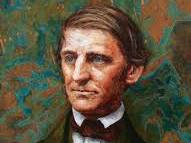
Ralph Waldo Emerson ranks high on any list of frequently quoted American sages. He has a special way of rendering human experience palpable.
Among his many essays, I’ve especially liked “Compensation,” which I first read as a young graduate student in an American Lit class.
Undoubtedly a residue of his exploration of Eastern thought, this essay has journeyed a lifetime with me in its karma undertones, buoying me up in its harbinger of moral recompense for life’s myriad inequities.
But on occasion, Emerson fumbled, as when he wrote that “money represents the prose of life, and which is hardly spoken of in parlors without an apology, is, in its effects and laws, as beautiful as roses” (“Nominalist and Realist,” Essays: Second Series, 1844).
Critics were quick to pounce, Marxists in particular seeing it as capitulating to capitalism. Emerson probably meant that the pecuniary is an integral component of the natural order.
Still, it seems a passage one wants to expunge like disturbing phlegm.
I like Saul Bellow’s correction: “Uch! How they love money, thought Wilhelm. They adore money! Holy money! Beautiful money! It was getting so that people were feeble-minded about everything except money. While if you didn’t have it you were a dummy, a dummy! You had to excuse yourself from the face of the earth!” (“Seize the Day”).
But let me also share psychologist and poet Pamela Joyce Shapiro’s response to Emerson’s remark. Her poem speaks for me and perhaps for you:
If money is the prose of life as beautiful as roses, poetry it seems must be the soil and sun of infinity, without which surely nothing grows. I see the pleasures each might bring, when flourishing in abundant spring. Though stocks and petals tend to fall in drought or storm or just because, poetry survives it all. What losses can define what loss is? Waning wealth or stolen roses? Forget the till and till the mind, plant poetry and praise the sky.
To behold death in the face of this once, he knew there could be no reincarnation, and he thought it a blessing, to have this once to swell forth, then to be enfolded like a seed into the sheltering darkness of eternity — to be lost in time among such furrows as the sea makes (Duffy, The World as I Found It).
When Joyce Carol Oates praised Bruce Duffy’s The World as I Found It (1987) as “one of the five best non-fictional novels,” I knew it would be my next read.
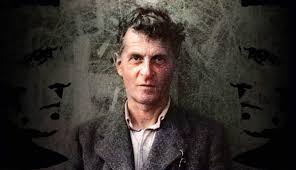
A blend of fact and fiction, it replays the legacy of esteemed philosopher Ludwig Wittgenstein’s complex life, thought, and turbulent relationships with fellow Cambridge contemporaries, Bertrand Russell and G.E. Moore.
Born into a privileged Viennese family of wealth and culture, much of his adult life was impacted by a domineering father, his experience as a combat soldier, frequent retreats from public life, and sustained quest for truth.
Enigmatic, his thinking underwent continuous flux, making Duffy’s achievement quite remarkable.
Duffy didn’t have the resources of extant biographies at the time.
Adding to his challenge was integrating Wittgenstein’s complex thought into his narrative, yet retaining readers unversed in analytical abstraction.
Wittgenstein premised the insufficiency of philosophy in ascertaining reality, its true function one of providing examples subject for further investigation. It mustn’t attempt to usurp science.
The World as I Found It unfolds episodically, interwoven with asides to the three philosophers—their temperaments, perspectives, strengths and weaknesses.
Of the three academic luminaries, Wittgenstein and Russell captivated my interest with their disparate temperaments: Wittgenstein, the youthful upstart; Russell, the widely celebrated academic renowned for his contributions to logic, epistemology, and the philosophy of mathematics.
In contrast, though the elder G.E. Moore, brilliant and benevolent, serves as mediator between the two rivals, his serene domesticity and lack of the same intense character traits, renders him less compelling than Russell, ebullient with conceit, yet haunted by self-doubt and bouts of jealousy, the putative exponent of free love; or Wittgenstein, volatile in temperament, given to barbed tongue directness, unsparing and wounding when critiquing his colleagues’ scholarly endeavors.
Wittgenstein emerges a good man, sincerely seeking life’s meaning and doing the right thing; Russell, in contrast, competitive and self-indulgent.
It appears Wittgenstein underwent some kind of religious conversion during his war years, though not in the conventional sense, perhaps influenced by Tolstoy, whose Gospel in Brief he carried everywhere and could virtually quote from memory.
In fashioning a fictional biography, Duffy made numerous changes not conforming to the biographical facts or timelines:
No letters exist between Wittgenstein and his despotic father.
He assigns Wittgenstein two sisters. He had three.
Wittgenstein never met D. H. Lawrence, despite Bloomsbury’s Lady Ottoline Morrell’s best efforts.
It was Wittgenstein’s excluded sister, Hermine, not Gretl, who sheltered Jews in Nazi occupied Vienna at great personal risk. This anomaly puzzles me.
Then there’s the inimitable, impulsive Max, rough in exterior, potentially violent, yet Wittgenstein’s faithful companion. Duffy confesses in his Epilogue that he never existed, reminding us of the controversy erupting on the book’s publication: Is it ethical to fictionalize historical figures and events, selectively altering character dynamics and outcomes to serve a narrative?
Still, the defining lineaments of Wittgenstein’s life are never distant: the interplay of a controlling father; the family’s wealth and cultural milieu; the several sibling suicides; the cottage built and retreated to in remote Norway; the two years of trench warfare on the Eastern Front in the Great War; the profound influence of Otto Weininger’s Sex and Character; the failed teaching stint in rural Austria; the abandonment of Cambridge; the late sojourn in Ireland and visit to America; the move into his physician’s home as he confronted his fatal prostate cancer. Even his last words, “I have lived a happy life.”
Seldom have I read a book so beautifully written and stylistically riveting, the cadence of its sprawling sentences endowed with verbal exactitude, rendering scenes and personages into palpable visages, an exemplar for aspiring writers.
The New York Review of Books deemed Life as I Found It a classic, restoring its availability in a handsome Classic Series edition, replete with Duffy preface and epilogue.
At its core, The World as I Found It transcends philosophy, embracing the often contradictory lives of those driven to understanding their world.
A narrative about ambition, genius, and the human condition, it offers profound insights into the interplay of intellect, emotion, and morality.


 Brimmings: up from the well