Mining the Ocean: The New Gold Rush

Mankind’s invasive footprint appears deplete of boundary, whether of earth, sky, or ocean depth, and not without consequences for an already shrinking biodiversity and a burning planet and, therefore, for ourselves.

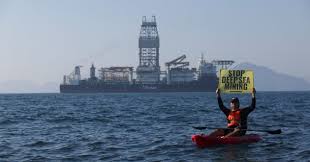
Today, July 9, 2023, marks an incipient crisis for our oceans, already menaced by rising temperatures, accelerating acidity and melting glaciers, all of it human induced. Applications to mine the sea can now begin.

It all goes back to 1982 when the United Nations negotiated The Convention on the Law of the Sea (Unclos), mandating a vast area of the ocean, a designated 53m sq. mile coastal economic zone, be excluded from seabed mining until the adoption of a code safeguarding the environment. Meanwhile, it approved an area of 1,700,000 sq. miles (half the size of Canada) known as the Clarion-Clipperton Zone, for seabed mining.

To this end, the International Seabed Authority was founded in 1994, with a current 167 subscribing members along with the European Union. After 28 years of negotiating, it has been unable to agree upon a code. It administers the Clarion-Clipperton Zone.

A clause in Unclos, however, provided an escape mechanism allowing any application for seabed mining be allowed should no code be adopted. Today, that moratorium ends.

We are caught in a catch 22 dilemma, compounded by both need and greed.

We rely upon nickel, cobalt and manganese, along with lithium from land resources, to propel our wind farms and electric vehicles. Potentially, the ocean seabeds offer us tons of needed minerals.

Even if there were a code, I seriously doubt it would be meaningfully implemented and mitigate environmental degradation to sea life.

The ISA has always been poorly funded and many of its negotiators have fishery interests. It has yet to deny any application for exploration, granting 31 of them. Five of them are by China. It lacks empowerment and resources to mandate candid environmental impact appraisals, leaving that up to the corporate sector.

We need to be doubly painstaking in assessing opening up our last earthly frontier for exploitation.

As environmental writer, Guy Standing (The Blue Commons: Rescuing the Economy of the Sea), cautions, “All of us should be deeply alarmed. The environmental impact of deep-sea mining could be catastrophic. Massive machines will scour the ocean bed to pick up polymetallic nodules, destroying everything in their path and creating sediment plumes that can suffocate coral reefs and other organisms hundreds of miles from the mining site. Mining will damage the ocean’s ability to act as a carbon sink, accelerating global warming. And new research suggests the polymetallic nodules could contain radioactive substances, endangering human health cautions.”

And what about noise, vibration and light pollution, or fuel leaks and chemical spills? The list is long and the unplanned for has a way of happening.

In June, the European Academies Science Advisory Council spoke of the dismal impacting on marine ecosystems and denounced “the misleading narrative” that deep-sea mining is necessary to harvesting the metals vital to a green economy. Lithium, not a pervasive ocean element, and other minerals vital to EV technology, are presently land-based. Further, technology constantly changes.

Our oceans comprise a vast cornucopia of biodiversity yet to be discovered. Consider the recent finding of 5,000 new species living on the seabed of the Clarion-Clipperton zone, open to deep-sea mining firms.

I fear where we’re about to tread.

I fear for ourselves.

And for our oceans, from whence we come.

–rj

Lobsters or Whales?


I was raised a New Englander and, by custom, eating lobster had been a staple in my diet. The problem with custom, however, is that we seldom question its tenets, propelling us to mindlessly continue behavior that scrutiny might render pause, if not discontinuance.

My misgivings began some years years ago when I found myself in a restaurant featuring a large water tank, containing lobsters scavenging its pebbled bottom, oblivious to their impending fate of being boiled live.

It spoiled everything for me. I no longer could enjoy squeezing the shell until it cracked, exposing the meat of the hideously killed creature.

Several years ago, my wife and I met up with our children in Maine, a favorite haunt for us with its rocky coasts, salty air, deep forests, quaint villages and, yes, super ice cream. In Maine, you eat crabs, clams, or lobsters. And so, here I am in a seafood restaurant, my family toiling at their lobsters; that is, except me.

But are lobsters sentient? Do they feel pain?

I say yes, based on recent science research, indicating their nervous system is complex. The fact they have a spine should suffice. When you drop them into that boiling water, however, they lack vocal chords to voice their screams.

You don’t really need the lab to confirm their suffering. Just witness a lobster or crab hurling itself violently against the sides of a pot of boiling water.

Opponents retort it’s simply reflex, taking us back to Descartes and his mechanistic assessment of animal behavior, ignoring their neurological components. On the other hand, crabs in a recent experiment rapidly adjusted their habits to avoid areas where they had previously experienced an electric shock.

A number of countries have taken legal measures to protect crustaceans like lobsters from unnecessary pain, among them, Norway, New Zealand, Austria and parts of Italy and Germany.

Switzerland set the precedent in 2018, banning boiling crustaceans alive, based on research indicating they feel pain. They needn’t possess a neocortex to experience pain. Biologist Robert Elwood, whose research led to Switzerland’s ruling, tells us that “crustacean brains and nervous systems are configured differently” (aldf.org).

But what about freezing them, a predominate recourse in shipping lobsters over long distances, say, to Biden’s recent celeb bash for the French president?

In June 2016, Italy’s highest court outlawed the practice, ruling it inflicted unjustifiable suffering. That makes sense. Freezing sentient creatures is no less repulsive than boiling them alive.

But environment also looms as a pressing concern involving the lobster industry.

Whole Foods has joined the debate, announcing it will no longer sell lobster after two consumer-focused environmental watchdogs— the Maine Stewardship Council and Seafood Watch—pulled their certifications due to concerns over impacts on North Atlantic right whales. The National Oceanic and Atmospheric Administration says it will reduce whale deaths and injuries by 69%.

This morning I woke to The Guardian’s lead article, “Save whales or eat lobster”: the battle reaches the White House” (11 December 2022), centering on the Federal court’s decision to curtail Maine’s lobster industry employing 10,000 workers in order to safeguard the diminishing North Atlantic right whales.

The Biden staff, nonetheless, ordered 200 lobsters be flown in for the Macron fete, despite the 2021 1st Circuit Court of Appeals decision reinstating a ban on lobster harvesting in some 940 square miles of the Gulf of Maine from October to January to protect endangered North Atlantic right whales menaced by entanglement in fishing gear and collision with large ships.

White House Executive Chef Cris Comerford responded that they wanted to “honor our lobstermen from Maine.” Meanwhile, the court’s decision is under fast track appeal.

I’m not hopeful. Sadly, politics often govern, expediency prevails, and the pecuniary nearly always wins, with accelerated biodiversity loss and climate warming their consequence.

My high regard for environmentalist Rachel Carson persists. An oceanographer by profession, her eloquent The Sea Around Us won the National Book Award, America’s highest literary award, in 1952.

Living summers on Southport Island, Maine, adjacent to touristy Boothbay, she loved the then abundant whale life. With her typical prescience, she also served an incipient warning: “We live in an age of rising seas,” she wrote. “In our own lifetime we are witnessing a startling alteration of climate.”

That was 1964, or 58-years ago.

The North American right whale, an endangered species under the Endangered Species Act, has since declined to a scant 340, of which only 100 fertile females remain. We know the seas are ubiquitously afflicted with fishing gear, imposing an immense burden and much suffering upon sea life.

The lobster industry, instead of shouting their outrage, would do better to observe the U.S. Oceanic and Atmospheric Administration mandate to employ multiple break points to pull up lobster traps in order to prevent right whale entanglement.

Declining rapidly in number, unless we protect these whales, they will have vanished forever.

–rj

No Longer Do the Seagulls Cry: Humanity’s Wounding of the Seas

The sea sings out for its singular subjects:
Arching whales that wave from their waves,
Turtles that teeter down their shining shores,
Coral reefs shining brightly as cities.

The sea sings out its suffering,
Knowing too much of waste, screeching sounds
And pernicious poison, its depths bruised by
Atrocities in the Atlantic,
Misery in the Mediterranean,
Its tides the preservers of time past.”
–Amanda Gorman, from “Ode to Our Ocean”

This morning comes dismal news that a fifth round of UN talks to reach agreement on a treaty to protect and manage our highly vulnerable oceans has stalled once again. No further discussions are scheduled.

The proposed treaty would protect 30% of the high seas lying 200 nautical miles off national jurisdictions and a legal means to enforcement.

Since the seas don’t belong to anyone, this apparently gives nations license to plunder and trash, imperiling biodiversity and, ultimately, fisheries on which a growing population will increasingly depend.

The seas, supplying 50% of the oxygen we breathe, home to the majority of earth’s biodiversity, is languishing, and humans are the source. 90% of big fish populations are depleted; 50% of coral reefs, formerly harboring abundant marine life, gone.

Let me give you just one stark example of human dereliction fouling our seas. There are many others:

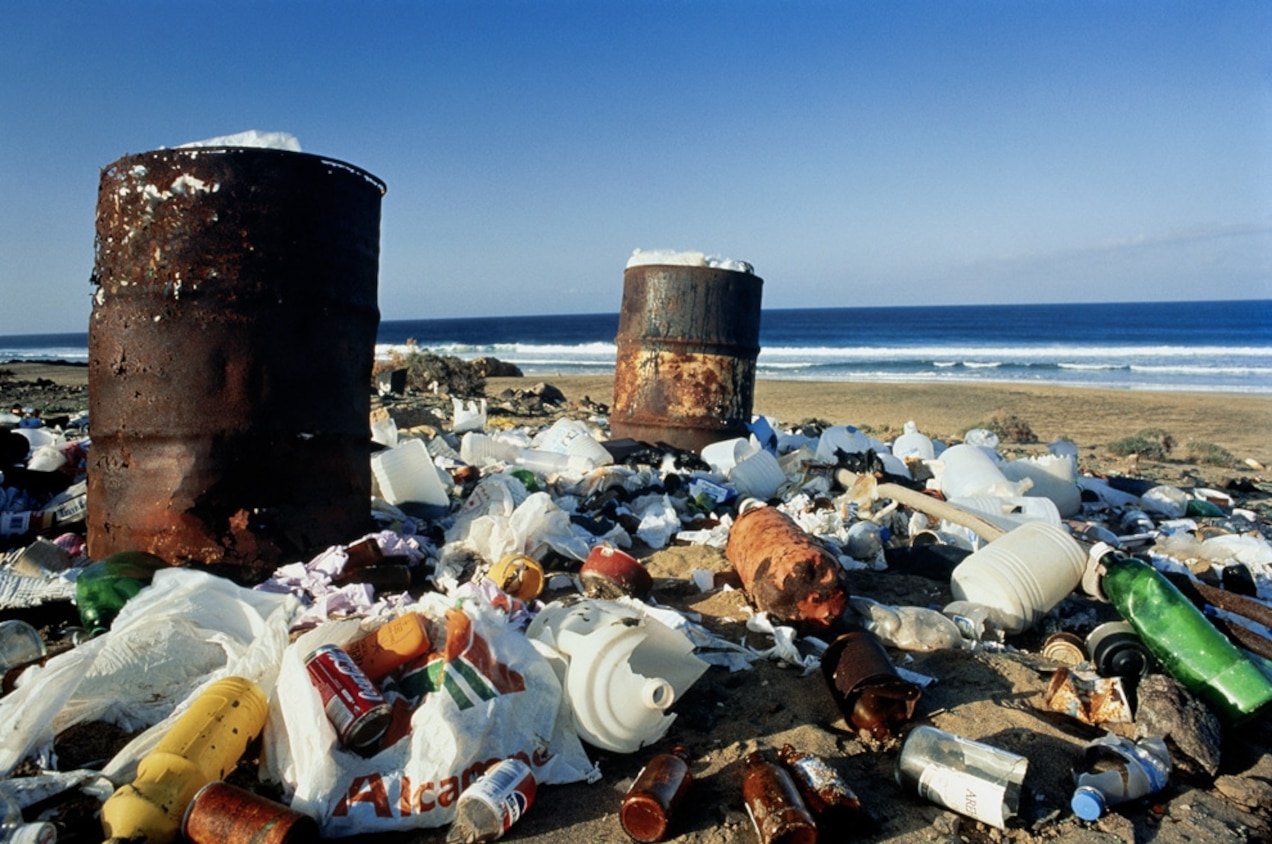
Located halfway between California and Hawaii, there lies the drifting human debris known as the Pacific Garbage Vortex, its estimated size twice that of Australia. It doesn’t exist as a single entity, but rather as a vast garbage soup, much of it just below the surface, coagulating in ocean currents as a defiantly boundless  repository of ship castoffs and swept-up coastal discharge, the vast majority of it plastic substances.

Reliable aerial and trawl estimates (2015-16) inform us that 1.8 trillion plastic pieces are floating in the patch, equivalent to 250 pieces of debris for every human in the world. That was six years ago. Currently, 1.15-2.41 million metric tons of plastic are added each year (theoceancleanup.com),

Plastic infiltration of our oceans poses an immense menace to sea life. The International Union for Conservation of nature (IUCN) reports that 700 marine species have encountered sea debris, 17% of them endangered species, among them, seals, dolphins, and sea turtles entangled in abandoned fishing nets. Many sea creatures mistake the plastics for food, imperiling themselves and their offspring.

01becdf4-e2b3-4ad7-a46f-784bc60ab960

Collectively, these plastics block sunlight to the plankton and algae below, which are the primary feed resources of fish and turtles. Ultimately, this has consequences for predators like sharks, seals and whales. A world without whales? Our grandchildren reduced to viewing photographs?

Bad as all this is, the Pacific Garbage Vortex isn’t an isolated phenomenon. It’s simply the biggest. Located in the Pacific, Atlantic and Indian oceans, these vortexes manifest humanity’s global trashing of the ocean:

Is there any hope at all? Only if we reduce our use of plastics, a formidable challenge in an economy built on their low costs, or adopt biodegradable alternatives that are no easy sell. It’s simply cheaper to rely on plastics, a carbon-containing product present in the clothes we wear, our computers, laundry detergent, and even our children’s toys, ad infinitum. Plastics tend to ultimately find their way into landfills. And yes, into our oceans.

Greenpeace laments that “failure to deliver a treaty at these talks jeopardises the livelihoods and food security of billions of people around the world.”

Sadly, I find their admonition, though well-meaning, typically anthropocentric in its solely human focus, or the essence of what birthed these vortexes in the first place.

Have sea dwellers, many of them preceding Homo sapiens, no right to a space of their own?
–rj


Reflections on the Supreme Court’s EPA Rebuff

A-polar-bear-and-her-cubs-007This has been a busy time for America’s highest court, with gargantuan issues–gay marriage, Obama Care, and approval of a controversial capital punishment drug, cases decided by razor thin majorities.

No less important, perhaps the most impacting of all, is the Supreme Court’s decision ultimately affecting climate change; namely its one vote majority ruling against the EPA’s Mercury and Toxic Standards (MATS) provision, designed to reduce mercury and other air pollutants from the nation’s myriad power plants, especially those utilizing coal.

Though MATS wasn’t specifically disavowed, the Court ruled that the EPA must consider the financial burden it imposes. Accordingly, the case goes back to the U.S. Court of Appeals for the District of Columbia to deliberate new guidelines.

I think the decision horrendous in the context of the preeminent threat we and, especially posterity, face in the context of climate change, which the vast weight of environmental science affirms is human induced.

In fact, if we don’t get our act together, we may find ourselves joining the plethora of species we’ve either driven into extinction or endangered.

On the other hand, I laud justice Elena Kagan, who wrote the minority decision in the 5-4 verdict:

Over more than a decade, EPA took costs into account at multiple stages and through multiple means as it set emissions limits for power plants. And when making its initial ‘appropriate and necessary’ finding, EPA knew it would do exactly that — knew it would thoroughly consider the cost-effectiveness of emissions standards later on. That context matters.

While it’s probable the lower court won’t gut the act, but simply mandate that EPA integrate cost factors upfront, not after-the-fact, as it had done, this may sadly take another five years and still be subject to legal scrutiny.

Climate change, in the meanwhile, isn’t about to go into a stall while we continue to rely upon coal as an energy source for many of our power plants.

The corollary is that like a credit card we don’t pay off, our delay will exact cost burdens exceeding mere cash reckonings in hazarding the health of both ourselves and the impinging on the ecological interplay upon which we depend.

Nobody wants to pay more for energy costs any more than we relish replacing a malfunctioning stove or fridge for a newer, more efficient model, at increased cost. Alas, sometimes it is what it is and we move on.

What moved me to write this post as I awoke today to a new dawn outside my window is a news story just out of the BBC, reporting on “Irreversible Change to Sea Life from CO2, compiled by twenty-two experts in the journal Sciencehttp://www.bbc.co.uk/news/science-environment-3336902

Coral reefs, polar bears, many fish–all gone by century end as oceans continue to heat up, lose oxygen, and become more acidic, consequent with our embrace of CO2 energy sources.

And we’ll not be spared either, as the ocean out of which all life came and upon which it substantially depends, not only overwhelms our coast lines, but our ecosystems as well.

This is the true cost of our delay and our neglect, unacknowledged by the Court as in the  public’s greater interest and for the well-being of Mother Earth.

–rj