
Read Eighty Books a Year: A Reader’s Arithmetic:

Stephen King reads sixty or more books a year. I’m lucky if I reach twenty—and the disparity bothers me more than I care to admit. Not because I value quantity over quality, but because there are simply too many books I want to live with, too many voices I want time to answer back to.

Time flows from us like a running faucet. Time is our common currency granted daily. How do we spend it? It comes down to our priorities.

King has been candid about how he does it. He treats reading as a necessity, not a luxury, reading every day for two or three hours, sometimes more. As he puts it in On Writing: “If you don’t have time to read, you don’t have the time (or the tools) to write.”

That rings true for me. When I write, it’s almost always in response to what I’ve read—to extend an argument, disagree with it, enthuse about it, or share it with others.

King refuses to slog through books that fail to engage him. He abandons them without guilt. Interest propels reading; boredom kills it. And he always has a book with him—reading while waiting, traveling, between tasks, or before bed. Those fragments accumulate.

The numbers themselves are demystifying. Suppose your goal is eighty books a year with an average length of 300 pages. That’s 24,000 pages annually. Divide by 365, and you arrive at roughly 66 pages a day. At a moderate pace of about 40 pages per hour, that comes to around an hour and forty minutes of daily reading.

That’s doable.

My final tip is one that has helped me most: read in clusters. Choose a topic that genuinely interests you and commit to five or six books in that area.

Reading a single book from a wildly eclectic list can feel shallow; focused reading builds momentum, deepens understanding, and increases motivation.

This year, for example, I’ve chosen to immerse myself in Kentucky sage Wendell Berry—two biographies and three of Berry’s own books. Depth, it turns out, can be the best catalyst for volume.

—rj
Small Changes, Big Results: Lessons from Atomic Habits

I’ve finally bitten the bullet and started reading James Clear’s Atomic Habits, the celebrated bestseller that has sold over 25 million copies and been translated into more than sixty languages.

I rarely read self-improvement books—not because I’ve arrived at perfection (far from it), but because I gravitate toward literary and intellectual works, and leisure time is finite. Still, Atomic Habits begins with such clarity and momentum that I can already tell it will be a quick read for me—simply because I can’t put it down.

The title itself hints at the premise: small, almost imperceptible changes that compound over time. Baby steps, if you will, that quietly evolve into daily discipline and, eventually, a better self. I’ve long believed that we can’t really make friends with the outer world until we make friends with ourselves, and Clear’s approach aligns with that idea.

Go to bed a little earlier, away from blue screens. Make your bed when you rise. Keep your bathroom tidy. Simple acts, but ones that generate momentum and a sense of self-respect. Want to read more? Start with a single page. Avoiding exercise? Take a five-minute walk. Clear gives modern life to an ancient axiom: “The longest journey begins with a single step.”

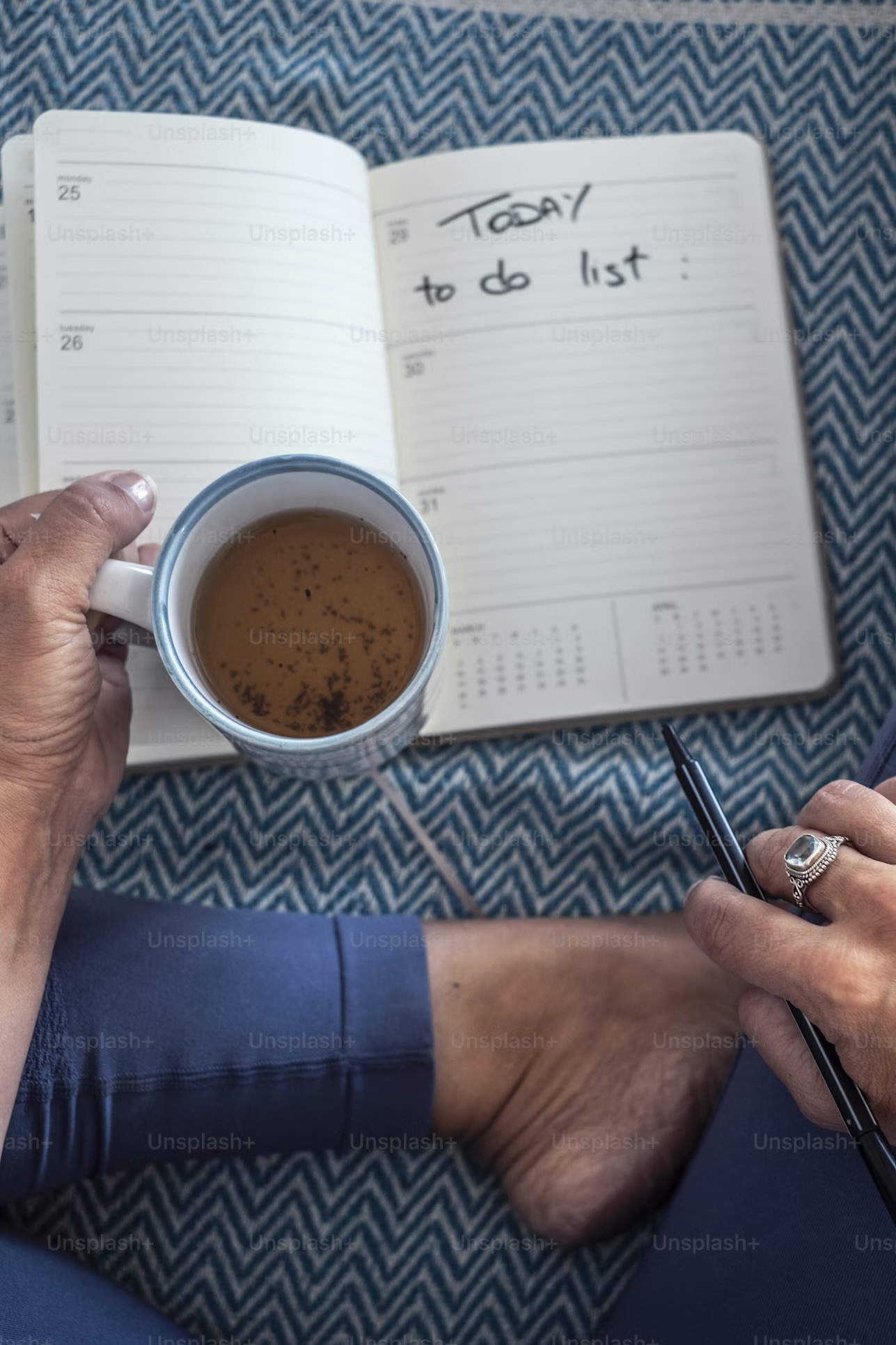
This is one of those books I’m reading with a journal nearby, interacting with the text—even if only a paragraph at a time. That, too, is a habit I know would enrich my life, but one I’ve too often postponed.

The irony is that when we fail to act on habits we know would improve our lives, the result isn’t neutrality—it’s to sour on ourselves.

Being up in years, my gray matter has shifted. Memory doesn’t cooperate the way it once did. There was a time I could glance at a list of twenty French or German words and walk away minutes later with them securely lodged in mind. No longer.

That frustration nearly convinced me to abandon my desire to read in Italian. But Atomic Habits reframed the problem: it isn’t the goal that matters so much as the process—where I am today versus where I was yesterday. Incremental steps still count. And so I persist with Italian, imperfectly, patiently.

It’s time for breakfast now—but not before I make my bed.

—rj