On February 28, 2026, the United States and Israel launched coordinated aerial strikes on Iran, ostensibly to induce regime change and secure stability in the Middle East.
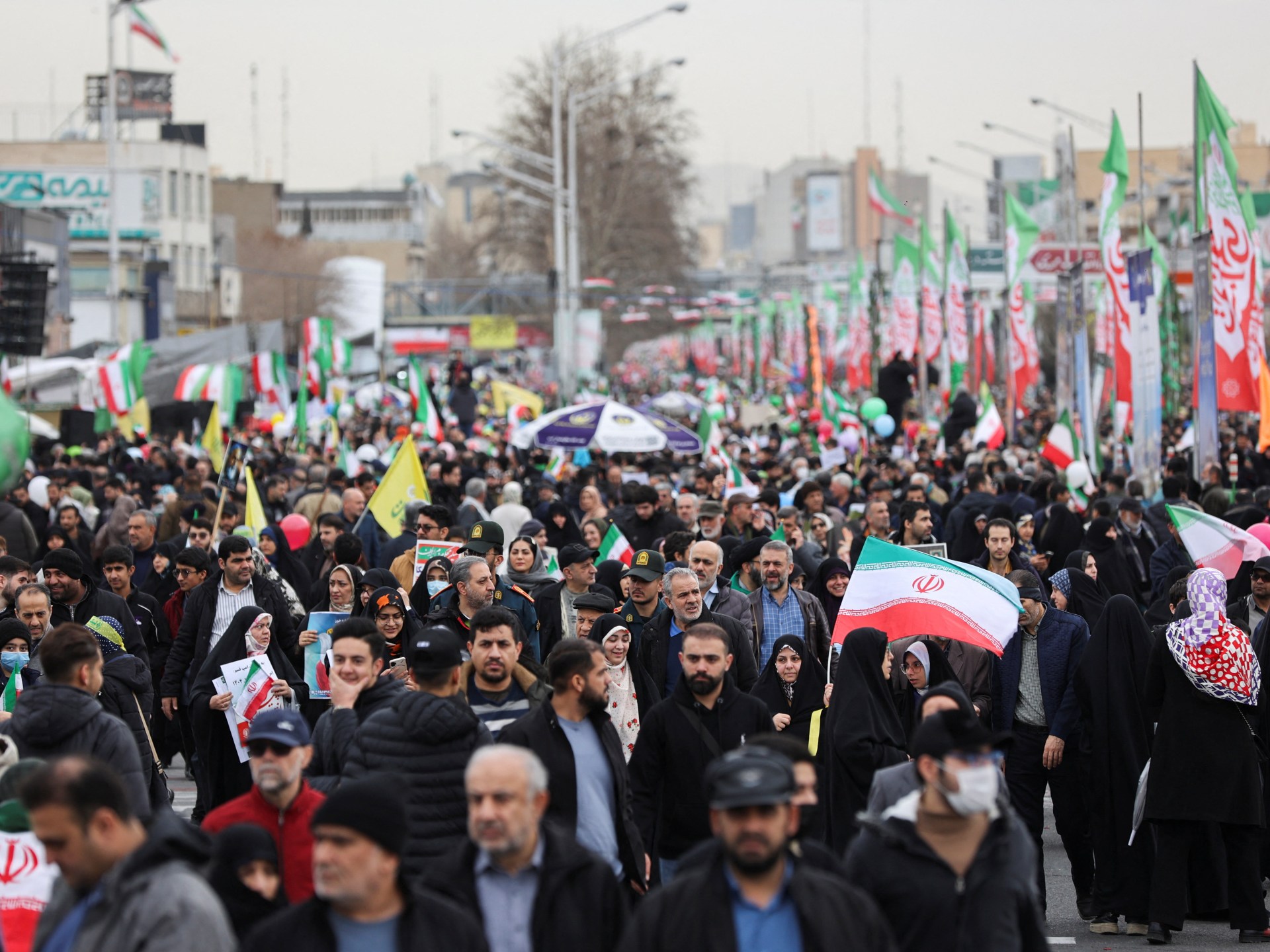
Central to this strategy was the expectation of a mass popular uprising—something glimpsed in January 2026, when tens of thousands of unarmed civilians took to the streets and were met with lethal force. Estimates suggest as many as 30,000 were killed, 7000 independently confirmed. The regime they opposed—a repressive Islamic theocracy entrenched since 1979—remains intact.
This is a war America is unlikely to win.
Despite the destruction of command centers, arsenals, and the targeted killing of senior leadership, including Supreme Leader Ayatollah Ali Khamenei, Iran has demonstrated a capacity for resilience that was either underestimated or ignored.
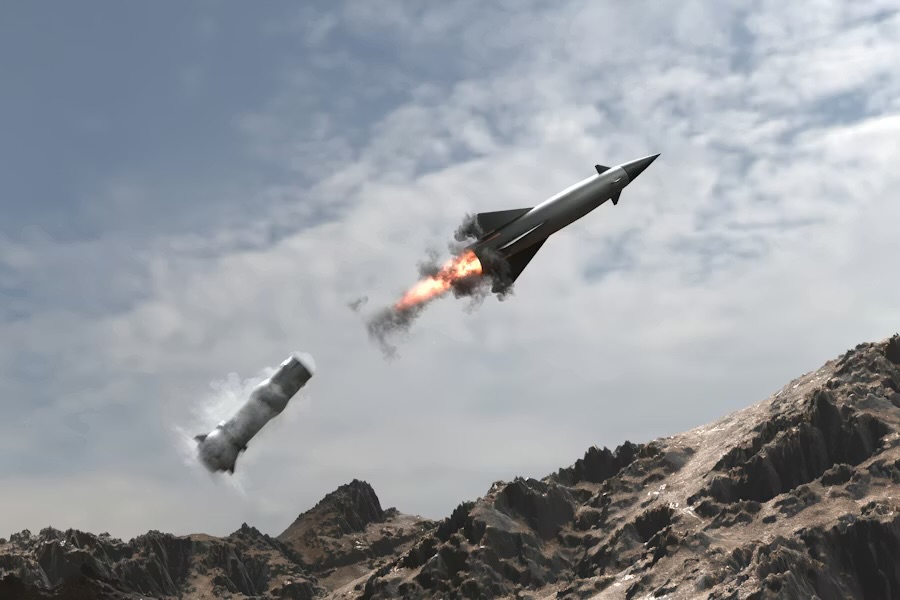
Its response has been asymmetric and expansive: ballistic missiles and drone strikes aimed not only at Israel but at a widening circle of nations hosting American bases—Qatar, the United Arab Emirates, Kuwait, Jordan, and Saudi Arabia. Recent launches have extended even farther, toward Crete, Turkey, and the joint UK–U.S. base on Diego Garcia in the Indian Ocean, 2400 miles distant.
At such range, the perimeter of vulnerability shifts. Southeastern Europe comes into view; with further technological refinement, even cities such as Rome or Berlin may not remain beyond reach; in a decade, the United States.
As this conflict widens, its economic consequences are already apparent. Iran’s disruption of the Strait of Hormuz, through which roughly one-fifth of the world’s oil supply passes, has driven prices upward, with projections rising sharply. The leverage is stark: Iran need not defeat the United States militarily to impose severe costs. It need only prolong the conflict.
The political implications are equally stark. Domestic opposition is mounting here at home, shaped less by geopolitics than by inflation, felt daily in grocery bills and at the gas pump. A war that amplifies those pressures becomes difficult to sustain, regardless of its stated aims.
Even proposed escalations such as a seizure of Kharg Island, which handles a significant portion of Iran’s oil exports, risk becoming symbolic victories at disproportionate cost.
The comparison to Iwo Jima is not misplaced: a tactical gain unlikely to alter the strategic reality. Much of Iran’s missile infrastructure remains embedded and protected, beyond the reach of conventional assault.
Recent Trump statements suggesting that U.S. objectives have largely been met already signal a search for an exit. Yet an off-ramp may not be readily available. Iran’s advantage lies in time. By sustaining pressure, economic as much as military, it can compel concessions without decisive confrontation.
There was another path.
Rather than precipitating war, a strategy of containment through sanctions and patience might have allowed the regime to atrophy under the weight of its own contradictions. Iran faces converging crises: acute water scarcity, environmental degradation, declining agricultural productivity, economic duress, and deep internal dissent. A large portion of its population—diverse, young, and increasingly disillusioned—has already demonstrated a willingness to demand change at great personal risk.
That internal pressure, not external force, may have proven the more decisive agent of transformation.
“This new war, like the previous one, would be a test of the power of machines against people and places; whatever its causes and justifications, it would make the world worse. This was true of that new war, and it has been true of every new war since. The dark human monstrous thing comes and tramples the little towns and never even knows their names. It would make Port William afraid and shed its blood and grieve its families and damage its hope.
“I knew too that this new war was not even new but was only the old one come again. And what caused it? It was caused, I thought, by people failing to love one another, failing to love their enemies. I was glad enough that I had not become a preacher, and so would not have to go through a war pretending that Jesus had not told us to love our enemies.”
Talks between the United States and Iran continue this week in Geneva.
When desperate Iranians poured into the streets demanding regime change, President Trump pledged that help was on the way, only to retreat. In the aftermath, credible human rights organizations report that thousands of protesters were killed and many more arrested in a sweeping crackdown designed to extinguish dissent.
Now it appears the administration has chosen to defer confrontation in favor of negotiation. The pattern is familiar: pressure followed by pursuit of a deal. As in Venezuela, where engagement and economic overtures failed to dislodge a repressive regime despite widely disputed elections, the governing apparatus endured.
Tehran understands the language of leverage and Trump’s susceptibility to profitable business deals. It has reportedly floated the prospect of lucrative energy, mining, and aircraft agreements in exchange for relief from punitive economic sanctions. Yet the offer comes with a critical caveat: Iran would modify, but not relinquish, its uranium enrichment and leave untouched its ballistic missile programs.
Such an arrangement would not dismantle the regime’s capacity for repression at home or projection of force abroad. It would instead stabilize a government that has spent nearly half a century suppressing its people and destabilizing the Middle East, while edging ever closer to nuclear weapons capability and refining the missiles to deliver it.
Yes, help may indeed be on the way, but not for Iran’s beleaguered citizens if sanctions are lifted without fundamental change. It will be relief for the very regime that has kept them in chains.
At least 83 protestors, including women and children, have now been killed in Iran since the beating death of Mahsa Amini by the regime’s morality police. The protests, led by women, continue and will be joined world-wide on Saturday.
The Biden administration would do well not to renew the nuclear treaty with this brutal regime, releasing billions of frozen funds as a payoff for Iran’s signing the treaty. Doing such only advances Iranian repression and exporting of terrorism abroad.
While protests do matter, what hurts regimes like Iran most are freezing their assets and sanctioning trade.
Once again, fundamentalist Islam has shown its ugly side in the attempted slaying of Salman Rushdie for writing The Satanic Verses. After two decades in hiding, he thought he was safe from Ayatollah Khomeini’s fatwa (1989). He was wrong.
We expect secular regimes to impose imprisonment and death on those who quarrel with their governance. Think Stalin, Hitler, Mao, and, currently center stage, Kim Yong- un, the Myanmar military regime, Xi Jinping, Putin, Maduro, and Ortega.
But religion sponsoring terrorism? For the most part, no; but not when it comes to much of the Islamic world.
Ironically, Islam has remained a largely medieval faith, inimical to change. A PEW Center Analysis (2019) surveyed 198 countries and territories and found that 40% had laws prohibiting blasphemy, defined as irreverence against God and sacred objects. 11% had laws against apostasy. Most of these countries are Muslim.
In 2019, Pakistan sentenced seventeen individuals to death for blasphemy, though the sentences haven’t been carried out as I write.
Iran executes “blasphemers” regularly as public policy, often as means to quell dissent, i.e., to oppose the regime is to oppose Allah.
Iranian execution doesn’t exclude stoning, usually for adultery. Human rights groups report that between 1980 and 2009, 150 people have been stoned to death. Currently, leaked prison documents reveal 51 individuals slated for execution by stoning, 23 of them women, 28 of them, men (thesunco.uk).
We are, indeed, back to ancient ways.
The publisher, Penguin, kept a stiff upper lip in pursuing publication of The Satanic Verses, despite death threats to its executives. An anomaly in a film-dominated time, books still had power to move the needle!
In 1989, Iran’s supreme ruler, Ayatollah Ruhollah Khomeini, issued a fatwa and $3m award for killing Rushdie for blasphemy in writing The Satanic Verses (1988).
This is the same holy man who sanctioned the execution of up to 5,000 Iranians accused of conspiracy in 1988. He would die a natural death four months after his fatwa.
What followed the fatwa was a bloodbath, forcing Rushdie into hiding under protection of British intelligence. Though he would apologize, the current Ayatollah, Ali Khamenei, rejected his apology. (Rushdie has long since recanted his apology: “The worst thing I ever did.”)
Subsequent to the fatwa, thousands of Muslims assaulted bookstores, threatening to bomb those selling his book.
In 1991, the book’s Italian translator was knifed, but survived.
A few days later, Japanese translator Hitoshi Igarashi was stabbed to death.
In 1993, the novel’s Norwegian publisher, William Nygaard, was shot, fortunately surviving his wounds.
In Tunisia and Saudi Arabia, two clerics protesting the fatwa, were fatally shot.
Riots broke out in Iran, India, and Pakistan. An estmated sixty people died.
Then, as now, many of Rushdie’s writing cohorts came to his defense, among them, Martin Amis, Joan Didion, Ian McEwan, and Christopher Hitchens.
I like how Steven King took on J. B. Dalton, one of three book chains refusing to sell Rushdie’s novel: “You don’t sell The Satanic Verses, you don’t sell Stephen King.” It reversed course immediately (vanityfair.com).
There were holdouts, arguing we should refrain from offending the sensitivities of others, much like what we hear in today’s cancel culture.
Among the holdouts was John le Carré, who wrote in The Guardian that “nobody has a God-given right to insult a great world religion and be published with impunity.”
In similar vein was former American president, Jimmy Carter, who wrote an op-ed in the NYT: “While Rushdie’s First Amendment freedoms are important, we have tended to promote him and his book with little acknowledgment that it is a direct insult to those millions of Moslems whose sacred beliefs have been violated.”
Rather strange, I think, for someone who permitted the detested shah to enter America, commencing the seizure of embassy hostages and the bringing to power a theocracy of repression and terror that remains with us still.
They were not isolated cases. Children’s author Roald Dahl depicted Rushdie in a letter to the London Times as a “dangerous opportunist” who “must have been totally aware of the deep and violent feelings his book would stir up among devout Muslims.”
In a tear-down New York Review of Books piece, “The Salman Rushdie Case,” author Zoë Heller wrote that “a man living under threat of death for nine years is not to be blamed for occasionally characterizing his plight in grandiloquent terms. But one would hope that when recollecting his emotions in freedom and safety, he might bring some ironic detachment to bear on his own bombast” (NYRB, Dec. 12, 2012).
It seems a strange twist of fate that there should erupt a groundswell of sympathy for perpetrators of violence rather than for a fierce defender of freedom of speech. But such are the times in which we live, trolls abundant and thought police, both Left and Right, ready to pounce and, not infrequently, message death threats to those it deems adversaries.
The climax in sympathy for rampaging Muslims seen as victims occurred in the aftermath of the French satirical magazine CharlieHebdo being awarded a freedom of expression courage award by PEN America. You may remember that eight of its staff and four other people, including two policemen, were murdered in Paris by Islamic terrorists (January 2015). Some 200 prominent writers wrote to PEN, criticising it for “valorising selectively offensive material” (“Observer Opinion”: The Guardian, 14 August, 2022).
Fatwas need not emanate from distant ayatollahs. They can be home-brewed.
Rushdie got it right in his 1990 essay “In Good Faith,” that “individuals shape their futures by arguing and challenging and questioning and saying the unsayable; not by bowing the knee whether to gods or to men.”
Let us hope that our wounded freedom warrior mends well and soon. Early medical reports say he will likely lose an eye, that nerves in his arm have been slashed, and his liver stabbed.
Freedom of speech defines a vital tenet of civilization as essential as the air we breathe, yet many of us take it for granted. We need voices like Rushdie’s to remind us that it can slip away and one day be gone if we forfeit being its sentries.
As for the repressive theocracy that prioritizes hate over love and its apologists, my sentiments lie with writer Jill Filopic’s eloquent summation:
Religion is a belief system. If yours cannot stand up to criticism, interrogation, and even mockery or insult – if you need to threaten or punish, up to the point of death, those who insult an idea you hold dear – it is perhaps worth asking if your beliefs are as strong as you believe they are. And this is the lesson of Salman Rushdie: it is courageous and necessary to stand up against tyrants and those who would use violence to suppress words and art – even when those tyrants claim to have God on their side” (The Guardian, 14 August, 2014).
I had tuned in on Friday to President Obama’s Rose Garden appearance before the media, expecting an updating of data justifying a response to the alleged use of chemical weapons by the Assad regime in Syria. After all, Secretary of State John Kerry had spoken forcefully to the issue, calling it an act of “thieves and murderers.” How preternatural it seemed for someone who had so vociferously opposed the Vietnam War, throwing his own medals away, to now be advocating a military strike. There must be something here.
What I hadn’t counted on was the residue from the UK Parliament rejection of Prime Minister David Cameron’s plea for a military option. Cameron hadn’t originally planned on asking for Parliament’s permission, only to yield to the reality of low public support in the polls and vociferous objection among even his Labor Party cohorts. He simply wanted to protect his hide, an idea that’s proven to be contagious.
Casting a dark specter over everything was doubtless the protracted war in Iraq, now largely deemed the folly of unreliable intelligence and an understandable passion for taking action following the terrorism of September 11, 2001. While it’s often been remarked how history repeats itself, it’s not a given that we must repeat its madness.
The psychology in Obama’s turnaround in imitating Cameron fascinates me. Sometimes we say too much and get ourselves into tight places, with anticipated fall out locking us into responses our better judgment, tempered by time and reason, tells us are wrong. From this angle Progressives seem justified in calling Obama’s new mindset courageous.
I see it differently, however, as a failure in will, abetted by a compliant media and a war- weary public. We have a president who has difficulty making decisions. For six months he knew the location of Osama bin Laden before taking action. We’re still awaiting the Keystone decision. Just the day before, we had heard a horrific litany of the deaths of 1400 civilians, more than 400 of them children, by the Assad regime’s use of chemical agents on its own people. British, French and Israeli intelligence also corroborate the culpability of the Assad government.
Oddly, the President in his Rose Garden appearance told us he had determined to strike Syria, yet wanted to put it up to the Congress. I think it unlikely that Congress will approve a strike, perhaps the Senate, but not the Republican House with its contingent of Tea Party isolationists. This may even play into Obama’s hands, giving him an opportunity to extricate himself, or to climb down the ladder as it were.
But he isn’t going to do so without impunity or a severe loss in credibility. Even more serious, he’s placed our nation in danger, emboldening aggression abroad by rogue governments. No one’s talked about it, but the present imbroglio is really about Iran. His paralysis can only encourage Iran’s efforts to achieve a nuclear arsenal. If I were the Israelis, I would be deeply troubled. It’s conceivable that Israel may now see itself as needing to launch a preemptive strike on its own, given the unreliability of the U. S.
Given Obama’s hesitancy towards Syria, what’s the script for Iran? Do you tip your hand, asking Congress for its permission for a preemptive strike? Or is it you do nothing, accepting the reality of a nuclear Iran with whom we must learn to live with as we do with North Korea? Meanwhile, a hostile Iran that sponsors terrorism develops a delivery system potentially targeting Tel Aviv and, ultimately, America. Let’s face it, as a corollary of the President’s pattern, the odds are that Iran gets its Bomb, despite our stringent embargo.
In the present circumstances, Obama has set a dangerous precedent. Presidents must be free to act in dealing with contingencies that may arise, and this is what the War Powers Act allows with its 90 day allowance before Congressional oversight kicks-in. A limited strike on Syria does not violate the Constitution, contrary to what some liberals say.
Mr. Obama is known to admire Lincoln. But maybe he’s forgotten his history. Lincoln didn’t ask Congress for permission to war against the eleven successionist states. In fact, the legality of succession wasn’t allowed to be presented before the Supreme Court. Lincoln rightly knew he couldn’t win in either the Congress or before the Supreme Court. My point is, strong presidents lead.
A very good argument can be made that any response now planned would be ineffectual and inflammatory anyway, since the strike is so limited and considerable time has elapsed for Assad to move his military assets into the mountains and his troops into exempted civilian areas such as schools. Even more important, the Syrian civil war has now largely turned sectarian, with Sunnis vs Shiites, compounded with the entrance of Hezbollah and al Qaeda insurgents, both of whom target Christians, who comprise 10% of the population.
But this gets us back to square one and our ineffectual president. Obama created this morass with his dilly-dallying over the last two years, giving extremists time to move in. His red lines mean nothing, as seen in Assad’s emboldened aggression. While Syrian dissidents lamented the absence of international outcry following the chemical attack of August 21, Obama was silent for 72 hours. Later, he played his usual rhetorical slight of hand, stating the situation defied easy answers.
Mr. President, if we’re reduced to this scenario, then you are its creator, having squandered your options and not acted on your own warnings. Awful as these deaths from chemical weapons are, they’re minuscule in a sea of 100,000 deaths, most of which could have been prevented had you armed the rebels from the outset. By the UN’s own estimates, we now have 2 million refugees, 1 million of them children.
Playing Hamlet–to act or not to act–is unbefitting a commander-in-chief and poses grave dangers for America. As Hisham Melhem, Washington bureau chief of Al Arabiya news channel comments, “He seems unable to make difficult decisions. This will embolden Assad and the opposition jihadis and demoralize the secular, moderate Syrian opposition. Obama is gambling with his reputation at home and abroad.”
With one utterance, Obama has inaugurated a template for disaster, diminishing the powers of the Presidency, making a mockery of American credibility, abandoning Syria’s freedom-fighters, and putting America and Israel under increased threat from a belligerent Iran ultimately armed with nuclear weaponry.
The videos from Syria are horrific and unprecedented, with row upon row of corpses, many of them children, in what now seems to indicate some kind of chemical agent, perhaps nerve gas, judging by the symptoms, also captured on camera, of the last gasps and spasms of the dying. Presumably the attack was launched under the auspices of the Assad regime, since it’s well known they possess a huge stockpile of chemical weapons. It maintains, however, that rebels are simply staging a scenario for Western consumption to provoke intervention.
But this isn’t the way Britain and France see it, the latter calling for possible force if there is verification. Even, and this is a shocker, Vladimir Putin has called on the Syrian government to allow UN inspectors, already in the country and just twenty minutes away, to visit the scene, though Russia assumes the whole thing is a rebel ruse. I don’t think for a minute Assad will allow such a thing, though logic would seem to compel it, if what’s happened is simply a rebel scheme.
It’s conceivable Hezbollah or non-government loyalists could have launched an attack like this using make-shift rockets, which they’ve done before, employing tear gas or industrial toxins fired into a confined space. Bad as the videos are, we don’t see defecation, vomiting and tremors that usually go along with chemical agents.
Because we can’t pin down, at least for now, what precisely happened, we need to refrain from a rush to judgment. In America we’ve seen enough of war, of thousands of our children killed and maimed, our treasury depleted, and those we’ve fought to liberate us not liking us one bit more. We got rid of Saddam, Iran’s nemesis, and stoked its friendship with largely Shiite Iraq.
If this turns out to have been a genuine chemical attack, then such barbarism should meet with a strong response. It doesn’t require boots on the ground. No one wants that. Nor does it mean a no fly zone. Cruise missiles fired off shore can take out the missile depots. Give the beleaguered rebels the weaponry they need so that the Assad regime pays a lingering price and this never occurs again. Include anti-tank missiles as well.
The truth is that the Obama administration has dilly-dallied too long, allowing extremist forces to enter the fray, al Quaeda fighting with the rebels; Hezbollah, for Assad. Now the war’s momentum, taking a very dangerous turn, increasingly resembles the imbroglio of Sunni vs Shiite, or what we see in Iraq, spinning out of control.
Like an ugly cancer, it threatens to metastasize, drawing in Turkey, Iraq, Jordan and Lebanon, where 42 died in a Tripoli bomb blast today. Iran, meanwhile has been sending in fighters.
The toll on civilians is immense: 100,000 dead; two million refugees, one million of them children divested of a future.
Meanwhile, our government is clearly confused, self-contradictory, and plainly ineffectual.
Obama told us a year ago, August 20, 2012, that chemical weapons would be a “red line” and “a game-changer.” Shortly after, he concluded that they had been used and pledged arms. No weapons have arrived. Nothing changed.
If we discover that chemical weapons were indeed deployed on this occasion, and substantially, will it make any difference this time? Don’t bet on it. Politicians often say things they don’t really mean, and that’s why we’re wise not to believe them when they do.
Ironic for a nation that owes its own liberation from the intervention of the French two centuries ago.



 Brimmings: up from the well