
The archaeology of grief is not ordered. It is more like earth under a spade turning up things you had forgotten, surprising things come to light: not simply memories, but states of mind, emotions, older ways of seeing the world.
–Helen Macdonald, H is for Hawk
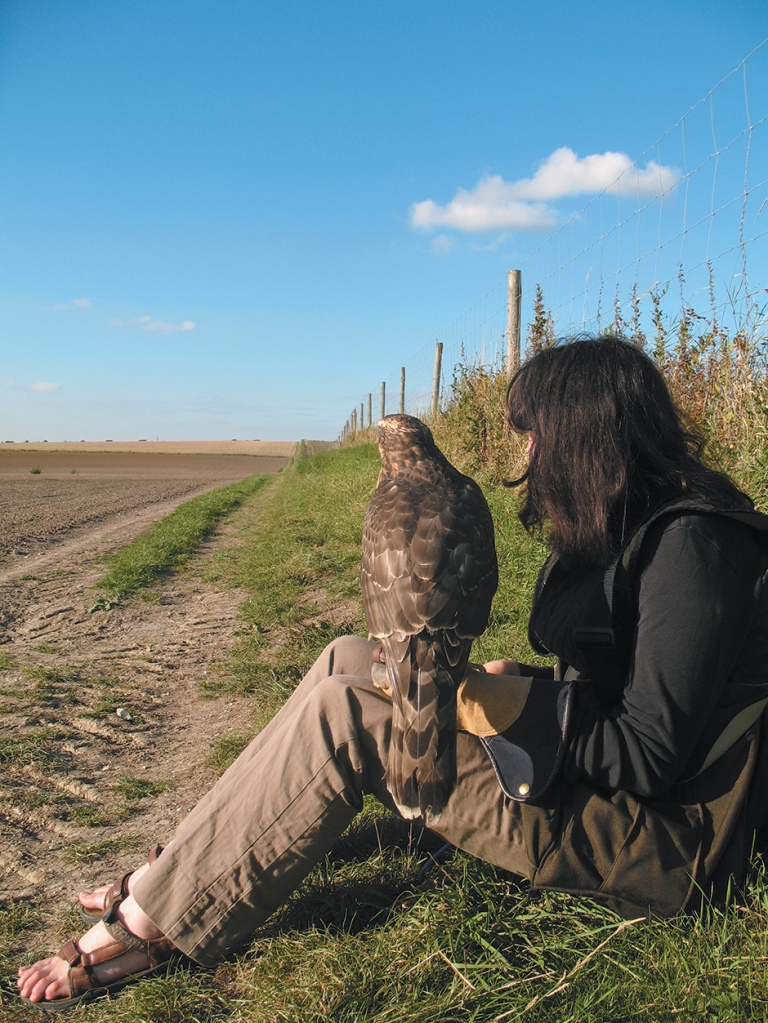
I’ve finished reading Helen Macdonald’s H is for Hawk and want to weigh in on it like someone who’s just dined gourmet and relishing the deed, must boast his good fortune.
I was attracted to Macdonald’s memoir because of its critical esteem in those bastions of literary prowess like The New Yorker and The New York Review of Books, which often ration praise and, even then, not without censure.
H is for Hawk has won two prestigious book awards as well: The Samuel Johnson Prize for non-fiction and Costa Book Award for best book in any genre.
This is Macdonald’s fifth book.
She teaches and does research at Cambridge University. Her interests include not only falconry, but history and poetry (3 published collections).
Macdonald’s memoir tells the story of her depression following the unexpected death of her father, Alistair MacDonald (2007), a longtime photographer and journalist for the Daily Mirror, and her resorting to falconry to relieve her grief.

This isn’t the first occasion we’ve seen a book testifying to the ability of animals to uplift troubled humans, but may well be among the best. In venturing into the first several pages, I knew immediately I’d be keeping company with a masterpiece.
Macdonald’s training of a goshawk provided a means of continuity with her father, an ardent plane spotter and bird enthusiast, who also taught her patience, a primary motif contributing to her healing and integral to harvesting nature’s plenitude::
My father’s talk of patience had held within it all the magic that is waiting and looking up at the moving sky.
But Macdonald’s memoir is not your romp into a Wordsworthian nature, benevolent and moral. Mabel kills her prey, suddenly and savagely, or like those artifacts of the human world, airplanes, which link the human and the natural; and yet, even then, there is a vital difference separating the two, with the balance favoring nature:
In my time with Mabel I’ve learned how you feel more human once you have known, even in your imagination, what it is like to be not. And I have learned, too, the danger that comes in mistaking the wildness we give a thing for the wildness that animates it. Goshawks are things of death and blood and gore, but they are not excuses for atrocities. Their inhumanity is to be treasured because what they do has nothing to do with us at all.
The writing itself is magnificent in its artfully composed sentences resonant with observation and chiseled detail of landscape and of her travails in training her goshawk, Mabel, and, most of all, in its poignant psychological journey of retreat from the human community and, ultimately, return to its renewed embrace.
Her memoir is also interlaced with T. H. White’s works, renowned for their Arthurian themes and with his The Goshawk (1951) in particular.
White, who lacked experience, had earlier attempted to train a goshawk, only to fail. Macdonald, however, didn’t suddenly take up the hobby or, more precisely, being an austringer (i.e., a hawk trainer), having previously trained peregrines, merlins, and kestrels:
While the steps were familiar, the person taking them was not. I was in ruins. Some deep part of me was trying to rebuild itself, and its model was right there on my fist. The hawk was everything I wanted to be: solitary, self-possessed, free from grief and numb to the hurts of human life.
Although MacDonald identifies in many ways with White, who becomes a projection and touchstone of her own anguished struggle to evade life’s seemingly malevolent caprice, she fortunately finds her way past his psychological morass.
As I grew happier his presence receded, his world more and more distant from mine.
Like White I wanted to cut loose from the world, and shared, too, his desire to escape to the wild, a desire that can rip away all human softness and leave you stranded in a world of savage, courteous despair.
Unlike White, she learns that “hands are for other human hands to hold. The wild is not a panacea for the human soul. Too much in the air can corrode it to nothing.”
–rj

 Brimmings: up from the well