The ancient classics, once the hallmark of the liberal arts, have increasingly vanished from today’s college campuses.
I remember with fondness my Massachusetts education. In the eighth grade, we read The Odyssey. In high school, I enrolled in what was dubbed the “classical” curriculum, emphasizing languages and the humanities.
In those days, you could major in Latin for four years, culminating in reading not only Cicero and Seneca, but Virgil’s The Aeneid, a work that’s impacted me immensely across the years.
If you’re lucky enough to get into Philips Exeter Academy, not far from where I lived, you’ll find the classics still in full bloom, courses not only in Latin, but Greek, to an advanced level. There’s even a classics club.
In the main, however, exposure to the classics has undergone steep decline.
An early harbinger, the year before I entered the University of North Carolina’s English Ph. D. program, the required Latin reading exam was dropped.
Today, issues of relevancy, racism, changing student interests, and funding have sped up a near universal decline in classics exposure across college campuses.
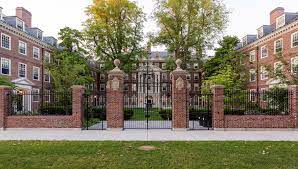
While Harvard and Princeton still retain courses in the classics, though in English and within a comparative global setting, other colleges have been dropping classics programs altogether, among them, Canisius College, Whitman College, Elmira College, the University of Vermont, Valparaiso University and Howard University, the only historically Black college to feature a classics department.
But back to my New England boyhood days, I remember going “junking” as we called it, ransacking antique stores, among their fare, scores of Latin public school primers, palpable evidence of a discarding of a former ubiquitous cultural presence.
In nearby Boston, there still exists its premium public educational institution, Boston Latin School, America’s first public school, founded in 1635, a year before Harvard College.
In keeping with its traditional Latin emphasis, options in Latin language courses remain, but the trend, as elsewhere, has been to evolve curriculum to service a diverse student body and transition to modern educational priorities.
I accept it’s at least better to retain the classics in English translation where budgets permit than to guillotine them altogether and acknowledge we live in a global village and musn’t exclude its verities of wisdom contributory to fostering a better world.
For nearly thirty years, I taught The Aeneid on a private university campus in a course called Western Classics, the only professor doing so. Its notion of self-discipline over impulsiveness, the obligation to duty (pietas) and mission (fatum) remain integral to civil integrity.
As the late academic Louise Cowan aptly put it, “To lose the classics is to lose a long heritage of wisdom concerning human nature, something not likely to be acquired again. Yet most college curricula now remain sadly untouched by their august presence, or at best make a gesture in their direction with a few samplings for select students. Such neglect is one of the most serious threats our society faces today” (“The Necessity of the Classics,” Modern Age Journal).
I’ve always admired Carl Sagan, taken from us so early at age 62.
Renowned for his contributions to space exploration and the search for extraterrestrial life, his thirteen year running public TV series, Cosmos, garnered an international audience of 500 million.
A prodigious scholar, he wrote some 600 papers and twenty books.
He wasn’t a child of privilege. His family knew poverty firsthand.
Sagan taught at Harvard for five years as an assistant professor following his undergraduate and graduate studies at the University of Chicago, only to be denied tenure. They said his interests were too broad.
Cornell immediately offered him a teaching position, and he would teach there, loved by his students and esteemed by colleagues, until his death thirty years later. Following his death, Smithsonian Magazine declared him “irreplaceable.”
I liked him especially for his advocacy of skepticism and embrace of reason and scientific methodology.
There’s a biblical proverb I remember: “Let another man praise you, and not your own mouth; A stranger, and not your own lips” (Proverbs 27:2).
Sagan was never given to affectation or condescension, an anomaly among eminent professors from elite universities I’ve known across the years:
“I think I’m able to explain things because understanding wasn’t entirely easy for me. Some things that the most brilliant students were able to see instantly I had to work to understand. I can remember what I had to do to figure it out. The very brilliant ones figure it out so fast they never see the mechanics of understanding.”
Along with Voltaire, Hume, Mill, and Russell, I owe Sagan an incalculable debt in helping me find the truth of reason that has set me free from the cultural biases, of which all of us are heirs.
The headlines shout the news of Harvard president Claudine Gay’s resignation.
It should have happened speedily, but not because she allegedly soft-pedaled campus protests calling for intifada while omitting Hamas’ atrocities and was consequently judged antisemitic by Israel supporters. I believe the presidents of Harvard, Penn, and MIT were essentially ambushed when they were interviewed—or is it interrogated?—by a House committee that had already made-up its mind.
As a former academic for nearly forty years, I firmly support the ACLU in its lawsuit defending University of Florida chapter of Students for Justice in Palestine, ordered deactivated in Florida’s public colleges by Governor DeSantis (ACLU defends).
Protecting the First Amendment is paramount and criticism of Israel shouldn’t be conflated with antisemitism.
Despite the ruckus over her “it depends on context” when asked if threatening Jews with genocide violated Harvard’s code of conduct, I think she was right.
As I write, seventeen members of Biden’s campaign staff sent an anonymous letter to Biden, calling for a permanent truce in Gaza and suspension of arms shipments to Israel.
Is it antisemitic to want the killing of Palestinian civilians, now exceeding 21,000, to stop? Whole families have been wiped out by incessant Israeli bombings; thousands more, nearly half of them children, wounded. Survivors haven’t any place to go. Schools, mosques, churches, hospitals and refugee camps haven’t found reprieve from largely American supplied weaponry. Survivors face disease and famine.
Was UN Secretary-General António Guterres antisemitic in saying Hamas violence didn’t happen in a vacuum”? Further, that “hospitals have turned into battlegrounds,” amid “the constant bombardment of all parts of Gaza” and rendered Palestinians homelessness and “without the essentials to survive”?
Meanwhile, West Bank violence continues unabated, with little said about repeated settler incursion on Palestinian lands and a vast expansion of Israeli settlements, rendering any two state resolution increasingly implausible.
A recent poll indicates 61% of the American public fault Biden’s strident support of Israel. Are they therefore antisemitic as well ?
Would it surprise you to learn that most orthodox Jews are anti-Zionists?
And then there’s that gadfly Jewish socialist senator from Vermont. I better stop. I think you see where I’m coming from.
Harvard was right to initially support its beleaguered first black president and just second female holding that post in its nearly 400 year history.
At least, in the beginning. But then money has a way of changing minds.
What began as a trickle became a tsunami, 1600 big spending Jewish alumni, some of them billionaires, pulling back from any more donations to the university.
Conservative Washington Post columnist George Will had said suspending giving wouldn’t dent Harvard policy, Harvard enjoying a 51 billion dollar endowment.
But he was wrong. 45% of Harvard’s 2022 $5.8 billion income came from donations.
When it comes to Gay’s several instances of plagiarism, I part ways with Harvard. Like most academics—I taught college English for forty years—I take plagiarism seriously. Failure to attribute sources constitutes both theft and fraud. The unveiling of her academic misdeeds called for immediate termination of employment.
In an opt-ed yesterday in The Guardian, former Secretary of Labor, Robert Reich, decries what he sees as a threat to campus free speech, donators marshaling monetary divestiture to secure their political perspective. He has a point.
Reich says, however, that he’s unable to comment knowledgeably on Gay’s alleged ¡plagiarism, but notes the bulk of the charges originated from the online conservative journal WashingtonFreeBeacon (Robert Reich).
So what? Does the source taint its accuracy? It’s the old guilt by association trick McCarthy played so notoriously.
The Left were privy to the allegations for some ten days, but buried it. Not until conservatives persistently pursued the story, led by Christopher Rufo, did the budding scandal take hold in the NYT, The Guardian, CNN and elsewhere.
If you pressed me, I could show you the specifics of Gay’s many instances of lifted passages, fifty initially in number with six more added the day before her resignation after meeting with the Harvard Corporation.
Ultimately, the new revelations piled on top of spiraling donator backlash, proved the straw that broke the camel’s back.
Did she get banished from the campus? Don’t even go there! Harvard, which initially made light of the charges, subsequently helped her correct the faulty passages in eight of her publications and reappointed her to her professorship in the Political Science Department.
If the shoe were on a student’s foot, the frequent punishment at reputable universities is expulsion for a year.
Talk about a double standard and the blatant hypocrisy of its Veritas motto, Harvard, you don’t walk the talk.
Writing anonymously for the Harvard Crimson, a student on the Honor Council that tries such cases, wrote, “When my peers are found responsible for multiple instances of inadequate citation, they are often suspended for an academic year. When the president of their university is found responsible for the same types of infractions, the fellows of the Corporation unanimously stand in support of’ her.” (Harvard president).
But why did an illustrious Ivy League university prove so intransigent in all of this is the bottomline question.
In a recent op-ed, black law school professor and former Harvard graduate Winkfield Tryman, Jr., comments that the plagiarism charges “are well deserved” and “not racial in nature…No one in good faith should defend President Gay because she is the first black president of Harvard. And yet, many are coming to her defense. Having finally got their wish of a Black president of Harvard, Harvard seems unwilling to let her go. The racial wagons have circled around Gay, with President of the NAACP alleging that White Supremacy is afoot and Morehouse President David Thomas claiming in a Forbes interview that Gay is a scholar at the “top of her profession… as qualified as any President Harvard has ever had” (Newsweek).
Truth be told, this illustrious Harvard prez “at the top of her profession” has published a mere eleven papers and not one book.
Now that’s a first, but of a dubious kind. Her predecessor, Larry Becow, the son of immigrants, and whose mother survived Auschwitz, wrote four scholarly books and scores of peer reviewed articles.
Unfortunately, this debacle at Harvard unfairly triggers a mindset of suspicion of legitimate black scholars, deflating their credentials and singular achievements.


 Brimmings: up from the well