After the Stars Go Dark: Thermodynamics for Mortals

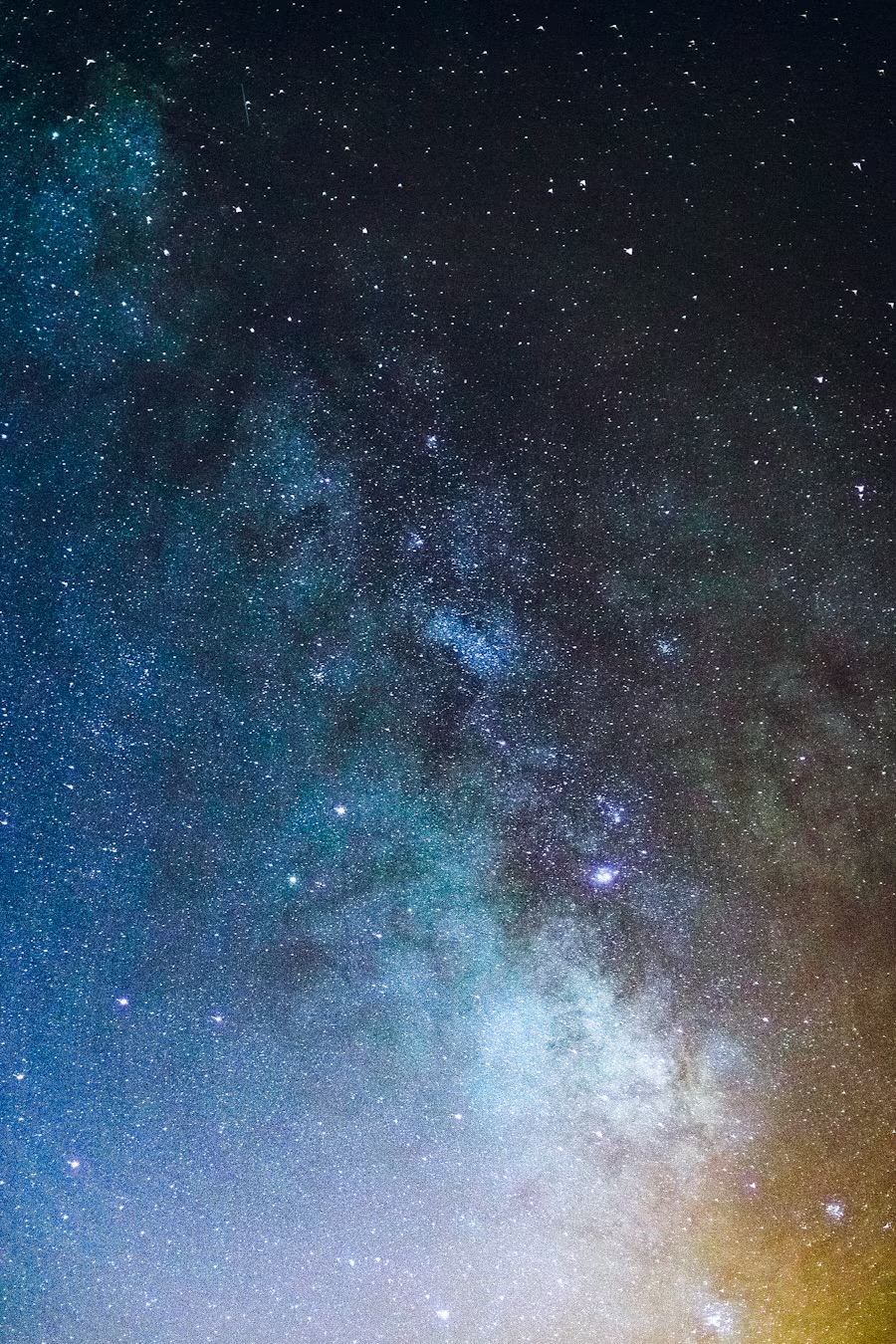
Our universe is mind-boggling in its vastness and mystery. Astronomers estimate it contains on the order of a septillion stars—roughly a 1 followed by twenty-four zeroes—though such figures apply only to the observable universe, bounded by the reach of our most powerful telescopes.

Though stars appear to us as ageless fixtures of deep time, they too—like all things—have beginnings and endings.

Our universe itself burst into being some 13.8 billion years ago. It continues to expand as galaxies rush away from one another, yet it will not expand forever in any form recognizable to us. Ultimately, it will be unable to sustain the structures that make matter—and life—possible.

How it ends remains a matter of fierce conjecture. The leading scenario suggests that as galaxies drift ever farther apart, they will fade beyond visibility; their stars will exhaust their fuel, leaving space cold, dark, and diffuse—a state known as thermodynamic equilibrium, or maximum entropy.

Sleep well, however. Such an ending lies far beyond the human temporal imagination.

Our sun, a middle-aged star at roughly 4.6 billion years old, has another four or five billion years ahead of it. Before its quiet extinction, it will grow hotter and brighter, boiling away Earth’s oceans and transforming the planet into a scorched desert—an irreversible greenhouse effect.

What truly unsettles me is the possibility that other universes may have existed before our own. Classical Big Bang theory posited a singular origin—a point of infinite density from which space and time themselves emerged. More recent theories challenge this view, suggesting instead that our universe may be one episode in an endless cycle of expansion and contraction.

The mystery deepens further. Might other universes exist now, alongside our own? Many physicists think so. If space extends infinitely beyond the observable horizon—currently about 46 billion light-years in radius—there may be regions forever beyond our capacity to detect, perhaps governed by laws of physics unlike our own.

The takeaway is not randomness, but recurrence: a cosmos governed by patterned transformation—birth, death, and regeneration repeating across unimaginable scales.

The end of Earth, and even of our universe, would not mark finality, but transformation.

Our suffering arises from clinging to permanence. The Buddha may have intuited this truth 2,500 years ago: reality is not static but dynamic—endless flux, expansion and contraction. Modern physics echoes the insight in the laws of thermodynamics: energy is neither created nor destroyed, only transformed; and all systems tend toward entropy.

We live, then, not in a fragile accident, but in a universe shaped by the regularity of change itself.

–rj
Making Moments Count

I’ve been reading Thich Nhat Hahn’s book on confronting our fears, a chapter each morning to begin my day and make it a better one.

In this morning’s reading, he tells of a woman who bought a Buddha statue at a flea market. When she brought it home, her small house offered no fitting place for it, so she set it on top of her television. When Thich Nhat Hanh later visited and saw its placement, he gently said, “Dear friends, the statue and the television don’t belong together. The Buddha helps us return to ourselves; the television helps us run away from ourselves.”

I don’t watch much television myself, but I know many who do. It so often serves as an escape—from the long day’s tensions, our restless anxieties, the quiet unease of being alone with ourselves. Such passive indulgence rarely nourishes us. It neither challenges nor enlarges us.

Today it’s not only television that distracts us. Social media reaches even deeper, its many tentacles drawing us outward until we lose touch with the stillness within. Life’s current slows; we grow older, dormant in our ways, awakening too late to realize we’ve traded what’s genuine for a shallow imitation.

—rj

Susan Sarandon Gets It: Authentic Living

susan-sarandon

“I can’t eat. I can’t sleep. I’ve been dreaming of my parents every day,” says Wang Zheng, a 31-year old engineer whose parents were aboard missing Malaysia Airlines Flight  370, now into its third week with still no positive yields as to its fate. 

Ironically, new reports of possible debris 1500 miles off the coast of Western Australia aren’t offering the languishing families and friends the solace they seek–that their loved ones may still be alive, despite its sheer unlikelihood.  As humans, hope is often all we can muster up against life’s irrational swells that confront, often adversely, randomly, and without closure, our daily quest for denominated happiness via health, work, food on our tables, and loved ones to share our good luck with on our return at day’s end.

Emily Dickinson said it well about the fervency of hope in her typically simple, yet elegant, observance,

 Hope is the thing with feathers –
That perches in the soul –
And sings the tune without the words –
And never stops at all.

Of course, it’s good to have hope in life, since without it we’d find each other mutually insufferable, depressed cranks weighed down by hurt, anger, and resentment.  I’m thinking just now of the biblical Job whose troubles were only made worse by his judgmental friends, devoid of empathy, callous to his personal suffering.

What prolongs our suffering, however, comes from our need to impose control, especially when it comes to life’s volatility, and thus hope may not really be what we need to shore us up.  All of life is laced with the temporal, or ending, a serial repertoire of good-byes.  In the vast aeons of Nature, even the mountains are born and die, our own existence as a species hardly a wink up against’s Nature’s several billion year legacy of genesis, maturation and decline.   For most of us, coming to terms with our own mortality is our ultimate existential dilemma. and the stuff of poetry, say like Keats (e.g., “When I have fears that I may cease to be”).

The Buddha had it right:  “All suffering is born of desire.”  Our primary desire is often for permanence when the truth is that impermanence embraces everything.  Again, we don’t like to say good bye.  I knew this first hand as a child, preferring to make myself scarce rather than seeing loved ones off.

We spare ourselves considerable grief when we grasp this fundamental truth, an observation shared in universal creeds and philosophic rumination, affirmed by science.  We can’t retain our youth; we forfeit our friends, sometimes our mates; we change our jobs and often our locales; we lose our parents; we see our children move out and sometimes far away; and, of course, we always must contend with that random press on human intent and happiness via cosmic intervention such as accident or natural disaster.

In all of this, it’s our human disposition to wander between past and future and thus miss out on what we do have–life in the Now–and living mindfully in its effulgence rather than hedonistically, which inevitably comes up short.

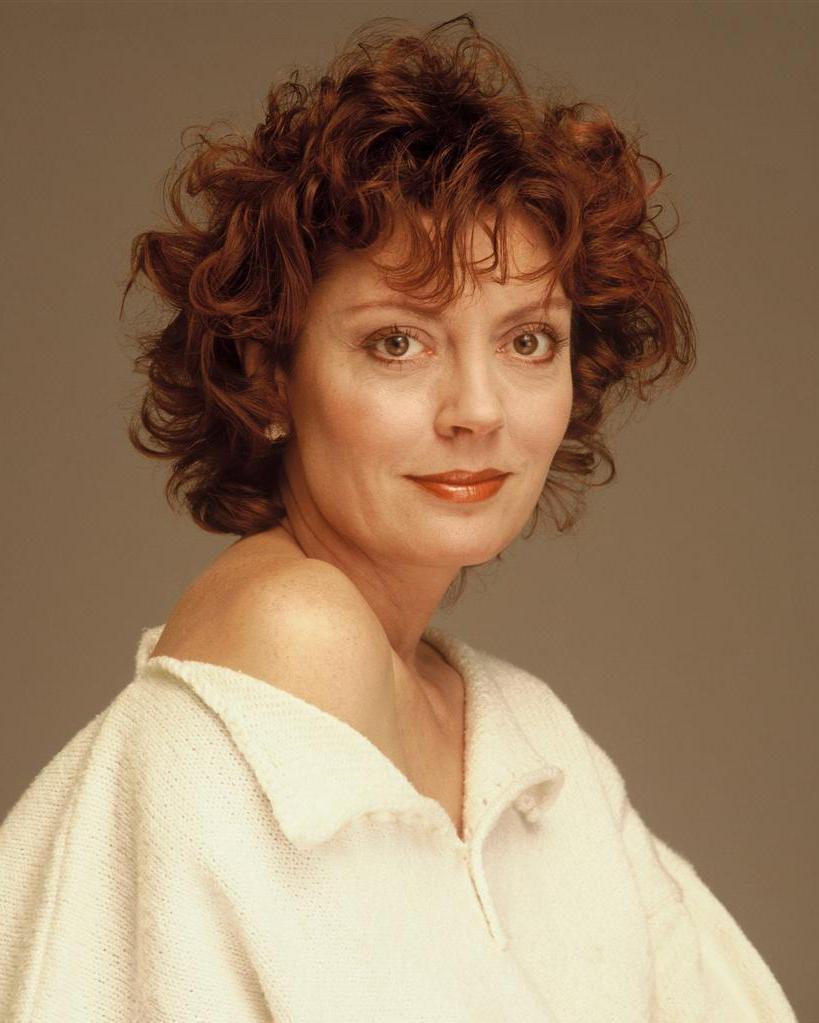
I was just reading about Susan Sarandon, whom I’ve long admired for not only her film achievement, but her compassion for those denied social justice.  In her personal life, she mirrors the wisdom of seizing the day, or maximizing our present.  Asked why she dissolved her 23-year relationship with Tim Robbins, with whom she had two children, she said that it came after performing in Ionesco’s Exit the King on Broadway, which deals with confronting mortality: “You can’t do a meditation on death and stay in a situation that’s not authentic” (Meg Grant, AARP Magazine, Feb/Mar 2014).

I also like her punchline simple formula for everyday happiness:  “It’s the simple things.  Good food.  Good friends.  Sunsets and sunrises.  With age, you gain maybe not wisdom, but at least a bigger picture” (Grant).

Me, I call that wisdom: authentic living in the present.  After all, the Now is all we really have, given the ephemerality of life’s myriad textures.  Living it meaningfully–which is to say, mindfully–enables us to find freedom over circumstance and, with it, greater happiness

–rj