I confess to being an omnivorous reader and that my iPad has only abetted my hunger for new turf, now so easily accessed with the likes of Publisher’s Weekly, Goodreads, and the Huffington Post. On occasion, I’ve drawn on Fareed Zacharia’s recommendations on his GPS weekly telecast. I maintain links to all the nation’s foremost bookstores like Powell’s as well. And, of course, there is always that behemoth, Amazon.
This past week I was delighted to see two authors among those on the 2014 Long List for the National Book Award for Nonfiction.
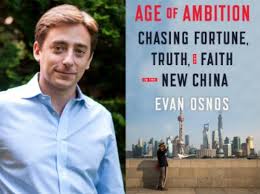 The first is Evan Osnos, whose Age of Ambition: Chasing Fortune, Truth, and Faith in the New China I read several months ago following upon Zacharia’s counsel. It’s not my intent, however, to give a lengthy book review here. Besides, you can access copious online reviews with Google or at the Amazon site.
Anyway, Osnos is presently with The New Yorker after having been a roving correspondent in China for eight years. He went everywhere, interviewing citizens across the social-political-economic spectrum.
What amazes me is that he did so speaking fluent Chinese, acquired as a major at Harvard, obviously increasing his access enormously.
He’s also a polished writer exhibiting a lucid style along with cogent analysis.
I hadn’t done any sustained reading on China until Osnos, which–sadly– probably includes the vast lot of us, though China rivals the USA on the world stage.
Certainly, Osnos has his hands on that nation’s pulse. Essentially, its communist government hasn’t changed in its dedication to controlling all aspects of daily life and maintaining its privileged status despite its seeming anomaly of encouraging a market economy so contrary to the legacy of Mao.
It does so, of course, to keep in check any democratic impulses among its citizenry. Let them eat cake and they’ll overlook pressing for governmental reform. So far, it seems to have kept the lid on, though Osnos notes that many of the populace seethe underneath, as materialism cannot assuage their desire to be free to think and choose. Accordingly, a revival of interest in religion is also taking place, proving again “that man cannot live by bread alone.”
As a consequence, it’s a fine-balancing act for many Chinese, especially among its entrepreneurial classes, intellectuals, and artisans. The thought police are everywhere monitoring, especially the Internet.
The regime even goes so far as to downplay natural disasters that may point to government malfeasance.
Of course, the Chinese know this well to the point of using code terminology to circumvent the censors.
Osnos doesn’t neglect the full picture, however, as there is a growing emergence of rabid nationalism among some that could ultimately pose a danger on the world stage. In the short term, these zealots pose an additional threat to the cadre of brave dissidents at home.
I went away admiring the quiet heroism of many of the Chinese, and sadly, the hard lot of dissidents who have chosen to articulate their concerns for a more liberal China very openly, risking long imprisonment under harsh conditions and sometimes torture.
If you want to take China’s measure, then this is a book you’ll want to read.
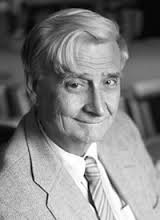 The second name among others in the 2014 Long List for Nonfiction is that of the renowned etymologist Edward O. Wilson for his The Meaning of Human Existence. I’m familiar with Wilson’s nimble acuity to persuasively and eloquently deliver a manifesto for nature and its myriad creatures under the duress of both man and global warming in his other books.
I’ve also just recently read his In Search of Nature, surely an environmental classic that explains in layman’s terms the complicated interplay between genetics and environment. Like all sociobiologists, Wilson seeks to unlock the biological origins behind human behavior.
In the Meaning of Human Existence, Wilson boldly asserts that no transcendental design is responsible for our existence. On the contrary, “Our species was created not by a supernatural intelligence, but by chance and necessity out of millions of species in Earth’s biosphere.”
No destiny or purpose is assigned to us, and no afterlife awaits us. Our human moment originates in “the epic of the species, begun in biological evolution and prehistory, passed into recorded history, and urgently now, day by day, faster and faster into the indefinite future.”
Creatures with a social intelligence predisposed for social action enhanced by natural selection, we require the humanities even more than the sciences to define the human condition and guide it into effectual relationships, not only among ourselves, but with earth’s other creatures, for surely our future, and our safety, depends upon biodiversity and its preservation.
Wilson’s view is a brave one, given that the religious instinct along with “tribalism” remain rampant with all their insularity and intolerance:
Human existence may be simpler than we thought. There is no predestination, no unfathomed mystery of life….We are self-made, independent, alone, and fragile, a biological species adapted to live in a biological world.
Accordingly, Wilson movingly pleads that humans in their unique social intelligence extend their embrace to include nature:
We alone among all species have grasped the reality of the living world…. We alone have measured the quality of mercy among our own kind. Might we now extend the same concern to the living world that gave us birth?
As always, Wilson writes a reasoned, yet passionate prose, acute in its honesty, telling in its empathy for both man and his beleaguered companions.
–rj
 Brimmings: up from the well