What Happens Then? Trump’s Myopic Climate Change Agenda

Caring about Mother Earth like many of you, I lament Trump’s myopic approach to climate change reflected in his pledge to curtail the provisions of the Inflation Reduction Act and withdraw from the Paris Agreement.

Renewable energy alternatives like solar, wind, and electric vehicles will be curtailed, prolonging our fossil fuel dependency.

Unfortunately, climate change didn’t resonate as an important issue for many voters, inflation, job security, healthcare, and immigration taking precedence.

Not infrequently, public attention to climate concerns follows the oscillations of natural disasters and temperature rise, snuffed out shortly after each by more immediate local concerns.

As is, we’re already behind in our efforts to mitigate climate change, hastening earth’s demise and dooming future generations to apocalyptic consequences formerly the realm of science fiction.

Unlike the biblical Joseph, we are unlikely to stow up for the future. Alas, the seemingly distant phenomena of melting glaciers, droughts, famines, and biodiversity loss may falsely shelter us from their unfolding consequences.

The danger looms that Trump’s intransigence on climate change may motivate developing nations to do the same in view of budget restraints.

An excerpt from poet Neil Gaiman’s moving tribute to Rachel Carson, “After Silence,” speaks to our malaise.

What happens then?
Are consequences consequent?
The answers come from the world itself
The songs are silent,
and the spring is long in coming.

There’s a voice that rumbles beneath us
and after the end the voice still reaches us
Like a bird that cries in hunger
or a song that pleads for a different future.
Because all of us dream of a different future.
And somebody needs to listen.
To pause. To hold.

A Seat at the Table: Why Economic Rights Must Transcend Identity Politics

In a recent Brimmings post, I cautioned Democrats to avoid identity politics: “While minority rights matter, they musn’t be set against the economic rights of all Americans to a fair share. Otherwise, we reap continuing resentment, social fissure, and exploitation.”

To blame working class white males for Harris’ defeat isn’t where it’s at. Truth is America’s working class transcends race and ethnicity. 15% of Blacks voted for Trump; 41% of Hispanic voters did the same. Collectively, they provided the margin of victory in the battleground states.

Perceiving themselves as marginalized while others jumped the queue, they voted their resentment. Trump masterfully exploited that resentment, focusing on unchecked immigration (8 million) at the southern border under four years of Biden.

America’s healing lies in addressing their grievances; if not, we’ll continue to be prey to demagoguery and its selfish interests.

Everyone needs to feel they’ve a place at the table, regardless of race, origin, or background.

—rj

Beyond Self: The Power of Empathy in Troubling Times”

In this anxiety-ridden age, I’m sometimes tempted to tune out the endless cacophony and retreat into a myopic vista of self-concern. But in doing so, I’d foreclose on empathy, essential for promoting understanding, compassion, and a kinder world.

It’s why I read daily and widely. To not do so exacts a price I’m unwilling to pay. Favorite author Elif Shafak expresses my sentiment superbly:

“It is the Age of Angst indeed, but it will be a more dangerous and broken world if it were to become the Age of Apathy. The moment we become desensitised. The moment we stop following what is happening in Gaza, in Ukraine, in Sudan… the moment we stop thinking about our fellow human beings, and their stories and silences, here and everywhere…. the moment we stop paying attention, we stop connecting across borders, we stop caring.

“If there is one emotion that really should frighten us, it is the lack of all emotions. It is numbness. It is apathy.”

—rj

Early Voters Signal a New Day for America

According to the most recent polls, Harris and Trump are in a dead heat, the outcome uncertain. Sounds awful? Relax!

The polls are wrong.

Trump blew the Latino vote with the Madison Square Garden hate fest. Early voting returns show women voting in record numbers for Kamala. Same with seniors, concerned about healthcare under Trump.

Wednesday morning, a new day for America, a glass ceiling shattered, democracy prevails, and a watching world rejoices.

—rjoly

Trump’s Madison Square Garden Debacle: Is This the End?

Trump’s Madison Square Garden rally last Sunday may very well have alienated Latinos across the country and cost him the election.

The wound was inflicted not by Trump, but by comedian Tony Hinchcliffe, who appeared as a warm-up act before Trump took the stage.

Drawing from a barrage of stereotypes targeting Black, Jewish, Muslim, and Latino communities, Hinchcliffe described Puerto Rico as “a floating isle of garbage,” adding that Latinos “love making babies.”

Welcome to the October surprise!

Although the Republican campaign attempted immediate damage control, the fallout of rage was immediate and widespread.

Pivotal state Pennsylvania has a 427,000 Puerto Rican population. Then there’s North Carolina (115,000), Georgia (101,000), and Arizona (65,000), all of them battleground states essential for a Trump victory.

Nationally, 36 million Latinos are eligible to vote next week, up from 32 million in 2020, according to the Pew Research Center.

Trump’s been on shaky ground from the beginning, many Puerto Ricans still nursing a grudge over the former President’s reluctance to grant islanders $20bn in aid in the aftermath of hurricane Maria in September 2017 in which 3000 died. Puerto Rico went without power for 181 days.

His acting Homeland Security secretary, Elaine Duke, reported to the NYT Trump proposed selling or divesting the entire island of Puerto Rico. following the disaster.

In the meantime, Democrats have made it a priority to grant Puerto Rico statehood, an obvious political maneuver giving them two more senators and, with the probable inclusion of Washington, DC, two more.

As for the Puerto Rico commonwealth, its voters on election day will again be deciding on statehood. The 2024 plebiscite differs, however, the previous six allowing voters the popular option of remaining a commonwealth, exempt from federal taxes. This year’s plebiscite omits that option. It’s simply statehood, independence, or independence with free association, virtually assuring statehood approval.

Critics claim that House Democrats, in collaboration with Puerto Rico’s Popular Democratic Party (PPD), rigged the plebiscite by passing the Puerto Rico Passage Act (2022), which established the current plebiscite with its limited options (Plebiscite).

Meanwhile, Puerto Rican voters on the mainland are not unappreciative of Democrat overtures on their behalf, nationally and in Puerto Rico. “We are not garbage and we are not lazy and we’re all American citizens ready to vote in this election,” said Luis Miranda, founding president of the Hispanic Federation and chairperson of the Latino Victory Fund (Puerto Rican Jokes).

Statehood, nevertheless, remains an uphill climb. To achieve congressional approval of statehood, Democrats will need to control both chambers. Although a simple majority vote is all that’s needed in each, in the way looms the Senate’s filibuster with its sixty vote threshold.

Kamala Harris has pledged to temporally suspend it in any vote to restore Roe v. Wade, a move opponents argue could make the filibuster obsolete.

There have been two attempts on Trump’s life, possibly a third. Fortunately, these efforts failed. However, the fiasco at Madison Square Garden may have dealt a fatal blow to Trump’s chances of returning to office in a close election.

–rj

When the Japanese Don’t Look Japanese

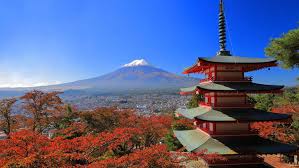
I remember Japan fondly, falling in love at first sight. It was twelve years after WWII and a place remarkably different from anywhere else and, in large measure, it has remained so.

It had been a long flight from Travis AFB in California, a brief stop in Honolulu for a crew change, then on to Wake Island, where President Truman had a few years before confronted a defiant General MacArthur, then on to Yamoto Air Station, 23 miles from Tokyo.

I was 17, an airman headed for Korea for the next 12 months. Yamoto meant processing before continuing on a C-47 for Osan AFB near Seoul.

Japan was then this kaleidoscope of sensuous bombast—human drawn rickshaws, coolies in straw conical hats, buckets suspended on long poles between their shoulders, and everywhere, women garbed in flowery kimonos on densely packed streets.

I would return to Japan twice on rest leave, the first time centering on Tokyo and its Ginza, even then, bustling with elegant department stores, game shops, restaurants, art galleries, theaters and night clubs, illuminated at night by a swarm of neon lights rivaling those of Vegas and New York. I would visit the grounds of the Imperial Palace, the Great Kanto Earthquake Memorial, and the Great Buddha of Kamakura bronze statue originally cast in 1252.

One of the supreme highlights was keeping company with American Quaker friends in Tokyo, who arranged a get-together with university students, fluent in English. They gave me a different war vista in narrating the American fire bombing of Tokyo, March 9-10, 1945, killing 100,000 civilians and leaving 1,000,000 homeless. I learned that it’s the victors who write the history we imbibe and I remain moved by their civility to me, an American serviceman.

A few days later, I journeyed by car with my friends, laboring up twisting mountain roads to the shrine city of Nikko 97 miles from Tokyo, where I lived several days in traditional Japanese manner, sleeping in minimalist fashion on a tatami soft mat made with rice straw fill, rolled out on the floor, then layered with a Shikifuton, or thin mattress, and a buckwheat hull pillow. To keep warm, an added Kakefuton , or soft quilt.

Following a hot bath, dressed in kimono, served a fish-seaweed meal, no links to an external world, I slept soundly.

I’m not certain how prevalent this ancient sleeping mode survives in modern Japan, though I know traditional inns abound in Kyoto, that magical city of April cherry blossom.

On my second visit, I took a long distance train from Tokyo to Fukuoka, one of Japan’s most populated cities on the southern island of Kyushu. I wish I could remember what I took in there, but I draw a blank, though I recall being dazzled by its department store elevators, on each floor, a young girl, often giggling at this lanky Westerner, helping you get on and off the escalator, and from my train window a passing landscape of brick houses contrasting with the fragile wooden structures dominant in central Honshu, Japan’s largest island.

There’s much I admire in the Japanese culture, still unique in spite of the cultural leveling you see in other nations, or what can be called Americanization, hastened by film and TV.

They’re surely the most hygienic-centered people I’ve known, indulging nearly daily in the hot bath and painstaking to remove their shoes before entering your home.

Streets are free of trash, yet you won’t find trash cans.

Politeness is the hallmark of Japanese culture, san often added to to a surname to render respect. It extends even to the language’s several pronouns, a tier gauged approach to courtesy.

Some of the customs are especially endearing. If given a gift with the donator present, you don’t open it, lest you hurt their feelings or, worse, feel pressured to masquerade your dislike on unwrapping it.

You reciprocate by sending a gift, usually candies.

Etiquette extends to not eating on a train or while walking.

Not interrupting

Not talking loud.

Not bragging.

Then there’s the ubiquitous honesty. Unlike in many countries, you don’t have to safeguard your pockets in a train station, not even on a packed commuter train.

Leave a camera on checking out of your hotel, housekeepers will see it to the registration desk.

You don’t shake hands or hug, bowing instead as a way of modesty and respect.

Sample your rice first, before nibbling other dishes, then go back to the rice, viewed as a palate cleanser.

Japanese gardens obsess me. I’ve always wanted one. With their emphasis on simplicity, harmony, and verisimilitude with nature, they confer sanctuary from everyday bustle and induce an inner calm. Many Japanese homes feature their own courtyard garden, bringing nature close.

Then there’s the tea ceremony, derived from Zen Buddhism, emphasizing mindfulness and bonding between host and guest. Thankfully, it remains a revered ceremony.

As for crime, it’s rare in Japan, mass shootings virtually unknown. Contrast with this, the 400 mass killings (4 or more dead per incident) in the U.S. in the first six months of 2023.

Unlike America, it’s not about doing your own thing. It’s thinking about others and not bringing shame to your family.

But Japan’s changing, inevitably because unless it does, it will simply vanish in several generations. The Japanese aren’t replacing themselves and unless they do, its present population of 124 million will dwindle to 87 million by 2070.

Consequently, traditionally xenophobic and homogeneous Japan has turned to immigration to solve its labor needs and sustain its population. 3,000,000 immigrants now call Japan home, triple the number in 1990. They come from not only Asia, the Philippines, Vietnam, and Indonesia especially, but from Africa and the Middle East. There are cities where 10-15% are foreign born.
Today, you’ll find 113 mosques across Shinto-Buddhist Japan. In 1999, there were 15.

Will Japan’s new citizens bring their resentments with them, as in France, England, and Sweden?

Will they end-up in ghettoes of the unassimilated?

As their numbers swell with immigration and higher birthrates, will they overwhelm the world’s most exemplary society?

Will the Japanese fade like countless fauna and flora into memory, their substantial contributions to civilization relegated to history books like those of the fabled Pharaohs’ Egypt or Nebuchadnezzar’s Hanging Gardens of Babylonia?

In sum, what happens when the Japanese don’t look Japanese?

–rj

A Profound Influence: My Debt to Tolstoy

I’ve had this fever to devour books since I was a child.
It began when my brother, David, returned from the army and gave me Huckleberry Finn to read. I was eight.

There was this small news store on Philadelphia’s busy Girard Avenue in Fishtown. I don’t remember how I discovered it, but I’d often stop there on the way back from elementary school or in summer time, when I roamed the city as a street urchin, sometimes poking my nose where it didn’t belong.

They had this big box filled with what were called Classics Illustrated, which featured comic-style adaptations of literary classics. Founded by the Kanter family in 1941, Classic Illustrated made it into the 21st century.

I’d fish out comics featuring works like Swiss Family Robinson, Moby Dick, Kidnapped, Mutiny on the Bounty, Oliver Twist. They went for no more than a nickel and there were lots of them.

I enjoyed them so much, I didn’t want them to end. This led me to the Montgomery Street library, where I would read their originals. By age 12, I had read scores of literary works. By the way, that library still exists.

Of all the writers I’ve read over the years, Tolstoy stands out head and shoulders above all others, influencing me profoundly. By age 13, I had read War and Peace and at 15, Anna Karenina.

Tolstoy taught me empathy for the poor, disavowal of violence, restraint from eating meat, to live simply and love my fellows.

Tolstoy’s great quest was to resolve life’s riddle: How should we live?

His quest became mine,

I loved his parabolic short stories. I think of The Death of Ivan Ilyich as among the most profound short stories I’ve ever read and taught it for many years.

Tolstoy’s writing creeps up on you. Though simply written, for Tolstoy shunned affectation, it’s the pulsating nuance generated by a passionate insistence that holds you to the end. Make no mistake. He aims to convert you.

Then there is his last novel, Resurrection, moving and powerful, a panorama of Russian life at the end of the nineteenth century. On the attack, he assails the injustices of a repressive, oligarchic society and the hypocrisy of its bulwark, the Russian Orthodox Church.

I wanted to read him in the original, so I studied Russian.

As a college prof, I taught seminars in Russian classics.

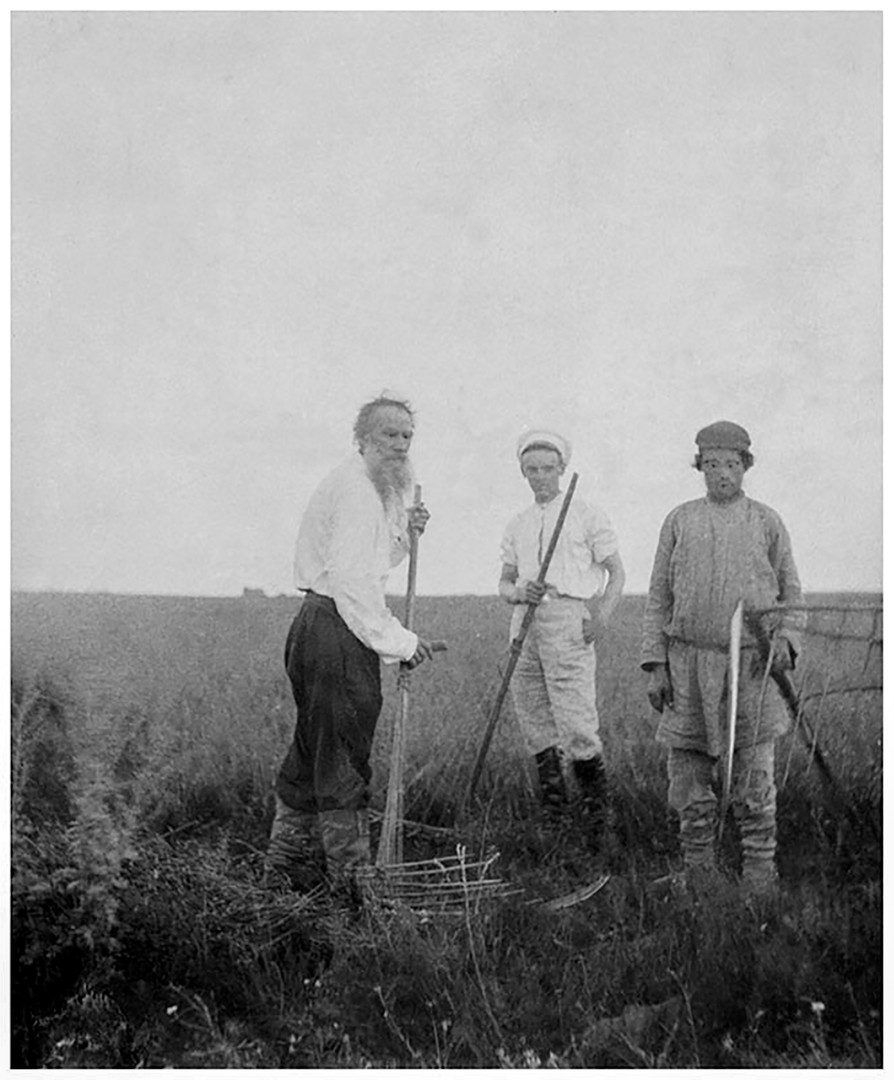
In 2001, I went to Russia and visited his lifelong residence at Yasnaya Polyana near Tula, 125 miles southeast of Moscow. I stood in silent tribute at his grave.


If there’s a Tolstoy book you should read sooner than later, my recommendation is The Kingdom of God is Within You.

Mahatma Gandhi, on reading it, exclaimed that he felt “overwhelmed”: “All the books given me … seemed to pale into insignificance.”

Tolstoy and Gandhi exchanged letters till Tolstoy’s death in 1910. Gandhi had also read Tolstoy’s hand-circulated “A Letter to a Hindu,” with its advocacy of love, not force, as the means to freeing India from British rule. We know the rest of the story.

I’m not interested in hagiography. Tolstoy had feet of clay. There existed his stormy marriage to Sofia and his moral intensity in combat with carnal appetites. He endowed his protagonist Anna Karenina with liabilities he despised in himself, annulling her quest for self-realization. In the novel, it’s Levin who Tolstoy aspires to be.

When the Bolshevik revolutionaries violently seized power in 1917, the five year Russian Civil War began. The Bolsheviks, coming upon the Yasnaya Polyana estate, did not blaze it to non-existence as was their wanton elsewhere. Tolstoy had freed his serfs long before the Czar. Dressing in peasant garb, he labored among them, and distributed his wealth.

When German troops approached the estate in their invasion of Russia, the Soviets loaded Tolstoy’s furnishings and manuscripts on a train into the Urals, safe-guarding them for posterity.

Today, Russia continues to revere Tolstoy, for he’s the Russian soul writ large. I never understood the deep spirituality of the Russian psyche until I was on Russian soil. You see it in their art: Bryullov, Kandinski, Aivazovsky. You hear it in their music: Tchaikovsky. Rimsky-Korsakov, Rachmaninov. You imbibe it not only through Tolstoy, but in Pushkin, Dostoevsky, and Chekhov. In Russia, poets are celebrities.

Russia is neither European nor Asian. It is itself.

Embraced by the universal human condition, Tolstoy nonetheless intensely sought to free himself from its shackles in pursuit of love, social equity, and non-violence: “The sole meaning of life is to serve humanity.”

I take him with me everyday.

–rj

RJ´s 2023 Reading List

One of Keats’ first notable poems, “On First Looking Into Chapman’s
Homer,“ celebrates Elizabethan poet George Chapman’s translation of Homer, an achievement kindling discovery and wonderment in Keats akin to that of the best travel venture. It’s what good books do, transporting us into unforeseen realms, expanding awareness and making us wiser, often lessening our prejudices, wrought by custom, that prohibit pathways to new understanding. Staying close to my drawback booklist for 2022, I read twenty-five books that, even at this stage in my life, have granted me gateways into personal growth. With similar expectation, I’ve again selected from among the very best reads out there, those that inform, challenge, and delight. Even in a time of declining readership, there remain books justifying your investment and, potentially, life-changing. —rj

Fiction:

Austen, Jane. Sense and Sensibility (Not as widely read as Emma, Pride and Prejudice, and Persuasion, it’s still worth reading in its exploration of moral dilemmas and, as the title suggests, the role of reason over emotion in solving them.)

Caroll, Lewis. Alice in Wonderland (The great classic you meant to read, but haven’t. A work inspiring others, and though seemingly a romp in imagination, latent with nuance, momentarily retrieving childhood wonderment lamentably lost by adults).

Catha, Willa. My Antonia. (Catha’s classic novel of a female immigrant’s tenacity to prevail on the Nebraska prairies. )

Franzen, Jonathan. Crossroads. (The latest novel by the great master of family dynamics, set in 1970s suburban Chicago, the first of an intended trilogy, a family headed by a minister must confront issues of faith and morality.)

Gaarder, Jostein. Sophie’s World. (Very appealing to both young people and adults, Gaarder’s novel embeds philosophical history that many readers find more compelling than the novel’s story. A favorite read internationally.)

Hurston, Zora Neale. Their Eyes Were Watching God (A moving work of the Harlem Renaissance, underscoring black identity, feminism, and love’s vulnerability.)

Ishiguru, Kazuo. The Remains of the Day (Narrated in first person through flashback and travelogue, a retired butler reevaluates his life. A Booker Prize fiction winner turned into a film selected as an Academy Awards Best Picture ,1993).

Labutut, Benjamin. When We Cease to Understand the World (“A monster and brilliant book,” says Philip Pullman. An exploration of the last century’s greatest minds exploring the profundities of existence.)

Percy, Walter. The Movie Goer. (Percy’s debut novel, featuring a post-Korea war veteran, now stock broker, suffering from malaise, in search of life’s meaning. A National Book Award winner listed by Modern Library as the sixteenth best novel of the 20th Century.)

Powers, Richard. Bewilderment. (The writer of acclaimed Overstory pens another literary masterpiece of Man’s estrangement from nature.)

Roberts, Gregory David. Shantaram. (The late Pat Conroy wrote: “Shantaram is a novel of the first order, a work of extraordinary art, a thing of exceptional beauty. If someone asked me what the book was about, I would have to say everything, every thing in the world”).

Rushdie, Salmon. Midnight’s Children (Booker Prize winning novel narrating India’s transition from British rule, a landmark work in post-colonial literature.)

Sebald, W.G. Austerlitz (Surely among the best ten novels of the previous century, a gripping account of repressed memory and the quest for identity.}

Smith, Zadie. White Teeth (An insightful first novel by a contemporary author observant of a plethora of issues: race, immigrants, education, science, religion, and nationalism among still others. Listed in Time Magazine {2005} among 100 All Time 100 Novels.)

Stendhal. The Charter House of Parma (An aristocrat in Napoleon’s army depicts court intrigue with psychological portraitures ahead of its time.)

Yanagihara, Hanya. To Paradise (A powerful narrative of the intersection of privilege and exclusion in America across three generations by one of our foremost contemporary novelists. The Guardian calls it a “masterpiece for our time.”)

Non-Fiction

Gardner, Howard, et al. Good Work: When Excellence and Ethics Meet (Based on more than 100 interviews across the workplace, a quest at evaluating what good work is and the ethical dilemmas posed by today’s technology.)

Gardner, Howard. Multiple Intelligences: New Horizons in Theory and Practice. Revised ed. (Gardner’s influential thesis that there exist multiple kinds of intelligence, not just one.)

Gaskell, Elizabeth. The Life of Charlotte Brönte. (Classic Victorian biography of the writer of Jane Eyre. Fascinating in its delineation of Brönte family dynamics.)

Hannah-Jones, The 1619 Project. Rev. ed. The controversial book that sets America’s beginnings in 1619, not 1776, and argues the American Revolution was a reactionary response to incipient British antagonism to slavery.)

Harris, Marvin. Cows, Pigs, Wars, and Witches: The Riddles of Culture ( A leading anthropologist’s explanation of why people believe the things they do. Harris’ many books never cease to allure.)

Kolbert, Elisabeth. Under a White Sky: The Nature of the Future (Pulitzer Prize winner for The Sixth Extinction, this new work explores whether we can still mitigate the damage we’ve done and save our planet. Recommended by Obama and Gates.)

Milosz, Czeslaw. The Captive Mind. (Nobel Prize winner examines the moral and intellectual conflicts posed by life under authoritarianism. Recommended by Elif Shafak.)

Montaigne, Michel de. Essays. (Just maybe the greatest essay writer ever, Montaigne teems with brilliance, helping us live better lives.)

Wallace-Wells, David. The Uninhabitable Earth (A survey of climate change’s brutal impact, but not without hope, if we get on board.)

Wright, Robert. Why Buddhism is True. (An engaging approach to secular Buddhism and its alignment with disciplines like psychology and neurobiology. Buddhism at its best takes on our human predicament and provides strategies for finding peace.)

Wulf, Andrea. Magnificent Rebels: The First Romantics and the Invention of Self. (A New Yorker selection as one of the best 2022 non-fiction books, Magnificent Rebels is an intellectual history of early Romanticism, centered in Jena, Germany, ultimately laying the foundation for English Romanticism. )

Yong, Ed. An Immense World: How Animal Senses Reveal the Hidden World Around Us. (We humans, anthropocentric as we are, consider ourselves lords of the creation. Yong’s book dispels our pretentiousness as we learn of fellow creatures of myriad, and superior, capabilities. New York Times listed as one of the ten best books of 2022.)

Salman Rushdie’s Home-Brewed Adversaries

Once again, fundamentalist Islam has shown its ugly side in the attempted slaying of Salman Rushdie for writing The Satanic Verses. After two decades in hiding, he thought he was safe from Ayatollah Khomeini’s fatwa (1989). He was wrong.

We expect secular regimes to impose imprisonment and death on those who quarrel with their governance. Think Stalin, Hitler, Mao, and, currently center stage, Kim Yong- un, the Myanmar military regime, Xi Jinping, Putin, Maduro, and Ortega.

But religion sponsoring terrorism? For the most part, no; but not when it comes to much of the Islamic world.

Ironically, Islam has remained a largely medieval faith, inimical to change. A PEW Center Analysis (2019) surveyed 198 countries and territories and found that 40% had laws prohibiting blasphemy, defined as irreverence against God and sacred objects. 11% had laws against apostasy. Most of these countries are Muslim.

In 2019, Pakistan sentenced seventeen individuals to death for blasphemy, though the sentences haven’t been carried out as I write.

Iran executes “blasphemers” regularly as public policy, often as means to quell dissent, i.e., to oppose the regime is to oppose Allah.

Iranian execution doesn’t exclude stoning, usually for adultery. Human rights groups report that between 1980 and 2009, 150 people have been stoned to death. Currently, leaked prison documents reveal 51 individuals slated for execution by stoning, 23 of them women, 28 of them, men (thesunco.uk).

We are, indeed, back to ancient ways.

The publisher, Penguin, kept a stiff upper lip in pursuing publication of The Satanic Verses, despite death threats to its executives. An anomaly in a film-dominated time, books still had power to move the needle!

In 1989, Iran’s supreme ruler, Ayatollah Ruhollah Khomeini, issued a fatwa and $3m award for killing Rushdie for blasphemy in writing The Satanic Verses (1988).

This is the same holy man who sanctioned the execution of up to 5,000 Iranians accused of conspiracy in 1988. He would die a natural death four months after his fatwa.

What followed the fatwa was a bloodbath, forcing Rushdie into hiding under protection of British intelligence. Though he would apologize, the current Ayatollah, Ali Khamenei, rejected his apology. (Rushdie has long since recanted his apology: “The worst thing I ever did.”)

Subsequent to the fatwa, thousands of Muslims assaulted bookstores, threatening to bomb those selling his book.

In 1991, the book’s Italian translator was knifed, but survived.

A few days later, Japanese translator Hitoshi Igarashi was stabbed to death.

In 1993, the novel’s Norwegian publisher, William Nygaard, was shot, fortunately surviving his wounds.

In Tunisia and Saudi Arabia, two clerics protesting the fatwa, were fatally shot.

Riots broke out in Iran, India, and Pakistan. An estmated sixty people died.

Then, as now, many of Rushdie’s writing cohorts came to his defense, among them, Martin Amis, Joan Didion, Ian McEwan, and Christopher Hitchens.

I like how Steven King took on J. B. Dalton, one of three book chains refusing to sell Rushdie’s novel: “You don’t sell The Satanic Verses, you don’t sell Stephen King.” It reversed course immediately (vanityfair.com).

There were holdouts, arguing we should refrain from offending the sensitivities of others, much like what we hear in today’s cancel culture.

Among the holdouts was John le Carré, who wrote in The Guardian that “nobody has a God-given right to insult a great world religion and be published with impunity.”

In similar vein was former American president, Jimmy Carter, who wrote an op-ed in the NYT: “While Rushdie’s First Amendment freedoms are important, we have tended to promote him and his book with little acknowledgment that it is a direct insult to those millions of Moslems whose sacred beliefs have been violated.”

Rather strange, I think, for someone who permitted the detested shah to enter America, commencing the seizure of embassy hostages and the bringing to power a theocracy of repression and terror that remains with us still.

They were not isolated cases. Children’s author Roald Dahl depicted Rushdie in a letter to the London Times as a “dangerous opportunist” who “must have been totally aware of the deep and violent feelings his book would stir up among devout Muslims.”

In a tear-down New York Review of Books piece, “The Salman Rushdie Case,” author Zoë Heller wrote that “a man living under threat of death for nine years is not to be blamed for occasionally characterizing his plight in grandiloquent terms. But one would hope that when recollecting his emotions in freedom and safety, he might bring some ironic detachment to bear on his own bombast” (NYRB, Dec. 12, 2012).

It seems a strange twist of fate that there should erupt a groundswell of sympathy for perpetrators of violence rather than for a fierce defender of freedom of speech. But such are the times in which we live, trolls abundant and thought police, both Left and Right, ready to pounce and, not infrequently, message death threats to those it deems adversaries.

The climax in sympathy for rampaging Muslims seen as victims occurred in the aftermath of the French satirical magazine Charlie Hebdo being awarded a freedom of expression courage award by PEN America. You may remember that eight of its staff and four other people, including two policemen, were murdered in Paris by Islamic terrorists (January 2015). Some 200 prominent writers wrote to PEN, criticising it for “valorising selectively offensive material” (“Observer Opinion”: The Guardian, 14 August, 2022).

Fatwas need not emanate from distant ayatollahs. They can be home-brewed.

Rushdie got it right in his 1990 essay “In Good Faith,” that “individuals shape their futures by arguing and challenging and questioning and saying the unsayable; not by bowing the knee whether to gods or to men.”

Let us hope that our wounded freedom warrior mends well and soon. Early medical reports say he will likely lose an eye, that nerves in his arm have been slashed, and his liver stabbed.

Freedom of speech defines a vital tenet of civilization as essential as the air we breathe, yet many of us take it for granted. We need voices like Rushdie’s to remind us that it can slip away and one day be gone if we forfeit being its sentries.

As for the repressive theocracy that prioritizes hate over love and its apologists, my sentiments lie with writer Jill Filopic’s eloquent summation:

Religion is a belief system. If yours cannot stand up to criticism, interrogation, and even mockery or insult – if you need to threaten or punish, up to the point of death, those who insult an idea you hold dear – it is perhaps worth asking if your beliefs are as strong as you believe they are. And this is the lesson of Salman Rushdie: it is courageous and necessary to stand up against tyrants and those who would use violence to suppress words and art – even when those tyrants claim to have God on their side” (The Guardian, 14 August, 2014).

What Camus’ “The Plague” Teaches Us

There are times when we’re not ready for a book, especially when young. So it was when I first read Albert Camus’ The Stranger, lacking the maturation to comprehend its resonance that only experience can fully render. Since those early years, better equipped from life’s lessons, I’ve gone on to other Camus works such as The Myth of Sisyphus, which critics seem to have omitted as a fitting introduction to his sequel, The Plague.

I’ve been wanting to catch-up on classics I’ve missed over the years, despite being an omnivorous reader of humanity’s most accomplished writers, whether of fiction or non-fiction. The Plague is one of them.

I had especially wanted to read it because of its topical relevance to COVID-19. I was curious. Readers will discover, however, that the book isn’t confined to detailing a deadly pandemic. The Plague, in short, is metaphor for what ails us beyond disease. As with his The Myth of Sisyphus, Camus posits an absurd universe of randomness, annulling meaning. How then are we to live our lives? The Plague is Camus’ answer.

Plagues, or pandemics, have been intrinsic to the human experience and, despite modern medicine’s vast repertoire of advanced treatment, remain with us. Ironically, The Plague surprised me, nonetheless, with its plethora of protocol that has varied little: vaccines, boosters, masks, quarantine and, in extreme cases, geographical isolation as in China’s Wuhan City and Shanghai.

More striking to me still is The Plague’s ominous depiction of a virus’ ability to mutate and thus pose continuing menace, even when apparently subsiding, lying dormant and ready to strike again.

America’s last great bout with a pandemic came with the 1918-19 epidemic that infected a third of the human population and killed an estimated 50 million; in the U.S., 675,000 (CDC). It killed a woman my father loved. As I write, the worldwide death toll of our current pandemic is a staggering 6,309,976 (worldmeters/info.com). In the U.S., we just recently recorded 1 million deaths. With new, more resistant variants and lessened protocols, the numbers are surging again.

Camus presumably employed the Oran (Algeria) cholera outbreak of 1849 shortly after French colonization as its backdrop. (Camus was Algerian born and had lived in Oran for eighteen months, subsequently revisiting it several times.) The novel, however, is set in the 1940s, suggesting he may have had the Nazi tyranny in mind as the ultimate scourge historically confronting humanity: “Calmly they denied, in the teeth of the evidence, that we had ever known a crazy world in which men were killed off like flies…. In short, they denied that we had ever been that hag-ridden populace a part of which was daily fed into a furnace and went up in oily fumes, while the rest, in shackled impotence, waited their turn.”

It takes courage, if not resolve, to continue reading its 226 pages of grinding suffering and loss. And yet not to read it is to miss out on one of the supreme narratives of the human condition in a cosmos where mortality hovers over everything, even what we love most.

There are no saviors to deliver us, no gods descending to the earth with quixotic formulae of a compensatory afterlife of eternal bliss. Ours is an irrational, or absurd, cosmos. We have only each other and, as such, we must create our own meaning, regardless of our temporality, if we are to achieve rapport with the dissonance that confronts us.

On another level, Camus, an atheist, decries the irrelevance of traditional Christianity through the ineffectual priest, Father Paneloux, with his platitudes of resignation to divine providence, reiterating a central complaint in his The Myth of Sisyphus.

This theme of revealed religion’s impotency and irrelevance in the context of pandemic isn’t new; for example, there is Giovanni Boccaccio’s famous The Decameron where religion is mocked. Subsequently, there is Gabriel García Márquez’s Love in the Time of Cholera in which Fermina Daza, lover of the story’s protagonist, comes to loathe her religion.

Despite The Plague’s seeming morbidity, the book’s ultimate affirmation is that crisis bequeaths solidarity. Empathy is suffering’s gift in a world depicted in Auden’s memorable “Musee des Beaux Arts” indifferently pursuing its mundane interests. Camus’ “The Rebel” makes clear his resistance to nihilism amidst absurdity, setting him apart from his contemporary, Sartre. Empathy inspires collective resistance to abate a sea of troubles; namely, the myriad horrors of unleashed human tyranny not confined to temporal-spatial parameters.

An unknown editor assembles the plague’s details, gathered largely from the notebook diaries of Jean Tarrou and other documents. The principal character is Dr. Rieux, saintly in depiction, compassionately persevering in treating victims, keen in observation.

Camus hated despotism in all its myriad guises, joining the French Resistance, ultimately rejecting Soviet communism, opposing the Russian repression of the East German uprising (1953) and of Hungary (1956). As a pacifist working for human rights, he fervently sought abolition of capital punishment. The Plague’s Raymond Rambert is spokesperson for his view. In 1957, he was awarded the Nobel Prize for his anti-capital punishment essay, “Réflexions sur la Guillotine.” Camus died in January, 1960, in a car accident. He was 46.

The characters in The Plague are few, but memorable. They include:

Dr. Bernard Rieux, dedicated healer and inveterate observer.
Jean Tarrou, Rieux’ close friend, whose notebooks detail much of the pandemic’s course.
Joseph Grand, the underpaid, dutiful city prefect, who takes the pandemic seriously in the context of ineffectual government.
Raymond Rambert, who foregoes escape for commitment and joins Rieux and Tarrou in their efforts to stem the disease.
M. Cottard, self-centered opportunist alienated from his fellows.
Othon, police magistrate.
Father Paneloux, Jesuit priest, representative of ineffectual Christian response.
The Plague’s unidentified editor.

The plot is readily available from many sources. I do want to comment on one scene, archetypal, that critics miss. Toward the book’s end, Rieux and his close friend, Tarrou, decide on a night swim: “Rieux turned and swam level with his friend, timing his stroke to Tarrou’s. But Tarrou was the stronger swimmer and Rieux had to put on speed to keep up with him. For some minutes they swam side by side, with the same zest, in the same rhythm, isolated from the world, at last free of the town and of the plague.”

As in baptism, they have been immersed into rebirth, and, for all the town’s woes, informed by experience, they discover mutuality and the contentment human fellowship confers. Isolation is one of the supreme agonies of the pestilence. In connection, we find meaning.

The Plague isn’t really a message of doom. Even in an irrational cosmos, humanity can find purpose. As such, the book offers respite in a collective citizenry awakened from apathy, resistant to the sources of suffering. It ends in the plague’s demise, the opening of the city’s gates, Oran’s streets filled with crowds jubilant in their reclaimed freedom, made possible, of course, through the daily, concerted efforts of organized health squads, quiet, uncelebrated stalwarts, transcending self-interest for the welfare of others. As Dr. Rieux exclaims, “…there’s one thing I must tell you: there’s no question of heroism in all this. It’s a matter of common decency.”

The Plague also offers two admonitions: firstly, the forfeiture of freedom in resuming previous habits of material solicitude. In this sense, even before the plague’s intrusion, Oran’s populace wasn’t really free: “The truth is that everyone is bored, and devotes himself to cultivating habits. Our citizens work hard, but solely with the object of getting rich. Their chief interest is in commerce, and their chief aim in life is, as they call it, “doing business.”

Secondly, we must always be awake to the lurking dangers of tyranny to mankind’s freedom. Were Camus still with us, he would decry Russia’s violation of Ukraine’s sovereignty and China’s growing aggression in the Pacific; and perhaps as a committed socialist, corporate hegemony and nativism as seedbeds of inequity and discrimination, marginalizing access to human fulfillment:

And, indeed, as he listened to the cries of joy rising from the town, Rieux remembered that such joy is always imperiled. He knew what those jubilant crowds did not know but could have learned from books: that the plague bacillus never dies or disappears for good; that it can lie dormant for years and years in furniture and linen-chests; that it bides its time in bedrooms, cellars, trunks, and bookshelves; and that perhaps the day would come when, for the bane and the enlightening of men, it would rouse up its rats again and send them forth to die in a happy city.

Along with Orwell’s 1984, The Plague ranks among the most essential reads of modern times.

–rj